Last updated: June 6, 2026 — opening status, entry fees and access notes for every site below were re-checked this week against official sources and recent traveler reports.
Somewhere between standing at the foot of a 4,000-year-old ziggurat at Ur and drinking sweet tea in a reed house in the marshes, I stopped counting how many times I said “I can’t believe I’m allowed to just stand here.” That, in one sentence, is what visiting Iraq is like.
The best places to visit in Iraq span 5,000 years and two very different regions: Babylon, Ur and the Mesopotamian Marshes in the federal south; Karbala and Najaf for the world’s great Shia shrines; rebuilt Mosul and ancient Hatra in the north; and the mountains, monasteries and citadel towns of Iraqi Kurdistan. This guide covers all 25, with the practical detail — fees, escorts, transport, time needed — that actually gets you to each one.
I’ve organized it by region rather than a countdown, because that’s how you’ll actually travel. Iraq doesn’t do day trips from a single base; it rewards a route. If you’re still at the “wait, can I even go?” stage, start with the Iraq e-visa guide and the honest safety breakdown, then come back here to plan the fun part.
In this guide: All 25 at a glance · How I chose · Baghdad & Central Iraq · The Holy South · The Marshes & Deep South · Mosul & the North · Iraqi Kurdistan · Planning a route · FAQ
The 25 best places to visit in Iraq at a glance
| Place | Region | Why it’s on the list | Time needed |
|---|---|---|---|
| Baghdad | Central | Mutanabbi Street, the Iraq Museum, Tigris café culture | 2–3 days |
| Taq Kasra (Ctesiphon) | Central | The world’s largest single-span brick arch, 30 min from Baghdad | Half day |
| Aqar Quf (Dur-Kurigalzu) | Central | A 3,400-year-old ziggurat with zero crowds | Half day |
| Samarra | Central | The spiral Malwiya minaret and the golden Al-Askari shrine | Half–full day |
| Babylon | Central | THE name in Mesopotamian history; UNESCO-listed since 2019 | Half–full day |
| Karbala | Holy South | The shrine of Imam Hussein — epicenter of Shia devotion | 1 day |
| Najaf & Kufa | Holy South | Imam Ali’s shrine and the world’s largest cemetery | 1 day |
| Al-Ukhaidir Fortress | Holy South | A vast Abbasid desert castle, almost always empty | Half day |
| Mesopotamian Marshes | Deep South | Reed houses, water buffalo, a boat trip through Eden | 1–2 days |
| Ziggurat of Ur | Deep South | Iraq’s most complete ziggurat, in Abraham’s hometown | Half day |
| Uruk (Warka) | Deep South | Where writing was invented; gloriously remote | Half–full day |
| Basra | Deep South | Shanasheel old houses, corniche evenings, Gulf-port swagger | 1–2 days |
| Al-Qurnah | Deep South | Where the Tigris meets the Euphrates — “Adam’s tree” | 1–2 hours |
| Mosul | North | The most moving comeback story in the Middle East | 1–2 days |
| Hatra | North | Iraq’s first UNESCO site — a Parthian desert city | Full day |
| Alqosh & Rabban Hormizd | North | A cliff-carved monastery above a biblical town | Half day |
| Mar Mattai Monastery | North | One of the oldest functioning monasteries on Earth | Half day |
| Lalish | North | The holiest place of the Yazidi faith — visited barefoot | Half day |
| Erbil | Kurdistan | A citadel inhabited for 6,000+ years, and the gateway city | 1–2 days |
| Amedi (Amadiya) | Kurdistan | A 1,200 m mesa town older than most countries | Half–full day |
| Rawanduz & Hamilton Road | Kurdistan | Canyon scenery and waterfalls on a legendary mountain road | 1 day |
| Akre | Kurdistan | Kurdistan’s prettiest hill town; Nowruz fire festival | Half–full day |
| Sulaymaniyah & Halabja | Kurdistan | Café culture and the museums that explain modern Kurdistan | 1–2 days |
| Shanidar Cave | Kurdistan | Neanderthal burials that changed archaeology | Half day |
| Dukan Lake | Kurdistan | Where Kurdish families actually go on weekends | Half day |
How I chose these places (and the fine print)
Two rules shaped this list. First, everything here is somewhere travelers are actually visiting in 2026 — no “technically it exists” entries you can’t reach without a press pass. Second, I’ve weighted substance over Instagram: Iraq’s six UNESCO World Heritage Sites (Hatra, listed 1985; Ashur, 2003; Samarra, 2007; Erbil Citadel, 2014; the Ahwar marshlands and Sumerian cities, 2016; Babylon, 2019) all make the cut, but so do living places — tea houses, shrines, mountain towns — because Iraq is not a museum.
The fine print, honestly: most Western governments still formally advise against travel to Iraq — the US advisory sits at Level 4 “Do Not Travel” (last updated March 2, 2026), and spring 2026 brought renewed regional tension. Plenty of travelers are still going and reporting calm, friendly trips on the routes below; the picture is genuinely region-by-region, and I keep the full, dated breakdown in the Iraq safety guide. Read it, decide for yourself, and check your government’s current advice before booking. Federal Iraq requires an e-visa arranged in advance since visa-on-arrival was suspended in March 2025; Kurdistan still stamps most Westerners in on arrival. Same country, two doors.
Entrance fees follow a pattern you’ll learn fast: most major archaeological sites charge foreigners around 25,000 IQD (roughly $19), payable in dinars, and shrines are free. Carry cash everywhere — my full money rundown explains why your cards are mostly decorative here.
Baghdad & Central Iraq: the Abbasid heartland
1. Baghdad — give it more time than you planned
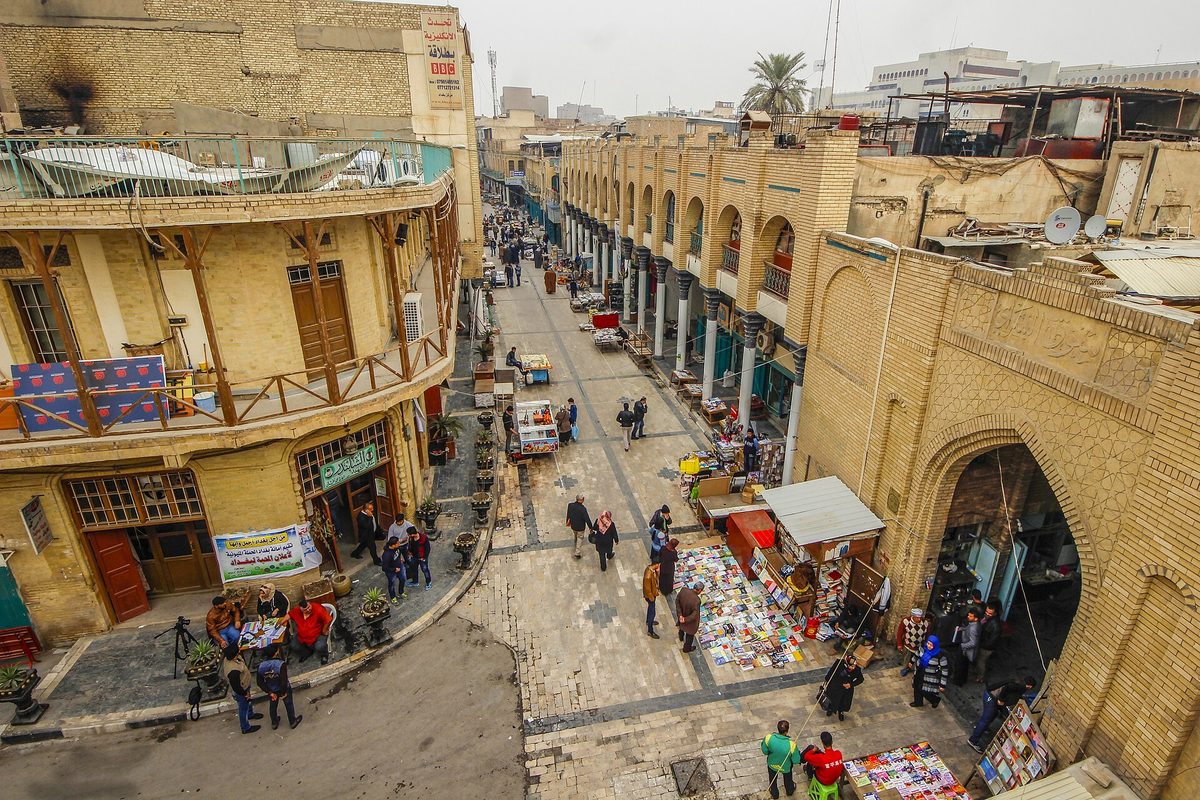
Every traveler I met in Iraq said a version of the same thing: “I wish I’d given Baghdad another day.” The city of the caliphs doesn’t photograph well from a distance — it reveals itself in particulars. Friday morning on Al-Mutanabbi Street, the booksellers’ lane that has been the city’s intellectual heart for centuries, when the stalls spill over and poets argue over cardamom tea at the 100-year-old Shabandar Café. The copper-beaters’ hammers ringing down Souk al-Safafeer. Masgouf — butterflied carp grilled over open fire — eaten at midnight on Abu Nawas street while the Tigris slides past.
The unmissable sight is the Iraq Museum, home of the Warka Vase, the Ram in a Thicket and the world’s densest collection of Mesopotamian art. Entry for foreigners is 25,000 IQD; check opening days locally as they shift (Fridays are usually a safe bet, mornings only). Add the Abbasid Palace on the river, Firdos Square for the post-2003 history, and the Martyr’s Monument — Saddam-era architecture at its most haunting. Getting around is easy with Careem ride-hailing; more on that in the getting-around guide.
2. Taq Kasra (Ctesiphon) — the arch that shouldn’t be standing
Thirty minutes south of Baghdad at Salman Pak stands the largest single-span unreinforced brick vault ever built: the 6th-century throne hall of the Sasanian Persian capital. You round a dusty corner and there it is, 37 meters of audacity that predates structural engineering as a discipline. Part of the façade collapsed in 2019 and restoration work has come and gone since — some visits you’ll find scaffolding, others open access to walk right beneath the vault. It’s a half-day trip; pair it with the small Salman Pak shrine next door, and check current access with a local driver before heading out, since the site has opened and closed with the works.
3. Aqar Quf (Dur-Kurigalzu) — Baghdad’s secret ziggurat
Most first-timers don’t realize there’s a 3,400-year-old Kassite ziggurat 45 minutes west of Baghdad. Aqar Quf is what Ur would look like without the restoration: a raw mudbrick core rising 50-plus meters, the reed matting between its brick courses still visible like the rings of a tree. When I went, the visitor count was me, a shepherd, and the wind. It was Baghdadis’ favorite picnic spot for generations and it’s slowly being spruced up; go now while “spruced up” still means a ticket booth and not barriers.
4. Samarra — the spiral minaret you’ve doodled without knowing it
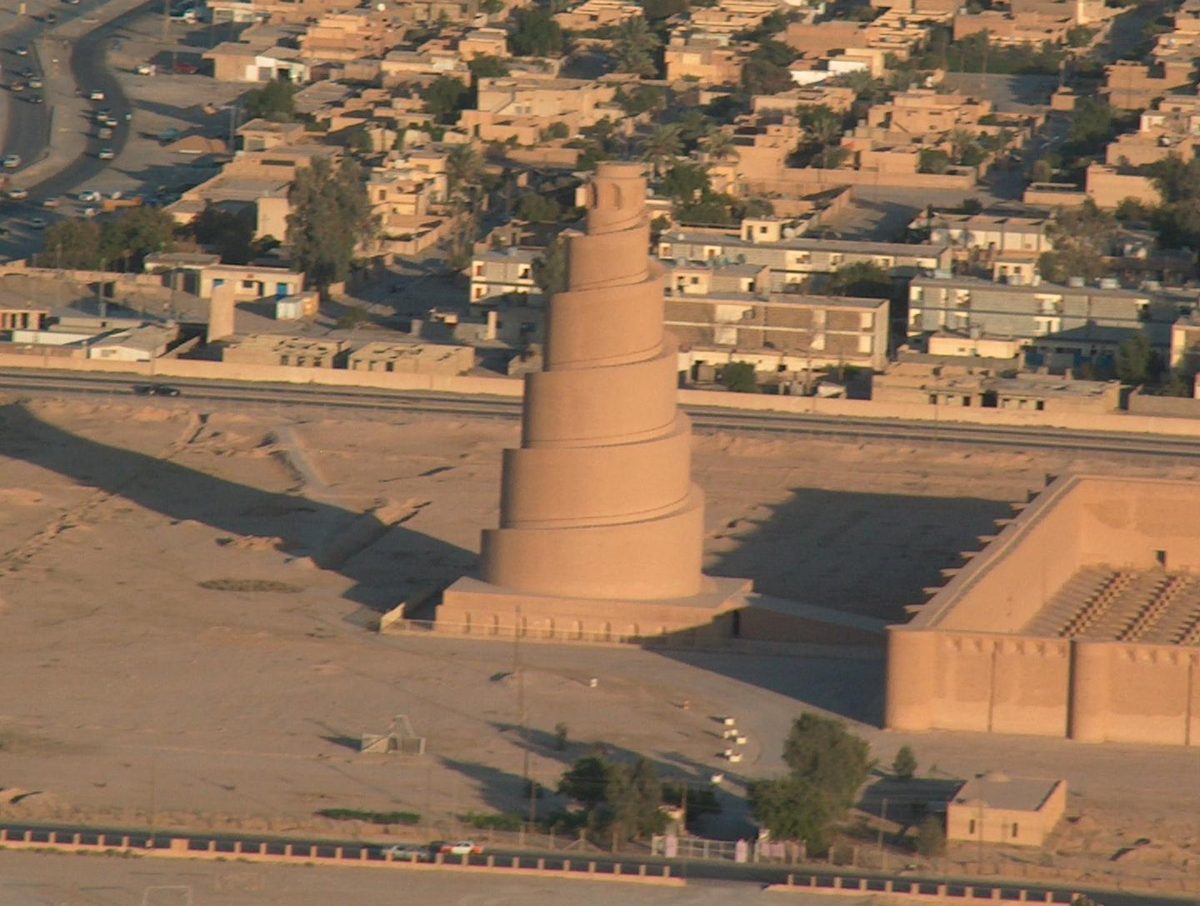
The Malwiya — a 52-meter spiral minaret coiling out of the desert 125 km north of Baghdad — is the ninth-century skyscraper of the Abbasid caliphate’s purpose-built capital, and the whole archaeological city has been UNESCO-listed since 2007. Whether you can climb the spiral ramp depends on the security mood the day you visit; in recent years it’s been mostly no, occasionally yes. Samarra is also home to the gold-domed Al-Askari Shrine, one of Shia Islam’s holiest places, rebuilt magnificently after the 2006 bombing.
Practical reality: Samarra sits in Salahaddin governorate, and the checkpoint into town typically logs foreign passports; an escort to the minaret is common and normal, not a sign of trouble. I’ve broken down how Iraqi checkpoints actually work — read it once and they stop being intimidating.
5. Babylon — yes, that Babylon
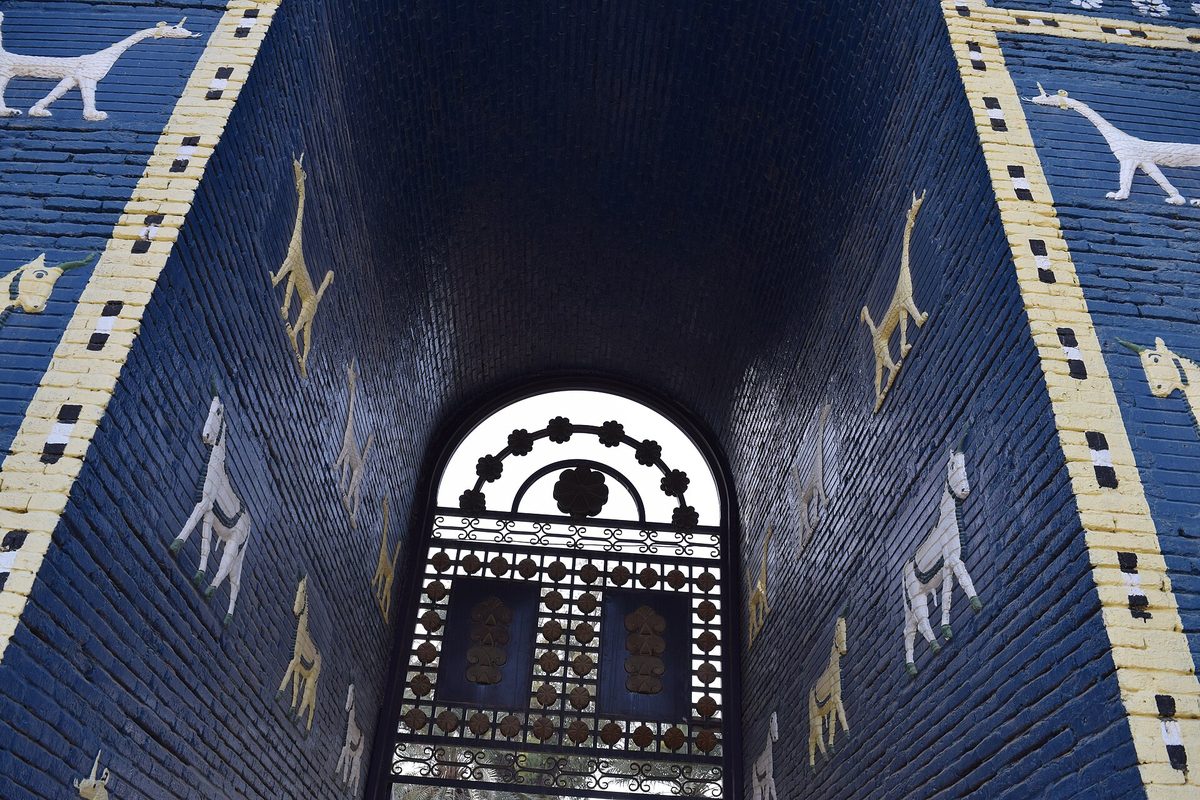
Babylon gets two reactions: travelers who feel the full weight of standing in Hammurabi’s and Nebuchadnezzar’s city, and travelers underwhelmed that the famous blue Ishtar Gate on site is a 1980s replica (the original glazed-brick gate is in Berlin’s Pergamon Museum). Both are right. Saddam infamously rebuilt palace walls directly on top of ancient foundations, stamping his name into the bricks like a Mesopotamian king — which has itself become part of the site’s strange story. UNESCO finally inscribed Babylon in 2019.
Come for the Lion of Babylon, the original Processional Way paving, the Greek theatre, and the deeply weird hilltop palace Saddam built overlooking it all — you can wander its gutted marble halls freely. It’s 90 minutes from Baghdad near Hillah, an easy stop en route to Karbala. Entry around 25,000 IQD for foreigners; a local guide at the gate is worth every dinar for making the brick mounds speak.
The Holy South: Karbala, Najaf and the desert castles
The shrine cities are the part of Iraq most visitors know least — and for millions of pilgrims yearly, they ARE Iraq. You don’t need to be Muslim to visit either city; you do need modest dress (women: an abaya and headscarf, easily bought locally; men: long trousers) and the good sense to treat working holy places with quiet respect. Cameras are fine in the courtyards; follow the flow.
6. Karbala — the gravitational center of Shia Islam
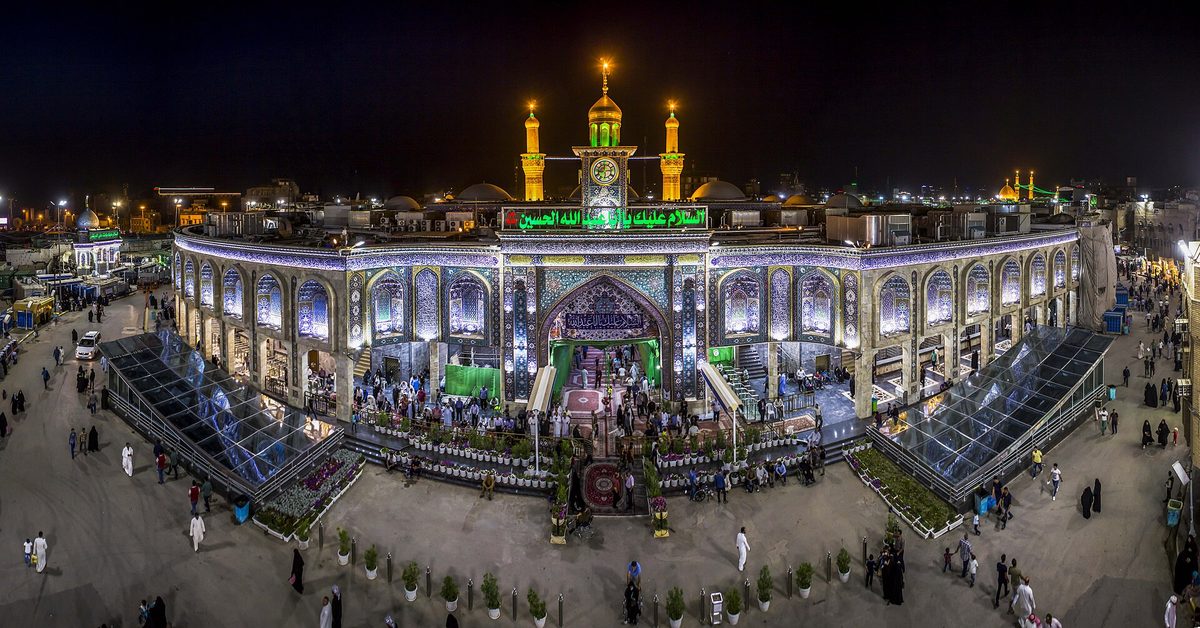
Nothing prepares you for the space between the shrines of Imam Hussein and his half-brother Abbas: a marble esplanade that during Arbaeen becomes the destination of the largest annual gathering of people on the planet — recent years have counted over 20 million pilgrims. On an ordinary evening it’s merely overwhelming: gold domes blazing under floodlights, processions chanting, families picnicking on the cool marble at midnight. Non-Muslim visitors are welcomed with startling warmth; shrine volunteers regularly adopted me for tea and questions. If you want to experience Arbaeen itself (falling around August 4 in 2026), there’s a special visa route — the visa guide covers it — but go with a pilgrimage operator, not solo, for your first time.
7. Najaf & Kufa — the shrine of Ali and a city of the dead
Najaf’s Imam Ali Shrine is, if anything, more intense than Karbala — this is where Shia Islam’s first Imam is buried, under a dome of 7,777 gold tiles, and the surrounding old city hums with seminaries that have debated theology for a thousand years. Walk the Grand Bazaar from the shrine gates and you’re moving through a working medieval city. On the edge of town sprawls Wadi al-Salam, the largest cemetery in the world — millions of graves stretching to the horizon, because being buried near Ali is the aspiration of Shia worldwide. A respectful drive-through with a local guide is possible and unforgettable. Twenty minutes away, Kufa’s Great Mosque — one of the oldest in Islam — completes the circuit, and the two cities make one full, humbling day.
8. Al-Ukhaidir Fortress — an Abbasid castle with no queue
Fifty kilometers into the desert west of Karbala stands a near-intact 8th-century fortress-palace the size of a small town: 17-meter walls, vaulted halls, courtyards opening onto courtyards like an Escher drawing in brick. If Ukhaidir were in Jordan it would be mobbed; in Iraq you’ll likely share it with pigeons and one caretaker. Bring water, a hat and a torch for the dark stairwells to the ramparts. Combine it with Karbala as a half-day taxi excursion — agree the waiting time upfront.
The Marshes & the Deep South: Sumer and the waterlands
9. The Mesopotamian Marshes — a boat through what’s left of Eden
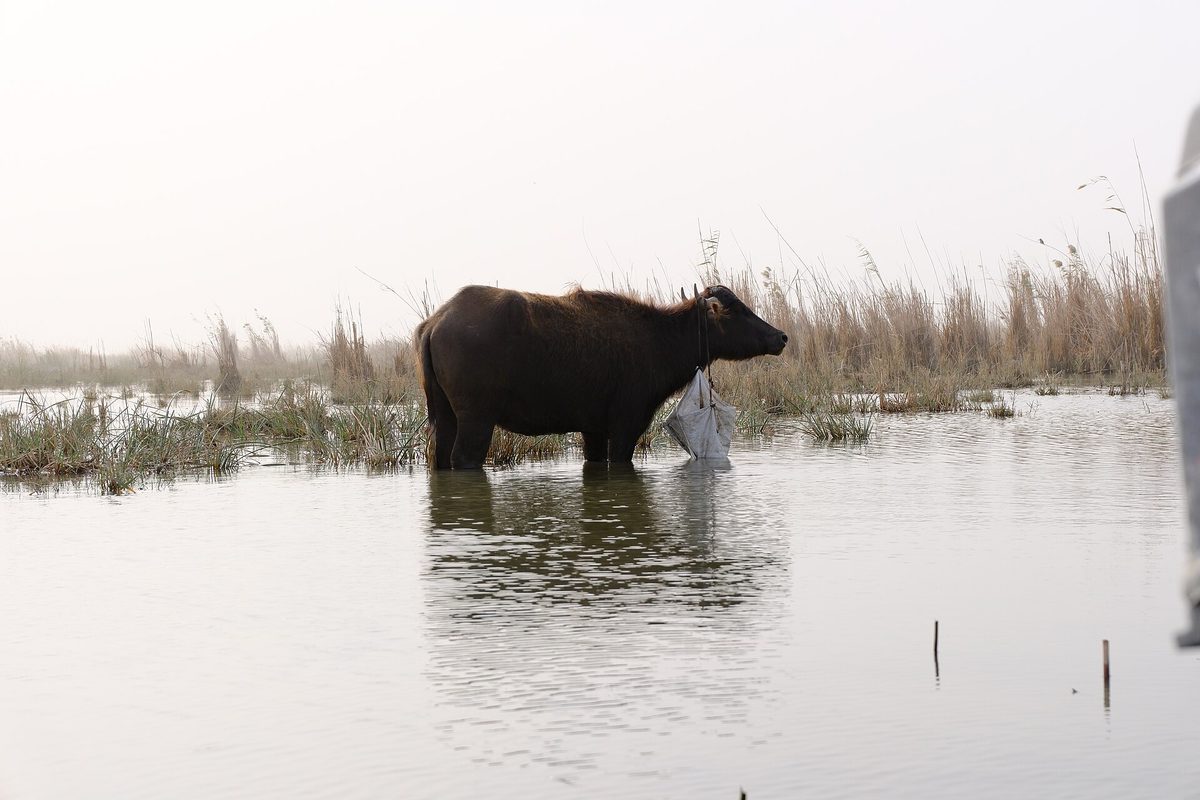
If I could send every skeptical friend to one place in Iraq, it’s here. The Ahwar — the great southern wetlands some traditions equate with the Garden of Eden — were drained almost to extinction by Saddam in the 1990s and partially reflooded after 2003; UNESCO listed them, together with Ur, Uruk and Eridu, in 2016. The way in is Chibayish, between Nasiriyah and Basra, where Marsh Arab boatmen run mashoof (the slim traditional canoe, now usually motorized) trips through reed corridors alive with water buffalo, kingfishers and herons.
An hour’s boat trip with tea in a mudhif — a cathedral-like guesthouse built entirely of reeds, a design unchanged for 5,000 years — costs a negotiable 25,000–50,000 IQD per boat. Staying overnight with a marsh family is the real magic: buffalo-milk geymar for breakfast as the sun comes up over the water. Be straight with yourself about timing, though — the marshes are climate-stressed, and in the late-summer drought months the water can drop heartbreakingly low. Aim for November–April, when it’s full and the birdlife is in.
10. The Ziggurat of Ur — Abraham’s hometown, the pyramid Iraq actually has
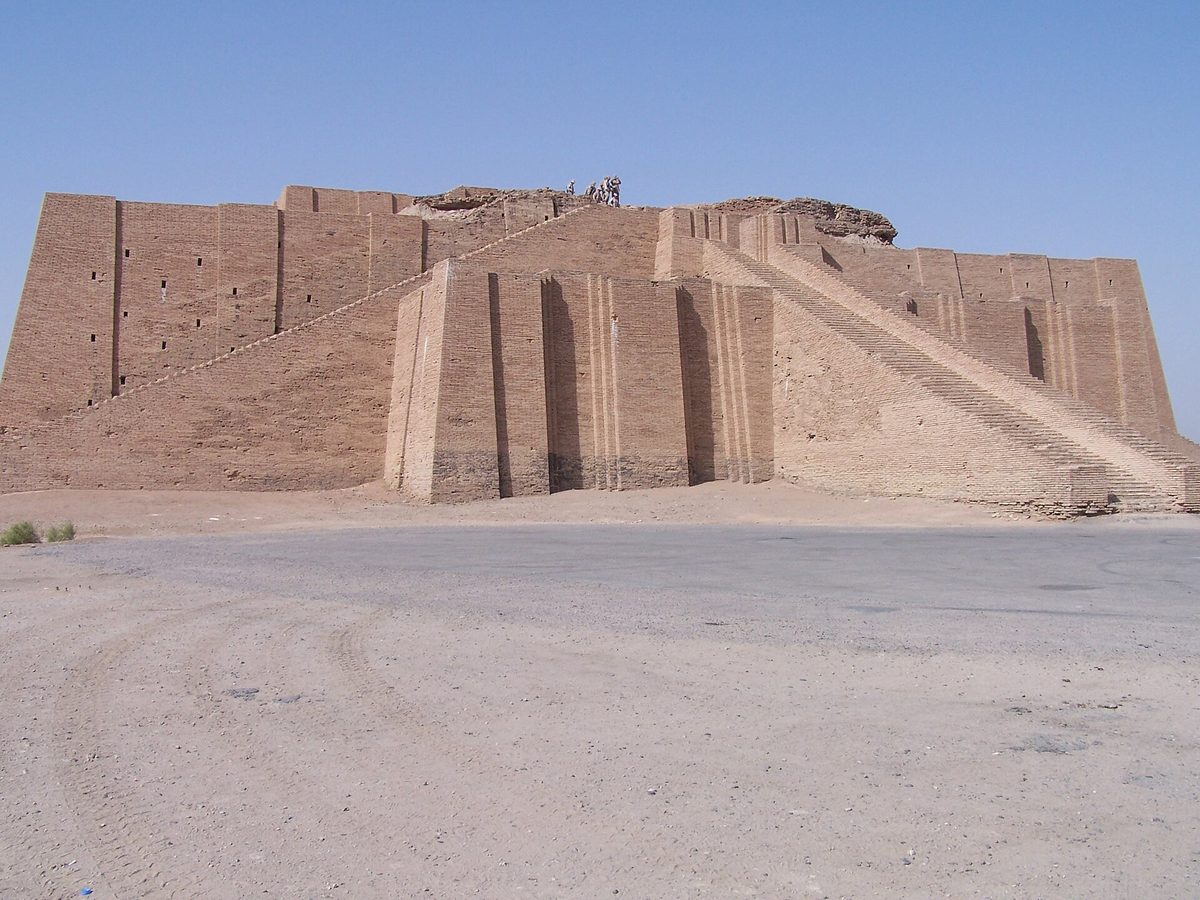
The Great Ziggurat of Ur is the image on every Iraq guidebook for a reason: a vast, three-staircase mudbrick mountain raised around 2100 BC by King Ur-Nammu for the moon god Nanna, its great triple staircase restored last century and now fenced off to protect the brickwork — you take it in from the base these days, which costs the view nothing. The surrounding city mounds hold the Royal Tombs that yielded some of the Iraq Museum’s greatest treasures, and the modest brick complex sign-posted as the House of Abraham — Ur is the patriarch’s traditional birthplace, which is why Pope Francis held an interfaith prayer here on his 2021 visit.
It’s 30–40 minutes from Nasiriyah, past a checkpoint that’s far friendlier than its reputation (the air base next door explains the formalities). Foreigner entry around 25,000 IQD. Go at opening time or the last two hours of light — the desert sun on those bricks at golden hour is worth planning a day around.
11. Uruk (Warka) — where writing began, and nobody goes
Uruk is the deepest cut on this list and the one archaeology nerds will treasure most. This was the first true city on Earth — home of Gilgamesh, the place where humans first pressed reed styluses into clay and invented writing around 3200 BC. Today its mounds, eroded ziggurats and brick-robbed temples sprawl across the desert near Samawah, visited by a trickle of travelers small enough that the guard may ask for a selfie. Access has historically required a permission slip arranged via the antiquities office (typically through the Samawah museum or your driver’s connections) — have a local fixer sort it the day before. There are no facilities at all: carry water, fuel up in Samawah, and give it a half day including the drive from either Samawah or Nasiriyah.
12. Basra — shanasheel, corniche nights and Sinbad’s harbor
Iraq’s port city runs on a different rhythm — Gulf-facing, palm-shaded, humid, up late. The draw is atmosphere more than monuments: the decaying shanasheel mansions of the old quarter, their carved wooden balconies leaning over silted canals that once earned Basra the lazy nickname “Venice of the East”; the evening corniche along the Shatt al-Arab, where the Tigris-Euphrates waters finally reach the sea among dhows and ice-cream carts; the Basra Museum, beautifully installed since 2016 in one of Saddam’s lakeside palaces — the kind of ironic reuse Iraq does best. Legend makes the river island here Sinbad’s home port. Basra is also a sleeper-train ride from Baghdad — the overnight service has run reliably in recent years for a few dollars in a private cabin, though always confirm it’s running locally. It bookends a southern loop perfectly.
13. Al-Qurnah — the tree where two rivers marry
An hour north of Basra, the Tigris and Euphrates — after 1,900 and 2,800 kilometers respectively — finally meet at Qurnah, and Mesopotamia (“the land between the rivers”) runs out of land between the rivers. On the small esplanade overlooking the confluence stands a gnarled dead trunk fenced off as Adam’s Tree, local tradition’s candidate for the Tree of Knowledge. Is it? No. Should you stop for thirty minutes on the Nasiriyah–Basra run to watch two of history’s great rivers become one, while old men fish off the steps? Absolutely.
Mosul & the North: resurrection country
14. Mosul — the comeback that will rearrange you
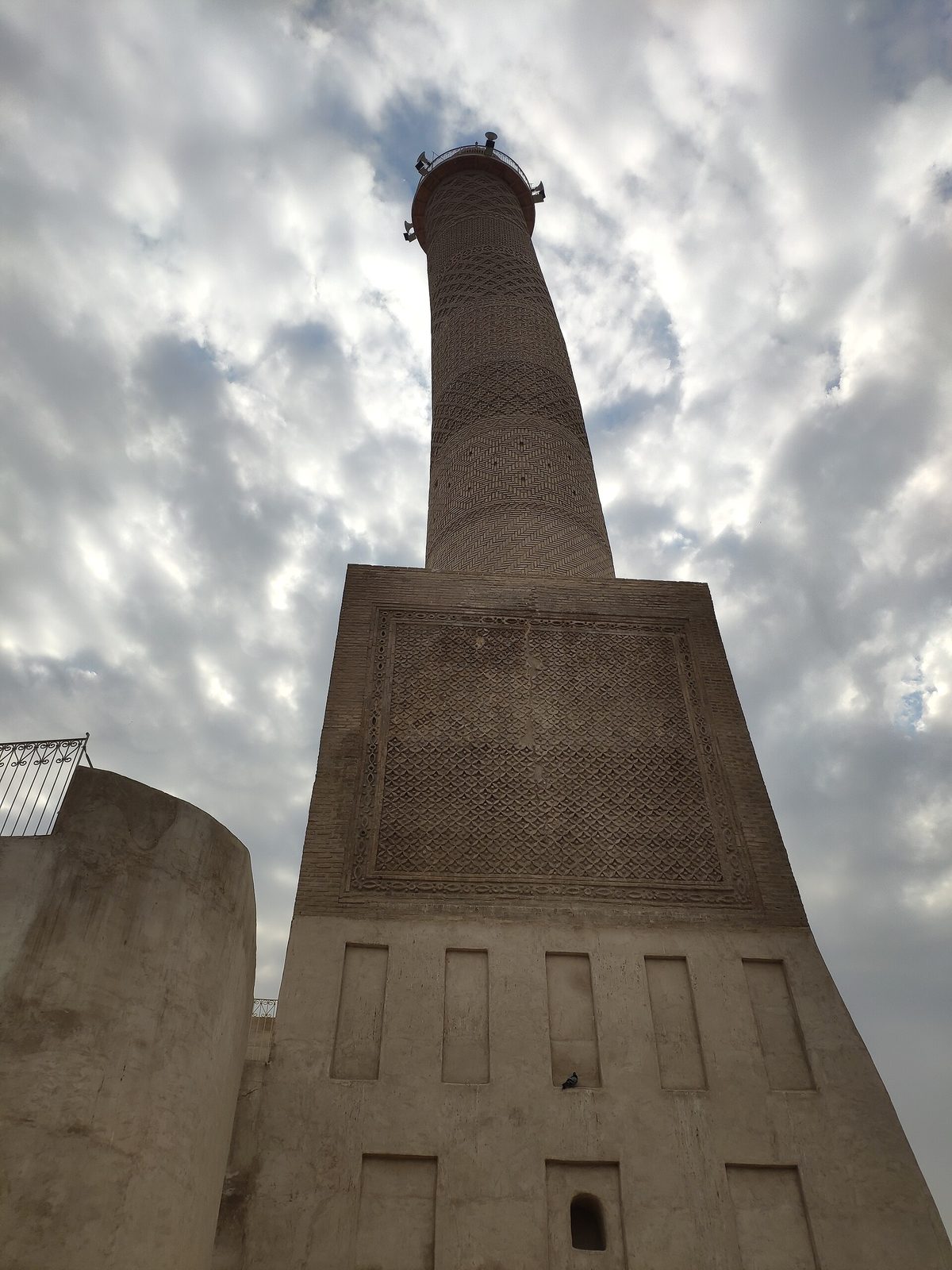
I debated whether Mosul belongs on a “best places” list, and then I went, and now I tell everyone it might be the most important stop in Iraq. The Old City — ground zero of the 2017 battle against ISIS — has spent the years since being painstakingly stitched back together, and in 2025 the project reached its symbol: the Al-Nuri Mosque and its beloved leaning minaret, Al-Hadba (“the hunchback”), blown up by ISIS in 2017, were rebuilt brick by salvaged brick under UNESCO’s $115-million “Revive the Spirit of Mosul” program and formally reopened. The minaret leans again, on purpose. People wept in the streets.
Walk the alleys between the minaret and the restored Al-Tahera and Al-Saa’a churches, poke into the revived book market on Najafi Street, and let Moslawis — who greet foreign visitors as walking proof their city is back — set the tone. A local guide is worth it here, both for navigating and for hearing the history first-hand rather than as rubble-gawking. Count the checkpoints into the city as part of the experience; they’re thorough but courteous with tourists.
15. Hatra — Iraq’s first World Heritage Site, alone in the desert
Two hours southwest of Mosul, the round city of Hatra rises out of absolute flatness: a 2,000-year-old caravan metropolis whose Parthian-era temples fuse Greek columns, Roman arches and Eastern gods into something that exists nowhere else. It was Iraq’s first UNESCO inscription (1985). ISIS took sledgehammers and rifles to its reliefs in 2015; restoration teams have since repaired some of the worst damage, and the bullet scars on the masks of the Great Temples are now part of what the site has to say. You’ll need a driver and an early start from Mosul or Erbil, your passport for several checkpoints, and ideally a thermos of tea to drink in the colonnade while you have an entire ancient city literally to yourself.
16. Alqosh & Rabban Hormizd Monastery — the cliff ladder of Nineveh
On the last ridge of the Nineveh Plains before Kurdistan’s mountains, the Chaldean Catholic town of Alqosh has been continuously Christian for some 1,400 years and continuously inhabited for far longer — the tomb traditionally assigned to the prophet Nahum, restored in 2021, sits in its old quarter. The reason you climb out of town, though, is Rabban Hormizd: a 7th-century monastery carved into the cliff face, reached by a zigzag of stairs, its cells and chapels burrowing back into the rock. The view across the plains where Assyrian kings once marched is the kind that resets your sense of historical scale. Combine with Lalish or Mosul; it’s under an hour from either.
17. Mar Mattai (St. Matthew’s Monastery) — 1,600 years of lamplight
Founded in 363 AD on the slopes of Mount Alfaf, Mar Mattai is among the oldest continuously functioning monasteries on Earth, and it wears the fact lightly: a handful of Syriac Orthodox monks, a guesthouse, manuscripts in a script Jesus would have roughly understood, and a terrace view over the Nineveh Plains that turns gold at dusk. During the ISIS years the front line was visible from that terrace; the monastery never emptied. Visitors are received with tea and zero fuss. It’s 40 minutes from Mosul — pair it with Alqosh for a day of northern monasteries that out-quiets anything in Cappadocia.
18. Lalish — the barefoot valley of the Yazidis
In a wooded valley a couple of hours north of Mosul, Lalish is the holiest place of the Yazidi faith — the temple complex around the tomb of Sheikh Adi, its conical fluted spires unlike any other religious architecture you’ll ever see. Every Yazidi is meant to make the pilgrimage once in their life; after the 2014 genocide in Sinjar, the valley carries extra weight as the heart of a community that survived. Visitors are welcome with one firm rule: the entire valley is sacred ground, so you’ll walk it barefoot — and mind the thresholds, which you step over, never on. Knot a wish into one of the colored silk cloths inside, drink from the White Spring, and let one of the resident guides explain a faith that outsiders have misunderstood for centuries. No entry fee; respectful donations welcome.
Iraqi Kurdistan: mountains, citadels and a different pace
Crossing into the Kurdistan Region feels like changing countries without changing countries: different flag, different language, its own visa-on-arrival system for most Western passports, and mountains where the rest of Iraq has plains. It’s the easiest place in Iraq to travel — and in spring, one of the most beautiful landscapes in the Middle East.
19. Erbil — six thousand years of city under one citadel
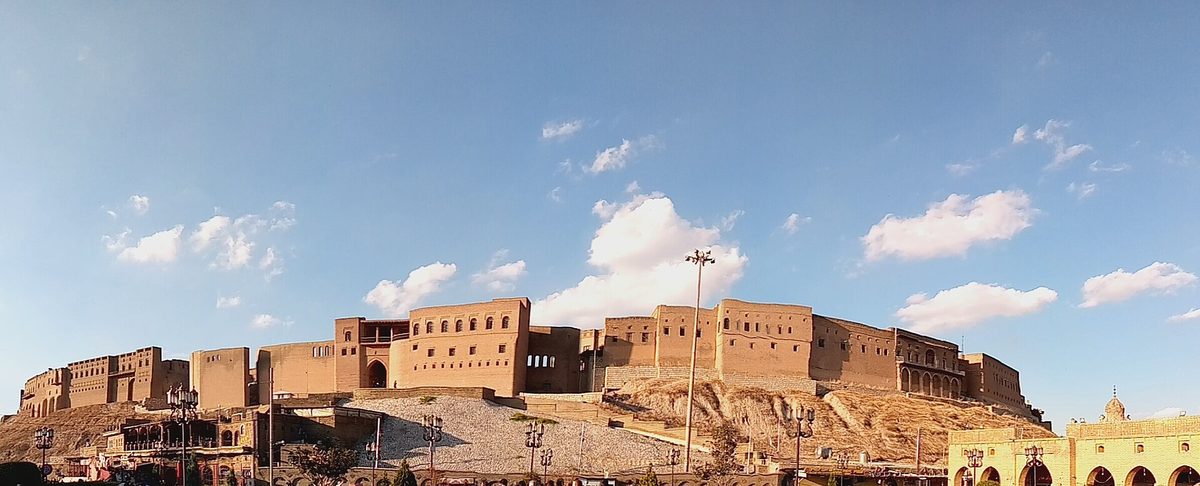
Erbil’s core is a tell — an artificial mound of city stacked on city — crowned by a citadel that has a serious claim to being among the longest continuously inhabited places on Earth, with traces going back 6,000-plus years. UNESCO listed it in 2014, and the long restoration means sections reopen year by year; the gates, the mansion museums and the rampart views over the fountains of Shar Park are open now. Down below, the Qaysari Bazaar does honey, cheese, carpets and gossip as it has for centuries — finish with a glass of sweet tea at the century-old Machko Chai Khana built into the citadel wall, where Erbil’s intellectuals have argued since 1940. Erbil is also the logical base: international flights land here, and everything else in this section is a day trip or an easy overnight.
20. Amedi (Amadiya) — the town on the table mountain
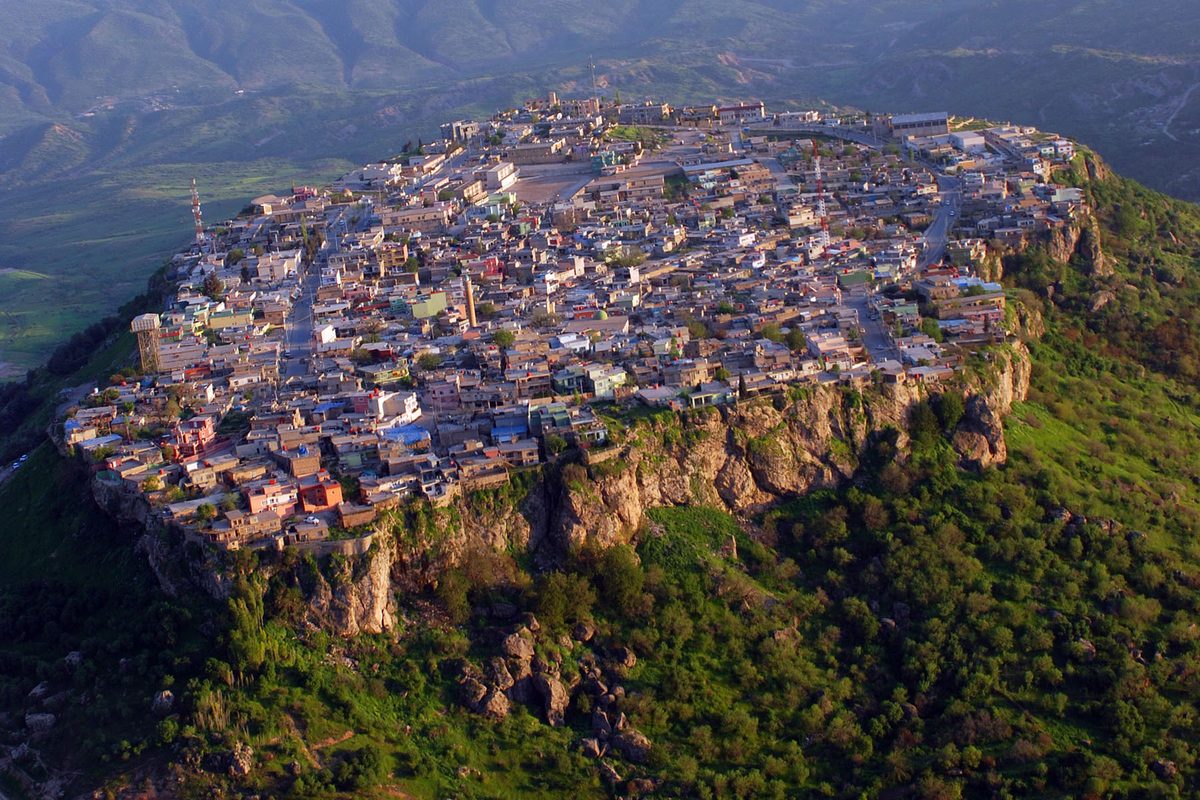
Amedi sits on a flat-topped mesa at about 1,200 meters, walls dropping sheer on every side, with a single old gate — the relief-carved Bahdinan Gate — surviving from the era when this was the seat of a principality. The town claims, plausibly, thousands of years of continuous habitation; some traditions even send the Magi off to Bethlehem from here. Honestly, you come for the approach: the first view of the town floating above the Sapna valley, snow on the Gara ridge behind it, is the single best vista in Iraq. Two to three hours from Erbil or one from Duhok; have lunch in town, walk the rim, and loop back via the Sulav resort waterfalls.
21. Rawanduz & the Hamilton Road — the gorge drive
In 1928 a New Zealand engineer named A.M. Hamilton started blasting a road through the Zagros toward Iran, and the stretch past Rawanduz remains one of the great mountain drives anywhere: the Rawanduz canyon dropping away in sheer rock sheets, the Korek mountain cable car dangling improbably above, and the twin waterfalls of Bekhal and Geli Ali Beg (the one on the 5,000-dinar note) roaring with snowmelt in spring. Kurdish weekenders picnic everywhere — join them; an entire culture of thermos tea and skewered kebab unfolds at every pull-off. Self-drive is doable here (this is the one part of Iraq where renting a car makes sense), or hire a driver from Erbil for the classic loop: Shaqlawa, the canyon, the waterfalls, back by dark.
22. Akre — the Nowruz town
Akre stacks itself up a mountainside like an amphitheater, all stone lanes and poplars, and is worth a wander any day of the year. But if you can possibly time your trip to March 20–21, do it: Akre is the unofficial capital of Nowruz, the Kurdish new year, when thousands of torch-bearers zigzag up the dark mountain in lines of fire, flags snap from every ridge, and the dancing goes until the early hours. It’s one of the great festival spectacles of the Middle East and it’s still essentially a local party — book a room in Duhok or Erbil well ahead and expect to be pulled into at least three circles of dabke.
23. Sulaymaniyah & Halabja — the brainy city and the hard museum
Sulaymaniyah is Kurdistan’s cultural capital — bookshops, galleries, shisha-and-espresso cafés full of students, and the excellent Slemani Museum (the country’s second museum after Baghdad’s, with Paleolithic finds from Shanidar). It’s also home to the museum that explains modern Kurdistan: Amna Suraka, Saddam’s former Red Security prison, left bullet-pocked exactly as it fell in 1991, its interrogation rooms and cell blocks now a memorial walked in silence. An hour away, the Halabja Memorial commemorates the 1988 chemical attack that killed thousands; it is brutal and necessary. This pairing isn’t “fun” tourism — it’s the day that makes the mountain picnics on either side of it mean something.
24. Shanidar Cave — the Neanderthal valley
A wide cave mouth high above the Great Zab river, Shanidar rewrote prehistory twice: first in the 1950s, when excavations found Neanderthal burials — one elderly man who had survived for years with severe disabilities, evidence his group cared for him — and the famous “flower burial” that suggested Neanderthals might have buried their dead with ceremony; and again since 2014, when new digs recovered another remarkably complete skeleton. The walk up from the road takes twenty minutes through oak scrub; inside, the excavation trench is visible under a soaring ceiling, swifts wheeling where Neanderthals sheltered 50,000 years ago. Combine it with the Rawanduz loop or Akre — it sits neatly between them, near Barzan.
25. Dukan Lake — Kurdistan off duty
Finish with the place Kurdish families actually go: Dukan, the big turquoise reservoir north of Sulaymaniyah, ringed by bare gold hills. Rent a pedal boat, eat grilled masgouf at a lakeside terrace, watch multi-generational picnics deploy carpets, samovars and competitive volumes of rice. After the ruins and the memorials, an afternoon of ordinary Iraqi joy is the right note to end a trip on — because the truest thing about Iraq in 2026 is that ordinary life, everywhere, is winning.
Stringing them together: routes that actually work
Iraq’s geography sorts this list into two natural loops. The classic federal circuit runs from Baghdad: south through Babylon, Karbala, Najaf, Nasiriyah (Ur + marshes) to Basra, then back, with Samarra as a northbound day trip — 7 to 10 unhurried days. The northern arc — Mosul, Hatra, the monasteries, Lalish — connects Baghdad to Kurdistan, where Erbil anchors the mountain loop in 4 to 5 days. Do everything on this list properly and you’re looking at two and a half to three weeks; my Iraq travel guide has a day-by-day first-trip itinerary if you’d rather start from a template.
Three honest planning notes. Season is destiny here: aim for October–November or March–April, because summer in the south is genuinely dangerous heat — the when-to-go breakdown has the month-by-month detail. Transport between cities is shared taxis and the odd train, cheap and sociable but slower than the map suggests — budget one travel half-day between each base, or take the transport guide’s advice and mix in a driver for the remote sites (Hatra, Uruk, Ukhaidir are realistically driver-only). And the paperwork: federal Iraq’s e-visa needs sorting before you fly (around $160 all-in, a few days’ processing), while Kurdistan stamps most Westerners in on arrival — if your trip includes both, the visa guide explains the two-system dance and the land crossings between them.
Solo travelers, including women, do this whole route — the safety guide covers the by-traveler-type reality, the checkpoint rhythm and the regions I’d still skip (Anbar’s deep desert, Kirkuk’s hinterland and the Syrian border strip are not on this list for a reason).
Best places to visit in Iraq: your questions, answered
What is the number one place to visit in Iraq?
If I’m allowed one answer for impact-per-hour: the Ziggurat of Ur at golden hour — 4,000 years of history towering over you, usually in near solitude (the staircase itself is fenced off for preservation). If you mean “what shouldn’t I miss,” the honest top three is Ur, the Mesopotamian Marshes by boat, and Friday morning on Baghdad’s Mutanabbi Street.
Is Iraq open to tourists in 2026?
Yes. Federal Iraq issues e-visas to around 37 nationalities (visa-on-arrival was suspended in March 2025), and Iraqi Kurdistan grants most Westerners visas on arrival. Government advisories remain severe — US Level 4 “Do Not Travel” as of March 2026 — so read the current advisory and our dated safety breakdown, and make your own informed call.
Can Americans visit Iraq?
Americans can and do visit: the e-visa is available to US passport holders (around $160 with the mandatory insurance, normally processed in days). Be aware the US advisory is Level 4 and consular help on the ground is very limited — that’s the trade you’re making. Kurdistan, with visa on arrival, is the gentler first step many Americans choose.
Is Babylon worth visiting?
Yes — with calibrated expectations. The on-site Ishtar Gate is a replica (the original is in Berlin), and imagination has to do some lifting among the brick mounds. But the Lion of Babylon, the original processional street, Saddam’s bizarre hilltop palace and the sheer fact of standing in Babylon make it a half-day nobody regrets, especially with a guide.
How many days do you need to see Iraq?
Ten days covers the federal classics (Baghdad, Babylon, the shrine cities, Ur and the marshes, plus Samarra). Add four to five for Kurdistan’s mountains and Erbil, and two to three for Mosul and the northern monasteries. The full 25 places on this list fit comfortably — but not lazily — into two and a half to three weeks.
What is Iraq famous for visiting?
Mesopotamia: Babylon, Ur, Uruk and six UNESCO World Heritage Sites from Hatra to Erbil Citadel. Add the holiest shrines of Shia Islam at Karbala and Najaf, the reed-house waterworld of the southern marshes, rebuilt Mosul, the Yazidi valley of Lalish and Kurdistan’s mountain scenery — a density of civilization few countries can match.
Is it safe to visit all the places on this list?
Every place here is one travelers are visiting routinely in 2026, but “routinely” isn’t “risk-free”: advisories are at their strictest levels and conditions shift. The tourist corridors — Baghdad–Basra, the shrine cities, Kurdistan — have run calm for several years; checkpoints are the main daily friction. Read the region-by-region safety guide with current dates before you commit.
Final thoughts: go before the secret’s fully out
Twenty-five places is a long list, and the strange truth is I cut it down. Iraq is what travel looked like before the velvet ropes: sites that belong on every list humanity keeps, with nobody standing in front of them. That window — where Babylon, Ur and the marshes are open, welcoming and empty — will not stay open at this width forever. Tour groups are multiplying each season, and Moslawis will tell you, with pride, that even their city is filling up. Sort the paperwork, read the safety picture with clear eyes, pick your season — and go stand where it all began.
Photo credits
All images via Wikimedia Commons: Alli Khalil (CC BY-SA 4.0); Hamody al-iraqi (CC BY-SA 4.0); Jim Gordon (CC BY 2.0); Mondalawy (CC BY-SA 4.0); Sameralhusseini1987 (CC BY-SA 4.0); U.S. Army photo by SGT Daniel Nelson (public domain); en:User:Hardnfast (CC BY 3.0); الدبوني (CC BY-SA 4.0); جيهان شيركو (CC BY 4.0). Full attribution and source links available on request.


