Last updated: June 6, 2026 — this is a fast-moving topic. This guide now includes the full February–June 2026 timeline, the current advisory wording from four governments, and what’s actually happening on the ground this week. We revise it whenever the situation changes.
“Is Iraq safe?” is the single most common question I get asked — at dinner parties, in DMs, and by my own mother, repeatedly. It’s also the question where almost everything you’ll read is selling you something: tour operators insist everything is fine, crisis-content sites insist you should flee, and government advisories describe a country no traveler I know quite recognizes.
So, is Iraq safe to visit in 2026? The honest answer: safer than its reputation, riskier than it was in 2024–25, and dramatically different depending on where you go and who you are. Western advisories currently say do not travel; meanwhile pilgrims, tour groups and independent travelers are moving through Baghdad, the holy cities and Kurdistan daily, without incident. Both facts are real.
This guide reconciles them properly: what changed in 2026, what each advisory actually says, the region-by-region reality, the risks that genuinely hurt travelers (spoiler: it’s the driving), and an honest read for Americans, women, LGBTQ+ travelers and pilgrims. It pairs with our complete Iraq travel guide, which covers the visas, money and logistics side of the trip.
In this guide: The short answer by region · What changed in 2026 · What the advisories say · Why people still go · Region by region · The real risks, ranked · Terrorism & militias in context · Checkpoints · Safety by traveler type · The safety playbook · Is Kurdistan different? · FAQ
Is Iraq safe? The short answer, region by region
Security in Iraq is local. A blanket “yes” or “no” is how both the cheerleaders and the doom-mongers get it wrong. Here’s the June 2026 map in one table — the detail for each region follows below. We go city by city in dedicated guides to whether Baghdad is safe, safety in Mosul and the situation in Basra.
| Region | Current reality for travelers (June 2026) |
|---|---|
| Iraqi Kurdistan (Erbil, Sulaymaniyah, Duhok) | Calmest part of the country on the ground; note advisories no longer exempt it |
| Baghdad | Functioning, busy, heavily policed; fine by day with sense; avoid a short list of districts |
| Karbala & Najaf (holy cities) | Among the safest-feeling cities in Iraq; built to manage millions of pilgrims |
| Babylon belt (Hillah, Ctesiphon) | Quiet day-trip country from Baghdad |
| Deep south (Nasiriyah, marshes, Basra) | Calm and welcoming; heat and roads are the hazards, not people |
| Samarra & Salahaddin | Day-trip only — militia-run checkpoints, no overnights for foreigners |
| Mosul & Nineveh plains | Open and rebuilding; go informed, daylight hours, ideally with local contact |
| Anbar (Ramadi, Fallujah), rural Kirkuk–Hawija, Syrian border | Off the itinerary — residual insurgent activity; local contact mandatory where possible at all |

What actually changed in 2026: the timeline nobody else publishes
If you’ve noticed that half the “is Iraq safe” articles online feel weirdly frozen in 2023, you’re not imagining it. The top-ranking guide still calls 2023 “the safest time ever to visit,” and the scariest one stopped updating in mid-April. Here’s the actual sequence, so you can see where things stand and how we got here:
- Through 2025: Iraq’s calmest stretch in two decades. Tourism income up 25% in 2024; Baghdad named Arab Capital of Tourism 2025; visa-on-arrival replaced by an e-visa; foreign tour groups running constantly.
- February 28, 2026: The US and Israel launch military operations against Iran. Iraq closes its airspace the same day. Iran-aligned Iraqi militias begin a campaign of drone and rocket attacks on US-linked military and diplomatic facilities in Iraq — by June, analysts count 300+ such operations.
- March 2, 2026: The US State Department orders non-emergency embassy staff out of Iraq and resets its advisory: Level 4, Do Not Travel. Other Western governments follow; the UK extends “advise against all travel” to include, for the first time in years, the Kurdistan Region.
- March–early April 2026: Airspace shut; travelers exit overland via Turkey, Jordan and Kuwait. Civilian life continues — pilgrimages in Najaf and Karbala never stop.
- April 8, 2026: A US–Iran ceasefire takes hold. Iraq reopens its airspace and all commercial airports. Airlines return through May: Qatar Airways (May 10), Turkish (May 14), Emirates, flydubai, Royal Jordanian, Iraqi Airways’ full network.
- May 5, 2026: The US Embassy in Baghdad reissues a blunt alert — “Do not travel to Iraq for any reason” — citing continued militia plotting against US-linked targets, including in Kurdistan.
- As of June 6, 2026: The ceasefire is holding on Iraqi territory — security monitors report no new militia attacks launched from Iraq in recent weeks, though groups have continued drone launches toward Gulf states and the situation remains genuinely unsettled. Airports are open. Tour groups and pilgrims are back. The advisories have not softened.
That’s the whole picture. A real crisis happened; it has substantially calmed for civilians inside Iraq; it has not resolved; and anyone telling you either “nothing happened” or “it’s still February” is recycling a stale page.
What the government advisories actually say (and how to read them)
Quoted precisely, because paraphrases are where safety articles go to lie:
- United States (Level 4 — Do Not Travel, updated March 2, 2026): do not travel “due to terrorism, kidnapping, armed conflict, civil unrest, and the U.S. government’s limited ability to provide emergency services.” Non-emergency embassy staff remain on ordered departure; the embassy’s May 5 alert told citizens to “leave now if you are there.”
- United Kingdom (FCDO): currently advises against all travel to Iraq including the Kurdistan Region — a post-February change worth noting, since for years Kurdistan carried only the softer “all but essential” wording. The stated reason is regional escalation risk and Iran’s declared intent to target US- and Israel-linked sites.
- Canada and Australia: avoid all travel, Kurdistan included, on essentially the same grounds.
Three things to understand about advisories before you let them decide for you. First, they’re written for the worst-case reader — the one who’ll wander into Anbar with a drone and a flag t-shirt — and for governments whose consular capacity in Iraq is currently minimal; “we can’t help you” is doing a lot of the work in that Level 4. Second, they are country-wide blunt instruments: Basra’s marshes and the Syrian border strip carry the same stamp. Third, they have real teeth in one specific place: insurance. Most standard policies void coverage in a Level 4/”advise against all travel” destination — the mechanics of which we unpick in our guide to travel insurance for Iraq — which matters more to your actual safety than almost anything else on this page — our travel guide’s insurance section covers the providers that do cover Iraq.
None of that makes the advisories wrong. In February and March 2026 they were urgently right. It makes them a starting point for adult judgment, not the end of it. We decode each government’s wording line by line in the Iraq travel advisory explained.
So why are people still going? Reconciling the two Iraqs
Here’s the tension nobody on page one resolves: while those advisories sat at maximum severity, the Najaf–Karbala pilgrimage corridor processed millions of visitors, Gulf and Iranian tourists kept coming, foreign tour operators resumed their autumn schedules, and the travelers’ grapevine — which reported every airspace closure and embassy alert in real time — reported precisely zero tourists harmed in the 2026 crisis.
The explanation is targeting. The violence of 2026 has been a contest between armed groups and military/diplomatic infrastructure: bases, logistics sites, embassy compounds, air-defense radars. The 300+ militia operations since February shared an address list, and it did not include hotels, souks, shrines, museums or tourist restaurants. Iraq’s painful sectarian-era violence against civilians in public spaces has, mercifully, not returned — the last mass-casualty bombing aimed at a civilian crowd in Baghdad was in 2021.
That’s the honest case for why a French history buff or a Pakistani pilgrim experienced calm streets in April while American diplomats packed. It is not a guarantee. Targeting logic can change; ceasefires can fail; being near the wrong facility at the wrong time is a real, if small, risk. If your risk tolerance doesn’t accommodate “low probability, high consequence,” Iraq in 2026 is not your year — and that’s a legitimate reading of the same facts.
What “safe” feels like at street level
Statistics don’t transmit texture, so here’s the texture. Daily Iraq is: shopkeepers abandoning their stalls to walk you three blocks because you looked lost; checkpoint soldiers practicing English compliments; teenagers queueing politely for selfies; a tea glass appearing before you’ve sat down fully. The national pastime is worrying about your wellbeing — travelers consistently describe being over-protected, passed from family to family like a parcel marked fragile. Crowded places feel watched-over rather than watchful; women push to the front of every queue you’re in; lost wallets chase their owners. None of this suspends the structural risks this guide maps — but if you’re calibrating “how will it actually feel?”, it feels like that.
Region by region: where it’s calm and where it isn’t
Baghdad
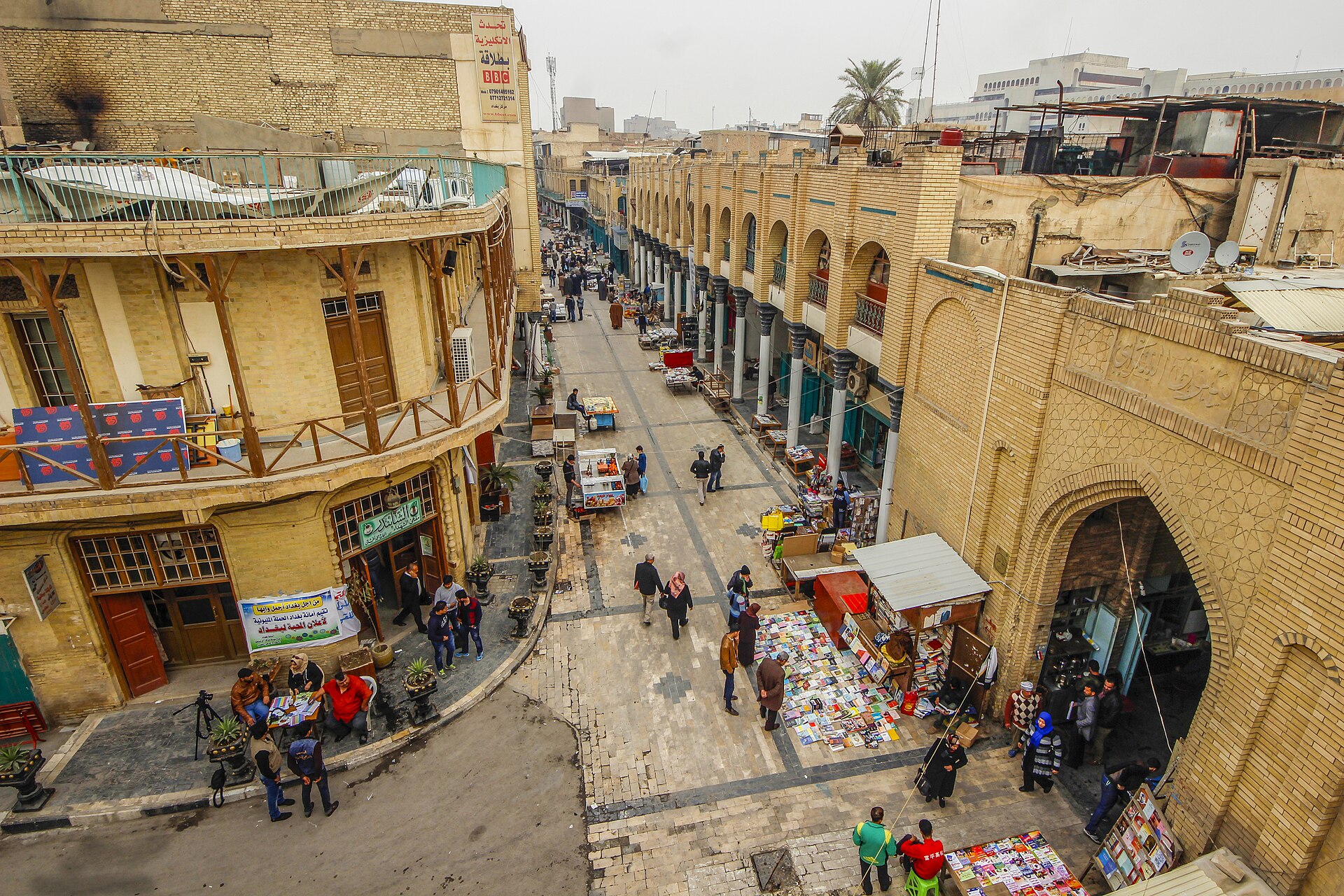
The capital is heavily policed, economically busy, and far more relaxed than its name. By day you can walk Mutanabbi Street, the museum district, Karrada and the riverfront with no more drama than friendly curiosity; Friday book-market mornings feel like a festival. Use Careem or Baly rather than flagging street cabs at night, skip the short avoid-list (Sadr City, Abu Ghraib’s outskirts, industrial Dora after dark), and stay clear of protest crowds and anything with a US flag on the gate. The Green Zone’s monuments need a pre-arranged permit anyway.
Karbala and Najaf
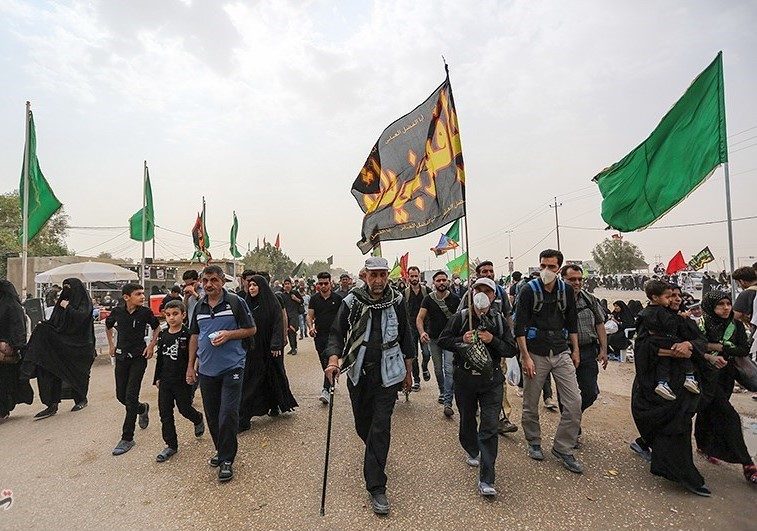
Purpose-built to move tens of millions of pilgrims a year, the holy cities run on layered security that makes them feel — and statistically be — among Iraq’s safest urban spaces. Strict checkpoint rings surround the shrines (no big bags or cameras inside; full abaya for women). Petty theft in dense crowds is the realistic concern, pickpocket-level, especially during Arbaeen.
The Babylon belt: Hillah and Ctesiphon
Quiet provincial Iraq. Babylon and the arch at Ctesiphon are standard, unescorted day trips from Baghdad — ticket window, tea stand, occasionally a wedding photoshoot among the ruins.
The deep south: Nasiriyah, the marshes, Basra
The friendliest miles in the country. Nasiriyah’s checkpoint formalities relaxed years ago; Chibayish boatmen compete to host you; Basra’s corniche evenings are family promenades. The hazards here are 48°C summers and Iraqi highway driving, not security. Tribal disputes occasionally flare in rural Dhi Qar/Maysan — your boatman or hotel will know, ask.
Samarra and Salahaddin province
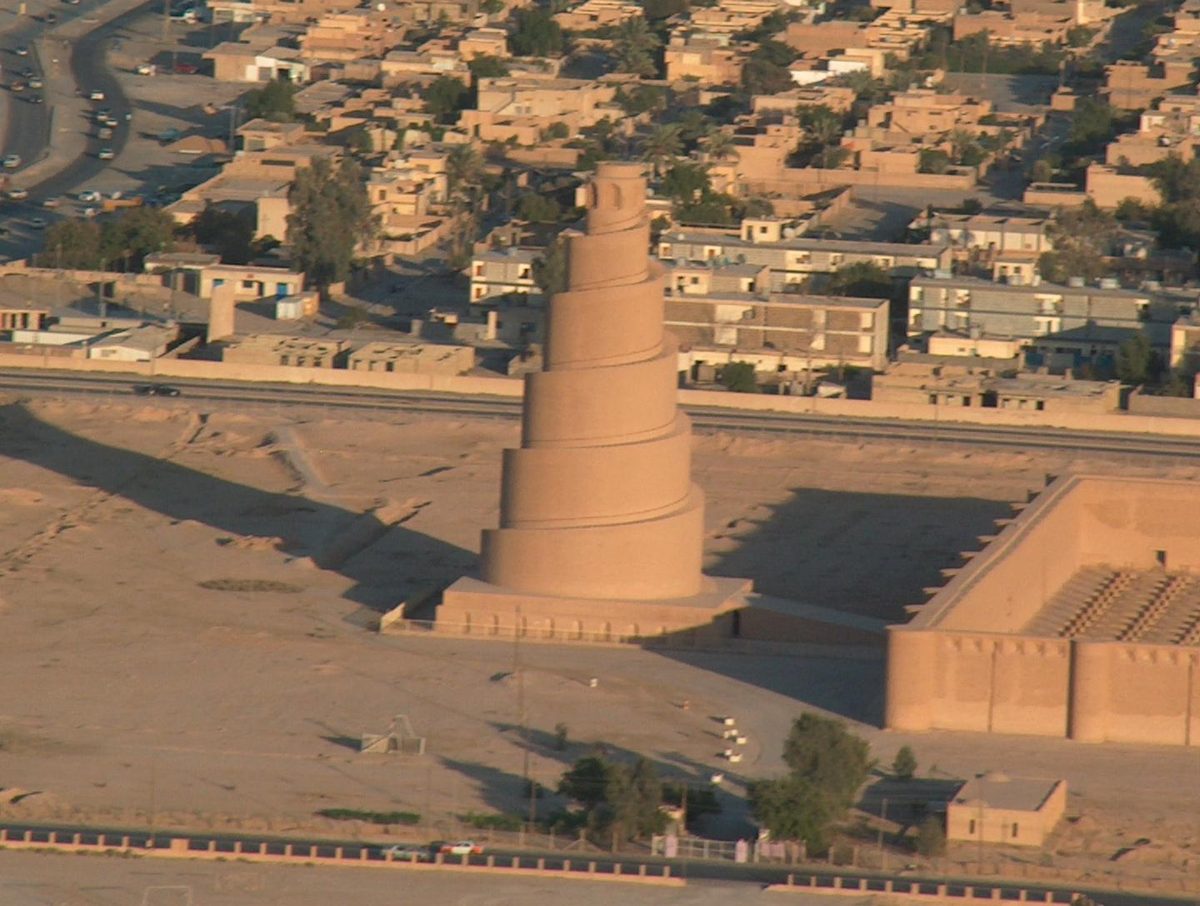
Visitable, with quirks: the spiral minaret is a day trip during which a militia-run checkpoint holds your passport, and foreigners can’t overnight. American visitors sometimes get longer questioning here — tedious, not dangerous. Go early, climb, leave.
Mosul and the Nineveh plains
Open, inspiring, and still finding its feet. The Old City, the rebuilt al-Nouri mosque and the museum are genuinely safe to visit by day, and Moslawis are evangelically welcoming. The countryside west and south of the city is a different matter — that’s residual-ISIS terrain. Daylight, main roads, and ideally a local contact; the Christian towns and monasteries of the Nineveh plains (Alqosh, Mar Mattai) are calm.
Anbar, rural Kirkuk–Hawija, and the Syrian border
This is where the remaining red on Iraq’s map actually lives. Ramadi and Fallujah require arranged local contacts even for determined visitors; the desert toward Syria and the Hawija pocket host the insurgent remnants that generate most of Iraq’s incident statistics. Nothing here is worth improvising for on a first trip.
Iraqi Kurdistan
Erbil, Sulaymaniyah, Duhok and the mountain circuit remain, on the ground, the easiest and calmest travel in Iraq — café terraces, hiking trails, midnight strolls. The 2026 asterisk: militia drones have struck military targets in the region during the crisis, and Western advisories now include the KRI in their “don’t” wording. Day-to-day tourist experience hasn’t changed; the worst-case envelope has widened slightly. We cover the region’s own entry rules in our full Iraq visa guide, the wider border checklist in Iraq’s entry requirements, and the separate question of whether Iraq is open to tourists right now — which is not the same question as whether it’s safe.

The risks that actually hurt travelers in Iraq, ranked
Having read every incident report and trip log I could find from the past three years, here’s the realistic danger list — in order, with the boring one first, because the boring one is the one that gets people:
- The roads. New Zealand’s advisory puts it with unusual govspeak honesty: “road traffic accidents are frequent and often result in fatalities.” Highway driving is fast, lane discipline theoretical, and night driving adds unlit trucks. Mitigation: choose the front-seat belt in shared taxis (pay the small premium), refuse night intercity runs, and use the train or domestic flights for the long south–north hauls.
- The heat. From June to September, 45–50°C is a medical event waiting for dehydrated sightseers. It kills more visitors region-wide than anything with a headline. Travel October–April, as our when-to-go guide begs you to.
- Scams and overcharging. Iraq is remarkably honest — wallets get chased down streets here — but two patterns persist: the airport “$50 hotel rebooking fee” hustle at Baghdad and Basra arrivals (refuse politely, ask for a receipt and a supervisor; it evaporates) and creative taxi pricing for the un-appped. Know the benchmark prices and it’s a non-issue.
- Petty crime. Genuinely low. Pickpocketing exists in shrine crowds and the busiest souks; violent street crime against foreigners is rare enough that individual incidents become traveler-forum legends. Standard city sense covers it.
- Photography misunderstandings. The fastest way for a pleasant afternoon to become three hours of tea-with-intelligence-officers is photographing a checkpoint, bridge, soldier or government building. Ask before portraits; keep the lens off anything in uniform. Drones: just don’t — permits are near-impossible and confiscation is the friendly outcome.
- Being near the wrong target. The 2026-specific entry. The militia campaign aims at US-linked military and diplomatic sites; the practical translation for travelers is simple — don’t linger near embassies, bases, convoys or oil infrastructure, and treat any sudden security cordon as a “leave now” instruction.
The complete scam catalogue (it’s short)
Iraq’s scam economy is refreshingly underdeveloped — here’s essentially all of it. The airport “$50 rebooking/hotel fee”: an official-looking demand at Baghdad or Basra arrivals; entirely invented; politely request a receipt and a supervisor and watch it dissolve. Taxi creativity: quoted prices tripling on arrival for the app-less — fix the fare before the door closes, or use Careem and delete the problem. The shortcount: money changers counting fast with worn small bills sandwiched in — count it back slowly in front of them; nobody objects, counting is culture here. Souvenir “antiquities”: that “Sumerian” cylinder seal is last Tuesday’s plaster — and if it somehow weren’t, exporting it is a serious crime. Buy the copperwork instead. That’s the list; guard against it and you’re left with a country that will mostly try to refuse your money. The legal side of staying out of trouble is set out in the laws tourists need to know.
Terrorism, militias and ISIS: context without spin
Three separate things get blurred under “terrorism in Iraq,” and they deserve unblurring.
ISIS survives as a rural insurgency — cells in the Hamrin mountains, Hawija pocket, western Anbar desert and pockets of the Syrian border — attacking Iraqi security forces and remote villages, almost never cities or foreigners. Iraq’s terrorism fatalities have fallen roughly 99% from the 2014 peak; the trend through 2025 was continued decline. Tourist itineraries and ISIS geography barely overlap, which is not an accident: that’s why the itineraries look the way they do.
Iran-aligned militias are 2026’s story. They’re armed, politically embedded, and engaged in a calibrated campaign against US-linked targets — not against tourism. For travelers their footprint is mostly indirect: checkpoint flags you’ll learn to recognize, the Samarra arrangement, and the background risk that escalation reshuffles everything. Worth respecting; not worth canceling Karbala over for most profiles.
Kidnapping — the advisory word that scares families most — has, in its tourist-targeting form, essentially vanished from the record in recent years. The cases that occur involve contractors, activists, or people deep in militia-contested areas, not visitors photographing ziggurats. I can’t promise you a zero; I can tell you the base rate is far below what the word conjures.
Checkpoints: the daily reality (annoyance ≠ danger)
You’ll meet more checkpoints in an Iraqi fortnight — about forty — than in a decade elsewhere, and they are overwhelmingly the friendliest armed encounters on earth: passport glance, “Welcome to Iraq!”, occasional selfie. Keep documents reachable, carry paper copies to hand over, dress tidily, never photograph the process, and bank the phone numbers of your hotel and driver for the rare phone-a-friend verification. The complete etiquette (including the Samarra and Green Zone special cases) lives in the main guide’s checkpoint section.
How to monitor the situation (before and during)
Staying current beats every other precaution on this page. Four feeds, ranked by usefulness: the Iraqi Travelers Café Facebook group — thousands of members, on-the-ground reports within hours of anything happening, and the fastest fact-checks of scary headlines anywhere; your embassy’s alert subscription (the US version arrives via STEP, the UK’s via gov.uk email signup) for the formal envelope; Rudaw or Shafaq News in English for Iraqi coverage that distinguishes a base perimeter incident from a city event; and your hotel front desk, which knew about the checkpoint change before Twitter did. The signal that matters is pattern, not incident: one drone interception near a base changes nothing for you; airports pausing, embassies drawing down, or three escalations in a week mean engage the exit sketch. Most travelers will spend their whole trip never needing any of this — which is precisely the right reason to set it up in ten minutes at home. For what to expect at each one and how to handle them, see our guide to Iraqi checkpoints.
Is Iraq safe for…? Honest answers by traveler type
Americans (and Brits)
The paradox: US citizens carry the most severe advisory and elevated targeted-risk-by-association in 2026 — and simultaneously report some of the warmest welcomes in the country, war-history conversations included. The risk isn’t street hostility (Iraqis separate people from governments with practiced grace); it’s proximity-to-target logic and near-zero consular backup. If you go: register with STEP, keep distance from US-linked facilities, have an overland exit plan, and accept that “Embassy says leave now” is the formal context you’re traveling inside. Expect extra minutes at Samarra’s checkpoint, where the local militia’s history with the US Army makes American passports slow reading.
Women traveling solo
Documented extensively by solo female travelers in 2024–26, the consensus: intense hospitality, constant minor celebrity, less street harassment than many touristed countries — alongside extra staring, occasional clumsy questions, and conservative dress requirements (abaya in the holy cities; loose cover elsewhere; details in our culture and dress guide). Practicals that help: front-passenger seat etiquette varies — when in doubt, take the back; families on transport will adopt you; hotel staff treat solo women as honored responsibilities. A full solo-female guide is publishing on this site soon.
LGBTQ+ travelers
This needs saying plainly, and almost no safety guide does: Iraq criminalized same-sex relations in April 2024, with prison terms that can reach 15 years, and social attitudes are harshly conservative. There is no scene, no legal protection, and real danger in disclosure, dating apps, or public affection. LGBTQ+ travelers do visit Iraq — discreetly, treating identity as strictly private information. That’s not advice we like writing; it’s the assessment that respects your safety.
Pilgrims and Arbaeen walkers
The Najaf–Karbala corridor is the most practiced mass-event security operation on the planet — tens of millions moved annually, with mawakib (service tents) providing food, beds and medical care for free. The genuine risks are crowd-density ones: heat exhaustion, blisters, separation from companions, pickpockets. Carry ID and a written hotel address, agree reunion points, and follow crowd-flow instructions. Our complete Arbaeen guide arrives later this summer.
Families with kids
Iraqis adore children, and a family traveling with kids gets triple the hospitality at half the suspicion. The friction is practical, not security: heat, long drives, squat toilets, thin medical infrastructure outside big cities. Kurdistan plus Baghdad-and-Babylon is the realistic family-friendly version of Iraq. Women travelling alone should read our dedicated guide to solo female travel in Iraq.
The Iraq safety playbook: 12 rules that do the work
- Time your trip. October–April for weather; check the news cycle the week before flying, not just when booking. The situation in 2026 rewards flexible tickets.
- Register and brief someone. STEP for Americans, equivalent programs for others, plus a friend at home holding your itinerary and a daily-check-in habit.
- Buy insurance that actually covers Iraq. Standard policies void at Level 4. The handful that work, and the war-exclusion fine print to read, are in our insurance rundown. Confirm medical evacuation, in writing.
- Carry cash strategically. No working ATMs for foreigners means your trip fund travels with you — split between money belt, day wallet and bag lining, in clean $100s. Iraq’s honesty makes this safer than it sounds; our money guide has the system.
- Get the SIM at the airport. A working phone is safety equipment: Careem, checkpoint phone-a-friends, offline maps. Zain or Asiacell, day one.
- Use apps, not street hails, after dark. Careem/Baly in Baghdad; hotel-called cars elsewhere. Intercity: never start a 4-hour shared-taxi leg after 4 pm.
- Dress one notch more conservative than you think. It de-escalates every interaction before it starts. The dress code by city is mercifully simple.
- Keep the camera disciplined. People: ask. Uniforms, checkpoints, bridges, embassies: never. Drone: leave it home.
- Hold your documents like a local. Passport on body, five photocopies distributed, hotel’s business card in your pocket for the checkpoint that wants an address.
- Know your distances. Embassy rows, bases, convoys, oil sites: photograph nothing, linger never. A new cordon or a suddenly empty street is information — act on it.
- Have the exit sketched. 2026’s lesson: airspace can close fast. Know that Ibrahim Khalil (Turkey), Safwan (Kuwait) and Trebil (Jordan) exist, roughly how you’d reach each from wherever you are, and keep enough cash to get there. You’ll almost certainly never need it; sketching it costs ten minutes — the border rundown is here.
- Emergency numbers, with realism. 130 reaches police in Baghdad, 104 emergency services in Kurdistan, 115 ambulance in most cities — and in practice, your hotel reception solves things faster than any of them. Save the hotel’s number first.
The medical reality (read this before you skip insurance)
Iraq’s healthcare is the quiet weak point in the safety picture. Pharmacies are everywhere, cheap and well stocked — minor ailments are easy. Hospitals are a steeper gradient: Baghdad and Erbil have decent private options (CMC in Erbil is the expat default), provincial cities run threadbare, and trauma care outside the big two is not where you want a highway accident adjudicated. There’s no functioning ambulance culture on intercity roads; casualties arrive by passing car.
That’s the cold logic behind two of this guide’s loudest recommendations: don’t ride the roads at night, and carry insurance with genuine medical-evacuation cover — an airlift to Dubai or Amman runs five figures, and it’s the difference-maker in a serious emergency. Bring a personal med kit (prescriptions in original packaging, antidiarrheals, rehydration salts), drink bottled water only, and ease into the street food glory — your gut gets an adaptation week whether you schedule one or not. Tap water, to answer the perennial: no, nowhere, not even to rinse the toothbrush if you’re sensitive. Which jabs you actually need is covered in vaccinations for Iraq.
How Iraq actually compares
Some perspective, carefully: Iraq’s violent-crime-against-visitors rate is low — robbery and assault of tourists are rarer than in many famous destinations, and traveler-poll sentiment runs strangely warm for a country with maximum advisories. What Iraq carries instead is tail risk: a political-military environment that can lurch, as February proved. Compare that with, say, parts of Latin America, where the advisory is milder but the mugging is tonight. Different shapes of risk; the honest comparison admits Iraq’s daily texture is gentler and its worst-case is heavier. Where you land on that trade is personal — my job is to make sure you’re choosing with the real shape in view.
If something does go wrong: the escalation ladder
Petty theft: file a police report at the nearest station with your hotel’s help (you’ll need the paper for insurance; expect tea and apologies-on-behalf-of-Iraq with your paperwork). Road accident: as a passenger you carry no liability circus — get names, photos and your insurer’s emergency line moving; serious injuries mean pushing for transfer to Baghdad or Erbil private care. Held long at a checkpoint: patience, politeness and the phone-a-friend (your hotel/guide) resolve 99% within the hour; never offer money — it converts a delay into a problem. Questioned about photos: delete cheerfully and apologize; pride costs hours. The news turns: if the regional picture lurches the way it did in February, switch to your sketch — cash, documents, overland routes — and move early while options are plural rather than late when they’re not. Travelers who exited during the March closure all tell the same story: the ones who moved Tuesday rode comfortable buses; the ones who waited for Friday paid quadruple for crowded ones.
Is Kurdistan still “the safe Iraq”?
On the ground: yes — it remains the lowest-friction, most independently walkable, most first-timer-friendly corner of the country, with its own simpler visa and a security apparatus that’s kept the region calm through every storm since 2003. On paper: the 2026 crisis cost it its advisory exemption, and militia strikes on military targets in the region punctured the “nothing ever happens here” version of the pitch. Both upgrades to your mental model can be true: Kurdistan is still where I’d send a nervous first-timer — minus the old implication that it sits outside Iraq’s risk envelope entirely. Our full Kurdistan guide publishes this month. The region gets its own full assessment in is Kurdistan safe to visit.

Is Iraq safe? Your questions, answered straight
Is Iraq safe to visit right now, in June 2026?
For most leisure profiles: visitable with elevated caution, not “all clear.” The ceasefire is holding inside Iraq, airports are open, and tourists report normal trips — but advisories sit at maximum, insurance needs care, and the situation can move fast. Risk-averse travelers should wait a season; experienced ones are going now, eyes open.
Is it safe to fly into Baghdad airport right now?
Flights are operating normally as of June 2026 — airspace and all airports reopened April 8, and major carriers returned through May. The residual risk is scheduling, not safety: the system showed in February it can close on hours’ notice, so book flexible tickets and avoid knife-edge connections through Baghdad.
Is Baghdad safe for tourists?
By day, with city sense — yes, and warmer than you imagine: Mutanabbi Street, the museum, Karrada and the corniche see foreign visitors daily without incident. Use ride apps at night, skip Sadr City and protest crowds, keep distance from government/US-linked sites, and Baghdad rewards you disproportionately.
Is Erbil / Iraqi Kurdistan safe?
It’s the calmest part of Iraq on the ground — walkable at midnight, hike-friendly, café-cultured. Note honestly: since February 2026, Western advisories include Kurdistan in “do not travel” wording for the first time in years, reflecting drone strikes on military targets in the region rather than any change in street-level safety.
Is Iraq safe for American tourists?
Americans face the sharpest paradox: the warmest welcomes and the most severe formal risk picture — Level 4, “leave now” embassy alerts, militia targeting of US-linked sites, minimal consular backup. Many Americans are traveling Iraq successfully in 2026; doing it wisely means STEP registration, distance from US facilities, solid insurance and an exit sketch.
Is Iraq safe for solo female travelers?
Manageable and widely done, with caveats: expect intense hospitality, staring, conservative dress requirements (abaya in Karbala/Najaf) and occasional awkwardness rather than danger. Most solo women rate Iraq’s street harassment below Egypt’s or India’s. It’s not a first-solo-trip country; it’s a rewarding fifth one.
Is Mosul safe to visit now?
The city, yes — by day, informed, ideally with a local contact: the Old City, al-Nouri mosque and museum are open and moving to visit, and residents are extraordinarily welcoming. The rural west and south of Nineveh remain residual-insurgency terrain; that’s a hard line worth respecting.
What are the safest cities in Iraq?
By traveler experience: Erbil and Sulaymaniyah first, then Najaf and Karbala (pilgrim-security infrastructure), Duhok, Basra and Nasiriyah. Baghdad sits mid-table — busier and more policed than its reputation. The pattern: tourist Iraq and dangerous Iraq are mostly different maps.
Can you walk around at night?
Kurdistan: freely — Erbil’s squares buzz past midnight. Holy cities: yes, around the shrine districts, which never sleep. Baghdad: stick to lively areas (Karrada, Mansour) and use apps for transport; quiet districts after dark are where the calculus shifts. Everywhere: night driving between cities is the actual no.
What about kidnapping?
The scary advisory word has, for tourists, become a near-empty category — recent cases involve contractors, activists or militia-area locals, not visitors on the historical circuit. The realistic versions of trouble are road accidents and heat, which is why this guide spends its energy there.
Is Iraq safer than it used to be?
Enormously — terrorism deaths are down roughly 99% from 2014, mass-casualty attacks on civilians have been absent since 2021, and tourism grew every year through 2025. And 2026 added a new, different risk layer: state-level escalation. Safer than its history, twitchier than last year — both true at once.
Should I cancel my 2026 Iraq trip?
If your dates are flexible and your tolerance low, shifting to October–November buys calmer odds and better weather anyway. If you’re going: book refundable where possible, insure properly, watch the advisory feed the week before, and have the overland exits in mind. Cancellation isn’t the only adult response to uncertainty — preparation is one too.
Final thoughts: the question behind the question
When people ask me “is Iraq safe,” what they usually mean is “will I regret going?” — and the honest answer to that one, from nearly everyone who makes the trip, is no. The Iraq travelers experience in 2026 — the tea, the ruins, the shrine courtyards at dusk, the desperate generosity of a country thrilled you bothered — coexists with the Iraq of advisories and militias and a war that nearly was, this spring. Respect the second Iraq: time your trip, insure it, keep your distances, stay current. Then let the first Iraq do what it does to everyone who shows up prepared.
Read it alongside our complete Iraq travel guide — visas, money, transport, where to go — and the deeper dives publishing daily on Iraq Tourism Guide.
Photo credits
All images via Wikimedia Commons: Abdulrzaq1 (CC BY-SA 4.0); Alireza Vasigh Ansari (CC BY 4.0); Khoshhat (CC BY 4.0); Levi Clancy (CC0); Safa.daneshvar (CC BY-SA 4.0); Jim Gordon (CC BY 2.0).