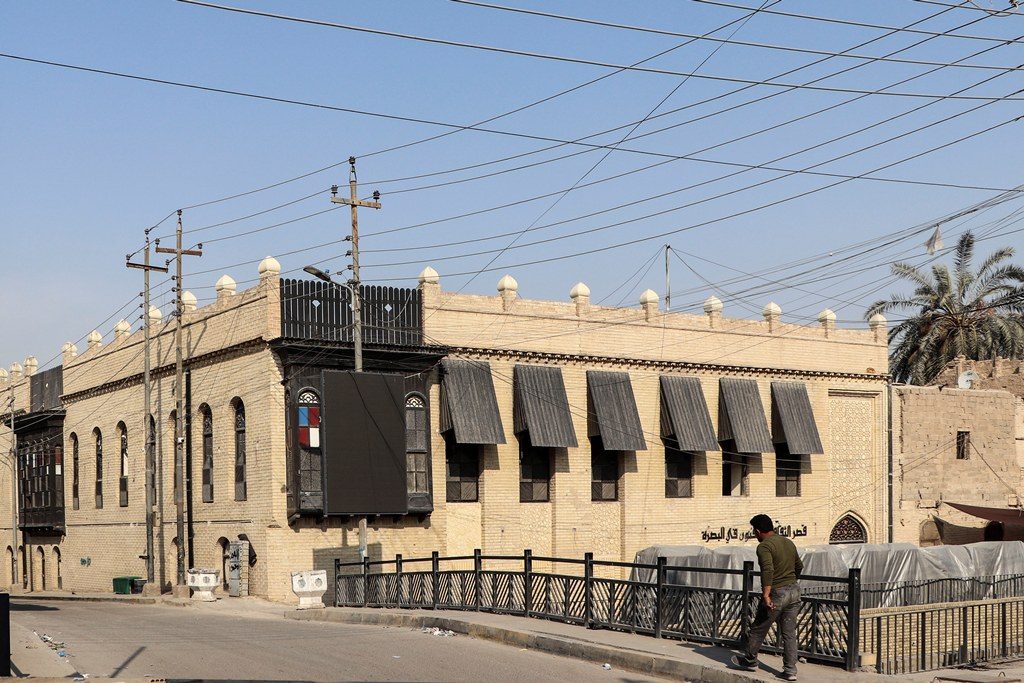
Last updated: June 6, 2026 — every fee, rule and route in this guide was re-checked against official sources and traveler reports this week. See our what to pack guide.
The first time I stood on a bridge over the Tigris at sunset, listening to the evening call to prayer roll across Baghdad, I remember thinking: nobody back home would believe how normal this feels. That gap — between what people imagine Iraq to be and what travelers actually find — is exactly why this guide exists.
Yes, you can travel to Iraq in 2026. Most Western and many Asian nationalities apply online for an e-visa (around $160, usually approved within days), fly into Baghdad, Basra or Najaf, and travel the country independently or with a guide. Iraqi Kurdistan runs its own, simpler visa system. It is not a trip for everyone — but it is a real, doable trip.
This is the complete picture: visas, the honest safety situation as of June 2026, money (Iraq runs on cash), transport, checkpoints, what to wear, where to go and what it all costs. It’s written for independent travelers and tour-joiners alike, whether you’re drawn by Babylon and Ur, the shrines of Karbala and Najaf, or simply by the question “what is Iraq actually like?”
In this guide: At a glance · Federal Iraq vs Kurdistan · Safety in 2026 · Visas · When to go · Getting there · Where to go · Getting around · Money · Checkpoints · Where to stay · Culture & dress · Food · Insurance · Itinerary · FAQ
Travel to Iraq at a glance
| Essential | The short version (June 2026) |
|---|---|
| Visa | E-visa via evisa.iq for ~37 nationalities, ~$160, single entry. Kurdistan has its own ~$70–80 visa |
| Currency | Iraqi dinar (IQD). Cash country — bring crisp US dollars; cards barely work |
| Daily budget | $45–65 independent backpacking; $150–300+ on organized tours |
| Best months | October–November and March–April. Summer is dangerously hot |
| Language | Arabic (Kurdish in the north). English is limited but goodwill is unlimited |
| SIM card | Zain or Asiacell, ~10,000–23,000 IQD for a tourist data bundle |
| Getting around | Shared taxis between cities, Careem/Baly in Baghdad, one night train, cheap domestic flights |
| Safety | US/UK advisories say don’t go; thousands of travelers go anyway and report warm, calm trips. Both things are true — read on |

One country, two systems: Federal Iraq vs Iraqi Kurdistan
The single most important thing to understand before you travel to Iraq is that you’re really choosing between two trips. Federal Iraq (Baghdad, the holy cities, Babylon, the marshes, Mosul) and the Kurdistan Region (Erbil, Sulaymaniyah, Duhok, the Zagros mountains) have separate visas, separate security forces, different dress norms and noticeably different rhythms. Here’s the comparison nobody puts in one place:
| Federal Iraq | Iraqi Kurdistan | |
|---|---|---|
| Visa | E-visa, ~$160, apply at evisa.iq | E-visa or on arrival, 100,000 IQD (~$70–80), visit.gov.krd |
| Valid in the other region? | Yes — the Federal visa covers all of Iraq | No — Kurdistan-only, and this is enforced |
| Arrival airports | Baghdad, Basra, Najaf | Erbil, Sulaymaniyah |
| Checkpoints | Frequent (think 40 in two weeks), passport checks routine | Lighter, Peshmerga-run, usually a wave-through |
| Dress code | Conservative; abaya required in Karbala/Najaf shrines and streets | Relaxed; jeans and t-shirts everywhere in Erbil |
| Alcohol | Licensed shops in Baghdad, absent in holy cities | Openly available, especially in Ankawa (Erbil) |
| Vibe | Intense, historic, deeply hospitable | Mountainous, easygoing, almost Mediterranean in spring |
If you want both on one trip, get the Federal e-visa — it’s valid everywhere. Just don’t plan to land in Erbil first on a Kurdish visa and continue to Baghdad: travelers report this is consistently refused at internal checkpoints, and the days of quietly slipping through via Mosul are over.
Is it safe to travel to Iraq right now? (June 2026, honestly)
I’m going to give you the version I’d give a friend, not the version that wins clicks.
The official position is blunt: the US State Department holds Iraq at Level 4 — Do Not Travel, and ordered non-emergency embassy staff out on March 2, 2026. The UK FCDO currently advises against travel to most of the country as well. Advisories like these mean your government’s ability to help you in a crisis is close to zero, and most standard travel insurance is void. Those are facts, and pretending otherwise would be doing you a disservice.
Here is the other set of facts. The February–March 2026 regional escalation between the US, Israel and Iran — which closed Iraqi airspace and rattled everyone — has cooled. A ceasefire has held since spring; the Civil Aviation Authority reopened Iraqi airspace and all commercial airports on April 8, 2026, and the airlines came back through May. On the ground, travelers who went in April and May 2026 describe the same Iraq travelers have described since 2021: long tea-fueled conversations, selfie requests, checkpoint soldiers more curious than suspicious, and zero moments of feeling targeted. Religious tourism never stopped — millions of pilgrims moved through Najaf and Karbala even in March.
My honest read for June 2026: central and southern Iraq (Baghdad, Karbala, Najaf, Hillah/Babylon, Nasiriyah, the marshes, Basra) are functioning normally for foreign visitors who behave sensibly. Kurdistan remains the calmest corner of the country. The places that stay off the table are the Syrian border strip, parts of Anbar (Ramadi and Fallujah need a local contact even now), rural Kirkuk–Hawija, and aimless wandering around Mosul’s hinterland — the city itself is open and rebuilding, but go informed.
Three honest caveats. First, the geopolitical situation is calmer, not resolved — airspace closed with hours’ notice in February and could again, so build slack into connections and don’t book tight onward flights. Second, “safe from terrorism” is not “safe from everything”: Iraqi driving is genuinely hair-raising and road accidents are the realistic top risk. Third, your insurance needs to actually cover Federal Iraq (more on that below).
If the safety question is the main thing standing between you and this trip, weigh the advisories against current traveler reports, decide like an adult, and — if you go — register with your embassy, share your itinerary with someone at home, and check the advisory page the week you fly. Travelling without a group changes the calculation, which we cover in solo travel in Iraq.
Iraq visas in 2026: how the e-visa actually works
Iraq scrapped its famous $77 visa-on-arrival on March 1, 2025. If you read a guide still telling you to bring cash for the airport visa desk, close the tab — it’s out of date, and half of page one still gets this wrong. Here’s the current system, as of June 2026 — and for the full border checklist rather than just the visa, we’ve broken down every one of Iraq’s entry requirements separately — plus a dated answer to whether Iraq is open to tourists right now.
The Federal Iraq e-visa, step by step
Citizens of roughly 37 countries — including the US, UK, EU states, Canada, Australia, Japan and most of the Gulf — apply online before flying:
- Apply only at evisa.iq — the official portal. Lookalike agency sites charge markups for nothing.
- Upload a passport scan (6+ months validity, one blank page) and a photo; fill in accommodation details — your first hotel’s name is fine.
- Pay by card. The standard tourist fee is about $160 including a small health-insurance charge, though travelers report totals from ~$115 to $165 depending on nationality. Frustratingly, some European cards get declined; if yours fails, try another card, a Wise/Revolut card, or a friend’s.
- Wait. Officially 6–72 hours for eligible (List A) nationalities. In practice, since the March 2026 security wobble, processing has slowed — the Interior Ministry denied rumors of a suspension, but recent applicants advise applying at least two weeks out.
- Print the approval. Airlines ask for it at check-in, and the immigration officer will want the paper. A phone screenshot sometimes works; paper always works.
The visa is single entry. Validity windows printed on approvals vary — most travelers report 60 days to use it, with a permitted stay of 30–60 days — so read your own document carefully rather than trusting any blog, including this one.
You can enter with the e-visa at Baghdad, Basra and Najaf airports, and at the major land borders with Jordan, Kuwait, Iran and Saudi Arabia. You cannot use it to enter via the Kurdistan Region’s airports and then continue south — enter Federal Iraq directly.
The Kurdistan visa
The Kurdistan Region runs a parallel system at visit.gov.krd. Eligible nationalities (broadly the same Western list) get a 30-day, Kurdistan-only visa for 100,000 IQD (about $70–80) — either as an e-visa in advance or on arrival at Erbil and Sulaymaniyah airports, where payment is now card only, no cash. It’s quick, friendly, and useless for Baghdad: it does not permit travel into Federal Iraq, full stop.
If your nationality isn’t on the list
Indian, Pakistani, Bangladeshi and most African passport holders (outside the pilgrimage system) currently need pre-arranged approval through an authorized Iraqi tour company — typically around $250 in fees plus a guided itinerary, taking up to a month. Pilgrims traveling for ziyarat have separate group-visa channels through licensed operators, especially around Arbaeen. Rules in this lane change often; get current advice from an operator before paying anyone.
Visa quick answers
| Question | Answer (June 2026) |
|---|---|
| Visa on arrival in Baghdad? | No — abolished March 2025. E-visa only |
| Federal e-visa valid in Kurdistan? | Yes, everywhere in Iraq |
| Kurdish visa valid in Baghdad? | No, and it’s enforced |
| Cost | ~$160 Federal; ~$70–80 Kurdistan |
| Processing | Days officially; allow 2 weeks currently |
| Entries | Single entry (Federal) |
| Same airport in and out? | Not required — fly into Baghdad, out of Basra, etc. |
When to go (and when really not to)
Iraq is a winter-half-of-the-year destination. The sweet spots are October–November and March–April: 18–30°C days, blue skies over the ruins, and the marshes green and full of birds. December–February is genuinely pleasant in the south (10–18°C, occasional rain) and cold in mountainous Kurdistan, which gets real snow — beautiful, if you pack for it.
Summer is the deal-breaker. From June through September, Baghdad and the south regularly hit 45–50°C. Sightseeing becomes a 6–9 am activity, power cuts strain hotel air conditioning, and the heat is a legitimate health risk. I’d only travel to Iraq in July or August for one reason: Arbaeen.
Three calendar items worth planning around. Ramadan (expected mid-February to mid-March in 2027): daytime cafés shutter and the pace slows — atmospheric, but logistics get harder and eating in public is disrespectful. Arbaeen (around mid-August in 2026): the largest annual gathering on earth, with 20+ million pilgrims walking Najaf to Karbala — transformative if you come for it deliberately, overwhelming if you stumble into it. Newroz (March 20–21): Kurdistan’s fire-lit new year, at its most photogenic in Akre.
Getting to Iraq: flights and land borders
By air
After the spring 2026 reopening, Baghdad International (BGW) is well connected again: Turkish Airlines from Istanbul (back since May 14), Qatar Airways via Doha (since May 10), Emirates and flydubai from Dubai, Royal Jordanian from Amman, Pegasus on the budget end, and Iraqi Airways running its full network — Istanbul, Amman, Dubai, Cairo, Delhi and more. A handful of carriers are still phasing routes back in through early July, so compare dates across airlines before assuming a route is dead. Najaf (NJF) is the pilgrim gateway with good Gulf and Iran connections; Basra (BSR) serves the south; Erbil (EBL) and Sulaymaniyah (ISU) cover Kurdistan.
One arrival warning: a long-running scam at Baghdad and Basra airports involves officials demanding a ~$50 “hotel booking” or “rebooking” fee in cash. It is not a real fee. Stay polite, ask for a receipt and a supervisor, and it tends to evaporate.
Arriving at Baghdad airport: the first 90 minutes
BGW deserves its own pep talk. Immigration is straightforward with your printed e-visa — expect fingerprints, a photo and a stamp, rarely more than a polite question about your hotel. Airside, ignore anyone offering to “fix” anything. Transport into the city is the only real puzzle: ride-hailing apps can’t pick up at the terminal, so either take the official taxi desk rate (~40,000–45,000 IQD into central Baghdad, fixed and safe), or ride the airport shuttle bus to the perimeter checkpoint (~8,000 IQD) and summon a Careem from there for 12,000–15,000. Anyone quoting more is improvising at your expense. Change $50 at the airport for the taxi and first chai, then do your real exchanging in town.
By land
- From Turkey — Ibrahim Khalil/Habur (for Kurdistan): the classic overland entry. Direct buses run Diyarbakır–Erbil (~$30, 8 hours) or cross independently via Silopi and Zakho. Kurdish visa rules apply.
- From Iran: several crossings work — Bashmaq (near Sulaymaniyah) and Haji Omaran for Kurdistan; Mehran and Shalamcheh for Federal Iraq, both heavily used by pilgrims. Have your e-visa printed.
- From Kuwait — Safwan: straightforward in 2026; a public bus links Kuwait City toward the border and a short shuttle (about 1 KD) connects the posts. Onward shared taxis to Basra.
- From Jordan — Trebil/Al-Karamah: open but slow, with long waits and occasional escort requirements through Anbar. Royal Jordanian also runs a direct Amman–Baghdad bus; many travelers simply fly this leg.
- From Saudi Arabia — Arar: open and e-visa-valid, mostly used during pilgrimage seasons.
- From Syria: closed to foreign travelers. Don’t.
Where to go: the places that justify the trip
Iraq’s density of significance is absurd — writing, cities, law codes and the wheel all trace back to the land between these two rivers. These are the stops that define a first trip, north to south.
Baghdad
Give the capital two or three days, not the nervous overnight most tours allow. Friday morning on Mutanabbi Street — the book market in full voice, chai in Shabandar Café among photos of old Baghdad — remains my favorite single experience in the country. Add the Iraq Museum (the original Mesopotamian treasures), the copper souk, Kadhimiya’s golden shrine, and grilled masgouf on Abu Nuwas street by the Tigris at night.

Karbala and Najaf, the holy cities
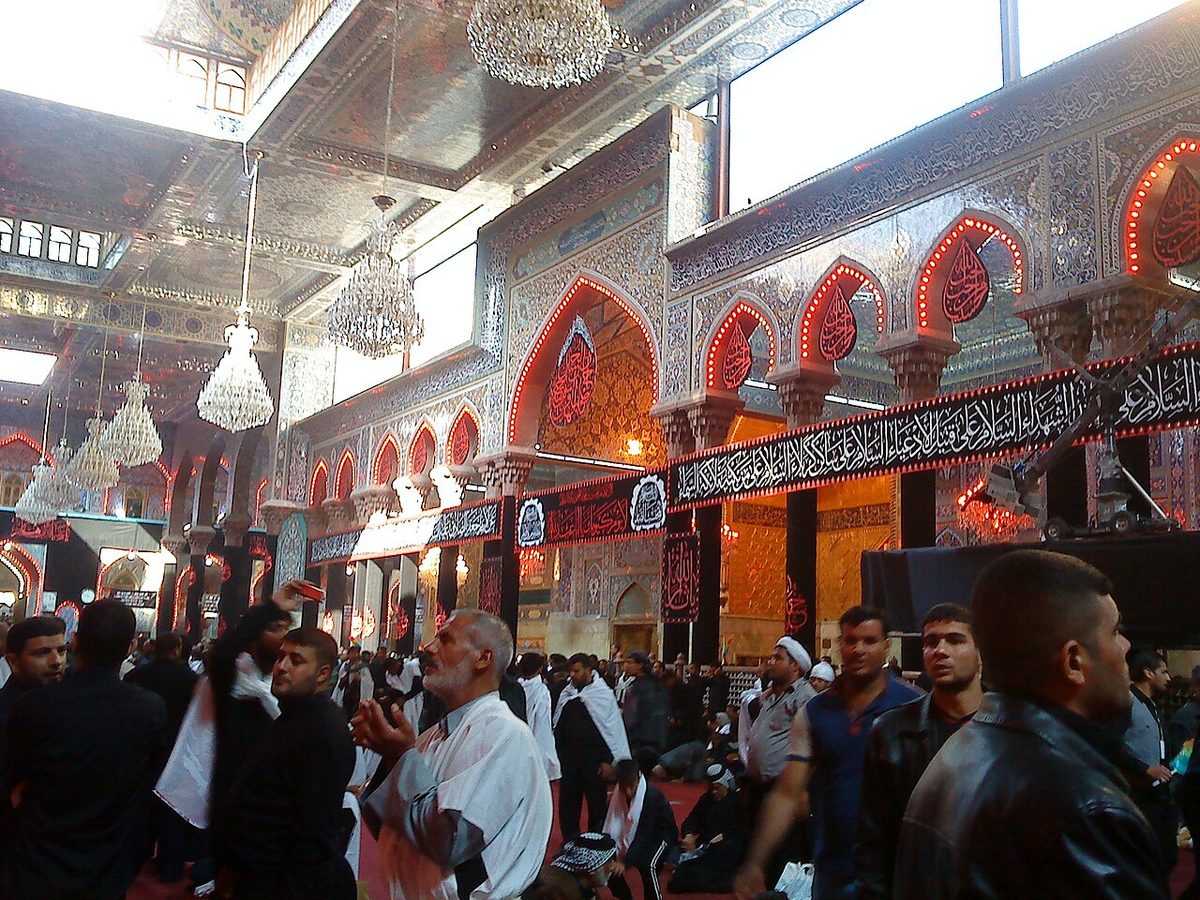
Even for non-Muslim visitors, the shrines of Imam Hussain and Imam Ali are staggering: golden domes, mirrored halls, and a tide of emotion that doesn’t translate to photographs. Non-Muslims are welcomed into the courtyards (and usually further) with remarkable openness; dress rules are absolute — abaya for women, long sleeves and trousers for men. Najaf’s Wadi al-Salam, the world’s largest cemetery, stretches to the horizon beside the old city.
Babylon and the cradle-of-civilization circuit
Ninety minutes south of Baghdad, Babylon is equal parts authentic ruin, Saddam-era reconstruction and hilltop palace folly — and somehow the combination works as a history lesson. Day-trip it from Baghdad or pair with Karbala. Further south, Ctesiphon’s colossal brick arch (the world’s largest) sits twenty minutes from the capital and gets a fraction of the visitors it deserves.
Ur, Uruk and the deep Sumerian south
The restored Great Ziggurat of Ur, near Nasiriyah, is the postcard of ancient Iraq — the great staircase Abraham’s hometown built for the moon god is fenced off these days to protect the brickwork, but stand at its foot and you’ll have all four thousand years of it nearly to yourself (entry 25,000 IQD, like most major sites). Uruk — the world’s first true city — is a sandier, lonelier detour for the committed.

The Mesopotamian Marshes
An hour east of Nasiriyah at Chibayish, you trade desert for a UNESCO-listed waterworld: narrow boats sliding between reeds, water buffalo swimming past, Marsh Arab villages on floating islands of woven rushes. An overnight in a mudhif (reed guesthouse) with dinner and a dawn boat run is the best $30–50 you’ll spend in Iraq. Go in spring when water levels and birdlife peak.

Samarra
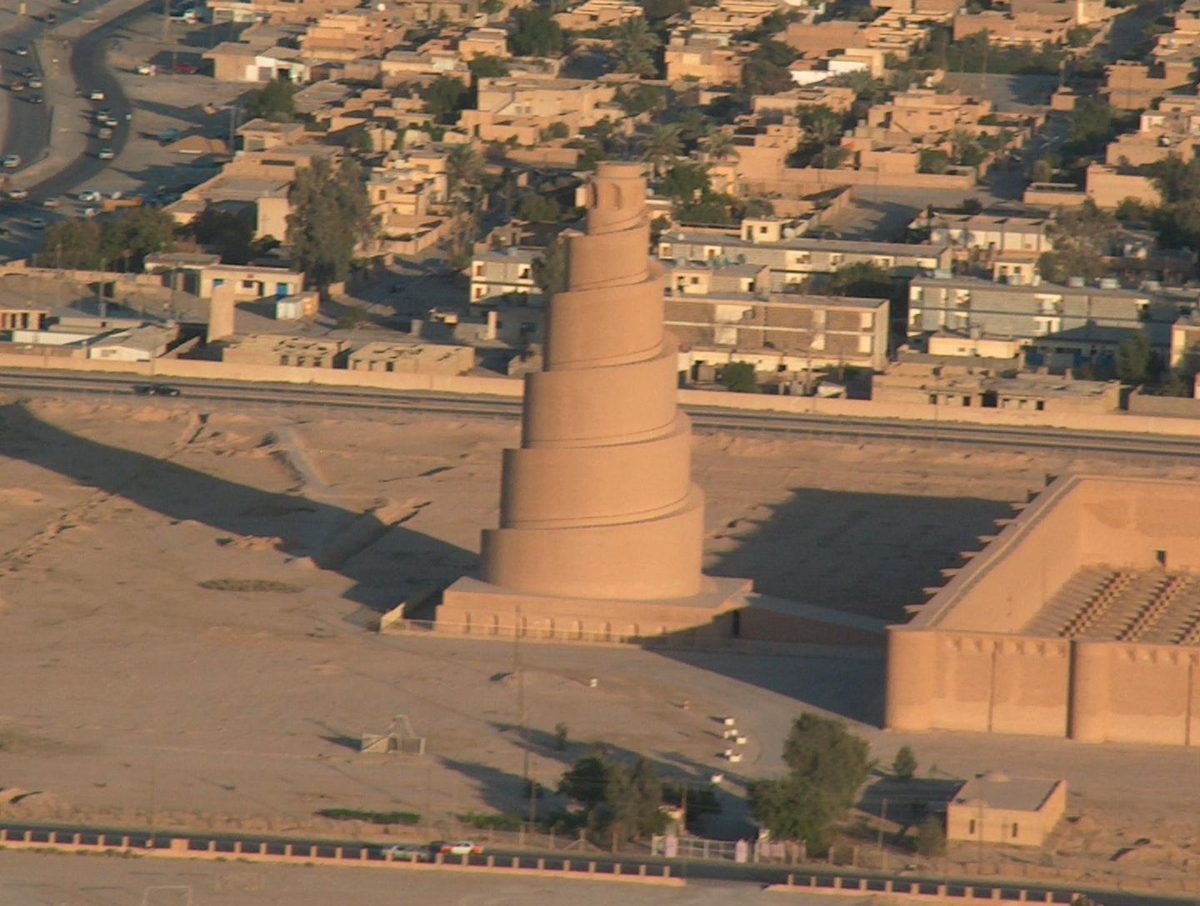
The 52-meter spiral Malwiya minaret is worth the strange logistics: foreigners currently can’t overnight in Samarra and must deposit passports at the entry checkpoint, visiting as a day trip (easiest from Baghdad). Climb early, before the heat and the crowds.
Mosul and the north
Mosul is the comeback story of this decade. The Old City’s wounds from the ISIS years are still visible, but the rebuilt al-Nouri mosque and its once-leaning al-Hadba minaret reopened in 2025, the souks hum again, and Moslawis greet visitors with an intensity of welcome I’ve not felt elsewhere. Pair with Nineveh’s Assyrian gates across the river, the mountain monastery of Mar Mattai, and Alqosh on the plain.
Iraqi Kurdistan
A different country in feel: Erbil’s 6,000-year-old citadel above a fountain square, Sulaymaniyah’s museums and café culture, the Hamilton Road threading the Zagros past Rawanduz canyon and the Gali Ali Beg waterfall, hilltop Amedi, sacred Lalish, and serious mountains for hikers. If Federal Iraq feels like a step too far this year, Kurdistan alone is a worthy, easier trip.

How to get around Iraq
There’s no Eurail pass and no Flixbus. What Iraq has instead is the garage — every city’s chaotic shared-taxi-and-minibus yard — plus one charming night train and dirt-cheap domestic flights. It all works better than it has any right to.
Shared taxis and minibuses
The backbone of independent travel in Iraq. Turn up at the garage, say your destination, and you’ll be pointed to a sedan or Kia minibus that leaves when full. Prices are fixed-ish and honest; the front seat costs a little more. Current benchmarks (per seat, June 2026):
| Route | Distance | Fare (IQD) |
|---|---|---|
| Baghdad → Karbala | 115 km | ~10,000 |
| Karbala → Najaf | 85 km | ~6,000–8,000 |
| Baghdad → Samarra | 130 km | ~15,000 |
| Najaf → Nasiriyah | 250 km | ~10,000–15,000 |
| Nasiriyah → Chibayish (marshes) | 90 km | ~5,000 |
| Baghdad → Mosul | 400 km | ~20,000–25,000 |
| Baghdad → Erbil | 365 km | ~30,000 |
| Mosul → Erbil | 90 km | ~10,000 |
The Baghdad–Basra night train
Iraq’s one passenger rail survivor is a minor adventure classic: departs Baghdad Central around 7 pm a few evenings a week, arrives Basra before dawn. Seats cost about 10,000 IQD, sleeper berths 25,000–50,000 depending on compartment. Buy at the station with your passport — recent travelers disagree on exactly which nights it runs, which tells you everything about Iraqi schedules: confirm in person a day ahead, and treat the tea seller’s 500-dinar chai as part of the fare.
City transport, apps and domestic flights
In Baghdad, Careem and local app Baly work well and kill the fare-haggling problem (a 5 km hop runs ~3,000–5,000 IQD). Elsewhere it’s street taxis and tuk-tuks — agree the price first, smile throughout. Iraqi Airways and FlyBaghdad connect Baghdad with Erbil, Basra and Najaf for $40–80, which beats a six-hour drive when summer bites. Car rental exists (Hertz at Baghdad’s Babylon Rotana from ~$39/day, Avis in Erbil) but you’ll need patience for checkpoints and a letter from the rental company; most travelers are happier hiring a car with a driver for $80–120/day.
Money: the cash-only reality
Iraq will reset your relationship with ATMs, because you’ll mostly pretend they don’t exist. Foreign Visa and Mastercard work only sporadically at a handful of bank ATMs, and card terminals in shops are a rumor. Bring your whole budget in cash US dollars — crisp, post-2013, $100 bills get the best rates — and change as you go at exchange shops (saraf), identifiable by the calculator-wielding men behind glass.
Know the two rates. The official rate has been fixed at 1,310 dinars to the dollar since 2023; the street rate in June 2026 floats meaningfully higher (recently in the 1,400s–1,500s and moving). Check the day’s parallel rate on arrival — your hotel will know it — and never change money at the airport beyond taxi fare.
What it all costs: a budget hotel double runs 25,000–40,000 IQD, a generous local dinner 6,000–12,000, street food 1,000–3,000, museum and site entries mostly 25,000 for foreigners, intercity hops under 30,000. Realistic independent budgets land at $45–65 per day solo, less per person as a pair. Organized tours run $150–300+ per day depending on group size and inclusions. Tipping isn’t expected in local eateries; round up with drivers and leave something for guides.
Checkpoints, passports and the practical quirks
Travel two weeks through the south and you’ll clear something like forty checkpoints. They are, overwhelmingly, friendly — a glance at the passport, a “Welcome to Iraq!”, sometimes a selfie request. Make their job easy: keep your passport and a printed visa approval reachable (not buried in a backpack), carry 4–5 paper photocopies to hand over when asked, dress tidily, and never photograph checkpoints, soldiers or government buildings. The complete document list — what the border wants and what you’ll be asked for inside the country — is in our guide to Iraq’s entry requirements, and the ground rules are collected in 25 Iraq travel tips.
A few special cases worth knowing. Samarra: passports are deposited at the checkpoint in exchange for a visitor card; no overnight stays for foreigners. Nasiriyah and Mosul: the old “sponsor” requirements have faded — solo travelers now pass with a phone call at most, though having your hotel’s number ready helps. Ramadi, Fallujah and Hit: still require a local contact; don’t freelance Anbar. Baghdad’s Green Zone monuments (the crossed-swords Victory Arch): require a permission letter arranged in advance — tour operators handle it routinely. Hotels everywhere photocopy your passport at check-in and may keep it overnight for police registration; that’s normal, ask for it back in the morning.
Where to stay (and how booking actually works)
Forget Booking.com reflexes — coverage is thin outside Baghdad and Erbil, and many of the best-value places live on WhatsApp, Facebook or a phone number a previous traveler passes you. Walking in works almost everywhere, even late; Iraqis rarely book ahead either. Expect simple but clean: powerful AC matters more than minibar ambitions.
| City | Budget benchmark | Comfort benchmark |
|---|---|---|
| Baghdad | Kasr Al Barakat, ~40,000 IQD | Uruk Hotel ~$70; Babylon Rotana for splash-out |
| Karbala | Pilgrim hotels from ~15,000–30,000 IQD | Baron Hotel, mid-range |
| Najaf | Old-city guesthouses ~20,000–30,000 IQD | Qasr al-Dur or similar, mid-range |
| Nasiriyah | Basic hotels ~30,000–50,000 IQD (standards dip here) | Marshes mudhif homestay, ~$30–50 with meals |
| Mosul | Simple hotels from ~25,000 IQD / $15 | New mid-range options opening yearly |
| Erbil | Center hostels/hotels ~25,000–40,000 IQD | Divan or Rotana, international standard |
Couchsurfing is unusually alive in Iraq, and the hospitality can be overwhelming in the best way — expect to be fed until surrender.
What to wear and how to behave
Iraq is conservative, religious and unfailingly courteous to guests — match the courtesy and you’ll be treated like visiting family. For men: long trousers everywhere (shorts read as underwear outside a gym), shirts with sleeves. For women: loose clothing covering shoulders and knees is right for Baghdad, Basra, Mosul and the south generally; a headscarf in your bag for mosques and shrines. In Karbala and Najaf the bar rises — a full abaya is required not just in the shrines but effectively on the street; buy one locally for ~15,000 IQD and consider it a souvenir with a job. Kurdistan swings the other way: Erbil’s café crowd dresses like Beirut’s.
The ground rules that earn smiles: accept the tea (the third refusal is the only one that counts — Iraq runs on a politeness ritual where “no, please, I insist” is a full conversation); ask before photographing people, and expect a yes plus an invitation to lunch; keep public displays of affection at zero; avoid commentary on politics and religion until you know your company; and learn ten words of Arabic — shukran (thanks), jameel (beautiful) and al-Iraq zain (Iraq is great) will carry you embarrassingly far.
Alcohol exists in a narrow lane: licensed shops and a few bars in Baghdad (mostly Christian districts) and freely in Erbil’s Ankawa quarter — and absolutely nothing in the holy cities. Drink discreetly, never publicly. Photography of people, souks and ruins is welcomed with enthusiasm; pointing a lens at anything in uniform, bridges or infrastructure is how cameras get inspected. Leave the drone at home unless you enjoy long conversations in police stations — permits exist but are genuinely hard to get.
What to eat your first week in Iraq
Iraqi food is the cuisine nobody warned you about — Levantine warmth crossed with Persian rice worship and five thousand years of river fish. Start with masgouf, the national dish: a whole carp butterflied and staked beside an open fire for an hour, lacquered with tamarind and turmeric, eaten by the Tigris with raw onion and flatbread. Baghdad’s Abu Nuwas street does the ceremonial version; order before you’re hungry, it takes its time.
Breakfast is the quiet masterpiece: kahi and geymar — flaky, syrup-soaked pastry under a slab of buffalo-cream so dense it slices — is what Iraqis queue for at 7 am, and the marshes’ buffalo herds exist substantially to produce it. Through the day you’ll meet kubba in a dozen forms (the Mosul disc is its own religion), quzi (lamb collapsed over spiced rice), tashreeb (bread drowned in rich broth, the national comfort food), dolma claimed by every grandmother as hers, and falafel-and-amba sandwiches for 1,000 dinars that outperform restaurants at twenty times the price. Trust the busy stalls.
And the chai. Tea in Iraq is not a beverage, it’s a social contract — small glass, heroic sugar, served before you’ve said why you came, refilled until you wedge the glass with the spoon to signal surrender. Budget three a day minimum; refusing the first one is barely legal.
SIM cards, internet and staying in touch
Buy a local SIM on day one — it makes checkpoints, Careem and hotel-finding frictionless. Zain has the best overall tourist experience (airport kiosks at Baghdad; ~10,000 IQD for a starter data bundle, ~23,000 for 10 GB), Asiacell matches it with the strongest southern coverage, and Korek only makes sense if you’re staying in Kurdistan. Bring your passport for registration. Hotel Wi-Fi exists and wobbles; 4G is faster almost everywhere. If you want data the moment you land, an Airalo or Saily eSIM works in Iraq at roughly triple the local price per gigabyte — fine as a bridge, silly as a strategy. Operators, real prices, the passport registration rules and the days Iraq switches the national internet off are all covered in our guide to SIM cards and internet in Iraq.
Five downloads before you fly: Careem and Baly (Baghdad ride-hailing), Maps.me or organic maps with Iraq saved offline (Google Maps is patchy on small towns), Google Translate with offline Arabic and the camera function for menus, and WhatsApp — which is how every hotel, guide, driver and new friend in Iraq will want to talk to you, forever.
Health, water and insurance
Routine sense applies: drink bottled or filtered water (tap water is a no), ease into street food (it’s glorious — start with the grilled things), and treat the summer sun as a hazard with a body count. Pharmacies are everywhere and well stocked; serious medical care is limited outside Baghdad and Erbil, which is exactly why insurance matters.
Here’s the catch nobody puts in bold: most standard travel policies are void in Federal Iraq because of the Level 4 advisory. You need a policy that explicitly covers it — IATI’s Backpacker policy is the long-standing option among Iraq travelers (with mixed claim reviews, to be candid), SafetyWing covers some scenarios, and high-risk specialists like battleface fill the gaps. Read the exclusions yourself, confirm medical evacuation is included, and don’t board the plane on a policy that quietly excludes “countries under do-not-travel advisories.” Kurdistan-only trips are easier to insure. We go through the exclusions clause by clause, and the questions worth putting to an insurer before you pay, in our guide to travel insurance for Iraq.
A first-trip itinerary that works
With 7–10 days you can do the classic southern loop without sprinting: two or three days in Baghdad (Mutanabbi Friday non-negotiable), a day for Babylon and Ctesiphon, two days for Karbala and Najaf, then south to Nasiriyah for Ur and a marshes overnight in Chibayish, returning via Baghdad — or pushing on to Basra and flying out from there. With two weeks, add Samarra as a Baghdad day trip, two days in Mosul and the Nineveh plains, and exit through Kurdistan: Erbil, the Hamilton Road, Sulaymaniyah. Under a week? Baghdad plus Babylon plus Karbala/Najaf, and promise yourself the rest.
Do you need a tour? (The honest answer)
Need? No. Iraq is fully doable independently in 2026 — this guide is the proof of concept, and the garage system, Careem and Iraqi hospitality will carry you. But it’s not the lazy option: checkpoints are smoother with Arabic, logistics eat time, and a knowledgeable guide transforms sites like Babylon from “atmospheric bricks” into the actual story of civilization. The honest matrix: confident overlanders thrive solo; first-timers with limited days get real value from a local guide for the historical circuit ($80–150/day including car) or a small-group tour for the whole loop. Iraqi operators are easy to find and vet through the Iraqi Travelers Café community — talk to two or three before wiring anyone money. We compare operators, costs and what a guide actually buys you in our guide to Iraq tours.
Travel to Iraq: your questions, answered
Is Iraq open to tourists right now?
Yes. As of June 2026, airspace and all commercial airports are open (reopened April 8 after the spring ceasefire), e-visas are being issued — currently with slower processing, so apply two weeks ahead — and tourists are moving normally through Baghdad, the holy cities, the south and Kurdistan.
Can Americans travel to Iraq?
Yes — US citizens are on the e-visa eligibility list and travel here every month. Be aware the State Department holds Iraq at Level 4 (Do Not Travel), which voids many insurance policies and means minimal consular help. Americans report the same warm welcome as everyone else; “Obama! Trump! Welcome!” is checkpoint small talk, not hostility.
How much does the Iraq visa cost?
Budget around $160 for the Federal e-visa including its health-insurance component — travelers report charges between roughly $115 and $165 by nationality. The Kurdistan-only visa costs 100,000 IQD (about $70–80), paid by card. Anyone quoting you visa-on-arrival prices for Baghdad is reading 2024 information.
Can I visit Baghdad with a Kurdistan visa?
No. The Kurdish visa is valid only inside the Kurdistan Region, and internal checkpoints enforce it — travelers attempting the Erbil-to-Baghdad continuation get turned around. If you want the whole country, get the Federal e-visa, which covers Kurdistan too.
Do credit cards or ATMs work in Iraq?
Mostly no. A few bank ATMs in Baghdad and Erbil accept foreign cards unreliably; shops and hotels are cash-first. Bring your full budget in clean US$100 bills and exchange at street-level money changers, where rates beat the official 1,310/dollar peg meaningfully in 2026.
How many days do you need in Iraq?
Seven to ten days covers the classic Baghdad–Babylon–Karbala–Najaf–Ur–marshes loop at a human pace. Two weeks adds Samarra, Mosul and a Kurdistan exit. A long weekend works for Baghdad plus Babylon, or for Erbil and the mountains — but Iraq rewards slowness; everyone leaves wishing they’d added days.
Is Iraq safe for solo female travelers?
Many women travel Iraq solo and report intense hospitality, constant tea, and less street harassment than in several more touristed countries — alongside extra staring and the occasional clumsy question. Dressing conservatively (abaya in the holy cities), sitting with women on transport, and projecting confidence smooth the road. It’s a “manageable with awareness” destination, not a beginner one.
Will visiting Iraq affect future travel to the US?
If you’re from a Visa Waiver country (UK, EU, Australia, Japan, etc.), a trip to Iraq ends your ESTA eligibility under US law — you’ll need a standard B1/B2 visa interview for future US trips. Factor in the embassy appointment time. US green-card holders and citizens are unaffected.
Can you drink alcohol in Iraq?
Legally, in places: licensed liquor stores and a handful of bars operate in Baghdad and Basra, and Erbil’s Ankawa district pours openly. The holy cities of Karbala, Najaf and Kadhimiya are completely dry, and public drinking anywhere is deeply disrespectful. Buy discreetly, consume privately, skip it during Ramadan.
Independent travel or organized tour — which is better for Iraq?
Independent travel works well if you have time, patience and overlanding experience: transport is cheap, locals fill every gap, and 2026’s checkpoint culture is relaxed. Choose a tour or local guide if your days are few, you want the deep history told properly, or Anbar-region sites and Green Zone permits are on your list.
What is the best month to visit Iraq?
November, by a nose. The summer furnace has fully broken, the light is golden over the ruins, marsh water levels are recovering and daytime highs sit near 25°C. March and April tie it for greenery and Newroz in Kurdistan; October works if you stay south. Avoid June through September unless Arbaeen is your purpose.
Do you need permits for Babylon, Ur or the marshes?
No — these are regular ticketed sites now (mostly 25,000 IQD for foreigners) with no advance paperwork. Permits only enter the picture for Baghdad’s Green Zone monuments, drone flying, and Anbar-region sites like Ramadi and Fallujah, which need arranged local contacts. Samarra requires no permit but holds your passport during the visit.
Final thoughts: the gap between headlines and ground truth
Every traveler I know who has been to Iraq describes the same arc: weeks of nerves before the flight, then a fortnight of being adopted by strangers, and finally the strange grief of leaving a place everyone at home still thinks is a war zone. The headlines aren’t lying — the advisories, the regional volatility and the checkpoints are all real. They’re just not the whole truth. The whole truth includes Friday mornings on Mutanabbi Street, dawn over the ziggurat your species’ first cities built, tea forced on you at gunpoint-of-hospitality, and the world’s warmest answer to “why did you come here?”
Iraq asks more preparation of you than Jordan or Turkey ever will. (This guide is the first stone of Iraq Tourism Guide — deep dives into every city, site and practicality named above are publishing daily.) It pays it back with interest. Start with the e-visa, pack the $100 bills and the long trousers, and go see the place where everything began — before the rest of the world reads past the headlines too.
Photo credits
All images via Wikimedia Commons: Ali Kareem Yousif (CC BY-SA 4.0); Alli Khalil (CC BY-SA 4.0); Imam Hussein Shrine media office (CC BY 4.0); Jim Gordon (CC BY 2.0); Michael Lubinski (CC BY-SA 2.0); Mondalawy (CC BY-SA 4.0); Samir Al-Ibrahem (CC BY-SA 4.0). Full attribution and source links available on request.