Where to stay in Iraq comes down to a handful of cities and a few good neighborhoods in each. Erbil is the easiest soft landing, Baghdad has the most choice, and Najaf and Karbala are built around their shrines. Standards range from polished international five-stars to bare-bones pilgrim hotels, and — crucially — booking here works differently than almost anywhere else.
I’ll be honest with you up front: accommodation is the part of an Iraq trip that surprises first-timers most, and not always pleasantly. You can’t just open one app, sort by rating and trust what you see — the online coverage is patchy, the prices you’re quoted in dollars are often not the prices locals pay, and the gap between a “five-star” sign and what’s behind it can be wide. But once you understand how the system actually works, staying in Iraq is easy, cheap by regional standards, and full of the kind of hospitality that turns a hotel breakfast into a forty-minute conversation.
This is the accommodation hub of our complete Iraq travel guide, and I’ve written it as the thing I wish someone had handed me before my first night in Baghdad: a real, opinionated walk through where to stay in every city worth staying in, what the hotels are actually like, what they cost in mid-2026, and how to book them without overpaying or getting caught out. We’ll go city by city and neighborhood by neighborhood, then break it down by budget — luxury, mid-range, backpacker — and cover the genuinely special places to sleep, from a reed guesthouse in the marshes to a cable-car resort in the Kurdish mountains.
Where to stay in Iraq at a glance
If you only read one section, read this. Here’s the orientation I give friends before they book anything — the cities, the vibe, who each suits, and what a decent room actually costs per night.
| City / area | Best for | Vibe | Typical room (mid-range) |
|---|---|---|---|
| Erbil (Kurdistan) | First-timers, comfort, nightlife, families | Safe, modern, relaxed; chains and bars | $60–120 |
| Sulaymaniyah (Kurdistan) | Culture, mountains, easygoing city breaks | Liberal, green, cooler in summer | $50–110 |
| Duhok (Kurdistan) | Northern road trips, Lalish, Amedi | Small, laid-back mountain town | $45–90 |
| Baghdad | History, the capital, the most choice | Big, intense, improving fast | $70–150 |
| Najaf | Pilgrimage, the Imam Ali shrine | Devout, busy, hotel-dense | $40–90 |
| Karbala | Pilgrimage, the Imam Husayn shrine | Devout, intense at peak, hotel-dense | $50–110 |
| Basra | The south, oil business, Shatt al-Arab | Hot, sprawling, fewer tourists | $60–130 |
| Mosul / Nasiriyah | Specific sights (recovering) | Basic, limited, for a night or two | $15–50 |
A few honest framing notes before we dive in. Prices are in US dollars because that’s how foreigners are usually quoted and how the booking sites display, but Iraq runs on cash dinars — more on that, and how it can save you money, below. The dollar figures here are mid-2026 ballparks for a clean double room; treat them as “expect roughly this,” not gospel, and always confirm the current rate. And the single most important thing to internalize: where you can comfortably stay maps closely onto where it’s sensible to travel. Governments still advise against all travel to Iraq (more in our honest safety guide), the Kurdistan Region is the easiest and most developed for visitors, and your accommodation choices follow from that reality.
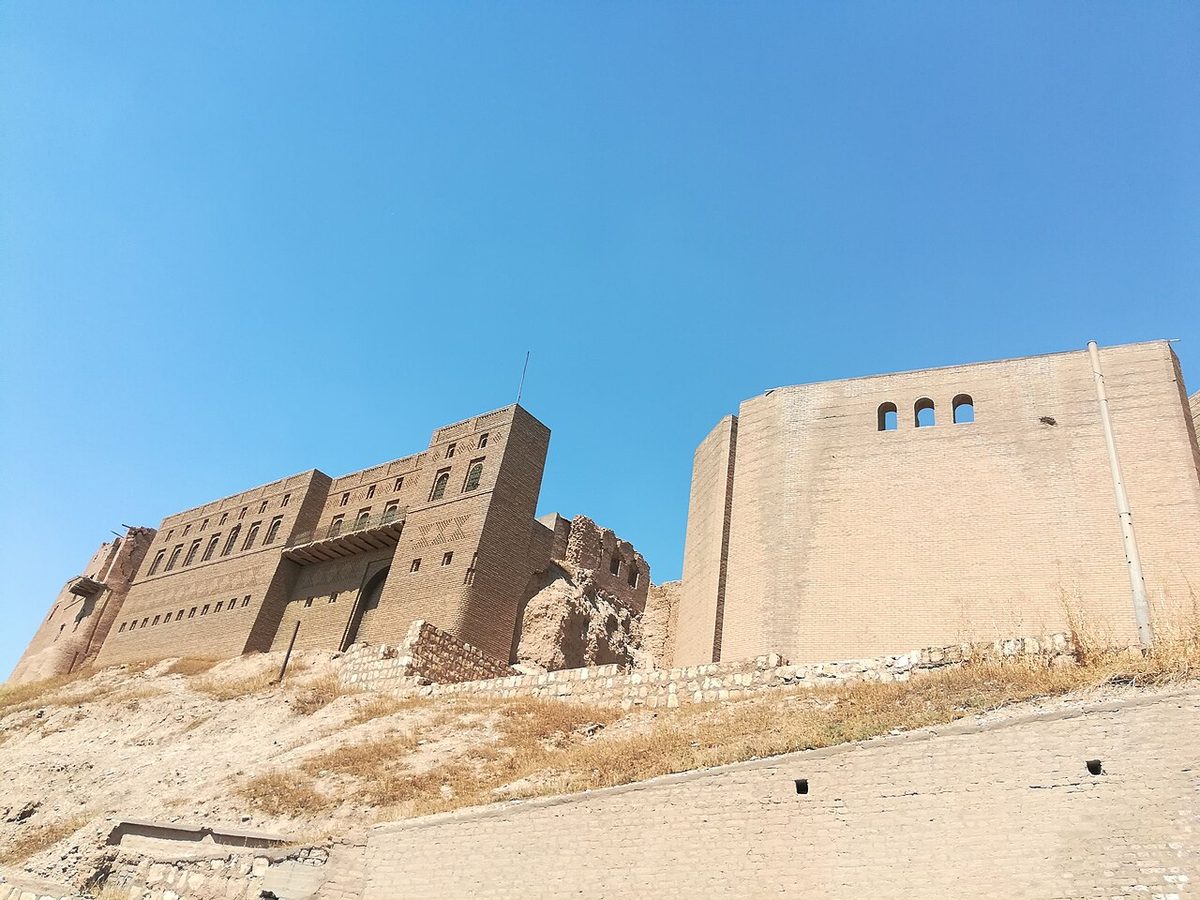
How booking a hotel in Iraq actually works (it’s not Booking.com)
This is the section that will save you the most money and hassle, so don’t skip it. Booking accommodation in Iraq is genuinely different from booking in, say, Jordan or Turkey, and the guides that just list five-star hotels quietly skip the part where you find out half the country’s hotels aren’t online at all.
The online booking reality: thin and skewed
Here’s the truth as of 2026. Yes, the big platforms technically cover Iraq now — Booking.com lists a couple of hundred Iraqi properties, Agoda and Expedia show the major cities, and Airbnb has real, active listings in Baghdad, Erbil and across Kurdistan. So the old traveler wisdom that “Iraq isn’t on Booking.com” is out of date. But the coverage is thin and badly skewed: what you’ll find online is overwhelmingly the business hotels, the international chains and the pricier end of each city. A huge share of the country’s actual hotels — the clean, cheap, family-run places, the pilgrim hotels in Najaf and Karbala, almost anything in a smaller town — simply isn’t listed anywhere, or appears with no prices, no photos and a phone number.
So the workflow that actually works is a three-app stack:
- Google Maps is your real hotel directory. Search the city, scan the pins, read the (often sparse) reviews, and note the names and phone numbers. Far more hotels live on Maps than on any booking site.
- WhatsApp is the booking engine. Most Iraqi hotels take reservations by phone or WhatsApp, often with a quick voice note or a “do you have a room tomorrow?” text. It’s normal, it’s how locals do it, and — this is the key — the WhatsApp price is usually lower than the walk-in or online price. A translation app bridges the language gap.
- Booking.com / Agoda for the chains and peace of mind. For the four- and five-stars, or for your very first night when you just want it sorted before you land, the platforms are fine and sometimes price-competitive. Use them where they exist; don’t expect them to show you everything.
One reassuring point: you almost never need to book far ahead outside of pilgrimage peaks. Plenty of independent travelers turn up in Baghdad at 1am with nothing reserved and walk into a hotel without drama. I still like having my first night booked, but after that, winging it city to city is completely normal here.
Cash, dollars and the dual-pricing trap
Iraq is a cash economy, and hotels are where this bites first. Outside the top international hotels (which take cards, usually with a fee), you pay in cash — and you’ll be quoted in either US dollars or Iraqi dinars depending on who’s asking. Here’s the money-saver almost no one tells you: prices quoted to foreigners in dollars are frequently marked up, and asking to pay the same room in dinars often gets you the local rate. Carry clean, newer US dollars for the big hotels and a stack of dinar for everywhere else, and when a budget or mid-range place quotes you a dollar figure, ask “how much in dinars?” — it can quietly knock 15–25% off.
For context, in mid-2026 the dinar trades around 1,300 to the dollar at the official rate but closer to 1,540 on the street, and that gap is exactly why paying in the local currency, at the local rate, matters. Get your cash strategy straight before you arrive — our Iraq travel cost guide covers exchanging money, ATMs (unreliable for foreign cards) and daily budgets in detail.
Your passport, check-in and the registration rules
Every hotel in Iraq will take your passport at check-in — not a photocopy, the actual document — and either hold it briefly to log your details or photograph the relevant pages. This isn’t a scam or a red flag; under Iraq’s long-standing residence law, hotels are legally required to report their foreign guests to the local Residence Office, so it’s completely routine. You’ll get it straight back. Always travel with your passport anyway, because you’ll show it constantly at the checkpoints between cities (see our getting around Iraq guide).
For most tourists on a short visit, that hotel reporting is the only “registration” you’ll ever deal with — you personally don’t have to do anything. If you’re staying longer, the rules get stricter: visitors who remain in Iraq beyond 10 days are generally expected to obtain a (free) residency or exit stamp from the Residency Office, and there can be a small fine for skipping it on the way out. Thresholds and enforcement vary and change, so if you’re planning a long stay, confirm the current rule when you get your visa — our Iraq visa guide has the latest.
One sensitive point travelers ask about: unmarried couples sharing a room. In Iraqi Kurdistan and at business-class hotels this is rarely an issue. In conservative Federal Iraq — especially budget hotels in the south and the holy cities — some places are stricter, and you may occasionally be asked about your relationship. Policies are inconsistent and foreigners are usually given latitude; if it might come up, a wedding ring and a low-key manner smooth things over, and Kurdistan is always the relaxed option.
What to actually expect from an Iraqi hotel room
Manage your expectations by tier and you’ll be happy. A few realities that cut across the whole country:
- Power cuts are constant, and hotels run generators. Iraq’s grid still fails daily, so every functioning hotel has a generator — but cheaper places may have a gap of a minute or several when the mains drop before the generator kicks in, and the very cheapest switch the generator off overnight. If reliable air-conditioning matters (it does, in a Basra or Baghdad summer), ask specifically about 24-hour power.
- “Five stars” is a self-applied sticker. Star ratings in Iraq are not regulated the way you’re used to. A hotel calling itself five-star may be a genuine Rotana or a tired three-star with ambition. Judge by recent photos, reviews and price, not the sign over the door.
- Budget rooms can be very basic. At the cheap end, don’t count on towels, toilet paper, reliable hot water or fresh linen — backpackers regularly report rooms with no towel and no window. Pack a quick-dry towel and a roll of toilet paper and you’ll never be caught out.
- Wi-Fi exists but wobbles. Most hotels advertise Wi-Fi; it’s often slow and drops with the power. A local eSIM or SIM is your real connection — again, see the transport and logistics guide.
- Little things: you’ll often find drinking water bottles in the fridge or hallway, slip-on bathroom shoes by the door, and a prayer mat and qibla arrow in the room. Upmarket hotels in Erbil and Baghdad have full security — gated entries, bag scanners, under-car mirror checks, sometimes sniffer dogs. It looks intense; it’s standard and reassuring, not a sign of danger.
The best hotels in Iraq, city by city
Now the heart of it. Below I go through every city you’re realistically likely to sleep in, with the neighborhoods that make sense, specific hotels across the price range, and my honest read on each. I’ve grouped hotels into luxury (international standard, $150+), mid-range (comfortable, reliable, roughly $50–150) and budget (basic but functional, under $50). Names and prices are mid-2026 snapshots — confirm before you book.
Where to stay in Baghdad

Baghdad has more hotels than anywhere else in Iraq — locals will tell you “around 500” — but they’re spread across a sprawling, traffic-choked city split by the Tigris into Karkh (west bank) and Rusafa (east bank). Where you stay shapes your whole experience, so pick your neighborhood first, hotel second. Our dedicated things to do in Baghdad guide maps the sights; here’s where to base yourself.
Karrada (Karada) is my default recommendation for first-time visitors. It’s a relatively lively, relatively safe central district on the Rusafa side, packed with restaurants, cafés, shops and the buzzing Arasat dining street, and it’s walkable in a way most of Baghdad isn’t. Jadriya, just south, curls along the river by the university and holds several of the city’s better hotels with Tigris views. Mansour, on the west side, is the upscale, leafy, old-money district — good restaurants, a more residential calm. The riverfront Abu Nuwas strip on the east bank is the classic, atmospheric Baghdad address (and home to the masgouf grills you’ll read about in our Iraqi food guide). And the heavily fortified International Zone (Green Zone) holds a couple of diplomat-grade hotels at diplomat-grade prices — secure but sterile, and not where I’d choose to actually experience the city.
Luxury. The standout is the Babylon Rotana, a genuine international five-star on the Jadriya riverbank with Tigris views, a pool and the city’s most reliable standards — expect somewhere around $250–400 a night. The Mövenpick Hotel Al Zaytoon brought a polished new five-star (rooms, suites and serviced apartments) to the secure central zone. The Cristal Grand Ishtar — the towering former Sheraton on Firdos Square, Baghdad’s most famous hotel — is a landmark with a faded-grand feel and a great central location. Royal Tulip Al Rasheed is the historic Green Zone option.
Mid-range. This is the sweet spot in Baghdad and the tier improving fastest. Coral Boutique and Coral Palace hotels in Jadriya are reliable business-class picks (the Coral runs around $200+ and is the corporate favorite). The Taj / Taj Unique hotels (Jadriya and Arasat) are modern and comfortable in the $120–160 band. Noor Land (Noorland) on Karrada’s Arasat Street is a stylish design-led option around $120–160. Ur Plaza near Liberation Square and Baghdad Do Hotel are solid family-friendly mid-rangers. Reckon on roughly $100–150 for a good four-star double, $103 average for three-star and $147 for four-star across the city.
Budget. Cheap Baghdad hotels cluster in the older central districts (Rusafa, near Tahrir/Liberation Square, the Sadoun/Abu Nuwas area). Places like Kasr Al Barakat go for around 40,000 dinars (roughly $30) for a basic but central double; independent travelers report comfortable-enough budget hotels from about 60,000 dinars. Expect simple rooms, variable hot water and that generator gap — fine for a night, and unbeatable for the price. There’s no real backpacker hostel scene in Baghdad (more on that below), so a budget hotel is your cheapest bet.
Where to stay in Erbil
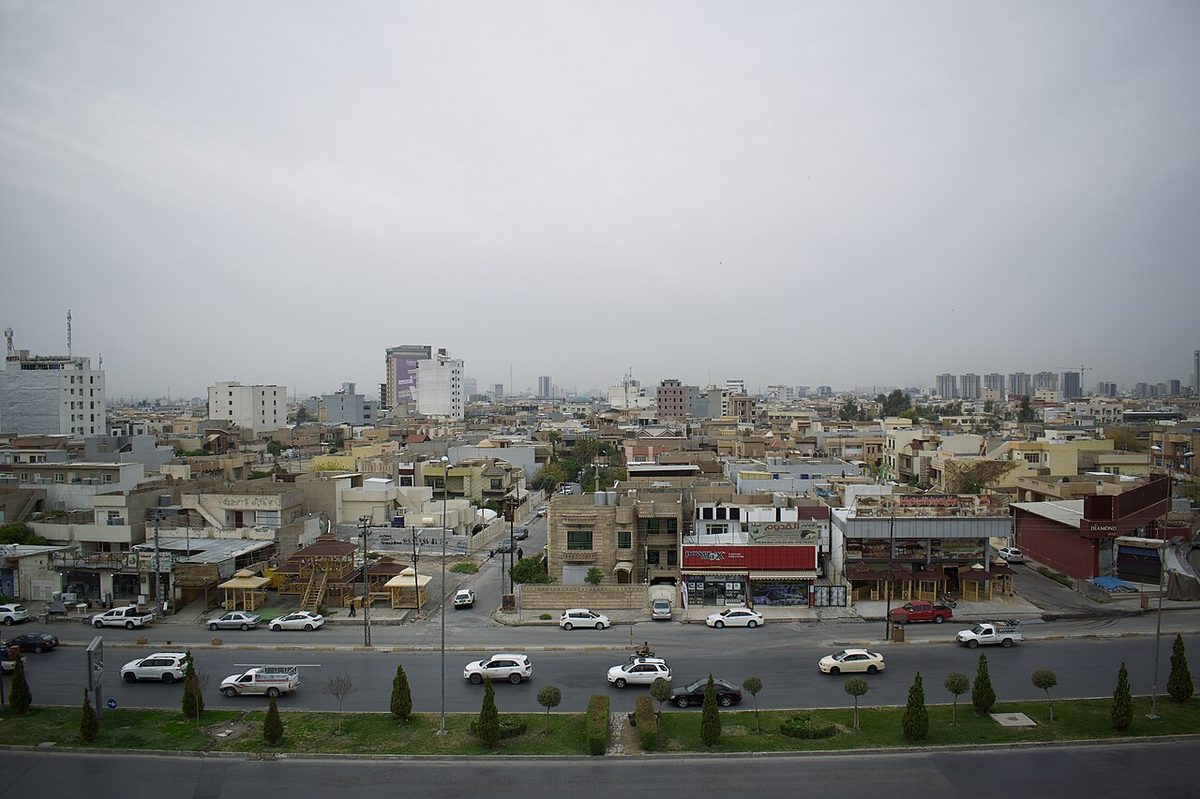
If it’s your first trip to Iraq, Erbil (Hawler) is where I’d tell you to start and probably to base yourself longest. The capital of Iraqi Kurdistan is safe, modern, relaxed and used to foreign visitors, with the best concentration of genuinely good hotels in the country and a nightlife (bars, big restaurants) you won’t find down south. The catch: Erbil sprawls and isn’t pedestrian-friendly, so you’ll lean on Careem and taxis — choose your area for proximity to what you came for.
The Citadel & Grand Bazaar is the historic heart, ringed around the UNESCO-listed citadel mound, with the bazaar, tea houses and the city’s most atmospheric streets at your doorstep — the most characterful base, with hotels from budget to mid. Empire World (the gleaming towers near 100-Meter Street and Gulan Street, half-jokingly called Erbil’s “little Dubai”) is the modern, polished district where the international five-stars cluster, with the malls, cafés and English-friendly restaurants. Ankawa (Ainkawa), the historically Christian quarter in the north, is the relaxed, cosmopolitan zone where the bars and liquor stores are, near several consulates — handy if you want a drink with dinner. Dream City is an upscale gated area with its own restaurant-and-bar strip.
Luxury. Erbil has the real thing. Erbil Rotana (near Sami Abdulrahman Park) and Divan Erbil are the two heavyweight five-stars — pools, gyms, spas, the lot — typically running $145–200 (Rotana) and somewhat more for the Divan, with the Divan’s 24th-floor views a highlight. The Radisson Blu Hotel & Residences at the World Trade Center is newer, slick and consistently the highest-rated in town (often $150–190). Erbil International Hotel (a tall older landmark with an outdoor pool) and the city’s other chain residences round out the top tier.
Mid-range. Lots of strong choices in the $50–120 band. Classy Hotel in Ankawa (around $65) is a reliable favorite. The various Arjaan by Rotana, Dedeman (from about $80), Tangram and similar business hotels give you four-star comfort without the five-star bill. For groups or longer stays, the serviced-apartment residences around Empire World are excellent value (kitchen, space, more on apartments below).
Budget. Erbil is also the best place in Iraq to travel cheaply. Around the Citadel and bazaar you’ll find simple hotels from roughly $25–40, and the Bikhal Hotel has long been the closest thing Erbil has to a backpacker hostel, with cheap beds around $10–15 and a travelers’ crowd. A handful of actual dorm-style hostels have appeared in the city in the last few years — Erbil and Sulaymaniyah are the only two places in Iraq where you’ll reliably find them. Just check recent reviews; the cheapest places skimp on towels and linen.
Where to stay in Sulaymaniyah & Duhok
The other two Kurdish cities are easy, friendly places to stay and often overlooked. Sulaymaniyah (Slemani) is Kurdistan’s cultural capital — greener, cooler in summer, famously liberal and arty — and it has a genuinely good hotel spread. At the top, the Grand Millennium Sulaimani and the Millennium Kurdistan Hotel & Spa are the polished five-stars (roughly $80–130 with spa and pool), the Copthorne Hotel Baranan and Ramada cover reliable four-star comfort, and the bazaar area has plenty of clean mid-range and budget hotels from $30–60. Base yourself near Salim Street or the bazaar for the cafés, museums and walkability.
Duhok, tucked in the mountains in the far north, is smaller and quieter — most people stay a night here as a base for Lalish, Amedi (Amadiya), the Zakho bridge or the road into the Barzan highlands. It’s not a deep hotel market, but there are comfortable options: the modern five-star-styled DDK Collection Hotel, a Coral Hotel Duhok with a pool and family facilities, and a range of mid-range and budget places in town from about $40–90. Duhok is your launchpad for the northwest more than a destination in itself, and a night or two is plenty.
Where to stay in Basra & the south

Down in the steamy far south, Basra is Iraq’s port and oil capital, strung along the Shatt al-Arab waterway. It sees more oil-industry business travelers than tourists, which shapes the hotel scene: a few genuine international-standard hotels at business prices, then a steep drop to basic. The flagship is the Grand Millennium Al Seef Basra, a waterfront five-star with indoor and outdoor pools, and the city also has a long-running Mövenpick-branded luxury property; expect $100–180 at this tier. Mid-range business hotels (the Manawi Pasha area, various four-stars) run $60–130, and budget options exist but are best vetted in person. Stay along or near the corniche for the river breeze and the evening promenade.
Elsewhere in the south you’re firmly in basic-hotel territory, and that’s part of the adventure. In Nasiriyah — the base for visiting the ziggurat and ruins of Ur, covered in our ancient Mesopotamia guide — simple hotels run roughly 30,000–50,000 dinars ($20–40), functional and no more. The Basra and southern cities will eventually get their own deep-dive in our southern Iraq guide (publishing later this year); for now, plan on comfortable in Basra, rough-and-ready beyond it, and read the unique marsh-guesthouse option further down — it’s the southern stay worth planning a trip around.
Where to stay in Najaf & Karbala (the pilgrim cities)

The holy cities are a different world of accommodation, and a fascinating one. Najaf (around the Imam Ali shrine) and Karbala (around the shrines of Imam Husayn and his brother Abbas) host millions of Shia pilgrims a year, so they are absolutely packed with hotels — far more than their size suggests — almost all oriented around one thing: how close you are to the haram, the shrine complex. Our Iraq pilgrimage guide covers the spiritual side; here’s the practical sleeping side.
The golden rule is proximity to the shrine. Hotels right in the old town ring around the haram — a few minutes’ walk to the gates — are the most convenient and atmospheric, letting you roll out of bed for dawn prayers and back for a midday nap. They range from gleaming towers to spartan pilgrim guesthouses, all within the same few blocks. Stay farther out in the newer parts of the city and you’ll pay less but rely on taxis. For most visitors, paying a bit more to be near the haram is worth every dinar.
Comfort and luxury. Both cities have surprisingly good upscale hotels. In Karbala, the Karbala Rayhaan by Rotana is the standout — a polished five-star a five-to-seven-minute walk from the shrines, with views over the golden domes, a rooftop restaurant and a free spa, often around $80–110. The Baron Hotel is another comfortable Karbala option with a pool (from roughly $110). In Najaf, modern hotels like the Najaf Do and a cluster of four- and five-stars sit near the Imam Ali shrine and the airport road. Across both cities, a good four-star runs roughly $60–100.
Mid-range and budget pilgrim hotels. This is where the holy cities shine for value: clean, simple hotels built for pilgrims abound, often $30–60 for a perfectly decent double near the shrine, and genuinely basic pilgrim guesthouses can be had for 20,000–40,000 dinars ($15–30). Standards vary wildly room to room, so look before you pay. Many include simple breakfast; many are family-run and wonderfully kind to a curious foreign visitor.
The big caveat — Arbaeen and Ashura. Twice a year the holy cities are overwhelmed, and accommodation math breaks down completely. Arbaeen (in early August in 2026, around the 4th) draws the largest annual human gathering on Earth — well over twenty million pilgrims converge on Karbala — and Ashura (late June in 2026) and the major shrine birthdays do similar on a smaller scale. In these windows, hotels book out months ahead, prices multiply (five-star rooms can leap toward $270+), and latecomers genuinely sleep in mosques, pilgrim camps (mawkib) or the street. If you want to witness Arbaeen — and it is extraordinary — book as far ahead as you possibly can, or plan to join the pilgrim hospitality network rather than expecting a hotel. Check the dates against our best time to visit Iraq guide before you lock anything in.
Mosul & the rest of the north
Mosul, devastated in the war against ISIS and now slowly rebuilding, is increasingly visited for its restored old city and the poignant reconstruction of its landmarks — but its accommodation is still thin and basic. There are a handful of functioning hotels (a Ramada Plaza opened on the Corniche; otherwise simple places like the Kahramana from around $20–25), and many travelers visit Mosul as a long day trip from Erbil (about 1.5 hours) rather than staying over. If you do overnight, keep expectations modest and your plans flexible. The smaller northern towns — Akre, Rawanduz, Amedi, Soran — have simple hotels and a few mountain resorts, covered in the unique-stays section next.
Where to stay by budget: luxury, mid-range, hostels
Let’s slice it the other way — by what you want to spend. The good news is that Iraq is inexpensive by Middle Eastern standards: even the international five-stars undercut their Gulf equivalents, and the budget end is genuinely cheap.
| Tier | What you get | Per night (double) | Where it exists |
|---|---|---|---|
| Luxury (5★) | International chains, pools, spas, full security | $150–400 | Erbil, Baghdad, Basra, Sulaymaniyah, Karbala |
| Mid-range (3–4★) | Clean, A/C, en-suite, often breakfast, reliable power | $50–150 | Every city |
| Budget hotels | Simple room, variable hot water, basic | $15–50 | Everywhere; cheapest in the south & holy cities |
| Hostels / dorms | Backpacker beds, shared rooms, social | $8–20 | Mainly Erbil & Sulaymaniyah only |
Luxury hotels in Iraq
If you want international-standard comfort — guaranteed power, real spas, English-speaking staff and serious security — it’s there, concentrated in Erbil and Baghdad. The names to know are the Rotana properties (Erbil Rotana, Babylon Rotana in Baghdad, Karbala Rayhaan by Rotana), the Divan Erbil, the Radisson Blu in Erbil, the Grand Millennium hotels in Sulaymaniyah and Basra, and the Mövenpick properties in Baghdad and Basra. These are where visiting executives, diplomats and the occasional well-heeled tourist stay, and at $150–400 a night they’re a relative bargain for the standard. Worth it if your trip is short and comfort is the priority.
Mid-range: the sweet spot
For most travelers, Iraq’s mid-range is the right answer — clean, air-conditioned, en-suite rooms with reliable power and usually breakfast, for $50–150. Every city has them, and the quality has climbed sharply in recent years. This is where I stay by default: comfortable enough to recharge after a long day of checkpoints and sightseeing, cheap enough not to think about it. Brands and names that signal this tier include the various Coral, Taj, Classy, Dedeman, Copthorne and Ramada properties, plus countless good independents you’ll only find on Google Maps.
Budget hotels and the (small) hostel scene
Here’s the honest reconciliation of something the internet contradicts itself on. You’ll read both “there are no hostels in Iraq” and “$10 dorm beds in Iraq” — and both are sort of true. Iraq has very few true backpacker hostels, and they’re almost entirely in Erbil and Sulaymaniyah, where a handful of dorm-style places and hostel-ish hotels (the Bikhal in Erbil being the classic) offer beds around $8–20 and a social, traveler-friendly vibe. Everywhere else — Baghdad, Basra, the holy cities — there’s essentially no hostel scene; instead, cheap hotels do the job, with private rooms from $15–40 that often cost little more than a dorm would anyway.
So if you’re backpacking Iraq on a shoestring, your model isn’t “find the hostel,” it’s “find the cheap hotel on Maps and message it on WhatsApp.” Budget travelers also lean on Couchsurfing, which has a small but warm community here, and on the country’s reflexive hospitality — it’s not unusual to be invited to stay with a family you’ve only just met. Daily on-the-ground budgets of $45–65 are very doable, accommodation included; the full breakdown is in our Iraq travel cost guide.
Airbnb, apartments & serviced rentals
One option the hotel-listicles ignore entirely: renting an apartment. Airbnb genuinely works in Iraq now, with real, bookable listings concentrated in Baghdad, Erbil and the Kurdistan Region, and there’s a parallel market of serviced and furnished apartments — especially around Erbil’s Empire World and the residence towers — that you book directly or through local agents.
When does an apartment beat a hotel? Three situations, in my experience. Families and groups get far better value and space from a two-bedroom apartment with a kitchen than from multiple hotel rooms. Longer stays — a week or a month in one city — are much cheaper and more livable in a furnished apartment, and many list explicitly for monthly rental. And travelers who want to cook, do laundry and live a little more locally (handy given Iraq’s restaurant-heavy but sometimes repetitive eating-out scene) appreciate the independence. The trade-offs: you lose the hotel’s generator-backed power guarantee, the security gate and the front-desk help with taxis and tips, and apartment hosts can be less responsive than a hotel. For a first short trip I’d take a hotel; for a family, a long stay or a base in Erbil, I’d seriously look at an apartment.
Unique places to stay: marsh mudhifs & mountain resorts
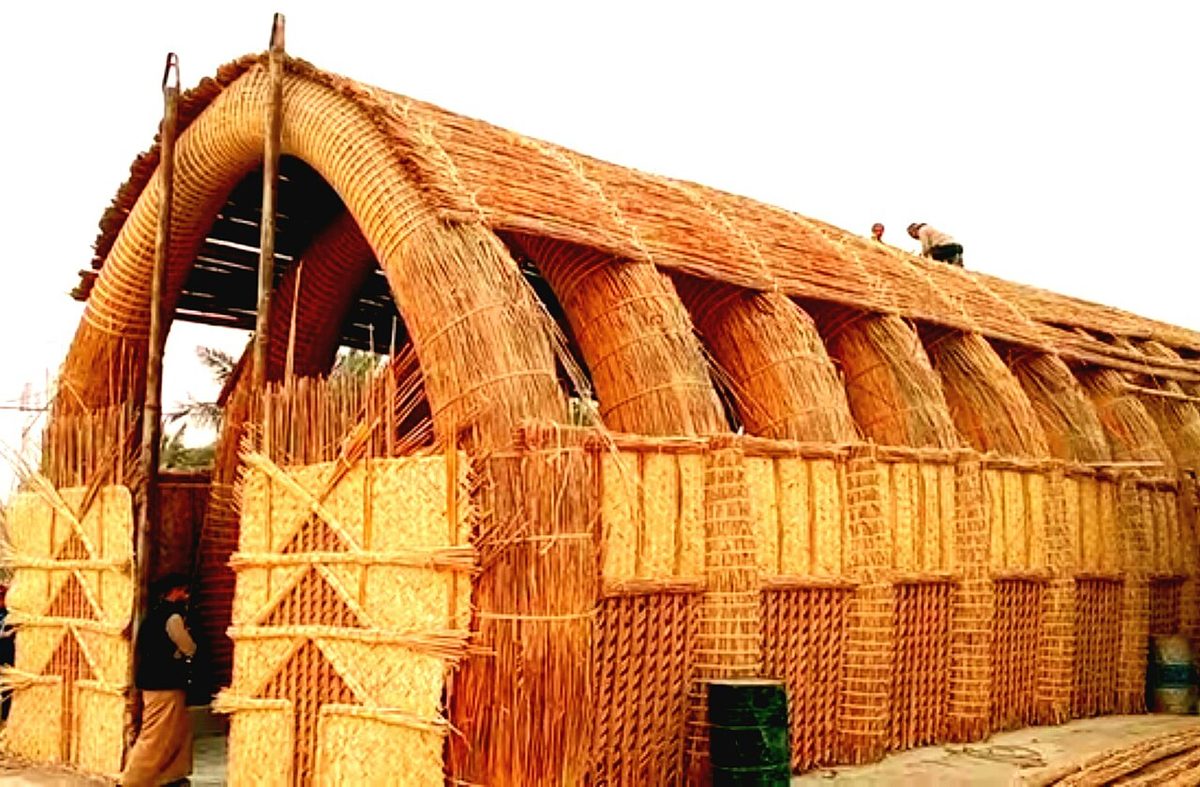
If you want the night you’ll still be talking about years later, skip the hotel entirely. Iraq has two extraordinary alternative stays, one in the deep south and one in the northern mountains.
In the Mesopotamian Marshes near Chibayish — the UNESCO-listed wetlands where the Marsh Arabs (Ma’dan) have lived among the reeds for five thousand years — you can sleep in a mudhif, the traditional arched guesthouse woven entirely from qasab reeds, a building technique older than the pyramids. Local families and small eco-tourism outfits host overnight visitors: a typical arrangement runs around 140,000 dinars (about $95) for two people and covers a night in the reed guesthouse, dinner and breakfast, and a boat trip out among the water buffalo and birdlife at sunset. You reach it via the Martyrs’ Monument in Chibayish, about ninety minutes from Nasiriyah, where the boats wait. It’s basic — think mattresses on reed matting, not thread counts — but waking up to the dawn over the marshes is one of the great experiences in the country, and your money directly supports a culture that very nearly disappeared. Read more about the region in our best places to visit in Iraq guide.
Up north, Iraqi Kurdistan’s mountains hide a clutch of proper resorts that locals flock to in summer to escape the lowland heat. The famous one is Korek Mountain Resort above Rawanduz, reached by a long cable car (teleferic), with chalets and hotel rooms at altitude. There are others scattered through the Rawanduz gorge, around Soran, and near the waterfalls and hill stations of the Barzan and Choman highlands — comfortable, scenic and a total change of pace from a city hotel. They’re seasonal and best in spring and summer; the Iraqi Kurdistan guide covers the routes and the scenery.
Where to stay for your kind of trip
Quick steers by who you are and what you’re here for, since the “best” base depends entirely on your trip:
- First-timer who wants it easy: base in Erbil, mid-range or up. It’s the safest, smoothest introduction to Iraq, and a great launchpad for the rest of Kurdistan. Pair it with our Iraq itinerary planner.
- Pilgrim or spiritually curious: stay in the shrine ring of Najaf or Karbala, as close to the haram as your budget allows; see the pilgrimage guide.
- History and ancient sites: a mix — Baghdad for the museum and Babylon day-trips, Nasiriyah (basic) for Ur, the Mesopotamia trail linking them.
- Business traveler: the international hotels in Baghdad, Erbil or Basra — pick by which has reliable power, security and a decent gym, and book the chain.
- Solo female traveler: Erbil and Sulaymaniyah are the most comfortable, and a mid-range hotel with a real front desk beats the cheapest option for peace of mind; our safety guide has a detailed women’s section.
- Families: an apartment in Erbil or a pool-equipped four-star; the space and kitchen are worth it.
- Backpacker: cheap hotels city to city, a hostel in Erbil or Suli, the marsh mudhif as a splurge, and WhatsApp as your booking tool.
Whatever your style, build your route first and let it dictate your hotels — our itinerary guide and transport guide are the natural companions to this one.
How much do hotels in Iraq cost?
Pulling it together into one place, here’s roughly what a clean double room costs per night by city and tier in mid-2026. Prices are in US dollars, and remember the dual-pricing tip — paying in dinars at smaller places can beat these figures. Always confirm the current rate when you book.
| City | Budget | Mid-range | Luxury (5★) |
|---|---|---|---|
| Erbil | $10–40 | $50–120 | $145–250 |
| Baghdad | $25–50 | $70–150 | $200–400 |
| Sulaymaniyah | $15–45 | $50–110 | $80–150 |
| Basra | $30–60 | $60–130 | $100–180 |
| Karbala | $15–40 | $50–100 | $80–110 (×3 at Arbaeen) |
| Najaf | $15–40 | $45–90 | $80–130 |
| Mosul / Nasiriyah | $15–35 | $40–70 | — |
As a rule of thumb across the country, budget on roughly $30–50 a night for comfortable mid-range accommodation, less if you go simple and pay in dinars, more for the international chains. For a full trip budget — accommodation, food, drivers, site fees and flights — see our dedicated Iraq travel cost guide.
Where to stay in Iraq: FAQ
Is it safe to stay in hotels in Iraq?
Hotels themselves are generally safe, and the better ones in Erbil and Baghdad have serious security — gated entries, bag and vehicle scanning, armed guards. The bigger question is Iraq overall: governments still advise against travel (the US has a Level 4 “Do Not Travel” advisory and the UK FCDO warns against all travel, including Kurdistan), citing terrorism, kidnapping and regional conflict. Many independent travelers visit safely, especially in Kurdistan, but weigh the official guidance honestly — see our safety guide.
Can tourists and foreigners stay in hotels in Iraq?
Yes. Foreign tourists are welcome at hotels across Iraq, and staff at mid-range and upscale places often speak some English. You’ll need your passport at check-in (hotels are legally required to register foreign guests), and you’ll pay in cash at most places. The main practical limits are availability in the holy cities during pilgrimage peaks and the generally basic standards at the budget end.
Does Booking.com work in Iraq?
Partly. Booking.com, Agoda and Airbnb all now list Iraqi properties — a few hundred on Booking, real apartments on Airbnb — but coverage is thin and skewed toward business hotels and the big cities. Most budget hotels, pilgrim guesthouses and smaller-town places aren’t online at all. The locals’ method is Google Maps to find hotels plus a WhatsApp or phone call to book, which also tends to get you a better price.
How much is a hotel room in Iraq?
Roughly $30–50 a night gets you a comfortable mid-range double in most cities, with budget hotels from $15–40 and international five-stars from about $150–400. Erbil and the holy cities are cheapest at the budget end; Baghdad is priciest at the top end. Paying in Iraqi dinars rather than US dollars at smaller hotels often lowers the price.
What’s the best area to stay in Baghdad?
For most visitors, Karrada (Karada) — a central, relatively walkable district full of restaurants and cafés on the Rusafa side. Jadriya nearby has the better riverside hotels, Mansour is the upscale residential pick, and the Abu Nuwas riverfront is the atmospheric classic. The fortified Green Zone has secure but sterile diplomat-grade hotels. Avoid basing yourself somewhere that forces long, traffic-heavy drives to everything you want to see.
What’s the best area to stay in Erbil?
Near the Citadel and Grand Bazaar for atmosphere and walkability, Empire World for modern five-stars and malls, or Ankawa if you want bars and a relaxed, cosmopolitan feel. Erbil sprawls and isn’t pedestrian-friendly, so pick the area closest to your priorities and plan to use Careem and taxis to get around.
Are there hostels in Iraq?
A few, and almost only in Erbil and Sulaymaniyah, where dorm-style hostels and hostel-like budget hotels (such as Erbil’s long-running Bikhal) offer beds around $8–20. Elsewhere — Baghdad, Basra, the holy cities — there’s essentially no hostel scene, but cheap private hotel rooms from $15–40 fill the same role. Many backpackers also use Couchsurfing and the country’s famous hospitality.
Do I need to book hotels in Iraq in advance?
Usually no. Outside pilgrimage peaks, you can turn up in most cities and find a room same-day, and walk-in or WhatsApp prices often beat online rates. The big exception is Najaf and Karbala during Arbaeen and Ashura, when millions of pilgrims fill every bed for weeks — book months ahead for those, or expect to sleep in a mosque or pilgrim camp.
Can unmarried couples share a hotel room in Iraq?
In Iraqi Kurdistan and at business hotels, it’s generally not a problem for foreigners. In conservative Federal Iraq — particularly budget hotels in the south and holy cities — some places are stricter and may ask about your relationship. Policies vary and foreigners usually get latitude; if it might come up, a wedding ring and a discreet manner help, and Kurdistan is the easy default.
Do Iraqi hotels take credit cards or only cash?
Plan on cash. Top international hotels accept cards (often with a fee), but everywhere else is cash only — US dollars at the upper end, Iraqi dinars elsewhere. ATMs are unreliable for foreign cards, so bring enough clean US dollars to cover your trip and exchange into dinar as you go. Our cost guide covers the money logistics.
Can non-Muslims stay in Najaf and Karbala?
Yes — non-Muslim visitors can stay in hotels in both holy cities and walk the areas around the shrines. Entry into the innermost sanctuaries of the shrines themselves can be restricted or supervised for non-Muslims, so ask rather than assume, and dress and behave conservatively throughout. The cities are welcoming to respectful visitors; see our culture and etiquette guide.
Do hotels in Iraq have reliable electricity and Wi-Fi?
Iraq’s grid fails daily, so every working hotel runs a generator — but at cheaper places expect short power gaps when the mains drop, and confirm 24-hour power if you need constant air-conditioning. Wi-Fi is widely available but often slow and drops with the power; a local SIM or eSIM is a more reliable connection for anything important.
Final thoughts: book smart, then relax
Here’s what I’ve learned staying all over Iraq: the accommodation is rarely the highlight of the trip, and it doesn’t need to be. Choose Erbil to land softly, lean on Google Maps and WhatsApp instead of fighting with booking sites, carry cash, pay in dinars where you can, hand over your passport at check-in without a second thought, and book months ahead only if you’re chasing Arbaeen. Do that and the logistics melt away, leaving room for the part that actually makes Iraq unforgettable — the people who run these hotels, pour you tea in the lobby, and treat a foreign guest like an honor.
My honest advice for a first trip: spend a little more for the mid-range comfort, base yourself somewhere central and walkable, and splurge one night on something unrepeatable — a reed mudhif in the marshes, a mountain chalet above Rawanduz, a room with a view of the golden domes in Karbala. Those are the nights you’ll remember.
When you’re ready to turn this into a real trip, start with our complete Iraq travel guide, sort the paperwork with the visa guide and read the current situation honestly in our safety guide. Then map your days with the itinerary planner, figure out the logistics in the transport guide, and get hungry with our Iraqi food guide. Wherever you end up sleeping, you’re in for one of the most hospitable countries on earth.
Sources & further reading: hotel names, prices and availability cross-checked against Booking.com, Agoda, Tripadvisor and hotel listings (June 2026 snapshots) plus first-hand independent-travel reports from Against the Compass, Laure Wanders and Take Your Backpack; the exchange-rate figures (official ~1,300 IQD and parallel-market ~1,540 IQD to the US dollar, June 2026) via Iraqi News and Central Bank of Iraq reporting; the hotel guest-registration requirement via Iraq’s Law on Foreigners’ Residence No. 118 of 1978 and the U.S. State Department’s Iraq International Travel Information page (which also details the 10-day residency-stamp rule); the marsh mudhif homestay details via on-the-ground accounts from Chibayish and Nature Iraq’s eco-tourism work; Arbaeen scale and 2026 timing via shrine and pilgrimage reporting; and current safety framing via the U.S. State Department (Level 4, Do Not Travel) and the UK FCDO (advises against all travel), checked June 2026. Prices and rules in Iraq change quickly and are enforced unevenly — treat every figure here as a well-researched starting point and confirm the current rate and policy when you book.
Photo credits: The Citadel of Erbil by Abdulsalam Al Dabbagh (CC BY-SA 4.0); Baghdad and the Tigris River via Wikimedia Commons (public domain); the Erbil cityscape by Levi Clancy (CC0); the Shatt al-Arab at Basra by Naseem95yak (CC BY-SA 4.0); the Al-Abbas shrine in Karbala by David Stanley (CC BY-SA 3.0); a reed mudhif guesthouse in the marshes by Hassan Al-Jarrah (CC BY-SA 4.0). All via Wikimedia Commons.
Last updated: June 2026. We keep this guide current — if a hotel has changed, closed or moved, or a price is off, tell us and we’ll update it.