Last updated: September 2026. We re-checked the FCDO’s Iraq advice on gov.uk on 25 September 2026. History and casualty figures follow Human Rights Watch’s 1991 report, the 1988 UN medical investigation and the court record; visitor details come from the KRG, the Halabja Trails project, The New Region (2025) and Shafaq News (16 March 2026).
The first hall of the Halabja Monument is not about the attack. It is about the town: its traditions, its crafts, its music and poetry, the life of the place before the evening of 16 March 1988. Only after that do the photographs of the dead begin. It is a deliberate choice, and a good guide to how to visit the town, which our Iraqi Kurdistan travel guide treats as a town people live in, not only a site of atrocity.
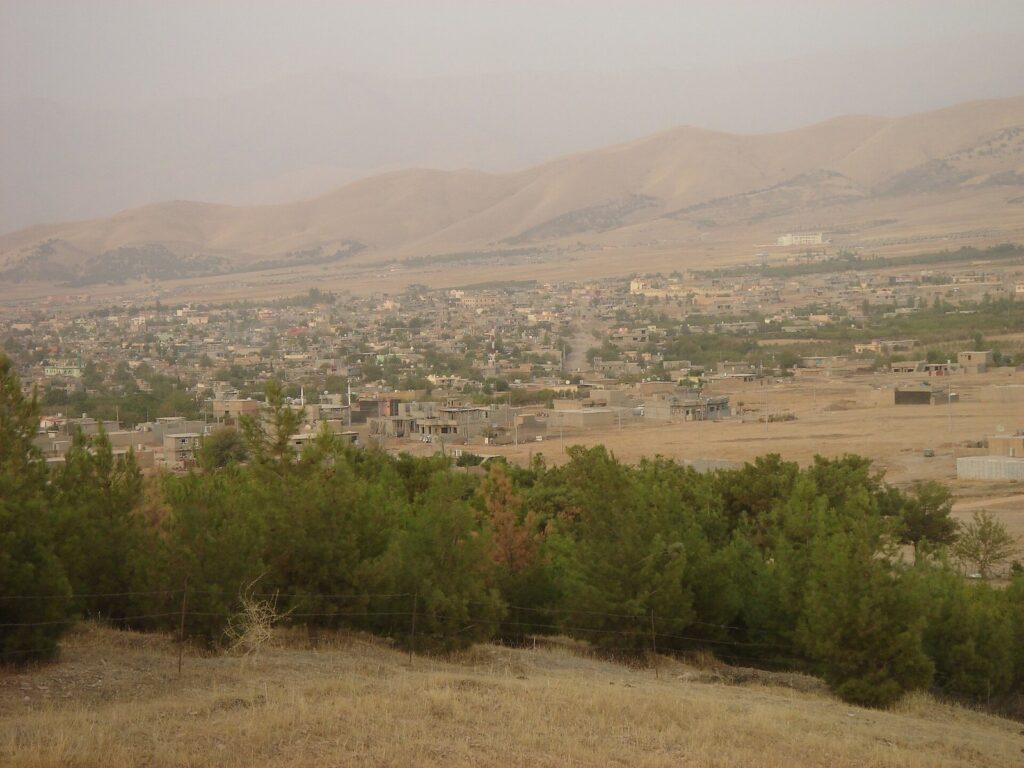
Halabja is a town in the Zagros foothills of north-eastern Iraq, about 14 km from the Iranian border, where Iraqi aircraft killed thousands of Kurdish civilians with chemical weapons in March 1988. Its memorial, the Halabja Monument and Peace Museum, stands at the entrance to the town, and since 2025 Halabja has been Iraq’s 19th governorate.
This guide covers what happened and why the figures differ, what you will see at the monument and the cemetery, how to visit respectfully, especially on 16 March, what the town is like today, and what we could not confirm, beginning with the monument’s opening hours.
The short answer
| Question | Answer |
|---|---|
| What is it? | The town hit by the largest chemical attack on a civilian population, on 16 March 1988 |
| The main memorial | Halabja Monument and Peace Museum, at the town’s entrance, opened 2003 |
| Opening hours and fee | None officially published; treat the fee as unknown, not free |
| Commemoration | 16 March each year: the busiest and most sensitive day to visit |
| Administrative status | Iraq’s 19th governorate since 2025, run within the Kurdistan Region |
| FCDO (25 September 2026) | All but essential travel, the same band as the rest of the Kurdistan Region |
| Nearest base | Sulaymaniyah; no official drive time is published |
What happened in Halabja in 1988?
In March 1988, in the last months of the Iran-Iraq war, Iranian forces took Halabja in an offensive they called Operation Zafar 7. Two days later, on the evening of 16 March, Iraqi aircraft attacked the town with chemical weapons. The attack lasted around five hours; Kurdish commanders described up to 14 bombing runs by aircraft flying in groups of seven or eight, directed by helicopters, and some eyewitnesses reported conventional bombing from late that morning. The photographer Kaveh Golestan, about 8 km outside the town, saw MiG-23s. Human Rights Watch’s 1991 report refers to “the bombings of Halabja on March 16 and 17, 1988”.
The agents deserve precision, because they are often overstated. A UN medical investigation in 1988 confirmed mustard gas and “unidentified nerve agents”, and could not obtain definitive information about hydrocyanic gas. The list that circulates everywhere, mustard, tabun, sarin and VX, comes from media reporting rather than a forensic finding. Most of the wounded evacuated to Tehran showed mustard exposure. Survivors described a smell of sweet apples.
The attack was not an isolated crime. It came in the middle of the Anfal, the Ba’ath regime’s campaign against Iraq’s Kurds, and at least 21 chemical attacks on Kurdish areas are documented before it. Human Rights Watch recorded that 140,000 Kurds fled Iraq in 1988. For years afterwards the story was muddied: the US Defense Intelligence Agency initially blamed Iran, a claim that was comprehensively rejected, and Iraq itself later admitted using poison gas at Halabja. It is described in multiple sources as the largest chemical weapons attack ever directed at a civilian-populated area, and surveys of the area have found elevated rates of cancer and birth defects.
Why the death toll differs between sources
You will see “5,000 dead” everywhere, and it is a fair round figure, but it is not a single authoritative count. There has never been a full forensic tally, and no source publishes a methodology.
| Source | Figure | What it actually measures |
|---|---|---|
| Human Rights Watch / Middle East Watch, 1991 | “Up to 5,000 civilians, mostly women and children” | Deaths, as an upper bound |
| Figure attributed to HRW, used as Wikipedia’s range | 3,200 to 5,000 killed; 7,000 to 10,000 injured | Deaths in and immediately after the attack, plus injuries |
| KRG General Board of Tourism | More than 5,000 dead and 10,000 wounded | The official Kurdish figure, undated |
| Common media and NGO wording | “Some 5,000 killed; another 7,000 to 10,000 injured” | A convention built on the figures above |
| Human Rights Watch, 1991 | “Thousands, most likely tens of thousands” killed | All chemical attacks on Kurds, not Halabja alone |
Justice and recognition
The attack was ordered under Ali Hassan al-Majid, head of the Ba’ath Party’s Northern Bureau from 1987 to 1989 and known as “Chemical Ali”. He was captured in Basra in August 2003 and first convicted over the Anfal in June 2007. On 17 January 2010 the Iraqi High Tribunal gave him a further death sentence specifically for the gassing of the Kurds, and on the same day convicted the former defence minister Sultan Hashim for this attack and sentenced him to 15 years. Al-Majid was hanged eight days later, on 25 January 2010; Amnesty International criticised the execution. In 2010 Iraq’s Supreme Criminal Tribunal defined the attack as a genocidal massacre against the Kurds, and the Parliament of Canada condemned it as a crime against humanity.
The Halabja Monument and Peace Museum: what will you see?
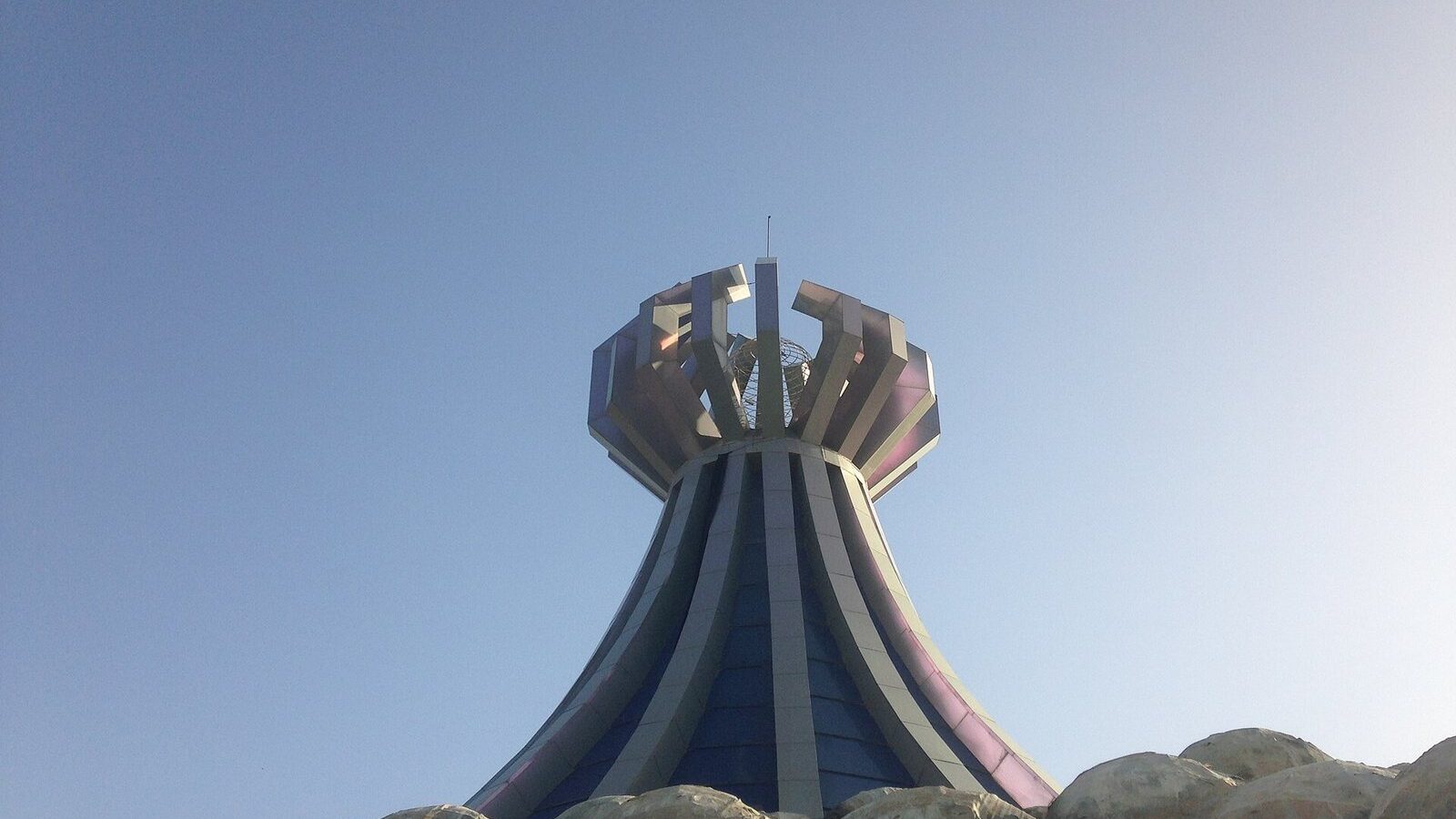
The monument stands at the entrance to the town, a tall flared tower that you see before you reach the centre. Inside, the museum holds photographs and names of the dead, images of the wounded, artefacts documenting the Ba’ath regime’s crimes, artwork and poems by Kurdish artists, and life-sized models of victims. The models are the hardest part; if you are travelling with children, look at the rooms before they do. According to Shafaq News in March 2026, the monument receives more than 100,000 visitors a year, and its museum director is Gulzar Azad.
Its history is contested in a small way. Wikipedia gives construction as 2002 to 2003 and an opening on 15 September 2003; the Halabja Trails project, run with the town’s municipality, gives a foundation stone in 2001 and an unveiling in 2003. Both agree that the US Secretary of State, Colin Powell, attended the opening. A replica was unveiled at the headquarters of the Organisation for the Prohibition of Chemical Weapons in The Hague on 19 April 2014.
Its more painful history is not contested. In March 2006, at the 18th anniversary commemoration, around 2,000 protesters, angry at poor living conditions and the lack of compensation, stormed the monument and set it on fire. Security forces opened fire, and a 17-year-old protester, Kurda Ahmed, was killed. The BBC and The Independent reported it at the time. We found no source that gives the year the building reopened. The episode is worth knowing, because it tells you that for many people here, remembrance and grievance are the same subject.
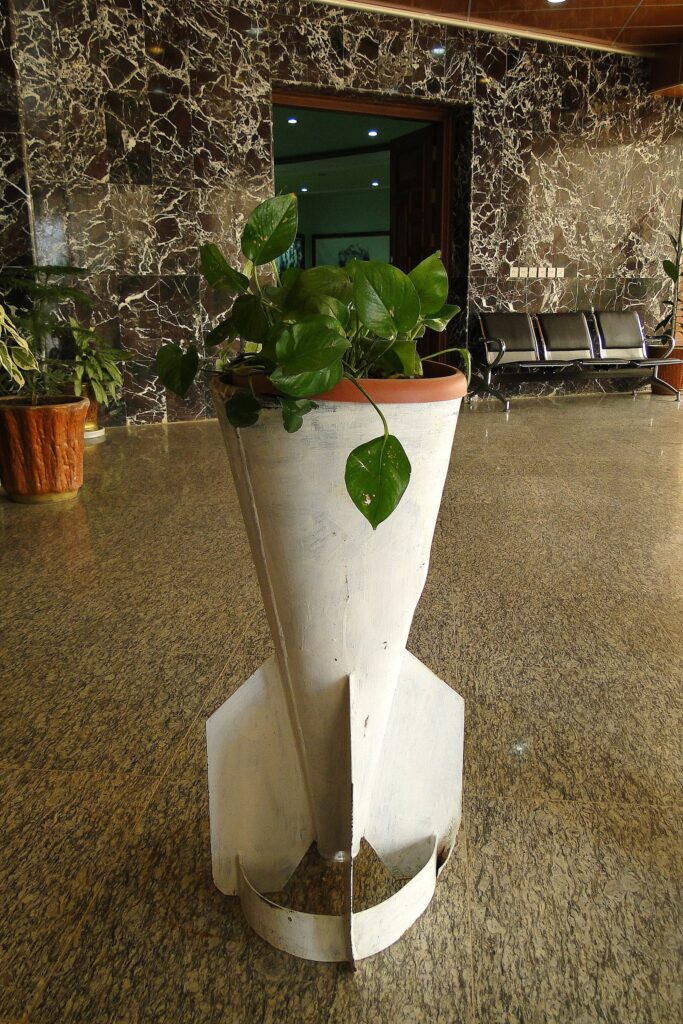
More change is coming. In 2025 the Kurdistan Region’s Council of Ministers approved 600 million dinars, about US$400,000, to renovate and expand the monument: updating the existing structure, building an auditorium and designing a new monument on a 47-dunam site while keeping the main features. No completion date or closure notice has been published, so parts of the site may be under works when you visit.
Hours and fees: the honest answer
Neither the KRG’s tourism board page for the monument nor the Halabja Trails site publishes opening hours, an entrance fee or a phone number. The “daily 8am to 5pm” you may see online comes from user-generated listings, not from anyone who runs the site. Go in the morning on a weekday, carry some cash in case there is a charge, and ask your driver or hotel to check the day before.
The Martyrs’ Cemetery
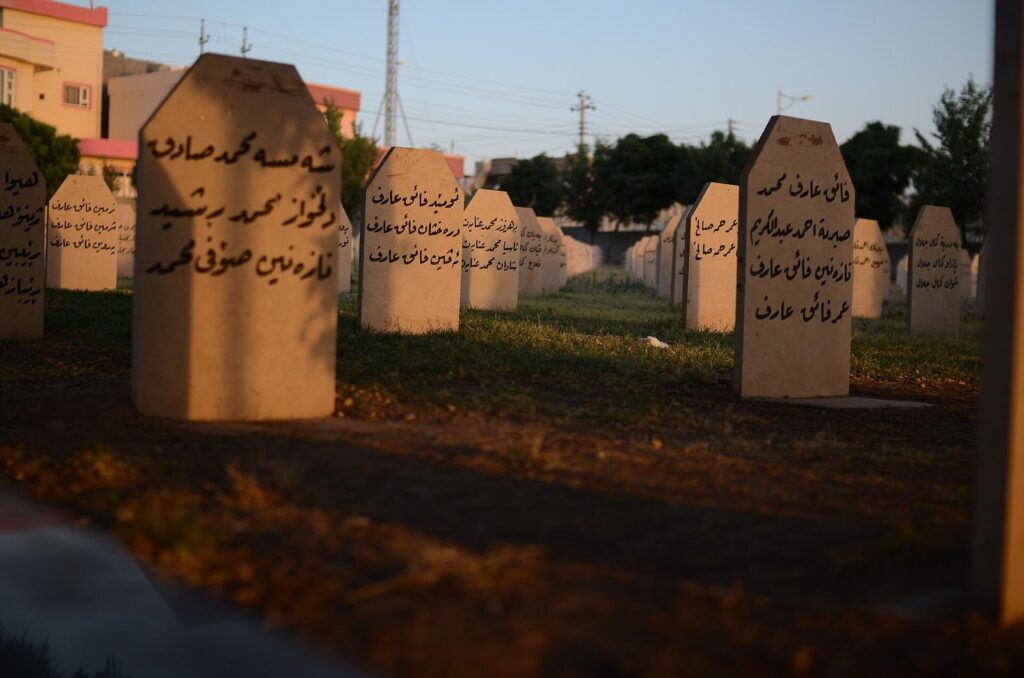
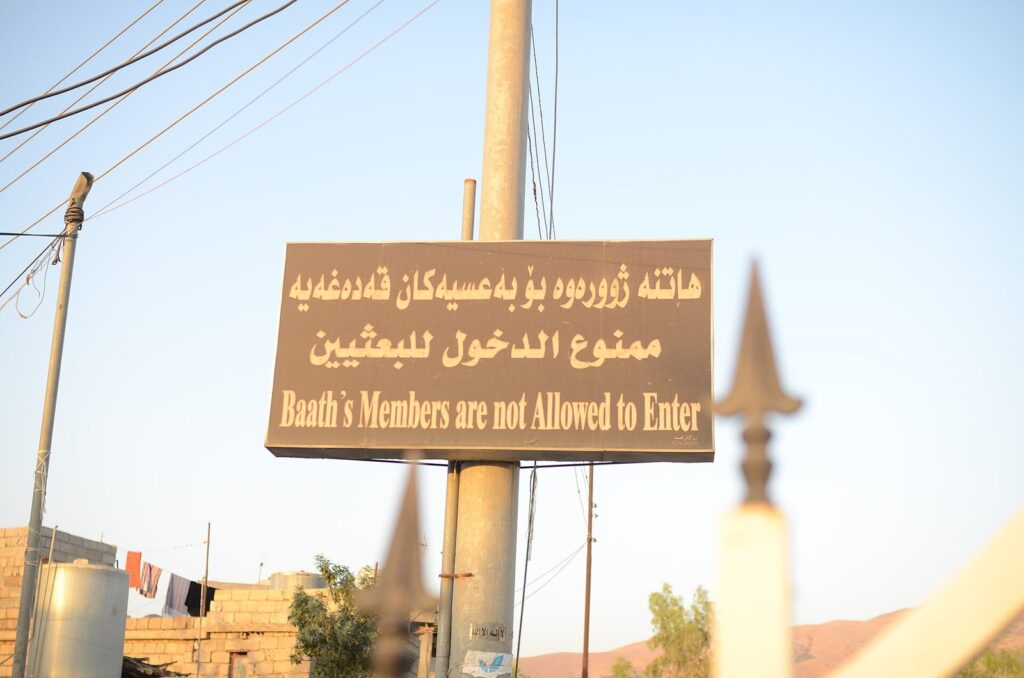
The cemetery holds the mass graves of the victims. The best-known marker belongs to the family of Omar Khawar, whose photograph, a father and his infant son lying dead together, became the defining image of the attack. At the entrances, a sign in Kurdish, Arabic and English bars members of the Ba’ath Party from entering; the English wording varies between transcriptions, so we describe it rather than quote it.
How should you visit Halabja respectfully?
Most of this is common sense, but it is worth spelling out, because visitors sometimes arrive treating the town as a sight rather than a place of mourning.
| Situation | What to do |
|---|---|
| At the monument | Dress modestly, keep your voice down, and give families room at the photographs and names |
| In the cemetery | Walk on the paths, don’t sit or stand on graves, and don’t photograph people praying or grieving |
| Photography inside the museum | No published rule; ask staff first |
| Talking to residents | Let people raise 1988 themselves; many survivors and their families live here |
| On 16 March | Expect ceremonies, officials and bereaved families; stand back and follow the crowd’s lead |
The 16 March commemoration is the day the town is busiest and most sensitive. Thousands gather, officials attend with bereaved families, and, as Shafaq News described in 2026, streets are hung with black banners and schoolchildren recite poetry. It is listed as Halabja Day on the KRG’s calendar. If you want to be there, go as a quiet witness, not a photographer. If you want to see the museum properly, choose another day.
A practical order for a half day: start at the monument in the morning, because the museum rewards time and its first hall sets the tone; walk the cemetery afterwards, when you know whose names you are reading; then give the rest of the day to the living town or the road to Ahmed Awa. In autumn, time the trip for the pomegranate festival. Our guide to Iraqi and Kurdish culture covers the wider etiquette of mourning and hospitality, and our guide to photography in Iraq explains when to put the camera away.
Halabja today: Iraq’s 19th governorate
For decades the town campaigned to be recognised as a governorate in its own right rather than a district of Sulaymaniyah. The Iraqi parliament voted it through on 14 April 2025, with 178 of 329 members present; the president ratified the law on 29 April, and it took effect when published in the Official Gazette on 5 May 2025. The new governorate covers the central Halabja district plus Khurmal, Biyara, Bamo and Sirwan, and it is the least populous governorate in Iraq.
| Source | Population figure | What it actually measures |
|---|---|---|
| 2024 Iraqi census (via Wikipedia and citypopulation.de) | 113,926 | The whole governorate |
| 2024 Iraqi census, city figures | 75,922 | The urban centre of Halabja |
| Shafaq News, March 2026 | About 140,000 | Unstated; higher than either census figure |
Nuxsha Nasih, a law graduate born in Halabja in 1978 and the town’s mayor from 2016, was inaugurated as acting governor in March 2025 and widely described as Iraq’s first female governor. We could not confirm who holds the post in September 2026: a Kurdistan24 headline refers to the KRG appointing a new governor, but we could not retrieve the article. A 2025 projection of about US$200 million a year in federal allocations for roads, hospitals and memorial sites is a projection, not a budget.
The town itself sits about 700 metres above sea level, watered by the Sirwan river, with orchards and terraced fields around it. It has held an annual pomegranate festival since 2007, which is a better reason than most to visit in autumn.
Is Halabja safe to visit in 2026?
As of 25 September 2026, the FCDO advises against all but essential travel to the whole Kurdistan Region, Halabja included; its page was last updated on 22 July 2026 and was unchanged when we checked. Although the town is only about 14 km from the Iranian border, the FCDO’s “within 5 km of the Iranian border” line applies only to Wasit, Maysan and Basra provinces, not to the Kurdistan Region. Its safety page, when we read it in August, noted intermittent Iranian strikes on Iranian-Kurdish opposition groups in parts of the Region, naming Rawanduz and Koya; this town was not named. Rudaw counted 19 drone and missile attacks on the Kurdistan Region in the first two weeks of August 2026.
The US State Department rates Iraq Level 4, Do Not Travel, reissued on 2 March 2026. The FCDO’s insurance line applies: “Your travel insurance could be invalidated if you travel against advice from the Foreign, Commonwealth & Development Office (FCDO).” Our guide to travel insurance for Iraq covers what to ask your insurer, and our assessment of safety in Kurdistan and our Iraq travel advisory page give the regional picture.
How do you get to Halabja, and what is nearby?
Sulaymaniyah is the base. The usual public-transport route is a shared taxi or minibus from Sulaymaniyah to Halabja, then local taxis; no official source publishes a road distance or drive time, so ask the driver. Our Sulaymaniyah guide covers the city, including the Amna Suraka museum of the Ba’ath regime’s prison, which makes a sober companion visit. Our guide to getting around Iraq explains shared taxis and drivers.
Halabja is inside the Kurdistan Region, so a Kurdistan Region visa covers it; the FCDO says such visas are “valid for travel in KRI only”. Our Kurdistan visa guide has the fee and validity. You will pass checkpoints near the border; carry your passport and read our guide to Iraq’s checkpoints. Most visitors stay in Sulaymaniyah, and our guide to where to stay in Iraq explains the options.
Ahmed Awa and the Hawraman highlands
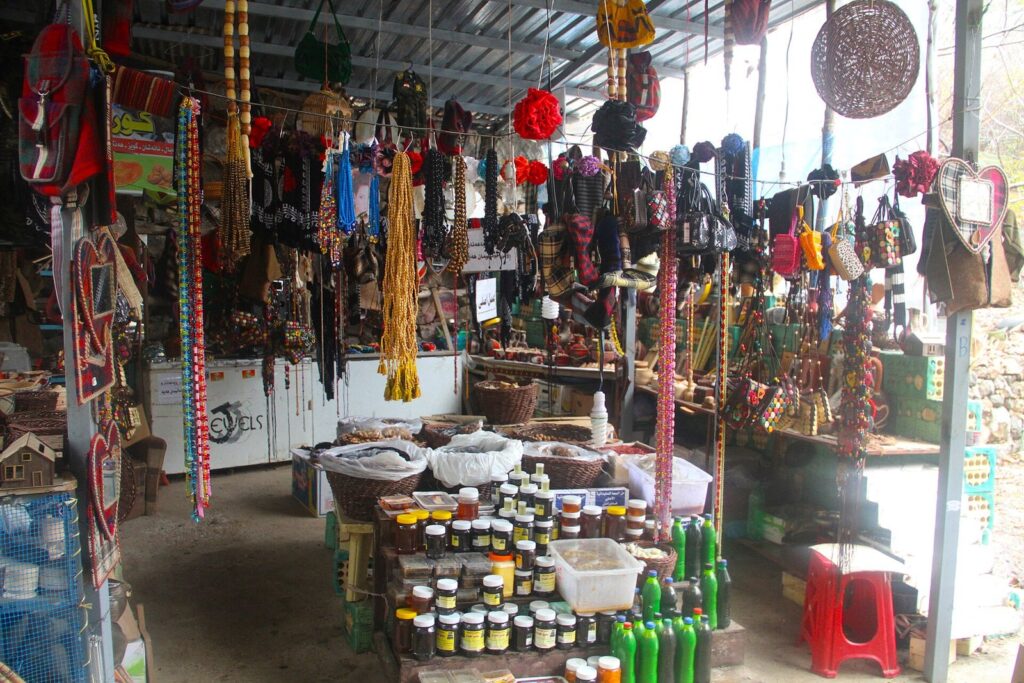
The most popular excursion from town is Ahmed Awa, a waterfall on the Zalm river in the Hawraman highlands near Khurmal, about 84 km east of Sulaymaniyah city. Older guides place it in Sulaymaniyah governorate; since 2025 it is in Halabja governorate. A strip of shops, teahouses and restaurants leads up to the falls, with shaded picnic areas and newly built cabins, and it is a mass-market destination at Eid. No entrance or parking fee is published.
Take the water seriously. An 11-year-old drowned at Ahmed Awa in June 2026, and new water-tourism safety rules followed that summer; stay out of the fast water, whatever the teahouse crowd is doing.
Where else is the Anfal remembered?
The 1988 attack is the best-known atrocity of the Anfal, but it is one chapter of a longer campaign, and the Kurdistan Region remembers it in several places. If the museum here leaves you wanting the whole story, these are the other sites, as of our 2026 research.
| Site | Where | What it holds |
|---|---|---|
| Halabja Monument and Peace Museum | Halabja | The 1988 attack, its victims and the town’s life before it |
| Amna Suraka (Red Security) | Sulaymaniyah | The Ba’ath regime’s security headquarters and prison; its Hall of Mirrors uses 182,000 shards of mirror for the Kurds killed in the Anfal and 4,500 lights for the villages destroyed |
| Replica of the Halabja monument | OPCW headquarters, The Hague | Unveiled on 19 April 2014, with the OPCW’s director-general and the mayor of The Hague |
| Planned Anfal genocide museum | Sami Abdulrahman Park, Erbil | Announced in July 2026 alongside the Region’s largest art gallery; not yet open |
Together they make a hard but coherent itinerary: the prison in Sulaymaniyah shows how the regime worked, and Halabja shows what it did. Our list of things to do in Erbil covers the capital’s museums and parks if you are finishing the trip there.
When is the best time to visit Halabja?
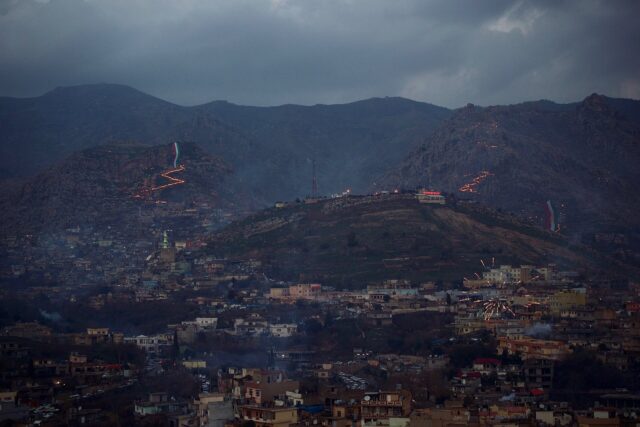
For the museum and cemetery, any weekday morning outside 16 March. For the landscape, spring, when Ahmed Awa runs at its fullest after the rains, and autumn, when the pomegranate harvest and festival come round. Summer is hot in the town but cool at the falls, which is why Ahmed Awa fills at Eid. March is heavy with anniversaries in Kurdistan: Halabja Day on 16 March, the anniversary of the 1991 uprising on 20 March and Newroz from 21 March, whose fire festival is at its most spectacular in Akre. Our guide to the best time to visit Iraq covers the seasons.
What we could not confirm
- Opening hours and entrance fee. None are officially published for the monument; the “8am to 5pm” figure is user-generated. Treat the fee as unknown, not free.
- When the monument reopened after the 2006 fire. No source gives a year.
- The renovation’s progress. The 600 million dinar project was approved in 2025; we found no completion date, closure notice or 2026 progress report.
- The monument’s architect. We found no reliable attribution or architectural description.
- Who is governor now. Nuxsha Nasih was acting governor in 2025; a Kurdistan24 headline refers to a new appointment, but we could not read it or date it.
- The exact date of the 2010 genocide ruling. The ruling is confirmed; the widely repeated “March 2010” is not sourceable.
- Drive times and road distances. None are published for Sulaymaniyah to Halabja or to Ahmed Awa.
- Ahmed Awa’s distance from Halabja. Sources give about 21 km and about 30 km; neither is official.
- Photography rules inside the museum. Not published.
- The town’s population. The census says 75,922 in the city and 113,926 in the governorate; Shafaq News says about 140,000.
Frequently asked questions
What happened in Halabja?
On 16 March 1988, near the end of the Iran-Iraq war, Iraqi aircraft attacked the Kurdish town of Halabja with chemical weapons, including mustard gas and nerve agents, after Iranian forces had taken it. Several thousand civilians were killed and thousands more injured. It was part of the Ba’ath regime’s wider Anfal campaign against Iraq’s Kurds.
How many people died in the Halabja attack?
The usual figure is about 5,000, but there has never been a full forensic count. Human Rights Watch put the toll at “up to 5,000”, a range of 3,200 to 5,000 is widely cited, and the KRG says more than 5,000. Between 7,000 and 10,000 people are usually said to have been injured.
Can you visit the Halabja Monument?
Yes. The Halabja Monument and Peace Museum stands at the entrance to the town and receives more than 100,000 visitors a year, according to Shafaq News. No official opening hours or fee are published, so go on a weekday morning, carry some cash and check locally. A 2025 renovation may mean parts of the site are under works.
What is inside the Halabja Peace Museum?
The first hall is about the town’s life before 1988: its traditions, crafts and culture. After that come photographs and names of the dead, images of the wounded, artefacts documenting the Ba’ath regime’s crimes, artworks and poems by Kurdish artists, and life-sized models of victims, which some visitors, and most children, will find very hard. Ask staff before taking photographs, and allow time: it is not a museum to rush.
When is Halabja Day?
16 March, the anniversary of the 1988 attack. It is on the KRG’s official calendar, and thousands gather in Halabja, with officials, bereaved families, black banners and children reciting poetry. It is the most sensitive day to visit: go as a quiet witness, or choose another day if you want to see the museum properly.
Is Halabja in Sulaymaniyah province?
Not any more. Halabja became Iraq’s 19th governorate in 2025, after the Iraqi parliament voted on 14 April and the law took effect on 5 May. The governorate includes Khurmal, Biyara, Bamo and Sirwan, and the Ahmed Awa waterfall now falls within it rather than within Sulaymaniyah.
Is it safe to visit Halabja?
As of 25 September 2026 the FCDO advises against all but essential travel to the whole Kurdistan Region, including Halabja, and the US rates Iraq Level 4. Halabja’s proximity to Iran does not put it in the FCDO’s stricter border band, which applies only in the south. Check your insurance and the news in the week you travel.
Final thoughts
Halabja asks something of its visitors that most places don’t: attention rather than admiration. The monument is not beautiful in the usual sense, the cemetery is hard, and the town has every reason to be tired of being known for one evening. Go anyway, go slowly, and read the first hall of the museum as carefully as the last.
The rest of the day can belong to the living town: its orchards, its autumn pomegranates, the teahouses on the way to Ahmed Awa. That balance, between remembering and simply being somewhere, is what the museum’s designers seem to have wanted.
For the wider trip, our guide to museums in Iraq places the Halabja museum among the country’s others, Erbil Citadel is the Region’s great historic site, and the rest of our Kurdistan Region coverage fills in the mountains and cities around it.
Photo credits
Halabja Monument and Peace Museum (featured image): Aya sh.yusuf, Wikimedia Commons (CC BY-SA 4.0). Bomb casing at the Halabja memorial: Adam Jones, Ph.D., Wikimedia Commons (CC BY-SA 3.0). Martyrs' cemetery, Halabja: Enno Lenze from Berlin, Germany, Wikimedia Commons (CC BY 2.0). Cemetery sign, Halabja: Enno Lenze, Germany, Wikimedia Commons (CC BY 2.0). Halabja town: Zaxo, Wikimedia Commons (CC BY 3.0). Stalls at Ahmed Awa: Diyar Muhammed, Wikimedia Commons (CC BY-SA 4.0). All images via Wikimedia Commons under the licences shown.