Last updated: August 6, 2026. Policy mechanics, advisory wording and market availability re-checked this week. We are a travel guide, not brokers or advisers — nothing here is a recommendation to buy any product, and every policy detail below needs verifying against the actual wording you’re offered.
Most travellers discover how their insurance treats Iraq at the worst possible moment: in a hospital corridor, reading a clause about government advice. Here’s the position up front. Iraq travel insurance from a mainstream provider almost certainly doesn’t exist, because standard policies void themselves the moment you travel against your government’s advice, and every major government currently advises against Iraq in some form. Specialist cover does exist, costs considerably more, and carries exclusions that matter far more here than the headline limits do — including, on some leisure policies, no war cover at all. Cover is one line on a longer pre-departure checklist; the Iraq travel guide works through the rest of it.
This guide explains the machinery: what actually triggers an exclusion, what changed for British travellers on 22 July 2026, what medical evacuation really costs, and the specific questions to put to an insurer before you hand over money. It does not tell you what to buy.
The short version
| Question | Answer |
|---|---|
| Will my normal policy cover Iraq? | Almost certainly not — travel against government advice is a standard exclusion |
| Does specialist cover exist? | Yes, from a small number of high-risk underwriters. Availability changes |
| What matters most? | Emergency medical and evacuation limits — not cancellation or baggage |
| What does evacuation cost unfunded? | Commonly quoted at $50,000–$100,000+ internationally; long-haul cases run higher |
| Is war and terrorism covered? | Sometimes. Some specialist leisure policies exclude war outright — read that clause first |
| Did anything change recently? | Yes. The FCDO regionalised its Iraq advice on 22 July 2026, which changes the UK picture |
| Is any of this a recommendation? | No. Verify wording, limits and current availability yourself |
Why your normal policy doesn’t cover Iraq
Nearly every travel insurance policy sold in the UK, Europe, North America and Australasia contains a clause excluding claims arising from travel to a country, or part of a country, where the traveller’s own foreign ministry advises against travel. The FCDO states it plainly on its own Iraq page: your travel insurance could be invalidated if you travel against its advice.
Three things about that clause are worth understanding properly, because they’re routinely misread.
It isn’t about danger, it’s about advice. The trigger is the existence of the advisory, not whether anything actually happened to you. A broken ankle in a perfectly calm Erbil café can be declined on the same clause as an incident in a conflict zone, because the policy was void from the moment you arrived.
It’s usually geographic and dynamic. Many policies exclude the specific regions their government names, and the exclusion tracks the advisory as it changes — including while you’re in the country. If an advisory tightens mid-trip, some policies stop covering you where you’re standing and start covering only your journey home.
“I didn’t know” is not a defence. Advisories are public. Insurers treat them as constructive knowledge, and the burden of showing you were covered sits with you.
This is why “does travel insurance cover Iraq?” is really two questions: does a policy exist that doesn’t contain the exclusion, and does it cover the things most likely to go wrong.
What changed for British travellers on 22 July 2026
This is the most consequential development in years and almost nothing online reflects it yet — including some insurers’ own Iraq pages, which still describe the old position.
Until late July, the FCDO advised against all travel to the whole of Iraq, the Kurdistan Region included. Since its 22 July 2026 update, the advice is split by province:
- Against all travel: Ninawa, Kirkuk and Salah al-Din provinces; Diyala except Baqubah City; the parts of Anbar west of but not including Ramadi City; Jurf al-Sakr in Babil; Sadr City in Baghdad; and within 5km of the Iranian border in Wasit, Maysan and Basra, and of the Saudi and Kuwaiti borders.
- Against all but essential travel: everywhere else — Baghdad province, Karbala, Najaf, Babil, Basra, Dhi Qar and the rest, plus the entire Kurdistan Region.
Why that matters for insurance: the two categories are treated differently by a meaningful number of underwriters. Plenty of policies that will not touch an “against all travel” destination will write cover for “all but essential travel” areas, sometimes with a supplement rather than a specialist policy. If you were quoted a flat refusal for Iraq before July, the honest advice is to ask again and to be specific about which provinces your itinerary actually covers.
Two cautions. The FCDO’s own sub-pages have been serving a stale banner reading “advises against all travel to Iraq” — quote the main warnings page. And this wording has moved twice in 2026 already; it can move back. Our is Iraq open to tourists guide tracks the current position.
What Level 4 does to an American policy
The US system works differently in form and similarly in effect. The State Department rates Iraq Level 4: Do Not Travel, and on 2 March 2026 ordered non-emergency government employees out of the country.
US travel policies don’t usually reference State Department levels as explicitly as UK policies reference the FCDO, but most contain war, terrorism and civil-unrest exclusions that do the same work, and many carriers simply decline to write cover for Level 4 destinations at all. The practical result is the same: a standard policy bought through an airline, a card or a comparison site is unlikely to help you in Iraq.
Americans have one additional consideration that isn’t insurance but behaves like it. Routine consular services in Iraq are curtailed and the embassy’s own position is that its ability to assist US citizens is severely limited. Whatever your policy says, the assistance network you’re relying on is commercial, not governmental. Enrolling in STEP costs nothing and is worth doing regardless.
The clause that actually matters: war and terrorism
Everyone compares medical limits. Almost nobody reads the war and terrorism wording, and in Iraq that’s the wrong way round.
Policies handle it in one of three ways. Some exclude war and terrorism entirely. Some cover terrorism but exclude war, which sounds reasonable until you consider that the distinction is decided after the event, by the insurer, using definitions in the policy. And some cover both, usually at extra cost and often only for business or organisational travel.
Here is the detail worth the price of this article. One UK specialist that markets itself precisely on covering FCDO-advised-against destinations carries this line in its terms: for leisure trips only, no war cover is provided under this policy. Business trips get war cover; holidays don’t. That is a specialist high-risk product, sold to people who know they’re going somewhere difficult, and the single risk they’re most worried about is carved out for the leisure traveller.
Assume nothing. Ask the question in writing: does this policy cover claims arising from war, invasion, act of foreign enemy, hostilities, civil war, rebellion or insurrection — and does that answer change because my trip is leisure rather than business?
Medical evacuation is the whole ballgame
If you read one section, this one. Cancellation cover is a convenience. Evacuation cover is the reason to buy anything at all.
Iraq has functioning private hospitals in Erbil and Baghdad that handle routine problems perfectly well. What the country cannot reliably offer is complex trauma care, specialist surgery or long-term intensive care to the standard most travellers assume. For anything serious, the realistic pathway is stabilisation locally followed by evacuation — most often to Jordan, Turkey or Europe. That applies as much in the far south, where the marshes are hours from a major hospital, as it does in the mountains.
That is not a cheap flight. International air ambulance transfers are commonly quoted in the $50,000 to $100,000-plus range, and long-haul cases with intensive-care equipment on board run considerably higher — transatlantic figures are quoted between roughly $90,000 and $220,000. A Middle East to Europe transfer sits within that band, and it is billed to you, in advance of departure, if nobody else is paying.
So the numbers that matter on a quote are the emergency medical limit and the evacuation and repatriation limit. Specialist high-risk policies commonly carry both at around £1,000,000, which is the right order of magnitude. A policy offering £250,000 of medical cover with evacuation bundled inside that limit is a materially weaker product, and the difference will not be obvious from the marketing page.
One more thing to check: who decides. Good policies commit to evacuation when it’s medically necessary in the judgement of the assistance company’s doctors. Weaker ones reserve the decision entirely to the insurer, or fund transfer only to “the nearest adequate facility” — a phrase that can mean a hospital you would not choose.

What specialist policies actually pay
Published benefit tables from UK high-risk specialists give a reasonable picture of the shape of these products. Indicative figures, not a quote, and not an endorsement:
| Benefit | Typical specialist limit | Comment |
|---|---|---|
| Emergency medical expenses | Up to £1,000,000 | The number that matters |
| Emergency evacuation / repatriation | Up to £1,000,000 | Check it’s separate, not inside the medical limit |
| Cancellation | Around £1,500 | Strikingly low — will not cover a serious trip |
| Baggage | Around £1,500 | Ditto |
| Personal accident | Around £15,000 | Enhanced cover usually optional |
| Hijack, mugging, wrongful detention | Around £2,500 | Small, but rarely present at all elsewhere |
| Post-incident counselling | Up to £25,000 | A genuine mark of a hostile-environment product |
| War cover | Varies — sometimes excluded for leisure | Ask explicitly |
Note the shape: enormous medical limits, tiny cancellation and baggage limits. These products are built to get you out alive, not to refund a holiday. If your main worry is losing the cost of the trip, this category of policy is not designed for you, and you should price that risk separately — the cancellation limits here are often less than a single flight.
Availability is not guaranteed — and it just changed
The assumption underneath most articles on this subject is that specialist cover is always there if you’re willing to pay. That isn’t true, and there’s a live example.
High Risk Voyager, a UK broker whose entire proposition is insuring destinations the FCDO advises against, currently carries this notice on its Iraq page: due to the current situation in Iraq, we are currently unable to provide cover for anyone travelling to this region. The product page still sits underneath it, describing the policy in full. A specialist in exactly this problem has stopped writing Iraq.
The lesson isn’t about that firm — underwriting appetite moves constantly, and it may well return. It’s that availability is a variable, not a constant. During the March–April 2026 escalation the market for Iraq contracted sharply, and it has not fully recovered. Price your trip on the assumption that cover might not be purchasable in the week you want it, and buy early rather than late.
Who is actually writing Iraq cover
We’re not going to rank these or recommend one, and we have no commercial relationship with any of them. For orientation only, here’s what travellers and operators report, all of which needs checking directly because it changes:
- IATI is the provider most frequently named by tour operators and travellers as covering Iraq, and appears in several operators’ recommended-insurance sections. It’s also the one with the most visible reports of claim disputes involving its underwriting partner — a reminder that “covers Iraq” and “pays claims promptly” are separate questions.
- VisitorsCoverage and similar aggregators list plans that can include Iraq, typically medical-led rather than comprehensive.
- Specialist high-risk brokers in the UK and Europe write hostile-environment policies, usually built for aid workers, journalists, and oil and gas staff, with leisure travel as a secondary market. These are where the £1,000,000 evacuation limits live.
- Some mainstream insurers will now consider the “all but essential travel” parts of Iraq post-22 July, occasionally as a supplement rather than a specialist product. Worth asking; not worth assuming.
Whatever you’re offered, the underwriter matters more than the brand on the website. Ask who carries the risk and who runs the 24-hour assistance line, because that second organisation is the one you’ll actually be phoning.

The questions to ask before you pay
Put these in an email and keep the reply. A verbal assurance from a call centre is not a policy term, and the wording is what gets read at claim time.
- Does this policy cover travel to Iraq while my government advises against travel there? Get the answer against your specific provinces, not the country.
- Does it distinguish “all travel” from “all but essential travel” areas? If yes, which of my destinations fall in which?
- What are the emergency medical and evacuation limits, and are they separate?
- Who decides that an evacuation is necessary, and to where?
- Is war cover included, and does that change for leisure travel?
- Is terrorism covered, and how is it defined?
- Am I covered if the advisory tightens while I’m in the country?
- What activities are excluded? Hiking above a certain altitude, caving, cable cars, quad bikes and boat trips in the marshes all appear in exclusion lists.
- Is there a territorial zone I must select, and have I selected the right one? Zoned policies fail on this technicality more than on anything dramatic.
- Who is the underwriter and who staffs the emergency line?
- What’s the claims process from a country with unreliable connectivity? Ask specifically about pre-authorisation requirements you might be unable to meet at 3am.
Things that void a policy you did buy
Getting cover is half of it. Keeping it is the other half, and the ways people lose it in Iraq are mundane.
- Straying into an “all travel” province on a policy written for the rest of the country. Mosul and Kirkuk are the obvious traps on a northern itinerary, and a day trip can quietly cross the line.
- Riding without a helmet, or driving without the right licence. Road incidents are the most likely serious claim in Iraq by a wide margin, and both of these are standard exclusions.
- Alcohol. Claims arising while intoxicated are commonly excluded — and in Federal Iraq alcohol is also illegal, which compounds the problem. Our travel tips guide covers where the ban applies.
- Undeclared pre-existing conditions. The single most common reason claims fail anywhere.
- Not calling the assistance line first. Many policies require notification before treatment except in life-threatening emergencies. Save the number offline.
- Working. If you’re being paid — including freelance journalism — a leisure policy may not cover you at all.
What you’re actually insuring against
Policies are priced on catastrophe, but claims are made on ordinary misfortune. It’s worth being clear about which risks in Iraq are real, because it changes what you should be checking on a quote.
The roads, first and by a distance. Every experienced traveller and operator says the same thing: the realistic danger to a visitor in Iraq is not terrorism, it’s a shared taxi at speed on a highway at night. Driving is fast and improvisational, rear seatbelts are often missing, and intercity journeys are long. Our getting around Iraq guide covers the garage system and how to travel it sensibly. If a policy excludes claims where you weren’t wearing a seatbelt — many do — that clause is far more likely to bite than the war exclusion.
Heat and dehydration in summer, which is a medical event rather than a discomfort at 48°C, and which lands people in hospital every year.
Stomach illness, the most common claim of all, usually resolved by a pharmacy rather than an insurer.
Falls at archaeological sites. Ur, Babylon, Hatra and the Kurdish mountain sites are uneven, unfenced and unlit, with no handrails and no visitor infrastructure. A twisted ankle at a Mesopotamian site two hours from a hospital is a more plausible claim than anything in the news.
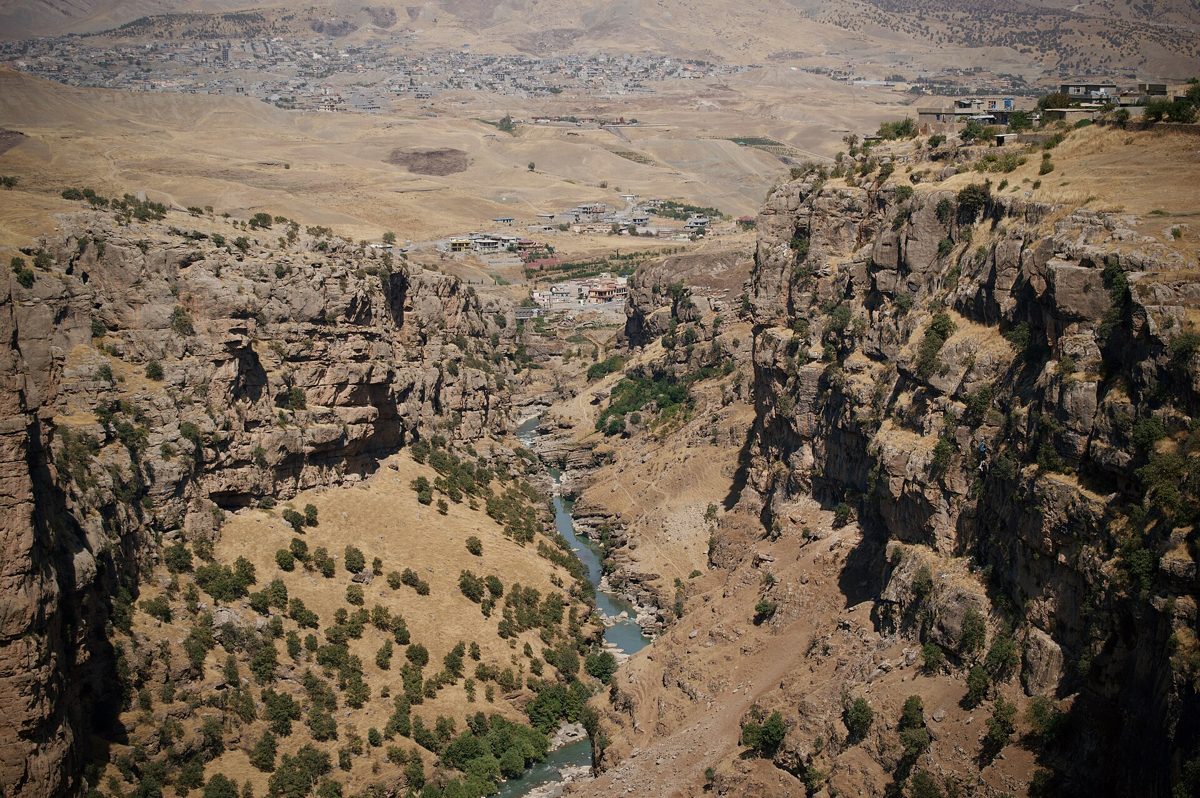
Altitude and terrain in the north. Hiking in Iraqi Kurdistan is genuine mountain walking, and the cable cars, canyons and mountain resorts that make the region attractive are exactly the activities that appear in exclusion lists.
Medical care itself is better than most people expect for routine problems. Private hospitals and clinics in Erbil, Sulaymaniyah and Baghdad handle everyday emergencies competently, pharmacies are well stocked and pharmacists are often the fastest route to a solution. What the system does not reliably offer is complex trauma, neurosurgery or extended intensive care — which is precisely why the evacuation limit, not the medical limit, is the number to interrogate.
What a claim from Iraq actually involves
Nobody writes about this part, and it’s where good intentions meet paperwork.
Pay and reclaim is the norm. Direct billing arrangements between Western insurers and Iraqi hospitals are rare. Expect to pay for treatment yourself — in cash, in a country where cards frequently don’t work — and claim it back afterwards. That has a practical consequence: your emergency fund needs to be real. Our cost guide explains why you’re carrying dollars anyway.
Keep everything, in paper. Itemised invoices, receipts, discharge summaries, prescriptions, pharmacy dockets. Photograph each one as you get it. Documentation in Arabic or Kurdish is normal and acceptable to most insurers, but translation delays claims, so ask for an English summary if the clinic can produce one.
Police reports for theft. Standard everywhere, more time-consuming here, and your hotel will help more than you expect.
Call before you’re treated, if you can. Most policies require notification, and the assistance line can steer you to a facility they’ll actually pay for. Save that number offline — connectivity is patchy and the moment you need it is the moment you won’t have signal.
Expect slow. High-risk claims are scrutinised more heavily than ordinary ones, and travellers report long correspondence with underwriters over Iraq claims even where cover clearly applied. Build that into your expectations rather than your budget.
If you’re travelling on a tour
Most Western visitors to Federal Iraq go with an operator — and almost all pilgrims travelling for ziyarat do — and it changes the picture in ways worth checking rather than assuming.
Operators running Iraq regularly carry their own liability cover, and some hold group policies or emergency-response retainers that give you a route to evacuation you wouldn’t have independently. That is not the same as insuring you. Their liability policy protects them; it typically does nothing for your broken leg. Almost every reputable Iraq operator therefore requires proof of your own insurance before departure, and several name the providers they know to work.
Ask your operator three things: what their own emergency response actually consists of on the ground, whether they have a relationship with a medical assistance provider, and which insurers their clients have successfully claimed with. That last question is more useful than any comparison site, because operators find out quickly which policies pay.
Employer, university and NGO rules
If you’re travelling in any organisational capacity, your own insurance may be the least of it.
Many universities prohibit staff and student travel to destinations rated Level 4 or FCDO-advised-against outright, and their institutional insurance is void for such trips by policy rather than by underwriting. Corporates frequently have the same rule, sometimes with an exceptions process requiring security training and a documented risk assessment. NGOs and media organisations usually have both a policy and a dedicated insurance arrangement — but it covers sanctioned deployments, not the week you added on the end.
Two practical notes. Some specialist insurers offer discounts for travellers who have completed recognised hostile-environment or travel-safety training, which is a rare case of an insurance incentive pointing at something genuinely useful. And if you’re travelling for work in any sense, resolve the status question before you fly — a leisure policy plus paid work is a void policy.
What insurance can’t fix
Worth stating plainly, because insurance is often bought as a substitute for planning.
A policy does not create a hospital that can treat you. It does not restart flights when airspace closes — and it may not compensate you either, since airspace closure and government-ordered disruption often sit outside cancellation cover. It does not summon a consulate whose services are curtailed. And it cannot be bought retroactively at the moment you realise you want it.
The things that actually reduce your risk in Iraq are unglamorous: not driving at night, wearing a seatbelt in the back, staying out of the provinces your government has flagged, keeping your plans loose enough to absorb three lost days, and travelling in a month that isn’t 50°C. Our is Iraq safe guide sets out the realistic risk ranking, and best time to visit covers the seasonal half of it. Insurance is what you buy for the residue after you’ve done all that.
Iraq travel insurance: your questions, answered
Does travel insurance cover Iraq?
Standard policies generally don’t, because travel against government advice is a standard exclusion and every major government currently advises against Iraq in some form. Specialist high-risk insurers do write cover, at higher cost and with exclusions that need reading carefully.
Which insurers cover Iraq?
A small number of specialist high-risk underwriters and brokers, plus some medical-led plans sold through aggregators. IATI is the provider most often named by operators and travellers. Availability shifts — one UK specialist that markets itself on FCDO-advised-against destinations currently isn’t writing Iraq at all. Check directly rather than relying on any list, including this one.
Is travel insurance mandatory for Iraq?
The federal e-visa fee has been reported as including a mandatory health insurance element (see our visa guide), and travellers are commonly asked to have the certificate available on arrival. That is not the same as comprehensive cover, and it is nowhere near evacuation-grade. Treat it as an entry formality, not protection. Our entry requirements guide covers what you’re asked for at the border.
How much does Iraq travel insurance cost?
Far more than ordinary travel cover, and it varies enough by age, trip length, itinerary, activities and whether war cover is included that any single figure would mislead. Get quotes with your actual provinces and dates rather than a country-level enquiry.
Does my policy cover medical evacuation from Iraq?
Only if it says so, with its own limit. This is the benefit that justifies the product: international air ambulance transfers are commonly quoted from around $50,000 to well over $100,000, and you would be asked to fund it before departure. Check the evacuation limit is separate from the medical limit, and check who decides.
Does travel insurance cover war or terrorism in Iraq?
Sometimes, and the two are treated differently. Some policies cover terrorism but exclude war; the classification is made after the event by the insurer. At least one specialist provides war cover on business trips but explicitly not on leisure trips. Ask in writing.
Does the FCDO change in July 2026 mean I can get normal insurance now?
Not normal insurance, but the market is meaningfully different. Most of Iraq including Baghdad, the southern shrine cities and all of Kurdistan moved from “against all travel” to “against all but essential travel”, and a number of underwriters treat those two categories differently. If you were refused before July, ask again, and be specific about provinces.
Is Kurdistan treated differently from the rest of Iraq?
By some insurers, yes — it has long been viewed as a lower-risk region, and it now sits in the FCDO’s less severe category. But it is not a separate country for insurance purposes, and the region has seen strikes during 2026. Don’t assume a policy covering “Iraq” excludes Kurdistan, or that one covering Kurdistan extends south. Ask about both.
Will my credit card travel insurance work in Iraq?
Almost certainly not. Card-linked policies are mass-market products with standard advisory exclusions and no high-risk underwriting. Read the certificate rather than assuming.
What if the advisory changes while I’m in Iraq?
This is a real scenario in 2026 and a question worth asking before you buy. Some policies continue cover for a defined window or until you can reasonably leave; others cut off at the change. The answer belongs in writing, before departure.
Can I buy cover after I’ve already arrived?
A few specialist products can be purchased after departure, though usually with a waiting period and never for something that has already happened. It’s a poor substitute for arranging it beforehand.
Final thoughts
Insurance for Iraq is one of the few parts of planning this trip where the honest answer is genuinely uncomfortable. The cover is expensive, the exclusions are wide, the market is thin enough that a specialist can withdraw entirely, and the benefit you’re really buying — being flown out alive — is the one you hope never to test.
What you can do is refuse to be vague about it. Ask the eleven questions above, get the answers in writing, know which provinces your itinerary touches and which category each sits in, and save the assistance number somewhere that works without a signal. That’s a couple of hours of admin, and it’s the difference between having insurance and believing you do.
When the cover is sorted, the rest of the planning is in our complete Iraq travel guide, with the paperwork in entry requirements, the kit in our Iraq packing list, and the routes in our itineraries.
Photo credits
All images via Wikimedia Commons: Levi Clancy (CC0); Alli Khalil (CC BY-SA 4.0); Khoshhat (CC BY 4.0).