Last updated: September 2026. Travel advice re-checked on 25 and 26 September 2026 against the FCDO’s Iraq pages and the US State Department’s 29 August 2026 reissue; site histories checked against published excavation summaries and the British Museum’s Girsu Project; health figures from Iraq’s Ministry of Health as reported in August 2026.
Most people who come to southern Iraq for the Sumerians see Ur, perhaps Uruk, and go home. Girsu, Lagash and Eridu are for the ones who have read the books. They are three low mounds in the Dhi Qar desert where much of what we know about Sumerian kings, temples, wars and laws was dug up, and in 2026 you are more likely to find archaeologists on them than tourists. This page, part of our guide to Iraq’s ancient Mesopotamian sites, is written for that kind of traveller.
Girsu, modern Tello, was the religious capital of the Sumerian state of Lagash, home of the warrior god Ningirsu’s great temple and of the ruler Gudea, in Dhi Qar province of southern Iraq. With Lagash itself (Tell al-Hiba) and Eridu (Tell Abu Shahrain), it makes up the deep end of Sumer: important, remote, and not set up for visitors.
Below: what each site was and what came out of it, where the finds are now, the latest excavations up to 2025, how the three fit together on the map, whether and how you can get to them, the FCDO advice for Dhi Qar as of September 2026, a health warning specific to this province, and the long list of things nobody publishes.
The short answer
| Site | Modern name | What it was | Visitor status (September 2026) |
|---|---|---|---|
| Girsu | Tell Telloh (Tello) | Religious capital of Lagash; temple of Ningirsu; Gudea’s city | Active British Museum excavation; no published visitor arrangements |
| Lagash | Tell al-Hiba | The state’s largest city, 400–600 hectares | Active excavation (Penn, Cambridge, Pisa); no visitor arrangements published |
| Eridu | Tell Abu Shahrain | In Sumerian tradition, the first city of kings; temple of Enki | UNESCO World Heritage (2016) as part of the Ahwar; no visitor information published |
| Nearest base | Nasiriyah, the capital of Dhi Qar province, which also has the Ziggurat of Ur and an open provincial museum | ||
| UK advice | FCDO: against all but essential travel to Dhi Qar (unchanged as of 25 September 2026) | ||
| US advice | Level 4, Do Not Travel, for all of Iraq (reissued 29 August 2026) | ||
What was Girsu?
The Sumerian state of Lagash was not one city but three: Lagash itself, the town of Nigin to the south, and Girsu, about 25 km north-west of Lagash, the state’s religious heart. Girsu was lived in from the Ubaid period, around 4900–4500 BC, and it rose to prominence in the Early Dynastic period (2900–2335 BC). Its great sanctuary, the E-ninnu, belonged to Ningirsu, the state’s warrior god, and to his wife Bau, whose festivals ran for days. Under Gudea, around 2144 to 2124 BC, Girsu became the capital outright, and it remained the religious centre after power moved back to Lagash.
The mound matters to the whole history of archaeology. Between 1877 and 1900 the French consul Ernest de Sarzec ran eleven campaigns here, making Telloh the first Sumerian site to be excavated on a large scale; until then, the Sumerians were a theory argued over by philologists. He and his successors, Gaston Cros, Henri de Genouillac and André Parrot, filled the Louvre with Sumerian sculpture. Between their seasons, looters dug too, and some 35,000 to 40,000 tablets reached the antiquities market. In all, about 50,000 cuneiform tablets have come out of this one site, which today covers about 130 hectares with two main mounds some 15 to 17 metres high.
The Girsu Project: what has been found since 2016
Since 2016 the British Museum has worked at Girsu under Sébastien Rey, as part of the Iraq Emergency Heritage Management Training Scheme, a programme that trains Iraqi archaeologists in documenting and protecting damaged sites. It has turned into one of the most productive excavations in Iraq.
| When | What the Girsu Project found or announced |
|---|---|
| 2016 | Work begins, linked to the Iraq Emergency Heritage Management Training Scheme |
| March 2020 | A 5,000-year-old cultic area with more than 300 broken ceremonial vessels, animal sacrifices and a bronze duck figurine |
| February 2023 | A 4,500-year-old palace and the main sanctuary of Ningirsu, the “Temple of the White Thunderbird”, with more than 200 administrative tablets |
| 2024 season | About 200 more tablets, including school texts, and 60 clay sealings from the Akkadian period |
| Ongoing | Stabilising the mounds after early excavations and illegal digging, and preparing the site for visitors |
The team also found traces of a much later shrine on top of the E-ninnu’s ruins, which British Museum specialists have linked to the era of Alexander the Great: a Greek-period cult honouring Zeus and two divine sons, Heracles and, possibly, Alexander himself. Girsu, it turns out, was still remembered as holy ground two thousand years after Gudea.
Gudea: the ruler who filled the Louvre
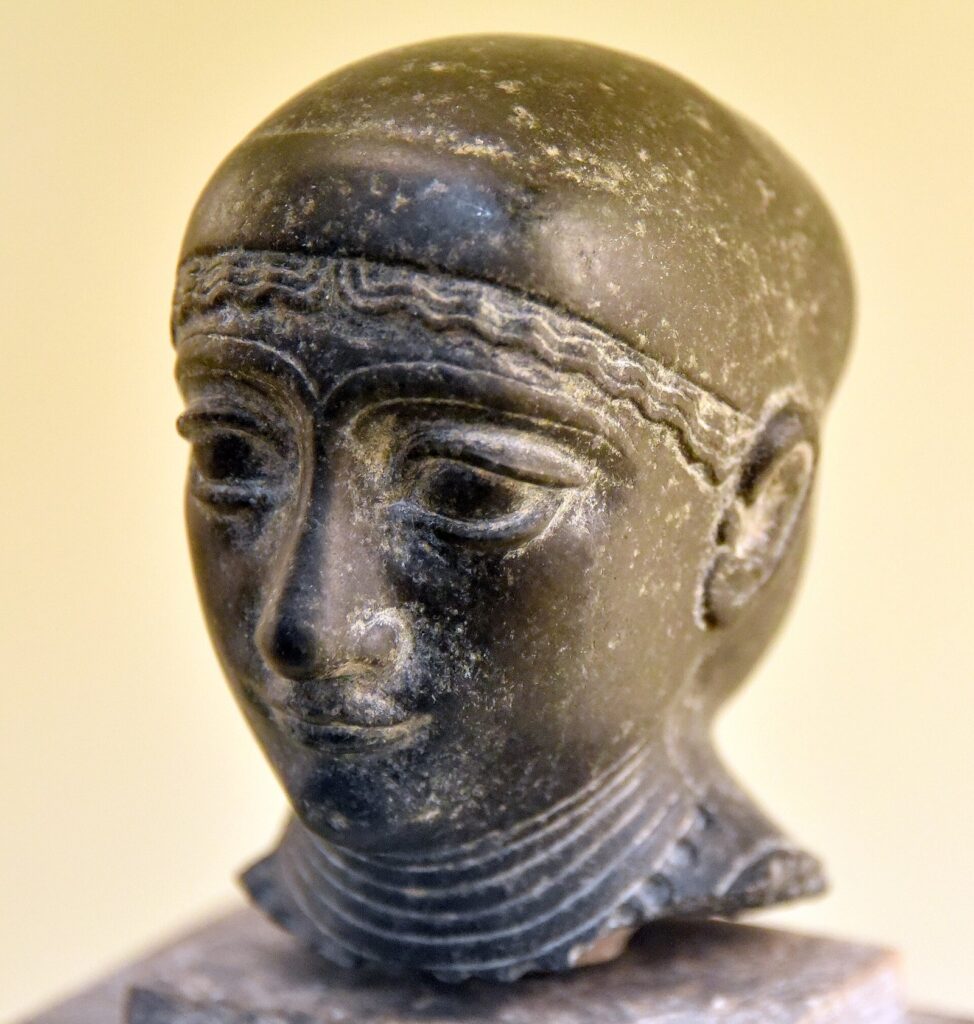
If you have seen one Sumerian face, it is probably Gudea’s. The ruler of Lagash around 2144 to 2124 BC commissioned a series of statues of himself in polished black diorite, a hard stone imported at great expense, standing or seated with hands clasped and often inscribed with long accounts of his temple building. Most of them came out of Girsu, and most are in the Louvre in Paris, with others in museums from London to New York. Two great clay cylinders, also in the Louvre, carry one of the longest Sumerian literary texts known, describing how Gudea rebuilt Ningirsu’s temple after the god appeared to him in a dream.
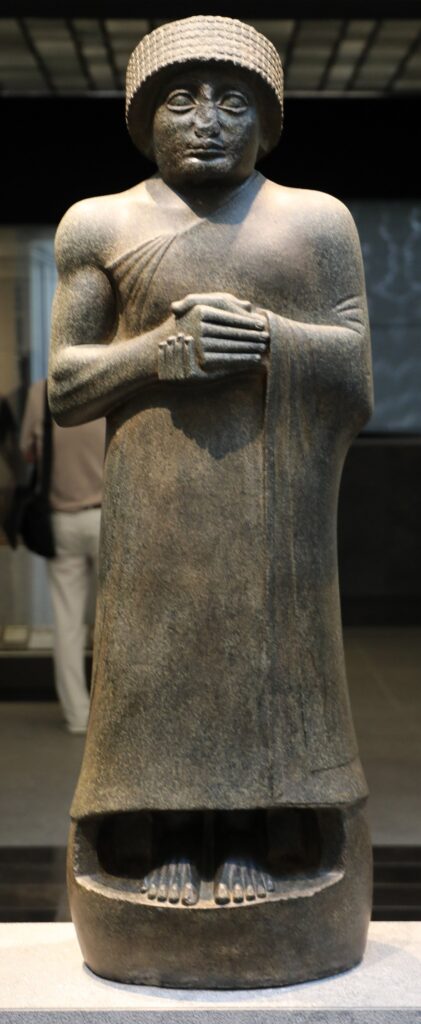
Gudea was not a conqueror on the scale of the Akkadian kings before him or the Ur III kings after him. His reputation rests on building and piety, and on the extraordinary quality of the sculpture made in his name, which remained a model for Mesopotamian artists for centuries.
Lagash (Tell al-Hiba): the city-state that fought Umma
Lagash itself is the big mound, about 3.5 km long and 1.5 km wide, with size estimates of 400 to 600 hectares; at its peak in the Early Dynastic III period it covered about 500. It lies about 22 km east of the town of Al-Shatrah, with Nigin about 10 km to the south. For two centuries its rulers fought a border war with the neighbouring city of Umma over a fertile strip of land called the Gu’edena, and the record of that war, carved on stone, is one of the earliest pieces of political history anywhere.
The rulers of Lagash
| Ruler | Approximate date | What he is remembered for |
|---|---|---|
| Ur-Nanshe | c. 2520 BC | Founder of the dynasty; claimed victories over Umma |
| Eannatum | c. 2450 BC | Defeated Umma; the Stele of the Vultures |
| Entemena | c. 2420 BC | Strengthened the state; inscriptions on the border dispute |
| Urukagina | c. 2350 BC | Judicial, social and economic reforms, before Umma sacked Lagash |
| Gudea | c. 2144–2124 BC | Temple building, statues, the cylinders |
| Nam-mahani | c. 2113–2110 BC | The last independent ruler before Ur took control |
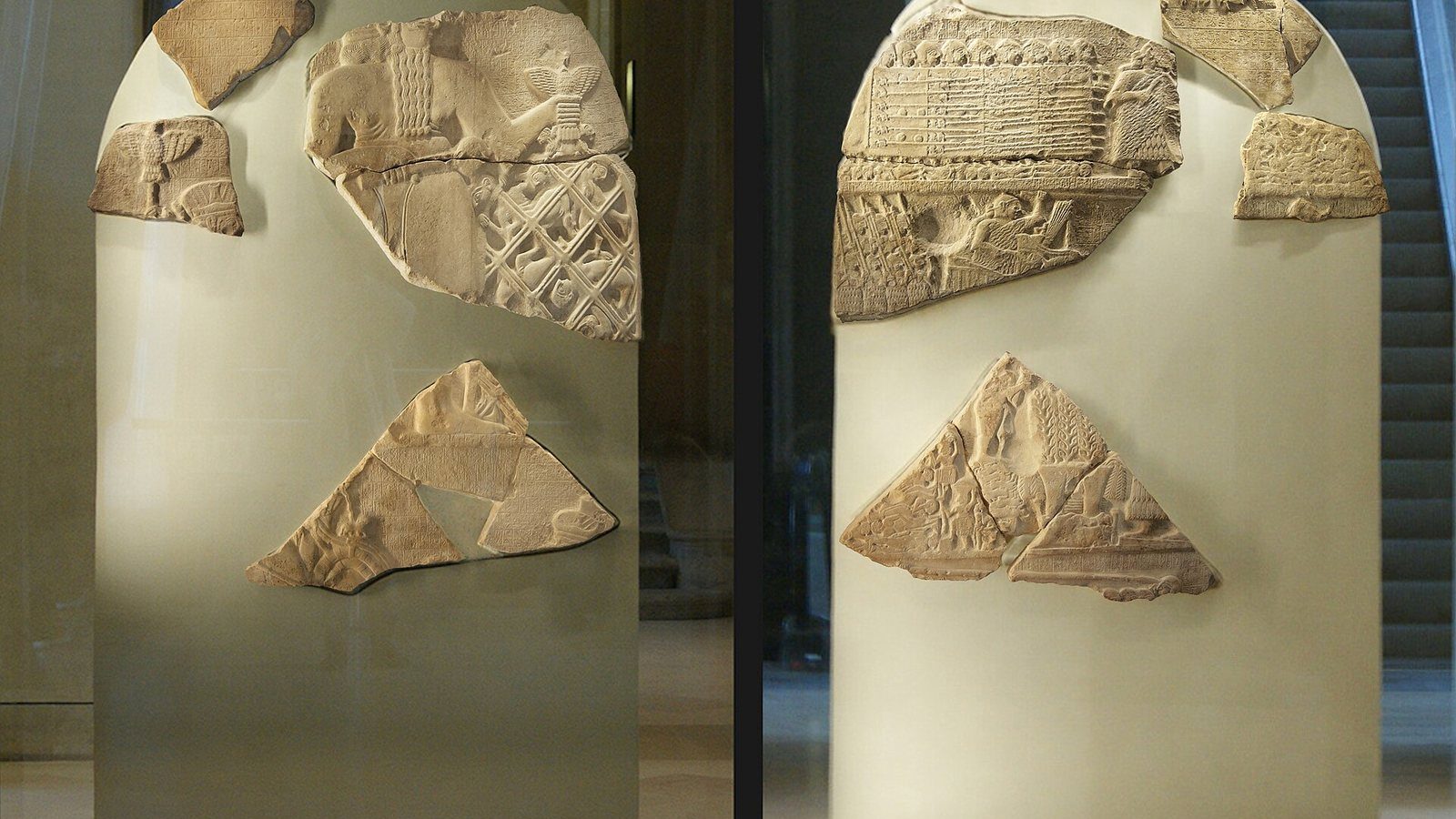
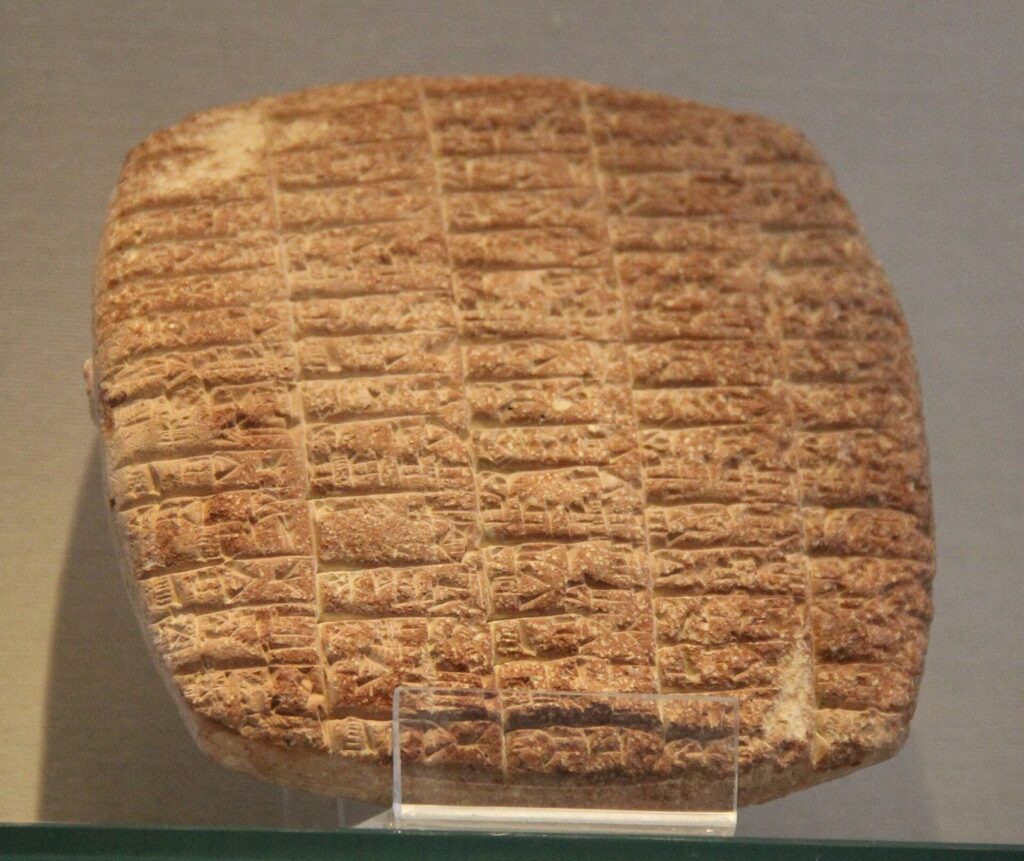
The Stele of the Vultures, found at Girsu and now in the Louvre, shows Eannatum’s soldiers marching over the bodies of the enemy while vultures carry off heads, and the god Ningirsu holding the men of Umma in a net. Urukagina’s reforms, which curbed the powers of officials and protected widows and orphans from exploitation, are often cited as one of the earliest recorded attempts at social reform; they did not save him, and a Lagash text lamenting the sack of the city by Umma’s ruler survives in the Louvre too.
Modern work at al-Hiba began with a short season by Robert Koldewey in 1887. A Metropolitan Museum team led by Vaughn Crawford and Donald Hansen dug from 1968 to 1976, finding temples of Inanna and Ningirsu, and Hansen’s last season was in 1990. Since 2019 the Lagash Archaeological Project, led by Holly Pittman of the Penn Museum with the University of Cambridge and Sara Pizzimenti of the University of Pisa, has been investigating the ordinary city. Its most talked-about find, in 2022, was a public eatery with ovens, a cooling system, benches and stacks of bowls and beakers: a place where working people ate together about 4,700 years ago.
Eridu: where kingship came down from heaven
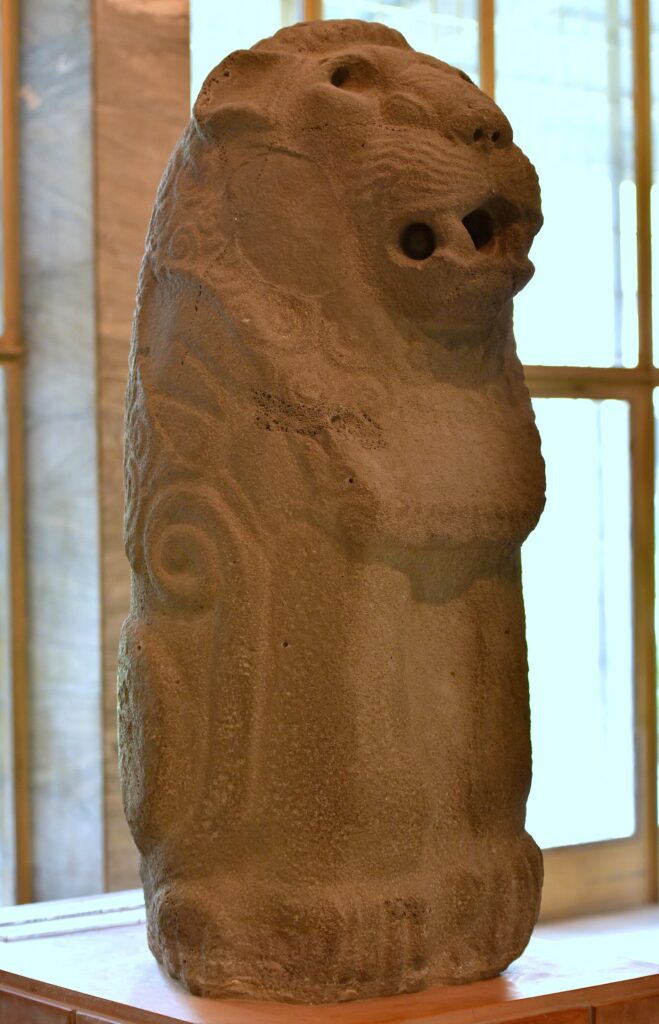
The Sumerian King List begins with a line that made Eridu famous: “When kingship from heaven was lowered, the kingship was in Eridu.” Its first kings, Alulim and Alalngar, are given reigns of tens of thousands of years, but the tradition that Eridu was the oldest city has a real basis. The site, Tell Abu Shahrain, about 24 km south-south-west of Ur, was founded around 5400 BC in the Ubaid period. It was the city of Enki, god of fresh water and wisdom, whose temple stood on the edge of the marshes.
Eridu’s great discovery is that temple. Excavating in 1946–49, Fuad Safar and Seton Lloyd found 18 mud-brick temples built one on top of the other beneath the later ziggurat, starting with a tiny shrine about 2 by 3 metres with a niche, around 4500 to 4000 BC, and growing level by level into a tripartite temple, the plan later Mesopotamian temples followed. It is one of the clearest pieces of evidence anywhere for continuity of worship on a single spot over thousands of years. They also excavated a cemetery of about 1,000 graves. Eridu was abandoned, on A. Leo Oppenheim’s reckoning, by about 600 BC, probably because irrigation had turned its soils salty.
Who built Eridu’s ziggurat? The sources disagree
| Source | What it says | What it actually tells you |
|---|---|---|
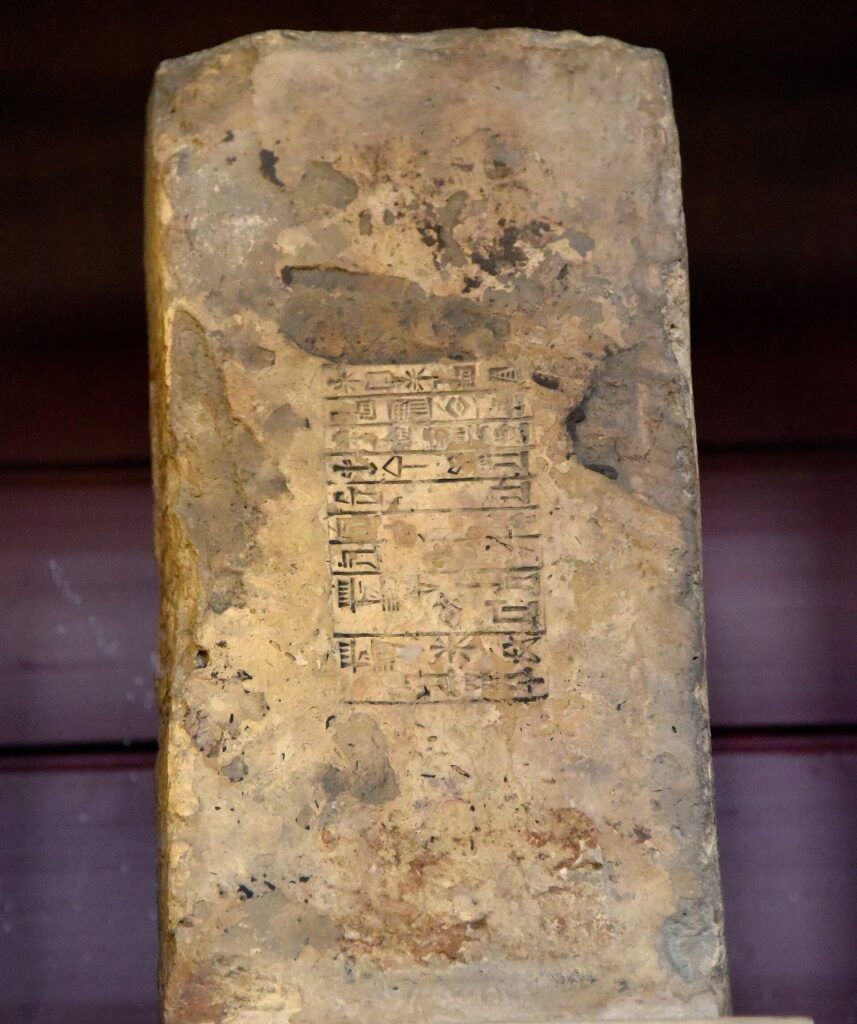
| Inscribed bricks from the site | “Ur-Nammu, king of Ur, the one who built the temple of the god Enki in Eridu” | Ur-Nammu (21st century BC) built or began the temple platform |
| Excavation summaries | The temples lie beneath “Amar-Sin’s ziggurat” | The ziggurat as it stands is credited to Amar-Sin, Ur-Nammu’s grandson |
| A stamped brick in the British Museum | Amar-Sin’s name, from Eridu | Amar-Sin built there too; completing or rebuilding a predecessor’s work was normal |
The likeliest reading is that the ziggurat was begun under Ur-Nammu, the founder of the Third Dynasty of Ur who also raised the great ziggurat at Ur, and finished or rebuilt under Amar-Sin. The earlier excavators were J.E. Taylor in 1855 and Reginald Campbell Thompson and H.R. Hall in 1918–19; joint Italian, French and Iraqi teams returned in 2019 and 2022. Since 2016 Eridu has been part of UNESCO’s Ahwar of Southern Iraq, alongside Ur, Uruk and four marsh areas, which makes it the only one of these three sites on the World Heritage List.
One practical warning belongs here. Eridu’s surface is strewn with sherds and stone fragments, and in 2022 a retired British visitor on an organised archaeology tour was arrested at Baghdad airport with fragments picked up at Eridu in his luggage and sentenced to 15 years in prison; the conviction was overturned on appeal later that year, but only after months in custody. Taking anything at all from an Iraqi archaeological site is a serious crime, and our guide to the Iraqi laws that catch tourists out explains the rest.
How the sites fit together
| Site | Location (as published) | Nearest town |
|---|---|---|
| Lagash (Tell al-Hiba) | About 22 km east of Al-Shatrah | Al-Shatrah |
| Girsu (Tello) | About 25 km north-west of Lagash | Al-Shatrah |
| Nigin (Tell Zurghul) | About 10 km south of Lagash | Al-Shatrah |
| Eridu (Tell Abu Shahrain) | About 24 km south-south-west of Ur | Nasiriyah |
| Ur | Just outside Nasiriyah | Nasiriyah |
These are straight-line distances between ancient sites. Nobody publishes road routes or drive times to them, and the mounds of Lagash and Girsu lie in open country north of Nasiriyah, so a local driver who knows the tracks is essential.
The rest of deep Sumer
Girsu, Lagash and Eridu are only the best documented of dozens of Sumerian cities in the plain between Nasiriyah, Samawah and Diwaniyah. A few more names come up constantly in the books, and knowing them helps make sense of the finds in any museum you visit.
| Site | Modern name | Province | Known for |
|---|---|---|---|
| Umma | Tell Jokha | Dhi Qar | Lagash’s great rival in the border war; badly looted after 2003 |
| Larsa | Tell as-Senkereh | Dhi Qar | A city of the sun god, about 24 km from Uruk; a major power around 1900 BC |
| Nippur | Nuffar | Al-Qadisiyah | The religious centre of Sumer, seat of the god Enlil; on Iraq’s UNESCO Tentative List since 2017 |
| Ur | Tell al-Muqayyar | Dhi Qar | The royal tombs and the best-preserved ziggurat; UNESCO World Heritage |
| Uruk | Warka | Al-Muthanna | The first great city and the earliest writing; UNESCO World Heritage |
After 2003, with the antiquities service overwhelmed, several of these mounds were pitted with looters’ holes on a scale that showed up in satellite photographs; Umma was among the worst hit. Guarding them is a large part of what the antiquities police in the south do today, and it is one reason unannounced visitors to remote mounds are met with suspicion rather than welcome. Arrive with an operator, paperwork and patience.
Can you visit Girsu, Lagash or Eridu?
Honestly, we don’t know of a reliable way, and nobody publishes one. All three are protected archaeological sites under Iraq’s State Board of Antiquities and Heritage (SBAH). Girsu and Lagash are active excavations with foreign teams in season; the British Museum’s project describes preparing Girsu for visitors in future, but we found no announcement that it has opened. Eridu, remote in the desert south-west of Ur, has no published visitor information at all.
If you are determined, the route is through a specialist Iraqi operator who works with SBAH, arranged well in advance, with the understanding that permission may not come. Ask whether they have taken anyone to Tello or al-Hiba recently, what the arrangement was, and what you will actually be allowed to see. Our guide to choosing a tour operator in Iraq covers the questions. Much more achievable, and still rewarding:
- Ur. The best-preserved ziggurat in Iraq, just outside Nasiriyah. It was closed for a restoration campaign due to finish in July 2026; check before you go. Foreign visitors paid 25,000 IQD there in 2026.
- The Nasiriyah Museum. SBAH listed it as open in February 2026, and it is the obvious place in the province to see Sumerian finds. Our overview of museums in Iraq has the wider picture.
- Uruk. In neighbouring Muthanna, now with a visitor path, signage and a rest area.
- The marshes. Al-Chibayish, about 90 km from Nasiriyah, is the base for boat trips; see our guide to nature in Iraq.
The paperwork is the same as for anywhere in federal Iraq: the federal e-visa, applied for at least 24 hours before travel ($160 for 60 days, per the FCDO as of 25 September 2026); a Kurdistan Region visa is not valid here. See our Iraq e-visa guide, and expect checkpoints on the roads out of Nasiriyah; our guide to Iraqi checkpoints explains the routine. For the region as a whole, read our guide to southern Iraq.
Is it safe to visit Dhi Qar?
Here is the frame as of late September 2026.
- UK. The FCDO advises against all but essential travel to Dhi Qar, as it does for Baghdad, Babil, Basra and most of southern Iraq. Its Iraq travel advice, last updated 22 July 2026, was unchanged when we checked on 25 September 2026.
- US. The State Department’s advisory is Level 4, Do Not Travel, for all of Iraq, reissued on 29 August 2026.
- Insurance. Travelling against FCDO advice can invalidate your cover; our guide to travel insurance for Iraq explains what to check.
- Health. Iraq had a serious outbreak of Crimean-Congo haemorrhagic fever (CCHF) in 2026, spread by tick bites and contact with the blood of infected livestock. By 6 August 2026 the Ministry of Health had reported 313 confirmed cases and 24 deaths nationally, with Dhi Qar the worst-hit province at 119 cases and 9 deaths. On rural sites, cover your legs, use repellent, check for ticks and stay away from livestock and slaughter areas. Our page on vaccinations and health for Iraq has the wider advice.
- Heat. Southern Iraq is brutal from May to September: Basra reached 51°C in August 2026. Visit these open mounds between November and March, early in the day.
- The wider picture. 2026 has seen 38 days of closed Iraqi airspace in the spring and repeated drone strikes on the Kurdistan Region, far to the north, and the US-led coalition’s mission was due to end on 30 September 2026.
For the reasoning behind all of this, read our assessment of whether Iraq is safe to visit and our guide to how the UK and US advisories work.
What we could not confirm
- Any visitor procedure for Girsu, Lagash or Eridu. No permit process, fee, hours or guard arrangement is published for any of the three.
- Whether Girsu has opened to visitors. The British Museum describes preparing the site for tourism; we found no opening announcement.
- Excavation seasons in 2026. We could not confirm whether the Girsu or Lagash teams are working this season, which affects what, if anything, you could see.
- Eridu’s condition. Beyond the 2019 and 2022 seasons, we found no current description of the site or of any guards on it.
- Road access and drive times. None are published for any of the three sites.
- What the Nasiriyah Museum displays. It was listed as open in February 2026, but we could not confirm its hours or whether it shows finds from Girsu or Lagash.
- The distance from Ur to Eridu. Wikipedia gives about 24 km south-south-west; some older references give a shorter figure. Treat it as approximate.
- CCHF figures. Counts conflict between sources; an IFRC figure from the same period was lower than the ministry’s. We quote the ministry’s, with its date.
Frequently asked questions
Where is Girsu?
At Tell Telloh, usually written Tello, in Dhi Qar province of southern Iraq, about 25 km north-west of the ancient city of Lagash (Tell al-Hiba). The nearest town is Al-Shatrah, and the provincial capital, Nasiriyah, is the practical base. The site covers about 130 hectares.
What is the difference between Girsu and Lagash?
Lagash was the name of both a Sumerian state and its largest city, at Tell al-Hiba. The state also included Girsu, its religious centre and for a time its capital, and the town of Nigin. Many older books and museum labels say “Lagash” for objects that actually came from Girsu, which adds to the confusion.
What has the British Museum found at Girsu?
Since 2016 its Girsu Project has uncovered a 5,000-year-old cultic area full of ceremonial vessels (announced in 2020), a 4,500-year-old palace and the main sanctuary of Ningirsu with more than 200 tablets (announced in 2023), and a further 200 tablets and 60 sealings in 2024. It also trains Iraqi archaeologists in heritage management.
Why is Eridu called the first city?
Because the Sumerian King List says kingship first came down from heaven at Eridu, and because archaeology backs up its great age: the site was founded around 5400 BC, and excavators found 18 temples built on top of one another there, the oldest a tiny shrine from about 4500 BC. Uruk has the better claim to the first true city.
Is Eridu a UNESCO World Heritage Site?
Yes, since 2016, as one of the seven components of the Ahwar of Southern Iraq, together with Ur, Uruk and four marsh areas. Girsu and Lagash are not on the World Heritage List, although both are protected Iraqi archaeological sites.
Can tourists visit Girsu or Lagash?
Not in any published, regular way. Both are active excavation sites, and no fee, hours or permit process is available. A specialist Iraqi operator working with the antiquities authorities might be able to arrange a visit, but there is no guarantee. Ur, Uruk and the Nasiriyah Museum are far easier ways to see Sumer.
Where are Gudea’s statues?
Most of the diorite statues of Gudea found at Girsu are in the Louvre in Paris, which also holds his two great clay cylinders and the Stele of the Vultures. Others are in museums including the British Museum and the Metropolitan Museum in New York, and at least one has been shown at the Louvre Abu Dhabi.
Is Dhi Qar safe for tourists?
The FCDO advises against all but essential travel to Dhi Qar, and the US rates all of Iraq Level 4, Do Not Travel, as of September 2026. The province also had Iraq’s worst CCHF figures in 2026, so take tick precautions on rural sites. Travelling against FCDO advice can invalidate insurance.
Final thoughts
These three mounds hold a strange imbalance. Their finds are among the most famous objects of the ancient world, the Stele of the Vultures, Gudea’s statues, the first lines of the King List, and yet the places themselves are almost unknown to travellers, with no paths, no signs and, for now, no way in that anyone publishes. Visiting them is still the preserve of archaeologists, and that may be the right order of things while the work is going on.
For most readers, the realistic plan is to meet Sumer at Ur and Uruk, in the museums of Nasiriyah and, when it reopens, Baghdad, and to keep an eye on Girsu, where a British-Iraqi team is actively working towards letting visitors in. If you do get to Tello or al-Hiba, you will be among a very small number of people who have seen them outside a trench.
For the rest of the story, start with our guide to Mesopotamia’s great sites, see the Assyrian north’s own recovery at Nimrud, and plan the Baghdad end around the Iraq Museum, which holds much of what stayed in the country.
Photo credits
Stele of the Vultures, Louvre (featured image): Background: Kikuyu3 Elements: Eric Gaba (User:Sting) Composite: पाटलिपुत्र (talk) 10:52, 30 April 2020 (UTC), Wikimedia Commons (CC BY-SA 4.0). Statue of Gudea from Girsu: Francesco Bini, Wikimedia Commons (CC BY-SA 4.0). Diorite head from Girsu, Berlin: Osama Shukir Muhammed Amin FRCP(Glasg), Wikimedia Commons (CC BY-SA 4.0). Lament for Lagash tablet, Louvre: Gary Todd, Wikimedia Commons (CC0). Basalt lion from Eridu, Iraq Museum: Osama Shukir Muhammed Amin FRCP(Glasg), Wikimedia Commons (CC BY-SA 4.0). Amar-Sin brick from Eridu, British Museum: Osama Shukir Muhammed Amin FRCP(Glasg), Wikimedia Commons (CC BY-SA 4.0). All images via Wikimedia Commons under the licences shown.