Last updated: August 2026. Operator prices, 2026–27 departure dates and group sizes were re-checked against each company’s own website in the week of 7 August 2026. Advisory wording is the FCDO text current on that date. Nothing here is a quote and no operator paid to appear.
Most articles about Iraq tours are written by companies selling them. Search the phrase and page one is operator landing pages, a couple of affiliate roundups that rank tours nobody has taken, and very little that tells you the thing you actually need to know first: in most of federal Iraq, a tour is not a preference or a luxury. It is close to a practical necessity. Whether you need a tour at all depends on the wider practicalities covered in the Iraq travel guide.
Iraq tours exist because independent travel in federal Iraq is genuinely difficult — not because it is forbidden, but because the visa system, the checkpoints, the near-total absence of long-distance public transport a foreigner can realistically use, and the fact that several major sites will not open their gate without a local fixer all stack up into something most people cannot solve alone. North of the green line it is a different country in practice: the Kurdistan Region has its own visa regime, its own police, and enough hire cars and taxis that plenty of people travel it independently and enjoy it.
So the honest question is not “which tour is best”. It is: which parts of Iraq do you want to see, does that region require a tour at all, and if it does, what are you actually buying. This guide compares the operators that genuinely run Iraq departures in 2026 and 2027 on structure rather than sales copy — group size, route, whether Mosul and Ninawa are on the itinerary, what the price includes and excludes — then goes through the money, the insurance trap, the pilgrimage market, and the questions worth asking before you send a deposit on any of the Iraq tours you are looking at.

The short answer
| Question | Answer |
|---|---|
| Do I need a tour for federal Iraq? | Effectively yes for most first-time visitors. Not a legal rule, a logistical one |
| Do I need one for Kurdistan? | No. Erbil, Sulaymaniyah and Duhok are straightforward independently |
| What does a group departure cost? | Roughly US$1,400–2,600 for 5–9 days, before flights and visa |
| What does a private trip cost? | From about US$1,200 for four days, rising steeply below three people |
| Typical group size | 8–15. Several operators cap at 10 or fewer |
| Is the visa included? | Sometimes the paperwork, almost never the fee. Check which |
| Will my insurance be valid? | Usually not, if you travel against your government’s advice. This is the big one |
| How far ahead to book? | Three to six months. Small groups fill and some 2026 dates are already waitlisted |
Why Iraq tours exist at all: federal Iraq versus Kurdistan
It is worth being precise about what forces the tour, because “Iraq is dangerous so you need a guide” is both lazy and not quite the reason.
What actually pushes people onto a tour
The visa. Visa on arrival in federal Iraq was suspended on 1 March 2025 for most nationalities, and an e-visa is now mandatory for the 37 affected countries, including the US, UK, Canada, Australia, Japan, South Korea and the whole EU. Plenty of nationalities can apply themselves through the government portal. Plenty of others cannot, and need a registered Iraqi company to sponsor the application — which means the tour comes first and the visa second, not the other way round. The mechanics are set out in full in our guide to the Iraq tourist visa and the wider entry requirements.
Transport. There is no usable intercity rail network for a visitor, the long-distance shared-taxi system runs on Arabic and local knowledge, and self-driving between provinces means negotiating checkpoints that will, reasonably, want to know who you are and why you are on that road. What this looks like in practice is covered in our piece on getting around Iraq. A tour solves it with a private vehicle and a driver who has done the route two hundred times.
Access at the gate. This is the one nobody writes about. Several major archaeological sites — Hatra and the Old City of Mosul among them — are controlled by a mixture of antiquities staff, local security and army units, and turning up as an unannounced foreigner is a good way to spend an afternoon being politely turned around. Registered guides pre-arrange the permissions. That is a large part of what you are paying for.
Checkpoints. They are frequent, generally courteous, and slow. A guide with the right paperwork and the right phone numbers turns a two-hour problem into a five-minute conversation.
Where independent travel genuinely works
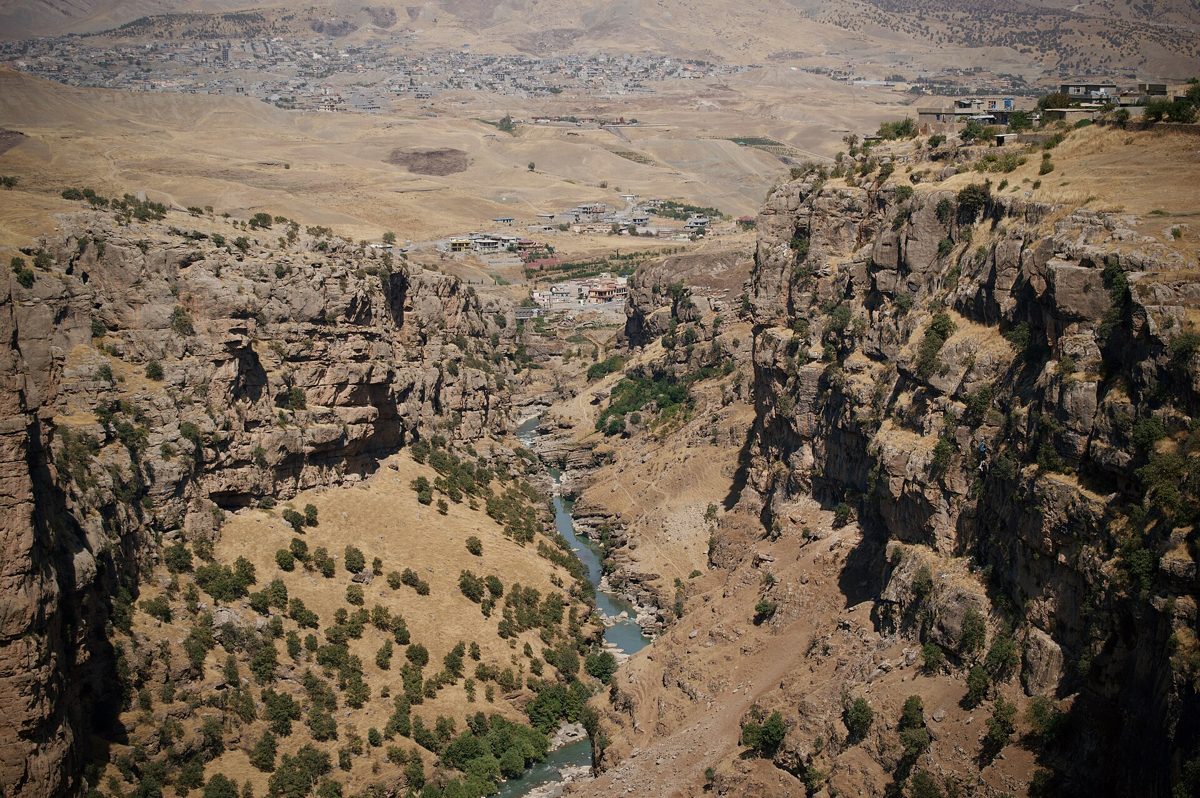
The Kurdistan Region operates its own entry system: visa on arrival is still available at Erbil and Sulaymaniyah airports for many of the same nationalities locked out of federal visa on arrival, valid around 30 days, with a KRI e-visa at roughly US$70. Roads are good, checkpoints are Peshmerga-run and quick, English is common in the cities, and ride-hailing works. People travel Iraqi Kurdistan independently every week without incident.
The hard boundary is the one people get wrong: a Kurdistan visa is not valid in federal Iraq. Travellers have been turned back at the internal crossings trying to head south on one. If you want both halves of the country, sort the federal visa first, and treat the Kurdistan leg as the part you could do alone if you wanted to.
Iraq tour operators, compared
These are companies with published Iraq tours departing in 2026 or 2027, checked on their own websites in August 2026. This is not a ranking and there is no winner. The differences that matter are structural: where the company is registered, how big the group gets, which provinces the route crosses, and what falls outside the price.
| Operator | Based | Max group | Sample published price (Aug 2026) |
|---|---|---|---|
| Aknaf Alsawary | Baghdad, Iraq | 10 | 9 days / 8 nights, US$2,200 sharing; single supplement US$400 |
| RJ Travel | UAE (Sharjah) + Morocco | 15 | 9-day group departure US$2,315; private 4-day from US$1,200 |
| Lupine Travel | Wigan, UK | Small group, not published | 7 nights federal Iraq, £1,875 |
| Young Pioneer Tours | China-based, international | Fixed numbers, not published | Southern Iraq 16–22 Oct 2026, US$2,595; Kurdistan 21–27 Oct 2026, US$1,395 |
| Koryo Tours | Beijing, China | Not published | 7 nights from US$3,390; 11 nights Basra–Erbil from US$4,290 |
| SURFIRAN | Tehran, Iran | Stated as 8 in one place, 12 in another | 7-day Iraq €1,895; 15-day Iran + Iraq €3,440 |
A few things that table cannot hold.
Aknaf Alsawary is an Iraqi company operating out of Baghdad, with fixed monthly departures published through to December 2027 and a stated policy that departures run even with a single booking. Entry tickets, the marshes boat trip and the marsh lunch are inside the price, which is unusual. Their terms for sponsored visas are worth reading before you book: the agency holds passports for the duration of the tour, you are accompanied from arrival to departure, and independent side-trips — including visiting friends — are not permitted. That is a real constraint, and it is stated openly, which is more than most.
RJ Travel is registered in Sharjah Media City with a second licence in Morocco, and runs a monthly nine-day group departure alongside private trips from four to thirteen days. Group size runs up to fifteen, which is at the larger end for Iraq. Note what sits outside the price: lunches, dinners, and monument admissions at US$20–25 per site, which on a nine-day archaeological route is not trivial.
Lupine Travel is the UK-registered option, out of Wigan, at £1,875 for seven nights of federal Iraq with departures in October and November 2026 and again in April and October 2027. Their published day one has you taking a taxi from Baghdad airport to the hotel yourself, where most competitors include a meet-and-greet at arrivals — a small thing, but exactly the kind of small thing that separates otherwise identical-looking itineraries.
Young Pioneer Tours splits its programme into southern Iraq, Kurdistan and combined trips, and is the cheapest way into Kurdistan on a fixed departure at US$1,395 for a week. It also runs an Arbaeen expedition, which almost nobody else in the adventure sector does. Their FAQ answers some safety questions more breezily than we would — “Iraq is perfectly safe for female travelers” is a sales sentence, not travel advice.
Koryo Tours is the most expensive of the six and the most explicit about what that buys: a local Iraqi guide plus a Koryo tour leader travelling with the group, all internal transport, entrance tickets and activities. Their long southern-to-northern route runs Basra to Erbil across eleven nights. Single supplement is US$50 a night.
SURFIRAN is an Iranian company, licensed by Iran’s tourism ministry, that has extended into Iraq — largely on combined Iran–Iraq itineraries. Their Iraq page contradicts itself on group size, listing a maximum of eight in the body and twelve in the FAQ, and most of the products displayed on it are Iran tours. If you book them, get the group cap in writing.
Beyond these six there are dozens of small Baghdad and Erbil agencies selling directly on Instagram and WhatsApp, plus a handful of Western brands that white-label somebody else’s ground operation. That second category is worth understanding, and we come back to it below.
What Iraq tours actually cost, and why
Iraq is expensive relative to its neighbours. A week in Jordan or Oman costs less. Travellers notice, and the reason is not that operators are gouging — it is the cost structure underneath.
| Where the money goes | Why it costs what it does |
|---|---|
| Private vehicle and driver | No group transport alternative exists. Every day is a chartered car or minibus |
| Licensed guide | Small pool of English-speaking licensed guides; demand outstrips supply |
| Permits and site access | Pre-arranged permissions, sometimes escorts, at restricted sites |
| Hotels | Thin four-star stock in Baghdad, Karbala and Nasiriyah; little price competition |
| Domestic flights | Baghdad–Erbil or Baghdad–Basra hops on routes with few carriers |
| Low volume | Fixed costs spread across small groups. Ten people, not forty |
| Visa handling | Sponsorship and letters of invitation are labour, and are charged for |
Reduced to a daily rate, the published 2026 group departures cluster between roughly US$240 and US$300 a person per day, with the higher-touch Western-led products running US$370–430. Kurdistan-only trips sit lower, around US$200 a day. Our full breakdown of on-the-ground spending lives in the Iraq travel cost guide; what matters here is that the tour price is the large majority of your trip budget, because there is very little left to spend money on once you are inside it.
Group departure or private trip?
Among the fixed-date Iraq tours, a scheduled group departure is the cheaper option per head and, for Iraq specifically, the more reliable one: the route is fixed, the permits are pre-arranged, and the operator has run it before. The trade is pace and company. Nine days with nine strangers works for some people and not for others.
A private trip costs more but not always dramatically more, because the vehicle and guide are being chartered either way. Published private rates start around US$1,200 for four days and US$3,900 for thirteen, per person — but those figures assume a shared room and usually a minimum of two. Solo, on your own dates, expect to pay a significant premium, which is one of several reasons our guide to solo travel in Iraq suggests joining a fixed departure rather than building something bespoke.
One structural point in favour of group departures here: at least one Iraqi operator states that its fixed dates run even if only one person books. That is a meaningful promise in a market where a cancelled departure can leave you holding a non-refundable e-visa and a flight.
What is included, and what quietly is not
Inclusion lists across the six operators are similar in shape and different in the details that cost money. This is the comparison worth making line by line before you compare headline prices.
| Item | Usually included | Often not |
|---|---|---|
| Hotels, 4-star, with breakfast | Yes, all six | Single room — supplements of US$50/night or US$400/trip |
| Private transport and driver | Yes | — |
| English-speaking guide | Yes | A second Western tour leader, on cheaper products |
| Airport meet and greet | Most | At least one operator has you take your own taxi in |
| Site entry tickets | Some | Others charge US$20–25 per site on the day |
| Meals beyond breakfast | Rarely | Lunches and dinners are usually yours |
| Visa paperwork vs visa fee | Paperwork often | The fee itself almost never |
| Travel insurance | Almost never | Mandatory on most, bought by you |
On the visa line, be careful with the numbers you are quoted. The Iraqi government tourist e-visa fee sits at around US$114, but operators commonly quote US$160 to US$190 for the same visa, and one publishes a US$250 sponsorship fee for nationalities that require a local guarantor. The gap is handling, not a different visa — but you should know which of the two figures you are being charged, and whether it is refundable if the application is refused.
One more piece of stale copy to watch: at least one major operator’s inclusion list still promises “all necessary documents for visa on arrival”. Visa on arrival in federal Iraq has been suspended since March 2025. The company knows this — the correct e-visa information appears elsewhere on the same site — but it tells you something about how carefully these pages are maintained.
Mosul, Ninawa and the advisory question nobody puts on the booking page
Look closely at the itineraries and a pattern appears. Most nine-day southern routes include Samarra, Hatra and Mosul. Several include Kirkuk-adjacent driving. And the FCDO’s advice, regionalised since 2024 and updated on 22 July 2026, advises against all travel to Ninawa province — which includes Mosul and Hatra — and to Salah al-Din, which includes Samarra. Most of the rest of the country, including Baghdad province outside Sadr City, Karbala and Najaf, is “all but essential travel”, as is the entire Kurdistan Region.
The US position is blunter: Level 4, Do Not Travel, reissued 2 March 2026, with non-emergency US government employees ordered to leave and US personnel in Baghdad prohibited from using Baghdad International Airport.
None of this means the sites are closed or that the operators are behaving improperly. Mosul’s al-Nuri mosque and the al-Hadba minaret reopened in September 2025 and the airport reopened that November; the city receives visitors and would like more of them, as our Mosul guide sets out. It means something narrower and more practical: an itinerary can be perfectly normal and still cross a province your government tells you not to enter, and the consequences of that land on you, not the operator.
What to do with that is your decision, and we are not going to make it for you. What we will say is that you should know which provinces your route crosses before you pay, rather than discovering it on day six. Ask for the itinerary by province, not by site name. Our standing assessment of the risk picture is in is Iraq safe, and the current access position — who can get in and where they can go — is in is Iraq open to tourists.

The insurance problem
This is the single most consequential thing on this page and the one least likely to appear on a booking form.
Most travel insurance policies are void if you travel against your own government’s advice. Not “reduced”. Void — for everything, including a broken ankle at Babylon that has nothing to do with security. The FCDO says so directly. Since the FCDO currently advises against all but essential travel to every part of Iraq a tourist would visit, and against all travel to several provinces that standard itineraries cross, a standard UK annual multi-trip policy will almost certainly not respond.
Iraq tours handle this inconsistently. Most list travel insurance as mandatory but not included, which puts the problem on you without explaining it. One publishes an FAQ saying insurance “is included with the Iraqi visa” — that refers to the basic health cover bundled into the e-visa, which is not medical evacuation cover, not repatriation, and not cancellation. Do not confuse the two.
The workable route is a specialist policy written for travel to countries under adverse advisories, bought from an insurer that will confirm in writing that it covers Iraq and covers medical evacuation. Those exist and they cost more. We have set out how to read the exclusions and what to ask an underwriter in our guide to travel insurance for Iraq. Do that before you pay a tour deposit, not after — if you cannot get cover you are comfortable with, that is useful information while your money is still yours.
Pilgrimage tours are a separate industry
Two almost entirely disconnected markets both trade under the heading of Iraq tours, and confusing them wastes a lot of people’s time.
The adventure and cultural operators compared above sell eight to fifteen places on a Mesopotamian archaeology route with a marshes day and a Baghdad walking tour. The Ziyarat operators — serving Shia pilgrims travelling to Najaf, Karbala, Kadhimiya and Samarra — are a far larger business, run mostly out of Pakistan, India, the Gulf and the UK, moving groups measured in the hundreds rather than the dozens.
The economics are different too. Ziyarat packages advertised for 2026 commonly start around US$1,400 to US$1,800 for ten days to a fortnight, frequently including flights — less than half the per-day cost of an adventure itinerary. That is achievable because the routing is short, the hotels are pilgrim hotels near the shrines, the buses are full, and the group does not need permits for restricted archaeological sites. Standards vary enormously at that price, and the sector has less of the published-itinerary transparency the adventure operators have. Our Iraq pilgrimage guide covers the shrine cities in their own right.
Arbaeen is its own category
Arbaeen — 5 August in 2026 — is the largest annual gathering of people anywhere on earth, centred on Karbala, with millions walking the roughly 80km from Najaf. For a few weeks around it, roads, hotels and transport across the south behave nothing like they do the rest of the year, and ordinary cultural itineraries are usually rerouted or suspended.
A small number of adventure operators run dedicated Arbaeen departures; one published a 2027 expedition at €1,695 for the short version and €2,995 for the extended one. If you are going as a pilgrim, go with a Ziyarat operator who does this every year. If you are going as an observer, think hard about whether you should — and if you do, go with someone experienced, in a very small group, and accept that you are a guest at somebody else’s act of devotion. Our notes on etiquette and expectations are in the Iraqi culture guide.
Questions to ask before you book
Nothing on page one for guided tours of Iraq gives you a due-diligence checklist, which is odd, because this is a destination where the difference between a competent operator and a confident one is large. Send these by email and keep the replies.
Who is actually running the trip?
Ask for the name of the Iraqi company that will meet you at the airport, and its licence with the Ministry of Culture, Tourism and Antiquities. A number of Western-facing brands subcontract to the same small set of Baghdad and Erbil agencies. That is not a scandal — the ground operator is often excellent — but it means you may be paying a Western margin for a service you could book directly, and it means the company answering your emails is not the company responsible for you on the road. Ask, and see whether they answer plainly.
Does the price include the letter of invitation or e-visa sponsorship, and what happens if the visa is refused?
Get the sequence in writing: who applies, when, what it costs, and whether the tour deposit is refundable if the application fails. If a sponsored visa is involved, ask whether the agency will hold your passport during the trip and whether you may leave the group unaccompanied. At least one operator states plainly that the answer to both is yes.
What is the contingency if the airspace closes mid-trip?
This is not hypothetical. EASA’s Iraq bulletin CZIB-2026-05, issued 8 July 2026 and running to 31 August unless reviewed earlier, advises operators not to use the Baghdad flight information region. Iraqi airspace closed entirely after strikes on 28 February 2026 and has reopened to limited commercial traffic since. Ask who pays for extra hotel nights, who rebooks the flight, and whether the operator has ever had to do it.
What is the evacuation plan?
Specifically: which hospital in Baghdad or Erbil, who makes the call, who pays the deposit a private clinic will want up front, and whether the operator has a relationship with a medical assistance company. “We would call an ambulance” is not a plan.
Which provinces does the route cross?
Ask for the itinerary annotated by province rather than by site, then check each one against your own government’s advisory. It takes ten minutes and it is the only way to know what you are agreeing to.
Is the departure guaranteed, and at what number?
Minimum group size, whether the date runs if it is not met, and how late they can cancel. If a tour is cancelled after your e-visa is issued, that fee is generally gone.
What financial protection do I have?
Of the six operators above, one is registered in the UK, one in the UAE with a Moroccan branch, one in Iraq, and the rest outside Europe. None of them advertised ATOL or ABTA membership on the pages we checked. That means for most of these bookings there is no UK or EU package-travel financial protection standing behind your deposit if the company fails. Pay by credit card where you can, and understand that a bank transfer to an overseas account has no recourse at all.
Who is the guide, and is it the same person throughout?
Guides are the single largest variable in the quality of an Iraq trip. Ask for a name and a short bio. One published itinerary we checked simply says “Led by TBC” three months before departure, which is honest but tells you something about the model.
Red flags
None of these means a company is dishonest. All of them mean slow down and ask more questions.
- Any promise that Iraq is “100% safe” or “perfectly safe”. A competent operator manages risk; it does not pretend the risk is absent.
- Refusal to name the ground handler, or vagueness about who meets you at the airport.
- An itinerary that lists sites but not provinces, especially when it crosses Ninawa or Salah al-Din.
- Payment by bank transfer or crypto only, with no card option.
- Any suggestion that the visa includes travel insurance.
- Inclusion lists that still reference visa on arrival for federal Iraq — a sign the page has not been updated since early 2025.
- Pressure to book immediately on a discount that expires in 48 hours. Iraq tours do sell out, but not like that.
Iraq group tour, private trip, or independent?
A blunt summary of who each option suits.
A group departure makes sense if it is your first time in Iraq, if you want the archaeology of the south, if you are travelling alone, or if your nationality requires visa sponsorship. It is also the cheapest way to see Babylon, Uruk, Ur, the marshes and Samarra in one loop, because the transport cost is shared.
A private tour makes sense with two to four people, a specific interest, or fixed dates that no group departure matches. The cost per head falls quickly as the group grows, because you are chartering the same vehicle either way.
Independent travel makes sense in the Kurdistan Region, and for confident travellers with Arabic, time and patience, in parts of the south. It does not make sense as a first trip into federal Iraq. If you are weighing it up, read our Iraq itinerary options first — the routing constraints tend to answer the question for you.
A hybrid is what a lot of experienced travellers actually do, and it is worth asking operators whether they will sell you the southern half of one of their Iraq tours as a standalone leg: a guided week in the south, then fly to Erbil and travel Kurdistan independently for a few days. It is usually the best value of the three, provided the federal visa is sorted first.

Timing and practical booking
Iraq tours cluster in the shoulder seasons for good reason: summer in the south is brutal and winter brings rain and cold in the north. October, November, March and April carry most of the published 2026–27 dates, and the same months are what our guide to the best time to visit Iraq recommends for independent trips.
Book three to six months out. Several October 2026 departures we checked were already waitlisted or down to a single place in early August. Deposits run from US$500 to £750 depending on the operator, and are typically non-refundable once the visa process starts.
Build slack around the flights. With EASA advising against use of the Baghdad FIR and Iraqi airspace having closed at short notice more than once in 2026, a same-day onward connection out of Baghdad or Erbil is a bad bet. Arrive a day early and leave a day late if you can. Everything else you need on the practical side — what to bring, what to wear, how to stay connected — is in our Iraq packing list and the guide to buying an Iraq SIM card on arrival.
Frequently asked questions
Can I visit Iraq without a tour?
Legally, yes, in most of the country. The Kurdistan Region is straightforward independently. Federal Iraq is legal but hard: no usable long-distance public transport for foreigners, frequent checkpoints, and several sites that will not admit you without pre-arranged permission. Most first-time visitors to the south go with an operator for logistics rather than permission.
How much do Iraq tours cost?
Published 2026–27 group departures run from about US$1,395 for a week in Kurdistan to US$4,290 for eleven nights across the whole country. The mainstream southern nine-day product sits around US$2,200–2,600. Flights, the visa fee and insurance are extra on all of them.
Are guided tours of Iraq safe?
Operators run them without incident most of the time, and the guides are generally very good at reading local conditions. That is not the same as safe in the sense your insurer means. The UK advises against all but essential travel to every region a tourist would visit and against all travel to several provinces on standard itineraries; the US advises against all travel to Iraq. Judge it on the advisory and your own tolerance, not on an operator’s reassurance.
Which operators actually run Iraq tours in 2026?
Companies with published 2026 or 2027 Iraq dates at the time of writing include Aknaf Alsawary, RJ Travel, Lupine Travel, Young Pioneer Tours, Koryo Tours and SURFIRAN, alongside a large number of smaller Baghdad and Erbil agencies selling directly. Verify dates on the operator’s own site before you plan around them.
Do Iraq tours include Mosul?
Many nine-day itineraries do, usually alongside Hatra and Lalish. Mosul has been receiving visitors since the al-Nuri mosque and al-Hadba minaret reopened in September 2025 and the airport reopened that November. Note that Mosul and Hatra are both in Ninawa, which the FCDO advises against all travel to — which is a decision for you, and an insurance problem regardless.
Is the visa included in the tour price?
Usually the paperwork is and the fee is not. The government e-visa fee is around US$114, while operators commonly quote US$160–190 and up to US$250 where sponsorship is required. Ask which figure you are being charged and whether it is refundable on refusal.
What is the best Iraq group tour?
There isn’t one, and anybody telling you otherwise is selling something. Pick on structure: how big the group gets, which provinces the route crosses, whether entry fees and the marshes trip are inside the price, where the company is registered, and whether they answer the due-diligence questions above properly.
Can women join Iraq tours?
Yes, and plenty do. Dress is conservative country-wide and an abaya and headscarf are required inside the Najaf and Karbala shrines — most operators help you buy them locally. Solo women report generally warm receptions and a lot of curiosity. The practical detail is in our Iraq travel tips.
How far in advance should I book?
Three to six months for a fixed departure. Groups are small, several operators publish only one date a month, and the visa process wants lead time — up to ten working days where sponsorship is involved.
Final thoughts
The uncomfortable thing about writing this comparison is that the operators are not the problem. They are, on the whole, small companies doing something logistically hard in a country most of their competitors will not touch, and the Iraqi guides on the ground are the reason people come home talking about the hospitality rather than the ruins. The problem is that the entire published conversation about Iraq tours is written by the people selling them, so the two questions that actually determine how your trip goes — which provinces you will cross and whether your insurance will pay — are the two nobody puts on the booking page.
Ask them. A good operator will answer both directly and will not be offended that you asked; some will tell you they think a particular leg is not currently worth doing, which is the most useful sentence you can get out of this process. If a company will not name its ground operator, will not annotate the route by province, or tells you Iraq is perfectly safe, you have learned something for the price of an email.
Then, once you have chosen, spend the time before you go on the country rather than the logistics. Read up on where the route is taking you in our ancient Mesopotamia primer, look at what else you could add in the best places to visit in Iraq, and start with the Iraq travel guide if you are still working out whether this trip is for you at all.
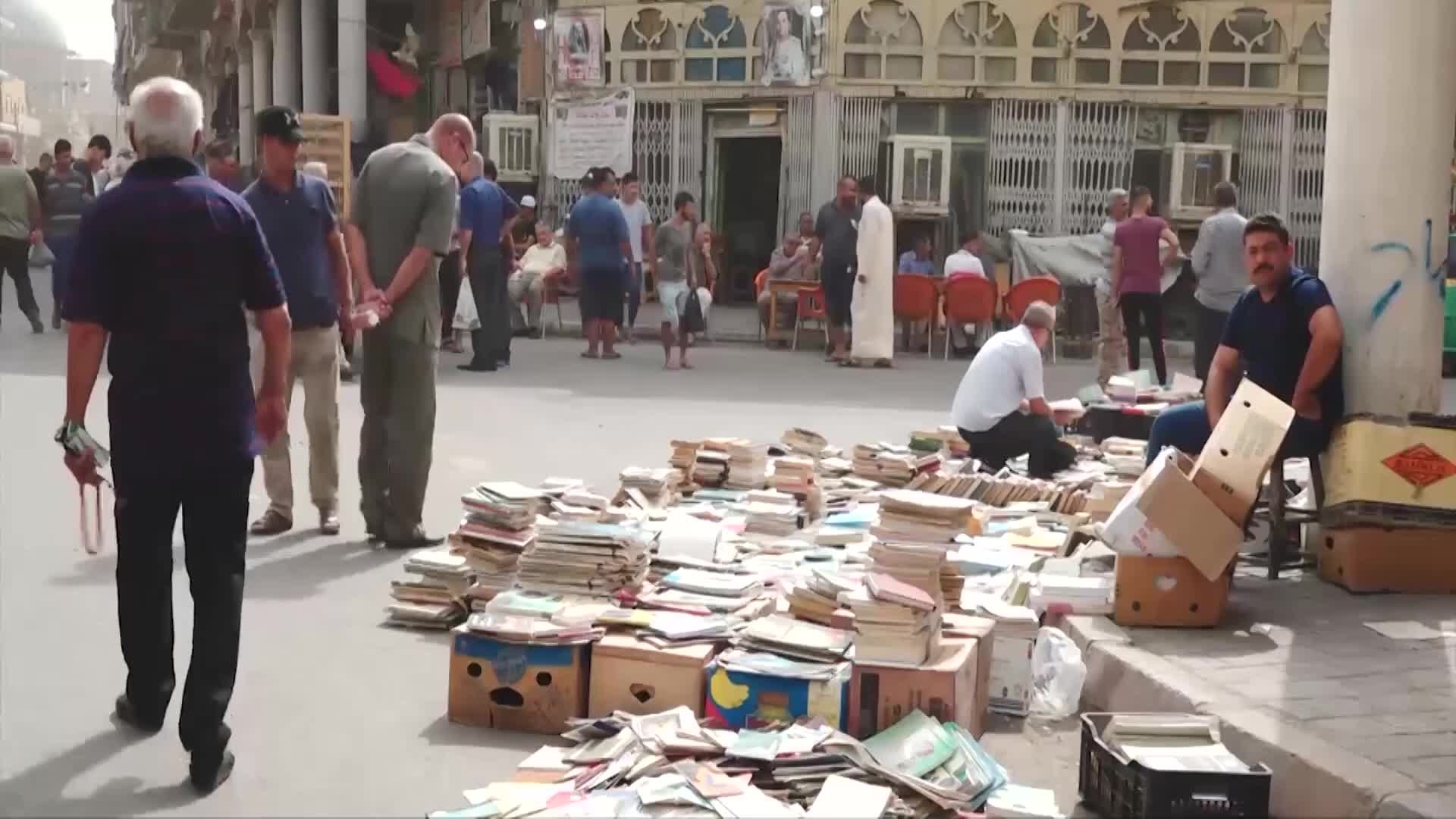
Photo credits
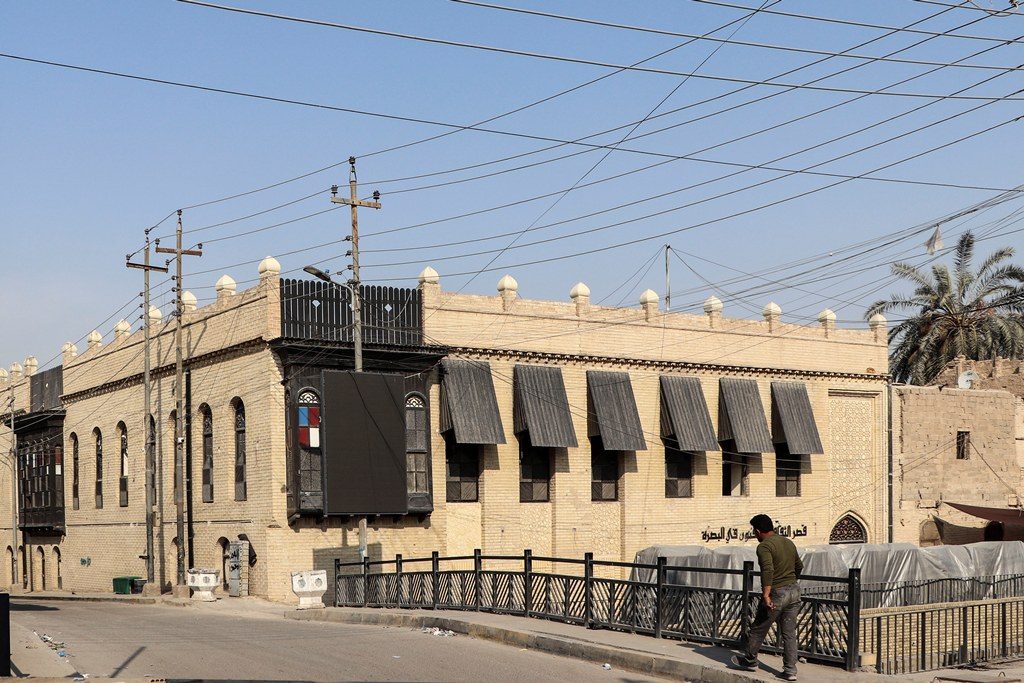
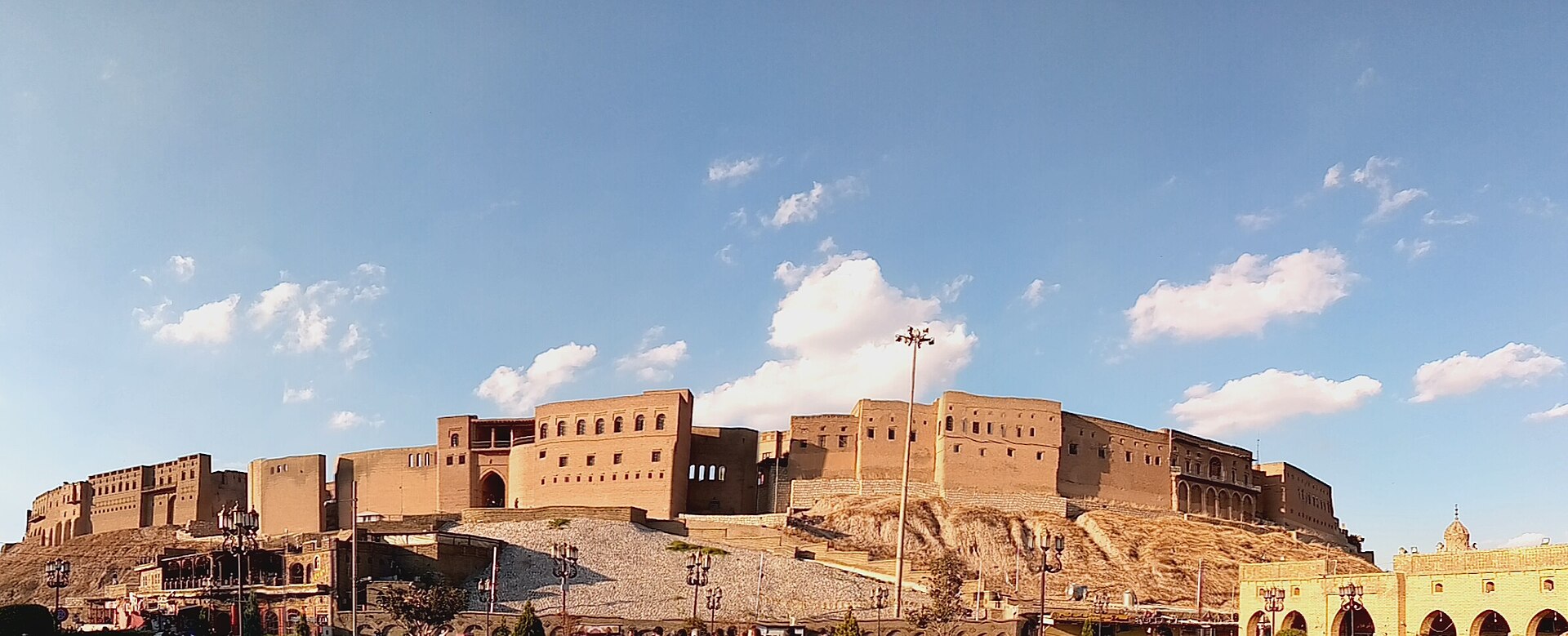
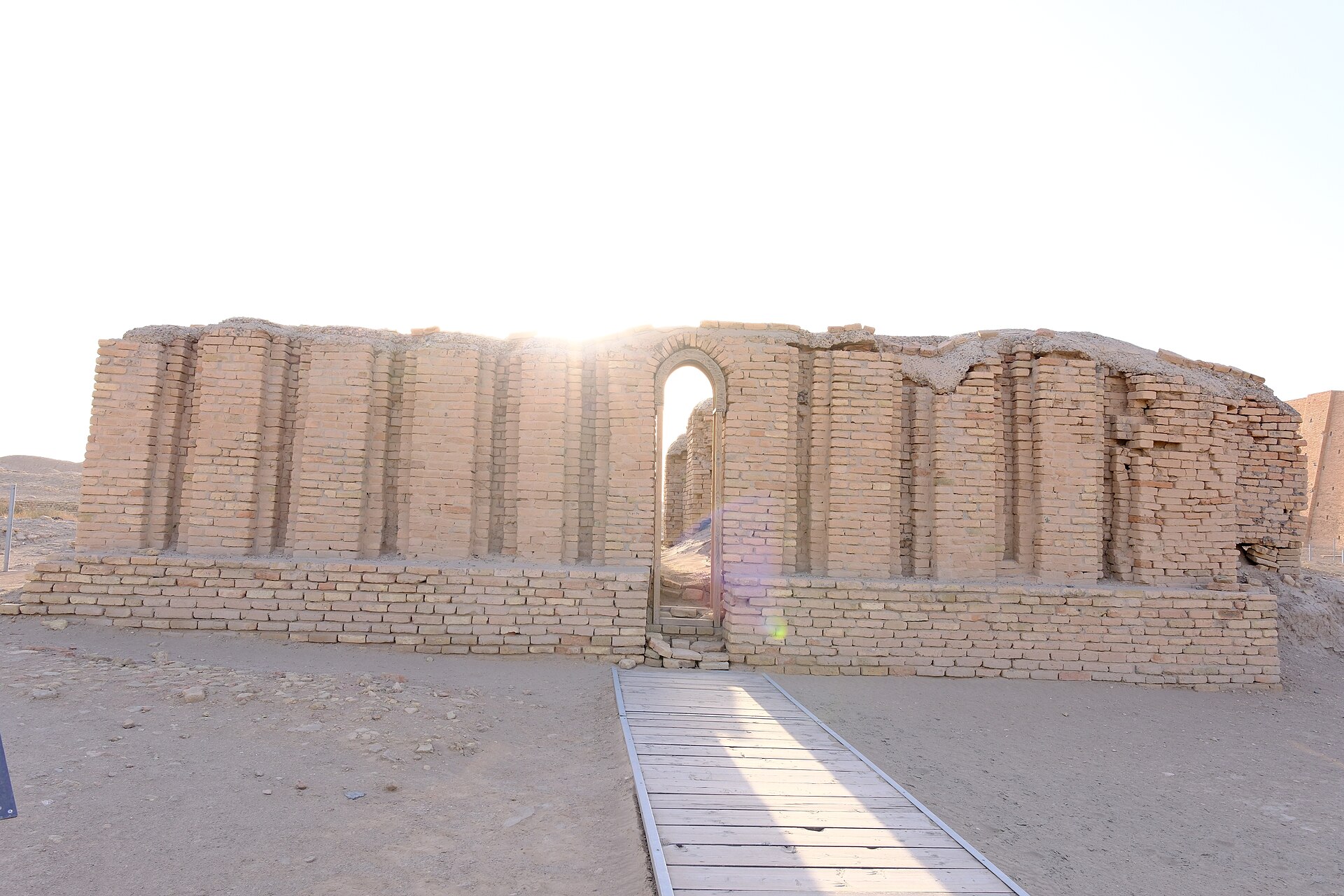
Malwiya minaret, Samarra — David Stanley (CC BY 2.0). Erbil Citadel, 2024 — Jehan Sherko (CC BY 4.0). Ur archaeological site, Nasiriyah — Alli Khalil (CC BY-SA 4.0). Hatra, Ninawa province — Multi-National Corps Iraq Public Affairs (public domain). Al-Mutanabbi Street, Baghdad — Al-Taghyeer Channel (CC BY 3.0). Chibayish marshes — Alli Khalil (CC BY-SA 4.0). All images sourced from Wikimedia Commons.