Last updated: September 2026. Dates follow the Middle Chronology used in most textbooks unless stated; site access and travel advice re-checked on 25 and 26 September 2026 against the FCDO’s Iraq pages, the US State Department’s 29 August 2026 reissue and our research files for each site.
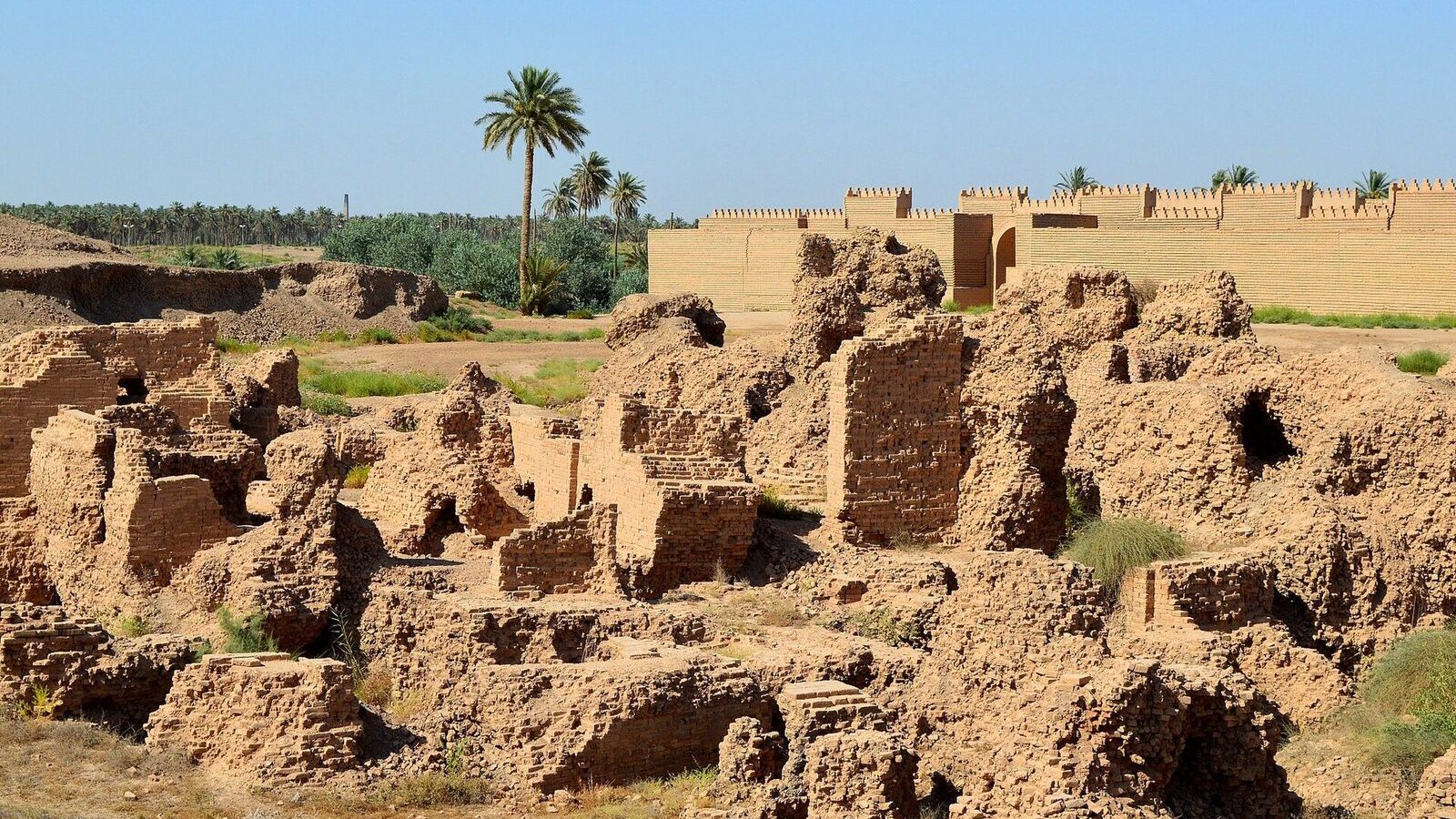
Mesopotamian history usually arrives as a parade of empires: Sumer, then Akkad, then Babylon, then Assyria, each tidily replacing the last. On the ground in Iraq, at the sites covered in our guide to ancient Mesopotamia, it doesn’t feel like that at all. At Uruk, scribes were still writing cuneiform while Parthian kings ruled from Ctesiphon. Babylon’s walls were rebuilt in the 1980s on top of Nebuchadnezzar’s. The spiral minaret at Samarra echoes temple towers three thousand years older. The layers overlap, and the sites make more sense once you know the order they were laid down in.
The history of Mesopotamia, the land “between the rivers” Tigris and Euphrates, runs from the first farming villages around 7000 BC, through the Sumerian cities and the empires of Akkad, Babylon and Assyria, and on through Persian, Greek, Parthian and Sasanian rule to the Arab conquest in the 630s AD. Almost all of it happened in what is now Iraq.
This is a traveller’s version: each era in plain terms, with the places in Iraq where you can still stand in it, their status in 2026, and the museums that hold what was carried away. Each major site also has its own page in this guide, linked below.
The short answer
| Era | Dates | Where to stand in it in Iraq |
|---|---|---|
| Prehistory: Neanderthals and first farmers | c. 75,000–5000 BC | Shanidar Cave and Jarmo (Kurdistan Region); Erbil Civilization Museum |
| Sumerian cities and the first writing | c. 5400–2350 BC | Uruk, Ur, Eridu, Girsu (south) |
| Akkad and the Third Dynasty of Ur | c. 2334–2004 BC | The Ziggurat of Ur |
| Babylon, from Hammurabi to the Kassites | 1894–1155 BC | Babylon (mostly later remains) |
| Assyria | c. 1350–612 BC | Nineveh park in Mosul, Nimrud, Ashur; Erbil Citadel |
| Nebuchadnezzar’s Babylon | 626–539 BC | Babylon |
| Persians, Greeks, Parthians, Sasanians | 539 BC – AD 637 | Ctesiphon, Hatra |
Why did the history of Mesopotamia begin between the rivers?
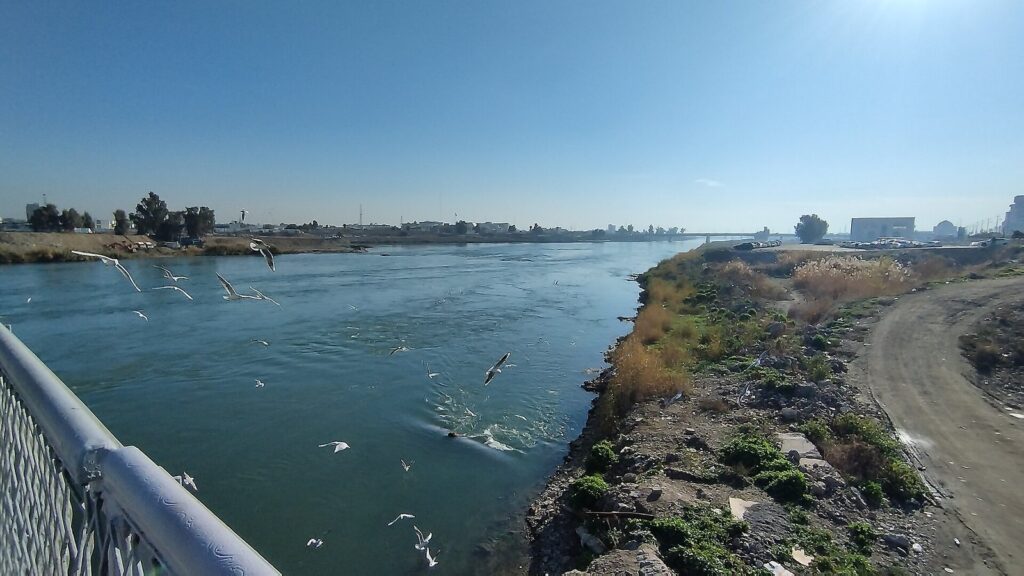
The name is Greek, and its oldest known use dates to the fourth century BC: Mesopotamia, the land between the rivers. The Tigris and the Euphrates rise in the mountains of Turkey and run south-east across Iraq, closest together around Baghdad, before joining above Basra and flowing into the Gulf. Everything in this history depends on them.
The land they water divides into two very different halves. In the north, Assyria’s country, there is enough rain to grow crops without irrigation, and the plains roll up into the hills of the Kurdistan Region. In the south, Sumer and Babylonia, rain is scarce and farming depends on canals. That requirement, to dig, clean and share canals across whole districts, is the usual explanation for why the first large-scale administration, and the first cities, appeared in the south. The same canals eventually salted the soil, and salinity helps explain why Eridu, the oldest city of all, was abandoned.
Before cities: Neanderthals and the first farmers
Iraq’s human story starts long before Mesopotamia. In Shanidar Cave, in the mountains of the Kurdistan Region, the archaeologist Ralph Solecki excavated the remains of nine Neanderthals between 1957 and 1961, and a tenth was identified among the stored bones decades later; they date to roughly 35,000 to 65,000 years ago. One of them, Shanidar 4, became famous as the “flower burial” because pollen in the grave suggested bunches of flowers; that interpretation is now contested, with burrowing rodents a rival explanation. A Cambridge-led team announced another Neanderthal, Shanidar Z, in 2020, more than 70,000 years old, and her face was reconstructed in 2024.
Farming came much later. Jarmo, in the hills east of Kirkuk, was settled around 7000 BC, and when Robert Braidwood of the University of Chicago excavated it in the late 1940s and 1950s he used one of the first multidisciplinary teams in archaeology to show how people there were domesticating wheat, barley, sheep and goats. The pottery cultures that followed carry the names of Iraqi sites: Hassuna in the early sixth millennium BC, Samarra (about 5500–4800 BC), Halaf in the north, and Ubaid, which spread across the south from about 6500 BC.
Where to see it: Shanidar Cave is in Erbil governorate, more than 100 km from the city; the first hall of the Erbil Civilization Museum runs from the Palaeolithic through Jarmo, Halaf, Samarra and Ubaid. Our guide to things to do in Erbil covers both, and warns against confusing Shanidar Cave with Erbil’s Shanidar Park.
Sumer: the first cities and the first writing (c. 5400–2350 BC)
The Sumerians themselves believed kingship first came down from heaven at Eridu, and archaeology gives Eridu a real claim to great age: founded around 5400 BC, with eighteen temples built one on top of another over the centuries. But the first true city was Uruk, which by about 3100 BC may have held 50,000 people, making it the largest urban centre in the world. Uruk also gives us the earliest writing: proto-cuneiform tablets from around 3300 to 3200 BC, almost all of them accounts of grain, livestock and labour.
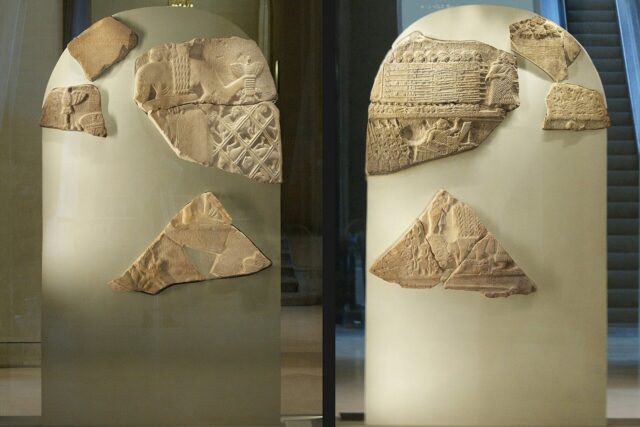
The Early Dynastic period that followed, from about 2900 to 2350 BC, was an age of rival city-states, each with its patron god: Ur, Uruk, Kish, Nippur, Lagash, Umma and more. Their rulers fought over water and fields, and left the first political records. The Stele of the Vultures celebrates Lagash’s victory over Umma; the reforms of Lagash’s ruler Urukagina, around 2350 BC, are among the earliest attempts at social reform on record. Ur’s royal tombs, from about 2600 BC, produced the gold, lapis and shell treasures now in London, Philadelphia and Baghdad.
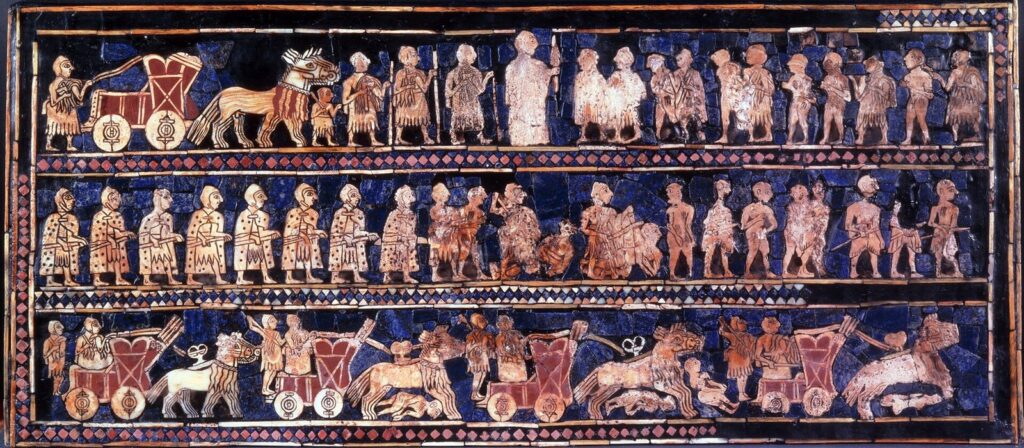
Where to see it: Uruk, with its new visitor path, and Ur are the two Sumerian sites a traveller can realistically reach; Eridu, Girsu and Lagash are remote and not set up for visitors, as our page on Girsu, Lagash and Eridu explains. The Nasiriyah Museum was listed as open in February 2026.
Akkad and Ur: the first empires (c. 2334–2004 BC)
Around 2334 BC Sargon of Akkad united the cities of Sumer and the north under one ruler, creating what is usually called the first empire. His Semitic language, Akkadian, became the common tongue of the region and developed into the Babylonian and Assyrian dialects of later centuries. Under his grandson Naram-Sin the empire reached its height, and then it collapsed, around 2154 BC, leaving a period in which Gutian rulers from the mountains held sway for about half a century.
The recovery came from the south. Ur-Nammu founded the Third Dynasty of Ur in 2112 BC, issued the earliest surviving law code, some three centuries before Hammurabi’s, and built ziggurats at Ur, Uruk and Eridu. His son Shulgi ran one of the most bureaucratic states the ancient world produced, recorded in tens of thousands of tablets. The dynasty fell in 2004 BC, and southern Mesopotamia broke into rival Amorite kingdoms centred on Isin and Larsa.
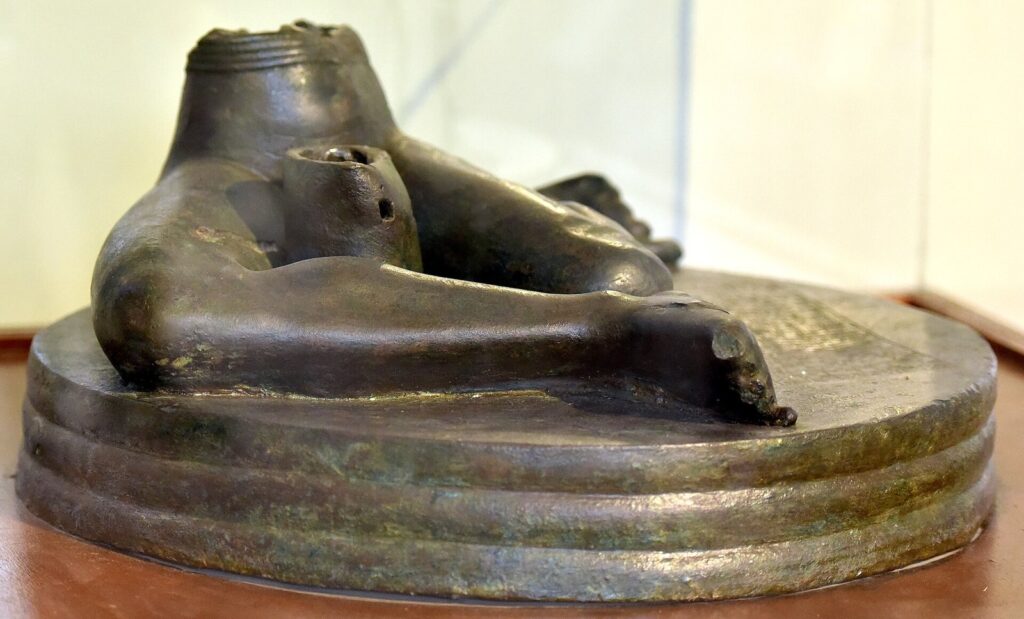
Where to see it: the Ziggurat of Ur, Ur-Nammu’s great temple tower near Nasiriyah and the best-preserved ziggurat in Iraq. It was closed for a restoration campaign due to end in July 2026, so check before you go.
Babylon: from Hammurabi to the Kassites (1894–1155 BC)
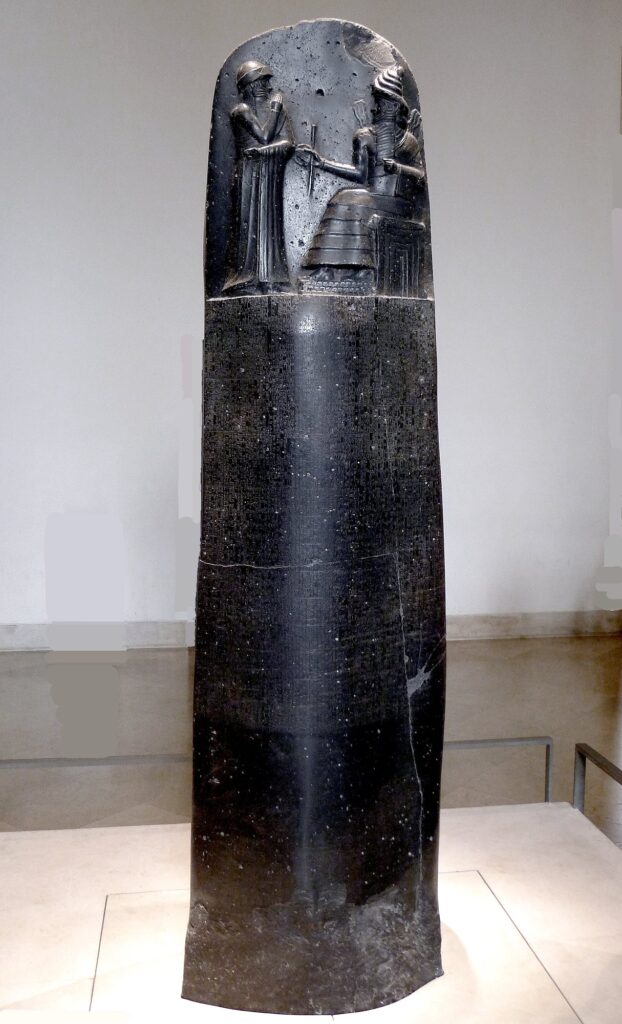
Babylon’s first dynasty was founded in 1894 BC, and its sixth king, Hammurabi (1792–1750 BC), turned a modest city into the capital of southern Mesopotamia. He is remembered for his law code, carved on a black stone stele that begins with the god Shamash handing him authority and continues through nearly three hundred laws on trade, property, family and injury. The stele itself was carried off as war booty by the Elamites to Susa, in what is now Iran, where French archaeologists found it in 1901; it is now in the Louvre.
In 1595 BC the Hittite king Mursili raided Babylon and ended Hammurabi’s dynasty. The Kassites, newcomers from the Zagros, took over and ruled Babylon for more than four centuries, the longest-lasting dynasty in its history, until about 1155 BC. They are the least glamorous chapter and one of the most stable; the ziggurat of Aqar Quf, about 30 km west of Baghdad, belongs to them.
Why the dates don’t agree
Mesopotamian dates before about 1400 BC float, because they hang on ancient astronomical records that can be matched to more than one modern year. Scholars use competing systems, and a traveller comparing museum labels will meet all of them.
| System | Hammurabi’s reign | What it means for you |
|---|---|---|
| Middle Chronology | 1792–1750 BC | Used by most textbooks and by this page |
| Short (Low) Chronology | 1728–1686 BC | 64 years later; used in some sources, including for the Kassite dates here |
| Other systems | Earlier or later again | Why two labels for the same object can disagree by decades |
Assyria: the empire of the north (c. 1350–612 BC)
Assyria began as the city of Ashur on the Tigris, a religious and trading centre, and grew into the most formidable military power the region had seen. A Middle Assyrian kingdom rose in the fourteenth century BC under Ashur-uballit I; the Neo-Assyrian empire, from 911 BC, reached from Iran to Egypt. Its kings moved their capital repeatedly and built on an astonishing scale: Ashurnasirpal II at Kalhu, now Nimrud, from 879 BC, where he fed 69,574 guests at the inauguration; Sargon II at Dur-Sharrukin; and Sennacherib at Nineveh, where Ashurbanipal later assembled his great library.
The empire fell fast. In 612 BC the Babylonians and the Medes sacked Nineveh, and within a few years Assyria had vanished as a state. Its palaces became the mounds that Victorian archaeologists dug into in the 1840s, and their reliefs are why London, Paris and New York have Assyrian galleries.
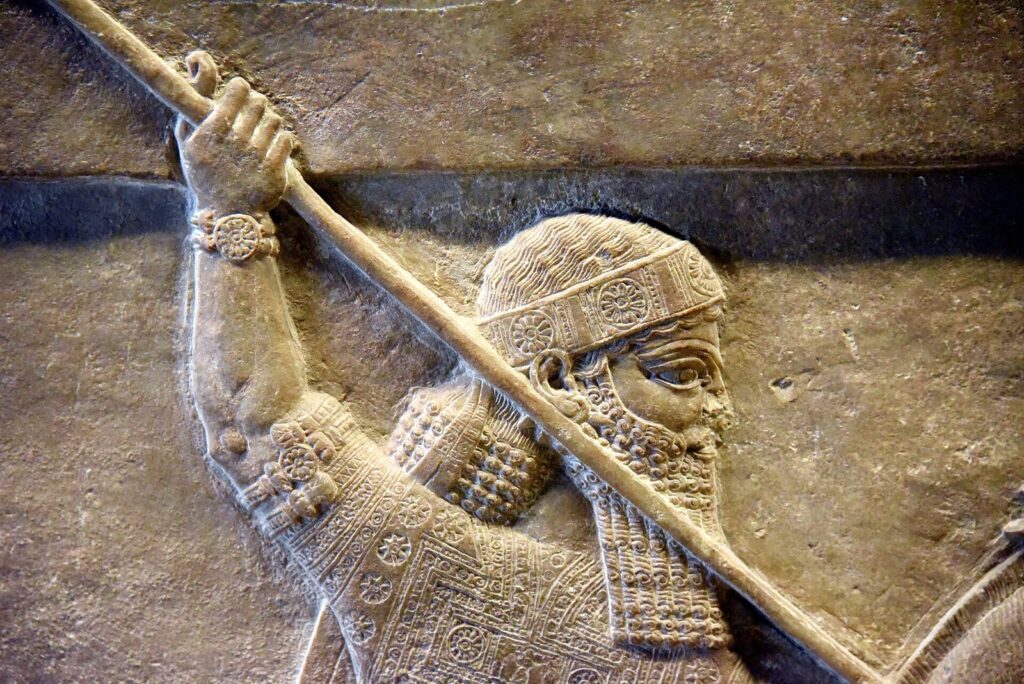
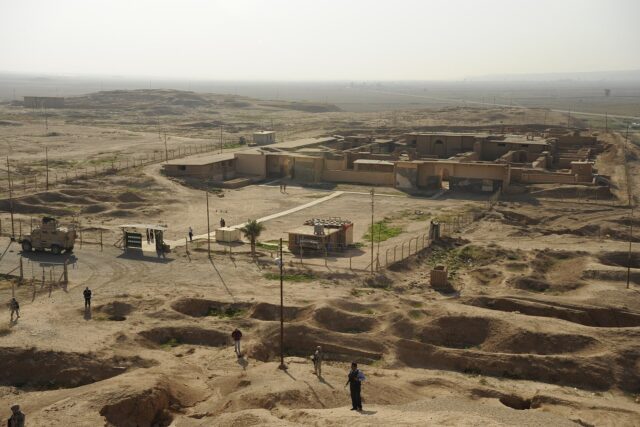
Where to see it: the Nineveh archaeological park in Mosul, opened in October 2023; Nimrud, still a rescue site after ISIS destroyed most of it; and Ashur, a UNESCO World Heritage Site on the danger list. All three are in provinces where the FCDO advises against all travel. The easiest Assyrian landscape to reach is in the Kurdistan Region: the Erbil Citadel, ancient Arbela, and the reliefs of Sennacherib’s canal system near Duhok.
Nebuchadnezzar’s Babylon (626–539 BC)
Babylon had the last word. Nabopolassar threw off Assyrian rule, and his son Nebuchadnezzar II (604–562 BC) rebuilt Babylon as the greatest city of its age, with perhaps 200,000 inhabitants, the blue-glazed Ishtar Gate and a ziggurat that may lie behind the story of the Tower of Babel. He is also the king who took Jerusalem and deported its people, which is why he looms so large in the Bible. The Hanging Gardens are usually credited to him, though many scholars now think they were at Nineveh, or never existed.
The Neo-Babylonian empire lasted less than a century. In 539 BC Cyrus the Great of Persia took Babylon, and Mesopotamia became a province of empires based elsewhere for most of the next 2,500 years.
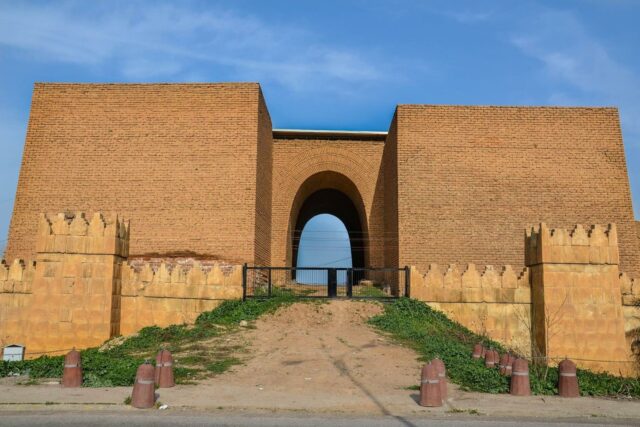
Where to see it: Babylon, a UNESCO World Heritage Site since 2019, 85 km south of Baghdad, with a foreigners’ ticket of 25,000 IQD in 2026. Much of what stands there is Saddam Hussein’s 1980s reconstruction, and the Ishtar Gate on site is a replica: the original is in Berlin.
Persians, Greeks, Parthians and Sasanians (539 BC – AD 637)
Under the Persians Babylon stayed a great city, and it was there that Alexander the Great died in 323 BC, eight years after defeating the Persian king at Gaugamela, on the plain near Erbil. His successor Seleucus founded Seleucia on the Tigris around 305 BC, which drew the life out of Babylon. The Parthians, an Iranian dynasty, took over in the second century BC and built up Ctesiphon across the river from Seleucia; they ruled for about five centuries, balancing against Rome.
This is also when the old Mesopotamian culture finally faded. The last dated cuneiform tablet, an astronomical almanac from Uruk, was written in AD 79 or 80, and historians put the effective end of that three-thousand-year tradition at around AD 100. On the desert frontier, the Arab kingdom of Hatra held off two Roman emperors before falling to the Sasanians in 241. The Sasanians made Ctesiphon their capital and left its one great monument, the vault of Taq Kasra.
Where to see it: Ctesiphon’s great arch, a half-day trip from Baghdad, under scaffolding since late 2021; and Hatra, which can only be visited with special permission.
After Mesopotamia: the Abbasid coda
The Arab-Islamic conquest in the 630s ended the ancient story, but not the land’s habit of hosting capitals. In 762 the Abbasid caliph al-Mansur founded Baghdad as a round city on the Tigris, and for the next five centuries it was one of the great cities of the world, a centre of scholarship and trade. For fifty-six years, from 836 to 892, the caliphs ruled instead from Samarra, whose Malwiya Minaret is the most striking survivor of that era. The Mongol sack of Baghdad in 1258 is the usual end point for this chapter.
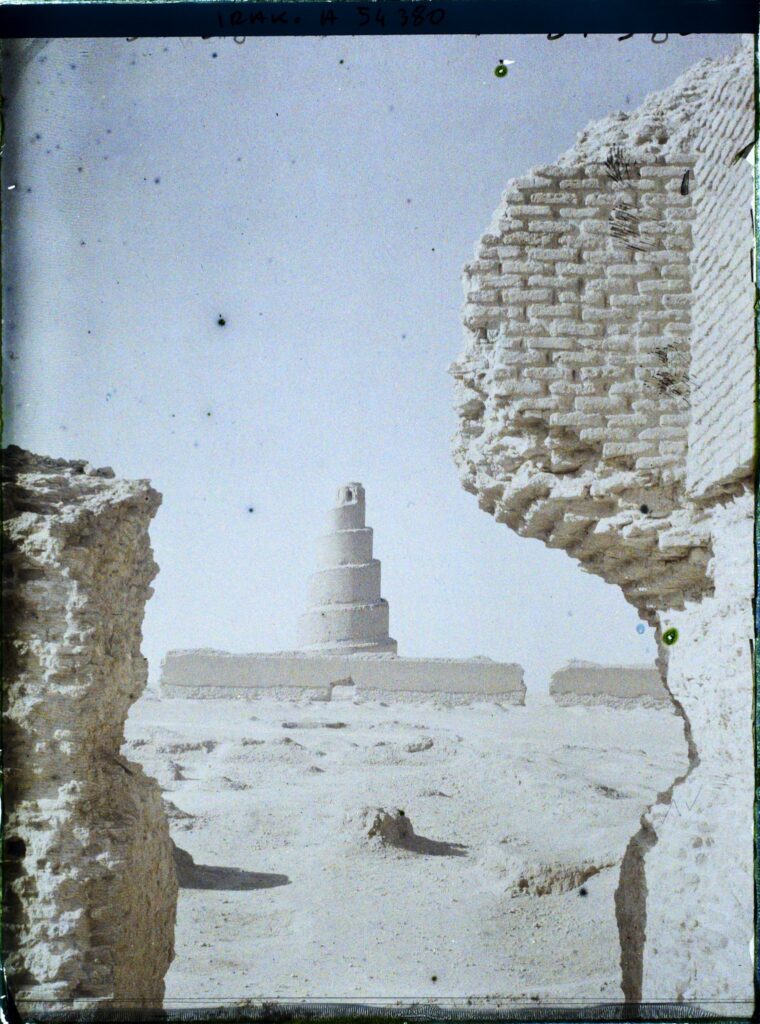
Little of Abbasid Baghdad survives above ground, but the city’s older quarters, souks and shrines carry its memory; our Baghdad city guide is the place to start.
Mesopotamia’s capitals, in order
One way to hold the whole history of Mesopotamia in your head is to follow the capitals. Power moved up and down the rivers for four thousand years, and most of the great sites in Iraq were, at some point, the centre of the world as their builders knew it.
| Capital | Period | Today |
|---|---|---|
| Uruk and the Sumerian city-states | c. 3500–2350 BC | Uruk and Ur are visitable; many others are remote mounds |
| Akkad | c. 2334–2154 BC | Never found: the capital of the first empire is still lost |
| Ur | 2112–2004 BC | The ziggurat near Nasiriyah |
| Babylon | 1894–539 BC, with interruptions | UNESCO site south of Baghdad |
| Ashur, Kalhu (Nimrud), Dur-Sharrukin, Nineveh | c. 1350–612 BC | All in provinces under FCDO against-all-travel advice |
| Seleucia and Ctesiphon | 305 BC – AD 637 | Ctesiphon’s arch, south-east of Baghdad |
| Baghdad and Samarra | 762–1258 (Samarra 836–892) | Baghdad’s old quarters; the Malwiya |
The missing entry is the most tantalising. Akkad, the city from which Sargon ruled the first empire, has never been located; it probably lies somewhere near the Tigris north of Babylon, under farmland or the suburbs of a modern town.
What did the Mesopotamian civilisations give the world?
It is easy to overstate this, and plenty of websites do: not every “first” credited to Mesopotamia holds up. But the core list is solid, and much of it can still be seen in Iraqi and foreign museums.
| Idea or invention | Where and when | How sure we are |
|---|---|---|
| Writing (cuneiform) | Uruk, around 3300–3200 BC | The earliest large body of writing anywhere; whether it was invented only here is debated |
| Cities on a large scale | Uruk, by about 3100 BC | Well established; smaller towns existed much earlier elsewhere |
| Written law codes | Ur-Nammu (21st century BC), Hammurabi (18th century BC) | Surviving texts; Ur-Nammu’s is the oldest known |
| Counting in sixties | Sumer, third millennium BC | Survives in our 60 minutes, 60 seconds and 360 degrees |
| Long-run astronomy | Babylon, first millennium BC | Centuries of recorded observations; the last datable cuneiform tablet is an almanac |
| Epic literature | The Epic of Gilgamesh, second millennium BC versions | One of the oldest great works of literature |
| The wheel | Mesopotamia and elsewhere, fourth millennium BC | Contested: early wheels appear in several regions at about the same time |
Which Mesopotamian sites can you visit, region by region?
The most useful way to plan is by region, because the travel advice changes sharply across the country. These are the FCDO bands as of 25 September 2026.
| Region | Eras you can see | Main sites | FCDO advice |
|---|---|---|---|
| Kurdistan Region | Prehistory, Assyria | Shanidar Cave, Jarmo, Erbil Citadel, Sennacherib’s reliefs near Duhok, Erbil and Slemani museums | Against all but essential travel |
| Baghdad and Babil | Kassite, Babylonian, Parthian and Sasanian, Abbasid | Babylon, Ctesiphon, Aqar Quf, the Iraq Museum (closed in 2026), Old Baghdad | Against all but essential travel (except Sadr City and Jurf al-Sakr: against all travel) |
| The south (Dhi Qar, Muthanna) | Sumerian, Ur III | Ur, Uruk, Eridu, Girsu, Nasiriyah Museum | Against all but essential travel |
| The north (Nineveh, Salah al-Din) | Assyrian, Parthian, Abbasid | Nineveh, Nimrud, Ashur, Hatra, Samarra | Against ALL travel |
The US State Department rates all of Iraq Level 4, Do Not Travel (reissued 29 August 2026), and travelling against FCDO advice can invalidate your insurance. Our pages on whether Iraq is safe to visit and on how the UK and US advisories work set out the detail, and our Iraq itinerary guide shows how the regions string together.
Where can you see Mesopotamia’s treasures today?
Much of Mesopotamia’s portable history left Iraq in the nineteenth and early twentieth centuries, and much of what stayed has been through looting and war. In 2026 the realistic picture is this.
| Museum | Strengths | Status |
|---|---|---|
| Iraq Museum, Baghdad | The national collection: Warka Vase, Nimrud gold, Assyrian galleries | Closed for refurbishment as of August 2026; Sumerian Hall closed since 2019 |
| Erbil Civilization Museum | Prehistory to Abbasid, including Hatra and Nimrud pieces | Open, with erratic hours (August 2026) |
| Slemani Museum, Sulaymaniyah | Iraq’s second-largest museum, prehistoric to Islamic | Open |
| Basra, Nasiriyah and Samawah museums | Regional collections | Listed as open by SBAH in February 2026 |
| Mosul Museum | Assyrian and Hatran sculpture | Not reopened as of August 2026 |
| Abroad | British Museum, Louvre, Berlin, the Met, the Penn Museum | The largest collections of Mesopotamian art outside Iraq |
Our Iraq Museum guide tracks the reopening, and our overview of museums in Iraq covers the rest.
What we could not confirm
- Exact dates before about 1400 BC. Every date in that range depends on which chronology you follow; we use the Middle Chronology except where a source gives short-chronology dates, as for the Kassites.
- Visiting Shanidar Cave. The site is well documented archaeologically, but we have no current confirmation of access arrangements, hours or a fee.
- Visiting Jarmo. It is an open or fenced excavation site with no published hours, fees or facilities.
- When the Iraq Museum reopens. A June–July 2026 target for the Sumerian Hall slipped, and no new date had been given by August.
- The Mosul Museum. A 2026 reopening was planned; we found no report that it has happened.
- The Hanging Gardens. Whether they were at Babylon, at Nineveh or anywhere at all is still argued.
Frequently asked questions
What does Mesopotamia mean?
It is a Greek word meaning “between the rivers”, referring to the Tigris and the Euphrates; its oldest known use dates to the fourth century BC. The region it describes lies mostly in modern Iraq, with fringes in Syria, Turkey and Iran. The people who lived there never used the name for themselves.
Is Mesopotamia the same as Iraq?
Mostly. Almost all the great Mesopotamian cities, from Ur and Uruk to Babylon, Nineveh and Nimrud, are in modern Iraq, which is why the country has more than one claim to be the cradle of civilisation. The upper reaches of the rivers, in Syria and Turkey, and parts of western Iran belonged to the same world.
What is the difference between the Sumerians, Babylonians and Assyrians?
The Sumerians built the first cities in the far south and spoke Sumerian, a language unrelated to any other. The Babylonians and Assyrians spoke dialects of Akkadian, a Semitic language: Babylon dominated the south from Hammurabi’s time, while Assyria, based on Ashur and later Nimrud and Nineveh, dominated the north, and at its height much of the Middle East.
What was the first civilisation in Mesopotamia?
The Sumerian cities of the south, from the fourth millennium BC, are usually counted as the first civilisation: Uruk was the world’s largest city by about 3100 BC and produced the earliest writing. Farming villages such as Jarmo, and cultures such as Ubaid, came thousands of years earlier but did not build cities.
How long did the history of Mesopotamia last?
From the first farming villages around 7000 BC to the end of the cuneiform tradition around AD 100, roughly seven thousand years. Politically, independent Mesopotamia ended when Cyrus of Persia took Babylon in 539 BC. Culturally, much later: temples and cuneiform writing survived under Persian, Greek and Parthian rule, and the last dated cuneiform tablet, from Uruk, was written in AD 79 or 80. Historians usually put the end of the tradition at about AD 100.
Why does the history of Mesopotamia matter?
Because so much of the world’s shared toolkit starts here: writing, large cities, written law, counting in sixties, systematic astronomy and some of the oldest literature, including the Epic of Gilgamesh. It is also the background to the Bible’s early books, and to Iraqi identity today, which draws heavily on Sumer, Babylon and Assyria.
Where can I see Mesopotamian artefacts in Iraq in 2026?
The Iraq Museum in Baghdad holds the national collection but was closed for refurbishment in August 2026. The Erbil Civilization Museum and the Slemani Museum in the Kurdistan Region were open, and SBAH listed the Basra, Nasiriyah and Samawah museums as open in February 2026. Check the latest before building a day around any of them.
Which Mesopotamian sites can tourists visit most easily?
Babylon and Ctesiphon from Baghdad, Ur and Uruk in the south, and the Erbil Citadel in the Kurdistan Region are the most accessible. Nineveh has an archaeological park in Mosul, but the FCDO advises against all travel to Nineveh province; Nimrud, Hatra and Samarra are harder still.
Final thoughts
The best reason to learn the history of Mesopotamia before you go is that Iraq does not present it in order. You will see a Parthian arch before a Sumerian ziggurat, a 1980s reconstruction on top of a Neo-Babylonian palace, and an Abbasid minaret that borrows from temples two thousand years older. Knowing the sequence turns a string of impressive ruins into a single long story, told in one country, and it makes the gaps, the objects in Berlin and London, the damage of the last twenty years, easier to understand.
It is also a history that is still being written. Archaeologists at Girsu, Lagash, Nineveh and Nimrud are adding chapters every season, often with Iraqi teams trained in the last decade, and several sites that were closed or dangerous ten years ago now have paths, signs and ticket gates.
To plan the practical side, go back to our guide to the sites of ancient Mesopotamia, check which of them are on Iraq’s UNESCO World Heritage list, and choose your region with the advisory table above in mind.
Photo credits
Ruins of Babylon (featured image): Osama Shukir Muhammed Amin FRCP(Glasg), Wikimedia Commons (CC BY-SA 4.0). Tigris River at Mosul, 2025: Abdulsalam Al Dabbagh, Wikimedia Commons (CC BY-SA 4.0). Standard of Ur, British Museum: Unknown authorUnknown author, Wikimedia Commons (public domain). Bassetki statue, Iraq Museum: Osama Shukir Muhammed Amin FRCP(Glasg), Wikimedia Commons (CC BY-SA 4.0). Code of Hammurabi, Louvre: Mbzt, Wikimedia Commons (CC BY 3.0). Ashurbanipal lion-hunt relief, British Museum: Osama Shukir Muhammed Amin FRCP(Glasg), Wikimedia Commons (CC BY-SA 4.0). Malwiya Minaret, 1927: Gadmer Frédéric, Wikimedia Commons (CC BY-SA 4.0). All images via Wikimedia Commons under the licences shown.