Last updated: August 2026. We re-checked the closure status of the Iraq Museum, Al-Qishla and the Baghdadi Museum, the most recent statements from Iraq’s General Museums Department, and the 2025–26 repatriation record on 13 August 2026.
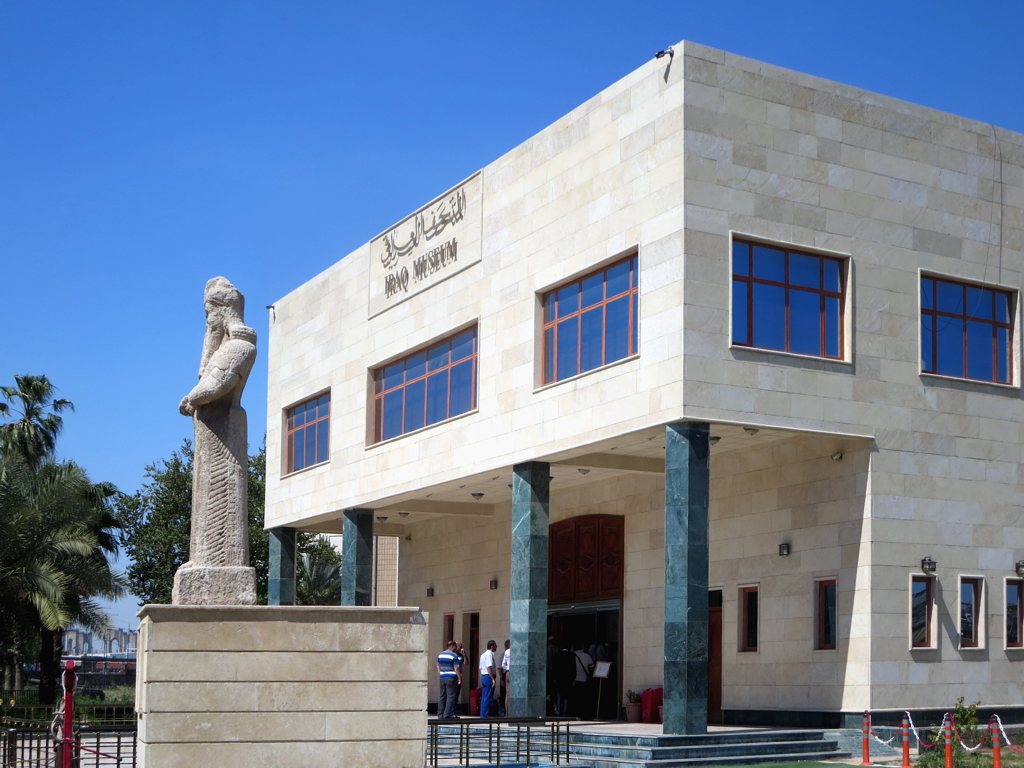
Every travel page we can find about the Iraq Museum tells you which day it opens, what a ticket costs and how long to allow. That advice describes a building that has been shut since July 2025. As of 13 August 2026 the Iraq Museum in Baghdad is closed for refurbishment and no reopening date has been announced. It is not a reduced-hours situation, not a partial opening, not a “check with your guide” situation. The doors are shut and the halls are being rebuilt. The museum anchors a day we sketch out in our guide to Baghdad.
That matters more than it sounds. Three separate reopening targets have now come and gone. The State Board of Antiquities and Heritage said “early 2026” in December 2025, when the works were reported 90% complete. In February 2026 the director general of the museums department said “next June or July”. On 28 July 2026 the same department was reported as still discussing preparations for a reopening, with no date attached. That is the whole picture, and nobody planning a trip has been told it.
So: do not build a Baghdad day around the museum. If you have a fixed date, ask your operator or your hotel to check in the week before you fly, because the museum’s own website has not been updated in years and the aggregator pages that dominate search results are simply wrong. And be honest with yourself about who is losing here — a closed national museum is an inconvenience for a visitor and a real deprivation for Baghdadis, teachers and Iraqi students, who have had far more of these closures than anybody should.
This article covers what is actually happening inside the building, what you will see whenever it does reopen, which Baghdad museums are open right now (fewer than you would hope), the 2003 looting numbers and how they get mangled, the repatriation record through July 2026, and the pre-closure practicalities — clearly labelled as pre-closure, because they may not survive the refurbishment.
The short answer
| Question | Answer as of 13 August 2026 |
|---|---|
| Is it open? | No. Closed since July 2025 for comprehensive maintenance and redisplay. |
| When does it reopen? | No announced date. Three targets have been missed. |
| Can I get in with a guide? | We could not confirm any current arrangement. Do not pay in advance for one. |
| Where is it? | Salihiya, in the Karkh district — the west bank of the Tigris, next to the Alawi transport hub. |
| Pre-closure hours | Sun–Thu 09:00–14:00, Fri 09:00–16:00, closed Saturday. May not survive the refurbishment. |
| Pre-closure entry | 25,000 IQD foreigners, 3,000 IQD Iraqis, card payment only. |
| Open alternatives | Basra, Nasiriyah, Samawa and Sulaymaniyah museums; the Abd al-Karim Qasim Museum on Rasheed Street. |
Is the Iraq Museum open? The closure, told properly
The museum closed in July 2025 for what was announced as a 190-day programme of maintenance and preservation work. One hundred and ninety days from July 2025 lands in January 2026. It is now August 2026.
Here is every dated public statement we could verify, in order. We have kept the wording close to the source, because the drift between these statements is the story.
| Date | Who said it | What they said | Status |
|---|---|---|---|
| July 2025 | Museum announcement, reported by Iraqi operators | Temporary closure for essential maintenance, roughly 190 days | Closure began |
| 4 Dec 2025 | Mohammed al-Bayati, SBAH maintenance and preservation director, to al-Sabaah | Reopening “early 2026”; project 90% complete | Missed |
| 22 Feb 2026 | Lama Yas al-Douri, director general, General Museums Department | Comprehensive maintenance of halls and display methods; reopening “during next June or July” | Missed |
| 28 Jul 2026 | General Museums Department, reported by NINA | A meeting to discuss the “ongoing preparations” for reopening | No date given |
| 13 Aug 2026 | Our own check | No reopening announcement found in Arabic or English sources | Still closed |
We want to be fair about this rather than snide. Rebuilding a national museum’s display system while its collection stays in the building is genuinely hard, and Iraq has spent 2026 dealing with regional escalation, airspace closures and a general election cycle. Slippage is not scandal. But a reader booking flights deserves the timeline rather than a cheerful “open Sunday to Thursday” lifted from a 2019 blog post.
The bitter irony of March 2025
Four months before the shutdown, on 6 March 2025, Prime Minister Mohammed Shia al-Sudani visited the museum and opened an exhibition of artefacts the government had recovered from abroad — thousands of cuneiform tablets, clay cones, cylinder seals, Mandaean scrolls and ivories from Ur among them. On the same visit he ordered fortified halls to be allocated for recovered material, including objects that had sat in the Central Bank since the 1990s.
It was, by any reading, the museum’s best week in twenty years. Then it closed. If you have ever wondered why Iraqis are sceptical when a ribbon gets cut, that sequence is a decent short answer.
What the Iraq Museum is doing behind the shutters
The February 2026 statement is the most detailed public account of the works, and it is worth reading closely because it explains why this is taking so long. This is not a coat of paint.
The Sumerian Hall, closed since 2019
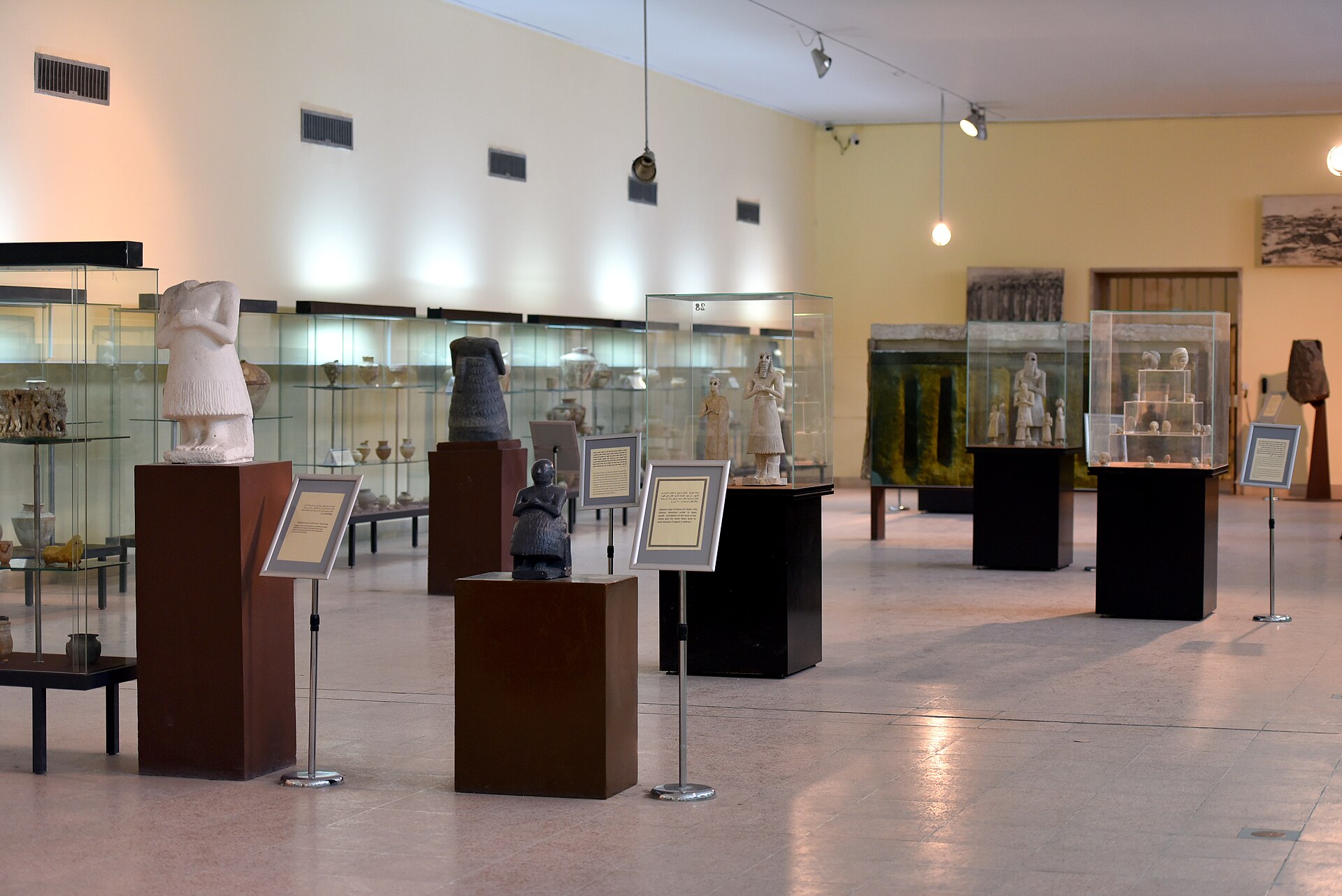
The museum’s Sumerian hall — the one with the Warka Vase, the Warka Mask and the Entemena statue at its heart — has been closed to the public since 2019, six years before the building itself shut. The current programme is meant to bring it back. If you visited Baghdad between 2019 and 2025 and felt the museum was smaller than you expected, that is why.
The seven-metre boat from Uruk
The single most interesting thing in the works, and the one no travel page mentions, is a dedicated hall being built for a rare Sumerian boat roughly seven metres long, dated to around 3200 BCE, recovered from the Uruk area. It is being conserved with a German team, behind glass, with the restoration itself visible to the public rather than hidden in a workshop.
If that hall opens as described it will be one of the most unusual displays in the region: a bitumen-and-reed river craft from the era when writing was being invented a few kilometres away, presented as an ongoing conservation project rather than a finished object. It is a reason to come back to Baghdad even if you have been before, and a reason not to write the closure off as pure loss.
Redisplay, not restoration
The rest of the programme, as described by SBAH, covers the halls and the display methods themselves: modern cases with controlled conditions, updated interpretation, visitor facilities. Anyone who saw the museum in its 2015–2025 configuration will recognise why. The collection was extraordinary; the labelling was thin, the lighting was uneven and long stretches of the galleries had the feel of a well-kept store rather than a museum built for visitors. Getting that right is worth a delay. Not telling anyone how long the delay will be is not.
What to do instead — and why that is harder than it should be
This is the practical heart of the article, so we will be blunt: Baghdad’s three headline heritage attractions are shut at the same time. We have not seen that sentence written anywhere else, and it is the single most useful thing on this page if you are planning a city itinerary.
| Site | Status, checked August 2026 | What we know |
|---|---|---|
| Iraq Museum, Karkh | Closed | Since July 2025. No reopening date. |
| Al-Qishla, Rusafa | Closed | Shut to the public for more than 18 months as of June 2026; booksellers protested outside on 9 June 2026 demanding it reopen. |
| Baghdadi Museum, Rusafa | Closed or disrupted | Rehabilitation works on the museum and its surroundings launched in June 2026 under the Rasheed Street programme. |
| Abd al-Karim Qasim Museum, Rasheed Street | Reported open | Opened January 2021. Small, single-subject, free at last report. |
| Basra, Nasiriyah and Samawa museums | Open | Confirmed open by SBAH, February 2026. |
| Sulaymaniyah Museum | Open | Iraq’s second-largest collection, in the Kurdistan Region. |
| Mosul Cultural Museum | Closed | Targeted for reopening by the end of 2026. |
Baghdad, with the museums shut
The city is not short of things to do — it is short of indoor, air-conditioned, ticketed things to do, which is a different problem and a serious one if you are visiting between June and August, when Baghdad’s mean daily maximum in July sits around 44°C. Check the seasonal timing of a trip to Iraq before you commit to a summer date.
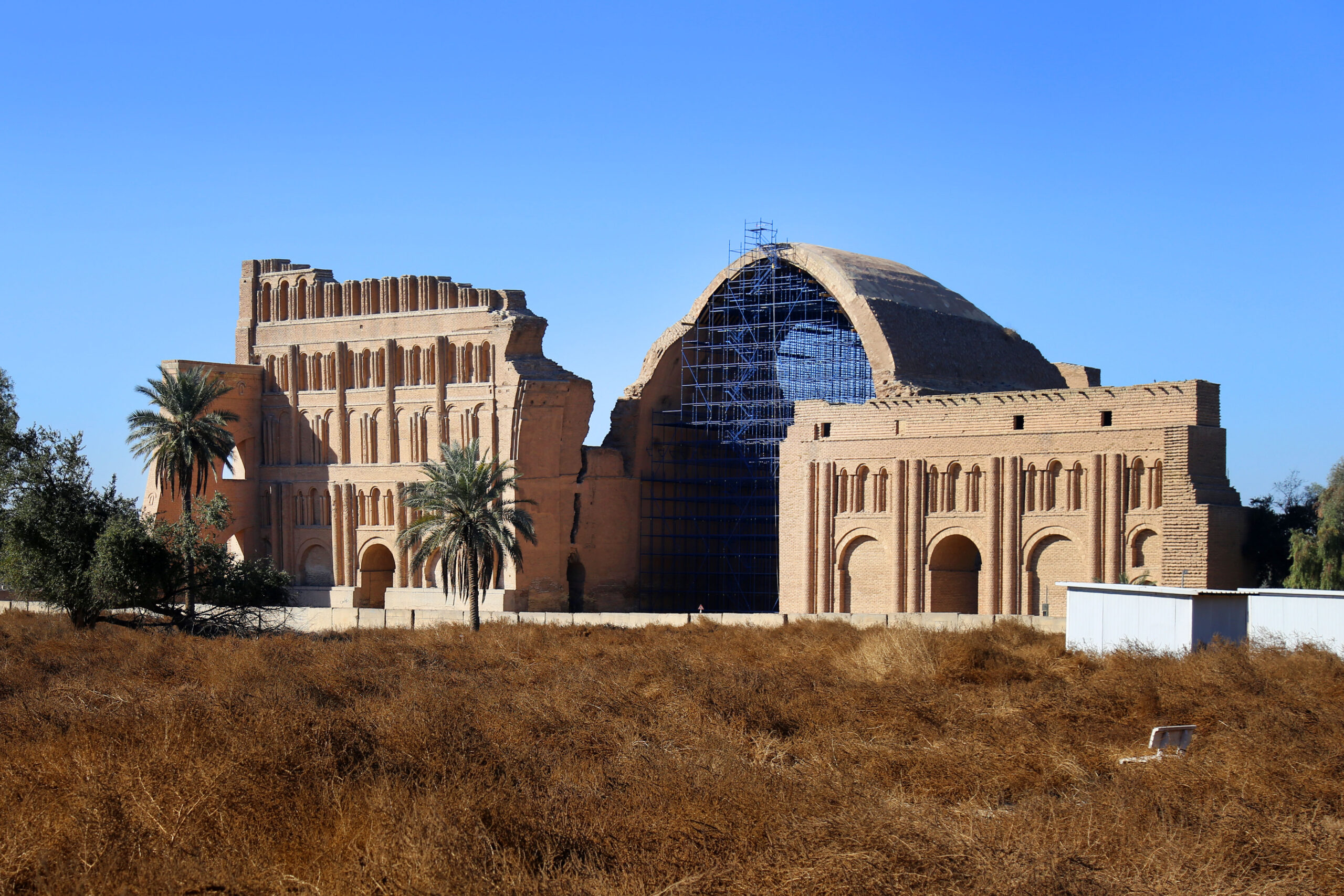
What is open: Mutanabbi Street and the booksellers’ quarter, best on a Friday morning; the Shabandar Café at its end; Souk al-Safafeer and the coppersmiths; the Mustansiriya Madrasa and the Abbasid Palace on the Rusafa riverfront; Kadhimiya; the restored first section of Rasheed Street; and Ctesiphon, forty-odd minutes south of the city, where the largest single-span brick vault ever built is still standing. Our full Baghdad guide sequences these properly, and the wider things to do in Iraq roundup puts them in national context.
What we would not do is book a Baghdad-only trip in 2026 on the strength of its museums. Build the museum time in elsewhere.
Museums that are open, and worth rerouting for
The Basrah Museum, in a former Saddam-era palace on the Shatt al-Arab, is the obvious substitute if you are heading to southern Iraq anyway. It was built by Iraqi and British curators specifically to give the south back a collection after 2003, and its galleries cover Sumer, Babylon and Assyria at a scale a visitor can actually absorb in ninety minutes. Nasiriyah’s museum sits within reach of Ur and Uruk and makes far more sense than most people expect once you have walked the sites — see our guide to the Mesopotamian sites themselves for how they fit together.
In the north, the Sulaymaniyah Museum holds the second-largest collection in Iraq and is open, accessible and well curated; it is also the easiest museum in the country for an independent visitor to reach, since the Kurdistan Region runs its own entry regime and its own security arrangements. The Erbil Civilization Museum is smaller but sits under the citadel.
The Mosul Cultural Museum, wrecked by ISIS in 2015 and painstakingly rebuilt since, is targeted for the end of 2026. Nothing about travel to Mosul is straightforward at the moment — the FCDO advises against all travel to Ninawa province — but the museum’s reopening will be one of the more significant cultural events in the region when it happens.
What you will see when it reopens
The collection is the reason the Iraq Museum matters, and it is worth knowing what is waiting behind the scaffolding. It holds somewhere between 170,000 and 200,000 objects covering more than five millennia, displayed bilingually in Arabic and English — a legacy of the museum’s British-influenced founding. Here is what is genuinely there, and, just as usefully, what is not.
The Sumerian and Uruk material
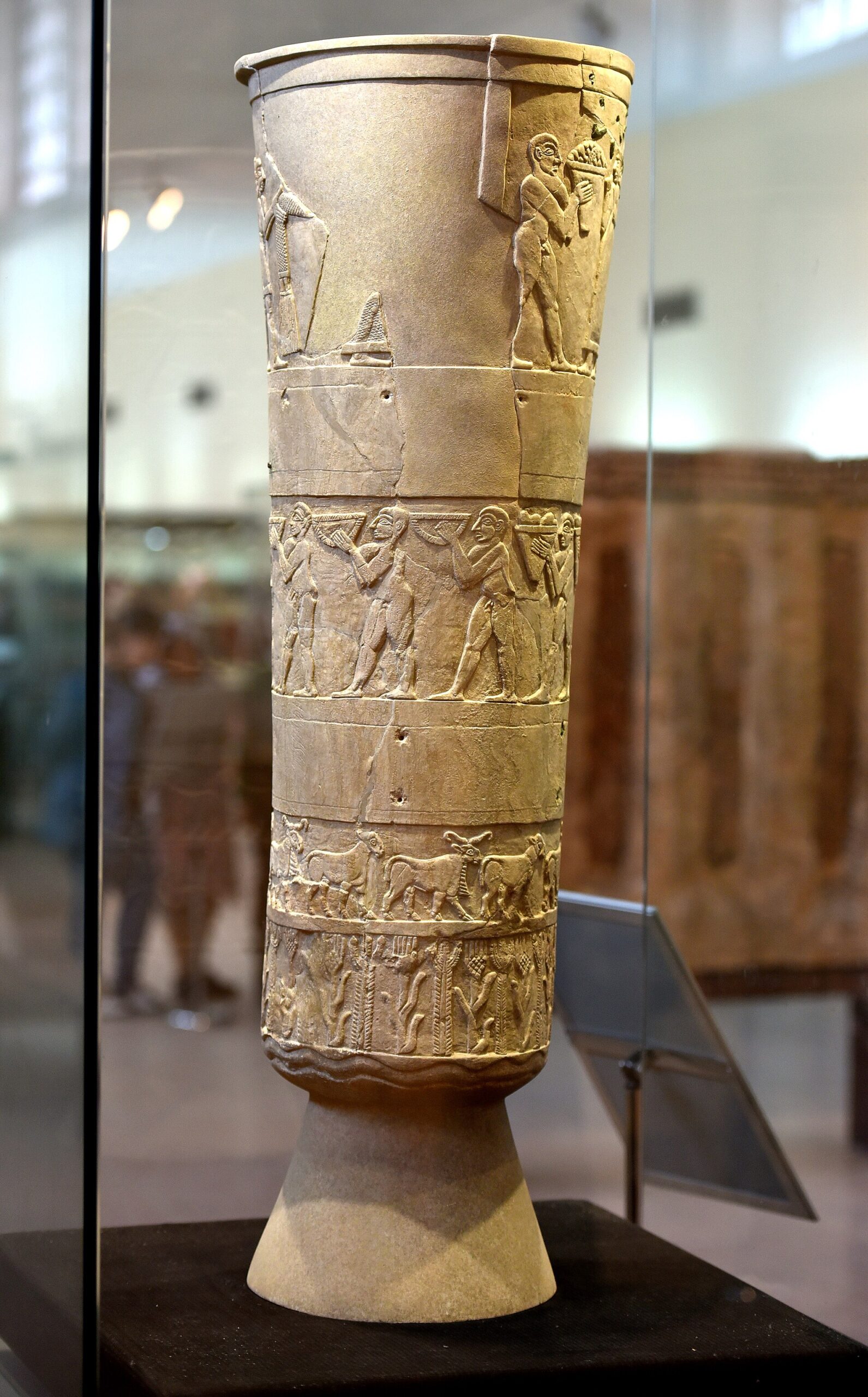
The Warka Vase, a carved alabaster votive vessel from Uruk dated to roughly 3000 BCE, is the museum’s signature object. It was stolen in April 2003 and returned two months later in fourteen pieces — which, awkwardly for the drama of the story, is roughly the state it was in when it was excavated. It has since been reassembled and displayed. The Warka Mask, a life-size female face in marble of similar date, was also stolen and recovered. The headless statue of Entemena of Lagash, which stood in the centre of the second-floor Sumerian hall and was the heaviest object stolen in 2003, was recovered in the United States in 2006 and returned.
Assyrian sculpture and the Nimrud ivories
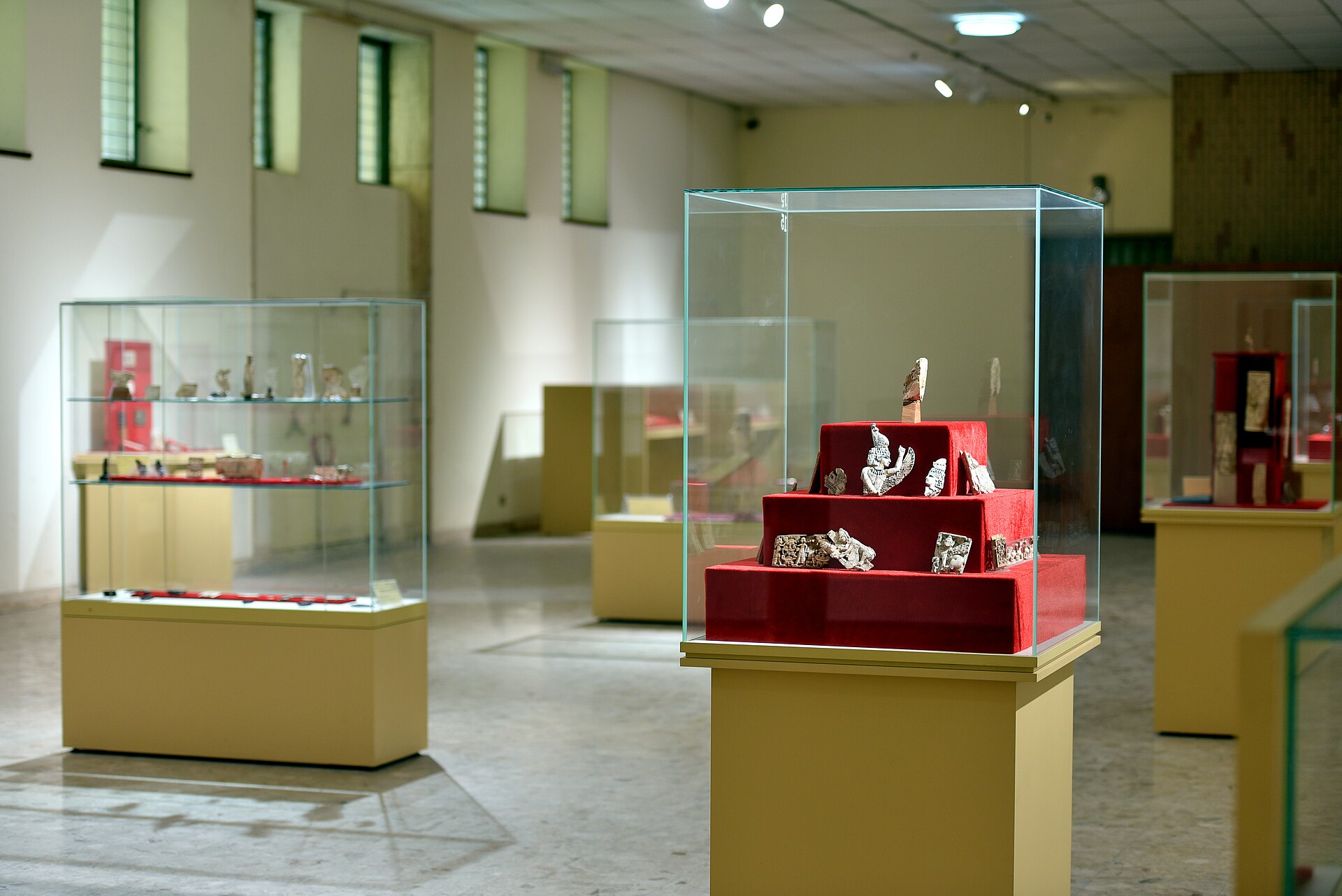
The Assyrian galleries hold reliefs, colossal gate figures and the throne dais of Shalmaneser III from Fort Shalmaneser at Nimrud. The Nimrud ivories — delicately carved furniture inlays in Phoenician and Syrian styles, including the piece known as “the lady at the window” — are among the collection’s quiet masterpieces, and among its most damaged: a large part of the ivory holdings suffered when the basement stores flooded in 2003.
The Nimrud gold — and an honest caveat
The Neo-Assyrian gold from the Queens’ Tombs at Nimrud, excavated in 1988–89, and the gold from the Royal Cemetery at Ur are the most valuable things the museum owns. They were moved into a deep vault at the Central Bank of Iraq in late 1990, ahead of the first Gulf War, and survived both that war and the 2003 looting there — the vault was found intact and flooded in June 2003. In March 2025 they were transferred back to the museum for display in a specially designed hall.
Whether that hall is currently installed and ready, we could not confirm. The transfer is documented; a functioning, visitable gold hall is not. Do not plan around it.
Hatra, Islamic Baghdad and the rest
The Hatra halls hold monumental limestone statuary from the Parthian-era caravan city in Ninawa — including the standing figure of King Sanatruq I — much of which was smashed at the site itself by ISIS in 2015, making the Baghdad holdings unexpectedly important. There are Old Babylonian galleries, a prehistory hall, Assyrian and Babylonian collections, and Islamic-period galleries including woodwork from Baghdad shrines. Several of these sites are also on Iraq’s World Heritage list, and seeing the objects and the sites in the same trip is the argument for a properly sequenced Iraq itinerary.
Things people expect to see here that are somewhere else
This trips up a lot of visitors and a lot of writers. Mesopotamia’s most famous objects are scattered across European and American museums, and several of the ones routinely listed as Baghdad highlights are not in Baghdad at all.
| Object | Commonly claimed | Where it actually is |
|---|---|---|
| “Ram in a Thicket” | Iraq Museum star object | The two famous examples are in the British Museum and the Penn Museum. Not Baghdad. |
| Ishtar Gate | Baghdad | The reconstructed gate is in the Pergamon Museum, Berlin. A smaller replica stands at Babylon. |
| Code of Hammurabi stele | Baghdad | The Louvre, Paris. |
| Standard of Ur | Baghdad | The British Museum. |
| Gilgamesh Dream Tablet | On display in Baghdad | Handed over in Baghdad on 7 December 2021. Whether it is on display is unconfirmed. |
| Warka Vase | Still missing | Recovered in 2003 and in the museum. |
| Nimrud gold | Still in the Central Bank | Transferred back to the museum in March 2025. Display status unconfirmed. |
A hundred years of the Iraq Museum
The institution turns a hundred this year, which is part of why the closure stings.
The Iraq Museum began with Gertrude Bell, the British traveller, intelligence officer and archaeologist who, from 1922, started collecting excavated material in a government building in Baghdad rather than let it leave the country. On 14 June 1926 the Iraqi government moved that collection into a new building and established the Baghdad Antiquities Museum, with Bell as its first director. She died later the same year. Sidney Smith succeeded her.
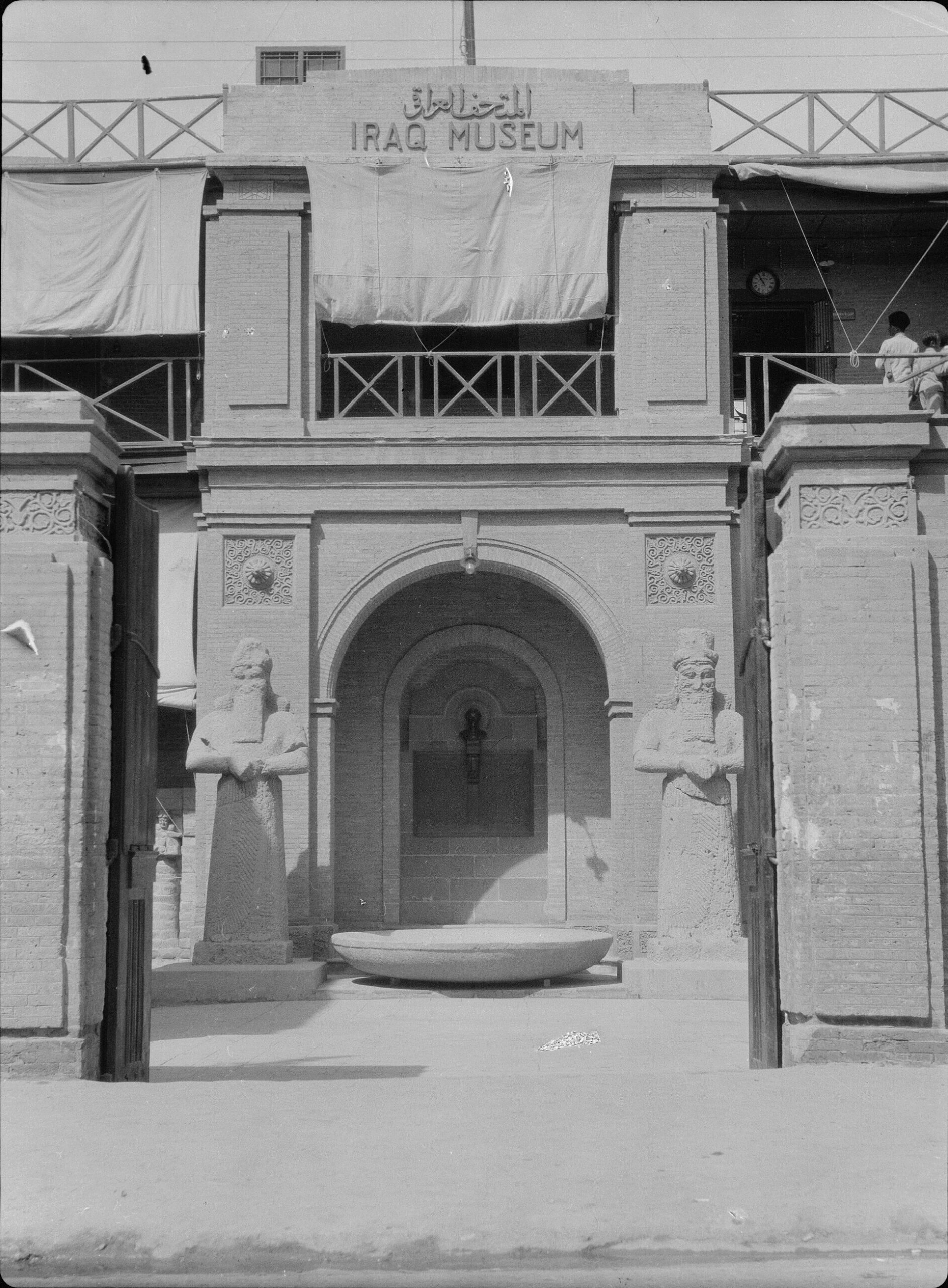
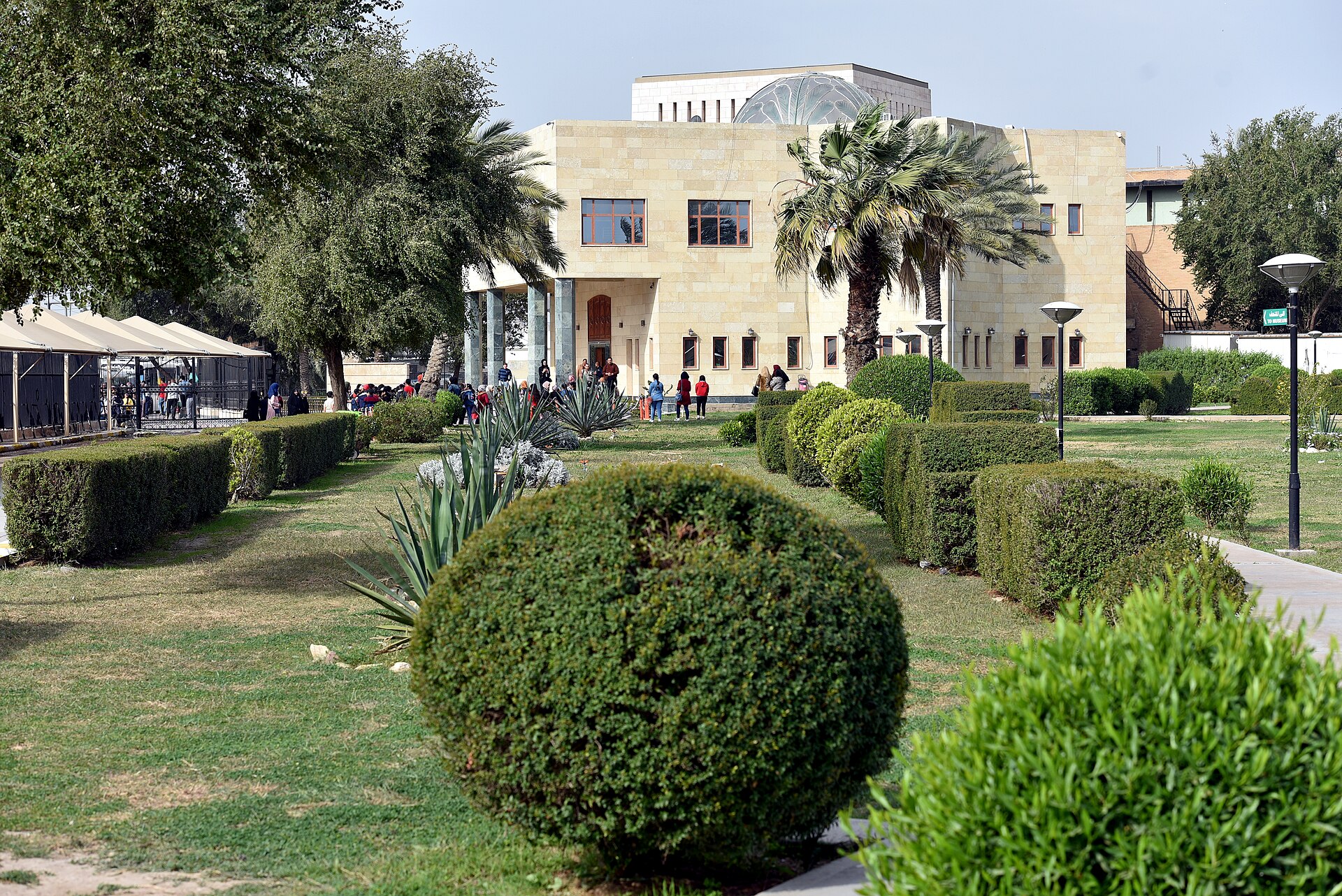
In 1966 the collection moved to the building it occupies today: a two-storey complex of around 45,000 square metres in the Salihiya area, designed by the German architect Werner March, next to the railway station and the Alawi transport hub. The name changed to the Iraq Museum with that move. It was formally opened on 9 November 1966.
One correction worth making, because it is repeated by sources that ought to know better. Britannica and the English Wikipedia article both place the museum on “the east side of the Tigris”. They do not. Karkh is the west bank; Rusafa is the east. If you are navigating Baghdad by river geography — and you should, because it is the only way the city makes sense — this matters. The museum is on the same side as the Green Zone and the airport road; Mutanabbi Street, Al-Qishla and the Abbasid Palace are all on the other bank.
Bahija Khalil became the museum’s first woman director in 1983, holding the post until 1989. The museum opened only sporadically between September 1980 and 2015, closed variously by the Iran–Iraq War, the Gulf War, sanctions and then the invasion. It reopened in April 2000, opened briefly and controversially in February 2009 at the prime minister’s request — over the objections of archaeological staff who thought conditions unsafe, one of whom was dismissed for saying so — and reopened fully on 28 February 2015 under Prime Minister Haider al-Abadi, a date deliberately brought forward as a response to ISIS’s destruction of the Mosul Museum’s collection.
How many galleries does the Iraq Museum have? Nobody agrees
You will see 13, 23 and 28 quoted, sometimes on the same page. The 1966 building opened with 13 galleries; later sources describe 23 and 28. All three may be accurate for different moments, and the current refurbishment will likely change the number again. We would not print a single figure, and neither should anyone else.
April 2003: what happened, and the numbers that get mangled
The looting of the Iraq Museum between 10 and 12 April 2003 was a catastrophe for Iraqi cultural heritage, and it is worth resisting the temptation to tell it as a caper. Three separate groups took objects over four days. The museum’s staff had already done what they could: following a plan they had used in the Iran–Iraq War and again in 1991, they had removed and secured 8,366 objects before the invasion, moved the most portable material into remote underground storage, sandbagged and foam-wrapped the large sculpture that could not be moved, and built a fortified wall along one side of the compound so staff could move under cover. Several curators concealed objects personally. When looters returned on 12 April, museum staff came back to the building and physically fended them off. US forces did not deploy around the museum until 16 April.
The immediate reporting was wrong by an order of magnitude, and the correction has never fully caught up with it. Early wire copy said 170,000 catalogued lots — around 501,000 pieces — had gone. Much of that came from empty display cases whose contents had been removed by curators years earlier for safekeeping.
| Figure | Source | What it actually measures |
|---|---|---|
| 170,000 lots / 501,000 pieces | Wire reports, April 2003 | Wrong. Based on empty cases emptied before the war. |
| ~15,000 objects | Bogdanos investigation and subsequent consensus | The accepted total stolen in April 2003. |
| ~7,000 recovered | Recovery totals to date | Objects from the 2003 theft that have come back. |
| 8,000+ still missing | Derived from the two figures above | The 2003 shortfall that remains. |
| 8,366 objects | Museum staff, pre-war | Secured before the looting. Not a loss figure. |
| 27,000 artefacts returned | Ali Obaid Shalgham, SBAH, March 2025 | All repatriations from all sources and all eras — not 2003 recoveries. |
| 400,000–600,000 objects | Estimates of site looting, 2003–2007 | Archaeological sites across Iraq, not the museum. |
That last confusion is the one we see most often. A page will say the museum lost 15,000 objects and that 27,000 have been returned, which reads as a happy ending and is arithmetically impossible. The 27,000 counts every artefact repatriated to Iraq from every source — smuggled material seized abroad, objects looted from unguarded excavation sites, purchases unwound decades later. The 2003 museum theft remains roughly half unresolved.
Marine colonel and Manhattan prosecutor Matthew Bogdanos led the recovery investigation from 2003 and had recovered around 10,000 items by 2006. Donny George Youkhanna, the museum’s research director and later its director, called the looting “the crime of the century”; he fled Iraq for Syria in August 2006 after death threats and died in 2011. The Iraqi sculptor Mohammed Ghani Hikmat — the man who made the bronze al-Mutanabbi statue at the end of the booksellers’ street — spent his last years leading artists’ efforts to recover looted works, and got back around a hundred of them.
Getting them back: the Iraq Museum repatriation record
The recovery effort did not stop, and the last five years have been the most productive since 2003. This is a genuinely encouraging story and it is under-told.
| Date | From | What |
|---|---|---|
| Aug 2021 | United States | 17,321 objects, largely from the Museum of the Bible — Iraq’s largest single repatriation |
| Dec 2021 | United States | The Gilgamesh Dream Tablet, handed over in Baghdad on 7 December |
| Feb 2022 | Lebanon | 337 pieces |
| Mar 2023 | United States (FBI) | An ivory and gold-leaf furniture piece from the Michael C. Carlos Museum — the first Iraq Museum object found in a US museum |
| 2023–2025 | Italy, Switzerland, Japan | Successive returns, including 27 artefacts and 20 Sassanian coins handed over at a museum ceremony on 11 February 2025 |
| May 2025 | Manhattan District Attorney | Seized antiquities returned to Iraq |
| 8 Jul 2026 | Manhattan District Attorney | Nine antiquities worth close to $300,000, including a Sumerian gypsum male and female worshipper, c. 2750–2600 BCE |
The July 2026 return is the most recent we could verify. The two worshipper figures had surfaced on the market in 2015 through a New York gallery as part of a named private collection; the DA’s office identified them as stolen and obtained a seizure warrant in June 2026. That is the shape of most modern repatriations — not treasure hunts, but provenance research and subpoenas, twenty years after the fact.
Practical details from before the closure
Everything in this section describes the museum as it operated up to July 2025. The whole point of the refurbishment is to change the visitor experience, so treat all of it as low-confidence and verify on arrival. We are including it because it is the best available picture of what a visit looks like, not because we expect it to survive unchanged.
Hours and tickets
Pre-closure hours were Sunday to Thursday 09:00–14:00, Friday 09:00–16:00, closed Saturday. Entry was 25,000 IQD for foreigners and 3,000 IQD for Iraqis, with a student discount that certainly applied to Iraqi students and possibly not to foreign ones. Tickets were card-only at the entrance, which is unusual in Iraq — this is overwhelmingly a cash economy and most travellers arrive carrying dollars. At a street rate of roughly 1,500 IQD to the dollar, 25,000 IQD is about $17.
Getting in, and what the security looks like
The Iraq Museum sits inside a walled compound and the gate is manned by Iraqi military or military police. Past visitors describe walking straight through with a greeting. Inside the gate there is a reception and security check with a separate curtained section for women, where laptops and larger items are left. The museum building sits at the far end of the gardens, and the path is not well signposted. At the building entrance there is a bag scanner and a luggage store; phones and cameras were normally allowed through. If this is your first Iraqi checkpoint, our guide to checkpoints and what officials actually ask will make the whole day less stressful.
Photography
Still photography was permitted; filming was not, and required written permission. That distinction is common across Iraqi state sites and is worth internalising before you raise a camera anywhere — see where photography is welcome in Iraq and the wider legal ground rules for visitors.
Guides
The Iraq Museum kept its own guides in a room near the luggage store, several with decent English, and they were free — tips were neither expected nor encouraged. Multiple visitors rated them the difference between a good visit and a confusing one, because the object labels, while bilingual, were sparse on context. Whether this survives the refurbishment we do not know, but it was one of the museum’s best features and we would ask for a guide the moment it reopens.
How long to allow
Two hours is the minimum, three if you take a guide, more if Mesopotamian archaeology is why you came to Iraq at all. The building is large and the chronological run from the prehistory hall through Sumer, Akkad, Babylon, Assyria, Hatra and Islamic Baghdad is genuinely long.
How to check whether it has reopened
There is no reliable single source on the Iraq Museum’s status, which is why so many pages get this wrong. What we would do, in order:
Ask your operator or your hotel to phone the museum in the week before you fly. Iraqi tour operators track this closely because it affects their own itineraries, and several publish closure notices that are better than anything in English-language search results. If you are booking a guided trip to Iraq, make the museum question explicit at the enquiry stage rather than assuming it is included.
Watch Iraqi news in Arabic rather than travel sites. The reopening will be announced by the Ministry of Culture and the State Board of Antiquities and Heritage, covered by the Iraqi News Agency, al-Sabaah and Shafaq, and picked up in English a few days later. Machine translation is more than good enough for a headline.
Ignore the aggregators. The pages ranking for museum opening hours in Baghdad — the ones with “2026” in the title and a ticket price in the first line — are generated from old data and have not registered the closure at all. That is true of most of page one for this search as of August 2026.
What we could not confirm
We would rather list these than paper over them.
Any reopening date. We searched in English and Arabic on 13 August 2026 and found nothing after the 28 July 2026 report of “ongoing preparations”. If a date has been set internally, it has not been published.
Whether special-arrangement visits are possible. There have been scattered reports of visits arranged through guides during the closure. We could not verify any current mechanism, price or contact, and we are not going to imply one exists. Do not pay for museum access in advance.
Whether the Nimrud gold hall is installed. The March 2025 transfer from the Central Bank is well documented. A finished, visitable hall is not.
Whether the Gilgamesh Dream Tablet is on display. It was handed over in Baghdad on 7 December 2021. Several sites state it is exhibited. We found no confirmation and will not repeat the claim.
The exact status of the Baghdadi Museum. Rehabilitation works on the building and its surroundings launched in June 2026. Whether the galleries are shut, partly shut, or open behind hoardings, we could not establish. Assume disrupted.
Whether pre-closure hours and prices will carry over. They almost certainly will not, in full. A 25,000 IQD foreigner ticket is the last confirmed figure, not a prediction.
The current gallery count. See above. Three numbers circulate and all three have a claim.
Frequently asked questions
These are drawn from the subject headings competitors actually use — Wikipedia’s history, collections, 2003 damage, international reaction, recovery and reopening sections, and the practical outlines used by Iraq tour operators — rather than from a scraped search box.
Is the Iraq Museum open to tourists right now?
No. It has been closed since July 2025 and, as of 13 August 2026, no reopening date has been announced. Anything you read that gives current opening hours is describing the pre-2025 situation. Check again before you travel; see also our overview of whether Iraq is open to tourists generally.
What is the difference between the Iraq Museum and the National Museum of Iraq?
None. They are the same institution. It was founded as the Baghdad Antiquities Museum in 1926, was known as the Baghdad Archaeological Museum, and took the name Iraq Museum with the 1966 move. “National Museum of Iraq” and “Baghdad museum” are informal English usages for the same building. The Arabic is al-Mathaf al-Iraqi.
How many artefacts were stolen in 2003, and how many came back?
Around 15,000 objects were stolen in April 2003. Roughly 7,000 have been recovered, leaving more than 8,000 outstanding. The separate figure of 27,000 artefacts “returned to the Iraq Museum”, quoted by SBAH in March 2025, counts all repatriations from all sources, not recoveries from the 2003 theft.
Can I see the Ishtar Gate or the Ram in a Thicket in Baghdad?
No to both. The reconstructed Ishtar Gate is in Berlin’s Pergamon Museum and the two famous “Ram in a Thicket” figures are in the British Museum and the Penn Museum. This is a persistent error in travel writing about the Iraq Museum. What Baghdad does hold is the Warka Vase, the Warka Mask, the Entemena statue, the Nimrud ivories and the Hatra sculpture.
Which side of the Tigris is the museum on?
The west bank, in the Salihiya area of the Karkh district, near the Alawi transport hub and the railway station. Several major reference works say east; they are wrong. Rusafa, on the east bank, is where Mutanabbi Street, Al-Qishla and the Abbasid Palace are.
Is it safe to visit museums in Baghdad?
Museum visits themselves are not the risk factor in Baghdad; movement, checkpoints, road traffic and the wider security situation are. The FCDO advises against all but essential travel to Baghdad province, and the US State Department maintains a Level 4 “do not travel” advisory for Iraq. Travelling against your government’s advice will invalidate most travel insurance. Read our assessment of safety in Baghdad and the current travel advisory picture before deciding.
Do I need a permit to visit the Iraq Museum?
No specific permit — an Iraqi visa is sufficient, and the museum was a normal ticketed public site before the closure. What you do need is the right visa in the first place: visa on arrival in federal Iraq was suspended on 1 March 2025 and most nationalities now need the Iraqi e-visa arranged in advance. Our entry requirements guide covers the documents at the airport.
Which other museums in Iraq are worth the detour?
Basrah, Nasiriyah, Samawa and Sulaymaniyah are open, and the Erbil Civilization Museum sits below the citadel. Our roundup of museums across Iraq ranks them properly and flags the ones that are currently shut.
Will the museum be different when it reopens?
That is the stated intention. The programme covers the halls and the display methods, not just the fabric of the building, and includes the return of the Sumerian hall after six years and a new hall for the Uruk boat. Expect a different museum, not the old one with fresh paint.
Is there anything to see at the museum while it is closed?
The compound is not a public park and there is no reason to turn up. If you want Mesopotamia in Baghdad while the doors are shut, go to Ctesiphon, or head south to Babylon, Ur and Uruk — the sites themselves are open and, for many people, more affecting than the objects taken out of them.
Final thoughts
A country’s national museum being shut for over a year with no announced reopening date is not a scheduling quirk. It is what happens when an institution has spent a century being closed by wars, sanctions, invasions and now, more hopefully, by a serious attempt to rebuild it properly. The 1926 founding, the 1966 building, the sporadic openings from 1980, the 2003 catastrophe, the 2015 reopening staged in defiance of ISIS, the March 2025 exhibition of recovered treasures — and then, four months later, the shutters. The Iraq Museum has never had a straightforward decade.
The best version of this story is the one where the Sumerian hall comes back after six years, the Uruk boat gets its glass conservation room, the gold from the Queens’ Tombs finally goes on public view, and Iraqi schoolchildren get the museum their grandparents had. That version is plausible. It is just not booked yet, and no travel page should pretend otherwise.
If you are planning a trip in the meantime, go anyway and go informed. Spend the museum morning on the booksellers’ street across the river instead. Read our country guide to Iraq for how the pieces fit, our notes on getting around the country for the realities of moving between cities, and the accommodation guide for basing yourself somewhere that makes the rest of it easy. And check the museum before you fly. One phone call is all it takes to save a wasted morning. Related reading: Old Baghdad Walking Tour: Rasheed Street to the Tigris.
Photo credits
Iraq Museum entrance with the statue of Nabu — David Stanley (CC BY 2.0). Courtyard and gardens of the Iraq Museum; Sumerian gallery, March 2019; the Warka Vase in the Sumerian gallery; the Hall of Nimrud Ivories — all Osama Shukir Muhammed Amin FRCP(Glasg) (CC BY-SA 4.0). The Iraq Museum building in 1932 — American Colony (Jerusalem) Photo Department, public domain, via the Library of Congress. All images sourced from Wikimedia Commons.