Last updated: September 2026. Travel advice re-checked on 25 and 26 September 2026 against the FCDO’s Iraq pages and the US State Department’s 29 August 2026 reissue; site details checked against published excavation summaries, Iraqi press reports on the Adad Gate and our Mosul research files (August 2026).
Nineveh is not out in the desert. It is inside Mosul. The walls of the Assyrian capital run through the city’s eastern neighbourhoods, a main road cuts across its southern half, and the mound where Sennacherib built his “palace without rival” looks over the Tigris towards the rebuilt al-Hadba minaret in the Old City. Of all the places in our guide to Iraq’s ancient Mesopotamian sites, it is the one most tangled up with a living city, and with that city’s recent war.
Nineveh was the capital of the Assyrian empire at its height, the seventh-century BC city of Sennacherib and Ashurbanipal, enclosed by a 12 km wall with 15 gates. Its ruins lie on the east bank of the Tigris inside modern Mosul, and an archaeological park, entered through the restored Adad Gate, opened in October 2023.
This page covers what Nineveh was, why its size and its library are so often misquoted, what happened to its gates and its famous mosque under ISIS, what you can see in 2026, where its reliefs ended up, how a visit works from Erbil and Mosul, the FCDO’s against-all-travel advice for Nineveh province as of late September 2026, and what we could not confirm.
The short answer
| Question | Answer |
|---|---|
| Where is it? | The east bank of the Tigris, inside modern Mosul, Nineveh province |
| What was it? | The capital of the Neo-Assyrian empire in the seventh century BC, sacked in 612 BC |
| How big? | About 750 hectares inside a 12 km wall with 15 gates |
| UNESCO? | No. It has been on Iraq’s Tentative List since 2000 but is not a World Heritage Site |
| What can you see? | An archaeological park on the Kuyunjik mound, entered through the restored Adad Gate (opened October 2023), plus the lines of the walls and gates |
| Fee and hours | Not published |
| UK advice | FCDO: against ALL travel to Nineveh province, including Mosul (unchanged as of 25 September 2026) |
What was Nineveh?
People lived at this crossing of the Tigris from prehistoric times, long before Assyria was an empire, and Nineveh was an important religious centre, home to a great temple of Ishtar, for most of Mesopotamian history. Its moment came around 700 BC, when Sennacherib (reigned 705–681 BC) made it his capital and rebuilt it on a scale the ancient world had not seen: new palaces, a wall 12 kilometres long, fifteen monumental gates and an elaborate system of canals bringing water from the hills to the north.
Some of that waterworks survives far from the city. Sennacherib’s engineers carved reliefs at Khinnis and Maltai and built the stone aqueduct at Jerwan to carry water to Nineveh’s gardens, and those sites are now day trips from the Kurdistan Region; our guides to things to do in Erbil and to Duhok cover them. The gardens themselves may be the real “Hanging Gardens”: many scholars now think the famous gardens were at Nineveh rather than at Babylon, if they existed at all.
His son Esarhaddon and grandson Ashurbanipal kept the court here and added to it. Ashurbanipal (668–c. 627 BC) built the North Palace, filled it with the lion-hunt reliefs, and gathered a library of cuneiform tablets covering omens, medicine, history and literature, including the Epic of Gilgamesh, the story of Uruk’s legendary king. Within fifteen years of his death the empire collapsed. In 612 BC an alliance of Babylonians and Medes, with Scythian help, besieged Nineveh, broke in after house-to-house fighting and razed it.
Nineveh’s great kings
| King | Reign | What he left at Nineveh |
|---|---|---|
| Sennacherib | 705–681 BC | The capital itself: the South-West Palace, the 12 km wall, the gates, the canal system |
| Esarhaddon | 681–669 BC | A palace on the Nebi Yunus mound, found again in ISIS-dug tunnels after 2017 |
| Ashurbanipal | 668–c. 627 BC | The North Palace, the lion-hunt reliefs and the library |
The Bible remembers Nineveh as the city Jonah was sent to warn, “an exceedingly great city of three days’ journey” with more than 120,000 people, and the prophet Nahum celebrated its fall. The tradition that Jonah is buried here attached itself to the southern mound, which is still called Nebi Yunus, the Prophet Jonah.
Assyria’s four capitals
Nineveh was the last and largest of the Assyrian capitals. The other three lie in the same northern stretch of Iraq, and knowing them makes sense of why the Assyrian kings kept moving.
| Capital | Its moment | Today |
|---|---|---|
| Ashur (Qal’at Sherqat) | The old religious heart of Assyria on the Tigris for more than a thousand years | UNESCO World Heritage since 2003, and on the danger list |
| Nimrud (Kalhu) | Rebuilt as the capital by Ashurnasirpal II in the ninth century BC | Badly damaged by ISIS; not formally reopened as of July 2026 |
| Dur-Sharrukin (Khorsabad) | Built by Sargon II, Sennacherib’s father, and abandoned after his death in 705 BC | Its winged bulls are in the Louvre, the British Museum, Chicago and Baghdad |
| Nineveh | Made the capital by Sennacherib around 700 BC, until the fall in 612 BC | An archaeological park since 2023; on the Tentative List only |
How big was Nineveh? Why the figures disagree
Nineveh’s numbers get repeated without their definitions. Here is what each one measures.
| Source | Figure | What it actually measures |
|---|---|---|
| Excavation summaries (Wikipedia) | 750 hectares inside a 12 km wall | The walled city of about 700 BC |
| The same summaries | About 7 km² | The same area, rounded |
| The Met’s Nineveh essay | About 1,800 acres | The same walled area in acres (about 730 ha) |
| Scholarly estimates | More than 100,000 people, perhaps 150,000 | The seventh-century population, about twice Babylon’s at the time |
| Book of Jonah | “More than 120,000” | A biblical number, often read as a round figure |
| Excavation summaries | About 22,000 tablets in Ashurbanipal’s library | Catalogued tablets; figures of around 30,000 in circulation usually count fragments |
Sennacherib’s palace and Ashurbanipal’s library
The Kuyunjik mound, about 20 metres high and roughly 800 by 500 metres, was Nineveh’s citadel. On it Sennacherib built the South-West Palace, which he called the “palace without rival”: about 503 by 242 metres, with at least 80 rooms, raised on a platform 22 metres high that took something like 160 million bricks. Its walls were lined with carved stone panels showing his campaigns, including the siege of the Judaean city of Lachish.
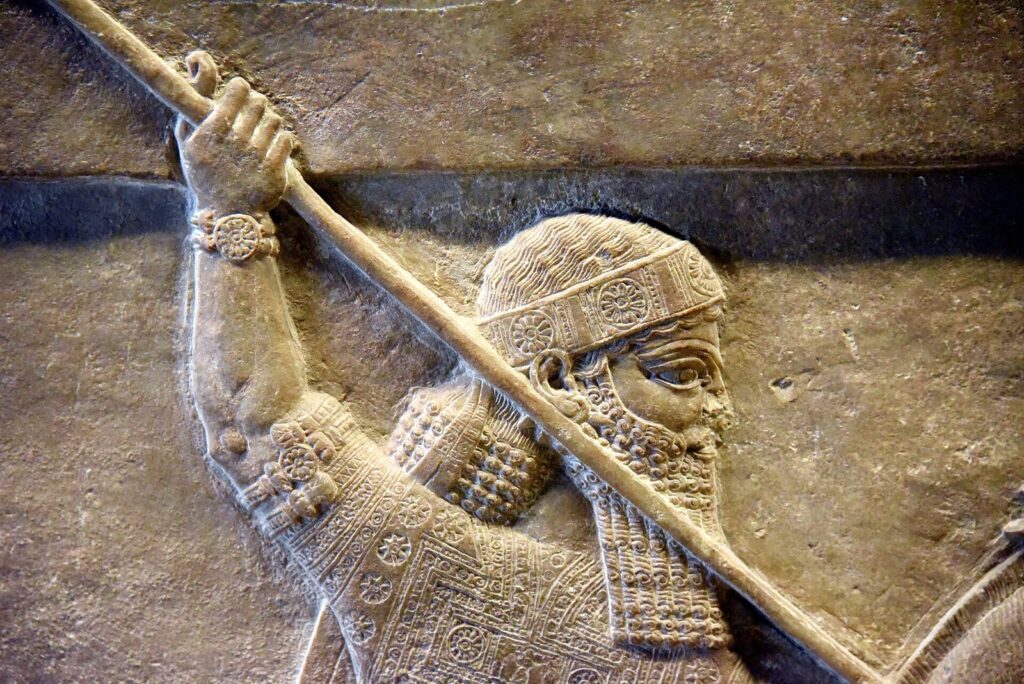
Ashurbanipal’s North Palace stood nearby. Its lion-hunt reliefs, with the king spearing lions from his chariot and wounded lionesses dragging their hindquarters, are among the finest carving to survive from the ancient world. They are in the British Museum, along with most of the library, because much of what the Victorian excavators found was shipped to London.
Where to see Nineveh’s treasures
| Where | What | Status |
|---|---|---|
| British Museum, London | The lion-hunt reliefs, the Lachish reliefs, most of Ashurbanipal’s library | Open |
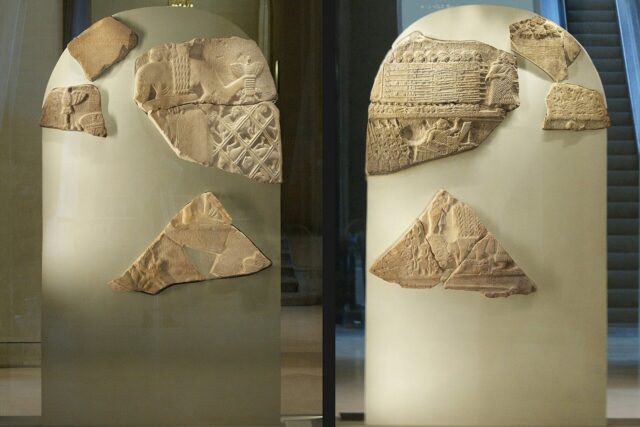
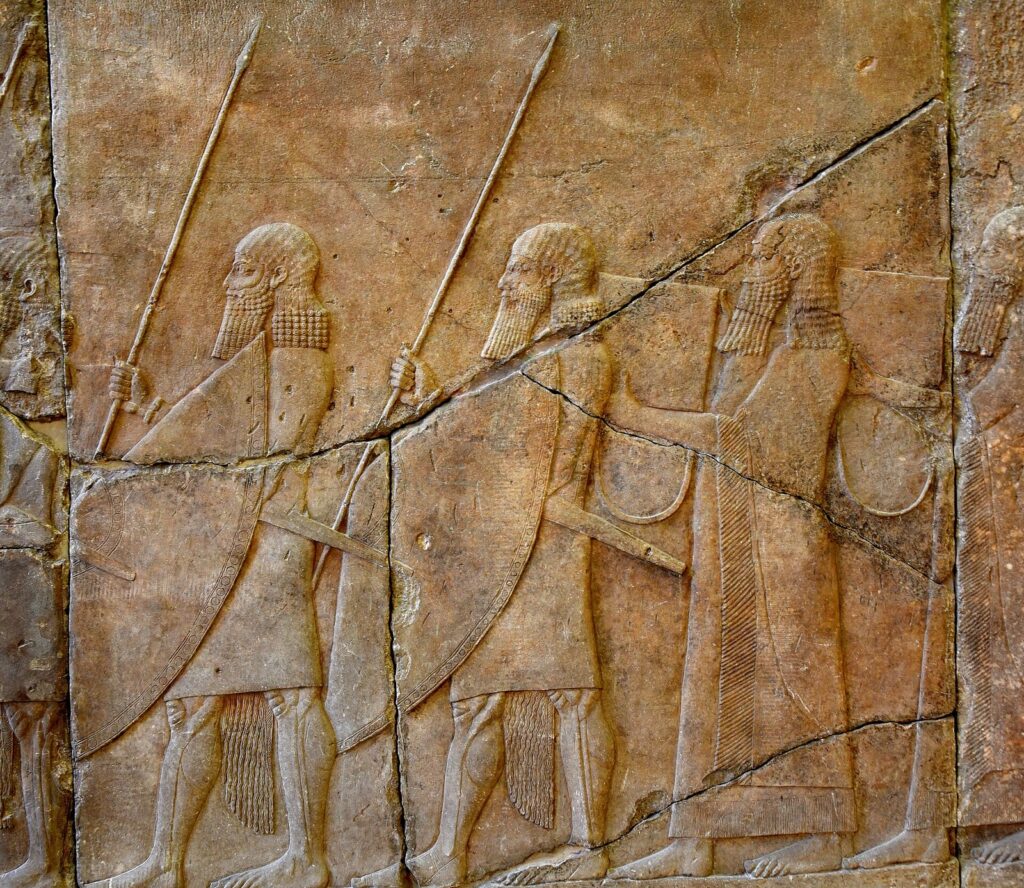
| Pergamon Museum, Berlin | Reliefs from Sennacherib’s reign, among others | Check before travelling |
| Mosul Museum | Assyrian sculpture, much of it wrecked by ISIS in 2015 | Not reopened as of August 2026; a 2026 reopening was planned |
| On site at Kuyunjik | The small palace and its library rooms found after 2019, the information centre | Open as an archaeological park since October 2023 |
Who dug up Nineveh?
This was one of the founding discoveries of Near Eastern archaeology, and a local story as much as a European one. Claudius James Rich, the East India Company’s resident in Baghdad, identified the mounds as Nineveh in 1820. The French consul in Mosul, Paul-Émile Botta, tried Kuyunjik in 1842 without much luck and moved on to Khorsabad. Then Austen Henry Layard found Sennacherib’s palace, and his assistant Hormuzd Rassam, a Christian born in Mosul, went on to find Ashurbanipal’s North Palace and much of the library.
The most famous find was made in London. In 1872 George Smith, a young assistant at the British Museum sorting fragments from the library, recognised on one tablet a flood story strikingly like Noah’s: part of the Epic of Gilgamesh. He announced it that December, and the museum’s sponsors sent him to Nineveh to look for the missing pieces.
| Years | Who | What came of it |
|---|---|---|
| 1820 | Claudius James Rich | Identified Kuyunjik and Nebi Yunus as Nineveh |
| 1842 | Paul-Émile Botta | First trenches at Kuyunjik |
| 1847–1852 | Austen Henry Layard, with Hormuzd Rassam | Sennacherib’s palace, Ashurbanipal’s palace and library |
| 1902–1904 | Leonard William King (British Museum) | Further work on Kuyunjik |
| 1927–1932 | Reginald Campbell Thompson | Excavations on the citadel |
| 1951–1958, 1967–1971 | Iraqi teams under Mohammed Ali Mustafa and Tariq Madhloom | Gates and walls, including the reconstructions |
| 1987–1990 | David Stronach | Surveys and excavation, including the Halzi Gate |
| 2018 onwards | Heidelberg University | Documenting the ISIS tunnels under Nebi Yunus |
| 2019–2023 | Iraqi-Italian expedition (Bologna) | 19 excavation areas, the small palace, the Adad Gate restoration |
| 2024 onwards | University of Chicago (ISAC) | The eastern lower town |
The gates of Nineveh
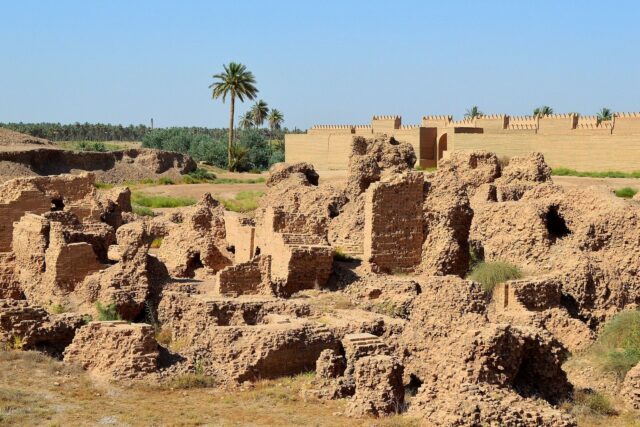
Fifteen gates pierced Sennacherib’s wall, and six have been explored. Several were partly reconstructed by Iraqi archaeologists in the twentieth century, in a mixture of new brick, concrete and eroding original mud brick that gave visitors an idea of their scale. ISIS destroyed or damaged most of those reconstructions between 2014 and 2017.
| Gate | What it was | What happened |
|---|---|---|
| Mashki | The gate for watering livestock | Reconstructed, then destroyed by ISIS; seven damaged Sennacherib-era reliefs were recovered there during restoration work in 2022 |
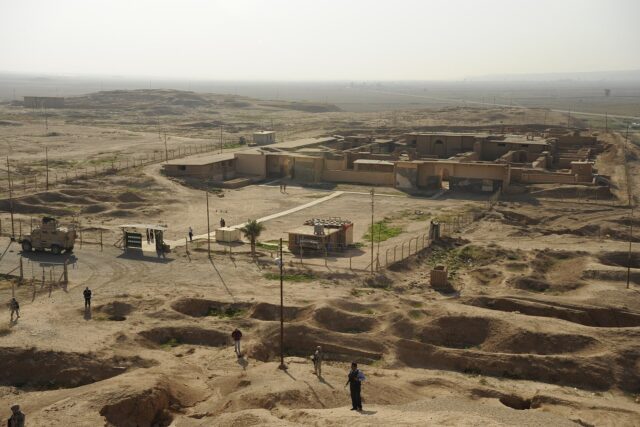
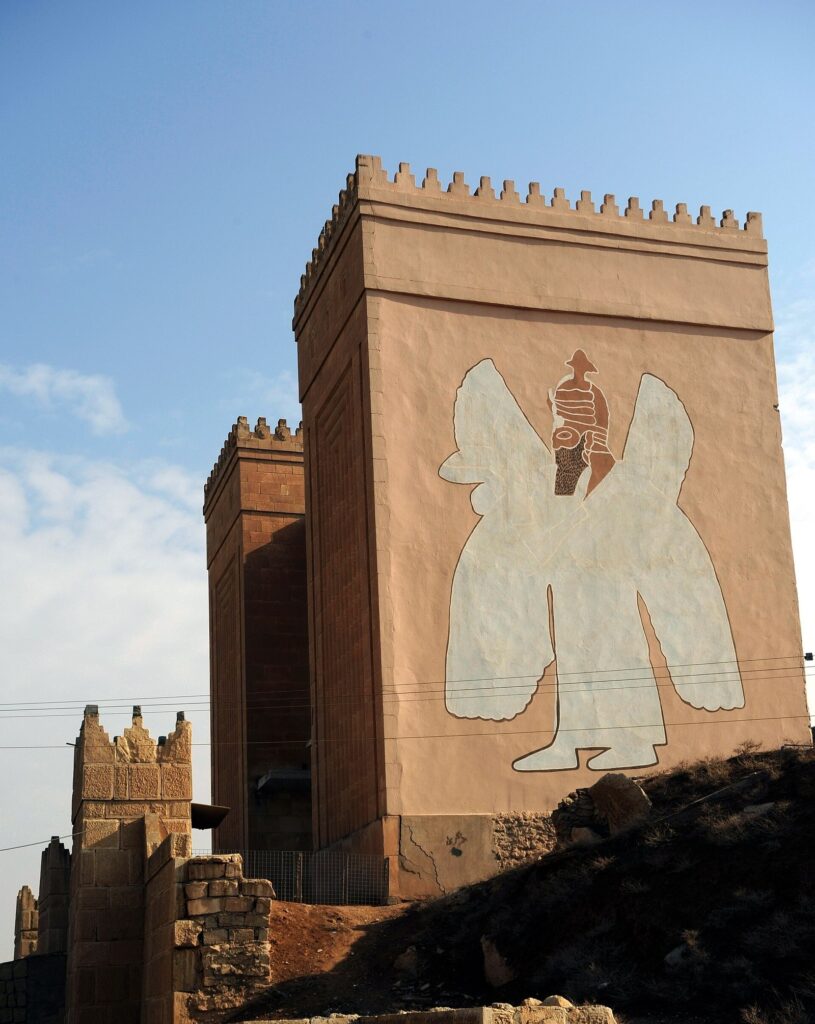
| Nergal | A ceremonial gate flanked by winged bull-men (lamassu) | The lamassu were destroyed by ISIS with jackhammers |
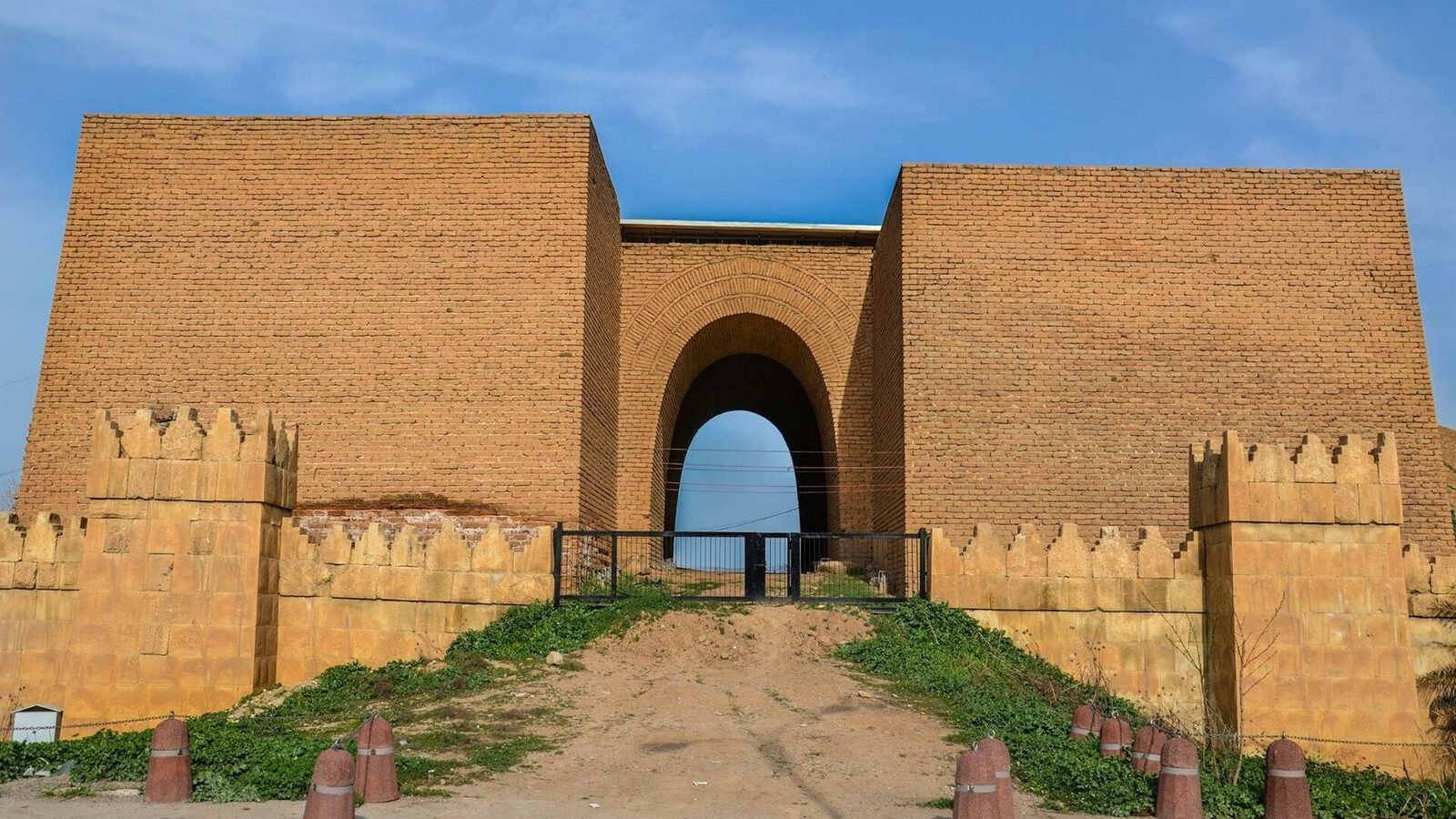
| Adad | A major defensive gate on the north side | Flattened, with the adjoining walls, in April 2016; restored by an Iraqi-Italian team and reopened in October 2023 as the park entrance |
| Shamash | The most important gate, on the road to Erbil | Explored by archaeologists; current state unconfirmed |
| Halzi | On the south wall, the largest gate still standing in outline | Explored in the late 1980s; current state unconfirmed |
| Sin | North-western corner | Partly explored |
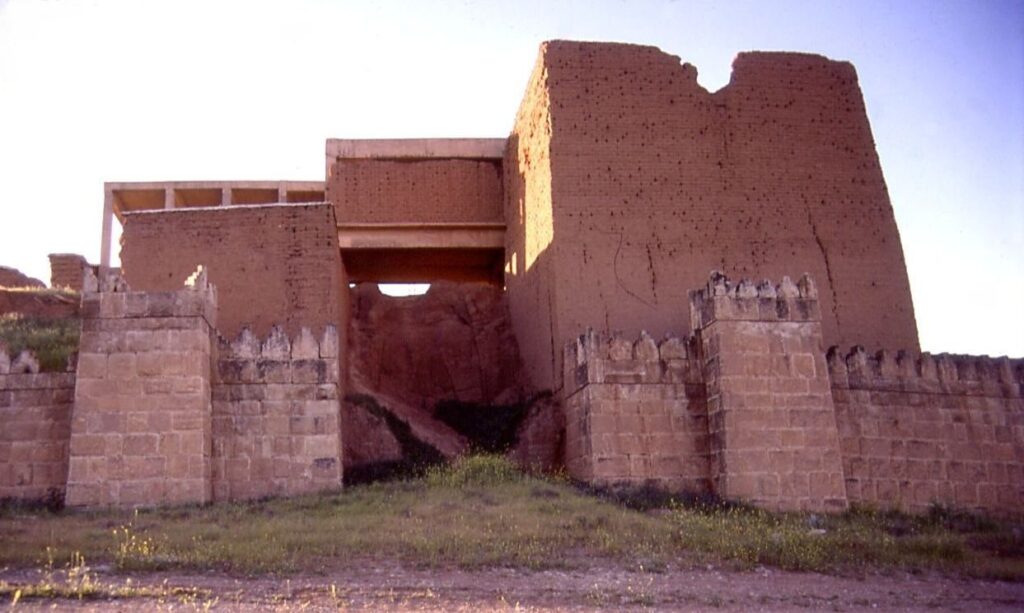
The Shamash Gate faced the road to Arbela, today’s Erbil, and the link was more than practical: one of the North Palace reliefs shows Arbela itself, its walls, citadel and temple of Ishtar. Our guide to the Erbil Citadel tells the other half of that story.
Why Nineveh matters to Christians and Muslims
For most of the last two thousand years, people knew Nineveh through scripture, not stone. In the Bible, Jonah is sent to warn the city, runs away, is swallowed by a great fish, and finally preaches; the Ninevites repent and the city is spared, at least for a while. Nahum later gloats over its fall, and the Book of Tobit is set among exiles living in Nineveh. The Qur’an names Jonah as the prophet Yunus, gives his name to a chapter, and holds up his people as the one town that believed in time and was spared.
That repentance still has a place in the calendar. The churches of Iraq’s Assyrian, Chaldean and Syriac Christians keep the Rogation of the Ninevites, a three-day fast in the weeks before Lent, and the towns of the Nineveh Plains just east of Mosul were among the oldest Christian communities in the world until ISIS emptied them in 2014. The shrine on the Nebi Yunus mound, venerated by Muslims and visited by Christians too, was part of the same shared inheritance. Our guide to Iraq’s cultures and faiths gives the wider picture.
What ISIS did to Nineveh
ISIS held Mosul from June 2014 to 2017, and Nineveh’s ruins were in its hands throughout. The damage came in several forms, some of it filmed for propaganda and some of it simply opportunistic.
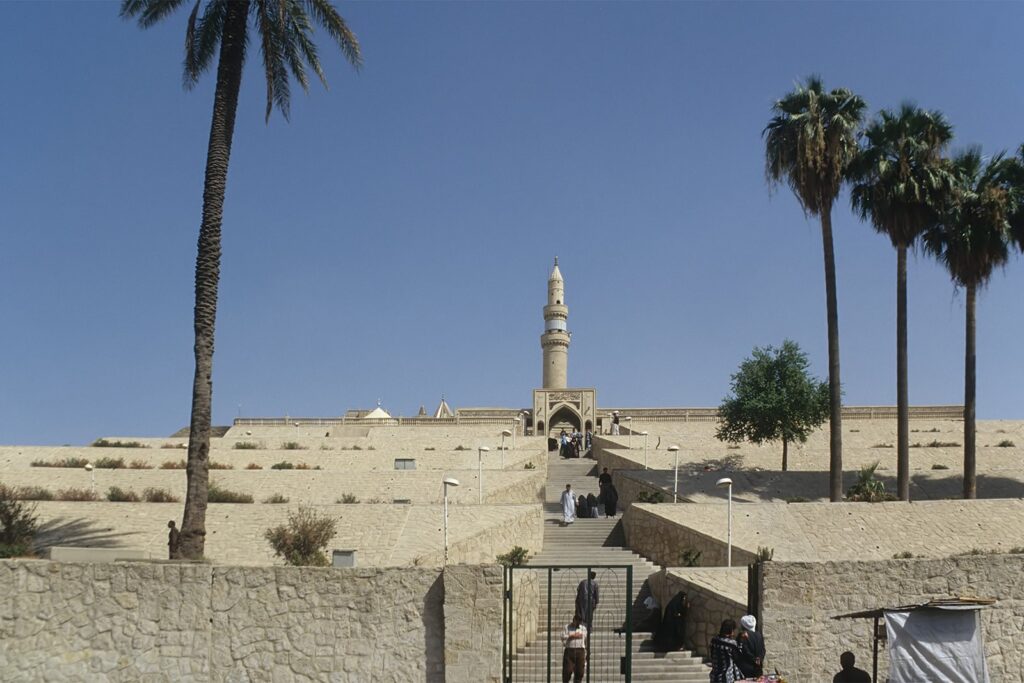
- The Nabi Yunus shrine. The mosque and shrine traditionally holding Jonah’s tomb, on the southern mound, was blown up on 24 July 2014.
- The gates. The Nergal Gate’s lamassu were broken up with jackhammers; the Mashki Gate was destroyed; the Adad Gate and the adjoining northern walls were flattened in April 2016.
- The palace. Sennacherib’s throne room was bulldozed in 2016.
- The ground. A road, the Al-Asady road, was cut across the southern part of the site, and militants dug tunnels into the Nebi Yunus mound, apparently hunting for antiquities to sell.
Those tunnels produced the strangest discovery of the war. When archaeologists from Heidelberg began documenting them in 2018, they found that the looters had cut into Esarhaddon’s palace beneath the shrine, and in 2021 reliefs from that palace were recorded underground. A disaster for the shrine became, grimly, one of the few ways anyone could have reached the palace under it.
What you can see at Nineveh today
Since 2019 an Iraqi-Italian expedition led by Nicolò Marchetti of the University of Bologna has dug in 19 areas across the city, reaching seventh-century BC levels, found a small Neo-Assyrian palace with rooms of cuneiform tablets near the Adad Gate, and restored the gate itself. Its work, under a project called KALAM, produced the thing visitors actually need: in October 2023 an archaeological park opened on the Kuyunjik side, entered through the rebuilt Adad Gate, with access to the small palace and a mud-brick information centre. Reports describe walkways with information signs, one of very few parks of its kind in Iraq.
- The Adad Gate. The entrance, restored after 2016.
- The small palace. Found by the Iraqi-Italian team, with the rooms where tablets were written and stored.
- Kuyunjik. The citadel mound of the great palaces, with views across the Tigris to Mosul’s Old City and the al-Hadba minaret.
- The walls. Stretches of Sennacherib’s wall and the outlines of the other gates, some inside modern neighbourhoods.
- The Mashki Gate. Under restoration; its recovered reliefs were one of the finds of 2022.
From 2024 the University of Chicago’s Institute for the Study of Ancient Cultures, under Tim Harrison, has taken over investigations in the eastern lower town, so parts of the site may be active excavations when you visit. The site’s biggest long-term threat is not war but water: if the ailing Mosul Dam upstream ever failed, the ruins could end up under as much as 14 metres of flood. Illegal building and rubbish dumping are the everyday threats.
Can you visit Nineveh? How it works from Erbil and Mosul
Yes, if you are in Mosul, and the paperwork is the first hurdle. Nineveh is in federal Iraq, so you need the federal e-visa, applied for at least 24 hours before travel; as of 25 September 2026 the FCDO put it at $160 for 60 days. A Kurdistan Region visa is valid in the Kurdistan Region only. That matters because most visitors come from Erbil: the road from Erbil to Mosul crosses from the Kurdistan Region into federal Iraq, and there were 2026 reports of travellers on Kurdistan-only visas being turned back on it. Our guides to the federal Iraq e-visa and the Kurdistan Region visa explain the difference.
Mosul is usually visited as a day trip from Erbil, and Nineveh fits into that day alongside the Old City. Mosul’s airport was inaugurated in July 2025, with scheduled passenger flights from November 2025, which gives another way in. Expect checkpoints on the approach roads and carry your passport and visa printout; our guide to Iraqi checkpoints explains the routine. Most foreign visitors go with a local guide or on a tour, and our guide to choosing a tour operator in Iraq covers what to ask.
Timing matters too. Northern Iraq’s summers are fierce, with Erbil reaching 49°C in August 2026, and the Kuyunjik mound has no shade; spring and autumn are far more comfortable, and mornings are best in any season. Our guide to the best time to visit Iraq has the month-by-month picture.
A Mosul day with Nineveh
| Stop | What it is | What we know (2025–26) |
|---|---|---|
| Nineveh archaeological park | Kuyunjik, the small palace and the information centre, via the Adad Gate | Opened October 2023; fee and hours unpublished |
| Al-Nuri mosque and al-Hadba minaret | The Old City’s landmarks, rebuilt after the 2017 battle | Reopened 1 September 2025 |
| Al-Nuri Grand Mosque Museum | The new museum at the mosque | Opened 9 February 2026; 25,000 IQD for foreigners, 3,000 IQD for Iraqis; daily 10:00–17:00 (reported) |
| Mosul Museum | The city’s archaeological museum, wrecked by ISIS | Not reopened as of August 2026 |
For the city itself, read our Mosul travel guide. If you have a second day and permission, Hatra, 110 km to the south-west, is the other great ancient site in the province, though it needs special permission.
Is Nineveh safe to visit?
Here is the frame as of late September 2026.
- UK. The FCDO advises against all travel to Nineveh (Ninawa) province, which includes Mosul, the Nineveh Plains and Nineveh itself. It is the FCDO’s highest level of warning. Its Iraq travel advice, last updated 22 July 2026, was unchanged when we checked on 25 September 2026, and it notes that terrorism is more frequent in former Daesh areas.
- US. The State Department’s advisory is Level 4, Do Not Travel, for all of Iraq, reissued on 29 August 2026.
- Insurance. Travelling against FCDO advice can invalidate your cover; our guide to travel insurance for Iraq explains what to check.
- The local picture. ISIS remnants still carry out sporadic roadside bombings and assassinations in the province, with more than 100 incidents reported in Nineveh governorate in 2024. The 2017 battle left about 11 million tonnes of rubble in Mosul’s Old City, and unexploded ordnance remains a hazard in ruined buildings, so stay on paths and don’t poke around ruins.
- The wider picture. Iraq’s 2026 has been shaped by the Iran-US confrontation: 38 days of closed airspace in the spring, repeated drone and missile strikes on the Kurdistan Region, and the US-led coalition’s mission due to end on 30 September 2026.
Mosul today is a city rebuilding, and foreigners do visit, mostly on guided day trips. But the advice is the strictest the FCDO gives. Our assessments of whether Mosul is safe and of how the UK and US advisories for Iraq work set out the detail.
What we could not confirm
- Entry fee and opening hours for the archaeological park. None are published, and no 2026 visitor report we found gives them.
- Whether the park is staffed and open every day. It opened in October 2023; we found no current operating details.
- The state of the Mashki Gate restoration. Work was reported continuing after the 2022 finds, with no completion date.
- The Nabi Yunus mosque. A photograph posted in April 2026 shows a new minaret on the site, which suggests rebuilding, but we could not confirm the mosque’s status or whether it is open.
- The Shamash and Halzi gates. We found no current description of their condition.
- The Mosul Museum’s reopening. A 2026 reopening was planned; we found no report that it has happened.
- Whether a Kurdistan Region visa ever covers Mosul. An operator claim that it does has circulated since January 2025; the FCDO says a KRI visa is valid in the Kurdistan Region only, and 2026 reports describe travellers being turned back.
Frequently asked questions
Where is Nineveh today?
Inside the city of Mosul in northern Iraq, on the east bank of the Tigris opposite the Old City. The walled area of about 750 hectares is now partly built over by modern neighbourhoods and crossed by roads. The main mounds are Kuyunjik, the citadel of the palaces, and Nebi Yunus, about a kilometre to the south.
Can you visit Nineveh?
Yes, from Mosul. An archaeological park opened on the Kuyunjik side in October 2023, entered through the restored Adad Gate, with a small palace and an information centre. No fee or hours are published. You need a federal Iraqi visa, and the FCDO advises against all travel to Nineveh province, which can invalidate insurance.
Is Nineveh a UNESCO World Heritage Site?
No. Nineveh has been on Iraq’s Tentative List since 2000, the list of sites a country intends to nominate, but it has never been inscribed. Many websites and tour brochures get this wrong. Iraq’s six World Heritage Sites are Hatra, Ashur, Samarra, the Erbil Citadel, the Ahwar of southern Iraq and Babylon.
What did ISIS destroy at Nineveh?
The Nabi Yunus shrine, traditionally Jonah’s tomb, was blown up on 24 July 2014. ISIS also destroyed the Nergal Gate’s winged bulls, the Mashki Gate and, in April 2016, the Adad Gate and nearby walls, bulldozed Sennacherib’s throne room and dug looting tunnels under the Nebi Yunus mound, which exposed Esarhaddon’s palace.
Where are the Nineveh reliefs now?
Most of the famous ones, including Ashurbanipal’s lion hunts and Sennacherib’s Lachish reliefs, are in the British Museum in London, along with most of Ashurbanipal’s library. Berlin’s Pergamon Museum holds others. The Mosul Museum held Assyrian sculpture that ISIS damaged in 2015 and had not reopened as of August 2026.
Is Jonah buried at Nineveh?
Tradition says so: the southern mound is called Nebi Yunus, the Prophet Jonah, and a mosque and shrine stood on it until ISIS blew it up in 2014. There is no archaeological evidence for a tomb of Jonah. The tunnels dug beneath the shrine instead revealed part of the Assyrian king Esarhaddon’s palace.
Were the Hanging Gardens at Nineveh?
Possibly. The Hanging Gardens are traditionally placed at Babylon, but no trace has been found there, and many scholars now argue that the gardens described by ancient writers were Sennacherib’s at Nineveh, watered by his canals and aqueducts. Others think the gardens were exaggerated or invented. The question is still open.
When did Nineveh fall?
In 612 BC, when an alliance of Babylonians and Medes, with Scythian allies, besieged the city, broke in after house-to-house fighting and razed it. The Assyrian empire collapsed within a few years, and Nineveh never recovered as a capital, though people went on living on its mounds for centuries.
Final thoughts
Nineveh is a strange place to stand. The empire that built it was one of the most feared in history, and its reliefs hang in some of the world’s great museums; the city itself is a set of grassy mounds and rebuilt gates in the suburbs of Mosul, with traffic running past. What changed recently is that someone has made it legible again. The Adad Gate park, with its paths and signs and a small palace you can actually walk into, is the first time in decades that a visitor could arrive and make sense of the place.
It is also a reminder of how recent the damage is. The gates and the shrine on the Nebi Yunus mound were standing in the lifetimes of most of the people who will read this, and some of what was lost is still coming out of the ground in unexpected ways. Go if you can do it within the advice you are willing to accept, go with a guide who knows Mosul, and give the Old City the same time you give the ruins.
For the bigger picture, read our overview of Mesopotamia’s great cities, see which collections are open in our guide to museums in Iraq, and check which of Iraq’s sites really are World Heritage before you trust a brochure.
Photo credits
Mashki Gate, Nineveh, 2014 (featured image): Mohamed albaroodi91, Wikimedia Commons (CC BY-SA 4.0). Ashurbanipal lion-hunt relief, British Museum: Osama Shukir Muhammed Amin FRCP(Glasg), Wikimedia Commons (CC BY-SA 4.0). Relief from Nineveh, Pergamon Museum: Osama Shukir Muhammed Amin FRCP(Glasg), Wikimedia Commons (CC BY-SA 4.0). Adad Gate, Nineveh: Fredarch (talk), Wikimedia Commons (CC BY-SA 3.0). Nergal Gate, Nineveh, 2008: JoAnn S. Makinano, U.S. Air Force, Wikimedia Commons (public domain). Mosque of the Prophet Yunus, 1999: Roland Unger, Wikimedia Commons (CC BY-SA 3.0). All images via Wikimedia Commons under the licences shown.