Last updated: September 2026. Travel advice re-checked on 25 and 26 September 2026 against the FCDO’s Iraq pages and the US State Department’s 29 August 2026 reissue; the site’s status checked against SBAH’s July 2026 statement in our research files, the Smithsonian’s project record and published excavation summaries.
Nimrud’s most famous residents left a long time ago. Its winged bulls guard museum galleries in London and New York, its carved ivories are split between Baghdad, London and Sulaymaniyah, and the best-known guest at its dig house was Agatha Christie. What stayed behind, the palace itself, was blown up by ISIS in 2015. Of all the ancient cities in our guide to Iraq’s Mesopotamian sites, Nimrud is the one where the story of the objects and the story of the place have come furthest apart.
Nimrud, ancient Kalhu, was the capital of Assyria from 879 to 706 BC, on the Tigris about 30 km south of Mosul. It is famous for Ashurnasirpal II’s Northwest Palace, its colossal winged bulls and its ivories. ISIS destroyed about 90% of the excavated area in 2015, and as of July 2026 the site had not formally reopened to visitors.
This page covers what Nimrud was, what made it famous, who dug it and where its treasures went, what ISIS did and how the rescue is going, whether you can visit in 2026, the other sites of the Assyrian heartland around it, the FCDO’s against-all-travel advice for Nineveh province as of late September 2026, and the gaps in what anyone can confirm.
The short answer
| Question | Answer |
|---|---|
| Where is it? | Nineveh province, on the Tigris about 30 km south of Mosul |
| What was it? | Kalhu, capital of the Assyrian empire from 879 BC until 706 BC |
| What was lost? | About 90% of the excavated area, including the Northwest Palace, destroyed by ISIS in 2015 |
| Is it open? | Not formally. SBAH said in July 2026 that parts still need infrastructure work before it can fully open |
| UNESCO? | Tentative List since 2000; not a World Heritage Site |
| UK advice | FCDO: against ALL travel to Nineveh province (unchanged as of 25 September 2026) |
| US advice | Level 4, Do Not Travel, for all of Iraq (reissued 29 August 2026) |
What was Nimrud?
The city’s real name was Kalhu, the Calah of the Book of Genesis, which lists it with Nineveh among the cities built in Assyria. It began as a modest trading settlement under Shalmaneser I in the thirteenth century BC. The name Nimrud was attached much later, by nineteenth-century travellers and archaeologists who linked the mound to the biblical hunter Nimrod. That same association has confused visitors ever since: Birs Nimrud, the ruined ziggurat of Borsippa near Babylon, is a different site four hundred kilometres to the south.
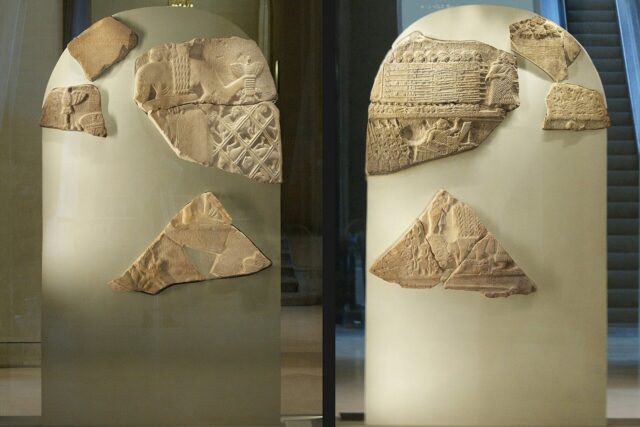
Kalhu’s great moment began in 879 BC, when Ashurnasirpal II made it the capital of Assyria and rebuilt it on an imperial scale: a city of about 360 hectares inside walls 7.5 km long, with a citadel of palaces and temples overlooking the Tigris. When the work was done, in 864 BC, he threw a ten-day feast and recorded the guest list on a stone slab now known as the Banquet Stele: 69,574 people. His son Shalmaneser III built a vast arsenal, now called Fort Shalmaneser, of about 5 hectares with more than 200 rooms. The capital moved to Sargon II’s new city of Dur-Sharrukin in 706 BC and then to Nineveh, but Kalhu remained a royal city until the Medes and Babylonians sacked it in the campaigns that ended the empire around 612 BC.
Kalhu through time
| Date | What happened |
|---|---|
| 13th century BC | A trading settlement under Shalmaneser I |
| 879 BC | Ashurnasirpal II makes Kalhu the capital |
| 864 BC | The inauguration feast for 69,574 guests |
| 858–823 BC | Shalmaneser III builds Fort Shalmaneser and sets up the Black Obelisk |
| 706 BC | Sargon II moves the capital to Dur-Sharrukin |
| c. 614–612 BC | Kalhu is sacked in the Median and Babylonian conquest |
| 1845 | Austen Henry Layard begins excavating |
| 2015 | ISIS destroys most of the excavated remains |
| November 2016 | Iraqi forces retake the site |
What made Nimrud famous
The Northwest Palace and its winged bulls
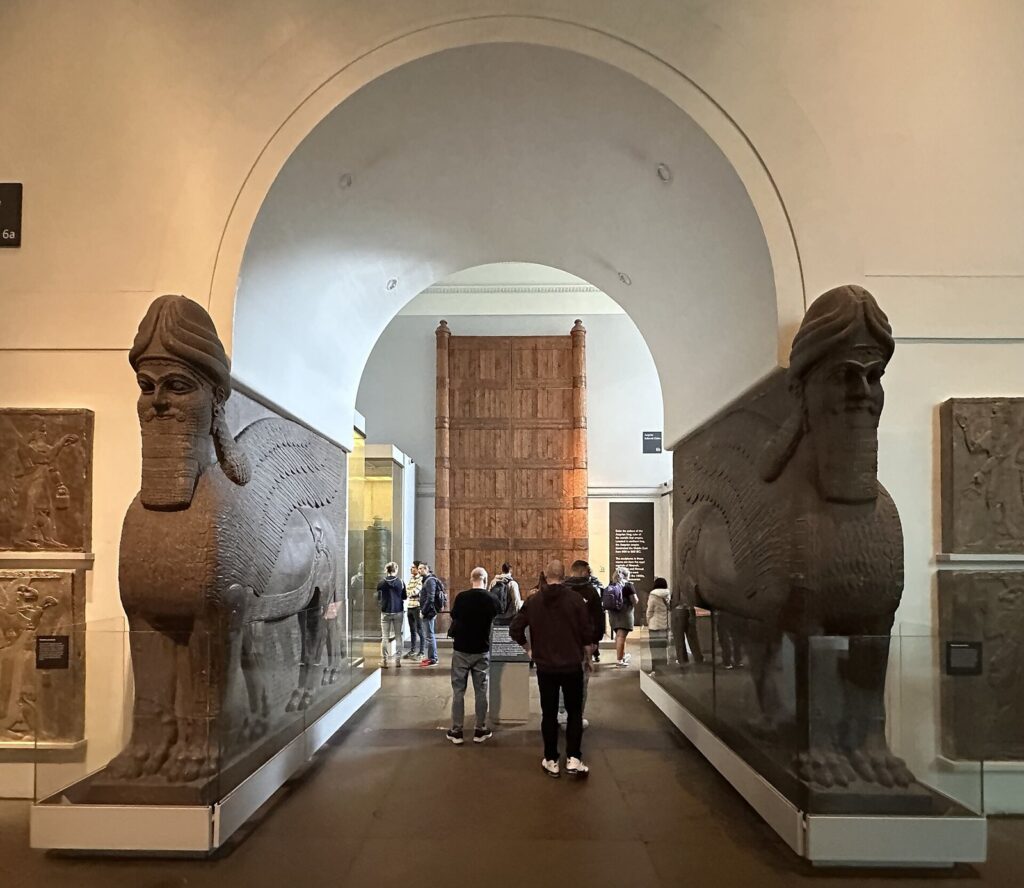
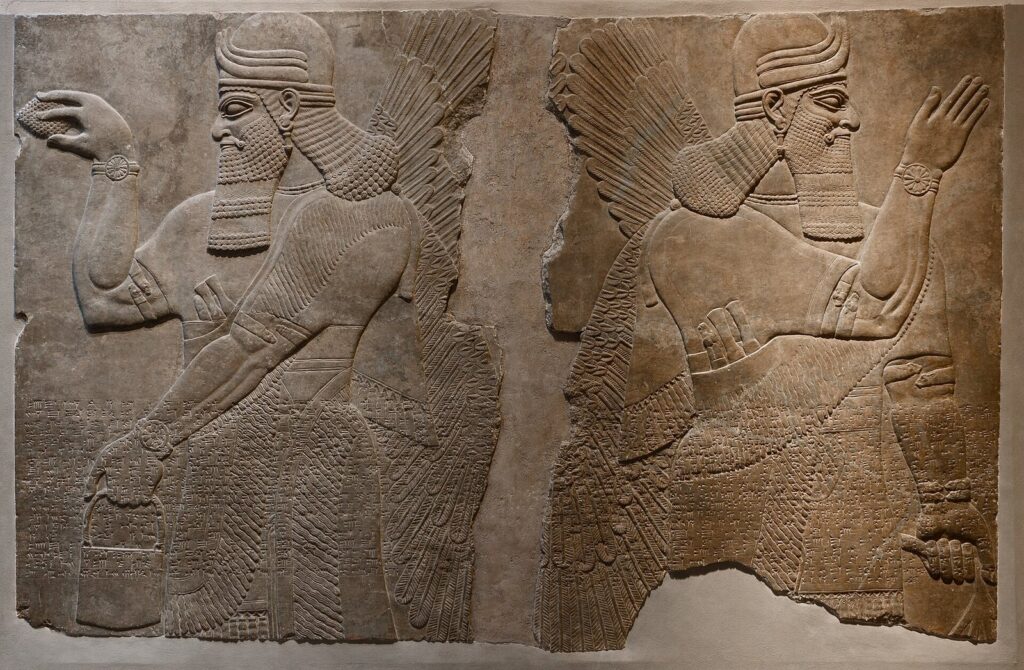
Ashurnasirpal II’s Northwest Palace was the model for every Assyrian palace that followed. Its doorways were guarded by lamassu, colossal human-headed winged bulls and lions carved from single blocks of stone weighing up to 27 tonnes, and its walls were lined with gypsum panels carved in low relief: the king at war, the king hunting, and above all the king attended by winged protective spirits holding buckets and cones in rituals of purification. Many of the panels also carry the same long inscription, the so-called Standard Inscription, running across the middle of the scenes.
Inside the Northwest Palace
The palace followed a plan that later Assyrian kings copied. Visitors came first into a great outer courtyard, the public face of the state, where officials and tribute-bearers gathered. From there the throne room opened along one side: a long hall entered through doorways guarded by pairs of lamassu, its walls lined with reliefs of the king at war and on the hunt, spearing lions and wild bulls from his chariot. Behind the throne itself stood a panel of the king twice over, flanking a stylised sacred tree beneath the winged disc of the god Ashur, with protective spirits at either side.
Beyond the throne room lay an inner courtyard and the private apartments, where the reliefs turned from war to ritual: row after row of winged spirits, some eagle-headed, performing purification before the king. The domestic wing held the palace women’s quarters, and it was beneath its floors that the queens’ tombs were found in 1988. Walking through it before 2015, visitors passed reliefs still standing where Ashurnasirpal’s sculptors had carved them, more than 2,800 years earlier.
The Black Obelisk
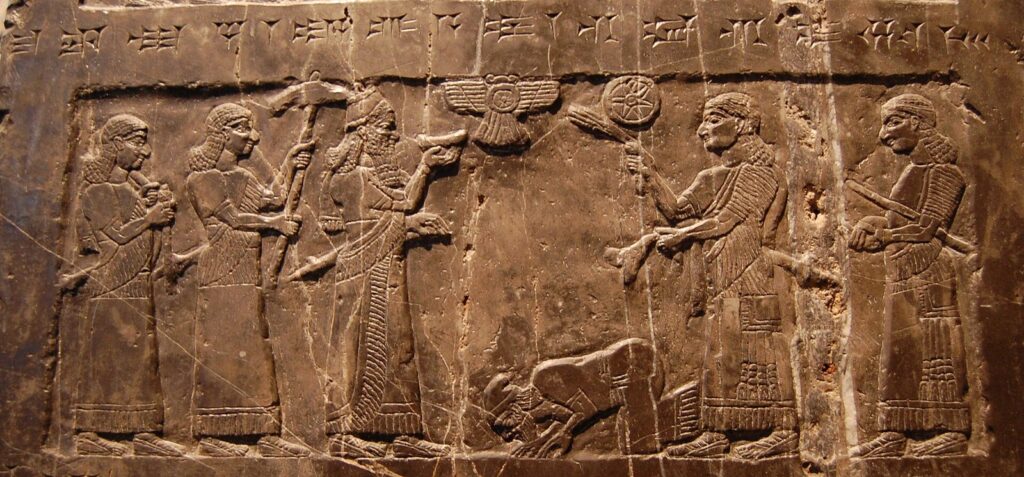
Found by Layard in 1846, the Black Obelisk of Shalmaneser III stands about two metres high and carries 24 relief panels recording the king’s campaigns between 859 and 824 BC. One panel shows a figure bowing to the ground before Shalmaneser, identified in the caption above it as Jehu, “son of Omri”, king of Israel. It is often described as the oldest surviving image of an Israelite king.
The ivories and the queens’ gold
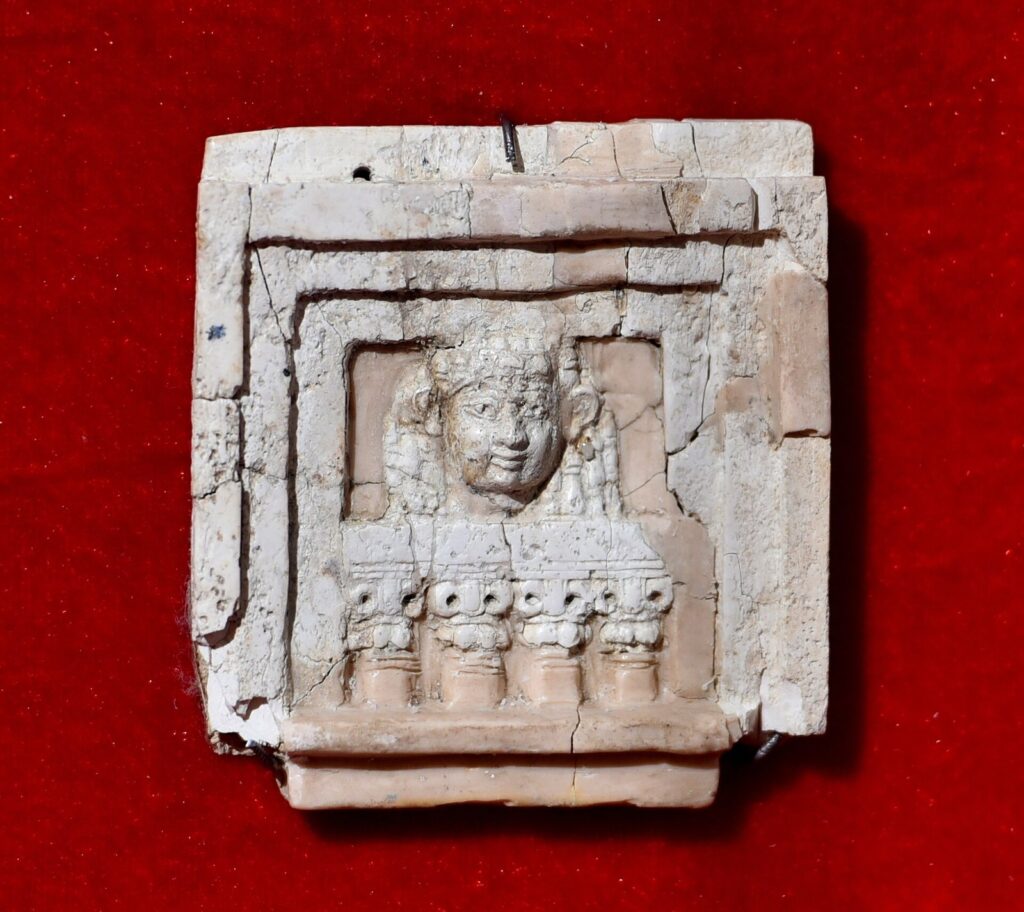
Nimrud’s palaces and storerooms held thousands of carved ivories, most of them made by Phoenician and Syrian craftsmen and brought back as tribute or loot: furniture inlays, plaques, boxes and horse trappings. The best known is the “woman at the window”, a woman’s face framed in a balcony, which exists in several versions. In 1988 Iraqi archaeologists opened the tombs of Assyrian queens beneath the Northwest Palace and found one of the richest hoards of gold jewellery ever recovered in the Near East. That treasure spent years in a Central Bank vault before being returned to the Iraq Museum for display in a purpose-built hall; whether that hall is currently open is something we could not confirm.
The inscriptions in the tombs named their occupants, including Yaba, a wife of Tiglath-Pileser III, and Atalia, a wife of Sargon II, and at least one carried a curse on anyone who disturbed the queen’s rest. The discovery came just before the 1990–91 Gulf War, which is why the treasure went almost straight into a bank vault.
Who dug up Nimrud?
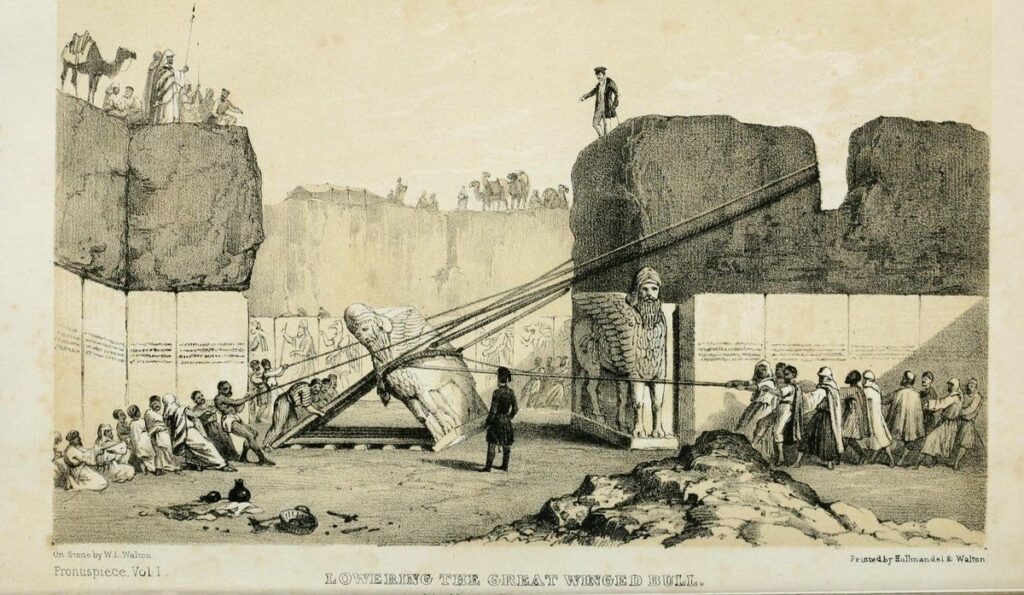
Nimrud made Assyria famous in Victorian Britain. Austen Henry Layard began digging in 1845, uncovered the Northwest Palace, and shipped lamassu and reliefs down the Tigris to London, a process he illustrated in his bestselling Nineveh and Its Remains. Hormuzd Rassam, the Mosul-born Christian who had been his assistant, and William Loftus carried on in the 1850s. So many relief panels were cut from the palace walls that they ended up in dozens of museums and colleges, from London and New York to small American colleges whose missionaries brought them home.
The next great campaign came after the Second World War. Max Mallowan, for the British School of Archaeology in Iraq, dug at Nimrud from 1949 to 1963, found the ivory storerooms of Fort Shalmaneser and 244 letters from the royal archives. His wife, the novelist Agatha Christie, spent the seasons with him at the dig house, photographed finds and, in a story told ever since, cleaned some of the ivories with her own face cream. Iraqi teams took over from the 1980s, and their discovery of the queens’ tombs in 1988 was the last great find before the wars.
| Years | Who | What came of it |
|---|---|---|
| 1845–1851 | Austen Henry Layard | The Northwest Palace, the lamassu, the Black Obelisk |
| 1853–1879 | Hormuzd Rassam and William Loftus | Further palaces and temples |
| 1949–1963 | Max Mallowan (British School of Archaeology in Iraq) | Fort Shalmaneser, the ivories, the Nimrud Letters |
| 1974–1976 | Polish documentation team | Recording the Northwest Palace |
| 1980s | Iraqi State Board of Antiquities and Heritage | The queens’ tombs (1988) |
| 2017 onwards | SBAH with the Smithsonian, UNESCO and the University of Pennsylvania | Stabilisation and recovery after ISIS |
Where Nimrud’s treasures are now
| Where | What | Status |
|---|---|---|
| British Museum, London | Lamassu, Northwest Palace reliefs, the Black Obelisk, many ivories | Open; its Nimrud gallery is Room 7 |
| Metropolitan Museum of Art, New York | A pair of lamassu, palace reliefs, ivories | Open |
| Iraq Museum, Baghdad | The queens’ gold, ivories, reliefs | Closed for refurbishment as of August 2026 |
| Slemani Museum, Sulaymaniyah | A “lady at the window” ivory plaque | Open (Kurdistan Region) |
| Erbil Civilization Museum | An ivory plaque of a striding bull; an Esarhaddon cylinder from Fort Shalmaneser | Open, with erratic hours (August 2026) |
| Mosul Museum | Assyrian sculpture, much of it damaged by ISIS | Not reopened as of August 2026 |
If you are in the Kurdistan Region, the museums in Sulaymaniyah and Erbil are the realistic way to see Nimrud pieces in Iraq this year; in Baghdad, follow our Iraq Museum guide for the reopening, and see our overview of museums in Iraq for what else is open.
What ISIS did to Nimrud
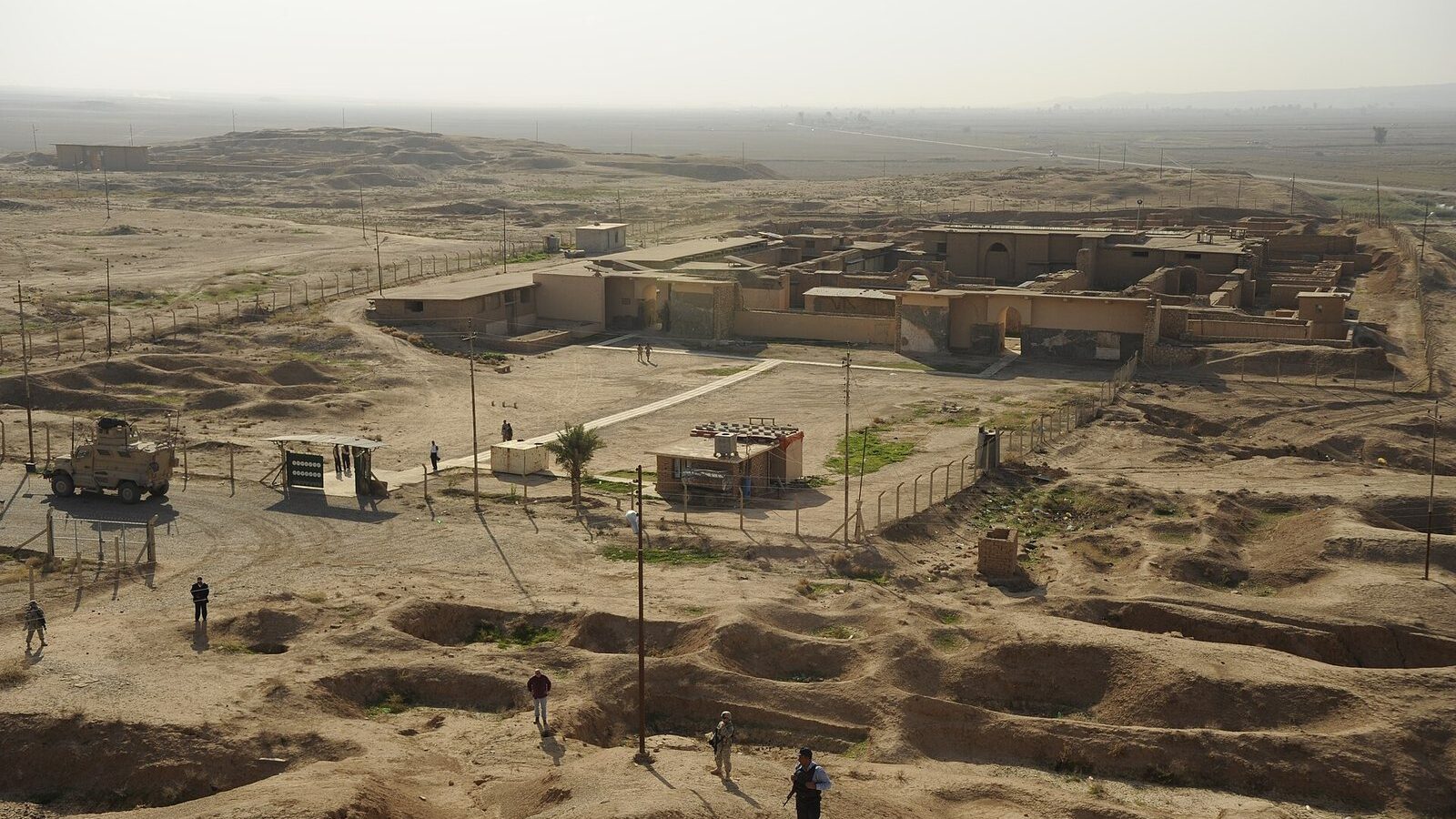
ISIS announced in March 2015 that it would destroy Nimrud as un-Islamic, and over the following weeks its fighters bulldozed and blew up the major structures, filming the explosion of the Northwest Palace for propaganda. By the time Iraqi forces retook the site in November 2016, about 90% of the excavated area had been completely destroyed, including the Northwest Palace, whose remaining reliefs had stood in place since Layard’s day. Satellite images later showed the great ziggurat levelled as well.
The objects in foreign museums survived because they had been taken away in the nineteenth century, an irony that is not lost on Iraqis and that sits at the centre of every debate about where Nimrud’s heritage belongs. The pieces left in place took the full force of the explosions.
The rescue since 2017
Recovery began almost immediately. In March 2017 the Smithsonian and the US Department of State announced a $400,000 project with Iraq’s State Board of Antiquities and Heritage to stabilise and secure the endangered remains, building on training at the Iraqi Institute for the Conservation of Antiquities and Heritage in Erbil. A UNESCO-supported programme followed in July 2017, a second phase to restore the palace began in October 2019, and a University of Pennsylvania team started work in October 2022, finding an inscribed door sill in its first season.
| When | What happened |
|---|---|
| March 2017 | Smithsonian and US State Department project with SBAH ($400,000) |
| July 2017 | UNESCO-supported recovery programme begins |
| October 2019 | Second phase: restoring the Northwest Palace |
| October 2022 | University of Pennsylvania team begins excavation and stabilisation |
| January 2025 | End of a fourth rescue season; a lamassu reassembled on the ground, according to Monte Carlo Doualiya radio |
| 1 July 2026 | SBAH’s Nineveh director: parts “still need further infrastructure work before it can fully open to visitors” |
The scale of the task is daunting. Teams have gathered about 35,000 fragments of shattered relief and sculpture, numbered and laid out on the ground to be matched, and a decade of work is expected. By July 2026 photographs showed a lamassu standing again and the outline of Ashurnasirpal II’s throne room. The Smithsonian describes its part of the project as still ongoing.
Can you visit Nimrud?
Not as an ordinary tourist site. Nimrud has not formally reopened, and SBAH said in July 2026 that parts still need infrastructure work before it can open fully. In practice some tours from Mosul do take visitors there as an escorted visit to what is still a working rescue site. If you want to go, the order of operations is:
- Visa. Nimrud is in federal Iraq, so you need the federal e-visa, applied for at least 24 hours before travel; as of 25 September 2026 the FCDO put it at $160 for 60 days. A Kurdistan Region visa does not cover it. Our Iraq e-visa guide explains how to apply.
- Operator. Go with an operator that has taken groups to Nimrud recently and can explain the current arrangement; our guide to choosing a tour in Iraq covers what to ask.
- Base. Mosul is the base, and tours usually reach Mosul from Erbil. Expect checkpoints on the way; see our guide to Iraqi checkpoints.
- On site. Stay with your escort, don’t step onto laid-out fragments, and ask before photographing anything that looks like work in progress or security.
How far is it from Mosul?
| Source | Distance | What it probably measures |
|---|---|---|
| Excavation summaries (Wikipedia) | 30 km south of Mosul | Straight line from the city |
| Museum summaries in search results | About 20 miles (32 km) south | The same, rounded in miles |
| Tour practice in our research files | 35 km | Road distance from central Mosul |
When to go
Spring or autumn, and early in the day. The Nineveh plain has almost no shade, northern summers are extreme (Erbil reached 49°C in August 2026), and a rescue site offers nothing in the way of shelter. March to April and October to November are the most bearable months; winters can be wet and muddy on unpaved ground. Our guide to the best time to visit Iraq has the month-by-month detail.
The Assyrian heartland: other sites around Nimrud
Nimrud sits in the old core of Assyria, the triangle of land between the Tigris, the Great Zab and the hills to the north. Its neighbours tell the rest of the story, though they vary enormously in how reachable they are.
| Site | What it is | Where, and the FCDO band |
|---|---|---|
| Nineveh | The last Assyrian capital; an archaeological park since 2023 | Inside Mosul; against all travel |
| Ashur (Qal’at Sherqat) | The religious heart of Assyria; UNESCO World Heritage, on the danger list | Salah al-Din province; against all travel |
| Dur-Sharrukin (Khorsabad) | Sargon II’s short-lived capital; its winged bulls are in Paris, London, Chicago and Baghdad | Nineveh province; against all travel |
| Balawat | Source of the bronze gate bands in the British Museum | Near Nimrud, Nineveh province; against all travel |
| Jerwan aqueduct | Sennacherib’s stone aqueduct carrying water to Nineveh | Nineveh province, reached from the Kurdistan Region; against all travel |
| Khinnis and Maltai reliefs | Sennacherib’s rock carvings on his canal system | Duhok province, Kurdistan Region; against all but essential travel |
| Erbil Citadel | Ancient Arbela, home of a great temple of Ishtar; UNESCO World Heritage | Erbil, Kurdistan Region; against all but essential travel |
The Kurdistan Region sites are the most accessible way to stand in the Assyrian landscape this year: see our guides to the Erbil Citadel, Duhok and its Assyrian reliefs and day trips from Erbil.
Is Nimrud safe to visit?
Here is the frame as of late September 2026.
- UK. The FCDO advises against all travel to Nineveh (Ninawa) province, which includes Nimrud and Mosul, its highest level of warning. Its Iraq travel advice, last updated 22 July 2026, was unchanged when we checked on 25 September 2026.
- US. The State Department’s advisory is Level 4, Do Not Travel, for all of Iraq, reissued on 29 August 2026.
- Insurance. Travelling against FCDO advice can invalidate your cover. Read our guide to travel insurance for Iraq.
- The local picture. ISIS remnants still carry out sporadic attacks in Nineveh governorate, with more than 100 incidents reported in 2024, and rural sites like Nimrud are exposed. The site is guarded by Iraqi forces.
- The wider picture. 2026 has seen 38 days of closed Iraqi airspace, repeated drone and missile strikes on the Kurdistan Region, and the US-led coalition’s mission due to end on 30 September 2026.
For Mosul’s own picture, see our assessment of whether Mosul is safe, and for how the advisories themselves work, our guide to the UK and US travel advice for Iraq.
What we could not confirm
- How to arrange a visit. There is no published permit or booking process; access appears to be negotiated by operators with the site’s guards and SBAH.
- A reopening date. SBAH gave none in July 2026, and the Wikipedia summary of the project says tourism is years away.
- What you can actually see. Beyond July 2026 photographs of a standing lamassu and the throne room outline, we found no description of a visitor route.
- Entry fee and hours. None exist that we could find.
- The queens’ gold display. The treasure was returned to the Iraq Museum for a purpose-built hall; whether that hall is open is unconfirmed, and the museum itself was closed in August 2026.
- The ziggurat. Reports agree it was levelled; we could not confirm what, if anything, has been stabilised.
Frequently asked questions
Where is Nimrud?
In Nineveh province in northern Iraq, on the east bank of the Tigris about 30 km south of Mosul and some 10 km north of where the Great Zab joins the Tigris. Road distances from central Mosul are usually given as about 35 km. Its ancient name was Kalhu, the Calah of the Bible.
What is Nimrud famous for?
For Ashurnasirpal II’s Northwest Palace, the model for later Assyrian palaces, with its colossal winged bulls and carved reliefs; for the Black Obelisk of Shalmaneser III; for thousands of carved ivories; and for the queens’ tombs full of gold, found in 1988. Much of this is now in the British Museum, the Met and the Iraq Museum.
Did ISIS destroy Nimrud?
Largely, yes. ISIS bulldozed and blew up the major structures in March and April 2015, and when Iraqi forces retook the site in November 2016 about 90% of the excavated area had been completely destroyed. Since 2017 Iraqi, American and UNESCO-backed teams have been recovering tens of thousands of fragments and stabilising what remains.
Can tourists visit Nimrud?
Not formally. As of July 2026 SBAH said parts of the site still needed infrastructure work before it could fully open. Some tours from Mosul take visitors on escorted visits to what is still a rescue site. The FCDO advises against all travel to Nineveh province, which can invalidate travel insurance.
Is Nimrud a UNESCO World Heritage Site?
No. Nimrud has been on Iraq’s Tentative List since 2000 but has never been inscribed, a point many websites get wrong. Iraq’s six World Heritage Sites are Hatra, Ashur, Samarra, the Erbil Citadel, the Ahwar of southern Iraq and Babylon, so the nearest inscribed Assyrian site is Ashur.
Is Nimrud the same as Birs Nimrud?
No. Nimrud is the Assyrian capital Kalhu, south of Mosul. Birs Nimrud is the ruined ziggurat of Borsippa, near Babylon, about 400 km further south. Both carry the name of the biblical hunter Nimrod, which local tradition attached to several ancient ruins, and the shared name confuses a lot of trip planners.
Did Agatha Christie work at Nimrud?
She spent several digging seasons there in the 1950s with her husband, the archaeologist Max Mallowan, who led the British excavations from 1949. She helped photograph and record finds, and the story that she cleaned ivories with her face cream has been retold ever since. She also wrote at the expedition house.
Where are the Nimrud ivories?
Spread across several collections. Many are in the British Museum, others in the Metropolitan Museum of Art and the Iraq Museum in Baghdad, which was closed for refurbishment in August 2026. In the Kurdistan Region, the Slemani Museum in Sulaymaniyah and the Erbil Civilization Museum each display Nimrud ivory plaques.
Final thoughts
Nimrud is a hard place to feel good about. Its finest things are safe in foreign museums because nineteenth-century excavators carried them off, and the palace that Iraq kept was destroyed on camera. Yet the rescue is one of the more hopeful archaeological stories of the last decade: Iraqi teams, with American and international partners, sorting tens of thousands of fragments by hand and slowly standing the bulls back up.
For most travellers in 2026, the realistic way to meet Nimrud is in a museum, in London, New York, Sulaymaniyah or, when it reopens, Baghdad, and the realistic way to feel the Assyrian landscape is from the Kurdistan Region. If you do reach the site itself, you will be seeing a place in the middle of being put back together, which is its own kind of privilege.
To follow the thread, start with our overview of Iraq’s ancient sites, compare Nimrud’s fate with Hatra’s, where most buildings survived, and check which Iraqi sites really are on the World Heritage List.
Photo credits
Northwest Palace, Nimrud, 2008 (featured image): Staff Sgt. JoAnn Makinano, Wikimedia Commons (public domain). Lowering the great winged bull, Layard 1849: Alemazzi, Wikimedia Commons (CC BY-SA 4.0). Nimrud lamassu, British Museum: APK, Wikimedia Commons (CC BY 4.0). Black Obelisk of Shalmaneser III, British Museum: Steven G. Johnson, Wikimedia Commons (CC BY-SA 3.0). Nimrud ivory, Iraq Museum: Osama Shukir Muhammed Amin FRCP(Glasg), Wikimedia Commons (CC BY-SA 4.0). Northwest Palace reliefs, Metropolitan Museum of Art: PierreSelim, Wikimedia Commons (public domain). All images via Wikimedia Commons under the licences shown.