Last updated: September 2026. Public holiday list re-checked on 26 September 2026 against 964media’s report of the 2024 holidays law and the current Wikipedia summary; Babylon festival dates from Shafaq News; Newroz, Akitu and Yazidi dates from Kurdistan24, the KRG calendar and our research files; FCDO and US advisories checked 25 and 26 September 2026.
Iraq festivals run on four calendars at once. The civil year is Gregorian. The religious year is the Islamic lunar calendar, which slides about 11 days earlier every year. The Kurds count their own years from Newroz, and on 21 March 2026 entered the year 2726. And the Yazidis still set their feasts by the old Julian calendar, which is why Iraq’s official holiday list gives their autumn feast as 23 to 30 September while it actually falls on 6 to 13 October. Any festival plan starts with working out which clock an event runs on. Our guide to the best time to visit Iraq covers the seasons; this page covers the dates.
In short, Iraq festivals come in three kinds: national and religious holidays that close offices across the country; the great Shia pilgrimages, which fill whole cities; and regional festivals worth building a trip around, led by Newroz at Akre on 20 and 21 March, Akitu in Duhok on 1 April, Babylon’s April festival, the Yazidi feast at Lalish in October and Halabja’s pomegranate festival.
Below: a dated calendar for 2027, the official public holiday list, the festivals that suit visitors best, how to plan around them and the safety frame as it stood in late September 2026.
The short answer
| Question | Answer |
|---|---|
| Best festival for visitors | Newroz at Akre: torch processions up the mountain on the evening of 20 March, a public holiday on 21 March. |
| Other festivals worth planning around | Akitu in Duhok (1 April), Babylon’s civilization festival (10 and 11 April in 2025), the Jama feast at Lalish (6 October), Halabja’s pomegranate festival (late October). |
| How many public holidays? | A 2024 law set 12 national holidays plus 13 for religious minorities; the cabinet adds extra days most years. |
| Biggest crowds | Arbaeen and Ashura in Karbala, put at 20 to 25 million pilgrims by Shafaq News. |
| What closes | Government offices on every holiday, for up to six days at Eid; shrine cities and roads during pilgrimages. |
| Advisories (26 September 2026) | FCDO: against all but essential travel to Baghdad, the south and the Kurdistan Region. US: Level 4, Do Not Travel. |
Iraq festivals and events calendar for 2027
Islamic dates below are projections from the 2026 observances and depend on the moon sighting; Iraq’s Sunni and Shia authorities sometimes start a month a day apart. Yazidi dates are converted from the Julian calendar.
| Date (2027) | Event | Where | Type |
|---|---|---|---|
| 1 January | New Year’s Day | Nationwide | Public holiday |
| About 4 January | 25 Rajab: the walk to the shrine of Imam Musa al-Kadhim | Kadhimiya, Baghdad | Pilgrimage; roads close |
| 6 January | Army Day | Nationwide | Public holiday |
| About 8 or 9 February | Ramadan begins | Nationwide | Fasting month |
| About 9 or 10 March | Eid al-Fitr | Nationwide | Public holiday (three days by law, longer in practice) |
| 16 March | Halabja Day, anniversary of the 1988 chemical attack | Halabja and the Kurdistan Region | Commemoration |
| 20 March (evening) | Newroz fires and torch procession | Akre, and hillsides across the Region | Festival |
| 21 March | Newroz | Nationwide; 21 to 23 March in the Kurdistan Region | Public holiday |
| 1 April | Akitu, the Assyrian New Year | Duhok and other Assyrian communities | Festival and parade |
| April (2025: 10 and 11 April) | International Day of Babylonian Civilization | Babylon | Festival; 2027 dates not announced |
| About 14 April | Yazidi New Year (Red Wednesday) | Lalish and Yazidi villages | Religious feast |
| 1 May | Labour Day | Nationwide | Public holiday |
| About 16 May | Eid al-Adha | Nationwide | Public holiday (four days by law) |
| About 24 May | Eid al-Ghadir | Nationwide | Public holiday since the 2024 law |
| About 6 June | Islamic New Year (1 Muharram) | Nationwide | Public holiday |
| About 15 June | Ashura | Karbala above all; Shia communities nationwide | Public holiday and mass commemoration |
| 24 or 25 July | Arbaeen | Karbala and the roads to it | Mass pilgrimage |
| About 14 August | The Prophet’s Birthday (Mawlid) | Nationwide | Public holiday |
| 3 October | National Day | Nationwide | Public holiday |
| 6 to 13 October | Feast of the Assembly (Jema’iyye) | Lalish | Yazidi religious feast |
| Late October | Pomegranate and Autumn Festival | Halabja | Harvest festival; 2027 dates not announced |
| 10 December | Victory Day | Nationwide | Public holiday |
| About 24 December | 25 Rajab, the next Kadhimiya walk | Baghdad | Pilgrimage |
| 25 December | Christmas Day | Nationwide | Public holiday |
What are Iraq’s public holidays?
In May 2024 Iraq’s parliament ratified a public holidays law that 964media described as controversial. It recognised 12 national holidays and another 13 reserved for followers of minority religions, 25 in all. The controversial addition was Eid al-Ghadir, the Shia commemoration of the Prophet naming Ali as his successor, now a national holiday on the 18th of Dhu al-Hijjah. The current list, as summarised on Wikipedia, looks like this:
| Holiday | Date | Notes |
|---|---|---|
| New Year’s Day | 1 January | |
| Army Day | 6 January | |
| Newroz | 21 March | Three days, 21 to 23 March, in the Kurdistan Region |
| Labour Day | 1 May | |
| National Day | 3 October | Independence from Britain in 1932 |
| Victory Day | 10 December | The defeat of ISIS |
| Christmas Day | 25 December | For all citizens |
| Islamic New Year | 1 Muharram | Moves about 11 days earlier each year |
| Ashura | 10 Muharram | |
| The Prophet’s Birthday | 12 Rabi al-Awwal | |
| Eid al-Fitr | 1 Shawwal | Three days |
| Eid al-Adha | 10 Dhu al-Hijjah | Four days |
| Eid al-Ghadir | 18 Dhu al-Hijjah | Added by the 2024 law |
Why the holiday counts don’t match
| Source | What it says | What it actually measures |
|---|---|---|
| 964media on the 2024 law | 12 national holidays plus 13 minority holidays | The law’s own categories; some days, such as Christmas, appear in more than one list |
| Wikipedia’s holiday table | 13 general holidays (7 fixed, 6 Islamic) | A summary that counts Christmas as general and lists Eid al-Ghadir separately |
| 964media on the 2024 law | Names the Halabja anniversary, 16 March | Listed in the report of the law, but absent from the general table; treat it as a commemoration that may not close federal offices |
| The law, as summarised | Eid al-Fitr: three days | The statutory minimum; in 2026 the cabinet closed offices from 18 to 23 March, six days |
Holidays for Iraq’s religious minorities
The law gives minority communities their own days off. Christians have Christmas and two days at Easter. Iraq’s small Jewish community has two days each at Pesach and Sukkot. Sabean-Mandaeans, who revere John the Baptist and baptise in running water, traditionally the Tigris and Euphrates, have Eid al-Banja (5 and 6 April), Eid al-Kabeer (7 and 8 August), Eid al-Sagheer (23 November) and Eid Wahna Lamafa. Yazidis have four: the first Wednesday of April, 18 to 21 July, 23 to 30 September and the first Friday of December, all Julian dates that fall about 13 days later in the Gregorian calendar.
Extra holidays and closures
The cabinet regularly adds days. Arbaeen in 2026 brought federal holidays on 3 and 4 August; the Rajab walk to Kadhimiya on 15 January 2026 closed government offices in Baghdad and Karbala; and Eid al-Fitr stretched to six days. Most extra holidays are announced only a few days ahead, so check local news in the week you travel if you need a government office, a bank or a ministry for anything.
Newroz in Kurdistan: Akre and beyond
Newroz, the Kurdish New Year, falls on 21 March and is the most welcoming festival in Iraq for a visitor. It is a national holiday across the country and a three-day holiday, 21 to 23 March, in the Kurdistan Region. The wider Nowruz tradition was inscribed on UNESCO’s list of intangible cultural heritage in 2010. In the Kurdish telling, the fires recall the uprising of Kawa the blacksmith against a tyrant king, and the lighting of fires on the eve of the new year is the heart of it.
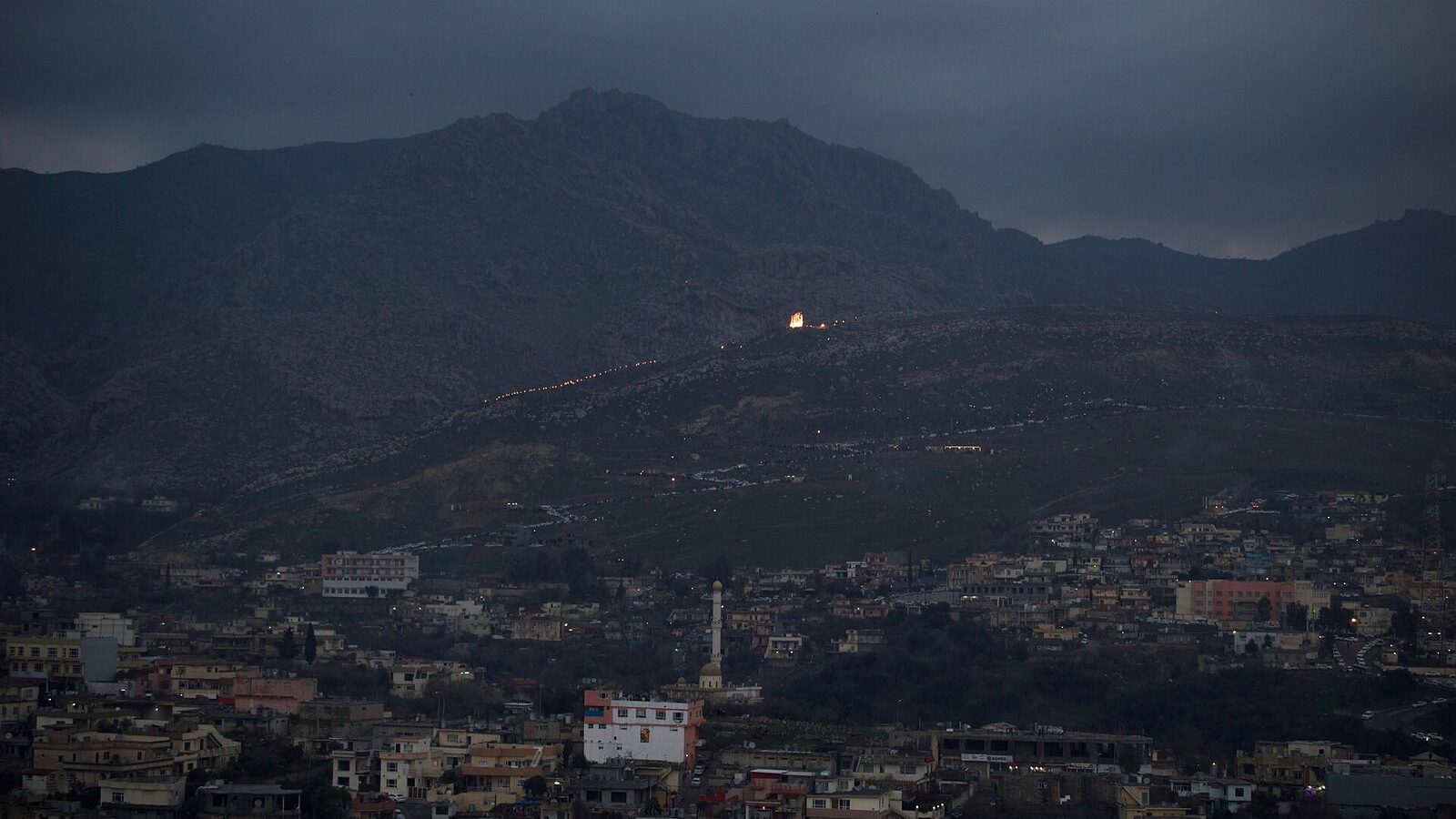
The flagship celebration is at Akre, a hill town in Duhok governorate about 100 km south-east of Duhok and 140 km from Erbil, according to Shafaq News. Kurdish media call it the starting point of the Newroz fire tradition, and in August 2025 the Kurdistan Region’s Prime Minister formally designated it the “Capital of Newroz”, with a US$150 million tourism project under way. On the evening of 20 March, young people carry torches up the mountain above the old town in a zigzag of light, followed by fireworks and dancing. The Akre Tourism Directorate counted 496,233 visitors across 2025, up from 447,800 the year before. Our full guide to Akre covers the town, the citadel and how to get there.
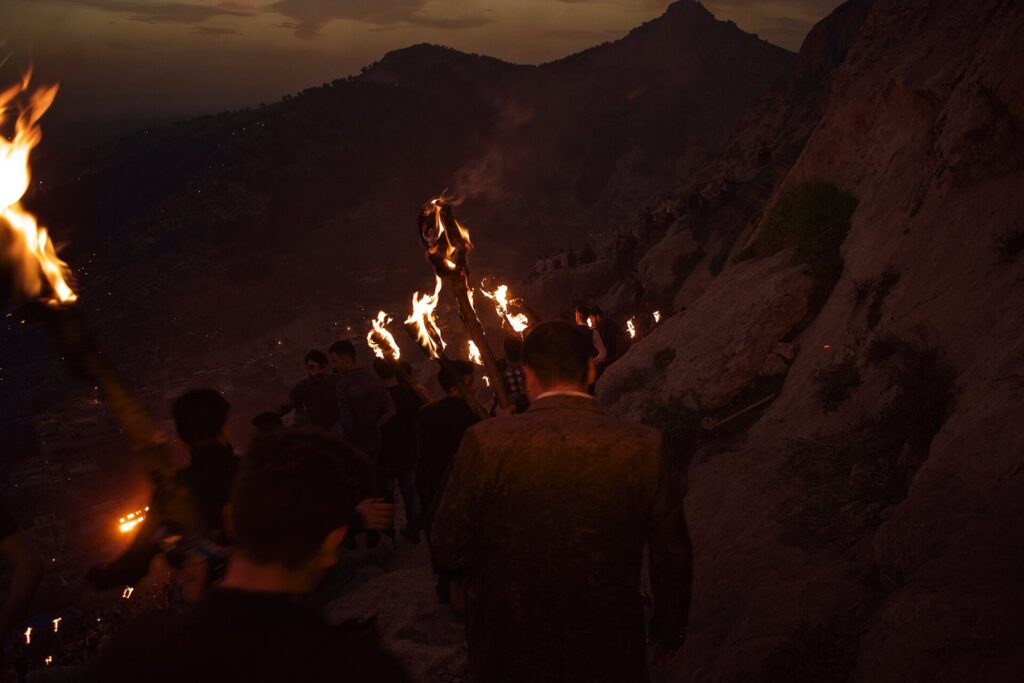
Beyond Akre, families across the Kurdistan Region picnic in the hills in their best clothes, and Duhok, Erbil and Sulaymaniyah all hold celebrations. Five days before Newroz, 16 March is Halabja Day, the anniversary of the 1988 chemical attack: in Halabja the streets are hung with black banners and schoolchildren recite poetry, so the mood of mid-March in the Region is not only festive. The Kurdistan Region’s calendar also marks the liberation of Erbil on 11 March, the anniversary of the 1991 uprising on 20 March and the liberation of Kirkuk on 21 March.
In 2026 Newroz ran straight on from Eid al-Fitr, making 20 to 23 March a continuous holiday with full hotels. In 2027 Eid is expected about a week and a half earlier, so the two peaks separate. Either way, book accommodation in Akre, Duhok and Erbil well ahead. For the season around it, see our guide to Iraq in spring.
Akitu: the Assyrian New Year in Duhok
On 1 April, Assyrian, Chaldean and Syriac Christians mark Akitu, also called Kha b-Nisan, the Assyrian New Year. It takes its name from the spring new-year festival of ancient Babylon and Assyria, and the community’s calendar counts from 4750 BC, so the 2019 celebrations marked the year 6769. In Duhok, known to Assyrians as Nohadra, the parade starts from the Church of the Virgin Mary; thousands attended in 2025, including members of the Assyrian diaspora, in traditional dress with drums, pipes and flags.
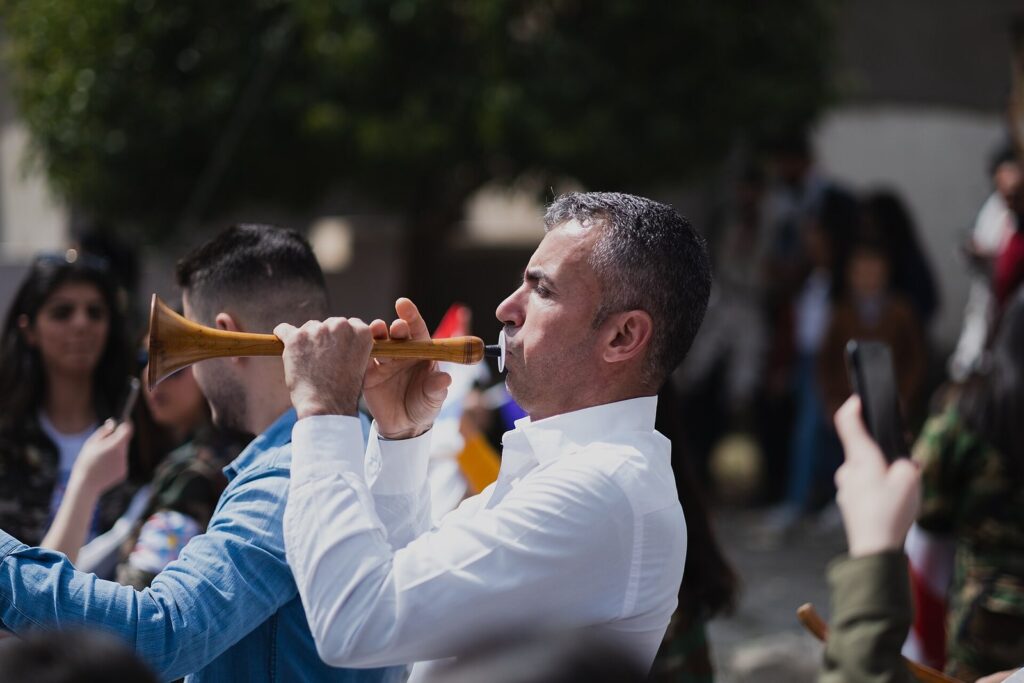
The 2025 parade was also the scene of an attack: a man shouting Islamist slogans struck out with an axe in central Duhok, injuring a 17-year-old boy and a 75-year-old woman before people nearby subdued him, according to Rudaw. It was a lone assailant rather than an organised attack, but it is a reminder that minority festivals draw attention. Our Duhok guide covers the city and its communities.
When is the Babylon festival?
Babylon’s festival has changed shape. The Babylon International Festival was long an autumn event at the ancient city; UNESCO’s events listing records an edition from 28 October to 1 November 2022. In 2025 the site hosted something new: the first International Day of Babylonian Civilization, on 10 and 11 April, opened by President Abdul Latif Rashid with performances on the stage of the Babylonian theatre inside the archaeological city and in the gardens of the Babylon Tourist Resort, alongside a flower show and an investment exhibition. The governor of Babil said it launched an annual event meant to revive the rituals of Akitu, the Babylonian new year.
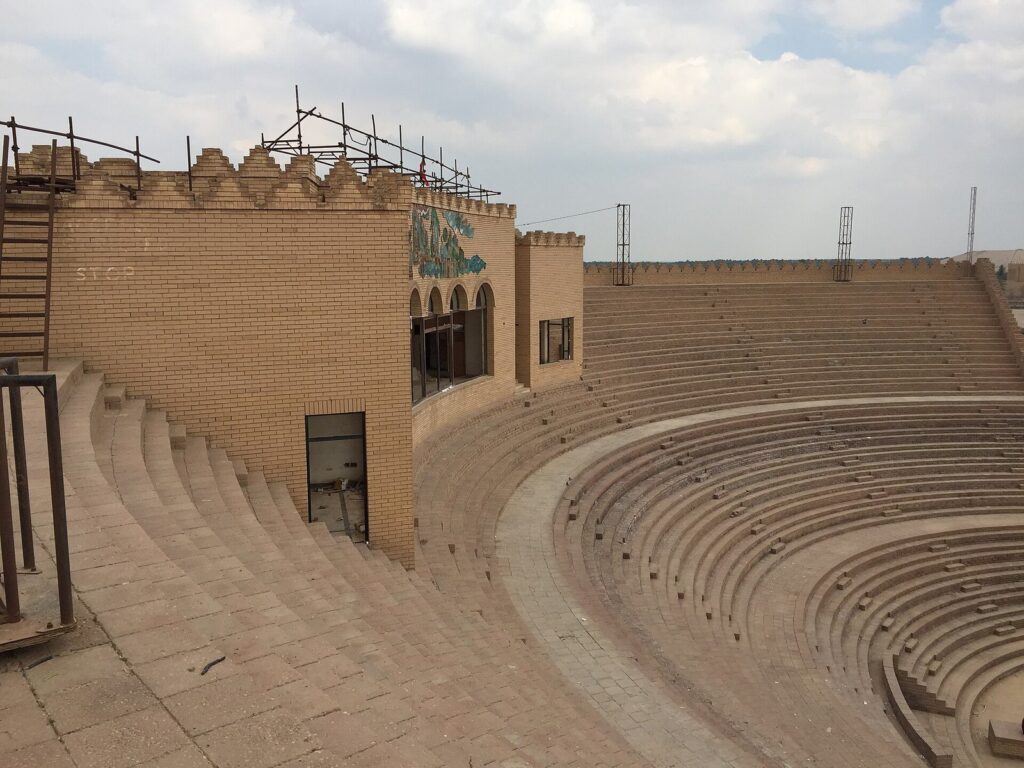
We found no confirmed dates for 2026 or 2027, so check the Babil governorate’s announcements before planning around it. The site itself is worth the trip in any case: our Babylon guide covers the Ishtar Gate replica, the Lion, the ticket and the heat, and our page on the history of Mesopotamia explains what Akitu meant to the Babylonians.
Religious festivals and pilgrimages
Most of Iraq’s biggest days are religious, and for visitors they fall into two groups: holidays that shut offices and fill parks and roads, and pilgrimages that transform particular cities.
| Occasion | What it marks | What visitors should expect |
|---|---|---|
| Ramadan and Eid al-Fitr | The month of fasting and its end | Quiet days, lively evenings, then a national holiday and a travel peak |
| Eid al-Adha | The feast of sacrifice at the end of the Hajj | A four-day holiday; more than 350,000 visitors in the Kurdistan Region over Eid in May 2026 |
| Ashura | The killing of Imam Hussein at Karbala in 680 | Processions, mourning and road closures, above all in Karbala |
| Arbaeen | The fortieth day after Ashura | A walk to Karbala by many millions; Karbala and Najaf saturated |
| 25 Rajab | The death of Imam Musa al-Kadhim | About 14 million at Kadhimiya in 2025; roads into Kadhimiya close to cars |
| Mawlid and Eid al-Ghadir | The Prophet’s birthday; the naming of Ali as successor | Public holidays; celebrations at mosques and shrines |
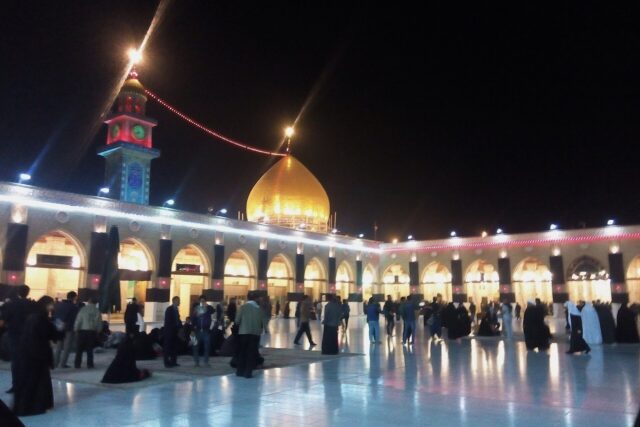
The pilgrimages are extraordinary to witness and hard to travel around. Shafaq News puts Ashura and Arbaeen at 20 to 25 million pilgrims, and the FCDO warns that curfews and vehicle bans can be imposed at short notice around religious holidays and pilgrimages. If you are joining one, start with our guides to the Arbaeen pilgrimage and Kadhimiya; if you are not, plan the shrine cities for other weeks. Our page on Ramadan in Iraq covers the fasting month in detail.

Yazidi feasts at Lalish
The Yazidi calendar centres on Lalish, the valley temple north-east of Mosul that is the holiest place of the faith. The New Year, Red Wednesday, falls in mid-April (15 April in 2026), when the Baba Sheikh and the Spiritual Council light 365 lamps, eggs are dyed and bread is shared. The Feast of the Assembly, Jema’iyye, runs for seven days in early October with Sema ceremonies and a sacrifice whose meat is shared; the 2025 feast drew more than 200,000 people. Smaller dates fill the winter: Belenda on the first Friday of January, Khidr Ilyas in the second half of February and the end of the winter fast in early February.
Public ceremonies depend on security. In April 2026 the Yazidi Spiritual Council cancelled all public New Year gatherings at Lalish, and rituals went ahead in homes and villages on a smaller scale. Visitors are welcome at Lalish outside the feasts too, barefoot throughout, as our guide to visiting Lalish explains.
Harvest, culture and city festivals
Iraq’s secular festivals are smaller and more local, and several have dated proof of life in the past two years:
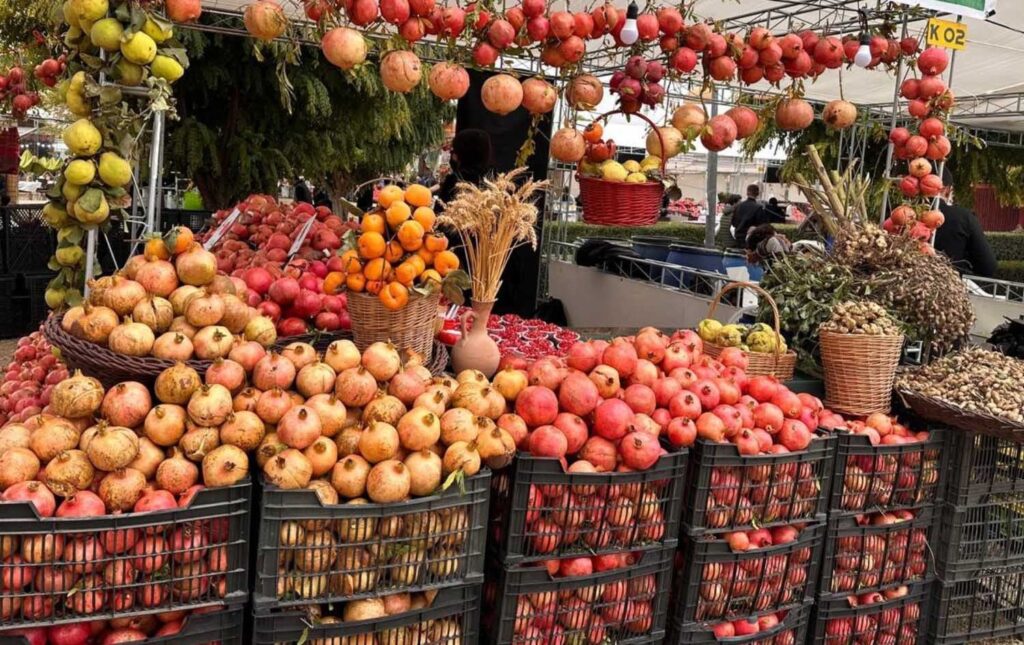
- Halabja Pomegranate and Autumn Festival. Late October; the 2025 edition drew more than 419,700 visitors and more than 1.7 billion dinars in sales across 700 booths, according to Shafaq News. Our Halabja guide covers the town.
- Baghdad Kite Festival. Held in Abu Nuwas Park on the Tigris, founded in 2017 in answer to Baghdad being ranked the world’s worst city to live in, and in its seventh year in May 2025, with music, theatre and a crafts bazaar, according to 964media.
- Sulaymaniyah International Film Festival. Run since 2016 by the University of Sulaymaniyah’s College of Fine Arts; the city is also the only one in the Kurdistan Region that regularly celebrates the Fête de la Musique.
- The harvest at Bere Sili Park. Residents of Amedi and the surrounding villages gather here, east of the town, in autumn; no fixed date is published.
- New Year’s Eve in Baghdad and Erbil. Baghdad’s Al-Zawraa Park held an all-night concert under a 30-metre Christmas tree at the end of 2024; Erbil’s celebrations for 2026 centred on the citadel, Ankawa and Peshmerga Park.
For music, the thread worth following is the Iraqi maqam, the classical system of melodic modes, proclaimed a Masterpiece of the Oral and Intangible Heritage of Humanity by UNESCO in 2003 and carried onto its Representative List in 2008. Workshops and small concerts, such as the maqam workshop on Mutanabbi Street reported in November 2025, are more common than big festivals. Our guide to Iraqi culture goes further into music, food and custom.
How do you plan a trip around an Iraqi festival?
- Confirm the date the week before. Islamic dates move with the moon, cabinet holidays are announced late, and festival organisers rarely publish programmes far ahead.
- Book early for Newroz and both Eids. Domestic travel peaks, and hotels in Akre, Duhok, Erbil and the mountain resorts fill.
- Expect closures. Government offices, and some banks and museums, shut on public holidays, sometimes for most of a week.
- Dress for the occasion. Religious commemorations call for modest, dark clothing; Newroz and Akitu are the time for colour.
- Ask before photographing people, especially at religious ceremonies, and accept a no.
- Plan around road closures during pilgrimages, when vehicle bans can come at short notice.
The safety frame for festivals
The UK Foreign, Commonwealth & Development Office’s Iraq travel advice, last updated 22 July 2026 and unchanged when we checked on 25 September, advises against all travel to Anbar west of Ramadi, Ninawa, Kirkuk, Salah al-Din, Diyala outside Baqubah city, Jurf al-Sakr in Babil, Baghdad’s Sadr City, within 5 km of the Iranian border in Wasit, Maysan and Basra, and within 5 km of the Saudi and Kuwaiti borders. Everywhere else, including Baghdad, Babil, Karbala, Najaf, Dhi Qar, Basra, Al-Muthanna and the whole Kurdistan Region, is against all but essential travel. Lalish sits administratively in Ninawa, though it is reached from Duhok in the Kurdistan Region.
The US State Department’s advisory is Level 4, Do Not Travel, reissued on 29 August 2026. Crowds are the specific festival risk: the Akitu attack in Duhok in 2025 and the history of attacks on pilgrimages are why security at big gatherings is heavy. The FCDO warns that your travel insurance could be invalidated if you travel against its advice; our Iraq travel insurance page explains what to check, and our guide to safety in Kurdistan covers the Region. We give you the inputs; the decision stays with you.
What we could not confirm
- Babylon’s 2026 and 2027 festival dates. The 2025 event was billed as annual, but we found no later dates.
- Akre’s Newroz crowd sizes. Headlines have put them at more than 75,000 (Rudaw, 2024) and nearly 88,000 (964media), but we could not open the reports to check the counts.
- The Islamic dates for 2027. All are projections; Sunni and Shia authorities can differ by a day.
- The 2027 Yazidi New Year. The Julian rule gives 14 April 2027, but the Spiritual Council’s announcement decides it, and public gatherings depend on security.
- Whether 16 March closes federal offices. The Halabja anniversary is named in reports of the 2024 law but not in the general holiday table.
- Dates for the Kite Festival and the Sulaymaniyah film festival in 2026 and 2027.
- The Duhok International Film Festival. Listings mention it, but we found no dated programme.
Frequently asked questions
What are the main festivals in Iraq?
The biggest are religious: Eid al-Fitr, Eid al-Adha, Ashura and the Arbaeen pilgrimage to Karbala. For visitors, the most rewarding are Newroz at Akre on 20 and 21 March, Akitu in Duhok on 1 April, Babylon’s April festival, the Yazidi Feast of the Assembly at Lalish in October and Halabja’s pomegranate festival in late October.
When is Newroz in Kurdistan?
Newroz is 21 March, a national holiday in Iraq and a three-day holiday, 21 to 23 March, in the Kurdistan Region. The fires and torch processions happen on the evening of 20 March, most famously at Akre in Duhok governorate, which the Region’s government designated the “Capital of Newroz” in 2025.
What public holidays does Iraq have?
A 2024 law set 12 national holidays and 13 for religious minorities. They include New Year’s Day, Army Day (6 January), Newroz (21 March), Labour Day, National Day (3 October), Victory Day (10 December), Christmas, the Islamic New Year, Ashura, the Prophet’s Birthday, Eid al-Fitr, Eid al-Adha and Eid al-Ghadir.
When is the Babylon festival?
It has moved. The Babylon International Festival ran from 28 October to 1 November in 2022; in 2025 the site hosted the first International Day of Babylonian Civilization on 10 and 11 April, billed as annual. We found no confirmed dates for 2026 or 2027, so check with the Babil governorate.
What is Akitu?
Akitu, or Kha b-Nisan, is the Assyrian New Year on 1 April, named after the ancient Mesopotamian spring festival. In Duhok, Assyrian, Chaldean and Syriac Christians hold a parade from the Church of the Virgin Mary in traditional dress, with music and flags; thousands attended in 2025.
Can foreigners attend Newroz in Akre?
Yes. Newroz is a public, outdoor celebration, and Akre’s government is investing to bring visitors to it. Book accommodation early, arrive before the evening torch procession on 20 March, and remember that the FCDO advises against all but essential travel to the Kurdistan Region.
Final thoughts
Iraq’s festivals reward anyone who plans around the right clock. The religious calendar gives you the biggest gatherings on earth and the hardest travel days of the year; the Kurdish and Christian spring festivals give you the most open, photogenic and welcoming ones. For a first trip built around a festival, the three weeks from Halabja Day on 16 March to Akitu on 1 April, with Babylon’s festival a week or so later, are hard to beat.
For the weather around those dates, see our Iraq weather by month tables; for the Shia pilgrimages, start with Karbala; and for how festivals fit the rest of the year, our month-by-month seasonal guide puts them side by side.
Photo credits
Newroz at Akre (featured image): Levi Clancy, Wikimedia Commons (CC BY-SA 4.0). Newroz torch-bearers, Akre: Levi Clancy, Wikimedia Commons (CC0). Akitu parade, Duhok: Levi Clancy, Wikimedia Commons (CC0). Babylonian theatre: Al-Hamza Ahmad, Wikimedia Commons (CC BY-SA 4.0). Arbaeen night in Karbala: Alireza Vasigh Ansari, Wikimedia Commons (CC BY 4.0). Halabja pomegranate festival: Unknown authorUnknown author, Wikimedia Commons (CC0). All images via Wikimedia Commons under the licences shown.