Last updated: September 2026. Climate figures from the published normals for Baghdad, Basra, Erbil and Sulaymaniyah; festival dates from the Kurdistan Regional Government’s 2026 calendar and Iraqi reporting, with 2027 dates marked as projections; travel advice re-checked on 25 and 26 September 2026 against the FCDO’s Iraq pages and the US State Department’s 29 August 2026 reissue.
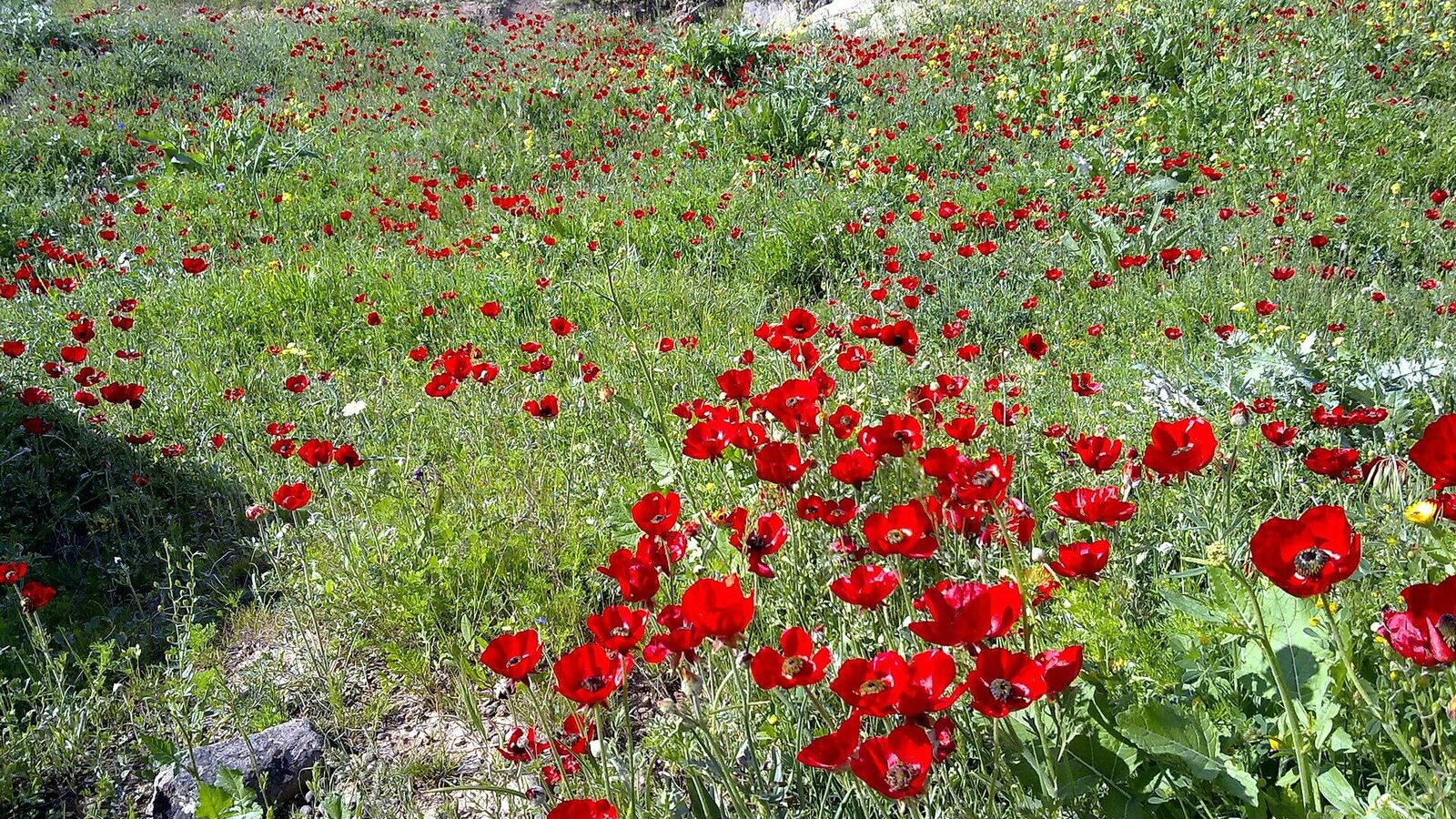
Spring is when Iraq looks least like the Iraq most people picture. The hills of the north turn green and red with poppies, waterfalls run full with snowmelt, the southern marshes rise to their highest, and three different new years, Kurdish, Assyrian and Yazidi, fall within a few weeks of each other. It is also, for most of the country, the most comfortable time to be outdoors, before the plains start baking in May.
Iraq in spring, from March to May, brings the best weather of the year for most of the country: Baghdad’s average highs climb from about 22°C to 36°C, the Kurdistan Region is green and mild, and the marshes are at high water. The trade-offs are dust storms, fast-rising heat by late May, and, when it falls in spring, Ramadan. Our guide to the best time to visit Iraq sets spring against the rest of the year.
This page takes the season month by month: the weather in four cities, the festivals and holidays that shape travel, where to go, the downsides, and what changed in the spring of 2026, when Iraqi airspace was closed for more than five weeks.
The short answer
| Month | Baghdad (avg high / low) | Erbil (avg high / low) | Basra (avg high / low) | What else is happening |
|---|---|---|---|---|
| March | 21.7 / 8.9°C | 18.9 / 7.7°C | 26.8 / 14.3°C | Newroz on 21 March; rain in the north; Eid al-Fitr in 2027 |
| April | 29.4 / 13.9°C | 25.5 / 11.4°C | 33.4 / 20.1°C | Akitu on 1 April; Yazidi New Year in mid-April; marshes at high water |
| May | 36.1 / 19.4°C | 32.6 / 17.3°C | 40.3 / 26.2°C | Heat arrives in the plains; mountains at their best; Eid al-Adha in 2027 |
What is the weather like in Iraq in spring?
Warm and settling, but it changes fast across the three months and across the country. In March the north is still properly wet: Sulaymaniyah gets about 129 mm of rain, its wettest month, and Erbil about 81 mm, while Baghdad and Basra see only a few showers. By April rain is tapering off everywhere, and by May it has all but stopped. Temperatures rise by about seven degrees a month in the plains, so the difference between early March and late May is the difference between a jacket in the evenings and 40°C afternoons in Basra.
| City | March | April | May | Spring rain (Mar–May) |
|---|---|---|---|---|
| Baghdad | 21.7 / 8.9°C | 29.4 / 13.9°C | 36.1 / 19.4°C | About 44 mm |
| Basra | 26.8 / 14.3°C | 33.4 / 20.1°C | 40.3 / 26.2°C | About 35 mm |
| Erbil | 18.9 / 7.7°C | 25.5 / 11.4°C | 32.6 / 17.3°C | About 142 mm |
| Sulaymaniyah | 17.6 / 4.1°C | 23.6 / 7.6°C | 30.4 / 12.7°C | About 217 mm |
Two hazards define the season. Dust storms: the FCDO notes that sand and dust storms are common in spring and summer, cutting visibility, making roads dangerous and delaying flights, sometimes for a day or two at a time. And flash floods, which the FCDO says are common from November to March, so early spring downpours in the hills and wadis can still be dangerous. For the full year and the sources behind these figures, see our month-by-month guide to Iraq’s weather.
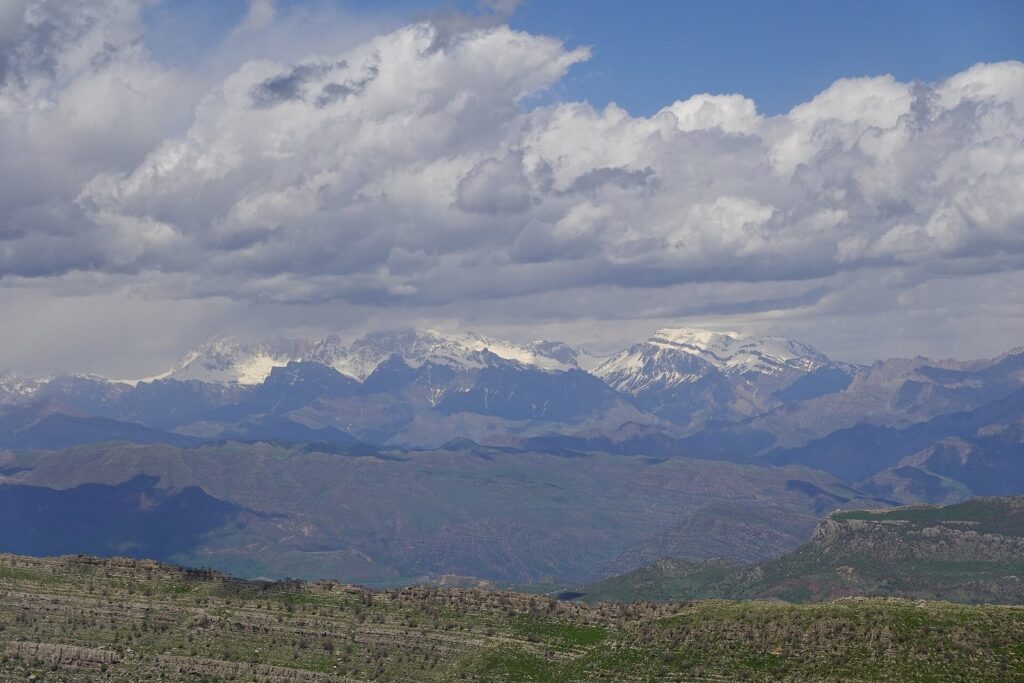
Iraq in March
March is the month of transition, and the month of Newroz. The Kurdish new year falls on 21 March, the spring equinox, and in the Kurdistan Region it is a three-day public holiday, from 21 to 23 March in the KRG’s 2026 calendar. Its heart is Akre, in Duhok province, often called the capital of Newroz, where young people carry torches up the mountain paths after sunset in a zigzag of flame, bonfires burn on the ridges and circles of dancers link arms to drums and the reedy zurna. Across the region, many families head out to picnic in the countryside. The legend behind it is Kawa the blacksmith, who is said to have overthrown the tyrant Zahak and lit a fire on the mountain to announce it; Newroz more broadly has been on UNESCO’s list of intangible heritage since 2010.
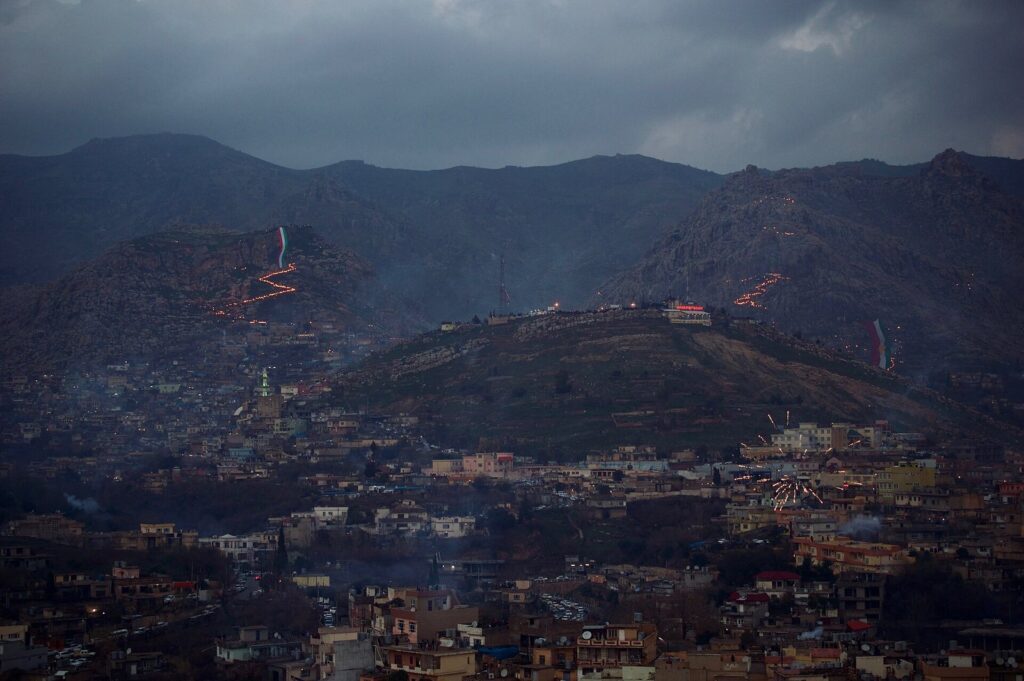
March carries other dates too. On 16 March the Kurdistan Region marks Halabja Day, the anniversary of the 1988 chemical attack on the town of Halabja, which killed thousands of civilians; it is a day of remembrance, not celebration, and our guide to Halabja explains its memorial and museum. The 1991 uprising is commemorated on 20 March.
Watch the Islamic calendar. Ramadan moves about eleven days earlier each year: in 2026 it began on 18 February for Sunnis and in the Kurdistan Region and on 19 February for Iraq’s Shia, with Eid al-Fitr on 20 March, and because Eid and Newroz ran back to back, 20 to 23 March became a four-day holiday across the Kurdistan Region, with full hotels and heavy domestic travel. In 2027 Ramadan is projected to run from about 8 or 9 February to 9 or 10 March, so Eid al-Fitr should fall in the second week of March, again close to Newroz. During Ramadan many restaurants close in daylight hours and eating in public is frowned upon; evenings, after the fast is broken, are lively.
Iraq in April
April is the sweet spot. Baghdad averages about 29°C by day, Erbil 26°C, and even Basra a manageable 33°C. The rain is easing in the north, the valleys are at their greenest, and the southern marshes are near their spring high water, which our research files put in the March to May window. It is also the month of two more new years.
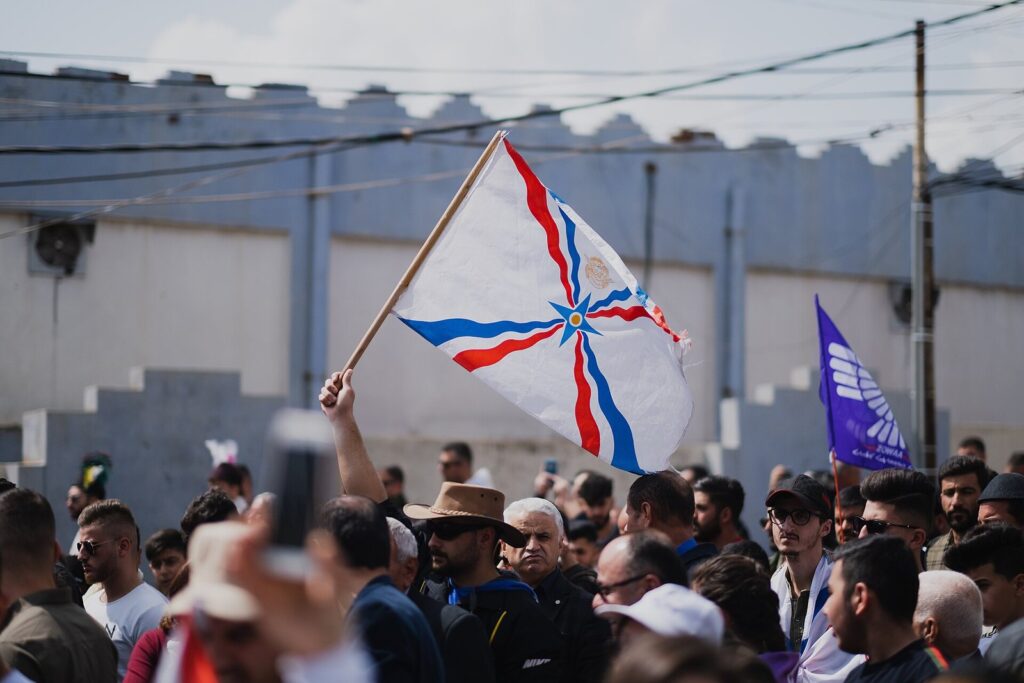
On 1 April Assyrians, Chaldeans and Syriac Christians mark Akitu, the Assyrian New Year, known as Kha b-Nisan, which takes its name from the ancient Mesopotamian spring festival. In Duhok, Iraqi media have reported colourful processions through the city, with drums, pipes, traditional dress and flags.
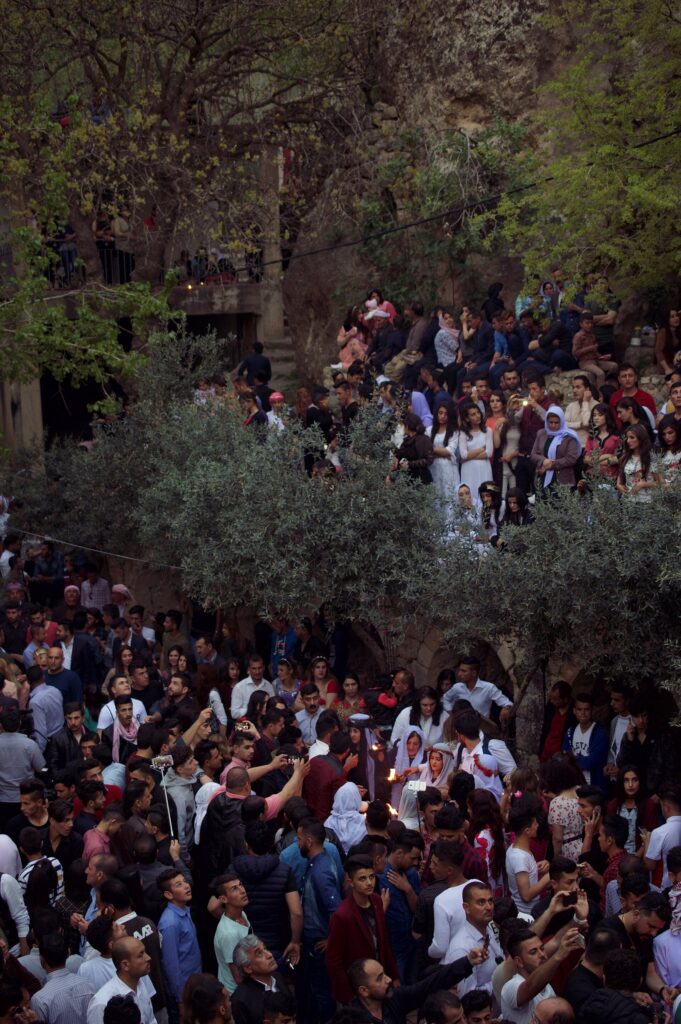
In mid-April comes the Yazidi New Year, known as Red Wednesday. It falls on the first Wednesday of April in the old Julian calendar, which in practice means the first Wednesday on or after 14 April: it was 15 April in 2026, and by the same rule it should be 14 April in 2027. At Lalish, the Yazidis’ holiest shrine, the Baba Sheikh and the Spiritual Council light 365 lamps, eggs are dyed, and bread is shared. It is a religious festival first; visitors who come should be respectful, dress modestly and follow the Lalish custom of going barefoot within the sanctuary.
Christian Easter also falls in spring, celebrated in the churches of Erbil’s Ankawa district and the towns of the Nineveh Plains; its date moves each year.
Iraq in May
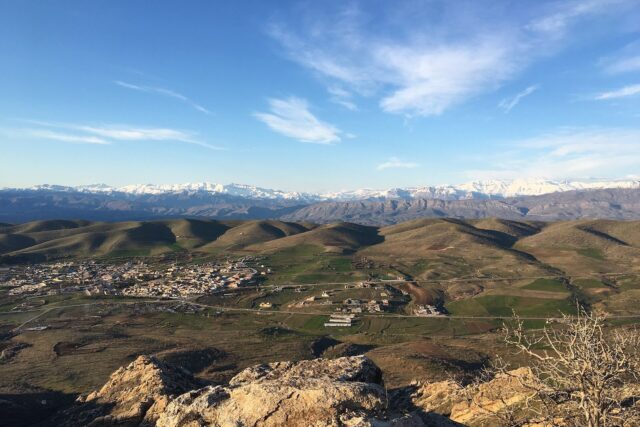
The heat comes on quickly. Baghdad averages about 36°C and Basra 40°C, so in the plains sightseeing becomes an early-morning activity and the middle of the day is for shade. The last rains fall in the north. This is when the Kurdistan Region’s mountains come into their own: the high valleys are green, the snow is retreating from the peaks, and walking routes open up. Our research files put the mountains’ best season at April to June.
Eid al-Adha, the feast of the sacrifice, falls about ten weeks after Eid al-Fitr, which puts it in May in 2027 on current projections; like Eid al-Fitr, it brings public holidays, family travel and busy roads.
Spring festival calendar
| Festival | When | Where | 2027 (projected) |
|---|---|---|---|
| Ramadan | Moves about 11 days earlier each year | All of Iraq | About 8/9 February to 9/10 March |
| Eid al-Fitr | The day after Ramadan ends | All of Iraq | Second week of March |
| Halabja Day | 16 March | Halabja and the Kurdistan Region | 16 March |
| Newroz | 21 March (holiday 21–23 March in the Kurdistan Region) | Akre and across the Kurdistan Region | 21 March |
| Akitu (Kha b-Nisan) | 1 April | Duhok, the Nineveh Plains, Assyrian communities | 1 April |
| Yazidi New Year | First Wednesday on or after 14 April | Lalish and Yazidi communities | 14 April (by the calendar rule) |
| Eid al-Adha | About ten weeks after Eid al-Fitr | All of Iraq | May |
Islamic holiday dates depend on moon sightings and are usually confirmed by the Iraqi government only days before; treat any date you see months in advance as provisional. For the religious and cultural background to all of these, see our guide to Iraq’s cultures and customs.
Where to go in Iraq in spring
| Region | Why go in spring | Watch out for |
|---|---|---|
| Kurdistan Region valleys and mountains | Green hills, poppies, full waterfalls, Newroz and the Yazidi New Year | Rain and cold in March; snow on high passes early in the season |
| Erbil, Duhok and Sulaymaniyah | Comfortable city sightseeing, picnics in the parks, Akitu in Duhok | Holiday crowds and full hotels around Newroz and Eid |
| Baghdad and the ancient sites | March and April are the last comfortable months for Babylon, Ctesiphon, Ur and Uruk before autumn | Dust storms; heat by May |
| The southern marshes | High water, birdlife and boat trips from Chibayish | Water levels vary a lot from year to year |
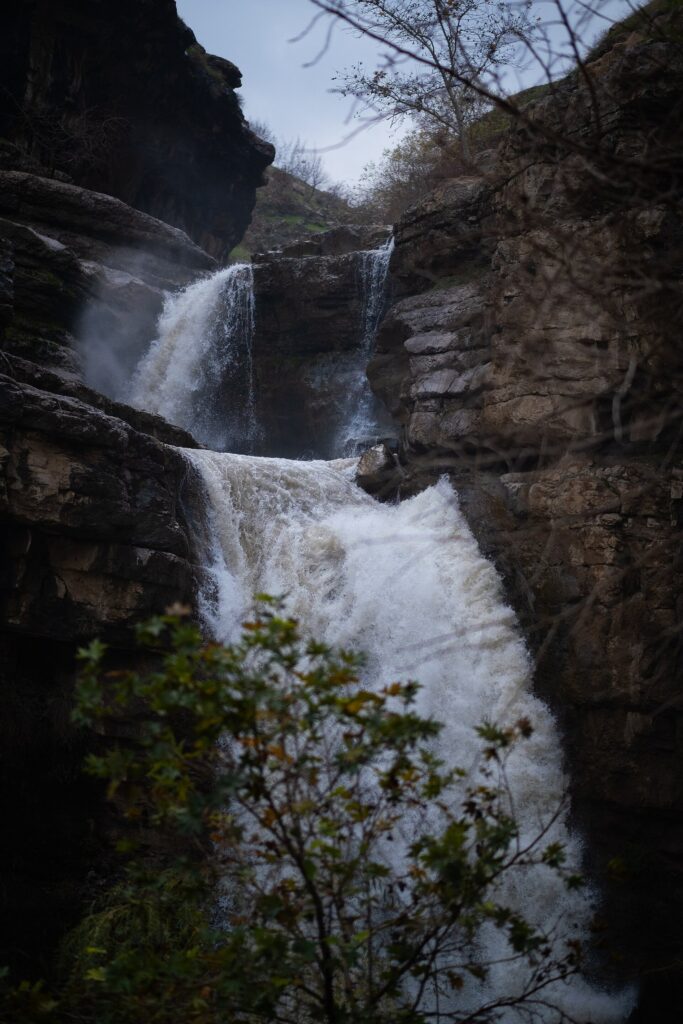
In the north, the classic spring drives run from Erbil towards Rawanduz and its canyon, past waterfalls such as Gali Ali Beg, and into the Hawraman highlands near Halabja, where Ahmed Awa’s waterfall draws crowds. For walking, see our guide to hiking in Kurdistan, and for the cities, our guide to things to do in Erbil, where Sami Abdulrahman Park, with its lakes, gardens and many thousands of shade trees, is a favourite for family picnics.
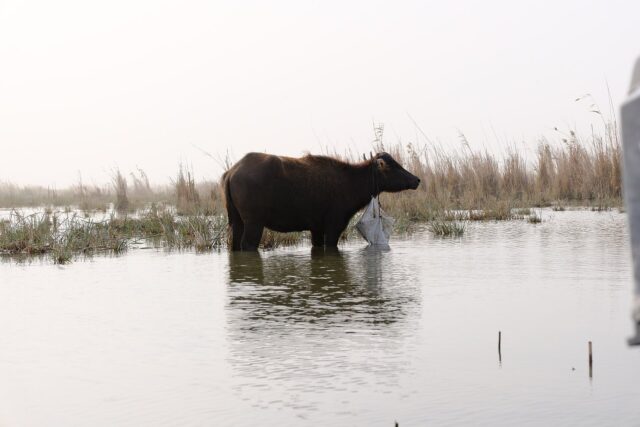
In the centre and south, spring is the last window before the heat for Babylon and the other open-air sites; go early in the day even in April. The marshes are the south’s great spring trip: in 2026 between 32% and 36% of the marshland was under water, far more than the no-more-than-8% of the previous five years, but conditions swing with each winter’s rain and the rivers’ flow. Our guides to nature in Iraq and to southern Iraq cover the logistics.
A ten-day spring route
One way to use the season is to start in the green north while it is at its best and finish in Baghdad before the heat. The outline below assumes late March or April; adjust the days to catch Newroz, Akitu or the Yazidi New Year if your dates allow.
| Days | Where | Why in spring |
|---|---|---|
| 1–2 | Erbil | The citadel, the bazaar and the parks in comfortable weather |
| 3 | Rawanduz and Gali Ali Beg | Waterfalls near their fullest, green canyon walls |
| 4 | Akre and Amedi | Mountain towns at their best; Newroz torches at Akre on 20–21 March |
| 5 | Duhok and Lalish | Akitu in Duhok on 1 April; the Yazidi New Year at Lalish in mid-April |
| 6–7 | Sulaymaniyah and the Hawraman valleys | Waterfalls, orchards in blossom, cooler air |
| 8 | To Baghdad | A federal Iraqi visa is needed from here on |
| 9 | Babylon | An early start while April mornings are still mild |
| 10 | Baghdad | Mutanabbi Street on a Friday morning, the old city, the riverside in the evening |
Two practical notes. The Kurdistan Region and federal Iraq need different visas, so if you plan to finish in Baghdad, get the federal e-visa before you travel. And think about the transfer: the roads from the Kurdistan Region towards Baghdad via Kirkuk, Mosul or Tikrit cross provinces where the FCDO advises against all travel, while its advice specifically covers the Highway 2 route via Baqubah and on to Baghdad on Highway 34 at the lower “all but essential” level. Many travellers simply fly. Build a spare day into the route for dust storms or holiday closures.
What are the downsides of travelling in Iraq in spring?
- Dust storms. Common from spring into summer, and impossible to predict far ahead; leave slack in any itinerary, especially around flights.
- Holiday crowds. Newroz and the Eids bring heavy domestic travel; in 2026 the Kurdistan Region had a four-day run of holidays from 20 to 23 March. Book accommodation early for those dates.
- Ramadan. When it falls in spring, daytime eating options shrink and schedules shift to the evening. Some travellers love the Ramadan nights; others find the daytime difficult.
- Heat by late May. The comfortable window in the plains is really March and April.
- Ticks and livestock. In 2026 Iraq had a serious outbreak of Crimean-Congo haemorrhagic fever, spread by ticks and livestock, with cases climbing through the warmer months. In the countryside, cover your legs and avoid contact with animals and slaughter areas; our page on health and vaccinations for Iraq has more.
- Regional disruption. Spring 2026 showed how quickly things can change: Iraqi airspace was closed for 38 days, from 28 February to 8 April, during the confrontation between Iran and the United States, cancelling flights through Newroz and into April.
Visas, flights and the travel advice
For federal Iraq, including Baghdad and the south, you need the federal e-visa, applied for at least 24 hours before travel; as of 25 September 2026 the FCDO put the fee at $160 for 60 days. For the Kurdistan Region only, you can get a Kurdistan Region visa on arrival or online, but it is not valid in federal Iraq. Our guides to the Iraq e-visa and the Kurdistan Region visa explain both. Flights have resumed since the 2026 closures, but European carriers were still subject to an EU conflict-zone bulletin covering the Baghdad flight information region as of 25 September 2026, so check your airline close to departure.
The travel advice does not change with the season. As of 25 September 2026 the FCDO advises against all travel to Nineveh, Salah al-Din, Kirkuk and parts of Anbar and Diyala, and against all but essential travel to the rest of Iraq, including Baghdad, the south and the Kurdistan Region; see its Iraq travel advice. The US State Department rates all of Iraq Level 4, Do Not Travel (reissued 29 August 2026), and travelling against FCDO advice can invalidate your insurance. Our pages on whether Iraq is safe and on how the advisories work go into the detail.
What we could not confirm
- When the wild flowers peak. We found no reliable source for the timing of the spring flower season in any part of the Kurdistan Region; it varies with altitude and the year’s rain.
- 2027 festival dates. Ramadan, Eid al-Fitr and Eid al-Adha dates are projections, and the 2027 Yazidi New Year date comes from the calendar rule rather than an announcement.
- Public holiday status for Akitu. We have seen claims that Duhok recognises Akitu as a holiday, but could not trace them to an official source.
- How Newroz 2026 went. Reports suggest celebrations continued with domestic and regional crowds but fewer international visitors during the regional conflict; we could not confirm numbers.
- Marsh water in 2027. 2026 was a relatively good year; nobody can say yet what next spring will bring.
- Airspace in spring 2027. The 2026 closure was tied to a specific conflict; check the situation and your airline in the weeks before you travel.
Frequently asked questions
Is spring a good time to visit Iraq?
For most of the country it is the best time. March and April bring comfortable temperatures in Baghdad and the south, green landscapes and waterfalls in the Kurdistan Region, high water in the marshes, and a run of festivals. May is still excellent in the mountains but already hot in the plains. The main drawbacks are dust storms and holiday crowds.
What is Iraq like in March?
Mild and changeable. Baghdad averages about 22°C by day and 9°C at night, Erbil about 19°C, and the north is still wet: March is Sulaymaniyah’s wettest month. Newroz on 21 March is the highlight in the Kurdistan Region, and in 2027 Eid al-Fitr is expected in the second week of March. Pack layers and a waterproof.
What is Iraq like in April?
The best all-round month. Baghdad averages about 29°C, Erbil 26°C and Basra 33°C, the rain is fading, and the countryside is at its greenest. Akitu, the Assyrian New Year, falls on 1 April and the Yazidi New Year in mid-April. Dust storms are the main risk, so keep a spare day in your plans.
What is Iraq like in May?
Hot in the plains and lovely in the mountains. Baghdad averages about 36°C and Basra 40°C, so sightseeing in the centre and south needs early starts. In the Kurdistan Region’s mountains the valleys are green and the walking season is under way. Eid al-Adha is projected to fall in May in 2027.
When is Newroz in Iraq?
On 21 March every year, the spring equinox. In the Kurdistan Region it is a public holiday that the KRG’s 2026 calendar listed as 21 to 23 March. The best-known celebrations are in Akre, where torch-bearers climb the mountain after dark, but families across the region picnic and dance in the countryside.
Is Ramadan in spring?
Sometimes. Ramadan follows the lunar calendar and moves about eleven days earlier each year. In 2026 it ran from 18 or 19 February, depending on the community, to 19 March, and in 2027 it is projected for roughly 8 February to 9 March, so it overlaps the start of spring in both years. From about 2028 it moves wholly into winter for several years.
Are there dust storms in Iraq in spring?
Yes. The FCDO notes that sand and dust storms are common in spring and summer. They can reduce visibility sharply, make driving dangerous and disrupt flights, and several can hit in a season. They usually pass within a day or two, so build some slack into your plans and carry a scarf or mask.
What should I pack for Iraq in spring?
Layers: warm clothes for evenings in March and for the mountains, light long-sleeved clothing for the heat of late April and May, a waterproof for the north, sturdy shoes for walking, sun protection, and a scarf or mask for dust. Modest dress suits both local norms and religious sites. Our Iraq packing list has the full checklist.
Final thoughts
Spring is the season when Iraq is easiest to love: the weather is kind, the countryside is at its most beautiful, and the festival calendar gives you a reason to be somewhere particular on a particular night, on a mountain above Akre, in a procession in Duhok or among the lamps at Lalish. It is also the season when the country’s many communities are most visibly themselves, which makes it a good time to understand how varied Iraq is.
It is not a season without risk. Spring 2026 was a reminder that regional events can close the skies at short notice, and dust storms and holiday crowds can undo a tight itinerary even in a quiet year. Plan flexibly, keep an eye on the advice, and aim for the heart of the season, late March to late April, rather than its edges.
For the rest of the year, see how the seasons fit a route in our Iraq itinerary guide, compare spring with the other seasons in our overall guide to when to visit, and plan the northern leg with our guide to Sulaymaniyah, gateway to the Hawraman valleys.
Photo credits
Spring poppies, Kurdistan Region (featured image): Banimarani, Wikimedia Commons (CC BY-SA 4.0). Kurdistan mountains in spring, 2023: Khoshhat, Wikimedia Commons (CC BY-SA 4.0). Newroz torch trail, Akre: Levi Clancy, Wikimedia Commons (CC BY-SA 4.0). Akitu in Duhok, 2019: Levi Clancy, Wikimedia Commons (CC0). Yazidi New Year at Lalish, 2017: Levi Clancy, Wikimedia Commons (CC BY-SA 4.0). Gali Ali Beg waterfall: Levi Clancy, Wikimedia Commons (CC0). All images via Wikimedia Commons under the licences shown.