Last updated: September 2026. Autumn climate normals re-checked on 26 September 2026 against the published tables for Basra, Baghdad, Erbil and Sulaymaniyah; festival figures from Shafaq News and Kurdistan24; FCDO and US advisories checked 25 and 26 September 2026.
Autumn does not reach Iraq all at once. It comes down from the mountains. In October, Sulaymaniyah’s afternoons average 28.6 °C while Basra’s still average 37.2 °C, so a traveller who sets off on the first of the month finds the north already in its best season and the south still finishing its summer. By November the two have swapped problems: the south is mild, and the Kurdish hills are taking their first heavy rain. Our guide to the best time to visit Iraq sets out the whole year; this page takes the three autumn months in turn.
The short version: Iraq in October is the start of the good season. Baghdad’s afternoons fall to about 33 °C, the Kurdish mountains are at their best and no major pilgrimage falls in autumn in 2026 or 2027. September is still summer in the south; November brings the first rain and the best weeks for the southern ruins and marshes.
Below: the numbers for September, October and November, the Yazidi feast at Lalish and Halabja’s pomegranate festival, how autumn compares with spring, the dust and rain to plan around, and the safety frame as it stood in late September 2026.
The short answer
| Question | Answer |
|---|---|
| Best autumn month? | October for the country as a whole; late October and November for Babylon, Ur and the south. |
| Baghdad afternoons | About 40 °C in September, 33 °C in October, 25 °C in November. |
| Rain | Almost none until November, when Sulaymaniyah averages 109 mm in the month. |
| Festivals | The Yazidi Feast of the Assembly at Lalish (from 6 October); Halabja’s pomegranate festival (end of October in 2025). |
| Pilgrimage crowds | None of the major ones: Arbaeen falls in summer and Ramadan in February for the next few years. |
| Dust | The sharqi season runs from late September into November. |
| Advisories (26 September 2026) | FCDO: against all but essential travel to Baghdad, the south and the Kurdistan Region. US: Level 4, Do Not Travel. |
How warm is Iraq in autumn?
The mean daily maximum is the useful number: what an ordinary afternoon peaks at. The overnight low matters more in autumn than in summer, because it drops fast. Baghdad’s nights fall by about ten degrees between September and November.
| City | September (high / low) | October (high / low) | November (high / low) | November rain |
|---|---|---|---|---|
| Basra | 43.3 / 26.3 °C | 37.2 / 21.7 °C | 27.0 / 14.4 °C | 19 mm |
| Baghdad | 40.0 / 21.1 °C | 33.3 / 16.1 °C | 25.0 / 10.6 °C | 20 mm on about 3 days |
| Erbil | 37.6 / 21.3 °C | 30.1 / 16.0 °C | 21.4 / 9.5 °C | Not published monthly |
| Sulaymaniyah | 35.4 / 16.1 °C | 28.6 / 11.0 °C | 19.1 / 5.8 °C | 109 mm on about 5 days |
Sources: the climate tables published for each city (Basra 1991–2020; Erbil and Sulaymaniyah 2012–2023 normals; Baghdad from Stadtklima, years not stated). Rain is close to zero everywhere in September; October brings Sulaymaniyah 41 mm and the plains almost nothing.
Two patterns are worth planning around. First, the north cools about three to four weeks ahead of the south: Sulaymaniyah in October is roughly where Basra gets to in November. Second, the swing between day and night widens sharply. An October day in Sulaymaniyah runs from 11 °C at dawn to nearly 29 °C in the afternoon, and in November its nights average under 6 °C. Pack for both ends.
Why October figures disagree
| Source | October figure | What it actually measures |
|---|---|---|
| Erbil climate table, 2012–2023 | 30.1 °C | The average afternoon high |
| Same table | 23.1 °C | The daily mean, day and night averaged, which is what many weather widgets headline |
| Same table | 16.0 °C | The average overnight low |
| English Wikipedia, Baghdad | 33.4 °C | Mean daily maximum from one source and period |
| German Wikipedia, Baghdad | 33.3 °C | The same measure from another source, years unstated |
| Basra table, 1991–2020 | 37.2 °C | Mean daily maximum: the reason “Iraq in October” means something different in the far south |
A single “Iraq in October” temperature blends Basra with the Zagros and describes nowhere. Our Iraq weather by month page has the full year for each city.
Iraq in September: summer with an exit
September is still summer across the plains. Baghdad averages 40 °C, Basra 43.3 °C, and the heat of an Iraqi summer only loosens its grip in the last week or two. The shamal, the north-westerly that blows dust across the plains all summer, eases from mid-September; the sharqi, which brings its own dust, starts in the second half of the month.
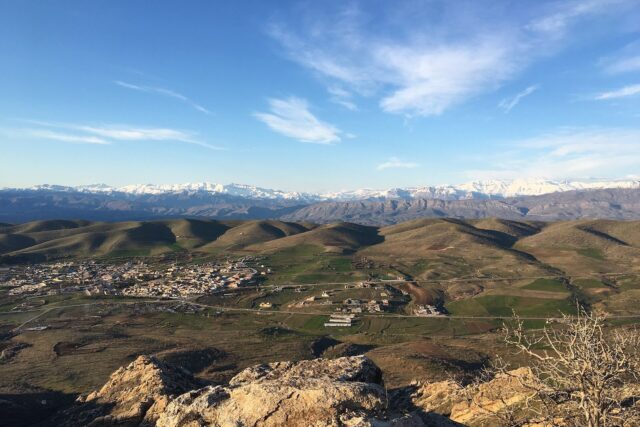
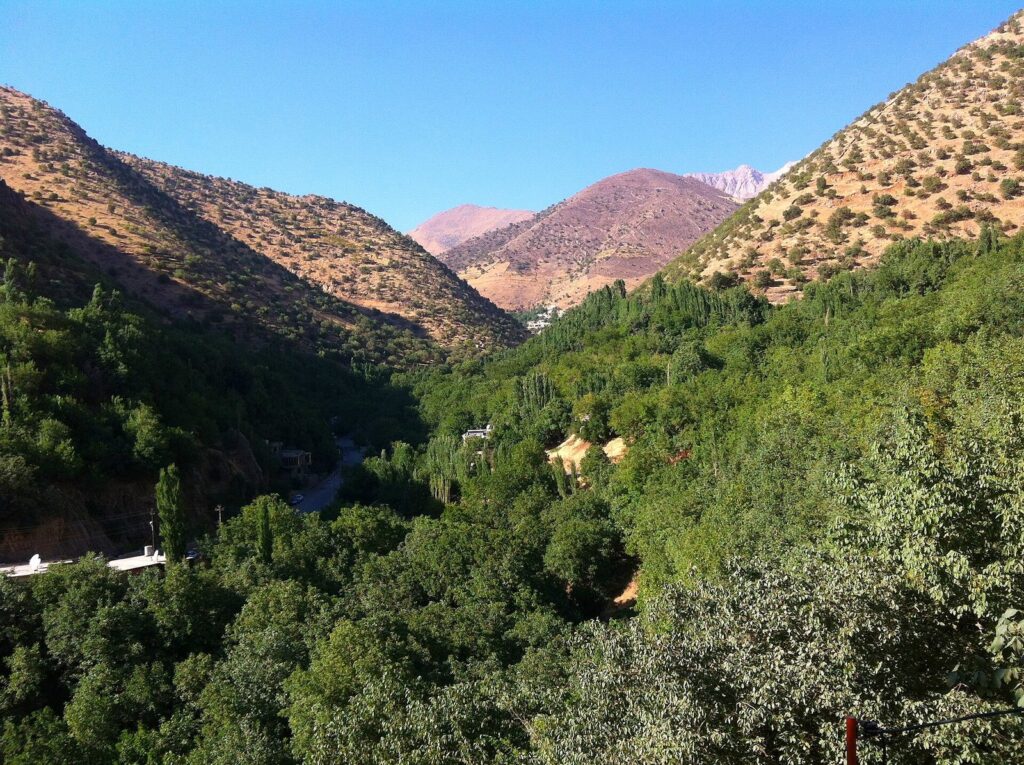
The mountains are a different story. September and October are the best months of the year for the Kurdish high country: the summer crowds have gone home, the passes are months from their first snow, which usually arrives in mid-December, and a Sulaymaniyah afternoon has already dropped to about 35 °C. The Hawraman valleys east of Halabja, the Rawanduz gorge and the Amedi plateau all suit an early-autumn trip. For walkers, this is the window: our Kurdistan hiking guide covers the routes and the landmine warnings you need to read first.
September also has the quiet that follows the pilgrimage season. Arbaeen, which filled Karbala and the southern roads on 4 August 2026, is expected on 24 or 25 July in 2027, so September in both years falls well clear of it.
Iraq in October: the month it opens up
October is when the whole country becomes workable at once. Baghdad’s afternoons average 33 °C with nights around 16 °C, so the evenings are pleasant outdoors rather than merely survivable. The northern cities sit at 28 to 30 °C. The open archaeological sites of the centre become possible for a full morning instead of a dawn dash, though Basra and the far south still run hot until late in the month.
It is also the month with the most dated events, which is why it deserves careful planning rather than a blanket “go in October”.
1 October and the Tishreen anniversary
Tishreen al-Awwal is the Arabic name for October, and in Iraq the short form, Tishreen, also names the protest movement that began in Baghdad’s Tahrir Square on 1 October 2019, in which more than 600 people were killed. The first anniversary in 2020 brought protesters back to the square with placards citing more than 600 dead. Anniversaries are politically sensitive dates; the FCDO warns that curfews can be imposed at short notice at politically sensitive times, so keep an eye on local news if your trip includes early October in Baghdad.
The Yazidi Feast of the Assembly at Lalish
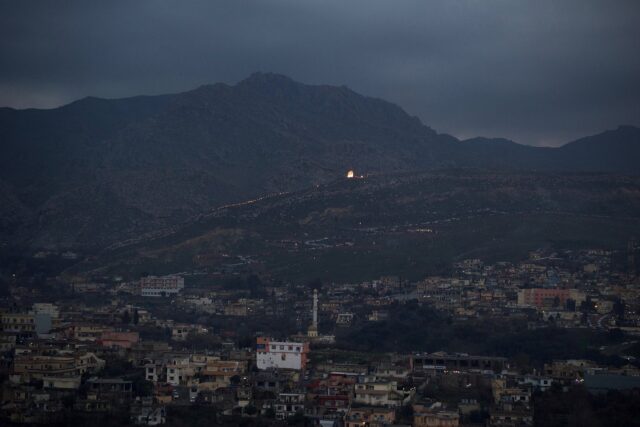
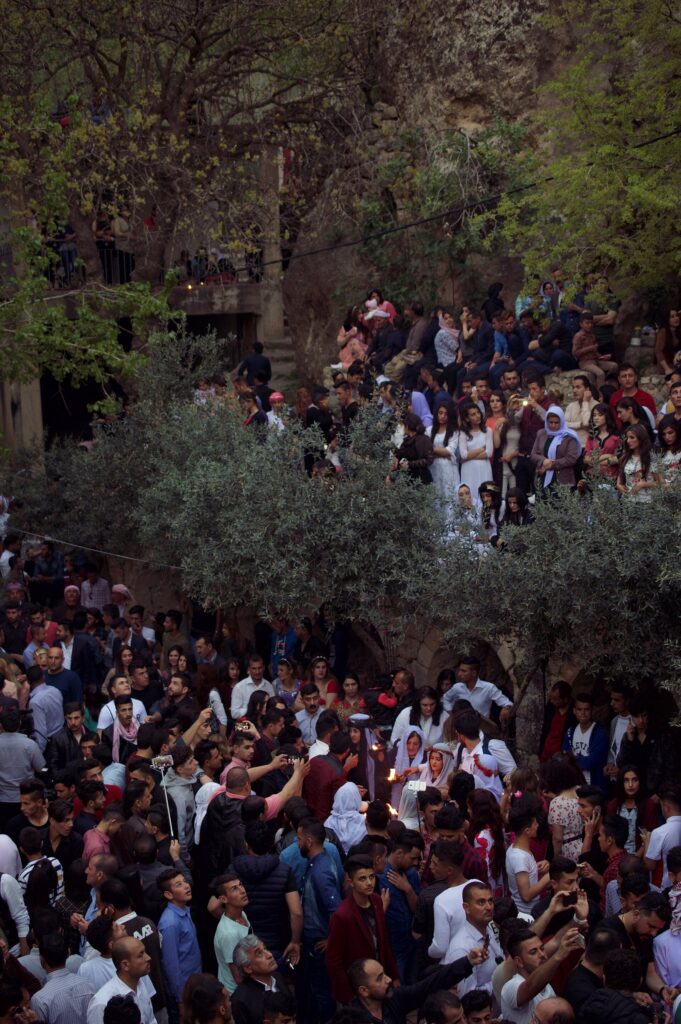
The biggest religious event of an Iraqi autumn belongs to the Yazidis. The Feast of the Assembly, known as Jema’iyye or the Jama feast, is a seven-day gathering at Lalish, the holiest place of the Yazidi faith, in a valley north-east of Mosul. Kurdistan24’s festival calendar describes Sema ceremonies, 365 lamps lit each evening and a sacrifice near the end whose meat is shared among those present. The 2025 feast drew more than 200,000 people.
The sources don’t quite agree on the dates, and the difference matters if you plan a day around it:
| Source | Dates given | What it actually says |
|---|---|---|
| Kurdistan24 festival calendar, April 2026 | 6–12 October | Seven days, counted inclusively |
| Reference accounts of Yazidi religion | 6–13 October | Also described as seven days, so the closing day or the eve is counted differently |
Two cautions. The Yazidi Spiritual Council cancelled all public New Year gatherings at Lalish in April 2026 on security grounds, so don’t assume every public ceremony goes ahead; check the Council’s announcements in the week you travel. And Lalish sits in a grey zone: it is administratively part of Shekhan district in Nineveh governorate, which the FCDO advises against all travel to, but in practice it is reached from Duhok in the Kurdistan Region. Visitors take their shoes off at the checkpoint at the village entrance and stay barefoot throughout, and must never step on a threshold. Our full guide to visiting Lalish covers the etiquette and the access question in detail.
Halabja’s pomegranate festival
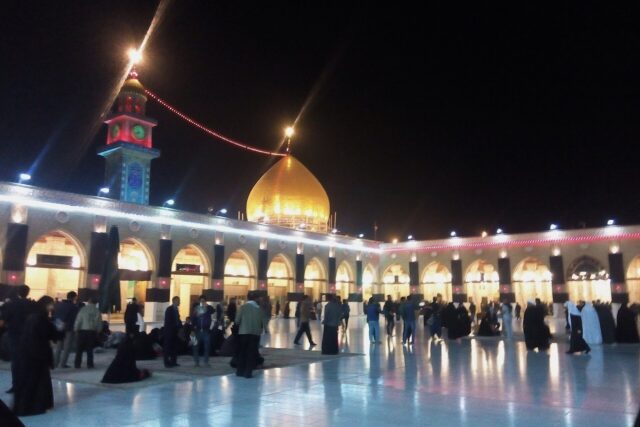
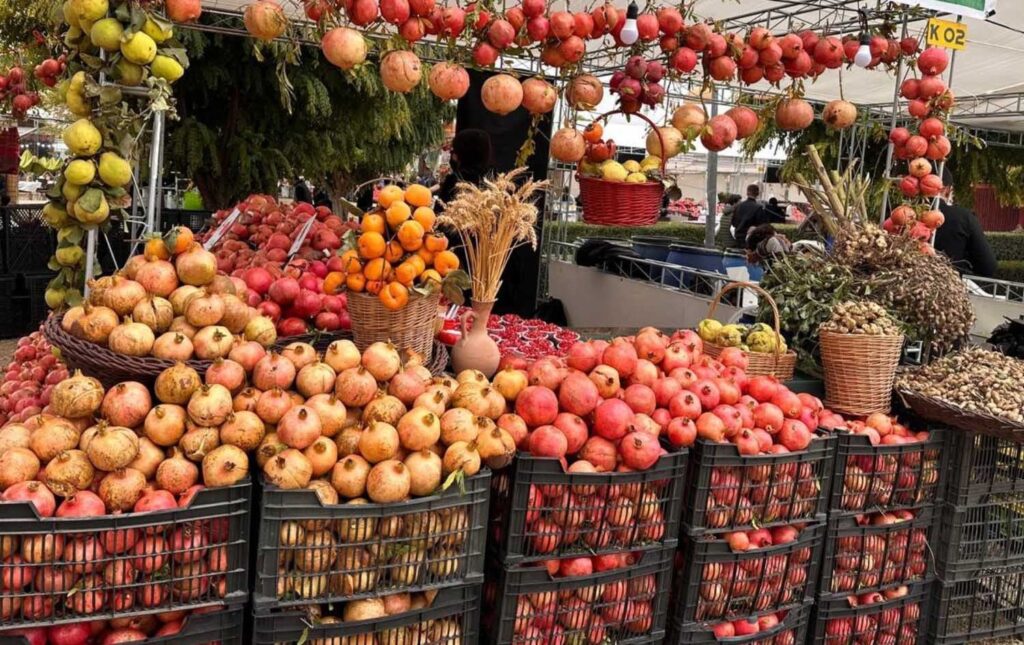
At the other end of the Kurdistan Region, Halabja sits about 700 metres up in the Zagros foothills, watered by the Sirwan river and 700 to 900 mm of rain a year, and grows the Region’s best-known pomegranates. Its annual pomegranate festival has run since 2007. The 2025 edition, billed as the Pomegranate and Autumn Festival, was held at the end of October: Shafaq News reported more than 419,700 visitors, 700 booths and more than 1.7 billion dinars, about US$1.3 million, in sales of fruit, food and handicrafts.
The 2026 dates had not been announced when we checked. If the pattern holds, late October or early November is the time to look. The town’s other reason to visit is sombre: Halabja was the target of the 1988 chemical attack, and its Peace Monument draws more than 100,000 visitors a year. Our Halabja guide covers both the memorial and the town, and Sulaymaniyah is the natural base.
Baghdad and the centre
For Baghdad, October is the month the riverbank becomes an evening destination again and the Friday book market on Mutanabbi Street is a pleasure rather than an endurance test. Babylon works as a morning trip, though the site is still exposed by midday early in the month. Babylon’s own festival used to be an autumn fixture (the 2022 Babylon International Festival ran from 28 October to 1 November), but we found no autumn dates for 2026.
Iraq in November: rain, marshes and the south
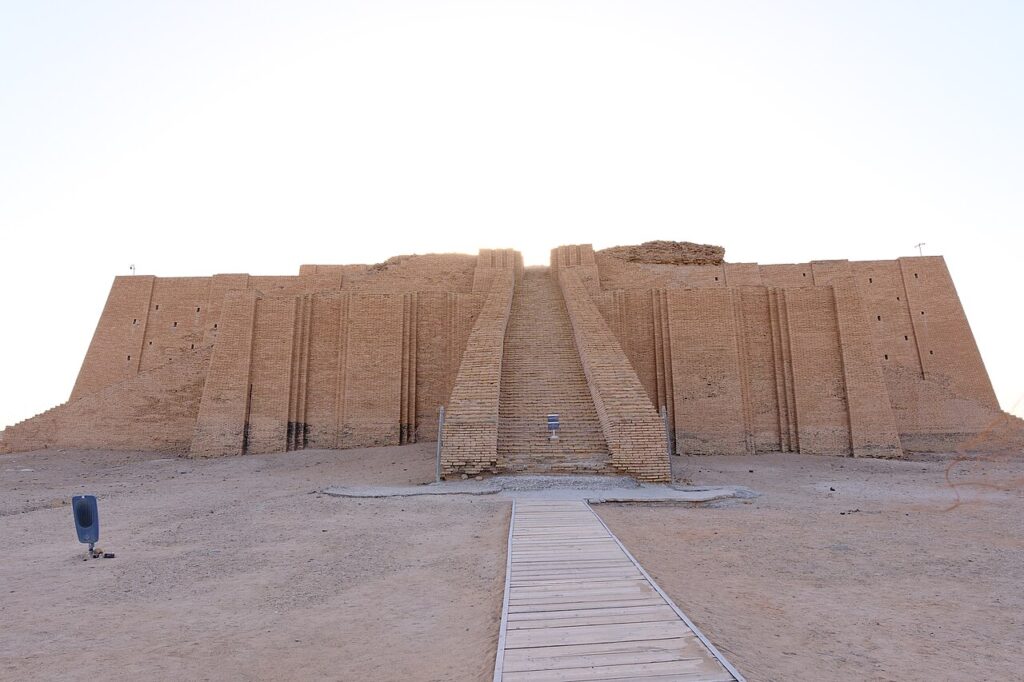
November turns the map around. Baghdad’s afternoons average 25 °C and Basra’s 27 °C, which makes this the most comfortable month of the autumn for the south: the Ziggurat of Ur, Uruk and Babylon can be walked in the middle of the day. The first real rain comes too. Baghdad averages 20 mm over about three days, Basra 19 mm, and Sulaymaniyah 109 mm, most of its October-to-May rainfall still to come. The FCDO notes that flash floods are common from November to March.
The north gets cold at night. Sulaymaniyah’s November low averages 5.8 °C and Erbil’s 9.5 °C, and although snow usually waits until mid-December, evenings in the mountain towns call for a proper jacket.
When are the marshes best?
The Mesopotamian Marshes of the far south are where November earns its place, but the sources disagree on the ideal window:
| Source | Best time given | What it is based on |
|---|---|---|
| Seasonal water and climate summaries | March to May, and November to December | Peak spring flood, then the first cool months |
| Travellers’ logistics accounts from Chibayish | October to April | Comfortable temperatures for boat trips, whatever the water level |
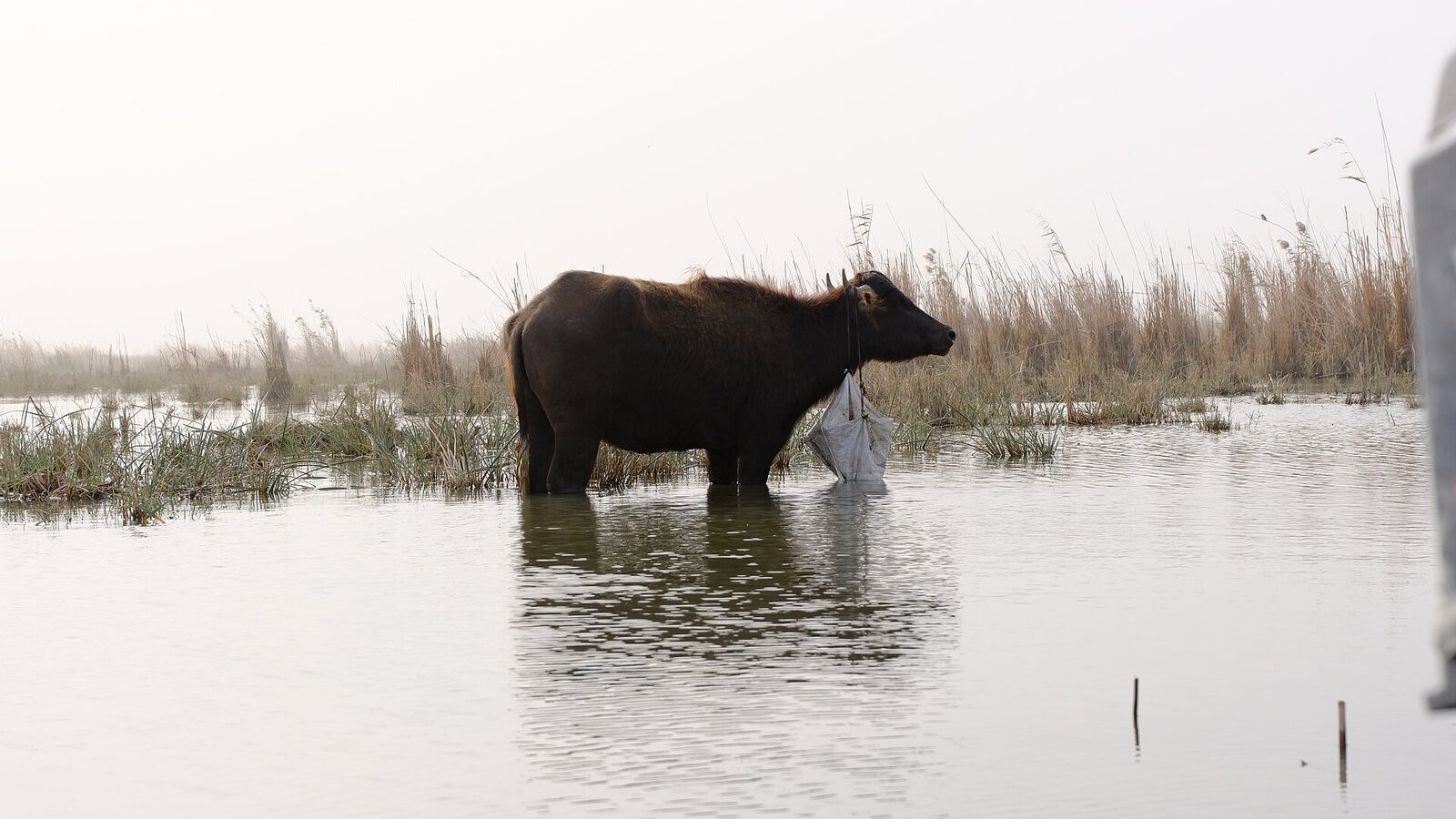
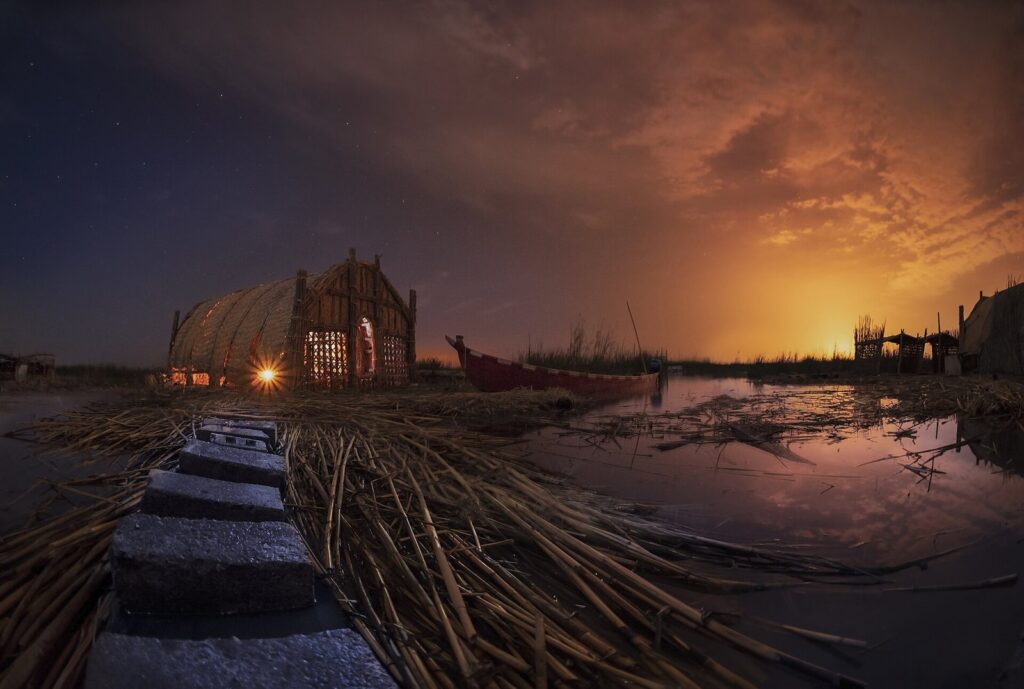
Both agree that November and December work. What changes year to year is the water: the 2025 to 2026 wet season was the longest in more than 40 years and left 32 to 36 per cent of the marshland under water, a reprieve after years of drought, but nobody has published a figure for this autumn. Chibayish in Dhi Qar is the usual base; our southern Iraq guide covers the marshes, Basra and the reed guesthouses.
A north-to-south route for the autumn
Because the cool moves down the country, the order of a trip matters more in autumn than in any other season. Start in the mountains while the south is still hot, and arrive in the south as it cools.
| When | Where | Why then |
|---|---|---|
| Late September to mid-October | Erbil, the Rawanduz gorge, Duhok and Amedi | Erbil averages 30 °C in October and the mountain towns run cooler; the summer crowds have gone; the Lalish feast begins on 6 October |
| Mid- to late October | Sulaymaniyah, Halabja and the Hawraman valleys | Sulaymaniyah averages 28.6 °C in October; Halabja’s pomegranate festival fell at the month’s end in 2025 |
| Late October to early November | Baghdad, Babylon, Karbala and Najaf | Baghdad’s afternoons fall from 33 °C towards 25 °C, and there are no pilgrimage crowds |
| November | Nasiriyah, Ur, Uruk, the Chibayish marshes and Basra | The south’s first comfortable month, and the start of the marshes’ best season |
Two practical rules shape a route like this. The first is the visa. A Kurdistan Region visa, issued on arrival at Erbil or Sulaymaniyah airport or online, is valid in the Kurdistan Region only, so the southern half of the trip needs the federal e-visa, which the FCDO says costs $160, must be applied for on the government portal at least 24 hours before travel and is valid for 60 days. Our Iraq visa guide explains which to get first. The second is the road. No Iraqi authority publishes drive times between the regions, and the crossing from the Kurdistan Region into federal Iraq means checkpoints where documents are inspected; our guide to Iraqi checkpoints covers what to carry and what to expect. Build in slack rather than chaining long drives.
Is autumn better than spring for Iraq?
Most guides call the two seasons equal. They are close, but they are not the same trip.
| Autumn (October–November) | Spring (March–April) | |
|---|---|---|
| Baghdad afternoons | 33 °C, then 25 °C | 22 °C, then 29 °C |
| Landscape | Dry and brown until the first November rain | Green after the winter rains |
| Religious calendar | Clear of Ramadan and the big pilgrimages in 2026 and 2027 | Ramadan expected 8 February to 9 March 2027, just before |
| Big events | Yazidi Feast of the Assembly; Halabja pomegranate festival | Newroz, 21–23 March, a three-day holiday in the Kurdistan Region |
| Dust | Sharqi season, late September to November | Sharqi season, April to early June |
| Temperature trend | Falling: each week is cooler than the last | Rising: late April is already hot |
The case for autumn is its calm calendar and the fact that the weather improves as you travel: a trip that starts in the mountains in October and ends in the south in November follows the cool down the country. The case for spring is the green and Newroz. Our guide to Iraq in spring covers the other half of the argument.
One point in autumn’s favour lasts for years. Ramadan moves about 11 days earlier each year, so by our arithmetic it won’t touch November again until about 2033. Arbaeen, the great Shia walk to Karbala, stays in summer for the rest of this decade.
What’s on: an autumn calendar
| Date | Event | Status |
|---|---|---|
| 1 October | Anniversary of the 2019 Tishreen protests, Baghdad | Annual anniversary; politically sensitive |
| 3 October | Iraq’s National Day | Listed as a public holiday by holiday sites; not confirmed with a government source |
| 6–12 or 13 October | Yazidi Feast of the Assembly, Lalish | Annual; check public ceremonies with the Yazidi Spiritual Council |
| Late October | Jerwan–Faida Archaeological Park, the Assyrian canal reliefs north of Mosul | Due to open in late October 2026, as of August reporting; unconfirmed since |
| Late October to early November | Halabja Pomegranate and Autumn Festival | Held at the end of October in 2025; 2026 dates not announced |
| Autumn, no fixed date | Harvest gathering at Bere Sili Park, east of Amedi | Local custom; no published date |
Amedi itself is about 90 km north-east of Duhok, one and a half to two hours by car, with no direct public transport, and sits at 912 metres according to Shafaq News. Our Amedi guide has the rest.
Dust, first rain and flights
Autumn has its own dust season. The sharqi blows from late September into November, and Iraq’s Environment Ministry counts 272 dusty days a year across the seasons. The FCDO’s safety page warns that sand and dust storms reduce visibility, make driving difficult and affect flights. From November the risk shifts to rain: the same page lists flash floods as common from November to March.
Flights have been the bigger variable in 2026. As of 25 September 2026, the European Union Aviation Safety Agency’s bulletin CZIB-2026-05-R1 told European airlines not to operate in Iraqi airspace at any altitude and was due to run until 30 September; check whether it has been extended before booking. In August, Emirates’ daily Dubai to Baghdad service was scheduled to restart on 1 October 2026. Erbil airport’s own flight board in late September listed Turkish Airlines, Pegasus, Royal Jordanian, EgyptAir, flydubai, Air Arabia and Qatar Airways among its carriers. Leave a spare day before any international flight home.
The safety frame for autumn 2026
The UK Foreign, Commonwealth & Development Office’s Iraq travel advice, last updated 22 July 2026 and unchanged when we checked on 25 September, advises against all travel to Anbar west of Ramadi, Ninawa, Kirkuk, Salah al-Din, Diyala outside Baqubah city, Jurf al-Sakr in Babil, Baghdad’s Sadr City, within 5 km of the Iranian border in Wasit, Maysan and Basra, and within 5 km of the Saudi and Kuwaiti borders. Everywhere else, including Baghdad, Babil, Karbala, Najaf, Dhi Qar, Basra, Al-Muthanna and the whole Kurdistan Region, is against all but essential travel. Ninawa’s listing is why Lalish and the Jerwan reliefs need a separate decision.
The US State Department’s advisory is Level 4, Do Not Travel, reissued on 29 August 2026. The FCDO’s insurance line is plain: your travel insurance could be invalidated if you travel against its advice. Our Iraq travel insurance page explains what to check, and our guide to safety in Kurdistan covers the Region’s own risks, including the Iranian strikes around Rawanduz and Koya that the FCDO reports. We give you the inputs; the decision stays with you.
What to pack for an Iraqi autumn
Autumn packing is about the gap between afternoon and night. For an October trip, light long clothes for 30 °C afternoons plus a warm layer for mountain evenings; for November, a proper jacket for the north, a light waterproof and shoes that cope with mud. Modest dress is expected at shrines and in conservative towns in every season, and at Lalish you will be barefoot, so shoes that slip off easily help. Our Iraq packing list has the full kit.
What we could not confirm
- The 2026 Feast of the Assembly programme. We found no announcement of public ceremonies at Lalish for October 2026, and the April 2026 New Year gatherings were cancelled on security grounds.
- Halabja’s 2026 festival dates. The 2025 festival ran at the end of October; search results suggest it opened around 30 October and lasted three days, but no 2026 dates had been published.
- National Day on 3 October. Holiday listings show it as a public holiday, marking Iraq’s 1932 admission to the League of Nations; we did not confirm the 2026 or 2027 arrangements with an Iraqi government source.
- A Babylon festival in autumn. The 2022 festival ran in late October, but reports of Babylon’s 2025 celebrations place them in April, and we found no autumn 2026 dates.
- The Jerwan–Faida park opening. It was due in late October 2026 as of August; we found nothing newer.
- Emirates’ Baghdad restart. Scheduled for 1 October 2026 as of August; check the airline directly.
- Autumn water in the marshes. No figure has been published since the spring 2026 inundation estimates.
- Erbil’s monthly rainfall. The city’s climate table gives an annual total of about 420 mm but no autumn month we could verify.
Frequently asked questions
Is October a good time to visit Iraq?
Yes, it is the start of the best season. Baghdad averages 33 °C in the afternoon and about 16 °C at night, the Kurdish mountains are at their best, and no major pilgrimage falls in October in 2026 or 2027. The far south stays hot until late in the month; Basra still averages 37 °C.
Is September too hot for Iraq?
For the south and centre, mostly yes: Baghdad averages 40 °C and Basra 43 °C. It is a good month for the Kurdish mountains, where afternoons are cooler, the summer crowds have gone and snow is months away. If your trip is Baghdad and Babylon, wait for mid-October.
What is Iraq like in November?
Mild in the south and cold at night in the north. Baghdad averages 25 °C by day and about 11 °C at night, Basra 27 °C, and Sulaymaniyah falls below 6 °C overnight. The first rain arrives, heavily in Kurdistan, and the FCDO flags flash floods from November to March. It is the best month of the autumn for Ur, Uruk and the marshes.
When is the Yazidi Feast of the Assembly?
It is a seven-day feast at Lalish in early October. Kurdistan24 gives 6 to 12 October; other accounts give 6 to 13. The 2025 feast drew more than 200,000 people. Public ceremonies depend on security: the April 2026 New Year gatherings at Lalish were cancelled, so check before you go.
Are there festivals in Iraq in autumn?
Yes, mostly in the Kurdistan Region. Halabja’s Pomegranate and Autumn Festival drew more than 419,700 visitors at the end of October 2025, and Amedi’s villages gather at Bere Sili Park for the harvest. Babylon’s festival, once a late-October event, was reported in April in 2025.
Is it safe to visit Iraq in autumn?
The season doesn’t change the advisories. As of late September 2026 the FCDO advises against all but essential travel to Baghdad, the south and the Kurdistan Region, and against all travel to Nineveh and several other provinces; the US rates Iraq Level 4, Do Not Travel. Autumn’s practical risks are dust, early rain on mountain roads and flight changes.
Final thoughts
If you can choose any three weeks in the Iraqi year, the most forgiving are probably the last week of October and the first two of November. The north still has its festivals and mild afternoons, the south has finally cooled, and the religious calendar leaves the roads to ordinary traffic. The one trade is the landscape: autumn Iraq is dry and dusty until the rain comes, and anyone who wants green hills should look at spring instead.
The route that makes the most of the season runs north to south, starting in the Kurdish mountains in early October and ending among the southern ruins in November. Our Iraq itinerary planner shows how the pieces fit, our Kurdistan itinerary covers the northern leg, and the month-by-month seasonal guide puts autumn next to the rest of the year.
Photo credits
Chibayish marshes (featured image): Alli Khalil, Wikimedia Commons (CC BY-SA 4.0). Tawela, Hawraman: Diyar Muhammed, Wikimedia Commons (CC BY-SA 4.0). Lalish at the Yazidi New Year: Levi Clancy, Wikimedia Commons (CC BY-SA 4.0). Halabja pomegranate festival: Unknown authorUnknown author, Wikimedia Commons (CC0). Ziggurat of Ur: Alli Khalil, Wikimedia Commons (CC BY-SA 4.0). Mudhif guesthouse in the marshes: (Ahmed Abdul Amiralem) احمد عبدالاميرلازم, Wikimedia Commons (CC BY-SA 4.0). All images via Wikimedia Commons under the licences shown.