Last updated: August 2026. Re-checked against the FCDO’s 22 July 2026 Iraq advice, the KRG’s visa portal at visit.gov.krd, Kurdistan24 reporting through 15 August 2026, the Columbia University Mapping Mesopotamian Monuments survey, and the published engineering specifications for Duhok Dam.
On 15 August 2026 the top-ranking English page for this city described it as “the capital city of Brimstone”. That is not a translation quirk. It was live vandalism on Wikipedia, sitting uncorrected on the single most-read reference page about the place, with the location map underneath it throwing a script error. It will be reverted eventually. But it tells you something true: almost nobody writes about this corner of Iraq, and the material that does exist is thin, old or borrowed. Duhok anchors the north of the region we cover in our guide to Iraqi Kurdistan.
Duhok is the northernmost of the Kurdistan Region’s three governorate capitals, a city of roughly 1.6 million people across its province, sitting in a valley within reach of the Turkish border — and it is the base for the most interesting mountain country in Iraq. It is also, right now, a place your government almost certainly advises you not to visit. The FCDO advises against all but essential travel to the entire Kurdistan Region, the US State Department is at Level 4 “Do Not Travel”, and travelling against that advice can void your travel insurance. Those two facts sit alongside a third: the KRG issued a US$25 million licence in July 2026 for an Austrian-built cable car on a mountain that Turkey was bombing three years ago.
This guide covers Duhok city, Duhok Dam and Zawa mountain, Amedi and its valley, Zakho and the Delal Bridge, Alqosh and the Rabban Hormizd monastery, and the practical frame around all of it — the visa asymmetry between the Kurdistan Region and federal Iraq, the Ibrahim Khalil crossing to Turkey, and the administrative boundary problem that quietly affects half the day trips people want to make. It is deliberately explicit about what could not be verified, because on this subject the gap between what is published and what is confidently repeated is enormous.
The short answer
| Question | Answer, as of mid-August 2026 |
|---|---|
| Where is it? | Northern Iraqi Kurdistan, about 170 km from Erbil airport and close to the Turkish border at Ibrahim Khalil |
| What does the UK say? | Against all but essential travel to the whole Kurdistan Region (FCDO, updated 22 July 2026). No sub-regions, no exceptions |
| What does the US say? | Level 4, Do Not Travel, reissued 2 March 2026, with an ordered departure of non-emergency US government staff the same day |
| Insurance | Travelling against FCDO advice can invalidate your policy. Check the wording before you book |
| Visa | Kurdistan Region visa on arrival still works; the KRG charges 100,000 IQD, 90 days to enter, 30 days’ stay. It is not valid in federal Iraq |
| Airport | None in Duhok. You fly to Erbil and drive |
| Opening hours | None are published for any museum, monastery or heritage site in the province. This is not an oversight in this guide |
Where Duhok is, and what it actually is
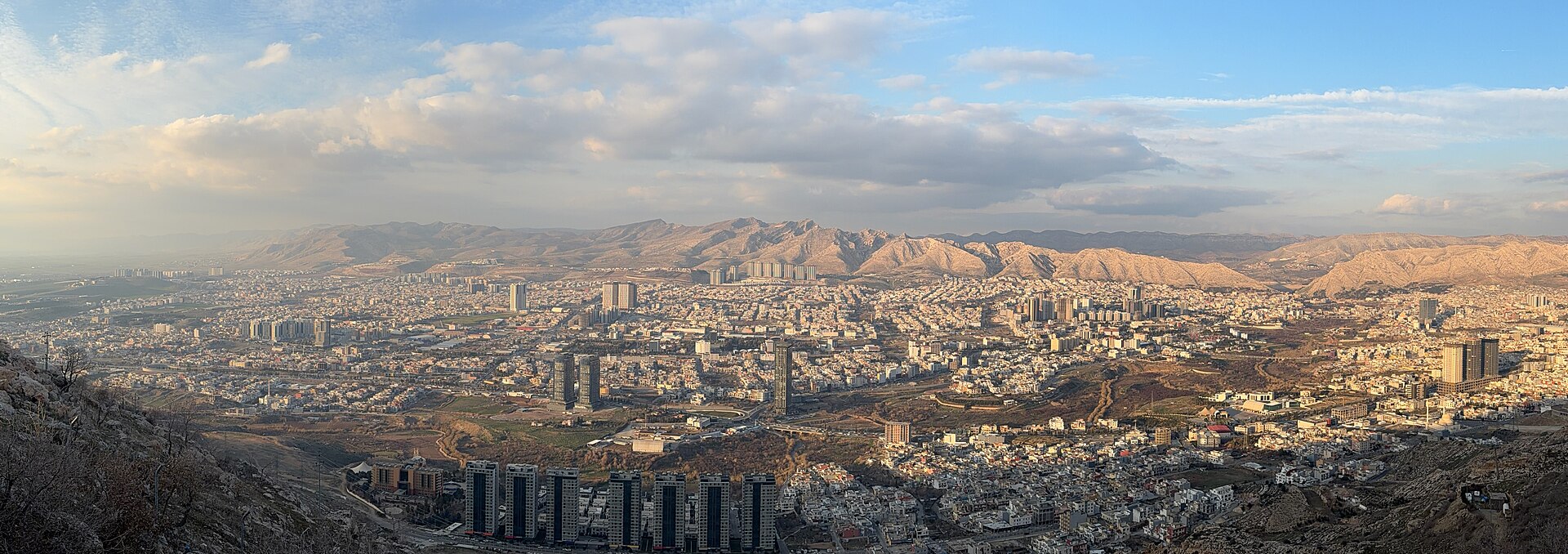
Duhok sits in a valley between two low ranges — Bekhair to the north-east and Zawa to the south-east — with two small rivers meeting in its south-western corner. The 2024 Iraqi national census put Duhok Governorate at 1,599,871 people, which makes it the smallest of the Kurdistan Region’s three original governorates by population; Erbil Governorate recorded 2,517,534 in the same count. The Kurdistan Region as a whole came in at 6,519,129, or 14.13% of Iraq.
Numbers for the city itself are a mess, and it is worth seeing why, because the same problem recurs across every claim made about this province.
| Figure | What it actually measures | Source and date |
|---|---|---|
| 1,599,871 | Duhok Governorate, whole province | 2024 Iraqi national census |
| ~1.5 million | “Duhok Province”, rounded | American University of Kurdistan, undated page |
| 350,000 | Duhok city | thekurdishproject.org, last modified 11 June 2015 — eleven years old |
| ~3,500 | Duhok’s settled population, 550 households | 1929 |
| 300 houses | Duhok, “a small town” and the seat of the Doski tribe | Claudius Rich, 1820 |
The 350,000 figure is the one that gets copied. It was accurate for a city that no longer exists in that form; Duhok has absorbed a very large displaced population since 2014 and has been building continuously. Nobody has published a current city-limits number that we could find. Note also that we could not settle the census date — one summary gives 20 October 2024, another 20–21 November 2024 — so this guide says “the 2024 census” and leaves it there.
The name has two competing explanations, both local. The Duhok Polytechnic and the University of Duhok give du (two) plus hok (lump): a toll of two lumps of grain taken from the basket of each caravan passing through, back when this was a stop on the road rather than a destination. The American University of Kurdistan prefers “two mountains”, which fits the topography and nothing else. Take your pick. The earliest written reference anyone points to is the late-fifteenth-century Persian chronicle Kitab-i Diyarbakriyya, in an account of Aq Qoyunlu campaigns.
The deeper history is more interesting than the etymology and is almost never told. In the tradition recorded by Sasson Nahum, the place was originally Duhok-e Dasinya — “Duhok of the Yazidis” — and was abandoned after a massacre, after which Muslims, Christians and Jews settled it. The mountain above the city was known as Mount Dasin. Duhok was the centre of the Yazidi principality of Dasini until the sixteenth century; after the Safavids took Diyarbakır and Mosul in 1508, Shah Ismail commissioned the Mir of Bahdinan, Hasan ibn Seyf al-Din, to take Duhok fortress from the Dasini tribe, and the city passed to Bahdinan. The missionary Henry Aaron Stern found in 1851 that the village mayor was a Chaldean Catholic Assyrian; Rabbi Yehiel found two minyans of Jews here in 1859. Duhok Governorate in its modern form was carved out of Nineveh Governorate on 27 May 1969 — a detail that turns out to matter enormously once you start planning day trips.
Is Duhok safe? The advice, and what is happening on the ground
Two things are true at once here, and most pages that touch this subject pick one and suppress the other. We are going to give you both and let you decide, which is the only honest way to handle it.
What the advisories say
The FCDO’s Iraq advice was last updated on 22 July 2026 and was still current when we checked it on 15 August. The Kurdistan Region entry is now two lines long: “FCDO advises against all but essential travel to the Kurdistan Region of Iraq.” That is the whole thing.
This is a change, and it is one we got wrong ourselves in earlier articles. Until the July 2026 edition, the FCDO carved out sub-zones inside the Kurdistan Region at the harder “against all travel” rating: a five-kilometre strip along the Turkish border, with the Ibrahim Khalil crossing explicitly excepted; the “Amedi Mountains Region”; and a strip along the Iranian border north of the Choman–Haji Omaran road. Those carve-outs have been deleted. The Regional risks page contains no geographic sub-divisions for the Kurdistan Region at all, and the current advice map — FCDO (TA) 048 Edition 12, June 2026 — has a two-class legend with no Amedi label on it. If you read a page that still lists the Amedi exclusion, including one of ours published before this correction, it is out of date.
Net effect: the advice is now uniform. It is no better for Duhok city than it was, and it is materially better for Amedi and the border strip, which had been in the top risk band. But a reader following the FCDO to the letter is travelling against advice everywhere in the region, and the FCDO’s own line on the consequence is the one most pages bury: “Your travel insurance could be invalidated if you travel against advice from the FCDO.” That is the single most practical sentence on the page. Read your policy wording before you book anything, and see our explainer on how travel insurance works for a country under advisory.
The US State Department is at Level 4 — Do Not Travel, reissued 2 March 2026: “Do not travel to Iraq for any reason. Leave now if you are there.” On the same date, State ordered non-emergency US government employees out of the country. Our fuller comparison of what the different governments actually say, and what each rating means in practice, is in the Iraq travel advisory guide, and the region-specific version is in our assessment of safety across Iraqi Kurdistan.
The regional picture as of mid-August 2026, all of which will have moved by the time you read this: the US and Iran announced a memorandum of understanding on 17 June 2026, and since 8 July there have been strikes and retaliatory attacks by Iran across the region including the Kurdistan Region, in the FCDO’s own words “against US military and civilian infrastructure”. Rudaw counted 19 drone or missile attacks on the Kurdistan Region in the first two weeks of August 2026, with three explosive drones intercepted over Erbil in the early hours of 14 August; Prime Minister Masrour Barzani has put the total at more than a thousand since the conflict began. Almost all of that activity has been directed at Erbil, not Duhok. The FCDO’s terrorism section lists Anbar, Diyala, Ninewah, Salah al-Din and Kirkuk as the provinces where attacks are more frequent; Duhok is not on that list, and neither the Rawanduz nor the Koya strike locations named in the safety section are in Duhok governorate.
Aviation is the practical bottleneck. All flights to Erbil, Baghdad and Basra were suspended on 24 July 2026; airspace reopened on 8 August, and seven commercial flights landed at Erbil that morning. EASA’s Iraq bulletin CZIB-2026-05 advises operators out of the Baghdad flight information region at any altitude and, as of mid-August, had not been extended past 31 August 2026. France has a NOTAM running to 26 August and Italy to 5 September. Separately, Iraq’s own NOTAM ORBB A0279/26 warns of GPS jamming and spoofing in northern Iraq through to 4 October 2026 — that is precisely the airspace you fly through to reach Erbil. Every one of those bulletins expires around or before the date this article publishes. Check them yourself rather than trusting any date printed here.
What is happening in Amedi, which points the other way
Against all of the above, three dated facts from 2026 are hard to explain if the border districts were still what they were in 2022.
On 11 June 2026 the KRG’s Interior Minister, Rebar Ahmed, held a press conference in Amedi district itself. His words, via Kurdistan24: “Fortunately, after several years, the cessation of fighting and clashes between the PKK and the Turkish army has brought calm back to the border areas.” He said the delegation had inspected the border region and its military checkpoints, and that the end of clashes had allowed many displaced residents to return to their villages. He also, to his credit, acknowledged that some issues remain beyond the KRG’s control.
On 16 July 2026 an investment licence worth US$25 million was issued for a cable car on Gara Mountain, in the Sarsang sub-district of Amedi district — a local company partnered with an Austrian firm, two phases running about three years. Haval Sadiq, Duhok’s Director General of Investment, described Gara as one of the province’s most popular destinations. Gara is one of the massifs named in Turkey’s Operation Claw-Lock, launched 18 April 2022, alongside Metina, Zap, Avashin and Basyan. A licensed twenty-five-million-dollar Austrian lift on a mountain that was being bombed within living memory is the hardest single piece of evidence available about how the people responsible for the ground read the risk.
On 8 August 2026 a six-site heritage restoration launched in Amedi town, backed by the French Consulate General in the Kurdistan Region. Consulates do not open field programmes in places they expect to be shelled.
Behind all three sits the Turkey–PKK process: the PKK announced its dissolution on 12 May 2025, destroyed weapons at a ceremony in Sulaimani on 11 July 2025, and announced a withdrawal of forces from Türkiye in October 2025. It then stalled over sequencing — the PKK wants legislative reform alongside disarmament, Ankara wants disarmament first — until the AKP filed a peace bill in the Turkish parliament on 5 August 2026 including an effective pardon for former fighters. Kurdistan24’s own judgement is worth borrowing as balance: whether this holds, or follows the pattern of every previous Turkish–Kurdish initiative, depends on institutional reform that has not happened yet.
| Signal | Date | Direction |
|---|---|---|
| FCDO: all but essential travel, whole Kurdistan Region, no exceptions | 22 July 2026 | Against |
| FCDO deletes the Amedi and border-strip “all travel” carve-outs | 22 July 2026 | For |
| US State Department Level 4, ordered departure of non-emergency staff | 2 March 2026 | Against |
| KRG Interior Minister holds a press conference in Amedi, cites “cessation of fighting” | 11 June 2026 | For |
| US$25m cable-car licence issued on Gara Mountain, Amedi district | 16 July 2026 | For |
| 19 drone/missile attacks on the Kurdistan Region, overwhelmingly at Erbil | 1–14 August 2026 | Against |
| French-backed restoration of six sites begins in Amedi town | 8 August 2026 | For |
We are not going to resolve that for you. What we will say is that “the FCDO says it is dangerous” and “the KRG is licensing ski-lift-scale capital in the district” are both true, they are measuring different things, and anyone telling you only one of them is selling something.
The incident record, since you will want it
The worst thing that has happened to a tourist in this province in recent memory was on 20 July 2022, when artillery struck the Parakh resort in Zakho district, packed with Iraqi holidaymakers from the centre and south. Nine civilians were killed, two of them children, and 23 people were injured in early counts, later reported as 33. Baghdad and Erbil blamed Turkey; Ankara denied responsibility and blamed the PKK. Rudaw reported three weeks later that tourism had fallen roughly 90% in Zakho and 70% across Duhok, with weekly visitor numbers to some resorts dropping from about a thousand to between 100 and 150. This was 2022, not 2024 — we had the year wrong in an earlier internal brief and the error is common online.
The most recent verifiable security incident in Duhok city was on 1 April 2025, during the Akitu (Assyrian New Year) parade, when a man shouting Islamist slogans attacked marchers with an axe, injuring a 17-year-old boy and a 75-year-old woman before being subdued by Assyrians nearby. The assailant was identified as a Syrian Kurdish national affiliated with Islamic State, and the Assyrian deputy governor described it as a terrorist attack. It was a lone-wolf incident, not an organised campaign, and it is the only one we could verify. Everyday risk here looks much more like Iraq’s road statistics — 2,351 road deaths nationally in 2025 — than like anything political. Our page on how checkpoints work and what officers ask covers the part of the journey that will actually take up your time.
Getting to Duhok, and the boundary problem nobody mentions
There is no airport in Duhok. We looked for a project and found nothing citable, so if you see a Duhok airport mentioned somewhere, treat it as speculation. You fly to Erbil and drive.
The American University of Kurdistan, which sits in Duhok and has an institutional interest in getting this right, puts Erbil International Airport at approximately 170 km away and the drive at approximately two hours depending on traffic and road conditions, on a paved road with sections still under construction. That is the best-sourced Erbil–Duhok figure we have. Treat every other drive time you read for this region with suspicion: the only official intercity distance the KRG publishes anywhere is 198 km for Erbil to Sulaymaniyah, route unspecified, and there is no published drive time for any city pair in the Kurdistan Region. Anyone quoting you a confident three hours and twenty minutes is guessing.
Now the part that matters. The Erbil–Duhok highway runs via Akre and Ba’adre. Ba’adre is in Shekhan District and Akre is Akre District, and both are listed among the disputed territories — administratively part of Nineveh Governorate, under KRG control in practice since 1991. Duhok Governorate’s own district table splits its seven districts into four officially inside the Kurdistan Region (Amedi, Duhok, Semel, Zakho) and three under de facto KRG control (Akre, Bardarash, Shekhan). FCDO advises against all travel to Ninawa province. So the road between the Kurdistan Region’s two largest northern cities stays inside KRG-administered territory the whole way, while passing through territory that on paper belongs to the province with the region’s harshest advisory rating.
We have not verified this against a route map or a checkpoint report, and we are not describing it as a checkpoint experience — it is an administrative-boundary observation, drawn from the governorate structure and the FCDO’s province list. But it applies identically to Lalish and to Alqosh, which are the two day trips most visitors to Duhok want to make, and it is worth understanding before you find yourself explaining it to an insurer. The KRG is building the 26-km Ba’adre–Etit Strategic Highway; on completion the whole Erbil–Duhok run becomes dual carriageway.
The Duhok–Mosul road is a different proposition entirely and should not be treated as a casual hop. It crosses into Ninawa proper, an “against all travel” province, and it is also where the visa trap bites, because travellers have reported being turned back on the Erbil–Mosul axis in 2026 for holding only a Kurdistan Region visa. We cover the city itself in our guide to Mosul and the risk picture in our assessment of whether Mosul is safe to visit; the short version is that it is a separate trip with separate paperwork, not an afternoon out of Duhok.
Overland from Turkey: Ibrahim Khalil
The crossing between Zakho and Habur, on the Turkish side in Şırnak province, is the main land route into this part of Iraq and it runs around the clock. Through April 2026 it was reported as busy and often slow, with freight dominating and inspections taking time. Traveller accounts describe two to four hours for processing across multiple X-ray checks and bag inspections, with reports ranging from about two and a half hours to as much as eleven; the standing advice in those accounts is to arrive by 06:00. Those are crowd-sourced figures, not official ones — no published waiting time exists.
We are deliberately not telling you how the visa works at Ibrahim Khalil in 2026, because we could not verify it and this is exactly the sort of rule that changes without announcement. Land-border practice and airport practice are not the same thing, and the sources that describe a free visa on arrival are describing Erbil airport. Check the FCDO entry requirements page and the KRG portal directly. What we can tell you is that the FCDO’s regional risks page warns that foreign nationals crossing into the Kurdistan Region illegally from neighbouring countries have been arrested and face up to five years’ imprisonment or fines of several thousand dollars, so this is not a border to improvise at.
One piece of context worth carrying: the Development Road Project, the planned 1,200 km corridor from the Faw Peninsula in Basra to the Turkish border, is routed through Zakho District via Rabia and Faysh Khabur, with construction scheduled to begin in 2026. Shafaq reported Baghdad and Erbil agreeing on the lowest-cost route; Rudaw reported on 21 December 2025 that they had not yet agreed on the Kurdistan Region’s inclusion at all. Both are on the record.
Getting around once you are there
Taxis and shared vans, locally called sarbis, do the local work; buses are mainly intercity, with regular services from Istanbul, Mardin and Cizre. There is no metro or tram, though an academic study has proposed light rail. Duhok’s first electric taxi arrived in May 2025 with registration fees waived. The shared-taxi “garage” system that moves people between Kurdistan Region cities is real, but we found no citable description of Duhok’s garage — its location, its fares or its frequencies — so we are not going to invent one. City taxis have no meters anywhere in the region; agree the price before you get in. On ride-hailing, be careful what you read: Lezzoo is an Erbil-founded delivery and wallet company with no passenger ride-hailing product listed, Uber and Bolt show no evidence of operating in Iraq at all, and whether Careem covers this part of the country in 2026 is contested. Our guide to getting around Iraq goes into the shared-taxi system properly.
Visas: the Kurdistan rule and the federal rule are different documents
This is the single most useful practical thing to understand before you come, and it is missing from essentially every page that ranks for this city.
Federal Iraq no longer issues visas on arrival. The FCDO puts it plainly: you must apply on the Government of Iraq e-visa portal at least 24 hours before travel, the visa costs US$160, and it is valid for 60 days. That $160 is now the stated government price, not an operator markup — an earlier and widely-copied figure of around $114 is superseded. The mechanics are in our walkthrough of the Iraqi e-visa application, and the wider entry rules in our Iraq entry requirements guide.
The Kurdistan Region runs its own regime, and visa on arrival survives there. The KRG quotes its e-visa in dinars: an administrative fee of 100,000 IQD to the Ministry of Interior’s visa department, valid 90 days from issue as a window in which to enter, giving a 30-day stay. List A nationalities can apply online or receive the e-visa at any Kurdistan Region entry point; List B nationalities need a guarantor code and up to five working days. Use the eligibility checker on visit.gov.krd as the live authority, not a blog. We have a dedicated page on the Kurdistan Region visa, and a comparison of both systems in the Iraq visa overview.
The trap: in the FCDO’s words, “Both types of visas are valid for travel in KRI only.” A Kurdistan Region entry stamp does not let you drive south. A claim has circulated since January 2025 that a KRI visa now permits onward travel into federal Iraq for e-visa-eligible nationalities; no official Iraqi or KRG source confirms it, and there are 2026 reports of travellers turned back between Erbil and Mosul. We publish the restrictive rule and label the permissive one unconfirmed. If you plan to do both halves of the country, sort the federal visa first. See also our note on what visa on arrival still means in Iraq.
Practical odds and ends: your passport needs six months’ validity beyond arrival and at least one blank page; you must declare local currency over 200,000 IQD and any currency or goods over US$10,000 on entry or exit; and the blood-test requirement that appears on some official pages applies to residence, not to visit visas, so ordinary visitors can ignore it.
Things to do in Duhok city
Duhok is not a monument city. It is a working provincial capital that happens to sit at the mouth of the best mountain country in Iraq, and the honest way to use it is as a base with two or three good half-days in it. Here is what those look like.
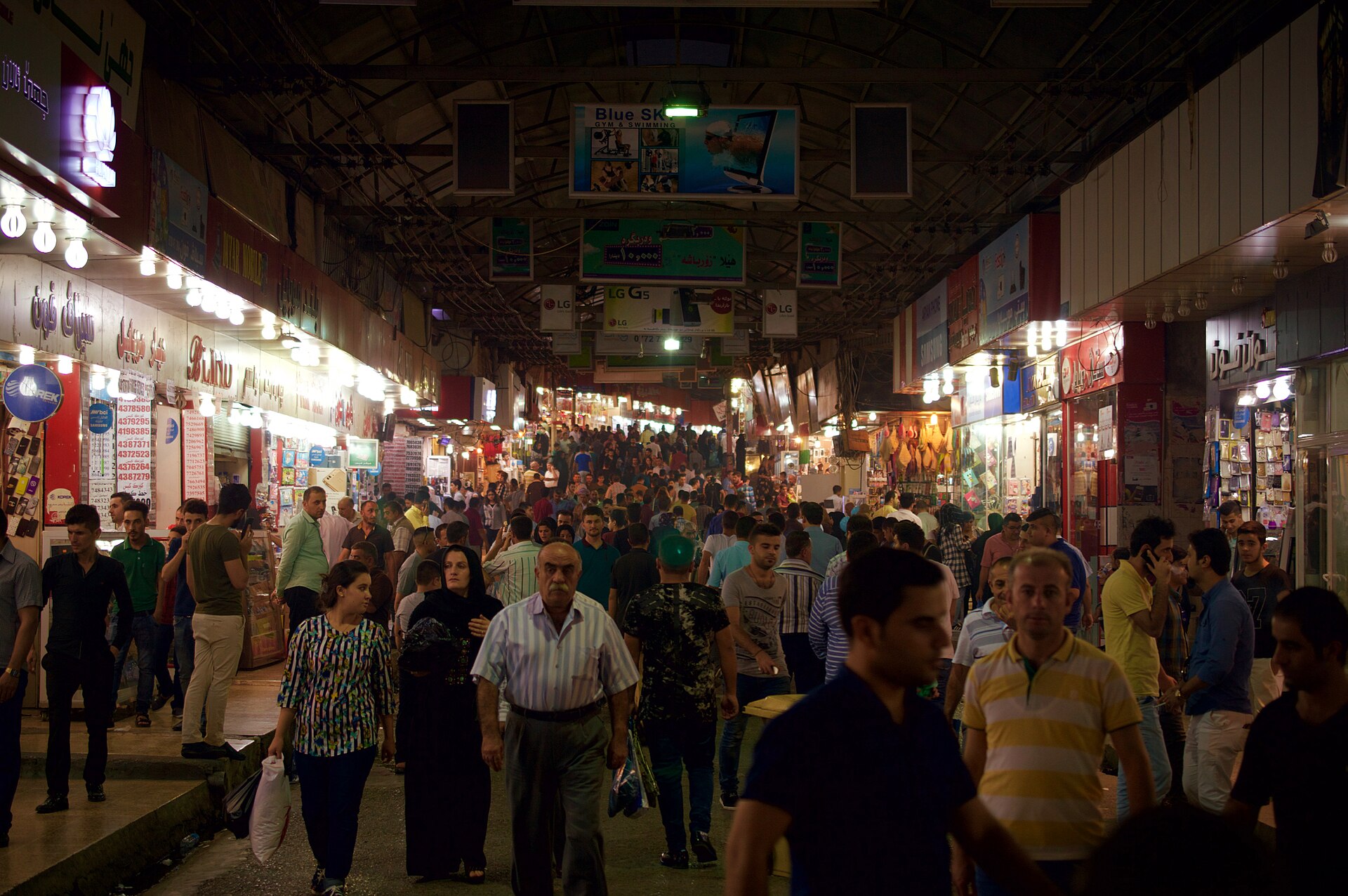
The bazaar
Duhok’s covered bazaar is a working market rather than a heritage set-piece: phone accessories, fabric, kitchenware, tea, spice, gold, and a permanent crowd. It is the easiest place in the city to spend an unstructured hour, and the easiest place to be reminded that the province is trilingual — Badini Kurdish first, then Arabic, then a good deal of Syriac in the Christian quarters. No published opening hours exist for it, which is the correct answer rather than an omission: markets here open when the traders open and close when they close, and Friday runs differently. If you want the fuller picture of what people actually eat in this part of the country, our guide to Iraqi food covers the Kurdish dishes that dominate a Duhok menu.
Zawa mountain
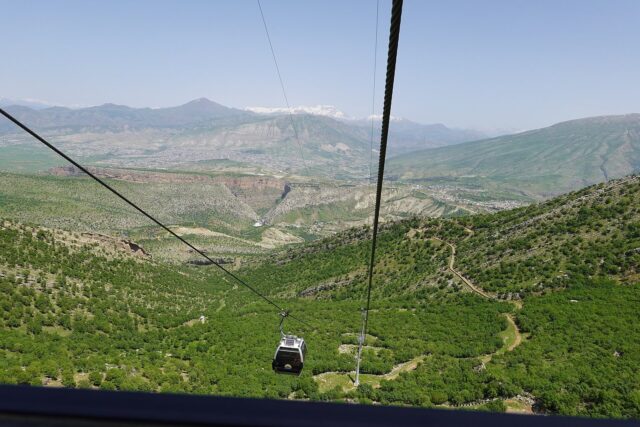
The ridge on the city’s south-east side is where people go for the view, and since 2026 it has had a cable car. Kurdistan24 reported on 28 June 2026 that Mount Zawa “already offers a panoramic view over the city and is accessible by a recently installed cable car”, and that it is to be developed into a full mountain resort. That is genuinely all that is published. We have no fare, no operating hours, no operator name and no opening date, and the height figures circulating for Zawa — 900 m above sea level, 350 m above the Semel plain — trace back to a source we do not cite, so we are not repeating them. Nor could we source the hillside “DUHOK” letters that appear in photographs of the ridge.
Do not confuse the Zawa lift with the Gara Mountain teleferic. Gara’s is the US$25 million Austrian-built project licensed on 16 July 2026, roughly 90 km away in Amedi district, and it is a three-year build that has not started. Two cable cars, two places, one very easy mistake.
There is real archaeology on Zawa: a University of Udine mission has been working there alongside Khinnis, Halamata Cave, Rovia and Akre.
Duhok Dam and its lake
The dam sits at the north end of the old town and is properly documented, which after the last few paragraphs is a relief. It is an earth-fill embankment dam on the Duhok River, completed in 1988, 60 metres high and 600 metres long, impounding a reservoir of 52 million cubic metres, with a bell-mouth spillway rated to 81 cubic metres per second. Its primary purpose is irrigation; water supply and flood control come second.
On swimming, we have to disappoint you: there is no published rule, in either direction. We could find no KRG, governorate or news source stating whether swimming in Duhok Dam Lake is permitted or forbidden. What we did find is a 2026 peer-reviewed water-quality study of the lake in Frontiers in Water, examining seasonality and pollution effects through phytoplankton and physicochemical variables. The existence of a pollution study is itself a reason to keep your head above the surface.
The lake is getting a masterplan. Dr Haval Siddiq, Duhok’s Director General of Investment, told Kurdistan24 on 28 June 2026 that the KRG will build an integrated tourist city behind the dam, funded initially from the provincial budget to construct a waterfront corniche, after which investment will be opened up for the rest. He put the Zawa and dam projects together on a three-to-six-year timeline. Both are worth knowing about; neither exists yet.
The museums, and the hours question
The institution most pages call “Duhok Museum” is properly the Duhok Cultural Museum, inside the Directorate of Culture and Arts building. It was founded in 1998 by Rafaat Rajab, who ran it until his death in 2019, and it is ethnographic rather than archaeological — agricultural life, medicinal and culinary herbs, traditional clothing, pottery, carpentry, household objects, some of them said to be over 500 years old, explicitly arranged around the Kurdish, Assyrian, Christian, Yazidi and Arab communities that share the province. A separate institution, the Duhok Gallery, opened the same year under the Directorate of Culture in the city centre; its fourteenth annual exhibition in January 2019 showed over a hundred works.
Neither publishes opening hours. Nothing in Duhok governorate does. We searched for hours for the Cultural Museum, the Gallery, Rabban Hormizd and every Amedi site, and found none — not on a KRG page, not on a directorate page, not anywhere citable. Aggregator sites will give you confident numbers for some of these. They are invented. Plan on the assumption that you will need to ask locally on the day, and do not build an itinerary around a specific building being open. If museums are the point of your trip, our round-up of Iraq’s museums is honest about which ones have verifiable access.
The Assyrian rock reliefs at Halamata
Seven kilometres south-west of the city, the Halamata Cave — also called the Maltai reliefs — carries Assyrian relief carvings connected to the northern canal system built by Sennacherib (reigned 704–681 BC) to bring water to Nineveh. Columbia University’s Mapping Mesopotamian Monuments project has documented them. This is a genuinely significant site and it has been treated badly: the reliefs were spray-painted with a flag in 2016, a relief was subsequently stolen, and Rudaw reported thefts at the site in March 2018. Nearby Charsteen Cave took around 25,000 visitors in the first half of 2026 according to Duhok’s Directorate of Antiquities — the only hard visitor number published for any single site in the province.
Ten kilometres west of the city, in the Balyuz hills, researchers found a Greek-inscribed tablet in 2020 dated to 165 BC and referring to Demetrius, a reminder that the Seleucid world reached this far up. If Assyrian material is what brings you to Iraq, the context is in our introduction to ancient Mesopotamia.
Malls, parks and the “largest” problem
Mazi is the name everyone repeats, usually as “the largest mall in Iraq”. The operator’s own account is more specific and more interesting: Mazi Supermarket opened in 1999, claimed as the first supermarket in Iraq rather than just in the governorate, a 17,000 m² building on 25,000 m² of ground with over 200 staff. The same group runs Dream City, a 200,000 m² entertainment park with an aqua park, visited since 2001, and the 180-room Mazi Hotel, opened 2007. The KRG’s own tourism site meanwhile lists it as “Maxi Mall”, and Family Mall Duhok markets itself as the largest and most modern mall in the Kurdistan Region. Both “largest” claims are self-declared with no independent measurement behind either. We are reporting the claimants, not adjudicating.
Amedi: the town on the rock
Amedi — Amadiya, Amêdî — is the reason to come to this province rather than pass through it. It sits about 70 to 90 km north-east of Duhok depending on which official source you ask: Kurdistan24 said around 70 km in June 2026, while the KRG’s General Board of Tourism says 90 km and “about one and a half hours by car” on a page footered “General Board of Tourism 2015 ©”. Both are official. Neither is recent. That is the state of the published record here.
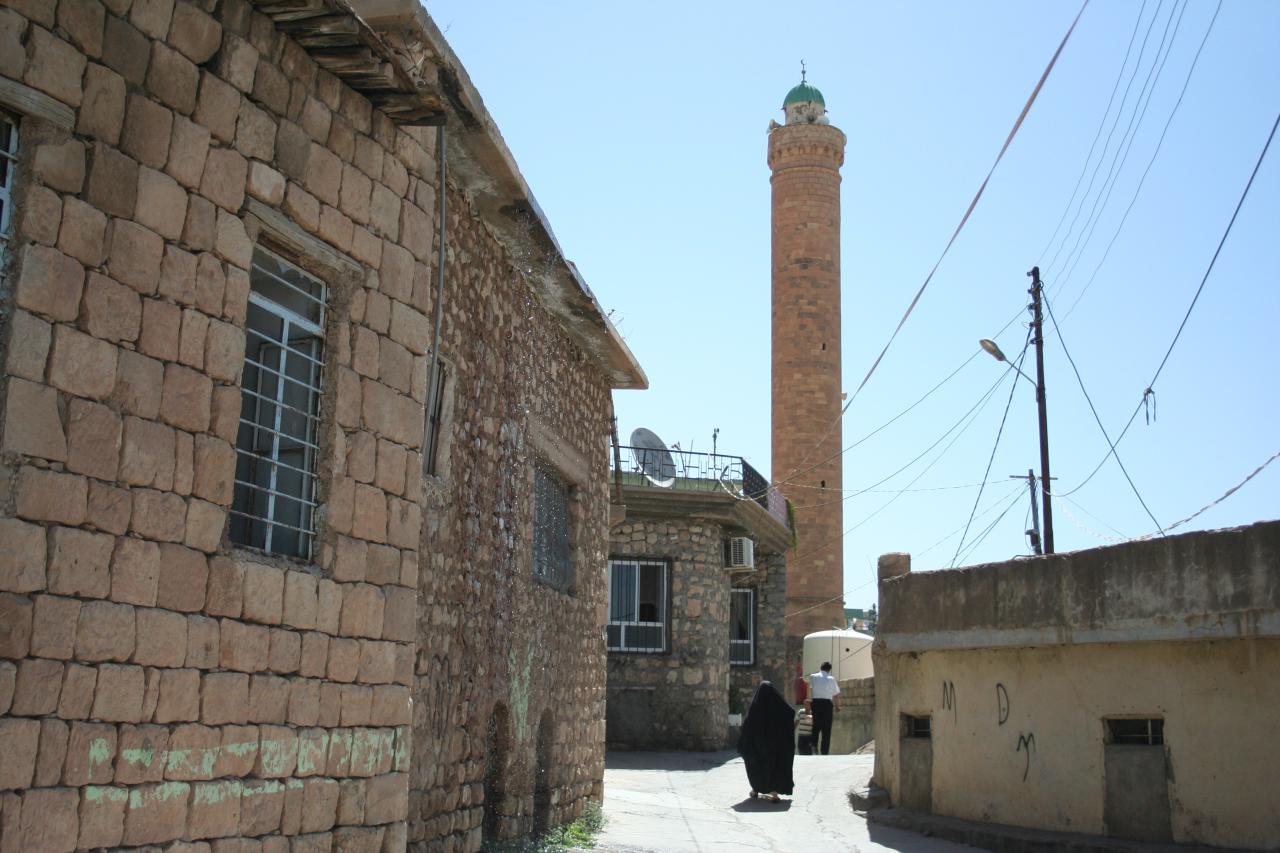
Why we are not giving you an elevation
Every travel page about Amedi opens with a height. We are not going to, and the reason is a good illustration of how much of the material about this region should be read.
The only figure we could surface from a citable page was 1,985 metres above sea level. That is almost certainly wrong. Amedi’s own climate record gives a January mean daily maximum of 6.2 °C and a July mean maximum of 36.3 °C — far too warm for a town at nearly two thousand metres at this latitude, and inconsistent with the peaks that visibly rise above it. The commonly printed 1,200–1,400 m range, meanwhile, we could not source at all; it appears to be repetition without an origin. So: Amedi is a flat-topped mesa rising sheer above the valley floor, with mountains standing well above it on three sides. The KRG’s own description is “a small, beautiful town built on a mountain plateau”. When somebody publishes a surveyed figure, we will use it.
What the climate record does support is the reason Iraqis drive up here every summer. Duhok’s July mean daily maximum is 42 °C and August’s 41 °C, with a record high of 46 °C; Amedi’s are 36.3 °C and 36.2 °C. That six-degree gap, plus the shade of the valley below, is the whole economy of the place in July and August. In January Amedi’s mean minimum is −2.4 °C and snow falls; Duhok gets two or three snowy days a year, with heavier falls in the uplands. If timing matters to you, our page on the best time of year to visit Iraq works through the seasons properly.
| Month | Duhok, mean daily max | Amedi, mean daily max |
|---|---|---|
| January | 11 °C | 6.2 °C |
| June | 38 °C | — |
| July | 42 °C | 36.3 °C |
| August | 41 °C | 36.2 °C |
The Bahdinan Gate, and the correction every travel page needs
Amedi was the seat of the semi-autonomous Bahdinan emirate, which ran from 1376 to 1843 — the standard scholarly range, and not “until the end of the Ottoman Empire”, which is what the KRG’s own tourism page says and which is off by roughly eighty years. Earlier still, ibn al-Athir has the Arabic name ʿAmadiyya deriving from Imad al-Din Zengi, who built a citadel here in 1142 on the site of an older fortification. Two main gates served the emirate: the Zebar Gate to the east and the Bahdinan Gate to the west, the latter reached by a stone staircase of nearly 200 metres and standing about 4 metres wide and 20 metres high. It was restored in 2023 with United States backing.
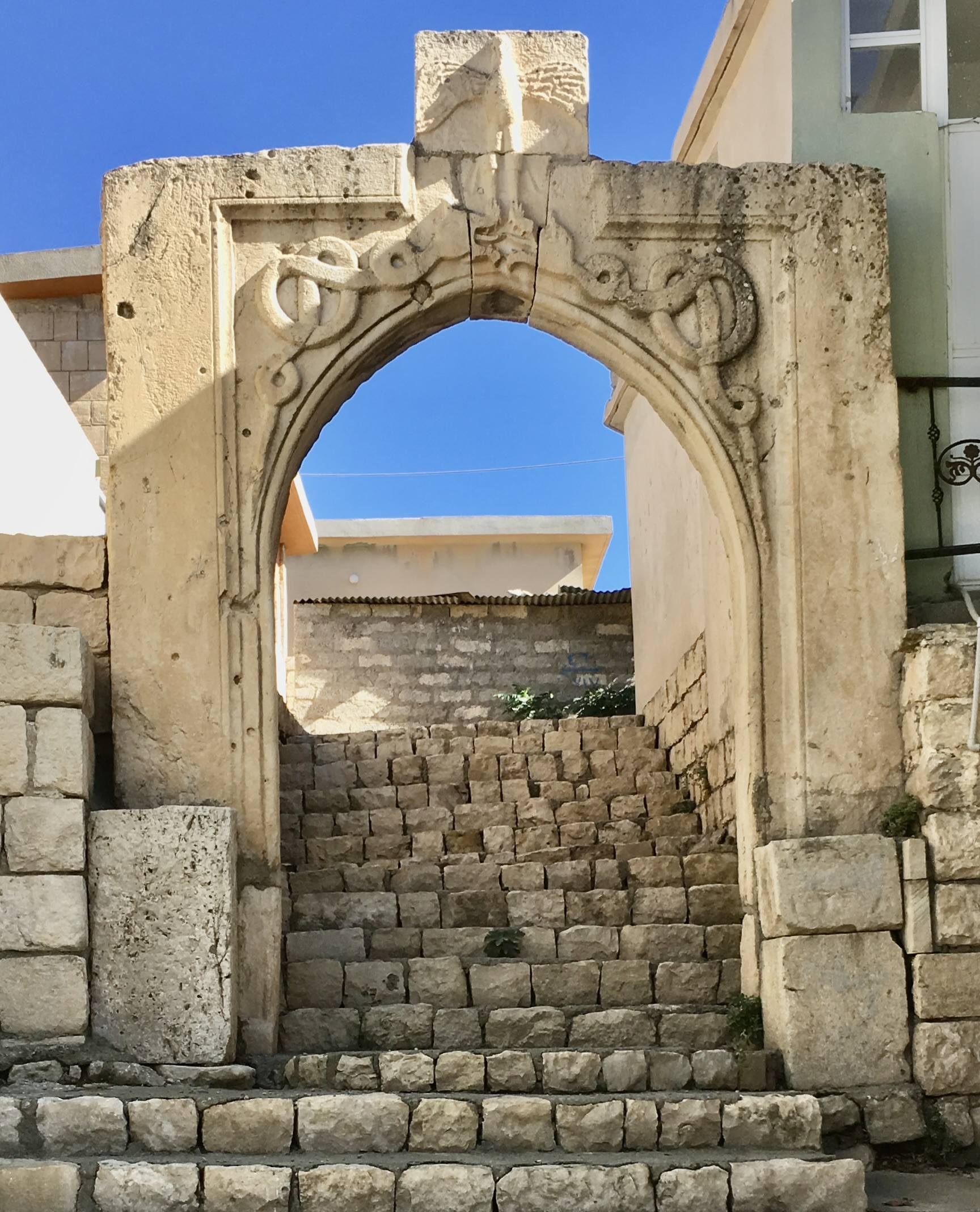
The rock reliefs at the gate are Parthian, not Assyrian. Almost every travel page that mentions them calls them Assyrian or “Assyrian-style”, presumably by association with Nineveh down the road. The scholarly literature does not. Zainab Bahrani and Haider Almamori, publishing the Columbia University Mapping Mesopotamian Monuments survey in the journal IRAQ, document Parthian-era reliefs at Amadiya recorded in 2013 and date the gate structure itself to around 1142 AD — so the gate is twelfth-century Zengid and the carvings beside it are second-century AD, about a millennium older. Michael G. Brown, writing in Zeitschrift für Orient-Archäologie in 2018, describes two. Columbia counts three.
| Source | Figure | What it is counting |
|---|---|---|
| Bahrani & Almamori, Columbia MMM survey, IRAQ | Three Parthian rock reliefs | Documented on the 2013 survey at Amadiya |
| Brown, Zeitschrift für Orient-Archäologie, 2018 | Two Parthian rock-reliefs | Reliefs he treats as securely identified |
| Most English travel pages | “Assyrian carvings” | Association with Nineveh, not evidence |
| Amedi’s own tourism copy | Zoroastrian Gate listed separately | KRG General Board of Tourism, page © 2015 |
Qubahan School
North-east of the town, in a garden of trees, stand the ruins of Qubahan — an Islamic college whose name comes from the Arabic qubba, dome, and which is nicknamed the Oxford of Kurdistan. It drew students from Kurdistan, Persia, Anatolia and the Arab world and taught Quranic interpretation, hadith and jurisprudence alongside astronomy, medicine, philosophy, literature and linguistics; its library is said to have held thousands of manuscripts, most lost to fires and wars. Kurdistan24, which repeatedly calls it five centuries old, dates its founding to the early sixteenth century under Sultan Hussein Wali of Bahdinan (r. 1534–1576); the KRG’s own tourism site says the seventeenth century, twice. The scholarly consensus is with the sixteenth. Kurdistan24 itself adds the sensible caveat that comparisons with famous universities should be read as symbolic rather than literal, and we will borrow that.
Restoration is under way and was on course for completion “later this year” as of mid-2026, delayed by unusually heavy rainfall earlier in the year, according to Dr Bekas Brefkany, Director General of Antiquities for Duhok Governorate.
The six-site restoration, launched August 2026
This is the freshest thing happening in Amedi. On 8 August 2026, restoration began on six historic sites in Amedi district in partnership with the French Consulate General in the Kurdistan Region: the Great Mosque of Amedi and its minaret, Qubahan School, the ancient Synagogue of Amedi, and the Tombs of the Sultans among them; earlier reporting adds the Chaldean church and the Pir Hazban shrine. Mayor Warshin Salman selected the sites. Amedi has 57 registered historical sites in total.
The most quotable part of the announcement is an admission: local officials said previous restorations had been carried out without sufficient expertise and had changed the buildings’ original architectural character. Two French universities are working in and around Amedi, and the current programme is using archival photographs, traditional materials and locally trained craftsmen rather than modern construction. Archaeologist Khalid Amedi told Kurdistan24 that some interpretations trace elements of these sites’ origins to Assyrian or Zoroastrian periods — which we report as his framing, not as established fact.
Jewish and Christian Amedi
Amedi was one of the great Jewish towns of Kurdistan. Joseph ha-Kohen’s Emeq ha-Baka records about a thousand Jewish families here in 1163, trading in gall-nuts. The Catholic Encyclopedia’s 1907 figures give the town 6,000 people: 2,500 Kurds, 1,900 Jews and 1,600 Chaldean Catholic Assyrians. It was the birthplace of the messianic claimant David Alroy, who led a revolt around 1160 and was defeated and killed; Solomon ibn Verga, writing in the following century, portrayed the community of Alroy’s day as wealthy and settled. The ruins of a synagogue survive, and a tomb attributed to the prophet Ezekiel — the KRG lists it as the tomb of the Prophet Hazkiel and dates it to 500–700 BC, which is a tourism-board claim rather than an archaeological one. The Jewish Neo-Aramaic dialect of Amǝdya has its own published grammar. The community left in the exodus of 1950–51.
On the Christian side, the Dominican Leopoldo Soldini founded a mission for Kurdistan at Amedi in 1760 together with Maurizio Garzoni, who lived here fourteen years and compiled a 4,600-word Italian–Kurdish dictionary and grammar — the first study of Kurdish grammar ever made, and the reason Garzoni is called the father of Kurdology. A Chaldean church remains, and the KRG lists Mar Odisho Church among the town’s sights. Roughly 5,000 people live inside the old citadel area today, per the KRG’s undated count.
One thing you will read and should treat carefully: the story that the Three Magi set out from Amedi. It is repeated across travel copy and told locally. We could find no documentary source for it whatsoever. That does not make it worthless as local tradition — it makes it local tradition, which is a different category from history.
Sulav, Sarsang and Gara
Below Amedi the valley opens into the province’s summer country. Sulav waterfall is 3 km north of Amedi according to one KRG page and the Solav resort “about 4 kilometres to the north east” according to another, which is the same place described twice by the same authority with different numbers; ice-cold water comes down the mountain into a wooded valley, and in July that is the entire point. Bere Sili Park, east of the town, is where residents of Amedi and the surrounding villages gather for the autumn harvest festival, and is being developed into a resort. The KRG also lists Gali Balinda (120 km north-east of Duhok, 50 km from Amedi), Amada Resort in the Dinarta sub-district and Kellybedul.
Sarsang is a sub-district of Amedi district and contains Gara Mountain, which is where the US$25 million cable car was licensed in July 2026. On the Sarsang presidential palace and the Sarsang dam, both of which appear in travel copy, we found nothing citable at all — not their status, not whether they can be visited, not confirmation that the palace is what people say it is. We are not describing them. The province’s apple orchards are real; a Sarsang-specific source for them is not something we have.
Zakho and the Delal Bridge
Zakho sits on the Khabur — the Tigris tributary, not the Syrian river of the same name — close to the Turkish border, with its old quarter occupying an island in the river. The reason to stop is the Delal Bridge, Pira Delal, which is the finest piece of pre-modern engineering in northern Iraq and one of the very few things in this article with a properly measured dimension attached.
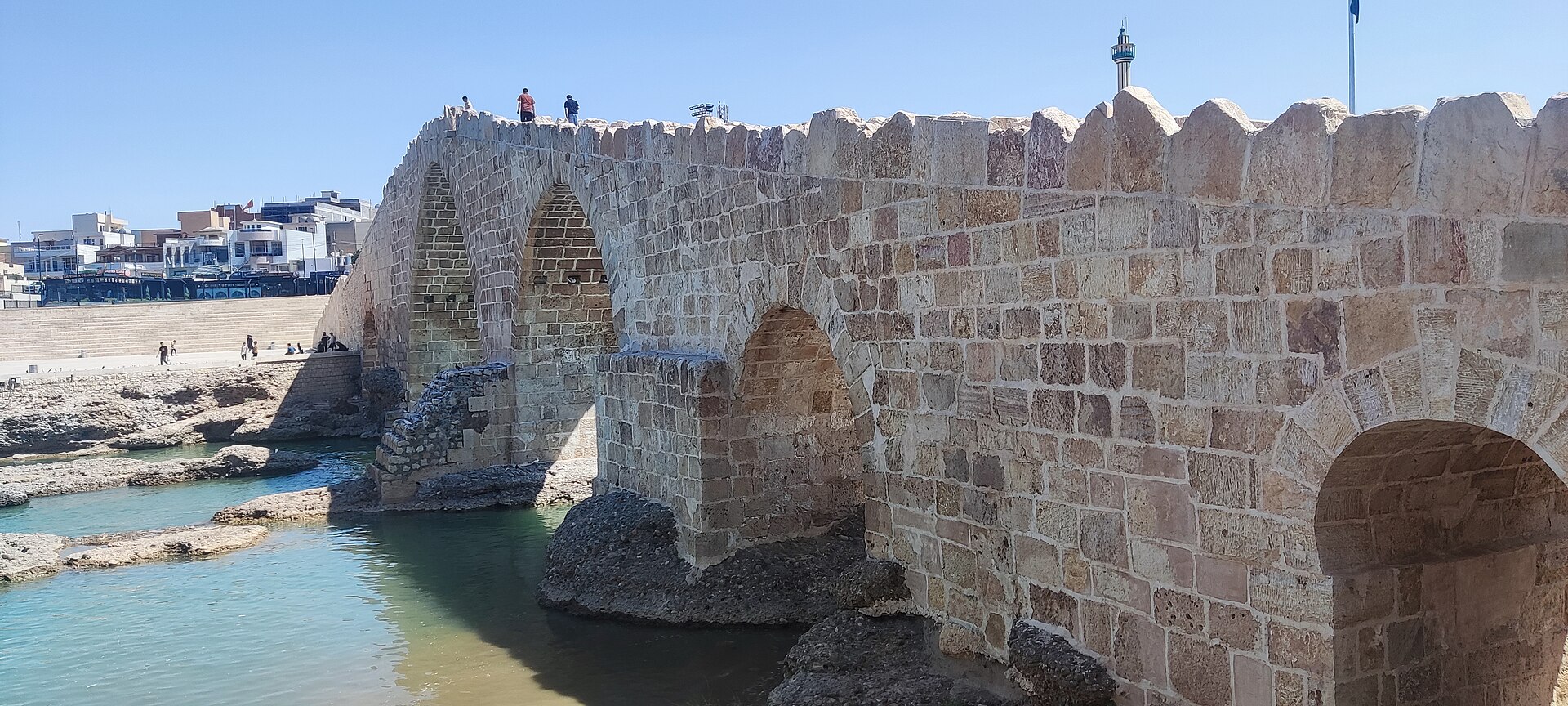
About 115 metres long, 16 metres high, five spans, carved limestone. Those figures come from a 2009 photogrammetric survey by the Laboratory of Photogrammetry at the Czech Technical University in Prague, presented to CIPA/ICOMOS — that is, somebody actually measured it with instruments, which is more than can be said for most numbers in circulation about this region.
The age is a different matter. Colin O’Connor’s Roman Bridges (Cambridge, 1993) is the source for the Roman attribution of the first build; the claim that the present structure is Abbasid rests on a KRG Ministry of Tourism document reproduced in a 2008 parliamentary report. One is a scholarly survey volume, the other is government tourism material, and neither is an excavation. The honest position is that nobody has securely dated the Delal Bridge, and anyone giving you a confident century is choosing a side without saying so.
Pir means bridge and delal is usually translated as “dear” or “beautiful”, though the sense is closer to “unique”; Zakho itself is called Zakhoka Delal, Delal’s Zakho. The legend attached to it exists in two versions in the same telling. A builder whose right hand had been cut off by the prince of Bohtan, so that he could never make another as fine, came to Zakho and found the middle span kept collapsing. A fortune-teller told him the first living thing to set foot on the bridge must be buried beneath it. His niece Delal stepped on before her dog did, and volunteered. Her husband dug for her until her muffled voice told him to stop — she wanted to hold the bridge up with her arms for eternity. Locals grew two long plants from a gap between the stones and called them Delal’s braids. The bridge also carries an Assyrian dimension that gets missed: the folk song “Dalaleh” is still sung at weddings across the Assyrian diaspora.
On its current condition we have nothing. No 2025–26 restoration or condition report surfaced, and we are not going to tell you whether it is walkable — though the photograph above, taken in June 2025, shows people standing on the deck. What is documented is that Zakho is preparing the third phase of a riverside corniche project, reported in July 2026, and approved 50 new factories the same month. It is a growing town, not a preserved one.
Alqosh, Rabban Hormizd and the tomb of Nahum
South-west of Duhok, out where the mountains drop to the plain, Alqosh is one of the oldest continuously Christian towns in Iraq — and it is the sharpest example of the boundary problem described earlier. Alqosh sits in Tel Kaif District, Nineveh Governorate, where the FCDO advises against all travel, while being administered in practice from the Kurdish side. Access reporting describes a security checkpoint manned by Peshmerga followed by clearance from an Iraqi police officer — a dual presence at the same approach, which is what a disputed territory looks like on the ground. Erbil to Alqosh is about 120 km; we have no verified Duhok–Alqosh distance and will not invent one.
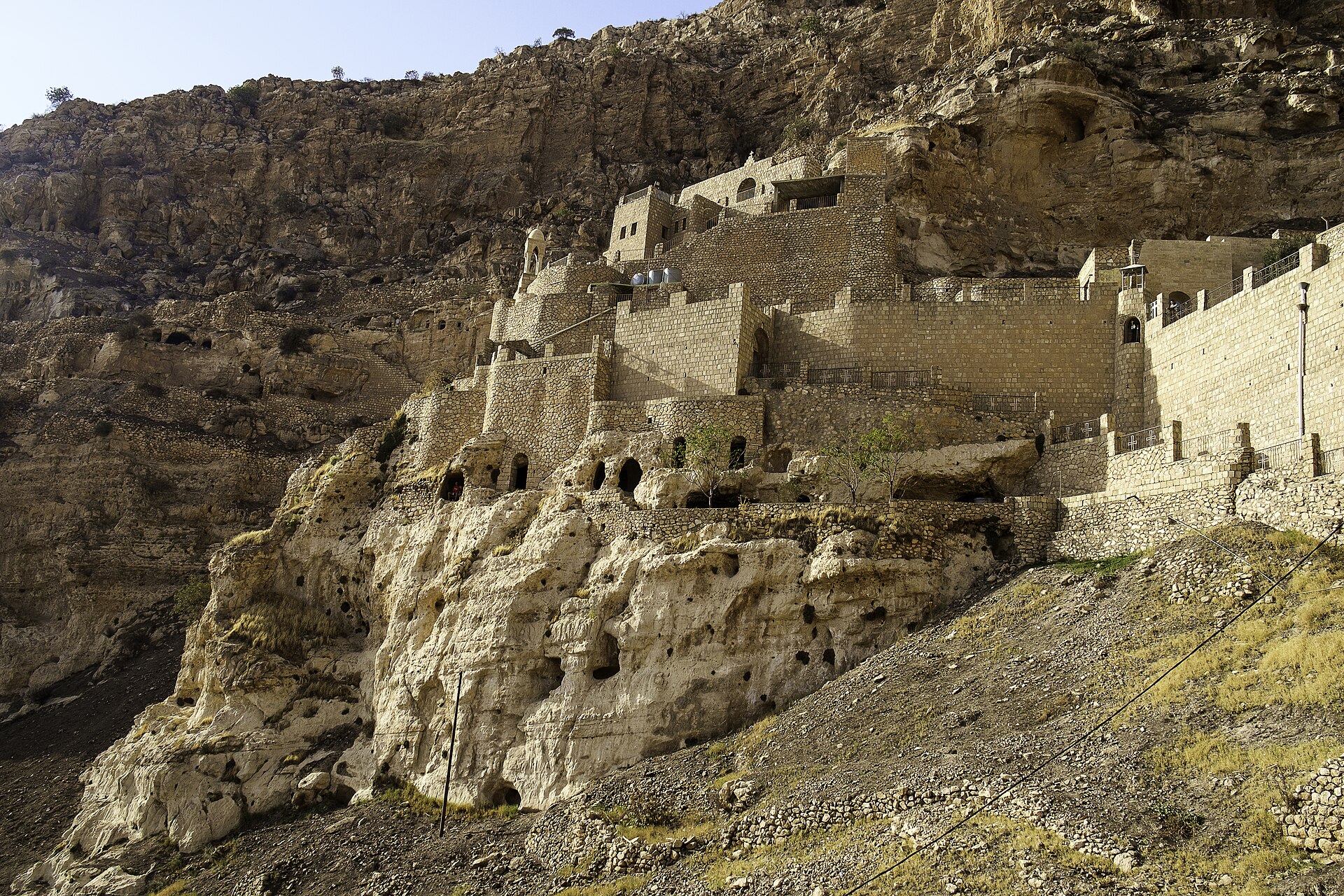
Rabban Hormizd was founded about 640 AD and is carved into the mountain roughly two miles above the town, 28 miles north of Mosul. It was historically the seat of the patriarchate of the Church of the East, and it is now Chaldean Catholic. The cliff below it is honeycombed with cells. Whether it is open, and on what terms, is not published anywhere — no hours, no confirmed key-holder arrangement, no 2025–26 access statement. Below it at the foot of the hill stands the newer monastery of Notre-Dame des Semences, Our Lady of the Seeds; the 1858 founding date usually given for it we could not verify.
In the town itself is the tomb of the prophet Nahum, and this is one of the few sites in the province where the access rule is on the record. Restoration was led by ARCH, the Alliance for the Restoration of Cultural Heritage, with deputy director Adam Tiffen leading the original effort after a first visit in January 2018. Roughly $2 million was raised, about half of it from the US government; a separate Kurdistan24 report has Alqosh’s mayor giving the split as $500,000 from the KRG and $1 million from Washington, and the two accounts do not reconcile. The project completed in late 2021, with limited public access from 2022 — so “reopened in 2021” is half right.
The operative rule comes from Tiffen directly: “Visits are possible, but they must be arranged in advance due to the site’s sensitive location and custodial oversight by the local government.” ARCH does not keep a registry but estimates several dozen Jewish visitors have made the journey since restoration, alongside interfaith groups, heritage travellers, backpackers and local school and university students. Rabbi Asher Lopatin of Michigan visited in April 2025, met by city officials at 04:30 and praying at sunrise; he wore his kippah throughout and reported no problems. Israeli citizens should note that Iraq’s parliament passed a law in 2022 criminalising normalisation of ties with Israel, punishable by death or life imprisonment. Nahum is called “an Alqoshite” in the Bible; whether that means this town or Kfar Nahum in Galilee is genuinely disputed, and nobody knows how old the tomb structure is.
ARCH also restored the Synagogue of Ezekiel at Shush, about 100 km east of Duhok, completing it in 2023 with a $500,000 US State Department grant. Within a short walk of it are the remains of an old church, an ancient mosque and a Zoroastrian fire temple — which is as good a one-paragraph summary of this province’s religious history as you will find. For more of this kind of thing, see our list of the most striking places in Iraq.
Lalish, briefly
Lalish is the holiest place in the Yazidi world and it deserves — and will get — its own article rather than a paragraph. The essentials: it holds the tomb of Sheikh Adi ibn Musafir, who moved here in the early twelfth century and died in 1162, along with two sacred springs, Zamzam and Kaniya Spî. Every Yazidi is expected to make a six-day pilgrimage at least once in life, and Yazidis living in the region attend the seven-day autumn Feast of the Assembly, celebrated 6–13 October; the KRG’s 2026 calendar marks 6–12 October as a holiday for it, which is a period to plan around rather than into. Lalish Temple has been on Iraq’s UNESCO Tentative List since 2020 — one of fifteen tentative entries, against six inscribed properties, as set out in our guide to Iraq’s UNESCO World Heritage Sites.
Two practical notes. First, the geography: Lalish is roughly 60 km north of Mosul and 14 km west of Ain Sifni, at about 861 m, among the mountains of Hizrat, Misat and Arafat. Administratively it is in Shekhan District, Nineveh Governorate — KRG-administered since 1991, but inside the province the FCDO rates “against all travel”. Second, the etiquette: visitors remove their shoes and do not step on thresholds. That is universally reported and is genuine long-standing Yazidi custom, but we could not verify it against a current published source, so treat it as custom to observe rather than a rule someone has written down for you.
Who lives here
Duhok governorate is not a Kurdish province with minorities in it. It is a province whose landscape was made by several communities at once, and saying so is not decoration — it explains why there is a Chaldean monastery in the cliff, a synagogue ruin on the mesa, a Yazidi valley in the hills and a mosque from the 1140s in the same forty-kilometre radius.
The Assyrian, Chaldean and Syriac communities are the oldest continuous presence. Duhok’s Syriac name is Beth Nohadra, and the governorate is the Hoparkiya d’Nohadra. Akitu, the Assyrian New Year, falls on 1 April and the Duhok procession starts at the Virgin Mary Church; thousands attended in 2025, including diaspora Assyrians who came back for it. It was that parade the axe attack of 1 April 2025 targeted.
The Yazidi story here is both very old and very recent. Duhok was the seat of the Yazidi principality of Dasini until the sixteenth century, and Lalish is in the province today. On 3 August 2014 ISIS overran Sinjar, and what followed has been recognised as genocide. Kurdistan24’s figures: more than 5,000 Yazidis killed, thousands of women and children abducted, about 2,820 people still missing and nearly 97 mass graves identified. Prime Minister Masrour Barzani, speaking at the twelfth-anniversary ceremony on 3 August 2026, gave slightly different numbers — more than 3,500 Yazidi women rescued and more than 2,700 still missing. Both sets are on the record and we give both.
The displacement is the part that shapes daily life in Duhok. More than 400,000 Yazidis fled to the Kurdistan Region; about 100,000 have returned to Sinjar; more than 270,000 remain in camps and another 100,000 have sought refuge abroad. As of the KRG’s March 2024 figures the region hosted 631,174 internally displaced people, 40% of them in Duhok governorate, plus 251,475 Syrian refugees, of whom around 131,700 were in Duhok. This province carries a disproportionate share of Iraq’s displacement, and it has done so for twelve years. The Sinjar Agreement signed by Baghdad and the KRG in October 2020 was meant to resolve the administration and security of the district; implementation has remained limited, and President Nechirvan Barzani has called the genocide an open wound.
Sinjar itself is in Ninawa. The FCDO advises against all travel there. We are not going to suggest you visit, and genocide sites are not a tourist itinerary. If you want to understand what happened, read the survivors’ accounts and support the organisations working on the missing; the Lalish Cultural and Social Center in Duhok, headed by Saeed Jardo, organised the 2026 commemoration and is the standing institutional contact point. Our broader piece on Iraqi culture and how to behave as a guest is the right starting point for anyone travelling into a place where recent history is not history yet.
Practical matters
Money
Iraq runs on cash and on two exchange rates. On 15 August 2026 the street rate in Baghdad and Erbil was around 153,000 IQD per US$100 — roughly 1,530 dinars to the dollar — against an official peg of 1,320. Dollars are widely accepted for larger transactions; small purchases are in dinars. Bring more cash than you think and see our breakdown of what a trip to Iraq costs for realistic daily figures. Card acceptance outside international hotels is patchy.
Alcohol, and the law you need to know about
Alcohol is sold and served openly across the Kurdistan Region, including Duhok — hotel bars, restaurants and licensed shops. That is a genuine legal difference from federal Iraq, where the import, manufacture and sale of alcohol carries fines of up to 25 million dinars. Note the shape of the federal rule: what is criminalised is import, manufacture and sale, not personal consumption, and the FCDO says it is not aware of officials stopping travellers carrying alcohol for personal use. Do not repeat the widespread claim that “Iraq banned alcohol in 2023” without a primary source; we could not find one.
Something else must be said plainly, because it is hard law and it affects real people. Under the July 2024 amendment to Iraq’s Anti-Prostitution and Homosexuality Law, if the authorities consider a person’s actions, clothing or possessions to promote LGBT+ identities, the penalty is up to seven years’ imprisonment and a fine of 10 to 15 million Iraqi dinars. Same-sex relationships carry 10 to 15 years. This applies in the Kurdistan Region as it does elsewhere in Iraq. It is not a hypothetical, and LGBT+ travellers should factor it into the decision rather than discover it on arrival. The rest of the legal picture is in our guide to the Iraqi laws that catch visitors out.
Drones, ID and dress
Do not bring a drone. The KRG prohibits sharing footage of drone launches or target locations with media or on social media, violations can bring legal action, and traveller accounts are blunter still about what happens when Peshmerga find one in your bag. Carrying photographic ID is a legal requirement in Iraq. On dress, there is no Kurdistan-specific rule that we could source for either men or women; what exists are observed norms — modest by European standards, considerably more relaxed in Duhok than in the Shia south — and the sharper sensitivity that applies during Ramadan. Our Iraq packing list deals with what that means in practice, and there is more on the specifics of travelling alone in our solo travel guide.
One more administrative oddity worth knowing: if you lose your passport in Iraq you must report it to the police and then publish the details in two local newspapers, and you may be refused an exit stamp until you do.
Health
Tap water is not reliably potable. Routine vaccinations plus hepatitis A and typhoid are the standard recommendations, with a polio booster commonly advised; there is no yellow fever risk in Iraq itself, and a certificate is required only if you arrive from or transit a risk country. Crimean-Congo haemorrhagic fever is an active outbreak in Iraq — the IFRC recorded 171 confirmed cases and 11 deaths across 15 governorates as of 15 June 2026, a 6.4% case fatality rate. It spreads by tick bite and by contact with the blood or tissue of infected livestock, which makes it a real risk for people visiting livestock markets and abattoirs and a negligible one for someone eating cooked food in a restaurant. Details are in our Iraq vaccinations guide.
What we could not confirm
This is the longest such list we have published, and it is the most useful section in the article. Every item below is something you will find stated confidently somewhere online. None of it could be verified.
- Amedi’s elevation. The one figure we found contradicts Amedi’s own climate data, and the commonly printed 1,200–1,400 m range has no source we could locate.
- Whether swimming is allowed in Duhok Dam Lake. No published rule exists in either direction.
- Zawa mountain’s height, any cable-car fare, operator, opening date or hours, and the “Dancing Fountain” said to be at the summit.
- The hillside “DUHOK” letters. Visible in photographs; no source found.
- Opening hours for anything at all in Duhok governorate — the Cultural Museum, the Duhok Gallery, Rabban Hormizd, every Amedi site. None are published. Any hours you are quoted for these are invented.
- The Sarsang presidential palace and the Sarsang dam. Nothing citable on either, including whether the palace can be visited.
- The Three Magi setting out from Amedi. No documentary source.
- The Delal Bridge’s current condition, walkability or any restoration work.
- Every intercity drive time in the Kurdistan Region except the Erbil–Duhok figure attributed above, and the Duhok–Lalish, Duhok–Alqosh, Duhok–Zakho and Duhok–Mosul distances specifically.
- Visa mechanics at the Ibrahim Khalil land crossing in 2026, including whether a visa is issued there and whether a Kurdistan Region visa suffices.
- Whether any Turkish bases have withdrawn from Duhok province. The Interior Minister described a cessation of fighting in June 2026 and said nothing about bases; we found no source either way, and we are not claiming Turkish forces have left.
- Notre-Dame des Semences’ 1858 founding date, the Mar Ith-Alaha church, and any Duhok airport project.
- Lalish’s shoes-off and threshold etiquette as a currently published rule, and the 2026 or 2027 date of Charshema Sor, the Yazidi New Year.
- Mazi as the largest mall in Iraq or the Kurdistan Region. Self-declared, and contested by a competitor in the same city.
Where a page states any of these with confidence and no source, that is a good reason to distrust the rest of it too.
Frequently asked questions
Is Duhok safe for tourists in 2026?
The FCDO advises against all but essential travel to the entire Kurdistan Region, and the US is at Level 4 Do Not Travel for Iraq as a whole, so the formal answer from both governments is no. In practice Duhok has seen one verified security incident in recent years — a lone-wolf axe attack in April 2025 — and is not among the provinces the FCDO lists as having frequent attacks. The drone and missile activity of 2026 has been directed overwhelmingly at Erbil. Everything here is dated mid-August 2026 and should be re-checked before you travel.
Do I need a visa for Duhok, and does an Iraqi visa work?
You need a Kurdistan Region visa, which is a different document from the federal Iraqi one. The KRG charges 100,000 IQD, gives you 90 days to enter and a 30-day stay, and List A nationalities can get it on arrival at Kurdistan Region entry points. A federal Iraqi e-visa costs US$160 for 60 days and must be applied for at least 24 hours before travel. Critically, a Kurdistan Region visa is not valid in federal Iraq — it will not get you to Mosul or Baghdad.
How do you get to Duhok?
Fly to Erbil International Airport and drive; there is no airport in Duhok. The American University of Kurdistan puts the distance at about 170 km and the drive at about two hours. The overland alternative is the Ibrahim Khalil crossing from Turkey at Zakho, which runs 24 hours but where travellers report two to four hours of processing and sometimes far longer.
Can you visit Amedi?
The FCDO’s separate “against all travel” rating for the Amedi Mountains Region was removed in the 22 July 2026 update, so Amedi now carries the same rating as the rest of the Kurdistan Region. Against that, the KRG’s Interior Minister held a press conference there in June 2026 citing a cessation of fighting, a US$25m cable-car licence was issued in the district in July 2026, and a French-backed restoration of six sites began in the town in August 2026. Both sides of that are in the safety section above.
What is there to do in Duhok itself?
The covered bazaar, the Zawa ridge and its new cable car for the view over the city, Duhok Dam and its lake at the north end of the old town, the Duhok Cultural Museum and the Duhok Gallery, and the Assyrian rock reliefs at Halamata seven kilometres to the south-west. Realistically Duhok city is a day and a half; the province is a week.
Are the Amedi carvings Assyrian?
No. The Columbia University Mapping Mesopotamian Monuments survey published by Bahrani and Almamori identifies three Parthian rock reliefs at Amadiya, and Brown’s 2018 study describes two; both date them to the Parthian period, around the second century AD. The Bahdinan Gate itself is Zengid, around 1142 AD. The “Assyrian” label appears on most travel pages and is not supported by the scholarly literature.
Is alcohol legal in Duhok?
Yes. Alcohol is sold and served openly across the Kurdistan Region, in contrast to federal Iraq, where import, manufacture and sale carry fines of up to 25 million dinars. Sensible restraint applies during Ramadan and around religious sites.
Can you visit Lalish and Alqosh from Duhok?
Both are reachable and both are administratively in Nineveh Governorate — KRG-controlled in practice, but inside the province the FCDO rates “against all travel”. Alqosh’s approach is reported to involve a Peshmerga checkpoint followed by clearance from an Iraqi police officer. Visits to the tomb of Nahum must be arranged in advance because of custodial oversight by the local government.
When is the best time to visit?
Spring and autumn. Duhok’s July mean daily maximum is 42 °C with a record of 46 °C, and four Iraqi governorates hit 50 °C on 15 August 2026, so midsummer in the city is punishing — which is exactly why Iraqis drive up to Amedi and Sarsang, where the July maximum averages around six degrees cooler. Winter brings snow to the uplands and flash flooding is common between November and March.
Final thoughts
Duhok is the last of four articles we have written on Iraqi Kurdistan in quick succession, and putting them side by side clarifies something. Erbil is the region’s capital and its point of entry, and the thing most worth seeing there has spent much of the last two years shut. Sulaymaniyah is the intellectual city, the one with the bookshops and the museum that publishes its own free opening hours and the harder political memory. Duhok is the mountain one. It has the fewest set-piece sights and the best country, and it is the only one of the three where the interesting question is not “what should I look at” but “how far up the valley can I go”.
What all three share is an information problem that this guide has tried to be honest about rather than paper over. Nobody publishes opening hours. Nobody publishes drive times. Official tourism pages are eleven years old and contain errors their own government’s news agency has since corrected. Two arms of the KRG will give you visitor figures for the same city on the same evening that differ by a factor of two. In that environment, a page that tells you exactly which of the surrounding mountains to photograph at which hour is not being helpful — it is being made up. The useful thing we can offer is the difference between what is documented and what is repeated, and a clear account of which is which.
And then there is Amedi, which is the real test. A reader following their government’s advice does not come here at all. A reader looking at the ground sees an interior minister on the mesa in June, twenty-five million dollars of Austrian cable car licensed in July, and French heritage money going into six buildings in August. Those two readings cannot both be complete. We have given you the dates on both sides and we are not going to pretend the decision is ours. What we would say is that whichever way you go, go with your eyes open, check the advisories the week you travel rather than the month, and read the small print on the insurance first.
If you are building an itinerary, start with our Iraqi Kurdistan regional guide and the city pages for what to do in Erbil and Sulaymaniyah; if you are wondering whether Duhok belongs in a wider trip at all, our Iraq itinerary planner and the round-up of Iraq’s cities put it in proportion. And if it is the mountains rather than the monuments that brought you to this page, Iraq’s natural landscapes is where this province genuinely leads the country.
Photo credits
Duhok from Zawa mountain: MireMarkaz (CC BY-SA 4.0). Duhok bazaar: Levi Clancy (CC BY-SA 4.0). Bahdinan Gate, Amedi: Frodlekis (CC BY-SA 4.0). Great Mosque minaret, Amedi: Joao Leitao (CC BY-SA 3.0). Delal Bridge, Zakho: R3YBOl (CC BY 4.0). Rabban Hormizd Monastery, Alqosh: Hardscarf (CC BY-SA 4.0). All images via Wikimedia Commons.