Last updated: September 2026. Winter climate normals re-checked on 26 September 2026 against the published tables for Basra, Baghdad, Erbil, Sulaymaniyah, Duhok and Amedi; snow records from Al Jazeera (February 2020) and Kurdistan24; FCDO and US advisories checked 25 and 26 September 2026.
People who think of Iraq as desert tend to pack for a mild winter, and in Basra they would be right: January afternoons there average 18.7 °C. In Amedi, on its clifftop north of Duhok, the January afternoon averages 6.2 °C and the nights fall below freezing. Heavy snow closes mountain roads in the Kurdistan Region, Korek Mountain runs as a ski resort, and even Baghdad has seen snow twice in living memory, in 2008 and on 11 February 2020. Our guide to the best time to visit Iraq covers the whole year; this page is about the three coldest months.
The short version: Iraq in winter is the best season for the south and centre and the hardest for the mountains. From December to February, Baghdad and Basra have afternoons of 16 to 22 °C, the southern ruins can be walked at midday and the marshes are in season, while the Kurdish highlands get snow, fog and closed roads. Nights everywhere are colder than most visitors expect.
Below: the numbers city by city, where and how often it snows, skiing at Korek, the Rajab pilgrimage to Kadhimiya, Christmas and New Year in Baghdad and Erbil, Ramadan’s arrival in February 2027, the winter hazards and the safety frame as it stood in late September 2026.
The short answer
| Question | Answer |
|---|---|
| Is winter a good time to visit? | Yes for Baghdad, Babylon, Ur, the marshes and Basra. Only for snow-seekers in the Kurdish mountains. |
| How cold does it get? | January averages: Basra 18.7 °C by day and 8.3 °C at night; Baghdad 15.6 and 3.9 °C; Sulaymaniyah 11.2 and −0.6 °C. |
| Does it snow? | Every winter in the mountains; about four snowy days a year in Sulaymaniyah; almost never in Baghdad. |
| Rain | The wet season. Sulaymaniyah gets 100 to 130 mm a month; the FCDO says flash floods are common November to March. |
| Big dates | Christmas and New Year; the Rajab walk to Kadhimiya (expected around 4 January 2027); Ramadan expected from 8 February 2027. |
| Advisories (26 September 2026) | FCDO: against all but essential travel to Baghdad, the south and the Kurdistan Region. US: Level 4, Do Not Travel. |
How cold is Iraq in winter?
The gap between north and south is widest in winter. In July the whole country bakes within a few degrees of itself; in January, Basra’s afternoon is three times as warm as Amedi’s.
| City | December (high / low) | January (high / low) | February (high / low) | January rain |
|---|---|---|---|---|
| Basra | 20.5 / 9.6 °C | 18.7 / 8.3 °C | 21.7 / 10.1 °C | 27 mm |
| Baghdad | 17.8 / 5.6 °C | 15.6 / 3.9 °C | 17.8 / 5.6 °C | 23 mm on about 4 days |
| Erbil | 15.4 / 5.1 °C | 13.2 / 2.9 °C | 15.4 / 4.4 °C | Not published monthly |
| Sulaymaniyah | 13.3 / 1.8 °C | 11.2 / −0.6 °C | 13.6 / 0.6 °C | 107 mm on about 12 days |
| Duhok | Not given | 11 / 3 °C | Not given / 5 °C | Not given |
| Amedi | Not given / 0.0 °C | 6.2 / −2.4 °C | Not given / −1.3 °C | Not given |
Sources: each city’s published climate table (Basra 1991–2020; Erbil and Sulaymaniyah 2012–2023 normals; Baghdad from Stadtklima, years not stated; Duhok and Amedi long-run figures via Wikipedia). Where a table leaves a month out, so do we.
Two things make winter feel colder than these figures suggest. The air is damp: January humidity averages 70 per cent in Baghdad and 66 per cent in Basra, and Erbil’s December humidity is 76 per cent, against the 20-odd per cent of summer. And the days are short and often grey. Baghdad averages 6.2 hours of sunshine a day in January, about half its August figure, so a 15 °C afternoon under cloud feels nothing like a 15 °C spring day. Records confirm the range: Basra’s lowest recorded temperature is −4.7 °C and Duhok’s −6 °C.
Why winter figures disagree
| Source | Figure | What it actually measures |
|---|---|---|
| Sulaymaniyah climate table, 2012–2023 | About 4 snowy days a year (1.9 in January, 1.1 in February, 0.9 in December) | An average of days with snow recorded; some winters have none, some several |
| Sulaymaniyah article text, Wikipedia | “Snow falls every year or two” | A general description that contradicts the table; we go with the table |
| Kurdistan24, Korek Mountain | 2,127 m | The summit of Mount Korek |
| Other published figures for Korek | 2,076 m summit; about 1,690 m; 2,000 m | A lower summit survey; the resort’s elevation; the cable car’s top station. Three different places on one mountain |
| Al Jazeera, February 2020 | Baghdad’s “second snowfall in a century” | Settling snow in the city: 2008’s fall was slush, and before that the record goes back a hundred years |
For the full twelve months, rain and sunshine included, see our Iraq weather by month tables.
Snow in Iraq: where it falls and how often
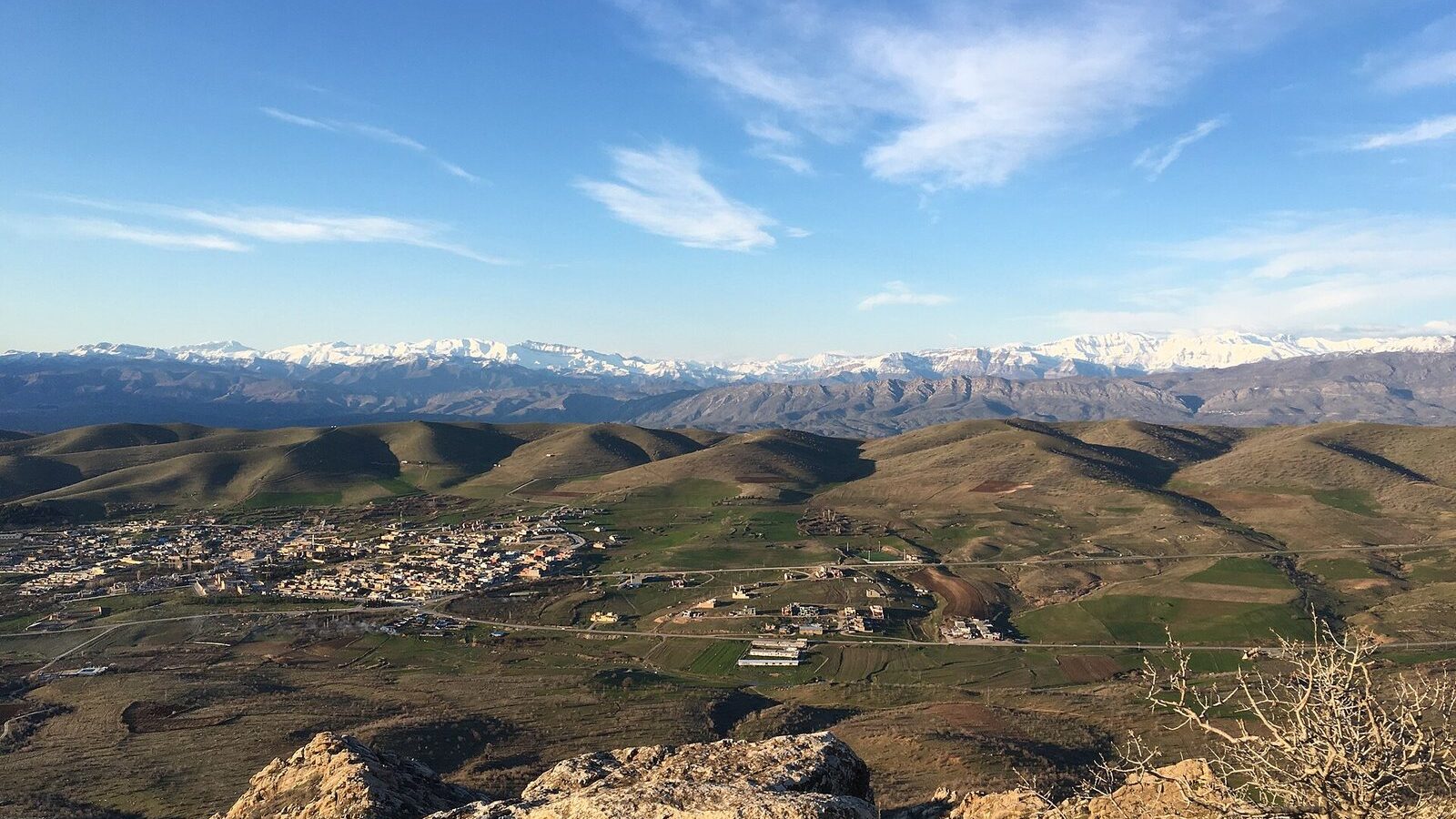
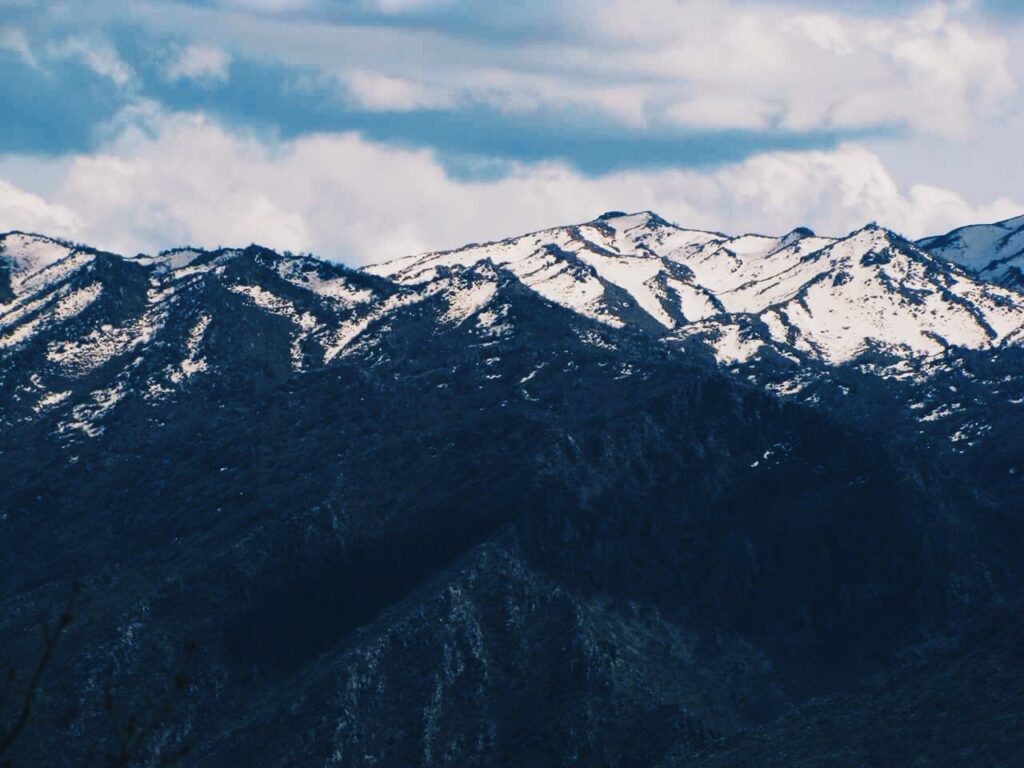
Snow in Iraq belongs to the Kurdistan Region’s mountains. It usually arrives in mid-December and lingers on the high ground until March; the ski season runs through January and February. Winter 2025 to 2026 was the longest wet season in more than 40 years, with more than a metre of snow in parts of Duhok governorate and the last road-closing fall on 29 March 2026. The same winter refilled the reservoirs: Dukan went from 24 per cent in June 2025 to 87 per cent by May 2026, and Darbandikhan was full by April.
How often each place sees it:
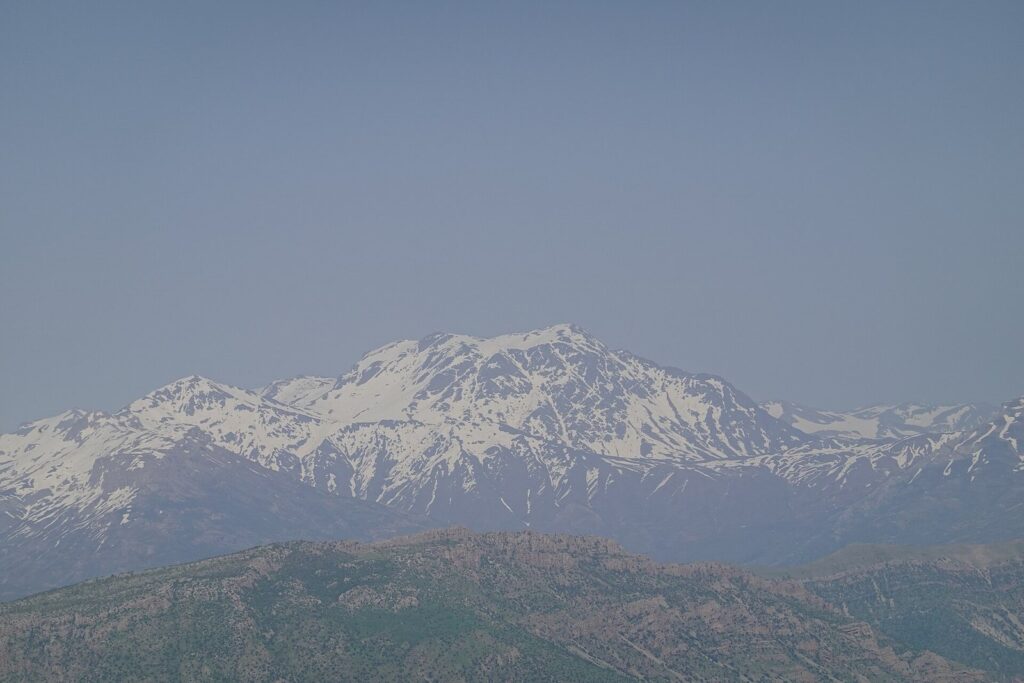
- Korek Mountain, above Rawanduz, gets 60 to 100 snow days between December and March and runs as a ski resort.
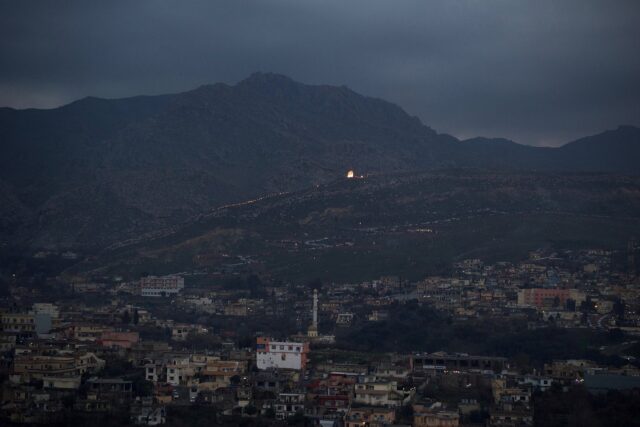
- Amedi, on its clifftop north of Duhok, has January nights averaging −2.4 °C, and snow falls there occasionally in winter.
- Shaqlawa, in the hills north-east of Erbil, averages a January low of −0.4 °C, and snowfall is described as not uncommon.
- Sulaymaniyah averages about four snowy days a year, and the KRG says people visit the Goyzha and Azmar mountains above the city in winter to enjoy the snow.
- Duhok gets two or three snowy days a year in the city, with heavier falls in the uplands.
- Erbil averages about one snowy day a year.
- Baghdad almost never sees it. On 11 February 2020 a thin layer covered the city, and snow also fell on Karbala and Mosul; the previous fall, in 2008, was mostly slush, and before that it had been a century.
Skiing at Korek
Korek Mountain Resort opened in 2014 at a cost of about US$95 million, with 132 villas, and in winter it becomes a ski destination, hosting an annual snow festival with the local government. The Doppelmayr cable car climbs about 4 km from a base station near Bekhal to a top station at 2,000 metres in around 12 minutes; the resort itself sits at about 1,690 metres, and a Radisson Blu opened there in October 2024. The cable car ran a full winter season in 2025 to 2026, and Kurdistan24 reported hundreds of visitors arriving after the first snow in late December 2025, with families marking New Year 2026 on the mountain. Winter temperatures at the resort drop to around −2 °C.
We could not find current lift or ski-hire prices from the resort itself, so we don’t quote any. Our Korek Mountain guide covers the resort, the cable car and the road up.
Iraq in December
December brings the rains in earnest. Sulaymaniyah averages 127 mm for the month, Baghdad 25 mm over about five days, and the FCDO warns that flash floods are common from November to March. They can be deadly: a downpour on 17 December 2021 caused flash floods around Erbil that killed 14 people. On the plains, December afternoons are pleasant, 17.8 °C in Baghdad and 20.5 °C in Basra, but the nights drop to single figures.
Christmas and New Year
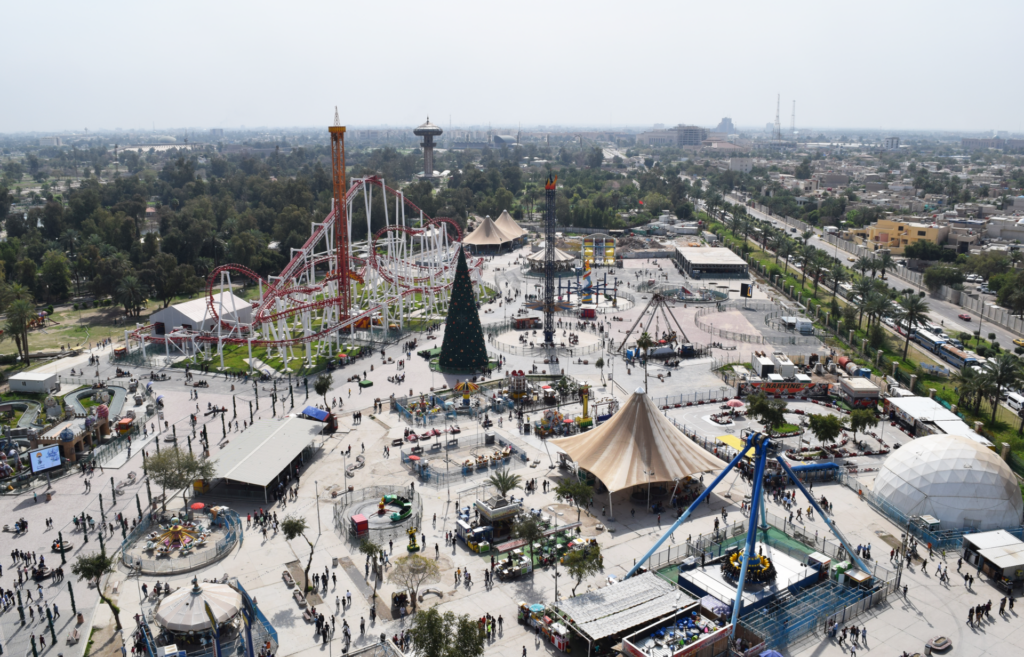
Iraq’s Christians are a small minority, but Christmas is visible. In December 2024, Baghdad’s municipality installed 14 Christmas trees across 14 of the city’s municipalities, including a 30-metre tree in Al-Zawraa Park, the tallest in the country that year, under which the park hosted an all-night New Year’s Eve concert with Iraqi and Arab performers. The municipality’s media director framed it as a celebration shared with “our Christian brothers”, recalling that in 2015 the city had been facing terrorism.
In the Kurdistan Region, the centre of Christmas is Ankawa, Erbil’s predominantly Assyrian Christian district, most of whose residents are Chaldean Catholic. St Joseph’s Cathedral (Mar Yousif) at the entrance to Ankawa is the seat of the Chaldean Catholic Archeparchy of Erbil. Kurdistan24 reported that Erbil’s New Year celebrations for 2026 were concentrated near the citadel, in Ankawa, Peshmerga Park, Iskan Street and the Empire and Boulevard areas. Our guide to things to do in Erbil covers Ankawa and the citadel.
For the Yazidis, December brings a three-day fast that ends in a Friday feast, according to Kurdistan24’s festival calendar.
Iraq in January
January is the coldest month everywhere. Baghdad averages 15.6 °C in the afternoon and 3.9 °C at night; Sulaymaniyah 11.2 °C and −0.6 °C, with about 107 mm of rain or snow over a dozen days. It is the heart of the ski season at Korek and the wettest, greyest stretch in the north.
The Rajab walk to Kadhimiya
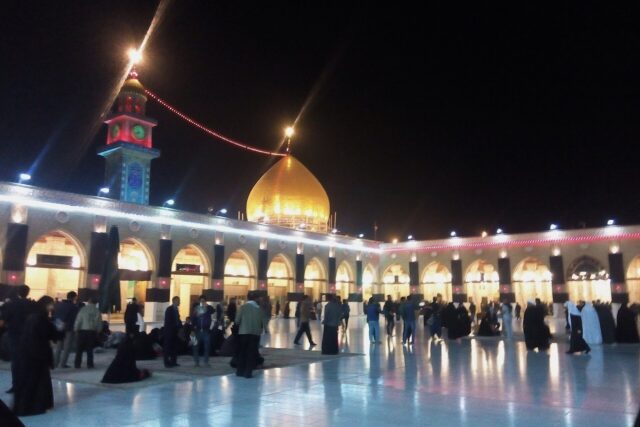
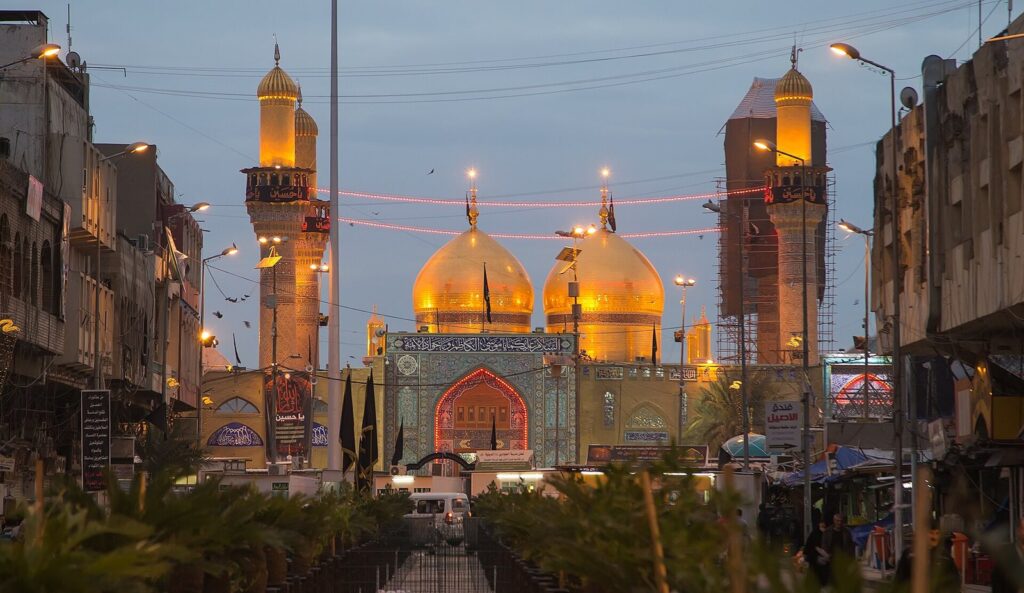
Baghdad’s largest annual gathering currently falls in winter. On 25 Rajab, Shia Muslims mark the death of Imam Musa al-Kadhim, the seventh Imam, who died in prison in Baghdad under Harun al-Rashid and is buried with his grandson Imam Muhammad al-Jawad at Kadhimiya. Pilgrims walk 5 to 20 km or more to the shrine from districts such as Karrada, Mansour and Palestine Street, roads and bridges towards Kadhimiya close to cars, and mawkibs, the volunteer roadside stations, hand out food and tea along the routes. The Kadhimiya shrine administration put 2025 attendance at about 14 million, according to Shafaq News, which called it the third-largest Shia gathering after Ashura and Arbaeen.
In 2026 the peak day was Thursday 15 January, when the government suspended official working hours in Baghdad and Karbala. By our arithmetic the next peak falls around 4 January 2027, and around 24 December 2027 after that, each subject to the moon sighting. If you are in Baghdad that week but not on the pilgrimage, expect closed roads across the north-west of the city and plan around them. Our Kadhimiya guide covers the shrine, the etiquette and the security arrangements.
The Yazidi calendar has its own January date: Belenda, on the first Friday of the month, marked with fires and food for the dead.
Fog and flights
Winter fog is common on the Sulaymaniyah plain, and Sulaymaniyah International Airport has no instrument landing system, a real limitation on foggy mornings. If you are flying into Sulaymaniyah in December or January, have a plan for a diversion to Erbil or a delay.
Iraq in February
February starts the slow climb out of winter: Baghdad’s afternoons return to 17.8 °C, Basra’s to 21.7 °C, and Sulaymaniyah still takes around 118 mm of rain. It was a February day, the 11th, in 2020, when snow last settled on Baghdad. For the Yazidis, the winter forty-day fast ends in early February with candles and Sema ceremonies at Lalish, and Khidr Ilyas falls in the second half of the month.
In 2027 the big change is Ramadan, expected from about 8 February to 9 March. During the fasting month, daytime life slows and evenings come alive after iftar, the meal that breaks the fast; in Baghdad that is when mheibes, the Ramadan ring game, is played. The FCDO notes that clothing that does not meet local dress codes may cause more offence during Ramadan. In the Kurdistan Region, where alcohol is otherwise sold openly, Sulaymaniyah banned public drinking and shut liquor stores for the whole of Ramadan in 2025. Eid al-Fitr, expected around 10 March 2027, is one of the year’s big family travel holidays.
Is winter the best time to visit southern Iraq?
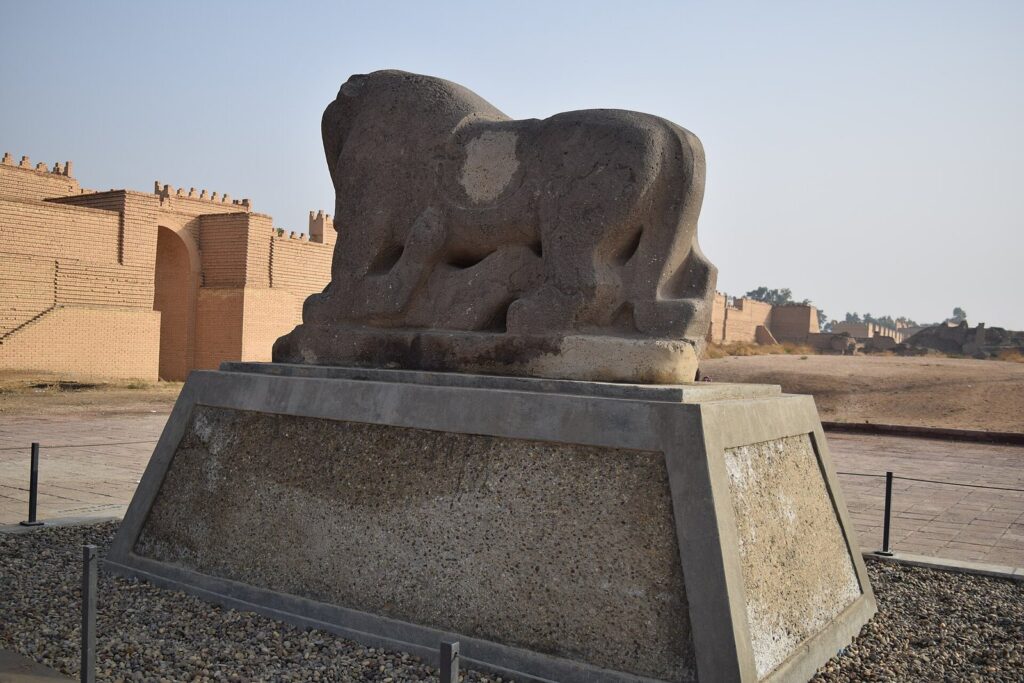
For the ruins of Mesopotamia, yes. A January afternoon of 16 °C in Baghdad and 19 °C in Basra is the only time of year you can spend a whole day at an exposed site without the heat deciding when you leave. Babylon, the Ziggurat of Ur and Uruk are all open ground with little shade, and in summer the advice is to be off them by late morning. In winter the risk is rain turning the tracks to mud, not heatstroke.
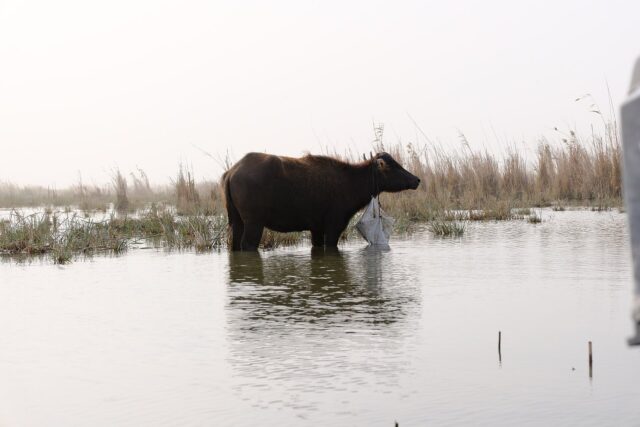
The marshes are the other winter draw. Sources differ on the ideal window: seasonal summaries put the best months at November to December and again March to May, while travellers’ accounts from Chibayish recommend anything from October to April. Both include December. The water is the unknown. The 2025 to 2026 wet season left 32 to 36 per cent of the marshland under water, the best in years, but national water reserves were expected to fall to about 20 billion cubic metres by winter 2026, so the picture for this season is not yet clear. Our southern Iraq guide covers the marshes, Basra and Nasiriyah together.
| Destination | Winter verdict | Why |
|---|---|---|
| Baghdad | Good | Mild afternoons, cold nights; check the Rajab dates |
| Babylon, Ur, Uruk | Best season | Midday visits possible; rain can make tracks muddy |
| Marshes | Good, water permitting | Cool, and within every source’s recommended window |
| Basra | Best season | January afternoons average 18.7 °C |
| Erbil and Sulaymaniyah | Fine for the cities | Cool, wet and sometimes foggy; indoor sights and bazaars still work |
| Mountain towns and passes | For snow and skiing only | Snow from mid-December, sub-zero nights, roads that can close |
The Kurdish cities when it rains
Erbil and Sulaymaniyah are cool, wet and often grey in winter, but they still work as a city stop if you plan for indoor time. In Erbil, the Qaysari Bazaar below the citadel is open and trading normally in 2026, two years after a fire in May 2024 destroyed around 227 shops. The citadel itself is another matter: access has been partial and scheduled since it reopened one day a week in May 2025, most of its back streets are fenced for restoration, and no official body publishes opening hours or a fee. Our Erbil Citadel guide explains what can be seen and how to check before you go. The Erbil Civilization Museum is open, with erratic hours.
In Sulaymaniyah the main indoor sight is the Slemani Museum, and even its hours disagree. Its own website, unmaintained since around 2019, gives free entry from 09:00 to 13:00, Sunday to Thursday; more recent reports put it at about 09:00 to 15:00, Saturday to Thursday, closed on Fridays. Amna Suraka, the former Ba’athist security headquarters that is now a museum of the Anfal campaign, has no confirmed 2026 hours at all. Treat any published time as a starting point and ask your hotel the day before. Our Sulaymaniyah guide covers the city in more depth.
Winter hazards: floods, fog, cold rooms and closed roads
- Flash floods. The FCDO lists them as common from November to March. Don’t drive through fast water, and avoid wadis and low roads in heavy rain.
- Snow on the passes. Mountain roads in the Kurdistan Region close in heavy snow; in 2026 the last closure came on 29 March. No authority publishes a closure schedule, so ask locally the day before.
- Fog. Common on the Sulaymaniyah plain, where the airport has no instrument landing system.
- Cold rooms. Heating standards vary. Ask a hotel how its rooms are heated and whether it runs its own generator.
- Short days. Plan drives to finish in daylight, especially on mountain roads.
A winter route: south first, mountains optional
Winter reverses the autumn logic. The south is at its best and the mountains at their hardest, so a winter trip is built around Baghdad and the Mesopotamian sites, with the Kurdistan Region as an optional snow detour rather than the backbone.
| Leg | Where | Why it suits winter |
|---|---|---|
| Start | Baghdad | Mild afternoons for walking the old quarters and the Friday book market on Mutanabbi Street; check the Rajab dates for Kadhimiya |
| Next | Babylon, then Karbala and Najaf | Whole-day site visits are possible; the shrine cities are calmer outside the big pilgrimages |
| Then | Nasiriyah, Ur, Uruk and the Chibayish marshes | The best season for the open sites and for boat trips in the reeds |
| End | Basra | January afternoons average 18.7 °C |
| Optional | Erbil and Korek | Only if snow or skiing is the point; allow for fog and closed roads |
Two practical points. A Kurdistan Region visa is valid in the Kurdistan Region only, so any trip that includes Baghdad and the south needs the federal e-visa, which the FCDO says costs $160, must be applied for at least 24 hours before travel and is valid for 60 days; our Iraq visa guide explains the options. And no Iraqi authority publishes drive times between these places, so treat any figure you are quoted as an estimate and finish long drives in daylight.
The safety frame for winter 2026 to 2027
The UK Foreign, Commonwealth & Development Office’s Iraq travel advice, last updated 22 July 2026 and unchanged when we checked on 25 September, advises against all travel to Anbar west of Ramadi, Ninawa, Kirkuk, Salah al-Din, Diyala outside Baqubah city, Jurf al-Sakr in Babil, Baghdad’s Sadr City, within 5 km of the Iranian border in Wasit, Maysan and Basra, and within 5 km of the Saudi and Kuwaiti borders. Everywhere else, including Baghdad, Babil, Karbala, Najaf, Dhi Qar, Basra, Al-Muthanna and the whole Kurdistan Region, is against all but essential travel. Mosul and the rest of Ninawa, where snow fell in 2020, stay on the against-all-travel list.
The US State Department’s advisory is Level 4, Do Not Travel, reissued on 29 August 2026. The FCDO warns that your travel insurance could be invalidated if you travel against its advice; our Iraq travel insurance page explains what to check. On flights, the European Union Aviation Safety Agency’s bulletin telling European airlines to stay out of Iraqi airspace was due to run until 30 September 2026 as of late September; check its status and your airline’s schedule before booking. Our Iraq travel advisory tracker follows the changes. We give you the inputs; the decision stays with you.
What to pack for an Iraqi winter
Layers, not a single heavy coat. For Baghdad and the south: a warm jacket for nights around 4 °C, a light waterproof, and shoes that cope with mud at the archaeological sites. For the Kurdish mountains in January: proper winter clothing, gloves, a hat and waterproof boots. Modest dress is expected at shrines and in conservative towns in every season, and women visiting Kadhimiya need to cover fully, hair included. Our Iraq packing list has the full kit.
What we could not confirm
- Christmas and New Year holidays. Search results show 25 December declared an annual national holiday by Iraq’s cabinet, and the KRG closing its institutions from 25 December 2024 to 2 January 2025, but we did not open the announcements. Check each year’s dates.
- The exact Rajab dates. Our 4 January and 24 December 2027 dates are arithmetic from the 2026 observance; the moon sighting can move either by a day.
- Korek’s season and prices. We found no published opening dates, lift prices or ski-hire rates from the resort.
- Snow depth in Baghdad in 2020. A weather site’s snippet gives 4 cm at the airport, but we could not open the observation.
- Winter water in the marshes. No figure has been published for this winter.
- Heating in hotels. There is no published standard, and we found no dated reports on winter power supply.
- Which passes close, and when. No authority publishes a winter closure schedule for the Kurdistan Region’s mountain roads.
Frequently asked questions
Does it snow in Iraq?
Yes, every winter in the Kurdistan Region’s mountains, where Korek gets 60 to 100 snow days between December and March. Sulaymaniyah averages about four snowy days a year and Erbil about one. Baghdad almost never sees it: a thin layer fell on 11 February 2020, the first since slushy snow in 2008.
How cold is Baghdad in winter?
Mild by day and cold at night. January afternoons average 15.6 °C and nights 3.9 °C; December and February average 17.8 °C by day and 5.6 °C at night. Humidity is around 70 per cent in January and the days are short, so pack a warm jacket.
What is the weather in Iraq in January?
January is the coldest month. Afternoons average 18.7 °C in Basra, 15.6 °C in Baghdad and 11.2 °C in Sulaymaniyah, and nights fall to 8.3 °C, 3.9 °C and just below freezing respectively. It is wet in the north, with about 107 mm in Sulaymaniyah, and snow is likely in the mountains.
Is winter a good time to visit Iraq?
For the south and centre it is the best time: Babylon, Ur, Uruk, the marshes and Basra are all comfortable at midday. For the Kurdish mountains it is snow season, good for skiing at Korek but hard for touring, with sub-zero nights and roads that can close.
What is Iraq like in December?
Cool and increasingly wet. Baghdad averages 17.8 °C by day and 5.6 °C at night, Sulaymaniyah gets about 127 mm of rain, and snow usually arrives in the mountains in mid-December. Christmas is visible in Baghdad and especially in Erbil’s Christian district of Ankawa.
Can you ski in Iraq?
Yes, at Korek Mountain Resort above Rawanduz, which has run as a ski destination in winter since opening in 2014. The ski season is usually January and February. We found no published lift or hire prices, so contact the resort before you go.
When is Ramadan in 2027?
Ramadan is expected from about 8 February to 9 March 2027, with Eid al-Fitr around 10 March, depending on the moon sighting. Daytime life slows, evenings come alive after iftar, and the FCDO notes that dress that ignores local norms causes more offence during the month.
Final thoughts
Winter is the season that most rewards visitors who come for ancient Mesopotamia. The heat that shapes every summer plan is gone, the sites are yours for the whole day, and the cities’ evenings are cold enough for a coat and a glass of tea by a heater. What it asks in return is flexibility: rain that turns a track to mud, fog that delays a flight, a pilgrimage that closes the roads into Kadhimiya for a day.
The mountains are a separate trip. If snow is the point, Korek in January is the obvious target; if you want the Kurdistan Region’s valleys walkable and green, wait for spring. Our guide to Iraq in spring covers that season, our page on Iraq in autumn covers the months before, and our Iraq itinerary planner shows how to fit the south’s best weather into a route.
Photo credits
Mangesh, Duhok governorate (featured image): Srood Kovli, Wikimedia Commons (CC BY 4.0). Halgurd: Khoshhat, Wikimedia Commons (CC BY 4.0). Al-Zawraa Park, Baghdad: Mohammad Ali Huzam, Wikimedia Commons (CC BY-SA 2.0). Kadhimiya shrine: Muhammad Mahdi Karim, Wikimedia Commons (GFDL 1.2). Lion of Babylon: Hamody al-iraqi, Wikimedia Commons (CC BY-SA 4.0). Mountains near Duhok: Barez duhoki, Wikimedia Commons (CC BY-SA 4.0). All images via Wikimedia Commons under the licences shown.