Last updated: September 2026. We re-checked the FCDO’s Iraq advice and entry rules on gov.uk on 25 September 2026. UNESCO’s World Heritage listing and state-of-conservation record, and a Hillah-based tour operator’s March 2026 account of the fee, route and timing, supply the practical detail; each figure is dated where it appears.
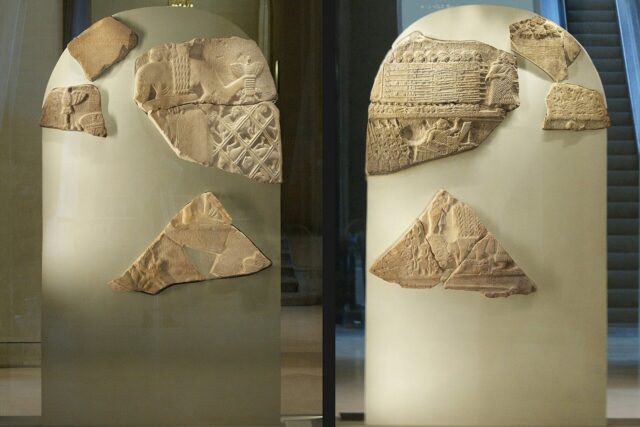
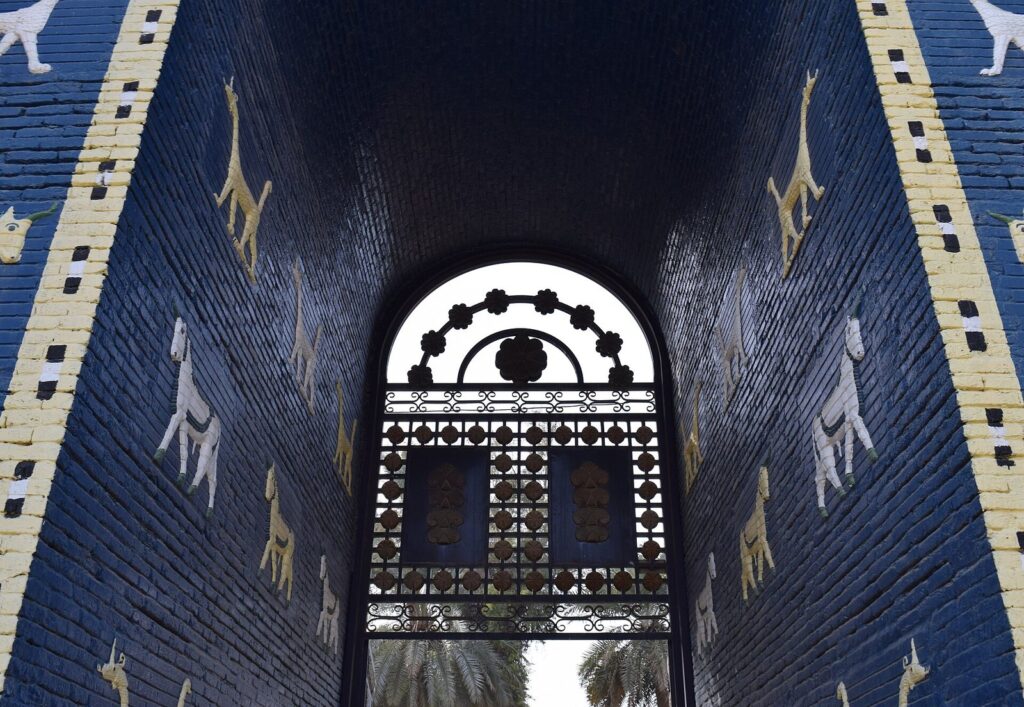
The blue gate everyone photographs at Babylon is a replica. The original Ishtar Gate was excavated by German archaeologists in the early 1900s, shipped to Germany piece by piece and rebuilt in Berlin’s Pergamon Museum, which one Iraqi guide calls “a sore point for many Iraqis”. That is the first thing to know about a visit, and it sets the tone for the rest: the site our guide to ancient Mesopotamia ranks among Iraq’s greatest is part ruin, part 1980s reconstruction, and mostly still underground.
Babylon is the ruined capital of the Neo-Babylonian Empire, 85 km south of Baghdad beside the town of Hillah, and a UNESCO World Heritage Site since 2019. Foreign visitors pay 25,000 dinars, need a federal Iraq visa rather than a Kurdistan one, and usually come on a day trip from Baghdad.
This guide separates the original from the reconstructed, explains the UNESCO position in UNESCO’s own words, and covers the route, the ticket, the heat, the advisory, Borsippa next door, and the questions nobody has answered.
The short answer
| Question | Answer |
|---|---|
| Where is it? | Babil province, beside Hillah, 85 km south of Baghdad (UNESCO) |
| Entry fee | 25,000 IQD for foreign visitors (operator, March 2026) |
| Opening hours | None published; tour groups arrive around 08:30 |
| Visa | Federal Iraq e-visa, US$160; a Kurdistan Region visa is not valid here |
| Is the Ishtar Gate real? | No: the gate on site is a replica; the original is in Berlin |
| UNESCO status | World Heritage Site since 2019; not on the Danger List |
| FCDO (25 September 2026) | Babil province: against all but essential travel, except Jurf al-Sakr town (against all travel) |
What is original at Babylon, and what was rebuilt?
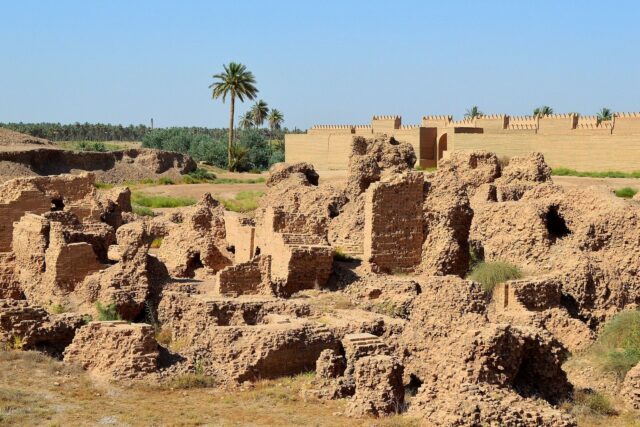
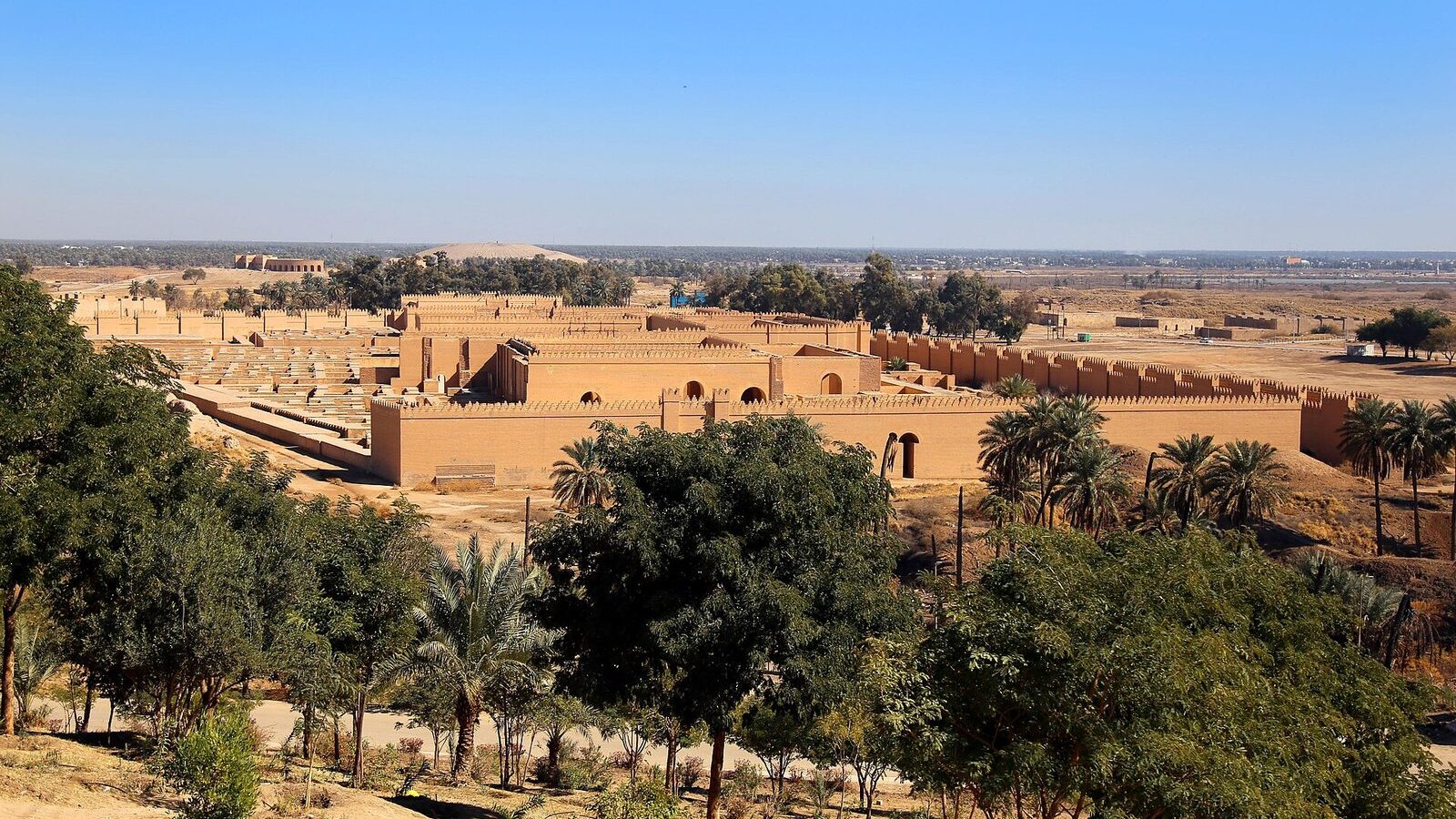
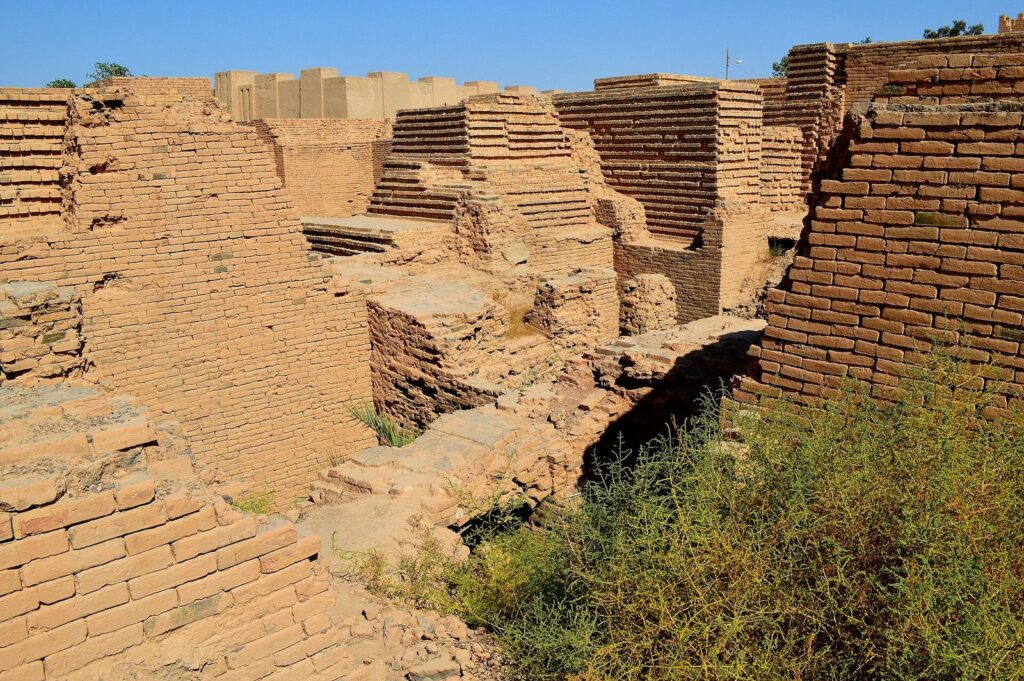
This is the question that decides whether you love Babylon or feel cheated by it. In the 1980s Saddam Hussein’s “Revival of Babylon” project rebuilt large sections of the city in new yellow brick on top of the ancient foundations. UNESCO’s own inscription text says those reconstructions “have negatively affected the integrity of the property” and that their heights and designs were “based on conjecture rather than scientific or archaeological evidence”. At the same time, UNESCO notes that 85 per cent of the property remains unexcavated. What you walk through, in other words, is a thin layer of excavation, a thicker layer of reconstruction and an enormous buried city beneath both.
| Structure | Original or rebuilt? | What to look for |
|---|---|---|
| Ishtar Gate | Replica; the original is in Berlin | The blue glazed bricks with dragons and bulls, as a model of what stood here |
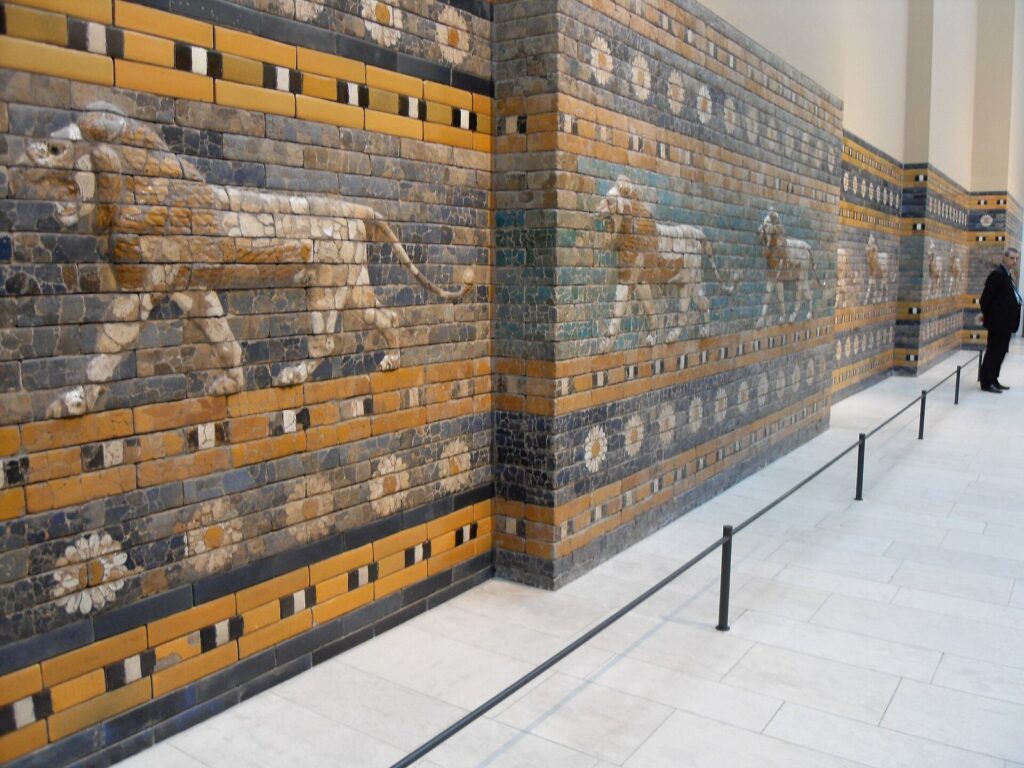
| Processional Way | Partly reconstructed; the layout is original | The line of the ceremonial road, once lined with 120 glazed-brick lions |
| Southern Palace | Original foundations under 1980s walls | Nebuchadnezzar’s throne-room area and the older brick courses at the base |
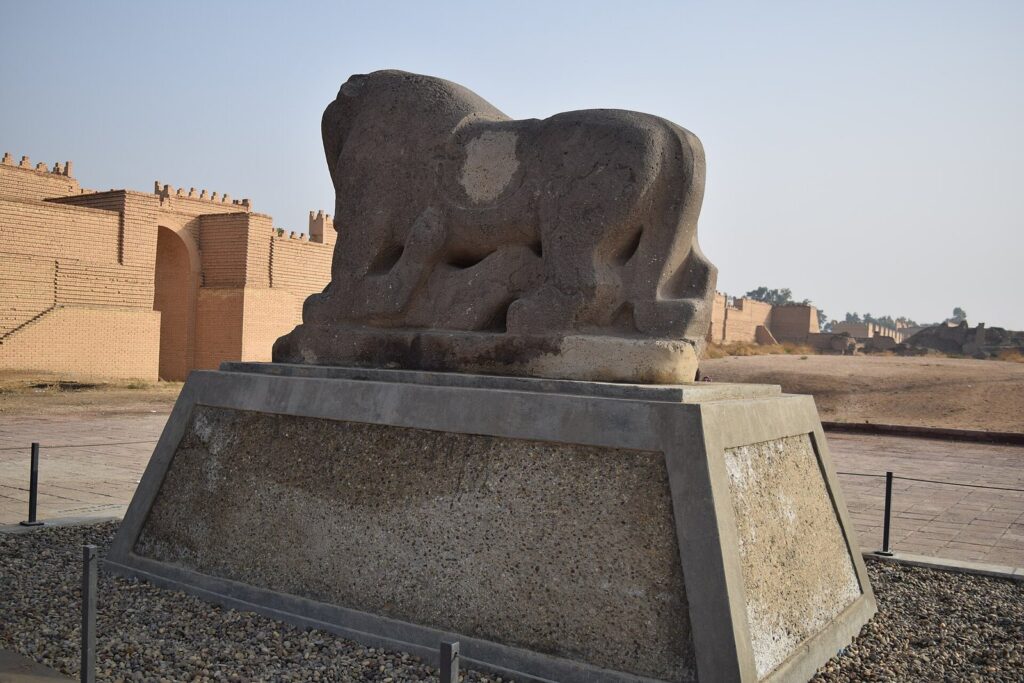
| Lion of Babylon | Original basalt sculpture | A lion standing over a human figure, about 2,600 years old |
| Saddam’s palace | Modern, 1980s | The view over the whole site and the Euphrates |
A short history of Babylon
| When | What happened |
|---|---|
| About 1792 BC | Hammurabi reigns; Babylon becomes a major power |
| 626 to 539 BCE | Capital of the Neo-Babylonian Empire, the period UNESCO’s listing centres on |
| 604 to 562 BC | Nebuchadnezzar II; the city at its peak, with possibly 200,000 residents |
| 539 BCE | Cyrus the Great of Persia takes the city, ending the Neo-Babylonian Empire |
| 323 BC | Alexander the Great dies in the city |
| Early 1900s | German excavations; the Ishtar Gate is shipped to Berlin |
| 1980s | Saddam Hussein’s reconstruction and hilltop palace |
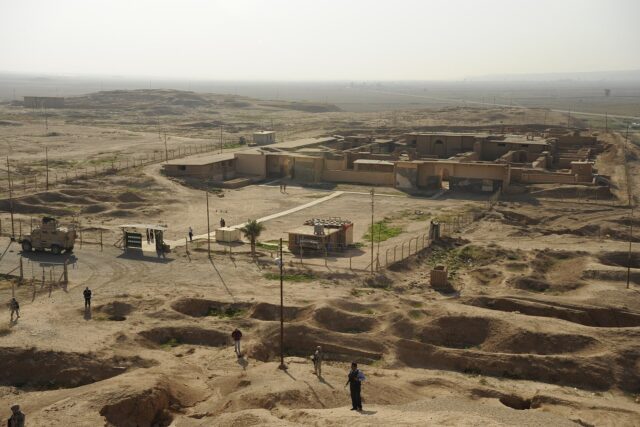
| 2003 to 2004 | Military use of the site; UNESCO later runs a damage assessment |
| 5 July 2019 | Inscribed on the World Heritage List |
One legend needs puncturing. The Hanging Gardens of Babylon were probably not at Babylon at all. As the same Iraqi operator puts it, most scholars now believe they were either at Nineveh, near modern Mosul, a literary invention or greatly exaggerated, and there is no archaeological evidence of them at the site. If a guide points out the “location of the Hanging Gardens”, treat it as theatre.
What will you see at Babylon?
A typical visit takes two to three hours, according to the operator. There is very little signage or interpretation on site, which is the real argument for a guide.
The Ishtar Gate replica and the Processional Way
The replica gate at the entrance gives you the colour the city once had: deep blue glazed brick with moulded dragons and bulls. From it, the Processional Way ran through the city, its walls once lined with 120 glazed-brick lions in blue and gold. Today the road is partly reconstructed, but its line is still legible, and walking it is the best way to understand the scale of Nebuchadnezzar’s city.
The Lion of Babylon
The Lion is the one great original you can stand beside: a basalt statue, about 2,600 years old, of a lion standing over a human figure. In the operator’s words, there is “no glass case, no velvet rope”. It appears on Iraqi currency and in government logos, and it is the image most Iraqis associate with the site. Please don’t climb on it.
Nebuchadnezzar’s Southern Palace
The Southern Palace, with its throne room, is largely foundation walls now, overlaid with 1980s brick. Its original façade was glazed brick with lions, bulls and floral patterns in blue, yellow and white; fragments are scattered in museums around the world. Look for the difference between the uniform new brick above and the older courses below.
Saddam Hussein’s palace
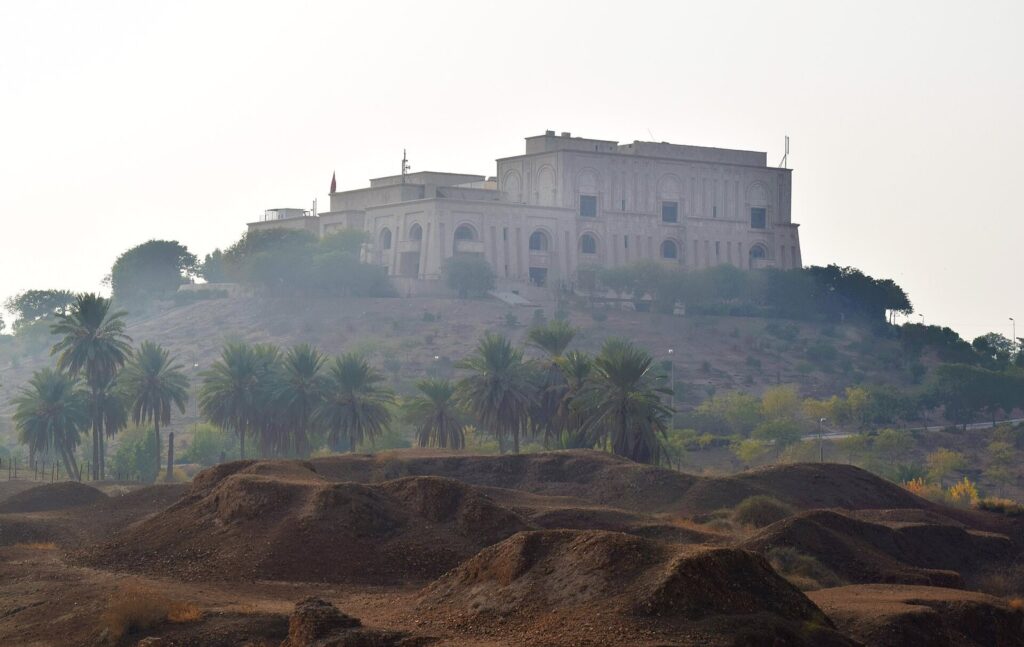
On an artificial hill above the ruins stands the palace Saddam built in the 1980s, directly on top of the archaeological site; its construction damaged ancient layers. The operator describes it in 2026 as abandoned, its interiors stripped, walls covered in graffiti left by soldiers of several eras, marble cracked and chandeliers gone. It is also the best viewpoint over the whole of Babylon and the Euphrates. Whether it carries a separate charge is inconsistently reported, and search summaries of UNESCO’s 2025 material mention studies to turn it into a museum; we could not confirm either.
Is Babylon a UNESCO World Heritage Site?
Yes. Babylon was inscribed on 5 July 2019 under criteria (iii) and (vi), covering 1,054.3 hectares with a 154.5-hectare buffer zone. It is one of Iraq’s six World Heritage properties, and unlike Ashur, Samarra and Hatra it is not on the List of World Heritage in Danger. That is not the same as being in good health. UNESCO’s own text says the property “suffers from a variety of threats including illegal constructions, trash dumping and burning, small-scale industrial pollution, urban encroachments”, and describes its state of conservation as “very concerning”. UNESCO has published state-of-conservation reports in 2021, 2023 and 2025, and a management plan developed from 2011 was officially endorsed in 2018.
Search summaries of the 2025 material say restoration has been completed at the Lion and its surroundings and at a cylindrical tower north of the Ishtar Gate, with projects planned for the electrical network and the tourist lake area. The site is managed by Iraq’s State Board of Antiquities and Heritage under the Antiquities and Heritage Law of 2002. Our guide to Iraq’s UNESCO World Heritage sites sets Babylon beside the other five.
How do you get to Babylon from Baghdad?
By car, it is about an hour and a half south of Baghdad via Hillah, on what the Hillah-based operator calls “one of the most well-patrolled roads in the country”, with a single checkpoint on the approach to Hillah that takes about two minutes. There is no public transport direct to the site: shared taxis and vans run from Baghdad’s Alawi garage to Hillah, and from there you need a local taxi. Our guide to day trips from Baghdad compares Babylon with the other options, and our guide to getting around Iraq explains garages and shared taxis.
| Source | Figure | What it actually measures |
|---|---|---|
| UNESCO | 85 km south of Baghdad | The site’s position relative to the capital |
| Travel guides (2025 to 2026) | 88 km, or a 100 km drive | Road estimates; neither states a starting point |
| Hillah-based operator (March 2026) | About 1.5 hours by car | Drive time with one checkpoint, in daylight |
| The same operator | About an hour from Hillah to Karbala or Najaf | Onward times to the shrine cities |
Carry your passport for the Hillah checkpoint; our guide to Iraq’s checkpoints explains what to expect. A local driver handles the paperwork, which is one reason most visitors come with one.
Tickets, hours and guides
The entrance fee is 25,000 dinars for foreign visitors, according to the Hillah operator in March 2026, corroborated by several 2025 and 2026 travel guides. It covers the main site: the replica gate, the Processional Way, the palace foundations and the Lion. Iraq’s cash economy makes the conversion worth doing carefully.
| Item | Figure | What it actually measures |
|---|---|---|
| Ticket in dinars | 25,000 IQD | The price at the gate |
| Ticket in dollars at the official rate (1,320) | About US$19 | The figure operators quote |
| Ticket in dollars at the street rate (about 1,533) | About US$16.30 | What it costs if you change money on the street; paying in dinars is cheaper |
| Saddam’s palace | Included, or about 1,500 IQD extra | Inconsistently reported between guides |
| Guide at the gate | About 15,000 IQD | Unclear whether official or informal |
No opening hours are published. Tour groups leave Baghdad at 07:00 and arrive around 08:30, which tells you the site is open by then. No permit, escort or advance paperwork is required, and no separate camera fee is documented. Card payment is sometimes possible but not reliable, so carry cash. A guide is not compulsory, and you can walk the site independently, but with so little signage you will understand far more with one. One Iraqi operator’s day trip, including Babylon, Borsippa and entrance fees, started from US$120 per person in March 2026; treat that as one company’s price, not a market rate. Our guide to Iraq tours explains what to ask an operator.
A walking route through the site
With no signage to guide you, the order you see things in matters. This loop uses only the structures we could confirm, and it saves the climb to the palace for last, when you know what you are looking at.
| Stop | What to do there |
|---|---|
| 1. The replica Ishtar Gate | Look at the glazed dragons and bulls, then remind yourself the originals are in Berlin |
| 2. The Processional Way | Walk the line of the ceremonial road and imagine 120 glazed lions along its walls |
| 3. The Southern Palace | Find the throne-room area and compare the new brick above with the older courses below |
| 4. The Lion | The one great original sculpture on site; stand beside it, don’t climb it |
| 5. The palace hill | Climb to Saddam’s palace for the view over the whole city and the Euphrates |
Allow two to three hours, more if you linger at the palace. In summer, do it in reverse only if you have started very early: the palace hill has the best view but no shade on the climb.
Who visits, and what should you bring?
The site is overwhelmingly an Iraqi destination. Our research records 43,530 Iraqi visitors and 5,370 foreign visitors in 2024, so roughly one visitor in ten was from abroad, and on Fridays you will share the Processional Way with families and school groups. That is part of the pleasure: this is a place Iraqis come to see their own history, and a foreign visitor is still unusual enough to be greeted.
| Bring or wear | Why |
|---|---|
| Cash in dinars | The ticket is 25,000 IQD, and cards are not reliably accepted |
| Passport and federal visa | Needed at the Hillah checkpoint |
| Sun hat, sunscreen and plenty of water | The site is mostly open and unshaded |
| Sturdy shoes | Uneven ground, brick rubble and the climb to the palace |
| Modest clothing | Long trousers or skirts and covered shoulders are the norm in federal Iraq |
| A charged phone, but no drone | No separate camera fee is documented; flying a drone without permission is asking for trouble |
For families and less mobile visitors, the main challenges are heat, uneven ground and the climb to the palace. We found no information on step-free routes or facilities on site, so plan for a shorter visit, keep children out of the midday sun, and treat the palace as optional.
When is the best time to visit Babylon?
Early, and not in summer if you can help it. The site is mostly open and unshaded, and Baghdad’s average July maximum is about 44 °C, with days above 50 °C from mid-June to mid-August; a midday summer visit is genuinely dangerous, not just unpleasant. From April to October, arrive at opening and leave by late morning. November to March is far more comfortable.
Avoid Fridays if you can: it is the Iraqi weekend, and the site fills with families and school groups. The operator’s advice is that weekday mornings, especially Tuesday to Thursday, are quietest. UNESCO’s events listing records a Babylon International Festival in late October and early November 2022; we could not confirm whether it ran in 2025 or will run in 2026. Our guide to the best time to visit Iraq covers the seasons.
Is it safe to visit Babylon in 2026?
As of 25 September 2026, the FCDO advises against all but essential travel to Babil province, except Jurf al-Sakr town, where it advises against all travel; Babylon and Hillah fall in the all-but-essential band. Baghdad province is in the same band, except Sadr City. The FCDO’s page was last updated on 22 July 2026 and was unchanged when we checked. The US State Department rates Iraq Level 4, Do Not Travel, reissued on 2 March 2026.
The FCDO warns that “your travel insurance could be invalidated” if you travel against its advice; our guide to travel insurance for Iraq explains what to ask. For flights, the European aviation regulator’s bulletin on Iraqi airspace was valid to 30 September 2026 when we checked. Our pages on whether Iraq is safe and the current travel advisory give the wider picture.
Papers matter here. Babylon is in federal Iraq, so a Kurdistan Region visa does not cover it: the FCDO says Kurdistan visas are “valid for travel in KRI only”. You need the federal e-visa, which costs $160, is valid for 60 days and must be applied for at least 24 hours before travel; there is no visa on arrival. Our Iraq e-visa walkthrough has the steps.
Borsippa and other add-ons
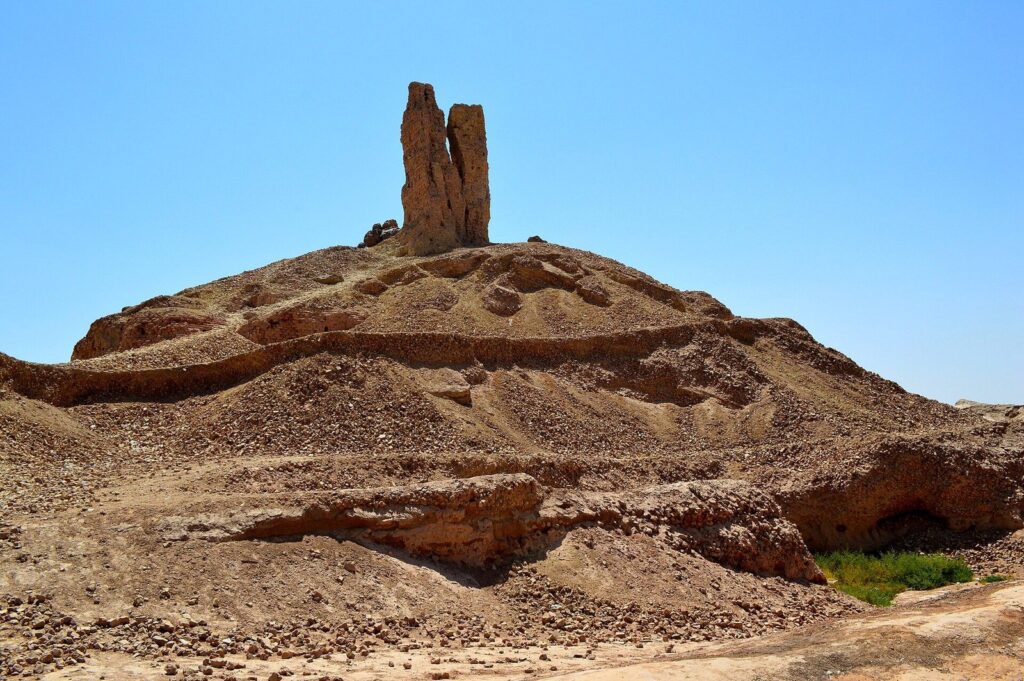
The best add-on is Borsippa, or Birs Nimrud, twenty minutes south of Babylon in open farmland, where the ruin of a ziggurat rises from a mound. Many scholars believe it is the structure behind the biblical Tower of Babel story. The vitrified, heat-fused bricks at the top fed centuries of speculation about divine fire; the operator’s explanation is a lightning strike or a kiln effect. There is no formal entrance fee, 30 to 45 minutes is enough, and it is almost impossible to find without a guide who knows the unmarked roads. It is not on UNESCO’s Tentative List.
With a full day, a common route adds lunch in Hillah. Door to door from Baghdad, Babylon plus Borsippa and lunch takes eight to nine hours. Baghdad’s Iraq Museum holds many of the finds from Iraq’s ancient cities that stayed in the country, and makes a natural companion visit.
Can you combine Babylon with Karbala and Najaf?
Geographically, yes: the shrine cities are about an hour from Hillah, according to the same operator. In practice, one day is enough for the ancient city, Borsippa and perhaps one shrine city, not both. Karbala and Najaf both reward unhurried time around the shrines, both require a change into modest dress, and trying to do all of them in one day from Baghdad turns a good trip into a long drive. If the shrines matter to you, sleep in Karbala or Najaf and visit Babylon on the way there or back. Our guides to Karbala and Najaf cover dress, access and where to stay.
How does it compare with Iraq’s other ancient sites?
Babylon is the easiest of Iraq’s great ancient cities to visit, and the comparison explains why. Several of the others sit in provinces where the FCDO advises against all travel, and half of Iraq’s World Heritage properties are on UNESCO’s Danger List.
| Site | Province | UNESCO status | FCDO band (25 September 2026) |
|---|---|---|---|
| Babylon | Babil | World Heritage, 2019; not in danger | All but essential travel |
| Ur | Dhi Qar | Part of the Ahwar World Heritage property, 2016 | All but essential travel |
| Samarra | Salah al-Din | World Heritage, 2007; in danger | Against all travel |
| Ashur | Salah al-Din | World Heritage, 2003; in danger | Against all travel |
| Hatra | Ninawa | World Heritage, 1985; in danger since 2015 | Against all travel |
| Nineveh | Ninawa | Tentative List only | Against all travel |
That leaves Babylon and Ur, in the south, as the two great Mesopotamian cities a cautious visitor can reach within the FCDO’s all-but-essential band. Our guides to Mosul, for Nineveh, and to the al-Askari shrine at Samarra explain the position in the north.
Where should you stay?
Most visitors sleep in Baghdad and treat the ancient city as a day trip; our Baghdad guide covers the neighbourhoods. Travel guides report few hotels in Hillah itself, and we could not verify any by name as trading in 2026. The alternative is to base yourself in the shrine cities: Karbala alone has around 1,000 hotels, roughly a third of Iraq’s stock, and our guide to hotels in Karbala explains how that market works, including why rates jump at pilgrimage peaks. Our guide to where to stay in Iraq covers the country’s hotel tiers.
What we could not confirm
- Opening hours. None published; groups arrive around 08:30.
- The palace charge. Some guides report 1,500 IQD extra for Saddam’s palace; the Hillah operator says it is included.
- The guide fee. Whether the roughly 15,000 IQD guide fee at the gate is official or informal.
- The Saddam-era bricks. Bricks stamped with his name in the reconstructed walls are well known, but we could not source their exact wording or number.
- Other structures. The Greek theatre, the foundations of the Etemenanki ziggurat, the Ninmakh temple and any on-site museum were not individually confirmed for 2026.
- UNESCO’s 2025 conservation report. Its page refused our connection; the restoration and museum-conversion details above come from search summaries.
- The Babylon International Festival. Whether it ran in 2025 or will run in 2026.
- Visitor numbers since 2024. Our research records 43,530 Iraqi and 5,370 foreign visitors in 2024; we found no 2025 or 2026 figure.
- Hotels in Hillah. Travel guides say there are few; we could not verify any by name as trading in 2026.
Frequently asked questions
Can you visit Babylon in Iraq?
Yes. Babylon is open to foreign visitors with a federal Iraq visa, for 25,000 dinars, and can be visited independently or with a guide. Most people come on a day trip from Baghdad, about 1.5 hours away by car via Hillah. As of 25 September 2026, the FCDO advises against all but essential travel to Babil province, and the US rates Iraq Level 4.
Is the Ishtar Gate at Babylon real?
No. The gate at the entrance is a replica. The original Ishtar Gate was excavated by German archaeologists in the early 1900s and rebuilt in Berlin’s Pergamon Museum, along with sections of the Processional Way. The replica shows the colours and animal reliefs, but the original bricks are in Germany.
How much does it cost to visit Babylon?
The entrance fee for foreign visitors is 25,000 dinars, about US$19 at the official rate or about US$16 if you change money at the street rate, according to a Hillah-based operator in March 2026. Some guides report a small extra charge for Saddam’s palace; others say it is included. Carry cash.
Were the Hanging Gardens at Babylon?
Probably not. There is no archaeological evidence of the Hanging Gardens at Babylon, and many scholars think they were at Nineveh, near Mosul, or were a literary invention or a great exaggeration. You will still hear the story on site; enjoy it as a legend.
Is Babylon a World Heritage Site?
Yes, since 5 July 2019. UNESCO inscribed it under criteria (iii) and (vi), while noting that Saddam-era reconstructions harmed the site’s integrity and that its state of conservation is very concerning. It is not on the List of World Heritage in Danger, unlike Iraq’s Ashur, Samarra and Hatra.
How long do you need at Babylon?
Two to three hours on the site itself, according to a Hillah-based operator. A day trip from Baghdad that adds Borsippa and lunch in Hillah takes eight to nine hours door to door. In summer, plan to be on site from opening until late morning, when the heat on the open ground becomes dangerous.
Can I visit Babylon from Erbil?
Only with a federal Iraq visa, because a Kurdistan Region visa is valid in the Region only. The roads south from the Kurdistan Region to Baghdad cross provinces where the FCDO advises against all travel, so the sensible route is a flight from Erbil to Baghdad, then the day trip south.
Do I need a guide at Babylon?
No, a guide is not compulsory, and you can walk the site independently. But there is very little signage or interpretation, so a guide makes a big difference to what you understand. A guide is also the easiest way to reach Borsippa, which is hard to find on unmarked roads.
Final thoughts
Babylon is not the lost city of your imagination, and it is better for being honest about that. The replica gate, the rebuilt walls and the dictator’s palace on its hill are part of the site’s story now, as much as Hammurabi and Nebuchadnezzar. Walk the Processional Way, stand next to the Lion, climb to the palace for the view, and remember that most of the city is still under your feet.
Go early, go outside the summer if you can, bring cash and a federal visa, and add Borsippa: the ziggurat in the fields is the quiet counterweight to Babylon’s reconstructed grandeur.
For the wider trip, our guide to Iraq’s ancient sites covers Ur, Nineveh and the rest, our photography guide explains what you can and can’t shoot, and our Iraq travel cost breakdown helps you budget the day.
Photo credits
Babylon, near Hillah (featured image): Safa.daneshvar, Wikimedia Commons (CC BY-SA 4.0). Ruins of ancient Babylon: Osama Shukir Muhammed Amin FRCP(Glasg), Wikimedia Commons (CC BY-SA 4.0). Ishtar Gate replica, Babylon: MohammadHuzam, Wikimedia Commons (CC BY-SA 4.0). Processional Way lions, Pergamon Museum, Berlin: Jononmac46, Wikimedia Commons (CC BY-SA 4.0). Lion of Babylon: Hamody al-iraqi, Wikimedia Commons (CC BY-SA 4.0). Saddam Hussein's palace, Babylon: MohammadHuzam, Wikimedia Commons (CC BY-SA 4.0). Borsippa ziggurat (Birs Nimrud): Osama Shukir Muhammed Amin FRCP(Glasg), Wikimedia Commons (CC BY-SA 4.0). All images via Wikimedia Commons under the licences shown.