The first question everyone asks me about Iraq isn’t “is it safe” (though that comes fast) — it’s “how long do I actually need?” And the honest answer is that Iraq stretches or shrinks to fit almost any trip. You can see the headline acts of Baghdad in a long weekend, trace the whole arc of southern Mesopotamia in a week, or spend three weeks and still leave with a list.
A good Iraq itinerary runs anywhere from 3 days to 3 weeks. Three days covers Baghdad and one big day trip; a week handles the classic southern route from Baghdad down to Basra; two weeks lets you add Iraqi Kurdistan and the north. This guide lays out every length, with routes, driving times, the overnight train, costs and the practical catches no one warns you about.
I’ve built these routes around how the country actually connects — where the shared taxis go, which sites are open, where a checkpoint will slow you down, and which “must-sees” are honestly worth skipping. Use the table below to find your trip length, then jump to the route that fits.
This is a planning resource. It pairs with our complete Iraq travel guide and our honest, regularly updated read on whether Iraq is safe to visit — read that one before you commit to dates.
Before you plan anything: the security picture right now
Last updated: June 2026. I won’t bury this. As I write, the region is in a volatile stretch. Iraq closed its airspace in early June 2026 during a flare-up of Iran–Israel strikes and reopened it on 8 June, but European aviation regulators were still advising operators to avoid Iraqi airspace, and schedules were moving day to day. This followed a similar closure in April 2026. Flights into Baghdad, Basra, Erbil and Najaf do resume quickly after each episode, but “quickly” is not “reliably.”
The formal advisories are stark and you should know them. The U.S. State Department has Iraq at Level 4: Do Not Travel, and ordered non-emergency government staff to leave in March 2026. The UK’s FCDO advises against all travel to both Federal Iraq and the Kurdistan Region, citing the regional escalation — a tougher line than its usual Kurdistan carve-out. Standard travel insurance will not cover a trip taken against this advice.
So treat everything below as a route-planning toolkit for when the situation allows — which, for independent travelers, it periodically does, and thousands go each year between flare-ups. Lock your dates late, watch the advisories, build slack into flights, and read our full Iraq safety guide for the region-by-region detail. If the timing isn’t right, the routes will still be here.
Iraq itinerary options at a glance
Here’s the whole menu in one table. Budgets are rough, per person, excluding international flights, and assume mid-range independent travel (a private driver for some legs, simple-to-comfortable hotels, eating local). Travel slower and with a guide and you’ll spend more; backpack it on shared taxis and you’ll spend less.
| Length | Best for | Route in brief | Regions | Rough budget |
|---|---|---|---|---|
| 2–3 days | Layover, first taste | Baghdad + one day trip (Babylon or Samarra) | Federal (centre) | $150–350 |
| 5 days | History & the deep south | Baghdad → Karbala/Najaf → Ur → the Marshes | Federal south | $350–650 |
| 1 week | The classic first trip | Baghdad top-to-bottom to Basra (or reverse) | Federal | $500–850 |
| 10 days | The popular sweet spot | Baghdad → Babylon → south, then Mosul/Erbil | Federal + a taste of the north | $700–1,300 |
| 2 weeks | The full country | Federal south + a Kurdistan mountain loop | Federal & Kurdistan | $1,200–2,200 |
| 3 weeks | No rushing, every region | Everything above + slow days + deep Kurdistan | Federal & Kurdistan | $1,800–3,200 |
If you only remember one thing: Iraq splits into two travel worlds — Federal Iraq (Baghdad and the south, where the ancient sites and the Shia holy cities are) and Iraqi Kurdistan (the mountainous, noticeably more relaxed north). How you combine them drives everything else. More on that in a moment.
How many days do you need in Iraq?
For a satisfying first trip to Federal Iraq, give it a week. That’s enough to do Baghdad properly and follow the southern thread — Babylon, the holy cities of Karbala and Najaf, the ziggurat of Ur, and the Mesopotamian Marshes — without feeling like you’re speed-dating ruins. Anything less and you’re choosing between the capital and the south; anything more and you can start adding the north.
Here’s how I think about the math:
- 2–3 days: Baghdad, plus one day trip. A real taste, no more. Perfect for a layover or a cautious first visit.
- 5 days: The south done at a fair clip — holy cities, Ur, the marshes — or Baghdad plus a relaxed southern loop.
- 7 days: The classic. All of Federal Iraq’s greatest hits, Baghdad to Basra, at a human pace.
- 10 days: The south and a first bite of the north — Samarra, Hatra and Mosul, or a hop up to Erbil.
- 2 weeks: Federal Iraq and a proper Kurdistan loop. The version I recommend if you’ve come a long way.
- 3 weeks: Everything, with breathing room — slow mornings, second cities, the scenic Kurdish mountain roads most people miss.
One planning catch that affects longer trips: foreign visitors staying beyond a short window are generally expected to register with Iraq’s residency directorate, and tour operators or hotels often handle this for you. The threshold and process shift, so confirm the current rule in our Iraq visa guide before a two- or three-week trip — it’s the kind of admin that’s trivial if you plan for it and a headache if you don’t.
Federal Iraq, Kurdistan, or both?
This is the decision that shapes your whole route, so let’s be clear about the difference.
Federal Iraq is the headline act: Baghdad, Babylon, the ziggurat of Ur, the holy cities, the marshes, Mosul. It’s where the “cradle of civilization” lives. It’s also where checkpoints are more frequent, the heat is fiercer, and the security picture is more sensitive. You’ll likely want a local guide or driver for parts of it.
Iraqi Kurdistan — Erbil, Sulaymaniyah, Duhok and the mountains around them — feels like a different country to travel in: greener, cooler, more relaxed, with fewer checkpoints and a long habit of welcoming visitors. Many first-timers start here precisely because it’s the gentlest introduction. Our Iraqi Kurdistan travel guide goes deep on that region on its own.
The good news for itinerary-building: one visa now covers both. Iraq’s federal e-visa is valid for the whole country, Kurdistan included, so you can fly into Baghdad and travel north, or fly into Erbil and travel south, on a single permit. The one trap to avoid: a visa issued only by the Kurdistan Region does not let you travel down into Federal Iraq. Get the federal e-visa and you’re free to roam — the full breakdown is in our visa guide.
My rule of thumb: under a week, pick one world (usually Federal Iraq for the history, or Kurdistan alone for an easy first trip). Ten days or more, do both — and the rest of this guide shows you exactly how they stitch together.
3 days in Iraq: Baghdad and one big day trip
Three days is a layover stretched into a trip, or a careful first visit. You won’t leave Baghdad’s orbit, and that’s fine — the capital has more than enough, and one well-chosen day trip gives you a genuine Mesopotamia moment. This is the spine of our forthcoming long-weekend Baghdad itinerary.
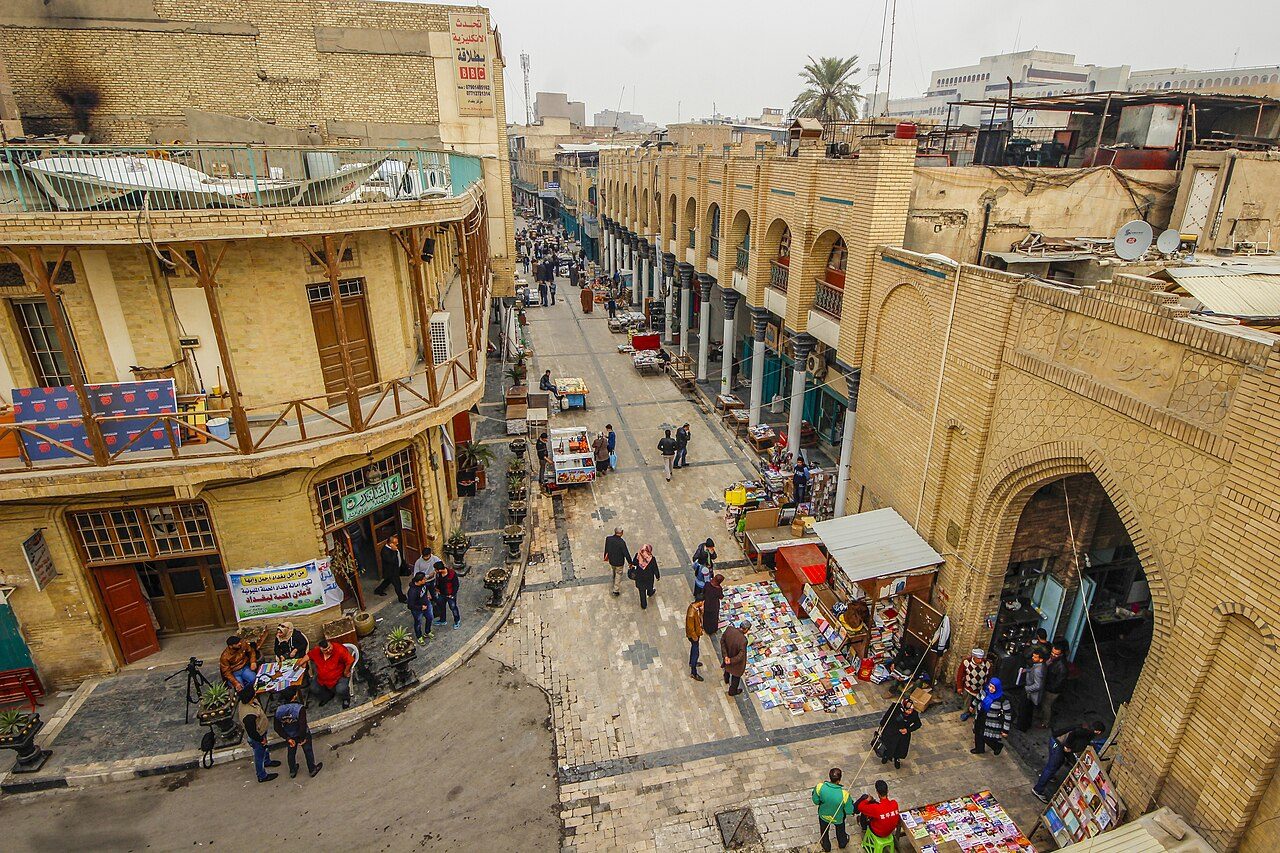
Day 1 — Baghdad, old and on the river. Start on Mutanabbi Street, the booksellers’ road, ideally on a Friday when it’s at its liveliest, and fold in a tea at the old Shabandar café. Walk Rashid Street’s crumbling colonnades, see the Martyr’s Monument (Al-Shaheed) and, if it’s open, the Abbasid-era heart of the city. End on Abu Nawas Street along the Tigris with a plate of masgouf, the split, slow-grilled river fish that’s Baghdad’s signature.
Day 2 — the day trip. Two strong options, both half-to-full days with a driver:
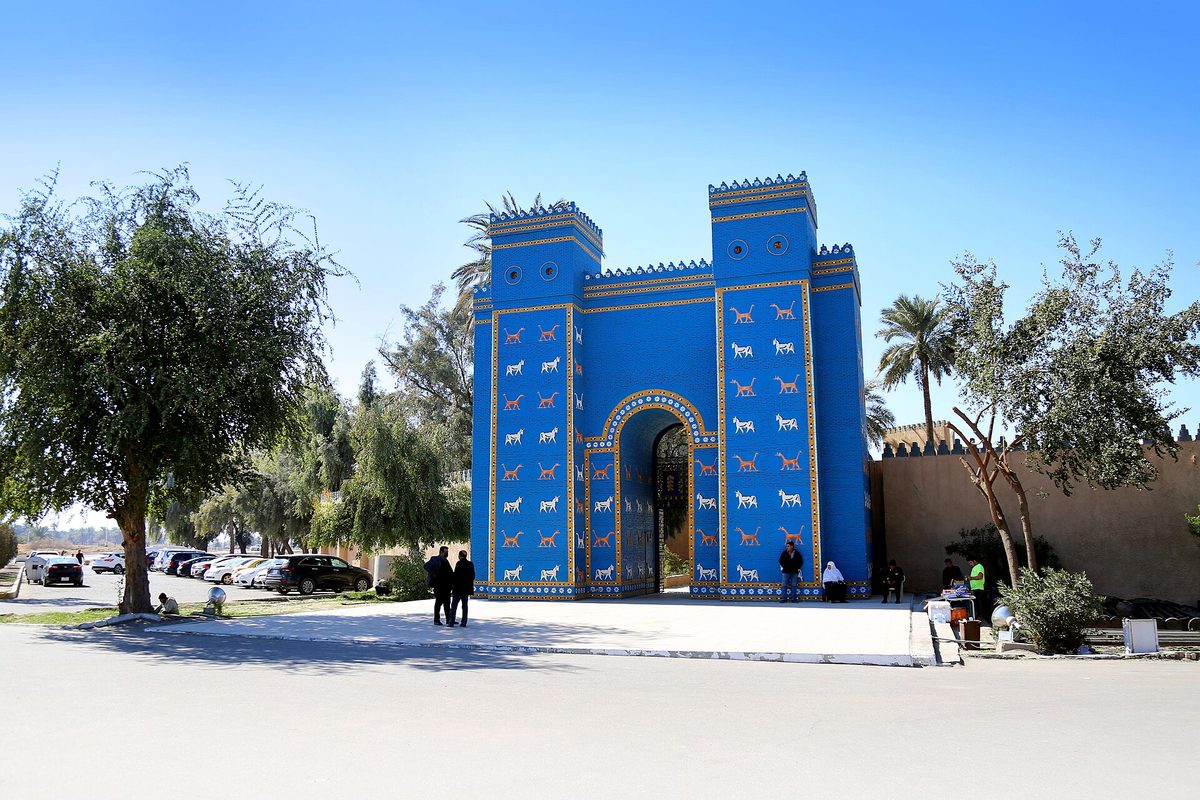
- Babylon (about 1.5 hours south via Hillah): the reconstructed walls, the processing way, the famous Lion of Babylon, and Saddam’s hilltop palace looming over the ruins. The single most evocative day trip from Baghdad.
- Samarra (about 2 hours north): the extraordinary spiral Malwiya minaret and the great mosque. Note you can no longer climb the Malwiya — it’s fenced for restoration and safety — but it’s staggering from the ground. Samarra sits in a more sensitive area; go with a local who knows the checkpoints.
Day 3 — Baghdad’s museums and markets. The Iraq Museum holds the world’s greatest Mesopotamian collection, but it has been closed for a major renovation, with a reopening announced for 2026 — check whether it’s actually open before you build a day around it. If it’s shut, the Baghdadi Museum, the copper market in Safafeer, and Kadhimiya’s golden-domed shrine fill the day richly. Our Baghdad travel guide has the full list and where to eat.
Tight on time? This compresses to 48 hours — Baghdad plus a single day trip — which is exactly the layover plan we cover separately.
5 days in Iraq: Sumer and the Marshes
Five days is my favourite “short but real” trip, and it points entirely south, into the oldest inhabited landscape on earth. You’ll cover holy cities, the ziggurat of Ur, and the UNESCO-listed Mesopotamian Marshes. This is the outline behind our dedicated southern Iraq in 5 days route.
Day 1 — Baghdad. As above: Mutanabbi Street, the river, masgouf.
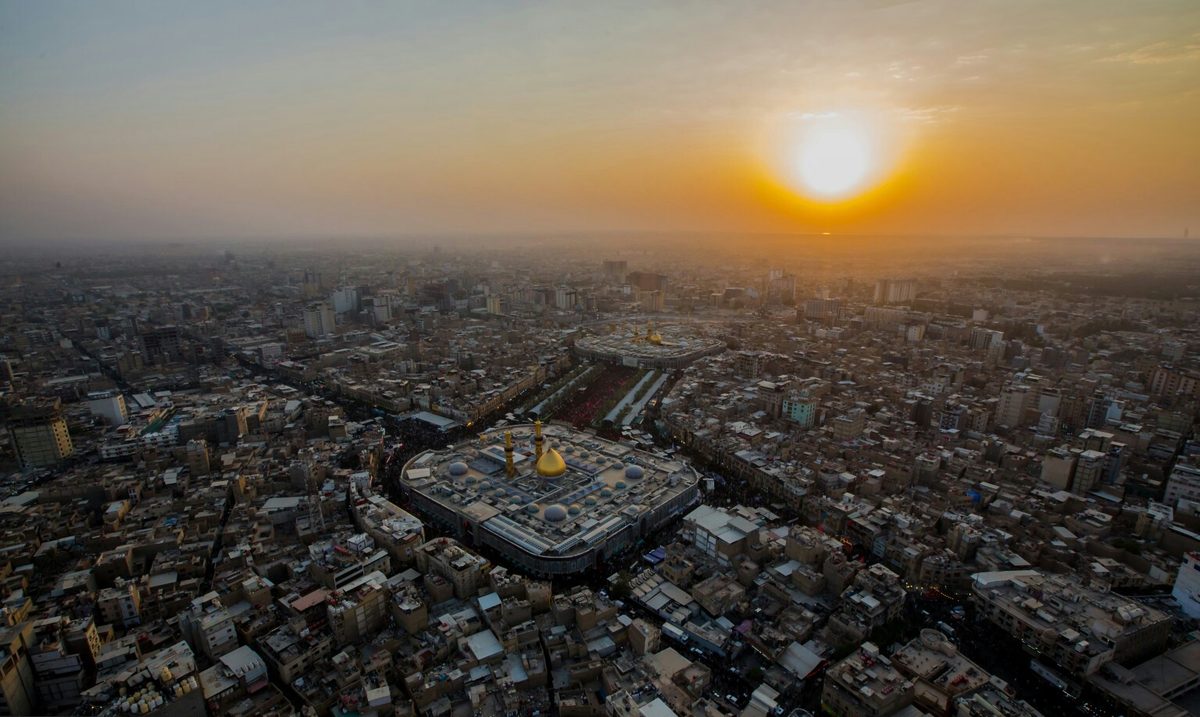
Day 2 — Babylon and Karbala. Babylon in the morning (about 1.5 hours from Baghdad), then on to Karbala (roughly another hour). Karbala is one of the holiest cities in Shia Islam, built around the shrines of Imam Hussein and Abbas — the plaza between them at night is one of the most moving public spaces I’ve stood in. Non-Muslims are generally welcome in the outer courtyards; dress conservatively and follow local guidance. Our Iraq pilgrimage guide explains the etiquette in depth.
Day 3 — Najaf and Kufa. Najaf (about an hour from Karbala) holds the Imam Ali shrine, the gold-domed centre of Shia scholarship, and the vast Wadi al-Salaam cemetery beside it. Old Kufa is a short hop away. These cities are the spiritual core of the south and worth slowing down for.
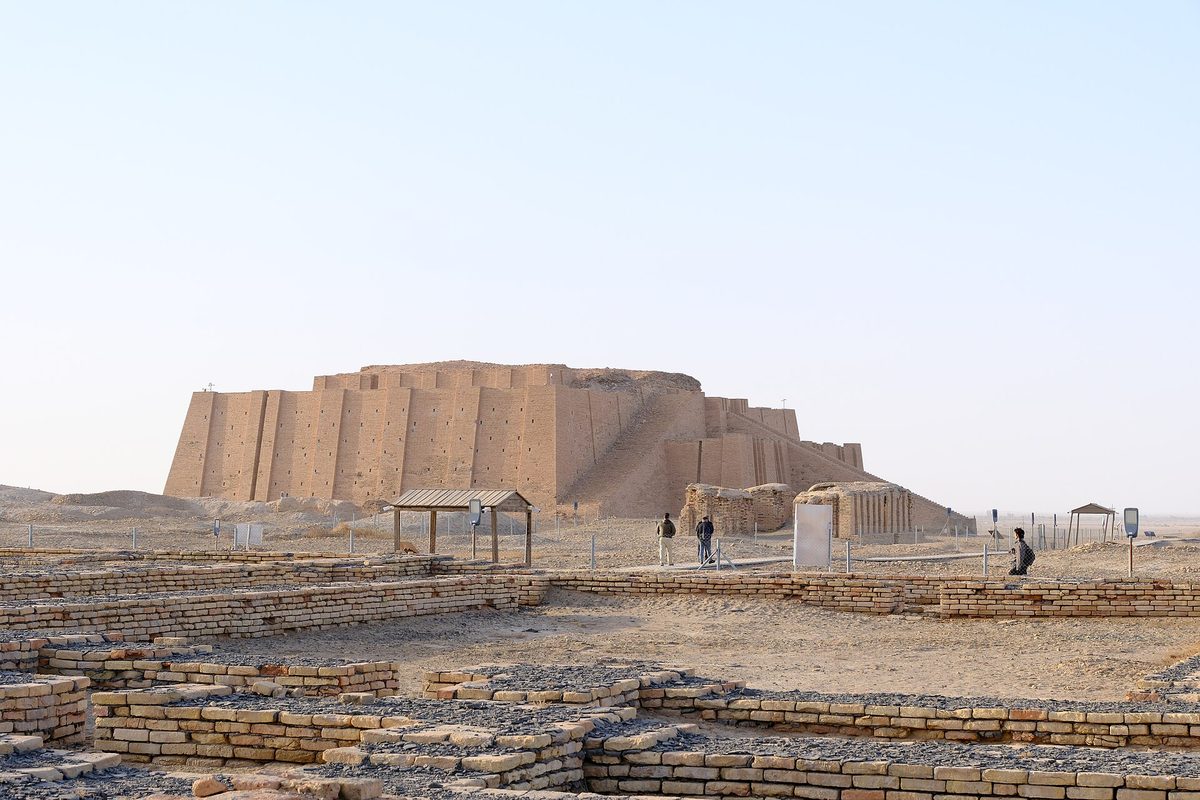
Day 4 — Ur and Nasiriyah. Drive south to Nasiriyah (around 3.5 hours from Najaf) for the ziggurat of Ur, the best-preserved in Iraq and the legendary home city of Abraham. A note that trips people up: the ziggurat’s grand staircase is fenced off and the site is under restoration through 2026, so you admire it up close rather than climbing it. Nearby are the Royal Tombs and the “House of Abraham.”
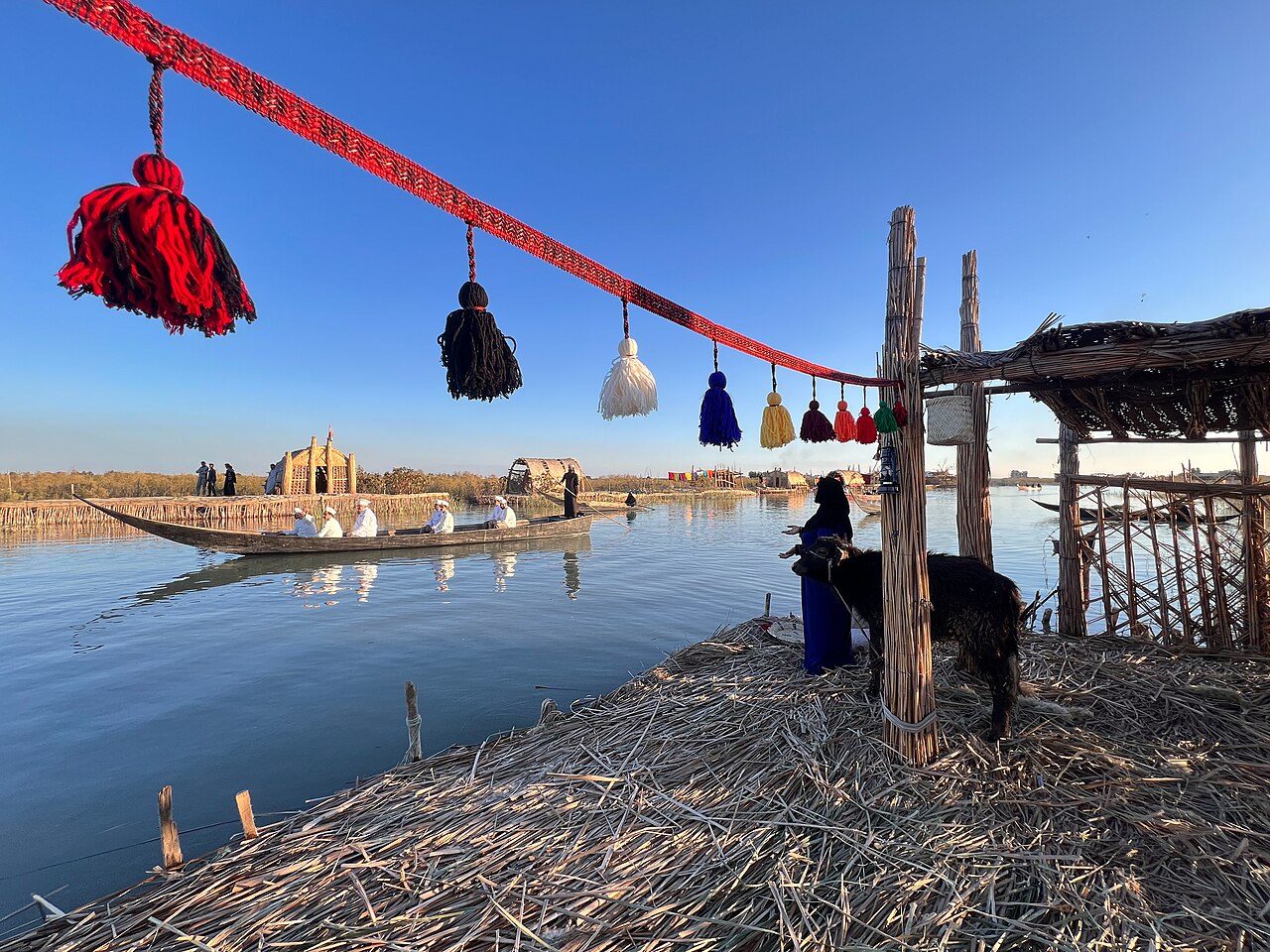
Day 5 — the Mesopotamian Marshes. From Nasiriyah, head into the Ahwar — the marshes of Chibayesh — for a mashuf (canoe) ride among the reed islands and water buffalo of the Ma’dan people. It’s a different planet from the desert you’ve crossed, and a fitting, gentle finish. You can loop back to Baghdad or push on to Basra to fly out.
Reverse this whole thing if you’re flying into Basra — the south works just as well bottom-to-top.
One week in Iraq: the classic federal route
If you have seven days and want the definitive first trip, this is it: Baghdad straight down the country to Basra, hitting the holy cities, Ur and the marshes on the way. It’s logical, it’s mostly downhill on the map, and it sets you up to either fly home from Basra or — with the overnight train — bounce back to Baghdad in your sleep. This is the spine of our one-week classic route.
| Day | Base | Highlights | Approx. drive |
|---|---|---|---|
| 1 | Baghdad | Mutanabbi St, Tigris, masgouf, Kadhimiya | — |
| 2 | Baghdad → Karbala | Babylon en route, Karbala shrines by night | ~2.5 hrs total |
| 3 | Karbala → Najaf | Imam Ali shrine, Wadi al-Salaam, Kufa | ~1 hr |
| 4 | Najaf → Nasiriyah | Ziggurat of Ur, Royal Tombs | ~3.5 hrs |
| 5 | Nasiriyah | Mesopotamian Marshes by mashuf | day trip |
| 6 | Nasiriyah → Basra | Shatt al-Arab, Shanasheel old houses, fish market | ~2.5 hrs |
| 7 | Basra | Fly out, or overnight train back to Baghdad | — |
Basra surprises people. It’s Iraq’s port, threaded with old canals (the “Venice of the East” tag is generous but the Shanasheel quarter’s carved wooden balconies are real), and the Shatt al-Arab waterway — where the Tigris and Euphrates finally meet — is a fine place to end a journey that has, quite literally, followed those two rivers from the capital to the sea.
Add a day if you can: a week is comfortable but full, and a buffer day in Baghdad or Najaf absorbs the inevitable late driver or extra-long checkpoint. For when to run it, see our best time to visit Iraq guide — the south is brutal from June to September.
10 days in Iraq: Baghdad to Babylon to Basra, plus the north
Ten days is the sweet spot most independent travelers land on, and for good reason: it gives you all of the southern route above, then enough runway to reach the north — Samarra, the desert ruins of Hatra, and Mosul — or to swing up to Erbil and dip a toe into Kurdistan. This is the backbone of our 10-day Baghdad-to-Babylon-to-Basra itinerary.
Run days 1–6 exactly as the one-week classic (Baghdad → Babylon → Karbala → Najaf → Ur → Marshes → Basra), then use the extra time like this:
- Day 7 — Basra to Baghdad. Take the overnight train (more on that below) or fly, recovering a travel day.
- Day 8 — Samarra and north. The Malwiya minaret and great mosque, then push toward Mosul. Some travelers detour to Hatra, the spectacular Parthian-era desert city that reopened after Islamic State damage — check the current security situation for that stretch, as it varies.
- Day 9 — Mosul. Iraq’s second city is rebuilding hard. The Old City around the al-Nuri Mosque is a moving, complicated place; the Christian town of Bakhdida (Qaraqosh) nearby is part of the same story. See our ancient Mesopotamia guide for the archaeology of Nineveh on Mosul’s edge.
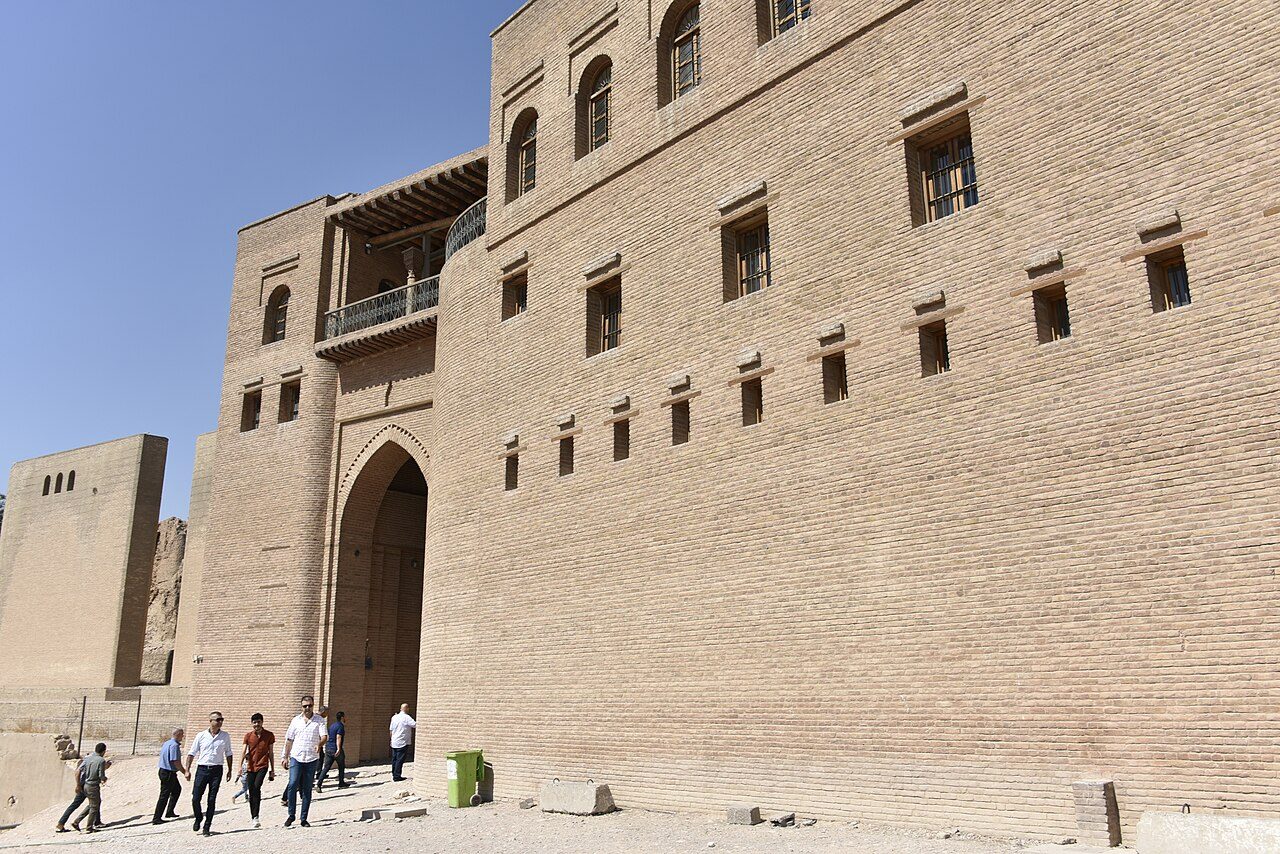
- Day 10 — Erbil. Cross into Kurdistan (about 1.5 hours from Mosul) and end at the citadel — claimed as one of the longest continuously inhabited places on earth — and the buzzing bazaar below it. From here you can fly home or roll straight into a Kurdistan extension.
Prefer to keep it gentle? Swap the Samarra–Mosul leg for a simple Baghdad-to-Erbil flight (about an hour) and spend days 8–10 easing through Kurdistan instead. That’s the lower-stress version of ten days, and it’s a perfectly good trip.
Two weeks in Iraq: the full-country loop
Two weeks is the itinerary I’d choose if I were flying halfway around the world for this. You get Federal Iraq’s full southern sweep and a proper Kurdistan mountain loop, with enough slack that a blown day doesn’t wreck the plan. Think of it as a strong core route with bolt-on days — the structure behind our two-week full-country route.
Days 1–7 — Federal Iraq. The one-week classic, Baghdad down to Basra, unchanged. Take the night train back to Baghdad on night 7.
Days 8–9 — Baghdad to the north. Samarra and Hatra (security permitting), overnighting in Mosul; a full day exploring Mosul’s Old City and the Nineveh plains.
Days 10–14 — the Kurdistan loop. This is where the trip changes gear:
- Erbil: the citadel, the Qaysari bazaar, day trips to the hilltop Christian town of Al-Qosh or the monastery of Rabban Hormizd.
- The Rawanduz–Soran road: the most scenic drive in the country, through the Gali Ali Beg gorge and waterfall, with the Hamilton Road switchbacking toward the Iranian frontier.
- Amedi (Amadiya): a town on a flat-topped mountain, impossibly photogenic, with the Sulav waterfall nearby.
- Sulaymaniyah: Kurdistan’s cultural capital, with the sobering Amna Suraka (Red Security) museum and the best café culture in the region.
End in Erbil or Sulaymaniyah and fly out — both have international airports, which often makes the logistics cleaner than backtracking to Baghdad. The full regional detail lives in our Iraqi Kurdistan guide, and you can mix and match these with the destinations in our best places to visit in Iraq roundup.
Three weeks in Iraq: the country without rushing
Three weeks isn’t “two weeks plus a week of filler” — it’s the same country travelled the way it deserves, with second cities, scenic detours and the occasional do-nothing morning over endless small glasses of tea. If you have the time and the timing is right, this is the richest version.
Build it from the two-week loop, then spend the extra days on the things everyone else skips:
- Deeper south: overnight in a reed guesthouse in the marshes instead of a day trip; add Uruk, the first true city, and the desert fortress of Ukhaidir near Karbala.
- Slower holy cities: a second night in Najaf or Karbala turns a sightseeing stop into something you actually feel.
- Deeper Kurdistan: the Barzan valley, Lake Dukan, the Shanidar cave of Neanderthal fame, and the Yazidi spiritual centre at Lalish — a genuinely singular place.
- Buffer and breathe: two or three unscheduled days. In a country of checkpoints and shifting plans, slack is an itinerary item.
Three weeks also lets you treat travel days as destinations — the Rawanduz gorge, the Hamilton Road, the long desert run to Hatra — rather than something to endure between sights.
The Mesopotamia history route, reordered
Here’s a different way to slice the country that no standard itinerary offers: follow it chronologically, oldest civilization to newest, rather than geographically. If you’re here for the archaeology above all — and Iraq is, after all, the cradle of it — this thematic route is deeply satisfying. It’s the thinking behind our dedicated Mesopotamia history route.
- Sumer (c. 4000–2000 BC): Uruk and the ziggurat of Ur in the deep south — where cities and writing begin.
- Babylon (c. 1800–500 BC): Hammurabi’s and Nebuchadnezzar’s capital, south of Baghdad.
- Assyria (c. 900–600 BC): Nineveh and its winged-bull gates at Mosul; Nimrud and Khorsabad nearby.
- The Parthians and Sassanians (c. 250 BC–650 AD): the desert city of Hatra and the colossal brick arch of Ctesiphon (Taq Kasra) near Baghdad — the largest single-span vault of the ancient world.
- Early Islam (c. 750–900 AD): Samarra’s spiral minaret and the Abbasid heritage of Baghdad itself.
Travelled in that order you watch human civilization assemble itself in front of you, layer by layer. Our ancient Mesopotamia guide covers each site, its current access status and what survives — essential reading before this route, because opening conditions at the archaeological sites genuinely change.
Getting around Iraq between cities
Iraq has no slick intercity rail network or budget-airline web tying it together — moving between cities is the part of any itinerary that needs the most thought. Here’s the honest menu, cheapest to comfiest, with the distances that shape the routes above.
- Shared taxis & “GMCs”: the workhorse. Battered sedans and big GMC Suburbans wait at city “garages” (taxi lots) and leave when full. Cheap, frequent on main routes, and how most locals travel.
- Minibuses & coaches: for longer hauls (Baghdad–Basra, Baghdad–Erbil), comfortable enough and very affordable.
- Private driver: what I’d budget for on the southern loop. Hiring a car with a driver — rather than self-driving, which I don’t recommend given the checkpoints — buys you flexibility and a local who knows which roads and checkpoints to avoid. Expect a meaningful daily rate; agree it up front.
- Domestic flights: Iraqi Airways and others link Baghdad with Basra, Erbil, Najaf and Sulaymaniyah. The Baghdad–Erbil hop (about an hour) is the big time-saver versus a ~5-hour drive past multiple checkpoints — worth it on shorter trips.
- The night train: the south’s hidden gem (next section).
| Route | Approx. distance | Typical options |
|---|---|---|
| Baghdad ↔ Karbala | ~120 km | Shared taxi ~1.5–2 hrs |
| Baghdad ↔ Hillah (Babylon) | ~100 km | Shared taxi ~1.5 hrs |
| Karbala ↔ Najaf | ~80 km | Minibus ~1 hr |
| Najaf ↔ Nasiriyah (Ur) | ~260 km | Shared taxi ~3.5 hrs |
| Nasiriyah ↔ Basra | ~190 km | Shared taxi ~2.5–3 hrs |
| Baghdad ↔ Basra | ~540 km | Night train, flight, or ~7–8 hr drive |
| Baghdad ↔ Samarra | ~125 km | Shared taxi ~2 hrs |
| Baghdad ↔ Erbil | ~360 km | Flight ~1 hr, or drive ~5 hrs |
| Erbil ↔ Mosul | ~85 km | Shared taxi ~1.5 hrs |
Distances and times are approximate and depend heavily on checkpoints — build in buffer. A dedicated transport pillar with border crossings, airports and booking detail is coming to the site; for now, the practical essentials are folded into our main travel guide.
The Baghdad–Basra night train
One of my favourite ways to save a day on the southern route is to do the long leg horizontally and asleep. Iraq’s one passenger line runs overnight between Baghdad and Basra, and it’s a genuine experience — slightly faded Chinese-built sleeper carriages, a buffet car, and a slow roll through the dark heart of the south.
As of 2026 it runs daily: the Baghdad service leaves Baghdad Central around 8:00 pm and reaches Basra (al-Maqal station) around 4:30 am; northbound, it leaves Basra around 7:00 pm and arrives Baghdad around 6:15 am. A two-berth sleeper runs about 37,000 IQD (around $28), a four-berth berth about 31,000 IQD ($24), and ordinary seats just 10,000 IQD ($8). There’s no online booking — buy at the station on the day of travel (the Baghdad office runs roughly 9:00 am–7:00 pm), bring your passport and visa, and arrive an hour early for the luggage check. Times and fares drift, so treat these as a planning baseline and confirm locally.
Slotting it into an itinerary: end the southern route in Basra, sleep your way back to Baghdad, and you’ve effectively gained a sightseeing day. On a 10-day or two-week trip, that’s the difference between rushing and not.
What it costs: budgets by itinerary length
Iraq isn’t a backpacker-cheap country the way some neighbours are, mostly because internal transport and the near-universal need for a driver or guide add up — but it’s far from expensive by Western standards. Independent travelers commonly run $40–65 a day on the ground (room, food, local transport), before the bigger line items of a private driver, site fees and your international flights.
| Trip length | Rough on-the-ground budget (per person) | What drives the cost |
|---|---|---|
| 2–3 days | $150–350 | One driver day-trip, central hotel |
| 5 days | $350–650 | Southern driver days, site fees |
| 1 week | $500–850 | Full southern loop with a driver |
| 10 days | $700–1,300 | Adds northern legs, a domestic flight |
| 2 weeks | $1,200–2,200 | Two regions, more driver days |
| 3 weeks | $1,800–3,200 | Everything, plus slow days |
Two money realities to plan around. First, Iraq is largely cash-only for foreigners — international cards rarely work and ATMs are unreliable, so you bring crisp US dollars and change them as you go. Second, sharing costs transforms the maths: a private driver split between two to four people is the single biggest lever on your daily spend. A dedicated costs guide is coming; in the meantime budget generously and carry more cash than you think you need.
Checkpoints, sponsors and registration: what independent travelers must know
The thing that surprises first-timers isn’t danger — it’s admin. Federal Iraq runs on checkpoints, and a smooth trip is mostly about handling them calmly.
- Checkpoints: frequent on southern and northern highways. Keep your passport and a printed visa copy handy, be patient and friendly, and let your driver do the talking. Most wave tourists through; some take longer. This is the real reason a local driver is worth it.
- Sponsors for certain sites: a few places — Samarra has historically been one, and parts of the deep south another — effectively want you accompanied by a local contact or guide who can vouch for you at the checkpoint. A good tour operator arranges this invisibly.
- Residency registration: stay beyond a short window and you’re generally expected to register with the residency directorate; hotels and operators often handle it. The threshold shifts, so confirm the current rule in our visa guide before a long trip.
None of this is scary in practice — but it’s the difference between an itinerary that flows and one that snags. When in doubt, read our honest Iraq safety guide, which goes region by region.
Combining Iraq with Iran, Jordan or Kuwait
Because getting to Iraq is the hard part, plenty of travelers fold it into a bigger regional trip. The realistic options:
- Iran: the most natural pairing, especially via Kurdistan’s land borders or the southern crossings used by millions of pilgrims. It demands its own visa and planning, but the religious and historical thread between the two countries is unbroken — and the holy-cities focus of our pilgrimage guide connects directly to it.
- Kuwait: the land crossing south of Basra (Safwan/Abdali) makes a Basra-to-Kuwait City finish feasible, and it’s a tidy way to end the southern route at a major airport.
- Jordan: there’s a land route via the western desert, but it’s long and the security picture along it is sensitive — most travelers connect Iraq and Jordan by air instead.
A combined regional trip is the subject of its own deep-dive on the site; the headline is that Iran and Kuwait pair cleanly with the routes above, while Jordan is easiest as a flight connection.
The best time to run these itineraries
Timing matters more in Iraq than almost anywhere I’ve travelled, because the southern summer is genuinely dangerous heat. In broad strokes: spring (March–early May) and autumn (late September–November) are ideal for the south; the Kurdish mountains are loveliest from spring through autumn and can hold snow in winter. The marshes are at their best in the cooler months. Avoid June–September in the south unless you have a high tolerance for 45°C-plus.
You’ll also want to plan around the big religious dates — Ramadan changes opening hours and rhythms, and the Arbaeen pilgrimage turns the roads to Karbala into one of the largest gatherings on earth. Our best time to visit Iraq guide breaks it down month by month, including exactly when those events fall.
Is Iraq safe to do these trips right now?
I’ll repeat what I said at the top, because it matters more than any route: as of mid-2026, Iraq sits under the most serious government travel advisories — the U.S. at Level 4 (Do Not Travel) and the UK’s FCDO against all travel — sharpened by a regional escalation that has repeatedly closed Iraqi airspace. That is the formal picture, and it’s not nothing.
The lived picture for the independent travelers who do go between flare-ups is more nuanced — Kurdistan in particular has long felt calm and welcoming — but “more nuanced” is not “ignore the warnings.” Travel insurance won’t cover a trip taken against advice, evacuation options are thin, and situations change fast. Plan the route now; decide on the timing with clear eyes and current information. Our regularly updated is Iraq safe? guide is the one to read before you book anything.
Frequently asked questions
How many days do you need for Iraq?
For a satisfying first trip to Federal Iraq, plan on a week — enough for Baghdad plus the southern route through Babylon, the holy cities, Ur and the marshes. Add a second week if you want Iraqi Kurdistan and the north. Two to three days works only as a Baghdad-focused taster or a layover.
Can you visit Federal Iraq and Kurdistan on the same trip?
Yes. Iraq’s federal e-visa now covers the entire country, Kurdistan included, so you can travel freely between the two on one permit. The only catch is that a visa issued solely by the Kurdistan Region does not let you continue into Federal Iraq — so get the federal e-visa. See our visa guide for the current process.
How do you get around Iraq between cities?
Mostly by shared taxi and GMC Suburban from city “garages,” by minibus or coach on long hauls, and by domestic flight for the big jumps like Baghdad–Erbil. For the southern loop, most travelers hire a private driver. The Baghdad–Basra night train is a cheap, characterful way to cover the longest leg while you sleep.
Does the Baghdad to Basra train still run?
Yes, daily as of 2026. It leaves Baghdad around 8:00 pm and reaches Basra near 4:30 am, with sleeper berths from roughly 31,000–37,000 IQD ($24–28). There’s no online booking — buy at the station on the day with your passport and visa, and arrive an hour early for the luggage check. Confirm times locally, as they shift.
Can you climb the ziggurat of Ur?
Not at the moment. The ziggurat’s restored grand staircase is fenced off and the site has been under restoration through 2026, so you visit and photograph it up close rather than climbing the steps. The same goes for Samarra’s spiral Malwiya minaret, which is closed to climbing for restoration and safety.
Do you need a guide, or can you travel Iraq independently?
You can travel independently, and many do — but Federal Iraq is far smoother with at least a local driver who knows the checkpoints, and a few sites effectively require a local sponsor. Kurdistan is the easiest region to do fully independently. A guided trip removes the admin; independent travel rewards flexibility and patience.
Is Iraq expensive to travel?
Mid-range. Expect roughly $40–65 a day on the ground before a private driver, site fees and international flights. The driver is the biggest variable, so splitting one between two to four people changes your budget dramatically. Bring US dollars in cash — Iraq is largely cash-only for foreigners and ATMs are unreliable.
Final thoughts
Iraq rewards the traveler who plans the route carefully and holds the timing loosely. The corridors don’t change — Baghdad to Basra down the rivers, the desert run to Hatra, the green switchbacks of Kurdistan — but when you can travel them does, and right now more than usual. Build your itinerary from the routes above, keep our safety guide open in another tab, and start the bigger journey at our complete Iraq travel guide. The cradle of civilization has been waiting a long time; it can wait for the right week.
About the author: The iraqtourism.org editorial team writes from repeated, on-the-ground travel across Federal Iraq and Kurdistan — riding the night train, arguing fares at the garages, and waiting at the checkpoints we describe. We update our guides as the country, and its access, change. Last updated: June 2026.
Photo credits
- Ziggurat of Ur — photo by Alli Khalil, CC BY-SA 4.0, via Wikimedia Commons
- Mutanabbi Street, Baghdad — photo by Mondalawy, CC BY-SA 4.0, via Wikimedia Commons
- Mesopotamian Marshes near Nasiriyah — photo by Montzr 1, CC BY-SA 4.0, via Wikimedia Commons
- Ishtar Gate replica, Babylon — photo by Safa.daneshvar, CC BY-SA 4.0, via Wikimedia Commons
- Erbil Citadel, Iraqi Kurdistan — photo by Osama Shukir Muhammed Amin FRCP(Glasg), CC BY-SA 4.0, via Wikimedia Commons
- Karbala shrines at sunset — photo by Karbobala Photos, CC BY 4.0, via Wikimedia Commons