Last updated: August 2026. Live rates and property counts on Booking.com, Kayak and iraqihotel.com were pulled on 13–14 August 2026. Sector figures re-checked against Shafaq News and AFP reporting from May and August 2026, and against the Karbala and Najaf hotel associations.
There is no single price for hotels in Karbala, and that is the first thing to understand. Two accommodation markets run side by side in the same streets, quoting the same beds at wildly different numbers, and almost every English-language page on the subject blends them into one misleading range. Where you sleep follows from the pilgrimage calendar explained in our Iraq ziyarat guide.
Locally-quoted walk-in rates run about US$5–12 per person in the quiet months and climb to $50–100 or more in the ten days around a major commemoration. Rates on international booking sites, for the tiny fraction of the city that appears on them, run roughly five to fifteen times higher: $65 to $150 a night for a room on Booking.com in mid-August 2026. Both numbers are real. They describe different transactions, in different currencies, with different people on the other side of the desk.
Hotels in Najaf work the same way, with a slightly larger footprint on the booking platforms and a much heavier dependence on one nationality of guest. Neither city has had a normal year in 2026. If you are still working out whether the trip happens at all, our page on whether Iraq is open to visitors is the place to start, and the federal e-visa is now mandatory for most nationalities heading to the shrine cities.
What follows is the geography that actually determines whether a room is good or bad, the two price markets set out side by side, why Karbala is nearly invisible on the platforms you would normally use, what the named properties are and what we can and cannot confirm about them, how the ten-day peak works, and what the war and the Iranian currency collapse have done to the trade. There are no recommendations here and no “best hotel” verdict. You get the mechanics and a checklist, and you decide.
The short answer
| Question | Answer |
|---|---|
| What does a room cost? | $5–12 per person walk-in off-season; $50–100+ per person at peak; $65–150 a night if you book through an international site |
| Can I book online? | For about 12 Karbala properties and 10 in Najaf, yes. For the other several hundred, no |
| Do I need to book ahead? | Only for the ~10-day peak windows. Agents advise 2–3 months. Outside those, walking in is normal |
| How close can I get? | There is a 1.5 km vehicle exclusion zone around the Karbala shrines. Everyone walks the last stretch |
| Do they take cards? | Assume not. Cash, dinars or dollars. ATMs are scarce |
| Is there a free option? | Yes. Mawkib and hussainiya lodging is how most pilgrims sleep, not a fallback |
| Is the trade running normally? | No. It shut down after 28 February 2026 and has been reopening since 30 May |
The two markets, side by side
This is the table the rest of the article hangs on, and it is the reason a single price range for hotels in Karbala is always wrong for one set of readers. The left-hand column is what Iraqi hotel owners and the Karbala Hotels Association quote to Iraqi media. The right-hand column is what appeared on Booking.com when we ran the searches on 13–14 August 2026. They are not competing estimates of the same thing. They are two different distribution channels selling largely different stock.
| Walk-in / local market | International booking sites | |
|---|---|---|
| Off-peak rate | $5–12 per person, or 10,000–15,000 IQD per person at the cheaper end | Headline “from $40” (Booking.com), “from $42” (Kayak), “from $50” (Tripadvisor); real lowest listings $50–65 a room |
| Peak rate | $50–100+ per person; one Karbala hotel quoted 25,000–30,000 IQD per person | Not meaningfully listed — inventory is block-booked by group operators before it reaches the platforms |
| Unit sold | Per person, often in shared rooms | Per room, priced for two adults |
| How you pay | Cash at the desk, dinars or dollars | Card, or pay-at-property on the Iraqi platforms |
| Who books it | Walk-ins, and group operators via dallalin (brokers) dealing with the hamladar | Independent travellers, mostly foreign, and Gulf-based visitors |
| Share of the city | Several hundred properties | 12 in Karbala, 10 in Najaf |
The per-person versus per-room distinction is doing a lot of quiet work in that table. Nobody writing about hotels in Karbala mentions it, and it is the reason two honest sources can be an order of magnitude apart. A $10-per-person walk-in room shared by four pilgrims is $40 of revenue, which is not far off the cheapest room on the platforms. The gap between the two markets is real but it is not as absurd as a bare comparison of headline numbers suggests. What actually differs is the room, the plumbing, the air conditioning and whether anyone at reception speaks English.
The low end of the local market is lower still than the association’s published range. A Najaf hotel manager told the Iraqi outlet 964media in July 2025 that some of his guests “can only pay $6 a night”, and that after the currency shock “many can’t even pay $4 or $5”. That is not a bargain tier being marketed to anyone. It is the actual ceiling for a large share of the people who come.
Why hotels in Karbala are barely on the booking sites
Here is the hardest single piece of evidence, and it is easy to reproduce. On 13 August 2026, Booking.com would not accept “Karbala” as a search string at all — a query with ss=Karbala errored out. The only page that resolved was the static city landing page at /city/iq/karbala.html, which listed 12 hotels and places to stay. Najaf’s equivalent page listed 10. Momondo showed 13. Kayak’s page is headed “7 Best Hotels in Karbala”.
Set that against the size of the actual trade. Karbala has somewhere between 450 and 1,200 hotels and guesthouses depending on whose count you take (see the table further down), and is routinely described as holding about a third of Iraq’s national hotel stock. Najaf has around 250. So the international platforms are showing you somewhere between one and three per cent of Karbala’s rooms and perhaps four per cent of Najaf’s.
The reason is structural rather than technical. Most hotels in Karbala take no advance bookings at all. As one operator put it to 964media in August 2024, “we depend on tourist groups and dallalin acting between the hotel and the hamladar” — brokers who sit between the property and the pilgrimage group leader. A hotel whose entire peak season is sold in bulk to a handful of brokers has no commercial reason to pay a platform commission, maintain an inventory feed or answer emails in English.
The Iraqi platform that does work
If you want to book a shrine-city room online, the one that functions is iraqihotel.com, part of the Iraqi travel group Sindibad. It claims more than 500 Iraqi hotels nationally, runs in English, Arabic, Chinese and Urdu, and — the part that matters — operates on pay-at-property with no charge taken at booking and free cancellation on most rates. That structure is a much better fit for a market where plans shift with airspace closures and visa timing than a prepaid non-refundable rate is.
Be aware that its coverage is thinner than the headline number implies. Its own Karbala page says “10+ hotels” and lists five: Awlad Al Hassan (4-star), Coral Karbala (4-star), Sayed Al Arab (4-star), Shubbar Tourist (3-star) and Al Etihad (2-star). Its editorial page splits the city into the Haram Area and New Karbala, which is the correct mental model, and it is candid that its own review-score feed is patchy.
What happens when you read the OTA data closely
Kayak’s Karbala page is worth a minute of your time as a lesson in not trusting aggregate travel statistics for thin markets. On 13–14 August 2026 it simultaneously stated that March is the cheapest month in Karbala at $70 a night and that March is the high season with an average 115 per cent rise in price; that June is the low season with a 94 per cent drop; and that the average weeknight price over the previous fortnight was $1,174, on a page headed “Hotels from $42/night”. Its Karbala frequently-asked-questions block answers three questions about finding a cheap hotel in Baghdad, and recommends a property described as being half a mile from a Baghdad shopping mall as five-star accommodation for your time in Karbala.
None of that is malicious. It is what an automated pricing model produces when it has a handful of properties, a violently seasonal demand curve and a template built for cities with thousands of listings. Treat “average price” figures for Karbala and Najaf as noise. The property-level rates on the same pages are real; the statistics built on top of them are not.
Karbala: the geography that decides everything
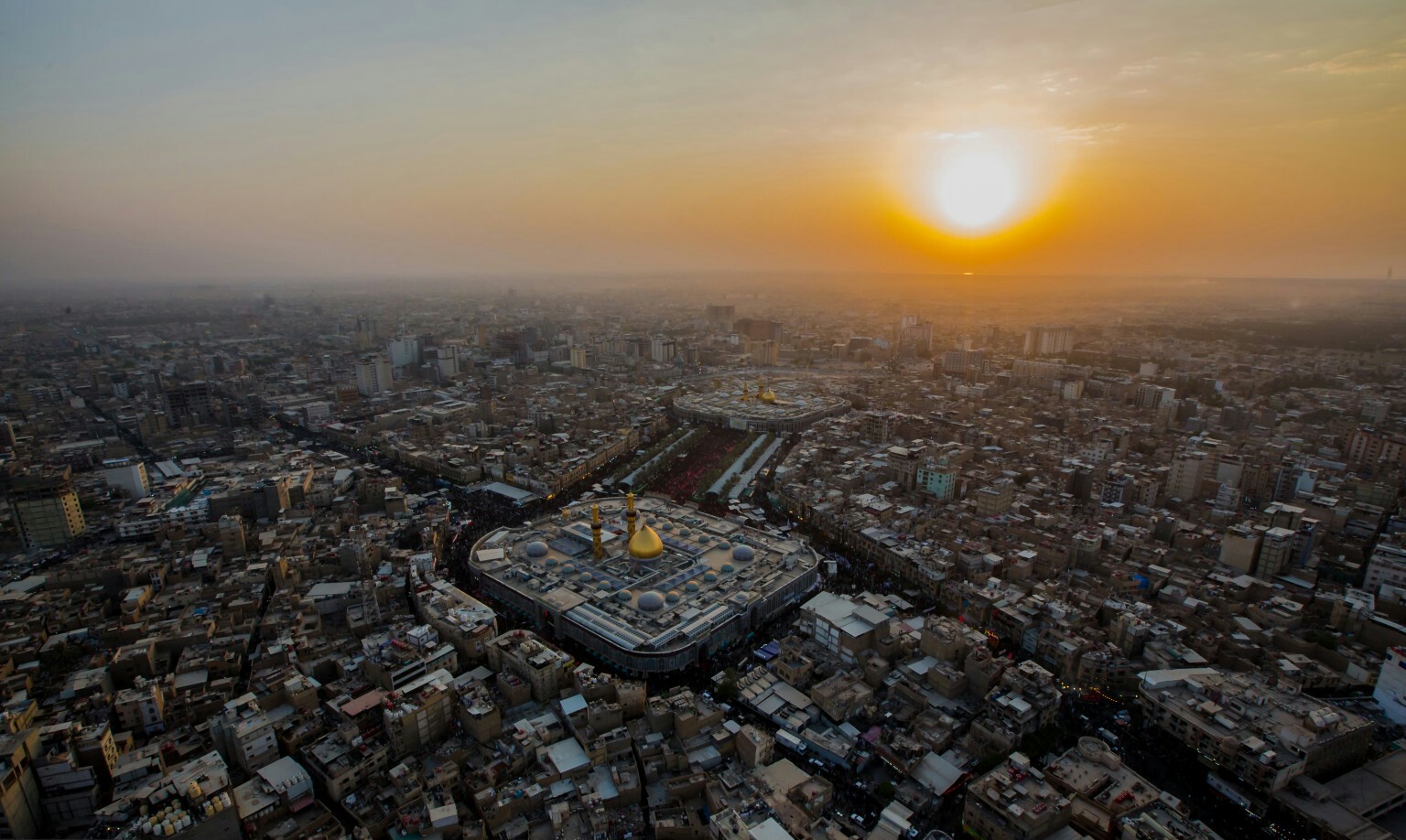
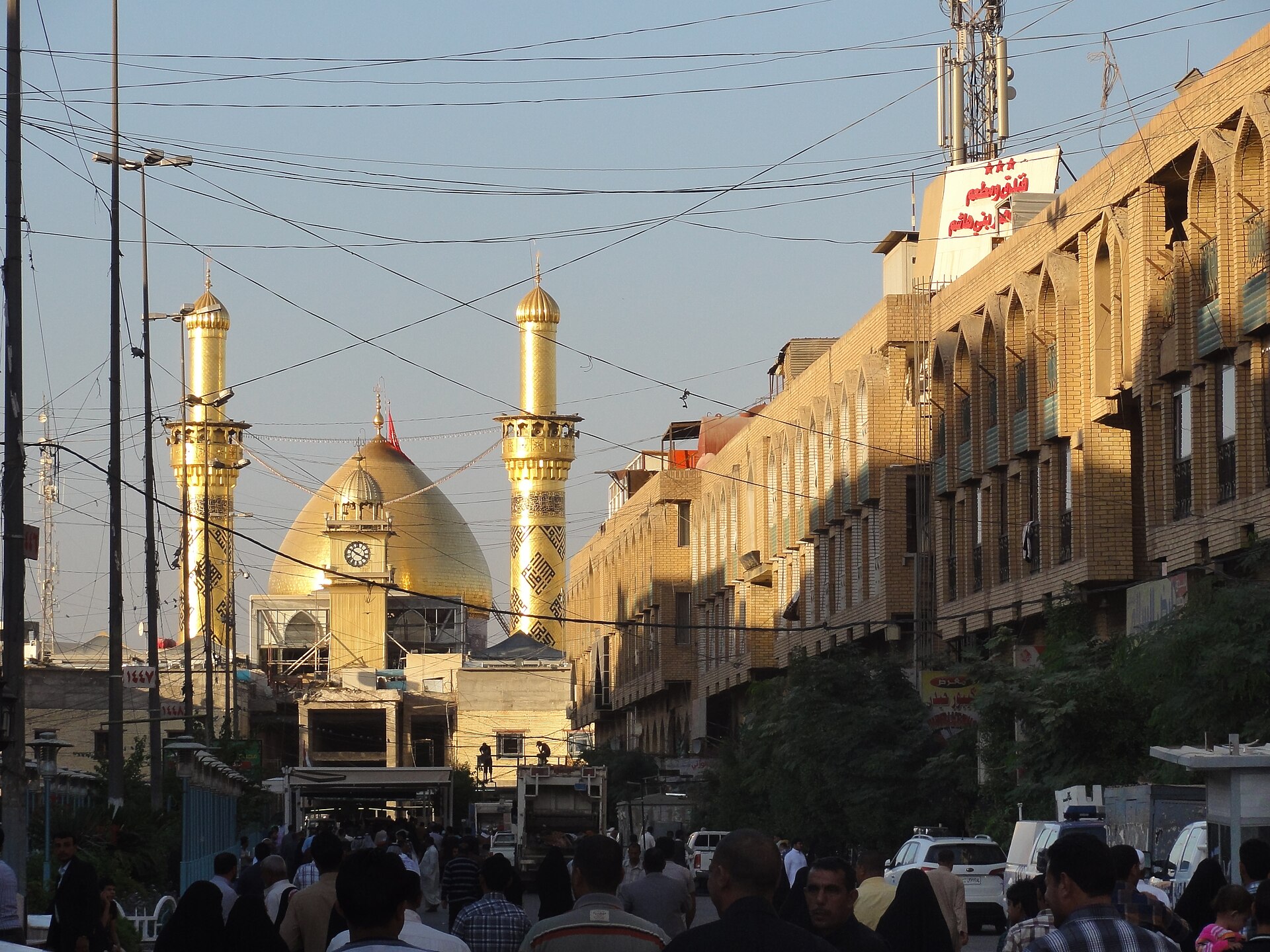
Choosing between hotels in Karbala is not really a choice about the hotel. It is a choice about how many times a day you are willing to walk, in what heat, through what density of people. Get the geography right and a modest room is fine. Get it wrong and a good room is useless.
The 1.5 km vehicle exclusion zone
Vehicles are excluded from a radius of roughly 1.5 km around the two shrines, with carve-outs for security, shrine staff and residents. Everyone else parks and walks, or uses the shrine bus services. This single rule reshapes the entire map of hotels in Karbala. A property “3 km from the shrine” is not 3 km of driving plus a short walk; it is a drive to the edge of the zone and then a walk in, unless the hotel runs its own shuttle.
The zone is separate from, and additional to, the security checks you will already have passed on the road in. Checkpoints on Iraqi roads add unpredictable time to any arrival, which is the practical argument for not booking a room you have to reach by a specific hour, and the wider transport picture explains why the coaster from Baghdad’s Alawi garage is still how most people arrive.
Bayn al-Haramayn, the premium address
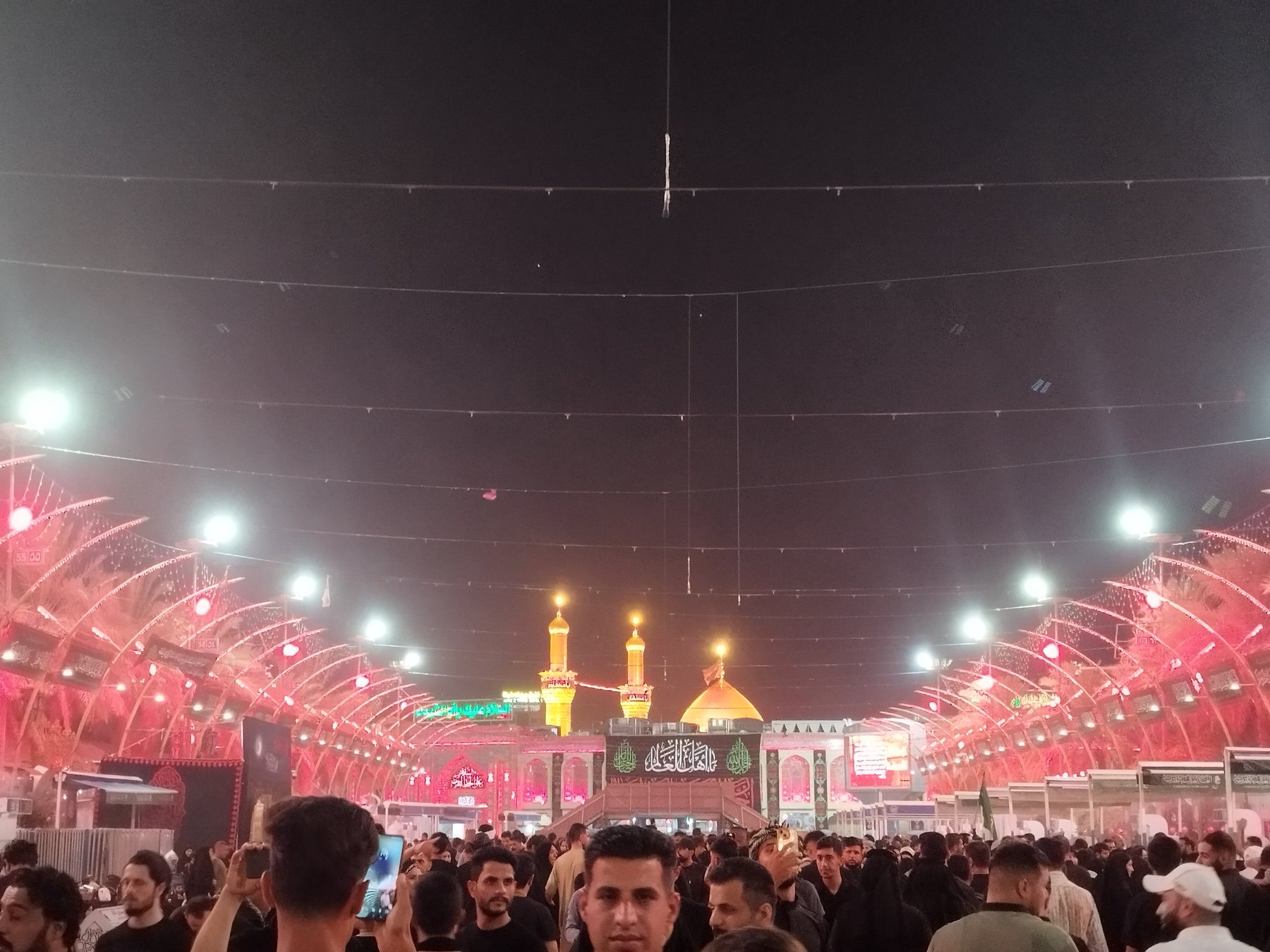
The al-Abbas shrine stands about 300 metres from the Imam Hussein shrine, and the paved corridor between them — Bayn al-Haramayn — is the ceremonial and commercial heart of the city. Rooms on or immediately off that strip carry the highest rates in Karbala, and in the peak windows they are the first inventory to disappear. What you buy is not luxury. It is the ability to go back to your room between prayers instead of making one long expedition a day.
The trade-off is noise. Courtyard sound, loudspeaker schedules and foot traffic run late into the night, and the two shrine plazas are audible from each other. Light sleepers frequently prefer to be one or two blocks back.
New Karbala and the Abbas Quarter
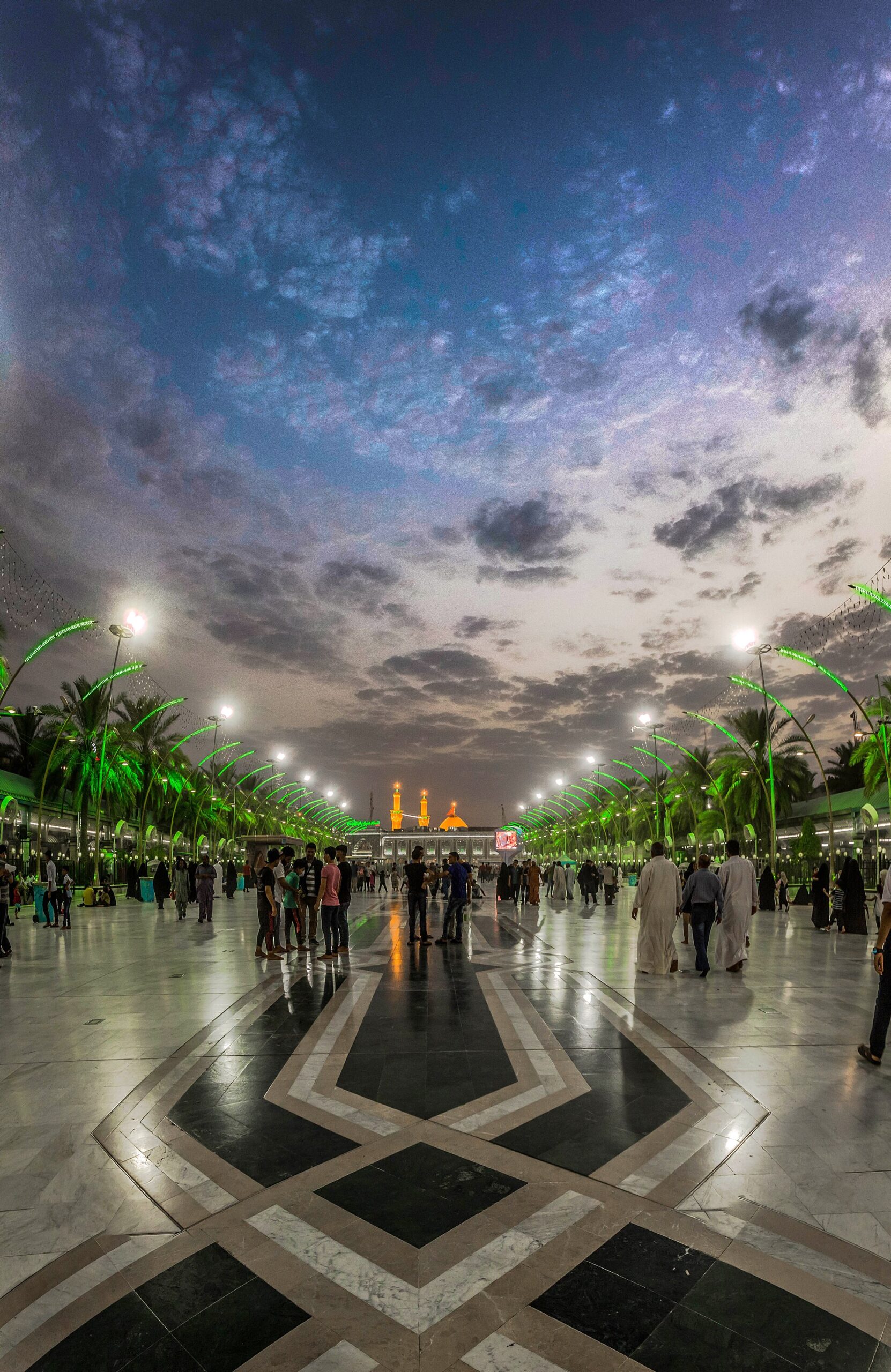
North and west of the old core, New Karbala (also given as the Abbas Quarter) is newer building stock on wider roads. Rates are typically lower, parking exists, buildings are more likely to have working lifts, and you can sleep. The cost is that every trip to the shrines is a deliberate journey rather than a stroll. For families travelling with elderly relatives, for anyone with a car, and for stays longer than two or three nights, this is often the better trade.
Bab al-Qibla and the old gates
Bab al-Qibla is the main historic gate on the shrine approach, and hotel listings use the gate names as location shorthand. If a listing describes itself by gate rather than by distance, that is usually a sign it is genuinely in the old district. Bab Baghdad, on the Baghdad side, is the other name you will see often.
Why metres on a map lie
This is the point almost no competitor page makes, and it is the most useful thing in this article. Straight-line distance to the shrine is close to meaningless in Karbala for three reasons.
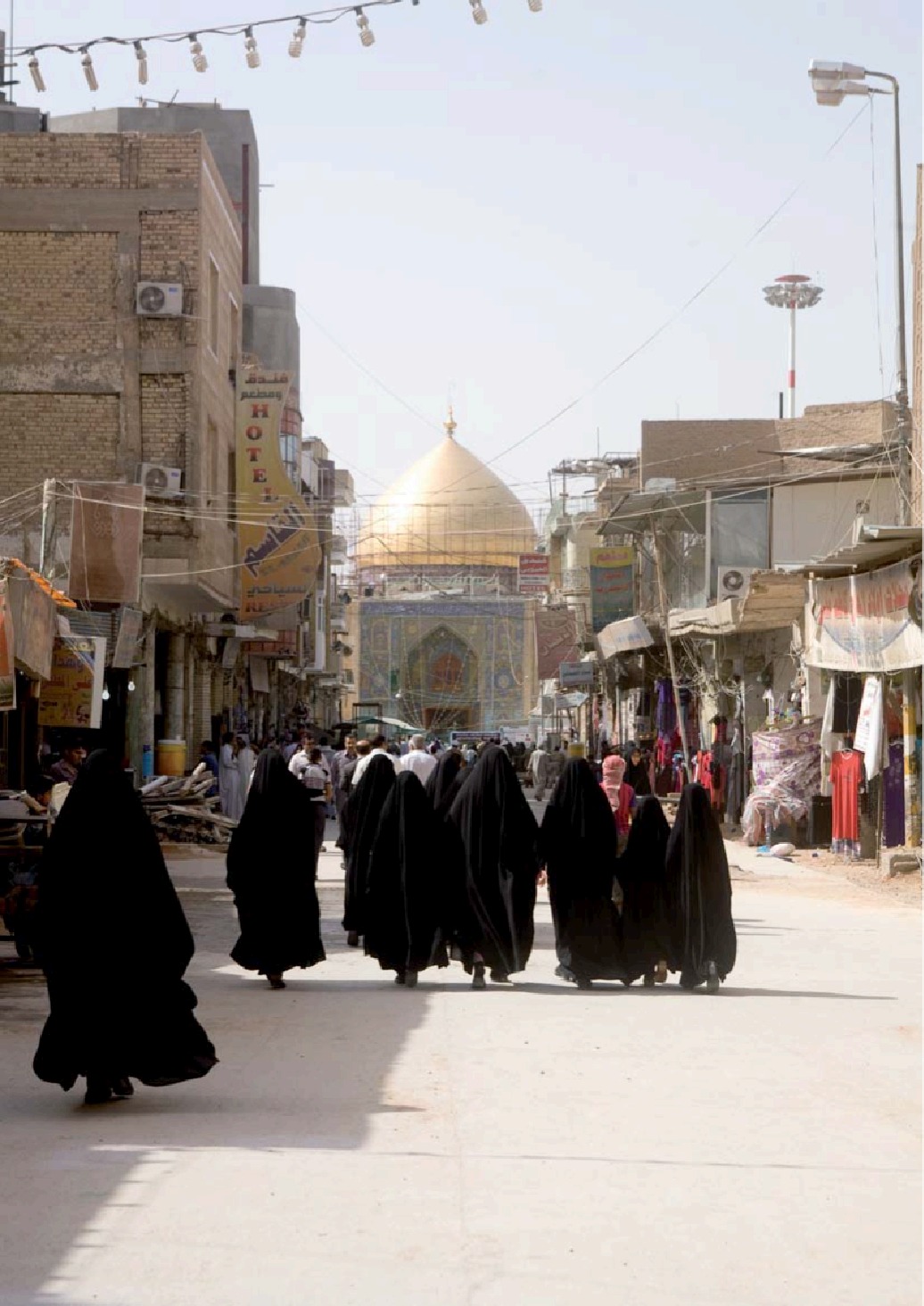
First, the walking routes are not straight. The old district is a dense grid of alleys, some of which are closed to through traffic at busy times, and the approach corridors funnel everyone through a limited number of entrances. Second, security screening rings are set up on peak nights, and a hotel that is 400 metres away but on the far side of a screening line can take longer to reach than one 900 metres out on the correct approach. Third, crowd density is the dominant variable. In the ten days around a commemoration, the last few hundred metres can take as long as the first kilometre.
The practical translation: ignore the distance figure on the listing and look at which shrine gate the property sits nearest, which side of the vehicle exclusion zone it is on, and whether it runs a shuttle. Then, if it matters to you, ask the hotel directly how long the walk takes at maghrib rather than at noon.
Najaf: a different shape of problem
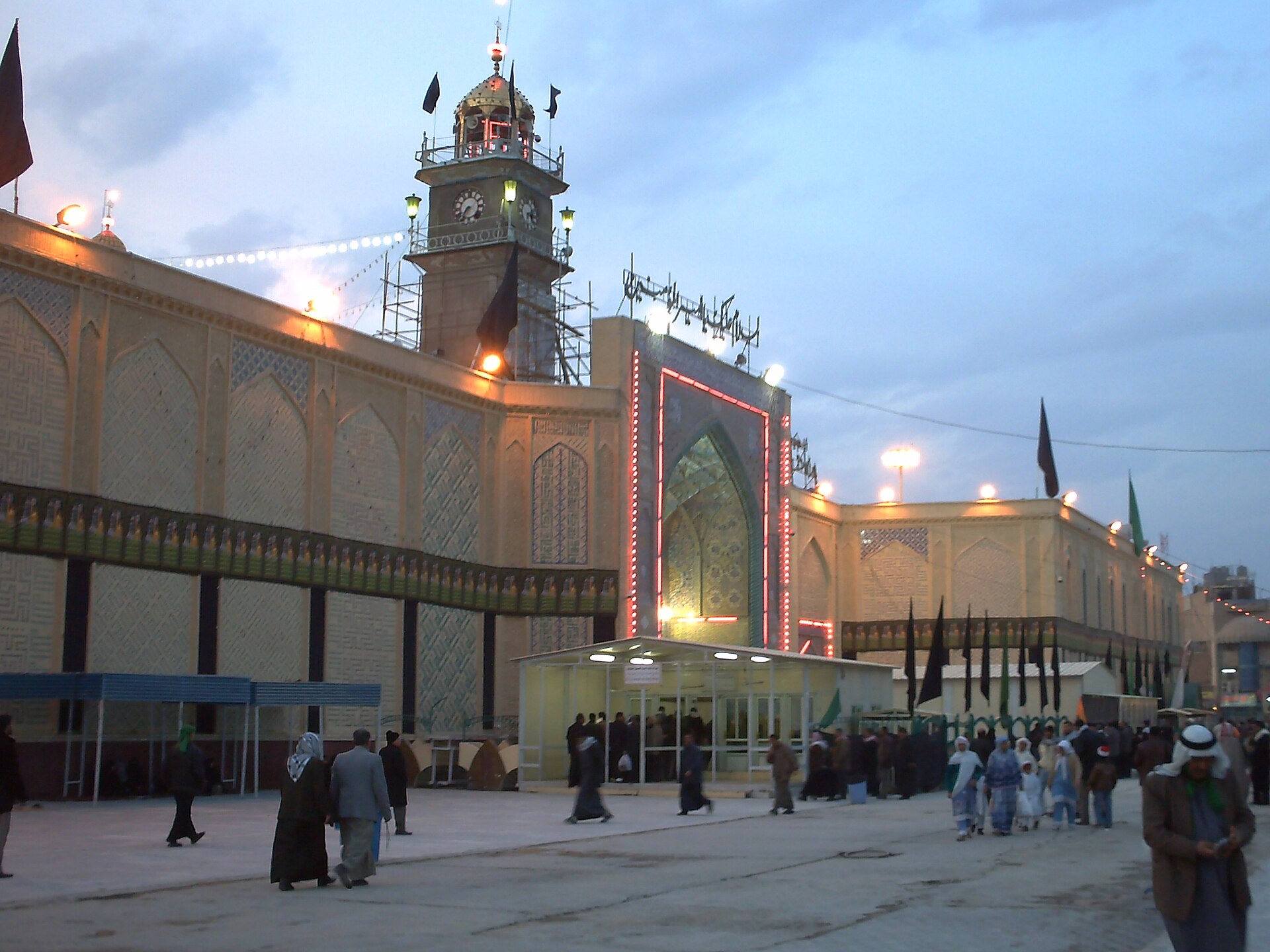
Najaf’s constraint is less about a formal exclusion radius and more about the old city itself. Vehicle access to the streets around the Imam Ali shrine is roadblocked, and the ride-hailing app Careem runs a distinct “Old City” tier for Najaf precisely because the normal pick-up logic does not work there. Drivers will often drop you at a block barrier and point.
The result is a hotel map with a clear inner ring of small properties on the shrine approach streets — Tusi Street and its neighbours, shopfront buildings with a few floors of rooms above — and an outer ring of larger, newer hotels out towards the wider roads and the airport road. The inner ring is where the local market lives and where almost nothing is bookable online. The outer ring is most of what you see on the platforms.
Najaf’s ten Booking.com listings on 13–14 August 2026 ran from Al-Mahasen at $50 and Zamzam Hotel 1 at $55, through Royal Eagle and Jar ALAmer at $80 and Granada at $90, up to Qasr al-Khawarnaq at $119, Qasr AlDur at $135 and Najaf Do at $140. Review volumes vary enormously: Qasr AlDur had 589 reviews and a score of 8.3, while Zamzam 1 had nine reviews and a 9.5. A near-perfect score on single-figure reviews tells you almost nothing.
One geographic note that catches people out: the vast Wadi al-Salam cemetery begins about ten minutes’ walk from the shrine and occupies a large share of the city’s northern side, so “close to the centre” in Najaf can mean bordering several square kilometres of graves. That is not a problem, but it does mean the street grid stops abruptly in some directions and taxi routes take longer than the map suggests. Day trips to the Great Mosque at Kufa, about fifteen minutes away, are usually run from a Najaf base rather than the other way round.
Named properties, and what we can and cannot say
We name properties only where a source names them, and we attach the caveat every time. This is not a shortlist and it is not a ranking. Prices are Booking.com’s lowest listed rate for one night, two adults, as at 13–14 August 2026, and they will not be your price.
| Property | Location | What is documented | Caveat |
|---|---|---|---|
| The Baron Hotel, Karbala | Al-Hussainya Rd, Bab Baghdad; 3.9 km out | Free 24/7 shuttle to the shrine every 30 minutes; pool, multiple restaurants; 8.4/10 from 722 reviews; from $110 | The shuttle is the reason the distance works. Confirm it is running before you rely on it |
| Karbala Rayhaan by Rotana | Karbala; described as 5–7 minutes’ walk from the shrines | 185 rooms and suites (one source says 200), three food outlets; listed by Kayak as a Karbala five-star; a guest review on Booking.com’s Karbala page names “Rayhaan Hotel” with 7.6/10 from 542 reviews | Rotana’s own property URL would not resolve for us on 13 August 2026 and it is not a Booking.com Karbala listing. We cannot confirm its current brand status either way |
| Dur Kassir Alkadhimiya, Karbala | 11-minute walk from the al-Abbas shrine per its own listing | 8.6/10 from 325 reviews; from $75 | The walk time is the property’s claim, measured at an unstated hour |
| Coral Hotel Karbala | Central Karbala | 8.8/10 from 20 reviews; from $65; a guest review reports a shrine bus every 15 minutes | Twenty reviews is a very thin sample |
| Dar Diyafat al-Warith, Karbala | Imam Hussein Shrine project | 19 floors, 7,800 m², capacity 1,000+, built by the shrine’s Strategic Projects Department | Still under construction as of 13 June 2026. It is not bookable. Pages calling it “Warith International Hotel” are citing something that does not exist under that name |
| Al-Kawthar International and Bahjat Al Nour, Najaf | Najaf | Both appear in operator and directory listings | Neither is on Booking.com. We found no confirmed Imam Ali Shrine-run hotel |
A note on the Rayhaan, because it is the property most likely to appear in a search: the evidence is genuinely mixed and we are not going to resolve it for you. It is present in aggregator inventory and carries hundreds of guest reviews. Rotana’s own web presence for it did not respond. If you want to stay there, contact it directly and get written confirmation before you build a trip around it.
Seasonality: the ten days that set the price
Karbala’s demand curve is not a season. It is a series of spikes, and between them the city has a great deal of empty stock. Annual hotel occupancy in Karbala reportedly does not exceed 60 per cent. In Najaf, occupancy rises only 20 to 25 per cent even at Ashura. A city that “sells out” is also a city that is half empty most of the year, and both of those facts show up in what you are quoted.
| Period | What happens to rooms | What to do |
|---|---|---|
| Arbaeen, ~10 days around 20 Safar | Peak of peaks. Inventory block-booked by group operators well in advance; walk-in rates multiply | Book 2–3 months out, or plan to use mawkib lodging like most of the crowd |
| Ashura, ~10 days around 10 Muharram | Second spike. Najaf occupancy up only 20–25%; Karbala much sharper | Same lead time. Najaf is the easier of the two cities to find a bed in |
| Shrine birthdays and Ramadan nights | Short, sharp local spikes, often only a night or two | Check the Islamic calendar against your dates before assuming a quiet week |
| Deep summer outside a commemoration | Genuinely quiet. Karbala and Najaf both hit 50°C on 12 August 2026 | Cheapest rooms of the year, and the hardest walking conditions |
| November to March, no commemoration | Low demand, comfortable weather | Walk in. There is no reason to prepay |
Arbaeen dates move about eleven days earlier each Gregorian year and the exact day is disputed between calendars, so check the current year rather than assuming. Our Arbaeen dates and planning guide sets out why three authorities produced three answers in 2026, and the seasonal overview for the country covers the weather side. If your trip is timed to the commemoration, note that Arbaeen visa arrangements are handled differently from a standard tourist application and the timing of that paperwork tends to decide your booking lead time for you.
There is no statutory cap on what a hotel may charge during a commemoration. The closest thing to price regulation these cities have ever had was moral rather than legal: in a Friday sermon on 28 November 2014, Sheikh Abdul Mahdi al-Karbalai, Grand Ayatollah al-Sistani’s representative in Karbala, publicly rebuked hotel owners over their rates. Nothing in law stops the same thing happening next season.
What 2026 did to the trade
This is recent enough that no other page covering these keywords carries it, and it changes what you should expect at the desk.
A regional war began with the US–Israeli attack on Iran on 28 February 2026, and it closed the pilgrimage economy down. By early May, Saeb Abu Ghneim, head of Najaf’s hotel association, told AFP that 80 per cent of the city’s 250 hotels had closed and more than 2,000 employees had been laid off or put on unpaid leave. Visitor numbers were reported down 95 per cent. In Karbala, with over a thousand hotels, most of the trade was suspended, and Shafaq News reported losses of $20,000 to $100,000 per month per hotel. Reopening began around 30 May 2026, with Najaf airport running roughly 17 flights a day against about 45 before the war.
Then came the strangest part. The Arbaeen walk and the commemoration on 4 August 2026 drew a record head-count — more than 22 million people according to Shafaq News, some five million of them foreign pilgrims from 172 countries, while the al-Abbas shrine’s own AI counting system published a figure of 19,999,870 — and hotel revenue fell anyway.
The reason is a currency. The Iranian rial has lost more than half its value against the dollar in a year, trading near 1.4 to 1.5 million to the dollar by early 2026, with inflation above 40 per cent. Abu Ghneim estimates that around 80 per cent of Najaf’s hospitality, transport and lodging activity in pilgrimage season is tied to Iranian visitors. “The Iranian pilgrim still comes, but cannot spend too much,” he told Shafaq News. Record crowds, thinner returns.
What this means for you in practice: some properties that appear in older listings are simply not open, staffing is thinner than it was, and owners are under real financial pressure. It is not a season for hard bargaining. It is also, in fairness, a period when a small hotel is very glad to see you.
The free option, which is not a fallback
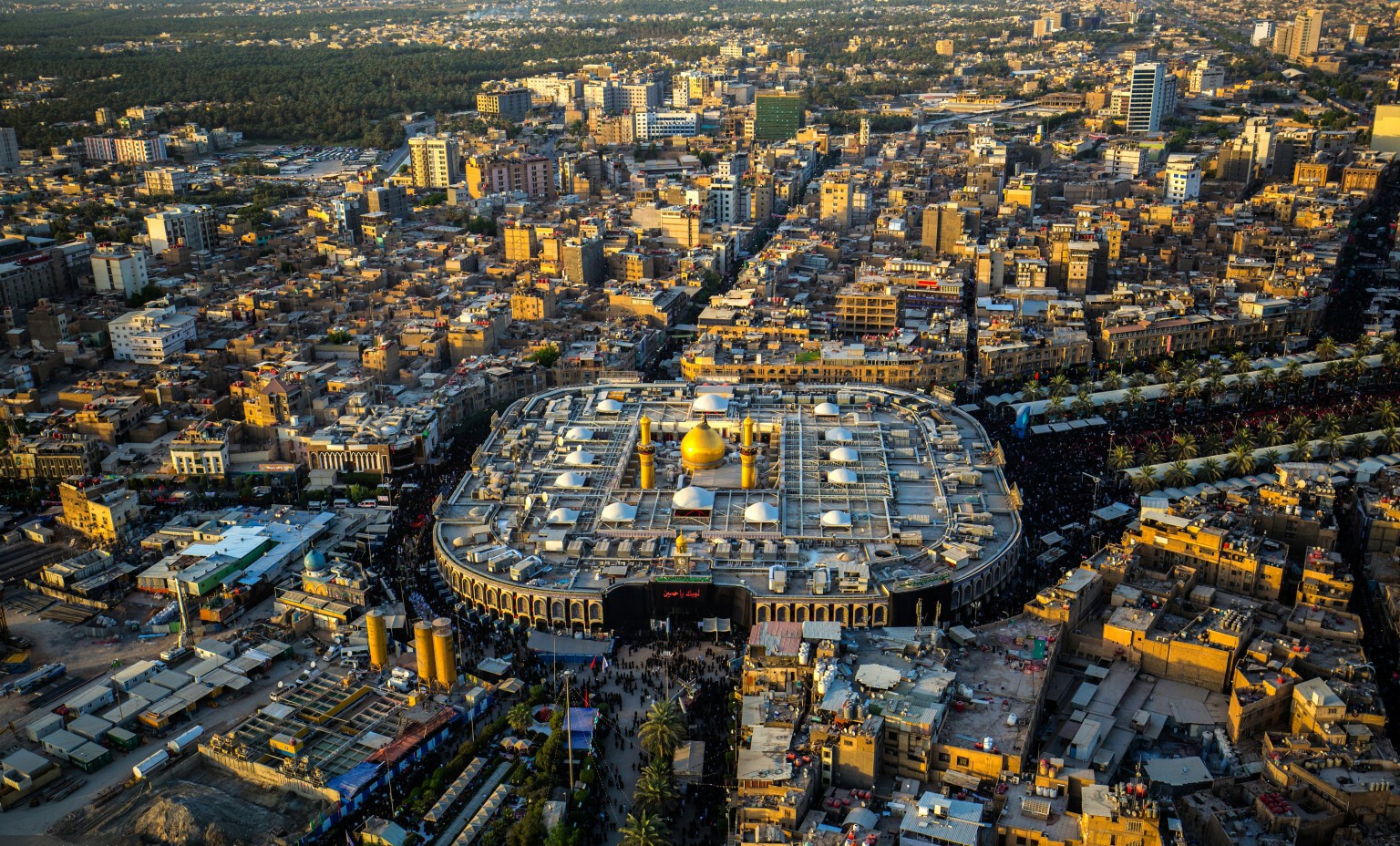
For most people who come to Karbala, the question of which hotel to book never arises, because they are not staying in one. The mawakib — the Husseini service processions — and the hussainiyat provide food, floor space, bedding and transport free of charge, funded by donation and staffed by volunteers. During Arbaeen this is the dominant form of accommodation in the city, not an overflow measure.
Economically it is also why the shrine cities convert enormous footfall into modest revenue. As the Iraqi economist Karim al-Hulou put it to Shafaq News, billions of dinars move through bakeries, restaurants and logistics during the pilgrimage, but because so much is given rather than sold, “the economy moves; the treasury and the private sector see only a slice.”
Foreign visitors can and do use mawkib lodging, and it is offered rather than sold. If you take it, take it on its own terms: it is communal, it is gendered in its sleeping arrangements, it is not private, and the correct response is to help rather than to tip. The Arbaeen packing guide covers what mawakib supply and what they do not, which is the difference between carrying a sleeping bag pointlessly across 80 km and not.
Paying, and what reception actually wants
Iraq is a cash economy and the shrine cities are more so than most. Assume the following unless a specific property tells you otherwise.
- Cash, at the desk, on arrival or departure. Cards work at a small number of upmarket properties and nowhere else.
- Dollars are accepted everywhere and often preferred. Bring clean, untorn notes; damaged bills get refused.
- The street rate is around 1,500 IQD to the dollar against a Central Bank peg of 1,320. Hotels quoting in dinars are usually working off the street rate.
- ATMs are scarce. Arrive with what you need. Our breakdown of what a trip to Iraq costs has the wider budgeting picture.
- Get the total, not the nightly rate. Ask whether the quote is per person or per room, and whether it includes breakfast. In the local market, per person is the default.
Two small things that make the desk conversation easier. Get a local SIM at the airport so a hotel can reach you when a coach is late, and read the general practical tips for Iraq before you arrive, particularly the sections on cash and on Friday timings. Hotel breakfasts in the shrine cities are generally bread, cheese, eggs, jam and tea, served early and cleared early.
For context on what the trade is used to: Iraq’s Ministry of Planning and Tourism estimates that foreign pilgrims spend $300–600 per visit in total and domestic pilgrims $100–200. That is the whole trip, not the room. It tells you how far outside the normal range a $140 hotel night sits.
The numbers do not agree, and here is the spread
Anyone researching this subject runs into wildly different figures for how many hotels these cities have. They are not all wrong; they measure different things. Rather than pick one, here is the spread with what each figure appears to count.
| Figure | Source | What it appears to measure |
|---|---|---|
| Karbala: ~1,200 licensed hotels and guesthouses | Shafaq News, August 2025 | Licensed premises of all types, including guesthouses |
| Karbala: 450 hotels available against a need exceeding 1,000 | Shafaq News, same article, quoting the Najaf association | Apparently hotels actually trading, excluding guesthouses |
| Karbala: 1,000+ hotels, about a third of Iraq’s stock, needing 30,000+ rooms | Sector reporting, 2024–2026 | Hotels of all sizes, with a stated room shortfall |
| Najaf: ~250 hotels, 240 fully operational | Saeb Abu Ghneim, Najaf hotel association | Hotels meeting safety requirements |
| Najaf: fallen from ~350 to ~245–250 | 964media, July 2025 | Net loss of 105 properties to demolition or conversion into car parks, malls and hospitals |
| Karbala: 12 properties; Najaf: 10 | Booking.com, 13–14 August 2026 | Bookable inventory on one international platform |
The useful conclusion is not a single number. It is that Karbala’s licensed capacity is somewhere in the high hundreds to low thousands, that Najaf’s has been shrinking for years as buildings are demolished or converted, and that Arbaeen alone generates more than 2.5 million bed-nights against that base. The mawakib absorb the difference.
For scale on the money: religious tourism contributes roughly 3.3 per cent of Iraq’s GDP and accounts for more than 60 per cent of local employment in Karbala and Najaf. Iraq’s tourism sector as a whole is quoted at around $3.7 billion in earnings, while the Ministry of Planning and Tourism put combined direct and indirect religious tourism revenues at more than $9 billion for 2023. Both figures circulate; they are not measuring the same thing. Saudi Arabia, for comparison, converts roughly 1.7 million Hajj pilgrims in 2026 into an estimated $12 billion. Iraq’s 2024 tourism investment plan earmarked about $620 million for Karbala and Najaf infrastructure including 38 new hotel licences, and delivery has lagged.
A booking checklist
No recommendations, no verdict. These are the questions worth asking before you commit, in roughly the order they matter.
- Are your dates inside a commemoration window? If yes, book 2–3 months ahead or plan for mawkib lodging. If no, do not prepay anything.
- Which shrine gate is the property nearest? This is more informative than a distance in metres.
- Is it inside or outside the vehicle exclusion zone, and if outside, does it run a shuttle? Ask the frequency and the hours.
- Is the quote per person or per room? In the local market it will be per person. Get it in writing.
- Lift, stairs, corridor width. If anyone in your group has limited mobility, ask directly. Old-district buildings frequently have neither lift nor level entry, and photographs will not tell you.
- Cancellation terms, in writing. Airspace over Iraq has closed at short notice more than once in 2026. Pay-at-property structures exist for a reason, and the insurance position is worth understanding before you prepay anything non-refundable.
- Does anyone at reception speak your language? If not, arrange arrival details in advance. Late-night coach arrivals into a crowded lobby are the usual failure point.
- Have you confirmed the property is trading? After the 2026 closures, listings are not proof of an open hotel.
Our national accommodation guide covers how this compares with the rest of the country, where the market behaves far more conventionally. If your route runs on to Baghdad or down into the south, expect ordinary online booking to work again the moment you leave the shrine cities.
Frequently asked questions
These questions are drawn from the section headings and on-page question blocks used by the pages currently ranking for this keyword, principally iraqihotel.com, Kayak and Booking.com, rather than from a scraped People Also Ask box.
Should I stay on the haram strip or a block or two back?
On the strip if your trip is short and shrine-centred and you expect to return to the room between prayers. A block or two back if you are staying more than two nights, sleeping badly, travelling with a car, or travelling in a group that will not all move at the same pace. The price difference is real and so is the noise difference.
What is the closest I can actually sleep to the shrines?
There are properties advertising 200 metres from the haram, and one such Karbala apartment listing was on Booking.com at $150 a night in mid-August 2026. In the old district there are guesthouse floors closer still, but they are not bookable online. The genuine limit is the shrine wall; the practical limit is what the brokers have not already taken for the season.
Are “walking distance” labels on listings reliable?
Treat them as the property’s own estimate, made at a quiet hour, on a route the writer knows. They are not lies but they are the best case. Add a substantial margin for prayer times, security screening and crowd density, and ignore the label entirely for the ten days around Arbaeen or Ashura.
Which amenities actually matter for a shrine visit?
In order: reliable air conditioning, a working lift if you are above the second floor, hot water at the hours you will want it, breakfast timed around prayer rather than around a Western business day, and somewhere secure to leave luggage on a checkout day when your bus is at midnight. Pools and gyms are irrelevant to how the trip actually goes.
Can I turn up without a booking?
Outside the peak windows, yes, and it is what most people do. Hotels in Karbala and Najaf are both walk-up feasible; neither city expects you to have arranged anything. The economics favour you: annual occupancy in Karbala reportedly never exceeds 60 per cent, which means most nights of the year there are empty rooms wanting a guest.
How do I book somewhere that isn’t on Booking.com?
Three routes. Use an Iraqi platform such as iraqihotel.com, which is pay-at-property. Go through a pilgrimage operator, which is how the bulk of the market moves and which usually bundles the room with transport and meals. Or arrive and walk in, which works fine off-peak. Wiring money in advance to a property you found on social media is the one approach we would avoid. If you would rather not deal with any of it, operator-run trips include the room by default. One nine-day ziyarat package running in early April 2026 was advertised at US$650 per person including hotels near the haram, three buffet meals a day and all in-country transport, which is a reasonable benchmark for what bundled accommodation costs.
What about families, elderly relatives and mobility needs?
Ask specific questions before you pay: is there a lift and does it run at night, are there steps at the entrance, how wide are the corridors, can rooms connect, are there extra beds. Old-district buildings are frequently four or five storeys with no lift. New Karbala and Najaf’s outer ring are the more realistic options, and the shuttle-equipped hotels exist precisely for people who cannot make the walk repeatedly.
Is it different for women travelling alone?
Practically, the shrine cities are heavily policed, extremely busy, and used to hosting women travelling in family groups and in organised parties. We could not confirm any general policy on hotels refusing single women or unmarried couples in Karbala or Najaf, and we are not going to assert one either way. Our guide to solo female travel in Iraq goes into what is reported, and the honest answer is that the accommodation-specific evidence is thin.
Do I need a permit or special paperwork to stay in Karbala or Najaf?
No permit is needed for either city; an Iraqi visa is sufficient. That is not true everywhere — Samarra operates differently. What documents a hotel asks for at check-in, and whether foreign guests are quoted differently from Iraqis, we could not confirm from any reliable source. Carry your passport and expect it to be looked at.
What we could not confirm
The gaps here are real and worth stating plainly, because several of them are things other pages state confidently on no visible evidence.
- Hotel passport-registration rules. We found no authoritative statement of what Karbala and Najaf hotels are required to record or report about foreign guests.
- Whether foreigners are quoted different prices from Iraqis. Plausible, widely assumed, unverified. We are not printing a differential we cannot source.
- Whether hotels refuse solo women or unmarried couples. No reliable source either way for these two cities.
- Karbala Rayhaan by Rotana’s current brand status. Present in aggregator inventory with hundreds of reviews; the Rotana property page did not resolve for us on 13 August 2026; absent from Booking.com’s Karbala listings.
- Exact hotel counts. The published figures for Karbala range from 450 to 1,200 and are not reconcilable from public sources.
- Current occupancy and how much of the pre-war trade has actually reopened. The 30 May 2026 restart is documented; the recovery rate since is not.
- Peak-season walk-in rates for 2026 specifically. The $50–100+ figure comes from 2024 association reporting. Given the Iranian currency collapse, this year’s peak may have been lower.
- Whether any hotel is operated by the Imam Ali Shrine. The Imam Hussein Shrine’s guesthouse tower in Karbala is documented and unfinished. We found no confirmed Najaf equivalent.
Final thoughts
The reason the search results for this keyword are so unsatisfying is that they are answering a question the cities do not really pose. Karbala and Najaf are not destinations with a hotel scene to be ranked. They are cities organised around two buildings each, where accommodation is a logistical problem defined by a vehicle exclusion zone, a ten-day demand spike, a brokerage system that predates the internet, and a free lodging tradition that houses more people than the entire commercial sector.
If you take one thing from this: work out where you need to be on foot before you look at a single price. Distance to the correct shrine gate, and which side of the exclusion zone you are on, will determine how your trip feels far more than star ratings or nightly rates will. Everything else is negotiable at the desk, in cash, on the day.
And treat this year’s numbers as this year’s. The trade is coming back from a shutdown that closed four in five Najaf hotels, and the biggest single variable in the shrine-city economy right now is the exchange rate in a neighbouring country. If you are building an itinerary, our seven-day ziyarat route through Najaf, Karbala, Kadhimiya and Samarra sets out the sequence that operators actually use, the Karbala city guide and the Najaf city guide cover what to do once you are there, and the pilgrimage pillar is where the whole silo starts. Before you book anything, read what your own government currently says — both Karbala and Najaf sit inside advisories that will affect your insurance.
Photo credits
Karbala shrine district from the air and Karbala shrine with surrounding blocks: Karbobala Photos (CC BY 4.0). Bayn al-Haramayn corridor: Azhar Hamid (CC BY-SA 4.0). Karbala haram district at street level: Sayed Mahmoud Javadi (CC BY 3.0). Tusi Street, Najaf: UNESCO Office for Iraq (CC BY-SA 4.0). Imam Ali shrine plaza, Najaf: Md iet (CC BY-SA 3.0). All images sourced from Wikimedia Commons.