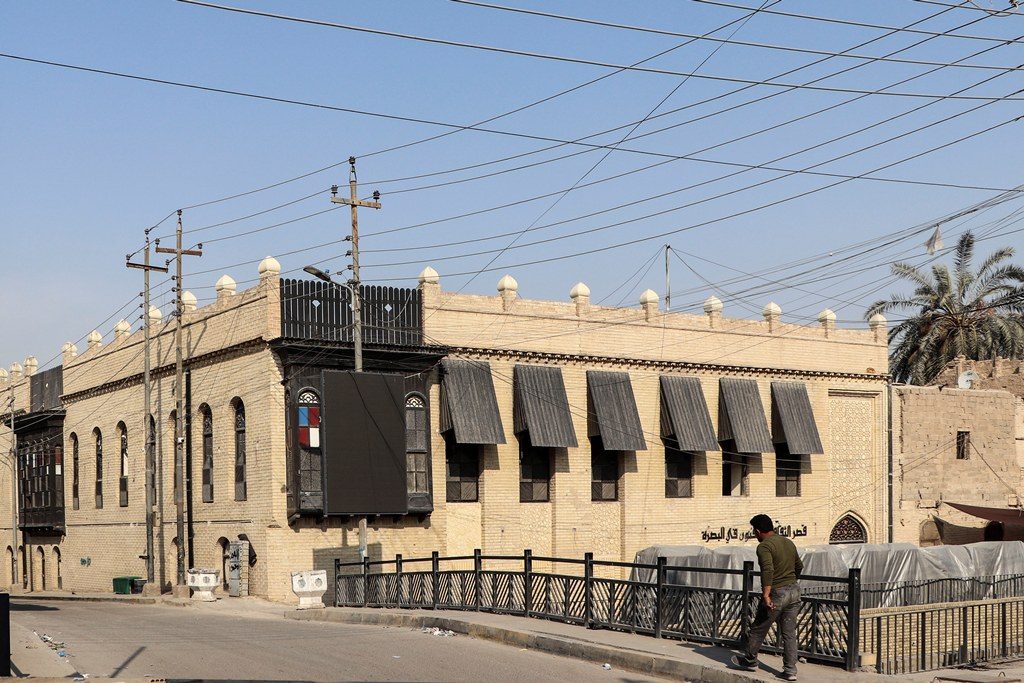
Last updated: August 2, 2026 — every price, rule and rate below re-checked this week. Where a figure comes from an older traveler report, it says so.
I’ve read most of what ranks for this search, and a startling amount of it was written before March 2025. That matters, because in March 2025 Iraq abolished visa on arrival — and a guide that gets the very first step wrong is not a guide, it’s a trap. Every tip below expands on the groundwork laid in our guide to travelling in Iraq.
So the short version. The Iraq travel tips that matter most in 2026: sort your visa online before you fly, bring far more cash than feels sensible and know that two exchange rates exist, expect roughly forty checkpoints on a two-week trip, treat Friday and Saturday as the weekend, and don’t come in August unless you enjoy 48°C. Everything else is detail — and the detail is where trips get better or worse.
What follows is 25 tips, grouped the way you’ll actually need them: before you go, money, moving around, daily rhythm, and conduct. I’ve flagged what’s changed recently, because in Iraq quite a lot has.

The five that matter most
| If you only remember five things | Why |
|---|---|
| No visa on arrival in Federal Iraq | Abolished 1 March 2025. Apply online, two weeks ahead. Kurdistan is the exception. |
| Cash, and then more cash | Foreign cards work in a shrinking number of places. Budget $100/day in dollars even if you spend half. |
| Two exchange rates exist | Official 1,320 to an end user; the street pays around 1,500. Change with a licensed exchanger, not a bank. |
| Passport on you, always | Checkpoints are constant, friendly, and non-negotiable about documents. |
| Timing beats everything | Avoid June–September heat, Ramadan, and the weeks around Arbaeen unless that’s why you’re coming. |
First, unlearn what page one told you
Before the tips, a short list of corrections. Every one of these is currently sitting near the top of Google for Iraq travel advice, and every one is wrong:
- “You can get a visa on arrival for $77.” Gone since 1 March 2025 for the 37 e-visa nationalities. It’s around $160 online now. Full detail in our Iraq entry requirements guide.
- “You must fly into Baghdad to get the all-Iraq visa.” You apply online from home. The old fly-to-Baghdad workaround is obsolete.
- “Alcohol is legal, there are bars in Christian neighbourhoods.” A ban on import, sale and production took force in March 2023; a November 2024 extension reached hotels and social clubs. Kurdistan is a different story — see tip 23.
- “$1 = 1,500 dinars, official.” There are two rates, and the guides quoting one number are usually quoting a stale one. See tip 7.
- “The Baghdad–Basra train runs three nights a week.” It’s daily.
- “There’s only one hostel in Iraq.” Not true, and hasn’t been for years.
- “You may need a PCR test.” There are no COVID entry requirements. That one still appears in a 2026-dated guide.
If a page tells you any of the above, treat everything else on it as equally old. Good Iraq travel tips carry a date; the ones that don’t are usually hiding one.
Is Iraq actually for you?
Worth asking honestly before you spend $160 on a visa.
Iraq rewards a specific kind of traveler: someone who has done a few harder trips already, who is comfortable improvising when a site turns out to be closed, and who finds the absence of other tourists a feature rather than a warning. If that’s you, there is almost nowhere better right now — you can have Babylon to yourself, walk into 4,000 years of history without a queue, and be fed by strangers three times a week.
It’s a poor fit if you need bookable, predictable logistics. Opening hours move, sites close for restoration without announcement, transport leaves when it’s full rather than when the timetable says, and the answer to most questions is “ask when you get there.” It’s also a hard first international trip, and previous travel in the Middle East makes an enormous difference to how legible the place feels.
Kurdistan is the gentler version of all of this — easier entry, better roads, English more common, alcohol legal, women travelling alone far less remarkable. Plenty of people do Kurdistan first and come back for the south a year later. That’s a sensible order, not a compromise.
Before you go (tips 1–6)
1. Apply for the visa two weeks out, not two days. The e-visa costs $160, runs 60 days, and is officially approved in 24–72 hours — and often is. It has also taken people three weeks. The portal’s card payments fail regularly — travelers report European bank cards and Wise being declined outright, with better luck on Revolut and on debit rather than credit. Save your application number by hand, because the confirmation email doesn’t always arrive. Our Iraq visa guide walks the whole thing screen by screen.
2. Decide Kurdistan-or-everywhere before you book a flight. A federal visa covers all of Iraq including the Kurdistan Region. A Kurdistan visa covers only Kurdistan, and there is no immigration post on the internal road where you could upgrade it — so flying into Erbil on the cheap Kurdish visa quietly cancels Baghdad, Babylon and the south. If you want both, land at Baghdad, Najaf or Basra. Our Kurdistan guide covers the northern option properly.
3. Buy insurance that actually names Iraq. Most standard policies void themselves the moment your government advises against travel, and both the US and UK currently do. A handful of insurers still cover Iraq; read the war-and-terrorism exclusions rather than the marketing page, using the checklist in our Iraq travel insurance guide, and check whether medical evacuation is included, because that’s the clause that matters.
4. Load your phone before you land. Offline maps (Google Maps offline areas or Maps.me), Google Translate with Arabic and Kurdish downloaded, WhatsApp — which is how every hotel, driver and guide in the country communicates — and a ride-hailing app. Add a calculator that reads Eastern Arabic numerals, because prices on menus and market signs are often written ١٢٣ rather than 123.
5. Join Iraqi Travellers Cafe before you go. The Facebook group is the closest thing Iraq has to real-time ground truth: which checkpoint is difficult this month, which site has reopened, which hotel is overcharging. It’s free, it’s active, and it has repeatedly been more current than anything published.
6. Pack for modesty and for dust. Long trousers and sleeves for everyone; a scarf if you’re a woman, and more coverage than you think in the holy cities. Add a dust mask or buff — sandstorms have closed airports repeatedly in recent years — plus a power bank, because the grid fails daily and budget hotels switch the generator off overnight. Our accommodation guide explains how to ask about 24-hour power before you book.
Money (tips 7–11)
7. Understand that Iraq has two exchange rates. The Central Bank has anchored the dinar at 1,300 to the dollar since February 2023 and confirmed that rate again for the 2026 budget — but 1,300 is an accounting rate. What a bank actually gives an end user is 1,320. The parallel market, which is what the exchange shops pay, was running around 1,500 in late July 2026 — roughly 150,000 dinars per $100, having come down from about 1,570 earlier in the month. That gap is 12–14%, it moves week to week, and it is the single most consequential number in your budget.
8. Change money at a licensed exchanger, not a bank or a hotel. The small shops with pictures of banknotes in the window look informal and are entirely normal. They pay close to the parallel rate. Banks pay the official rate, which costs you 12–14% for nothing. Bring clean, new US$100 bills — worn, torn or pre-2013 notes get refused or discounted, and this is not a negotiation you will win.
9. Bring more cash than you think, and small notes. Plan on roughly $100 per day and expect to bring most of it home. Foreign Visa and Mastercard withdrawals work in Erbil, Sulaymaniyah and Duhok fairly reliably and patchily elsewhere; fees run 4,000–7,500 IQD a withdrawal, and machines run dry. Carry both a Visa and a Mastercard, because some ATMs take only one. Small dollar bills — $1, $5, $10 — are gold for tips and small purchases.
10. “Cash only” is becoming less true, slowly. Iraq has pushed hard on electronic payment: the domestic Qi Card scheme reported more than 22 million users and over 160,000 merchants in mid-2026 (its own figures), and card terminals are now ordinary in Erbil and in mid-range and upmarket Baghdad. That doesn’t help you as much as it sounds, because those terminals are built for domestic cards and often decline foreign ones. The habit worth forming is the one Iraq-based guides teach: ask “card OK?” before you order, not after. Assume cash, be pleasantly surprised.
11. Tipping is light, and rounding up is the norm. Nobody expects a percentage. Round up for drivers, leave something for a guide who’s spent a day with you, and don’t tip in local eateries where it isn’t expected. Our Iraq travel cost breakdown has realistic daily budgets — independent travel lands around $45–65 a day before drivers and site fees.

Getting around (tips 12–15)
12. Learn the word “garage”. Intercity travel doesn’t run on bus timetables; it runs on garages — the yards where shared taxis and minibuses fill up and leave. You don’t book. You turn up, ask for the “[city] garage”, pay for a seat, and wait for the vehicle to fill. A four-passenger sedan costs more than a seven-seat GMC; the front seat costs 2,000–5,000 IQD extra and is worth it on a long run. Full mechanics in our getting around Iraq guide.
13. Use the apps in cities, not street taxis. Careem covers Baghdad, Erbil, Basra and Najaf. Baly, the Iraqi super-app, is generally the cheaper of the two and covers more provincial cities; Bolt also operates in Baghdad. There is no Uber. Both fix the fare before you get in, which removes the entire category of taxi argument. From Baghdad airport, the budget route is the shuttle to Abbas ibn Firnas Square for 8,000–9,000 IQD and an app ride from there for 12,000–15,000 — the official taxi desk inside charges 40,000–45,000. Anything much above 15,000 quoted at that square is someone trying it on.
14. The Baghdad–Basra night train runs daily now. This is the tip most guides get wrong. It’s a Chinese-built air-conditioned sleeper leaving both ends around 7–8pm and arriving early morning; a two-berth sleeper is about 37,000 IQD ($28), a four-berth 31,000, a seat 10,000–15,000. You can’t book online. Tickets are sold at the station, in person, on the day — though you can send someone with a photocopy of your passport to buy on your behalf, and travelers report the ticket office wanting card payment, which is an odd inversion of the rest of the country. Bring cash or a Mastercard, and get to the station an hour before departure for the compulsory luggage check. Go early if you want a sleeper.
15. Budget mentally for about forty checkpoints. Two weeks in the south and you’ll clear something like forty. They are overwhelmingly friendly — a look at the passport, a “welcome to Iraq”, occasionally a selfie. Make it easy: passport and printed visa reachable rather than buried, four or five photocopies to hand over, a destination you can name, and no photographs of the checkpoint itself. Learning to say siyaha (tourism) covers most of the conversation. Baghdad to Erbil runs around seven checkpoints with boot searches; Samarra takes your passport and gives you a visitor card back on exit.

The daily rhythm (tips 16–20)
16. The weekend is Friday and Saturday. Government offices, some museums and most official business shut. Friday morning is the quietest time in any Iraqi city and the best time to walk around one.
17. Do monuments in the morning, markets at night. Archaeological sites and museums tend to close by mid-afternoon, and in summer the middle of the day is genuinely dangerous to be standing in. Cities do the opposite: markets, riverside cafés and shrines fill up after dark and stay busy until 1 or 2am. Shift your whole day later than you would in Europe. Our best places guide flags opening patterns site by site.
18. Check what’s actually open before you travel to it. Iraq’s headline sites open and close with restoration work and security decisions, and published guides lag badly. Several Baghdad landmarks have spent recent years closed for restoration, the Iraq Museum and Al-Mustansiriya Madrasa among them, and reopening dates slip — we couldn’t confirm current status from any official antiquities source, which is itself the point. In the other direction, Mosul’s al-Nuri Mosque and its leaning al-Hadba minaret reopened in September 2025 after reconstruction, and Mosul airport reopened to passenger flights that November — two facts almost no competing guide has caught up with. Ask your hotel or the Facebook group the week you go, not the month before. Our Mosul guide and Mesopotamia sites guide track this.
19. Tea arrives with a dune of sugar at the bottom. Stir it in for the local experience or ask for it plain. Tea usually comes with a meal at no charge; the bottle of water on the table usually does not, and will appear on the bill. Accepting tea when it’s offered is close to a social obligation, and refusing repeatedly reads as coldness.
20. Menus are often Arabic-only, and pointing works. Outside Erbil and upmarket Baghdad, expect no English menu and no English-speaking waiter. The universally successful strategy is to look at what the next table is eating and point. Vegetarians should plan around this — Iraqi food is superb but meat-centred, and falafel fatigue is real. Our Iraqi food guide lists what to point at and what to ask for by name.

Conduct and culture (tips 21–25)
21. Dress conservatively, and more so in the holy cities. Men: long trousers, sleeves, no shorts. Women: loose clothing covering arms and legs, with a scarf carried at all times. In Karbala’s shrine district an abaya and headscarf are effectively mandatory and enforced at the modesty checks on the way in; elsewhere in the city, modest dress with a scarf is the expectation. Abayas and chadors are sold on the approach roads for roughly 5,000–15,000 IQD, which is the easy solution, and some shrines lend cloaks. Lalish, the Yazidi holy site, is entered barefoot, so leave shoes and socks in the car. More on all of it in our Iraqi culture and etiquette guide.
22. Photograph people freely, infrastructure never. Iraqis will frequently ask you for a photo, and street photography is welcomed to a degree that surprises people. What you must not point a camera at: checkpoints, soldiers, police, bridges, government buildings, airports and the Green Zone. Ask before photographing women. Drones don’t come in. There’s no realistic permit route for a tourist and they are routinely confiscated on arrival, Erbil included.
23. Alcohol: a real ban in the south, a shrug in the north. Article 14 of the Municipal Revenues Law — passed back in 2016 but only gazetted into force in March 2023 — bans import, sale and production nationally, and a November 2024 extension pushed it into hotels and social clubs. Fines run 10–25 million dinars, roughly $7,700 to $19,000, and dozens of outlets have closed. Enforcement in Baghdad is real enough that police have searched cars coming down from Kurdistan for beer. The Kurdistan Region does not enforce it, and Erbil, Sulaymaniyah and Duhok have open, legal bars and shops. Practical position: drink in Kurdistan if you want to, don’t carry it south, and don’t expect a drink in Karbala or Najaf under any circumstances.
24. Take hospitality seriously, and learn to lose the payment argument gracefully. You will be invited to meals, handed free tea and juice, and occasionally waved out of a taxi without paying. Some of that is a genuine gift and some is politeness expecting a polite refusal. The move is to insist on paying twice, and accept on the third. Bring something small from home to give in return — it converts an awkward imbalance into an exchange.
25. Solo women can travel here, with adjustments. Women do travel Iraq alone and report warmth rather than harassment, but it’s rare enough that you’ll be conspicuous, and the calculus differs sharply between Kurdistan — relaxed, easy, cafés and hiking — and the conservative south. Practical adjustments travelers actually recommend: a scarf permanently to hand, a guide or local contact for the holy cities, firmness about selfies that turn into an arm around your shoulder, and a slightly cooler default friendliness than you’d use at home. Reading a woman’s account of the country is worth more than any listicle; a few good ones exist and they broadly agree.
What things actually cost
Real prices are the thing missing from almost every Iraq guide — the SERP contains roughly two entrance fees between all of its top results. Here’s a working set. Treat anything marked as older with the usual inflation caution, and note that most site fees have converged on a flat foreigner rate.
| Item | Typical price | Notes |
|---|---|---|
| Major archaeological site entry | 25,000 IQD (~$17) | Babylon, Ur and most ticketed sites; Iraqis pay a fraction |
| Shared taxi seat, intercity | $5–15 | Front seat +2,000–5,000 IQD |
| Baghdad–Basra sleeper berth | 31,000–37,000 IQD ($24–28) | Seats from 10,000; daily service |
| Careem/Baly ride in Baghdad | 12,000–15,000 IQD | Baly generally cheaper; Bolt also in Baghdad |
| Airport shuttle to Abbas ibn Firnas Sq | 8,000–9,000 IQD | vs 40,000–45,000 at the official desk |
| Budget hotel double | 25,000–40,000 IQD ($17–30) | Reported 2025–26; often no towels, ask to see the room |
| Mid-range hotel, Baghdad | $100–150 | 5-star runs $250–400 |
| Street food meal | 2,000–5,000 IQD | Falafel, samoon, shawarma |
| Local restaurant dinner | 6,000–12,000 IQD | 10,000–20,000 somewhere smart |
| SIM with 10GB | 20,000–23,000 IQD | Zain, Asiacell or Korek |
| Abaya or chador | 5,000–15,000 IQD | Sold outside the shrines |
| Marsh overnight, two people | ~140,000 IQD (~$95) | Includes mudhif, boat, meals |
| Independent daily budget | $45–65 | Before drivers, guides and flights |
Two structural notes. Nearly everything above is negotiable or has a lower local price, and asking “how much in dinars?” rather than accepting a dollar quote typically saves 15–25%. And an organized tour is a completely different economy — $150–300 per person per day depending on group size. Our full cost guide breaks both models down.
Where the money goes wrong
Iraq has very little crime aimed at tourists and a small, well-documented set of ways foreigners get overcharged. Knowing the five saves more than any other tip on this page.
- The airport “hotel rebooking fee”. The best-known one. Someone official-adjacent at the Baghdad or Basra arrivals desk explains that your booking isn’t at an approved hotel and asks for $50–60 to fix it. You get no room and no receipt. Travelers who have argued report either a long stalemate or being waved through; the Iraqi travel community is clear that it isn’t a real charge. Have a printed booking with a street address and be politely immovable.
- The taxi rank at Abbas ibn Firnas Square. The shuttle from the airport to this square costs 8,000–9,000 IQD and is the budget route into Baghdad. From the square, an app ride into the centre is 12,000–15,000. Quotes well above that are opportunistic — this is the spot travelers most often name as the one place they got stung.
- Dual pricing in dollars. A price quoted to you in USD is a marked-up price. Asking “how much in dinars?” typically brings it down 15–25%, and it works on hotel rooms, taxis and souvenirs alike.
- Unnegotiated hotel rates. Rack rates are opening positions, particularly for walk-ins. Asking for the cheapest room rather than accepting the one offered is worth doing every time — several travelers report being given a “family room” at family prices they never needed.
- Lookalike visa websites. Agency sites that clone the government portal charge $200–400 for a form you can complete yourself. The real ones are evisa.iq for Federal Iraq and visit.gov.krd for Kurdistan; everything else is a middleman.
None of these is dangerous. All of them are avoidable by knowing the number before someone tells you the number.
Staying connected
Buy a local SIM on arrival; the Zain counter at Baghdad arrivals is on the left as you come out. Zain, Asiacell and Korek all work, with Asiacell generally strongest in the south and Korek in Kurdistan. Reckon on 20,000–23,000 IQD for around 10GB, and note that “unlimited” packages throttle hard after a threshold. You’ll need your passport to register the SIM — this is not the paperwork-free process some guides claim, and one recent report has Zain refusing a SIM to a traveler holding only a printed e-visa with no passport sticker yet.
eSIMs work if your phone supports them and save the queue, though they cost more and give you no local number — which matters, because WhatsApp with a local number is how you talk to drivers and hotels. Hotel wifi is generally serviceable, and a VPN is worth installing before you arrive rather than after — not least because Iraq still cuts the national internet during school exam sessions, which we explain in our Iraq SIM card and internet guide.
Health, water and the things nobody writes about
No vaccinations are required for a standard arrival from Europe, North America or the Gulf, though a travel clinic will usually suggest the routine regional set — hepatitis A and typhoid among them — a few weeks ahead. There are no COVID requirements of any kind.
Drink bottled water everywhere. It’s cheap, universal, and municipal quality varies enormously; Basra’s 2018 water crisis hospitalised well over a hundred thousand people and the underlying salinity problem hasn’t gone away. Iraqi food is generally safe, street food included, but it is cooked in a great deal of oil and a lot of visitors have a rough day or two adjusting — bring the obvious medication rather than hunting for it.
Pharmacies are common and well stocked, and pharmacists are often the fastest route to a minor problem being solved. Bring prescription medication in original labelled packaging with a copy of the prescription. Private hospitals in Erbil and Baghdad are reasonable for minor issues; anything serious means evacuation, which is precisely why the insurance clause in tip 3 matters more here than in most countries.
And the boring statistic that ought to shape your behaviour: the realistic danger to a tourist in Iraq is not terrorism, it’s the roads. Driving standards are fast and improvisational, seatbelts in the back are rare, and long night drives between cities are the single most avoidable risk on your trip.
The seasonal traps
Three timing mistakes account for most miserable Iraq trips.
August is a mistake. Federal Iraq in high summer is genuinely extreme — Basra recorded about 53.9°C on 22 July 2016, a reading the World Meteorological Organization has never certified but nobody in Basra disputes, and Baghdad hit 51.8°C on 28 July 2020. Add dust storms and daily power cuts and you have a country you experience through a car window. If you’re reading this in August 2026, plan for October instead. Our best time to visit guide breaks it down month by month; the short answer is March to May and October to November.
Arbaeen swallows the country. Arbaeen 2026 falls on 5 August. By the end of July, Iraq’s Security Media Cell had counted well over three million foreign pilgrims from 172 countries already inside the country, with officials forecasting 4.5–5 million foreign arrivals and something near 22 million people in total. Karbala and Najaf hotels are full at triple rates, the roads south of Baghdad become a walking city, and immigration queues stretch. It is one of the most extraordinary human events on earth and a terrible fortnight for ordinary sightseeing — go deliberately or not at all. Our ziyarat guide covers going deliberately.
Ramadan changes the rules, including for you. Eating, drinking and smoking in public during daylight is prohibited rather than merely impolite, and the Interior Ministry has said this applies to foreigners too. Restaurants close during the day; nights are wonderful. Ramadan 2027 begins around 8 February.
Leaving: the last hour nobody plans for
Two things to get right on the way out. Make sure you leave with an exit stamp in your passport — the process at land borders in particular involves several windows in no obvious order, and walking away un-stamped creates a problem you’ll meet on your next visit. And give Baghdad airport three hours, not two: it runs multiple security rings, starting with a vehicle check well before the terminal.
The same currency-declaration thresholds apply going out as coming in — over $10,000 or 200,000 dinars must be declared. Don’t leave with anything that could be mistaken for an antiquity, however convincingly the bazaar seller described it as a replica. Our entry and exit requirements guide has the full detail.
One honest paragraph about safety
You should know what you’re deciding. The US State Department rates Iraq Level 4: Do Not Travel, and ordered non-emergency government staff out on 2 March 2026. The UK FCDO advises against all travel to Ninawa, Kirkuk, Salah al-Din, most of Anbar and several border strips, and against all but essential travel to the rest of the country — Baghdad, Karbala, Najaf, Basra and the Kurdistan Region included. Check it the week you fly, because that wording has moved twice this year. The regional conflict that began with strikes on Iran in late February 2026 has not resolved, and the US Embassy has repeated a standing warning through late July and into August that people in the region should expect flight cancellations and periodic airspace closures. None of that is compatible with telling you Iraq is fine, and we won’t. What we can say is that day-to-day travel for the small number of tourists who go has stayed remarkably ordinary, and that the honest, unexciting version of the risk picture is laid out in our is Iraq safe guide. Read it, read your own government’s advisory, and decide as an adult.
Iraq travel tips: your questions, answered
What should I know before traveling to Iraq for the first time?
Four things, in order: there’s no visa on arrival in Federal Iraq any more, so apply online first; bring cash in clean US dollars because cards mostly don’t work; carry your passport everywhere because checkpoints are constant; and don’t come between June and September. Everything else you can improvise.
How much cash should I bring to Iraq?
Around $100 per day is the standard advice and most people bring some home. Independent travel actually runs $45–65 a day before drivers, guides and site fees. Bring new, unmarked $100 bills for changing, plus a stack of small notes.
Can I use my credit card in Iraq?
Sometimes, in Erbil and in mid-range and upmarket Baghdad. Card terminals are now common but are built for domestic cards and frequently decline foreign ones. Ask “card OK?” before ordering. ATMs are most reliable in the Kurdistan cities; carry both Visa and Mastercard.
Is alcohol allowed in Iraq?
Not in Federal Iraq — a 2023 law banned import, sale and production, extended into hotels and clubs in late 2024, with heavy fines. The Kurdistan Region doesn’t enforce it and sells alcohol openly. Don’t transport it from north to south.
Do I need a guide to travel in Iraq?
Not to travel, but yes for specific places. Some sites and checkpoints are effectively closed to unaccompanied foreigners, and the country has almost no interpretive signage, so a guide converts ruins into history. A good middle path is independent travel with hired day-guides where you need them.
What should women wear in Iraq?
Loose clothing covering arms and legs, with a headscarf carried at all times and worn at religious sites. Karbala expects full covering city-wide. Abayas and chadors are sold cheaply outside the shrines. Kurdistan is considerably more relaxed.
Is English spoken in Iraq?
Patchily. Younger people in Erbil, Sulaymaniyah and central Baghdad often speak some; drivers, garage staff and checkpoint soldiers generally don’t. Download offline Arabic and Kurdish translation and expect to point at things.
What’s the weekend in Iraq?
Friday and Saturday. Government offices and some museums close, and Friday morning is the quietest, most walkable time of the week.
Are there any COVID entry requirements for Iraq?
No. There are no COVID tests, certificates or forms required to enter Iraq. Guides that still mention PCR tests are years out of date.
How many checkpoints will I pass?
On a two-week southern trip, roughly forty. Baghdad to Erbil alone runs around seven. They’re friendly and quick if your documents are accessible and you can name your destination.
Can I drink the tap water in Iraq?
Stick to bottled. Municipal supply quality varies a lot by city and season, and Basra in particular has a documented history of contamination — a 2018 crisis hospitalised well over 100,000 people. Bottled water is cheap and universal.
How many days do you need in Iraq?
Ten days covers Baghdad, Babylon, Karbala, Najaf and Ur at a civilised pace. Two weeks lets you add the marshes and Basra, or swap south for Kurdistan. Three weeks does the whole country without rushing. Under a week, pick one region.
What’s the best month to visit Iraq?
October and November, then March to May. Kurdistan stretches that by a few weeks at both ends because of altitude. June to September is brutally hot in the south and best avoided.
Do I need to speak Arabic to travel in Iraq?
No, but a dozen words transform the trip. Shukran (thank you), salam alaikum (hello), shlonak (how are you, Iraqi dialect), siyaha (tourism, for checkpoints) and bekam? (how much?) will carry you a long way. Kurdish differs — supas is thank you in the north.
Can I bring a drone to Iraq?
No. There’s no realistic permit route for tourists and drones are confiscated at customs, Erbil airport especially.
Final thoughts
The most useful thing about Iraq is also the most disorienting: almost nothing about it works the way the internet says it does, and the gap is usually in your favour. The checkpoints that sound terrifying are a man asking where you’re going and welcoming you to his country. The famously impossible logistics amount to learning one word — garage — and turning up. The hospitality is not a travel-writing cliché; it is a daily, slightly overwhelming fact that will leave you owing people things you can’t repay.
Get the paperwork right, come in the right month, carry cash and your passport, and Iraq is far easier than its reputation. Start with our complete Iraq travel guide, then pick a shape for the trip from our itineraries — or start in Baghdad and see how far the invitations carry you.
Photo credits
All images via Wikimedia Commons: Enno Lenze (CC BY 2.0); Blacktealike (CC BY-SA 4.0); Ahmadkurdi44 (CC0); City Foodsters (CC BY 2.0).