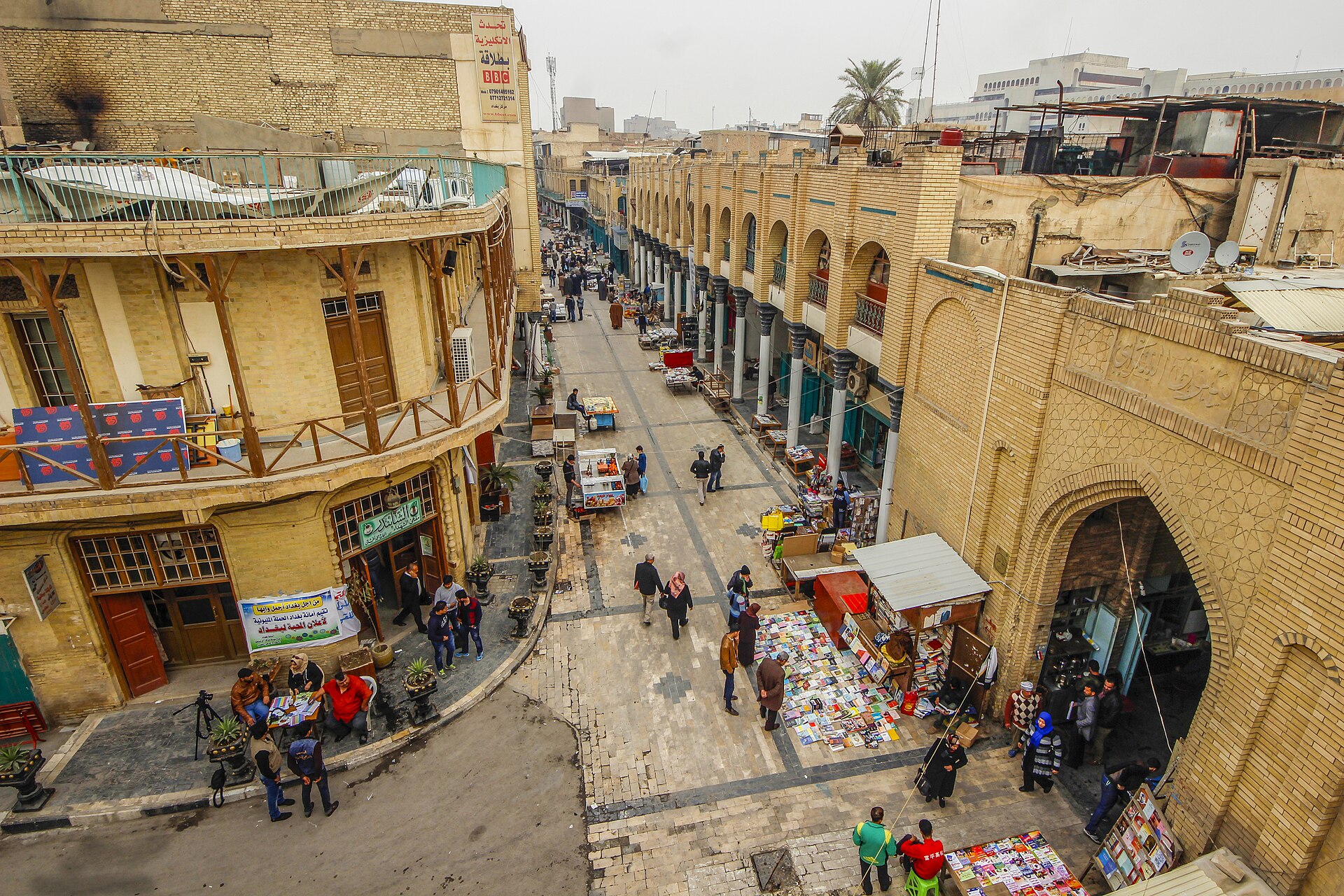
Last updated: August 2026. FCDO regional wording re-checked against gov.uk on 8 August 2026; Iraq’s 2024 anti-homosexuality law, the hotel guardianship rules documented by Human Rights Watch and the shrine entry procedure at Najaf and Karbala all re-verified for this update.
Ask women who have actually done solo female travel in Iraq what the hardest part was, and street harassment is rarely the first thing they say. They talk about the heat, the checkpoints, the paperwork, being the only woman in a room of forty men, and how tiring it is to be looked at all day even when every look is friendly. The catcalling and grabbing that shapes a woman’s day in Cairo or Naples or Istanbul is, by most accounts, markedly rarer here. The general conditions behind all of this are covered in our country-level safety guide.
So here is the honest answer. Solo female travel in Iraq is genuinely feasible in the Kurdistan Region, and in federal Iraq it is usually done with a guide, a driver or a small group — and the reason for that is logistics, access and government advisories, not the risk of being bothered by men in the street. The two risk curves that most destinations bundle together run in opposite directions here. Interpersonal harassment is low. The structural risks — advisories that void your insurance, airspace that closes at short notice, checkpoints that decide where you may go, consular help that is thin to non-existent — are high, and they apply to men and women identically.
Search solo female travel Iraq and page one splits into two camps: breathless reassurance, or a warning not to go at all. Almost every one of those guides collapses the two risks into a single verdict, which is why the advice you get is either “I felt safer than at home” or “women shouldn’t go”. Neither is useful when you are trying to plan. This guide keeps them apart. It covers what the advisories say and what they cost you, where independent travel is realistic and where it is not, hotel check-in and the guardianship rule you may have read about, shared taxis and where to sit, the women’s entrances at Najaf and Karbala, what to wear city by city, periods and pharmacies, working with a male guide all day, the legal position for women travelling with a female partner, and the parts nobody puts in the brochure.

Solo female travel in Iraq: the short answer
If you are here for one question, take the row that matches it and go. Everything after this table is the reasoning and the detail.
| Question | Answer |
|---|---|
| Is Iraq safe for women, specifically? | Street harassment is reported as low by most foreign women, lower than in several neighbouring and Mediterranean countries. The serious risks are not gendered |
| Can I travel independently? | In the Kurdistan Region, realistically yes. In federal Iraq, most women use a guide, driver or small group, largely because of checkpoints and access rules |
| Do I need a headscarf? | Not legally, and not in Erbil, Sulaymaniyah, Baghdad or Mosul. Yes inside shrines, and socially expected in Najaf and Karbala |
| Will hotels take a woman alone? | Foreign women with a passport are generally fine at mid-range and business hotels. Cheap lodging houses often will not, and unmarried couples are a separate problem |
| What do the advisories say? | The UK advises against all travel to some provinces and all but essential travel to most of the rest, including all of Kurdistan. The US says do not travel, for any reason |
| What does that cost me? | Standard travel insurance is void if you go against your government’s advice. This is the single most expensive consequence and the one most pages skip |
The two risks run in opposite directions, and only one of them is about you
This is the structural point, and it is worth sitting with before you read anything else about what to pack.
Why harassment is lower than most female travellers expect
Foreign women in Iraq consistently report very little of the street harassment they have learned to brace for elsewhere in the region. The reasons appear to be three. A woman travelling alone here is so socially unusual that she is read as a guest rather than as available, and guest status in Iraq carries real obligations on the host side. Social sanction against public harassment of a stranger is strong, and confrontation between men is a normal way of settling things, which means bystanders intervene. And tourism is still new enough that most Iraqis are pleased you came and behave accordingly.
None of that makes Iraq a country without harassment. A widely reported survey found eight in ten women in Iraq had experienced some form of sexual harassment, and Iraqi women’s organisations have been describing a rise in recent years. What foreign women are experiencing is a protective bubble around the outsider, not the absence of the problem. It is worth naming, because guides that say “harassment doesn’t happen in Iraq” are describing a privilege and calling it a country.
The reports that do come back from travellers are consistent in shape: too many selfie requests, a hand that lingers during a photo, a great many casual marriage proposals, and men who will not stop messaging once they have your number. Serious assaults are rare in traveller accounts but not unheard of, and the same account that says “I had no problems” often also says “I know women who did”.
Why the real constraint has nothing to do with your gender
The FCDO updated its Iraq advice on 22 July 2026 and it is regionalised now, which a lot of competitor pages still have not caught up with. It is no longer a blanket “against all travel to Iraq”. The UK advises against all travel to Kirkuk and Ninawa provinces (Mosul included), Salah al-Din, most of Anbar, most of Diyala, Jurf al-Sakr in Babil, Sadr City in Baghdad, and strips within 5km of the Iranian, Saudi and Kuwaiti borders. It advises against all but essential travel to most of the rest, including Baghdad province, Karbala, Najaf, Basra and the whole Kurdistan Region. The US State Department is at Level 4, Do Not Travel, reissued 2 March 2026, with the instruction to leave if you are already there.
The practical consequence is money. Travelling against your government’s advice invalidates most standard travel policies, so you either buy a specialist policy that names Iraq or you are self-insuring a medical evacuation from a country where you cannot rely on consular help. Our guide to travel insurance for Iraq covers which policies actually respond and what to ask before you pay. The wider picture — militia dynamics, airspace closures, what the advisories are built on — is covered province by province across this silo, from Baghdad to Basra and the south, and it applies to you exactly as it applies to a 45-year-old man on the same tour.
Since 8 July 2026 there have been strikes and retaliatory attacks across the region, including in Iraq and the Kurdistan Region; eight explosive-laden drones were downed over Erbil in July. Iraqi airspace has closed at short notice more than once this year. None of that discriminates by gender. It does mean you should never book a same-day onward connection and should build slack into any plan.
Can you actually travel Iraq independently as a woman?
Yes and no, and the line falls almost exactly on the Kurdistan boundary.
The Kurdistan Region: solo female travel in Iraq at its most straightforward
The Kurdistan Region runs its own visa regime, its own security forces and, in practice, its own social climate. Visa on arrival is still available at Erbil and Sulaymaniyah airports for many nationalities at around US$70 for the e-visa, which alone removes a large chunk of the friction. Women drive, work in shops and cafés and sit in mixed company. Public transport is mixed-gender — you can sit next to a man on a minibus without anyone rearranging the vehicle, which is not true across the region. Erbil and Sulaymaniyah both have hotels used to foreign guests, and the Runaki programme had brought round-the-clock electricity to more than 85% of the Region by April 2026, which matters more than it sounds when you are alone in a hotel in August.
A meaningful number of women have travelled the north independently, by shared taxi and on foot, and the accounts are boringly positive. If you only have ten days and want solo female travel in Iraq without a fixer, this is where you spend them. What we would not do is pretend the FCDO has blessed it: the Region is still “all but essential travel”, with harder carve-outs within 5km of the Turkish border (except the Ibrahim Khalil crossing), the Amedi Mountains, and within 5km of the Iranian border north of the Choman–Haji Omaran road. The detail is in our guide to safety in the Kurdistan Region, and what there is to actually do is in the Iraqi Kurdistan travel guide.

Federal Iraq: possible, but most women use a guide
Women have backpacked federal Iraq alone, by shared van and on one memorable occasion by motorcycle, and they have generally had a good time. But the obstacles are real and they are administrative rather than sinister.
Visa on arrival in federal Iraq was suspended on 1 March 2025 and an e-visa is now mandatory for the 37 affected nationalities. The government tourist fee sits at around US$114, while operators commonly quote US$160–190 all-in and up to US$250 for sponsored nationalities; ask which one you are being charged, because the gap is handling, not a scam. A Kurdistan visa is not valid in federal Iraq — some operators claim that changed in January 2025, but no official Iraqi or KRG source confirms it and travellers were still being turned back between Erbil and Mosul in 2026. Plan on the restrictive rule and sort the federal visa first. The mechanics are in our Iraq visa guide and the document checklist is in entry requirements.
Then there are the checkpoints. You will pass several a day on any intercity drive, you will be asked to produce your passport, and you will be asked where you are going and where you are staying. Having a hotel name ready, even one you have not booked, saves twenty minutes; “I’ll see how I feel” does not compute. Some sites have their own rules on top: at Samarra, foreigners routinely surrender a passport at the first checkpoint, are often escorted by police for the whole visit, and are generally not permitted to stay overnight. Whether you can climb the Malwiya minaret depends on the mood at the gate that day.
None of this is gendered. It is simply why so many women end up on a small-group trip or with a private driver in the south — not because the streets are dangerous but because a guide converts a five-hour negotiation into a phone call. Our guide to choosing an Iraq tour covers what a fair price includes, and getting around Iraq covers the independent options in detail. If you want the non-gendered version of this whole question, our solo travel in Iraq guide is the companion piece.
| Where | Independent travel as a woman |
|---|---|
| Erbil, Sulaymaniyah, Duhok | Realistic. Mixed transport, hotels used to foreigners, visa on arrival, English more common |
| Baghdad | Doable with a local SIM and ride-hailing; most women still use a fixer or driver for day trips out of the city |
| Najaf, Karbala | Very heavily policed, street crime near zero. The constraints are dress, segregated space and procedure, not danger |
| Basra and the marshes | Marsh boat trips need an operator regardless of gender. Heat is the limiting factor from May to September |
| Samarra | Escorted visits only in practice, no overnight stays for foreigners |
| Mosul and Ninawa | UK advises against all travel to the province. Those who go go with a guide who knows the current rules |
What solo female travel in Iraq actually feels like, day to day
The texture of a day is the thing guides skip, so here it is.
You will often be the only woman in the room. In a restaurant at lunchtime in a small southern town, in a shared van garage, in the queue at a checkpoint, in a tea house at any hour — the public world in most of Iraq is male by default. Local women are not absent from life; they are largely not in that part of it. Foreign women get an odd exemption from this and can move through male space in a way local women cannot, which is a genuine privilege and also worth noticing rather than enjoying uncritically.
You will be looked at constantly. Most of it is curiosity and a good deal of it is warm. It is still exhausting. Women who have done long trips here describe the fatigue of visibility as the single hardest part — not fear, just the impossibility of ever being unremarkable. Build recovery into your itinerary: a hotel with a decent room you can retreat to, a slower pace than you would set in Jordan, an afternoon off every few days. This is a real planning input, not a character flaw.
You will be photographed. Selfie requests are constant and mostly harmless, and they compound. It is entirely fine to say no, and it is fine to say no to the tenth person after saying yes to nine. If a man moves to put an arm around you during a photo, step back and say no clearly; he would not do that to an Iraqi woman and everyone present knows it.
You will be invited home, and it is generally exactly what it looks like. Hospitality here is close to obligatory and being invited for tea, lunch or to stay the night is not a euphemism. It is also the best part of the trip and the only reliable way to meet Iraqi women, who are usually in the kitchen and the family rooms rather than the street. Ask whether the family will be there. Accept invitations from households, be more careful with invitations from individual men, and read our guide to Iraqi culture and etiquette before you go so you know what a guest is expected to do.
You will be asked where your husband is, several times a day. Many women find it simpler to invent one, and the ones who do usually recommend having a photo on your phone, because the claim without evidence often does not land. Children come up next; if you do not have any you will accumulate a great many prayers for your fertility. None of this is hostile. It is people trying to place you in a social structure that has no slot for what you are doing.

Hotels, check-in, and the guardianship rule that isn’t aimed at you
You may have read that women cannot check into hotels in Iraq alone. That is broadly true, and it is not about you.
Human Rights Watch documented that hotels in Iraq do not let adult Iraqi women take a room alone unless a guardian is with her or she can produce an official letter tying the stay to work or a conference. Crucially, HRW’s sources describe this as tourism authority instructions to hotels rather than a law. Foreign women arriving with a passport, a visa and a booking are handled under a different set of assumptions, and in practice mid-range, business and international-brand hotels in Erbil, Sulaymaniyah, Baghdad and Basra check women in without drama.
Where it does bite:
- Budget lodging houses. The cheapest tier in federal Iraq is often a dormitory-style men’s lodging house, and those will turn you away. This is the main reason a woman’s floor in Iraq is higher than a man’s; budget with that in mind using our Iraq travel costs guide.
- Unmarried couples. If you are travelling with a male partner, say you are married. Some hotels refuse otherwise, and hotels are widely equipped with cameras and take registration seriously.
- Sharing a room. Sharing with another woman, foreign or Iraqi, is unremarkable. Sharing with a foreign man you are not married to is usually tolerated outside the holy cities and often refused in Najaf and Karbala.
- Registration. Expect your passport to be photocopied and sometimes held overnight. Ask for it back in the morning and keep a photo of the data page on your phone.
Take the hotel’s business card at check-in. Drivers frequently cannot find an address from GPS alone and will ring the hotel instead. Our guide to where to stay in Iraq breaks down the tiers city by city.
Transport: shared taxis, garages and where to sit
Intercity travel runs from “garages” — informal depots where shared taxis and vans leave when full. They are functional, cheap and almost entirely male environments. Women who use them report feeling safe; the reports are consistent enough across years and authors to take seriously.
Two practical habits come up again and again. In a shared vehicle, try to sit next to another woman; people will usually rearrange themselves to make that possible without being asked twice. In a private taxi, sit directly behind the driver rather than beside him, which is both the local norm and the position he can least easily reach.
In Baghdad, Basra, Najaf and Erbil, Careem operates and takes cash. A tracked ride with a fixed fare removes the two things that make a street taxi stressful: the haggle and the unverifiable driver. Iraqi women themselves have adopted ride-hailing heavily for precisely this reason. You will want a local SIM to make any of it work — data is cheap and coverage is decent, and our Iraq SIM card guide covers which network to buy and where.
Hitchhiking happens and some women have done it. We are not going to recommend it, and we are not going to pretend it never works. If you do it, tell someone where you are going, and be willing to get out.
Tea houses, restaurants and the family section
The chai khana is the centre of male social life and in most of Iraq it is functionally men-only. Nobody will stop a foreign woman walking in, and plenty have, but you will be the event of the afternoon. Some women love this and some find it draining after the third day.
Most sit-down restaurants solve the problem structurally with a “family section” — a separate room, an upstairs floor, or an area behind a screen or curtain, reserved for women and mixed family groups. It is usually quieter, sometimes has a worse view, and is where you will be steered if you arrive alone. Take it: it is the socially frictionless option and it is where you will encounter Iraqi women. In Erbil and Sulaymaniyah the distinction is much softer and mixed cafés are ordinary.
Toilets are the genuine daily problem, because public provision is thin. Mosques are the reliable answer; look for the women’s section, which will have its own facilities. Restaurants and petrol stations on the highways are the next best. Our guide to Iraqi food covers what to order once you are seated.
What to wear, place by place
There is no national dress code for foreign women and no legal requirement to cover your hair in most of Iraq. What exists is a set of local expectations that vary more sharply than almost anywhere else in the region, because Erbil and Najaf are two hours apart and two different social worlds.
| Where | What works |
|---|---|
| Erbil, Sulaymaniyah, Duhok | Loose trousers or a long skirt, sleeves to the elbow or wrist, no headscarf needed. Local women wear jeans |
| Baghdad, Mosul | Same but a shade more covered: long sleeves, nothing tight, scarf in the bag for mosques. Headscarf optional on the street |
| Samarra, Nasiriyah, small southern towns | Loose long sleeves and long skirt or trousers, headscarf on. You will be the only uncovered head otherwise |
| Najaf and Karbala, city centres | Abaya and headscarf. During religious holidays this is effectively enforced at the city boundary, not just at the shrine |
| Inside any shrine | Full abaya, hair completely covered, socks. Non-negotiable and checked at the gate |
| Marshes and rural south | Cover arms and legs for sun and insects as much as for modesty. Long, light, loose |
What happens if you get it wrong is usually nothing. In Baghdad or Erbil, nothing at all. In a holy city, someone — often an older woman — will tell you politely to cover up, and the correct response is to do it and smile. In a small conservative town you may simply feel the temperature of a street change, which is information rather than a threat.
Practical notes: linen and loose cotton beat technical fabrics in Iraqi summers, black absorbs heat and you will be wearing a black abaya anyway in the south, and a large light scarf doubles as sun cover, dust filter and instant headscarf. Full packing detail is in our Iraq packing list, and if you can choose your dates, the difference between November and July is the difference between a walkable country and a survivable one — see the best time to visit Iraq.
Shrines: the women’s entrance and what it actually involves
The Imam Ali Shrine in Najaf, the Imam Husayn and Al-Abbas shrines in Karbala and Al-Kadhimiya in Baghdad are the architectural high points of the country and among the most orderly places in it. They are also where the rules for women are most specific, and where knowing the procedure turns an intimidating hour into a straightforward one.
Men and women use separate entrances. The women’s route runs through large tents or a screened enclosure, usually signed with a picture of a woman in an abaya, and you will be searched by women volunteers in black abayas who are courteous and thorough. Expect to check your shoes, wear socks, and be sent back if any hair is showing. Cameras, phones and power banks are frequently not allowed inside; in some shrines make-up in your bag is enough to be stopped. Bags are searched properly, so travel light on shrine days.
You do not need to own an abaya. They are usually available to borrow at the gate, and there is a market immediately outside every major shrine selling them for a few dollars if you would rather have your own. Buying one on the first morning of a southern trip is the single best money you will spend, because it also solves the city-centre dress question in Najaf and Karbala.
Non-Muslim women are generally welcome at these shrines, and are expected to be quiet and unobtrusive, particularly during the five daily prayers. Photography rules vary by shrine and by day. If you are planning a route around the holy cities, our guide to pilgrimage in Iraq explains the sites and the calendar, and the wider region is covered in the southern Iraq guide. Arbaeen, which fell on 5 August in 2026 and drew more than 22 million people to Karbala, changes every one of these calculations — roads, hotels, crowds and gender segregation all tighten.

Periods, pharmacies and the practical body things
Pharmacies are everywhere, well stocked and staffed by people who are used to selling things without a prescription. Sanitary pads are widely available in pharmacies and supermarkets in every city. Tampons are the exception: they are not reliably stocked anywhere in Iraq, and travellers consistently report bringing their own. If you use a menstrual cup, bring it and plan on sterilising with bottled water, since tap water is not reliably potable.
Painkillers, antihistamines and rehydration salts are cheap and easy to find. Bring anything prescription-specific with you in its original packaging, along with a copy of the prescription. Contraception is available but selection is limited and asking for it may involve an awkward conversation in a pharmacy full of men; bring what you need.
On heat: from May to September temperatures in the south regularly clear 45°C, and dehydration and heat exhaustion put more travellers in trouble than anything on the news. Combine that with an abaya over your own clothes and you have a real physiological load. Drink more than you think, carry salts, and do not plan a shrine visit and an archaeological site on the same afternoon in July.
Two health notes that apply to everyone. Crimean-Congo haemorrhagic fever is having a serious year — 313 confirmed cases and 24 deaths nationally in 2026 as of early August, with Dhi Qar worst affected. It spreads by tick bite and by contact with the blood or tissue of infected livestock, so it is a risk if you are handling animals or visiting livestock markets and abattoirs, not if you are eating cooked lamb in a restaurant. And Iraqi roads are the genuinely dangerous part of the trip: 2,351 road deaths in 2025, with Baghdad accounting for roughly a fifth of national crashes.
Spending all day with a male guide or driver
If you travel in federal Iraq you will probably spend ten hours a day in a car with a man you met that morning. This is normal, it is how the industry works, and it is worth thinking about in advance rather than at hour six.
Socially, a foreign woman with a male guide reads as a professional arrangement and nobody blinks. Hotels, checkpoints and restaurants understand it. What you want to establish early is the shape of the day: who books the hotel, whether he eats with you or separately, what time the day ends. Guides who work with women regularly will offer this without being asked, which is itself a good signal.
Before you commit, ask the operator directly whether they have female guides or can arrange one, whether previous solo women have reviewed this specific guide, and what the procedure is if you want to change guides mid-trip. A company that answers those three questions crisply is a company that has thought about it.
If a driver or guide behaves badly when you are three hours from the nearest city, your leverage is social, not physical. In order: say no clearly and out loud, because indirectness does not read. Ask to be taken to the next town — not home, just the next town. Call the operator in front of him; the fear of losing a company’s business is a powerful lever. Call your hotel, who will usually intervene by phone. And make a scene if you need to, because public confrontation in Iraq draws bystanders in on the side of the person being wronged, and men here are not accustomed to being publicly told off by a woman. Keep a local contact — a guesthouse owner, a previous guide, anyone — whose number you can dial. This is the single most useful thing you can carry.
Travelling with a female partner: the legal position
Be clear-eyed about this one. Iraq’s parliament passed the Anti-Prostitution and Homosexuality Law on 27 April 2024, amending the 1988 anti-prostitution law. It criminalises same-sex sexual conduct with sentences of 10 to 15 years, imposes at least seven years for “promoting” homosexuality, and provides one to three years for gender-affirming medical care or for “imitating women”. An earlier draft carried the death penalty and was amended before passage. The law remains in force in 2026 and is being enforced: prosecutions have followed Ministry of Interior campaigns against “indecent content”, and arrests have been reported in the Kurdistan Region as well as in the south.
What that means practically for two women travelling together: sharing a hotel room is completely unremarkable and will attract no attention at all, because two women sharing is the social norm. Public affection between any two people, of any genders, is not done in Iraq, so the behaviour that would draw attention is behaviour you would not be displaying anyway. The exposure is elsewhere — in what is on your phone, in what you say to a new friend who then posts it, in dating apps, in social media that a checkpoint officer could scroll. Consular assistance is severely limited across most of Iraq, which means the usual backstop is not really there.
We are not going to tell you whether to go. We will say that the risk is legal and digital rather than street-level, that it is asymmetric and serious, and that anyone weighing it should read the current text of the law rather than a summary written before April 2024.
The harder parts of solo female travel in Iraq
“No” sometimes needs repeating. Politeness is read as warmth and warmth is read as interest. The first refusal of a phone number, a photo, a lift or a dinner invitation is sometimes treated as an opening bid. Repeat it flatly, without the apology and the softening that most of us are trained into. It works, and it works faster than escalation.
Your number will travel. Women who hand out WhatsApp and Instagram in Iraq describe months of late-night messages afterwards. You are allowed to say no to giving it out; “I don’t want to” is a complete sentence and no further justification is required.
Turning down hospitality is genuinely hard. Refusing tea can read as an insult, and the pressure is real. A workable formula is to accept the tea and decline the rest, with a specific reason attached — a booked hotel, a driver waiting, a phone call at seven. Vague refusals get negotiated; specific ones do not.
Holidays change the picture. Multiple accounts point to Eid as the period when foreign women experience the most street harassment, and celebratory gunfire is a real hazard in some towns on the final night. Ramadan makes the practical day harder: finding lunch, finding an open café, finding anywhere to sit.
You are visible, so use it. The same conspicuousness that is exhausting also means you are never anonymous. If something is wrong, everyone within fifty metres already knows who you are and where you have been all afternoon. That cuts both ways, and mostly it cuts in your favour.

A short list of things to sort before you fly
- The right visa for the right half of the country. Federal e-visa if you are going anywhere south of the Kurdistan boundary, and do not assume a KRI visa will carry you south. See whether Iraq is open to tourists for the current state of play.
- Insurance that names Iraq. Not a policy that will quietly decline because of an advisory.
- One local contact. A guesthouse owner, a guide, a member of a travellers’ group. Somebody who will answer a phone at a checkpoint.
- A SIM before you leave the airport. Data is the thing that makes everything else work.
- An abaya or a large scarf, bought on day one if the south is on your route.
- A first hotel booked and its card in your pocket. Checkpoints ask, and drivers ring.
- Tampons, if you use them. They are not on sale here.
Our general Iraq travel tips covers the rest of the pre-departure list, and if you are still at the “is this even a trip” stage, the Iraq travel guide is the place to start. For route planning, see our Iraq itinerary suggestions.
Frequently asked questions
Is Iraq safe for women travelling alone?
Street-level risk to foreign women is low by regional standards, and most solo travellers report warmth rather than harassment. The serious risks — advisories, airspace closures, road accidents, restricted movement and thin consular support — are not gendered and apply to every visitor equally. Judge the trip on those, not on the harassment question.
Do I have to wear a headscarf in Iraq?
Not legally, and not in Erbil, Sulaymaniyah, Baghdad or Mosul, where plenty of local women go uncovered. You must cover your hair completely inside any shrine, and a headscarf is socially expected on the streets of Najaf and Karbala. Carry a large scarf and put it on when the street tells you to.
Will a hotel let me check in as a woman on my own?
Foreign women with a passport are generally checked in without difficulty at mid-range and business hotels. The restriction that circulates online applies to Iraqi women and comes from tourism authority instructions rather than a law. Budget men’s lodging houses will refuse you, and unmarried couples are a separate and stricter problem.
Can I visit Najaf and Karbala as a non-Muslim woman?
Generally yes. You will use a separate women’s entrance, be searched by women volunteers, need a full abaya with your hair covered and socks on, and will usually have to leave your phone and camera outside. Abayas can be borrowed at the gate or bought in the market beside every major shrine.
Is Iraqi Kurdistan easier for a female traveller than the south?
Considerably. Visa on arrival is still available, transport is mixed-gender, hotels are used to foreign guests and the dress code is relaxed. It is where most women who travel Iraq independently spend the bulk of their time. The FCDO still advises against all but essential travel to the whole Region.
Should I say I am married?
Many women do, and it reduces the number of conversations you have to have. If you use it, have a photo of a “husband” ready, because the claim on its own is often not believed. It is a convenience, not a safety measure, and it will not do any work that a clear, repeated no cannot do better.
Are tampons available in Iraq?
Reliably, no. Pads are sold in pharmacies and supermarkets in every city, but tampons are not consistently stocked anywhere in the country. Bring what you need for the whole trip, plus a margin for delays, because Iraqi airspace has closed at short notice more than once in 2026.
Is it safe to travel with a female partner?
Two women sharing a hotel room draws no attention whatsoever. However, Iraq criminalised same-sex sexual conduct in April 2024 with sentences of 10 to 15 years, the law is being enforced, and consular support across most of Iraq is severely limited. The realistic exposure is legal and digital rather than street-level.
Final thoughts
The most common thing women say after solo female travel in Iraq is that the country was kinder than they expected and harder than they expected, in ways that had nothing to do with each other. The kindness is real and it is not a performance for tourists. The difficulty is real too, and it is mostly bureaucratic, physical and social rather than threatening: heat, paperwork, checkpoints, the long car days, and the low-grade tax of never being invisible.
If you are trying to work out whether you personally should go, the honest test is not “am I brave enough” but “am I experienced enough to be relaxed in a place where the rules are unfamiliar and change by province”. Women who have travelled a lot in the Middle East or South Asia tend to find Iraq demanding but legible. Women for whom this would be a first conservative-country trip alone tend to find it a lot at once, and a small group is not a lesser way to do it.
Whatever you decide, decide it on the real inputs. Read what your government actually says in our Iraq safety guide, look at how a city with a hard reputation actually reads on the ground in the Mosul safety guide, and then go and look at what you came for — the shrines, the marshes, and the oldest cities anyone has ever built.
Photo credits
A Kurdish woman at the Citadel of Erbil — Levi Meir Clancy (CC0). Erbil Citadel — جيهان شيركو (CC BY 4.0). Night market in Sulaymaniyah — Enno Lenze (CC BY 2.0). Women’s prayer section at the Imam Ali Shrine, Najaf — Sonia Sevilla (CC0). Imam Husayn Shrine, Karbala — J. Ansari (CC BY-SA 4.0). All images via Wikimedia Commons.