Last updated: August 2026. Fares, package prices and hotel rates re-checked against a February 2026 independent trip report and live operator pricing on 13 August 2026. FCDO regional advice re-read as published 22 July 2026.
Almost every ziyarat itinerary published online is either a religious operator’s sales page or an archaeology route that treats the shrines as architecture. Neither tells you what a coaster from Baghdad to Karbala costs, how long the checkpoints add, whether you can turn up at a Karbala hotel without a booking, or what a package is actually buying you that you could not buy yourself. Each stop on this route is introduced in our guide to pilgrimage in Iraq.
Here is the direct answer. A workable seven-day ziyarat itinerary runs Kadhimiya first, then a single northern day taking in Balad and Samarra, then Karbala, then Najaf with Wadi al-Salam and Kufa as half-days. Karbala and Najaf can be done entirely independently on public transport for a few dollars a day. Samarra is the one leg where a driver is functionally necessary. A ground-only package covering the same seven nights was selling for around US$390 per person in the 2026 Ramadan season and US$1,350–1,850 for the Arbaeen window — the same hotels, three to four times the price.
This guide builds that ziyarat itinerary day by day and says where the sequence comes from, with real intercity fares and drive times, a costed comparison of doing it yourself against buying a package, what happens at a shrine gate, the position on non-Muslim access, when in the year to go, and an honest list of the things we could not confirm.
The short answer
| Question | Answer |
|---|---|
| Best order | Kadhimiya → Balad + Samarra → Karbala → Najaf → Kufa. Some operators reverse the northern leg to the end. |
| Minimum days | Four covers Karbala, Najaf and Kufa properly. Seven adds Kadhimiya and Samarra without rushing. |
| Can you do it alone? | Yes in Karbala, Najaf and Kufa. Samarra realistically needs a driver. |
| Intercity cost | Baghdad–Karbala 3,500 IQD by coaster; Karbala–Najaf 2,500 IQD. Roughly US$4 for both legs. |
| Package cost 2026 | US$390 ground-only for 7 nights off-peak; US$650 for a 9-day all-in; US$1,350–1,850 at Arbaeen. |
| Best months | Late October to early April. Mid-June to mid-August routinely passes 50°C. |
| Advisory status | FCDO advises against all travel to Salah al-Din (Samarra, Balad) and against all but essential travel to Karbala, Najaf and Baghdad province. US advisory is Level 4. |
Where this ziyarat itinerary comes from
The sequence below is not invented. It follows the shape of a real nine-day, eight-night programme run by KBM Tours from 31 March to 8 April 2026: hotel in Kadhimiya and ziyarat of Imam Musa al-Kadhim and Imam Muhammad al-Jawad first, then one northern loop day taking Balad and then Samarra, then Karbala for Imam Hussein and al-Abbas plus a separate atraf-e-Karbala day of outlying maqams, then Najaf for Imam Ali, then Masjid al-Sahla, Masjid al-Hannana and the tomb of Kumayl with Wadi al-Salam, and finally a Kufa day.
Compressed into seven days, that structure holds up well, and there is a logic to it beyond convenience. You land at Baghdad, so Kadhimiya is the shrine you can reach on your first evening without a transfer. Samarra and Balad sit north of Baghdad and Karbala and Najaf sit south, so doing the northern leg while you are still based in Baghdad saves you a 300-kilometre backtrack later. And Kufa is ten kilometres from Najaf, which makes it a half-day rather than a destination.
Not everyone builds it this way. Plenty of operators run the reverse, flying pilgrims into Najaf International, spending the first days in Najaf and Karbala where most of the group’s time is meant to be, then working north to Baghdad and Samarra at the end before flying home from Baghdad. Both work. The reversed version is better if Najaf has the cheaper flights for you and if Samarra is a nice-to-have you are willing to lose; the version below is better if you want the northern shrines banked early, before fatigue and heat set in.
One thing almost every published Iraq itinerary gets wrong is treating the four shrine cities as equidistant stops. They are not. Kadhimiya is a district of Baghdad, not a separate city. Kufa is a suburb of Najaf in practical terms. Karbala and Najaf are about eighty kilometres apart. Samarra is the genuine outlier, and it is the only one with a materially different security regime.
The 7-day ziyarat itinerary, day by day
| Day | Base | Main ziyarat |
|---|---|---|
| 1 | Kadhimiya, Baghdad | Imam Musa al-Kadhim and Imam Muhammad al-Jawad; Shaykh al-Mufid and Nasir al-Din al-Tusi |
| 2 | Kadhimiya, Baghdad | Northern loop: Balad, then al-Askari shrine and the Malwiya at Samarra |
| 3 | Karbala | Transfer south; Imam Hussein and al-Abbas, first evening in the haram |
| 4 | Karbala | Return visits at different hours; outlying atraf maqams |
| 5 | Najaf | Transfer; Imam Ali shrine, evening in the old souk |
| 6 | Najaf | Wadi al-Salam, Masjid al-Sahla, Masjid al-Hannana, tomb of Kumayl |
| 7 | Najaf | Kufa: the Great Mosque, Muslim ibn Aqil, Hani ibn Urwa, Maytham al-Tammar |
Day 1 — Arrive Baghdad, ziyarat at Kadhimiya
Sleep in Kadhimiya rather than central Baghdad if you can. It puts you inside walking distance of the shrine, which matters because the useful hours here are early morning and late evening, not the middle of the day. Operators running this route book their group hotels in the district for exactly that reason.
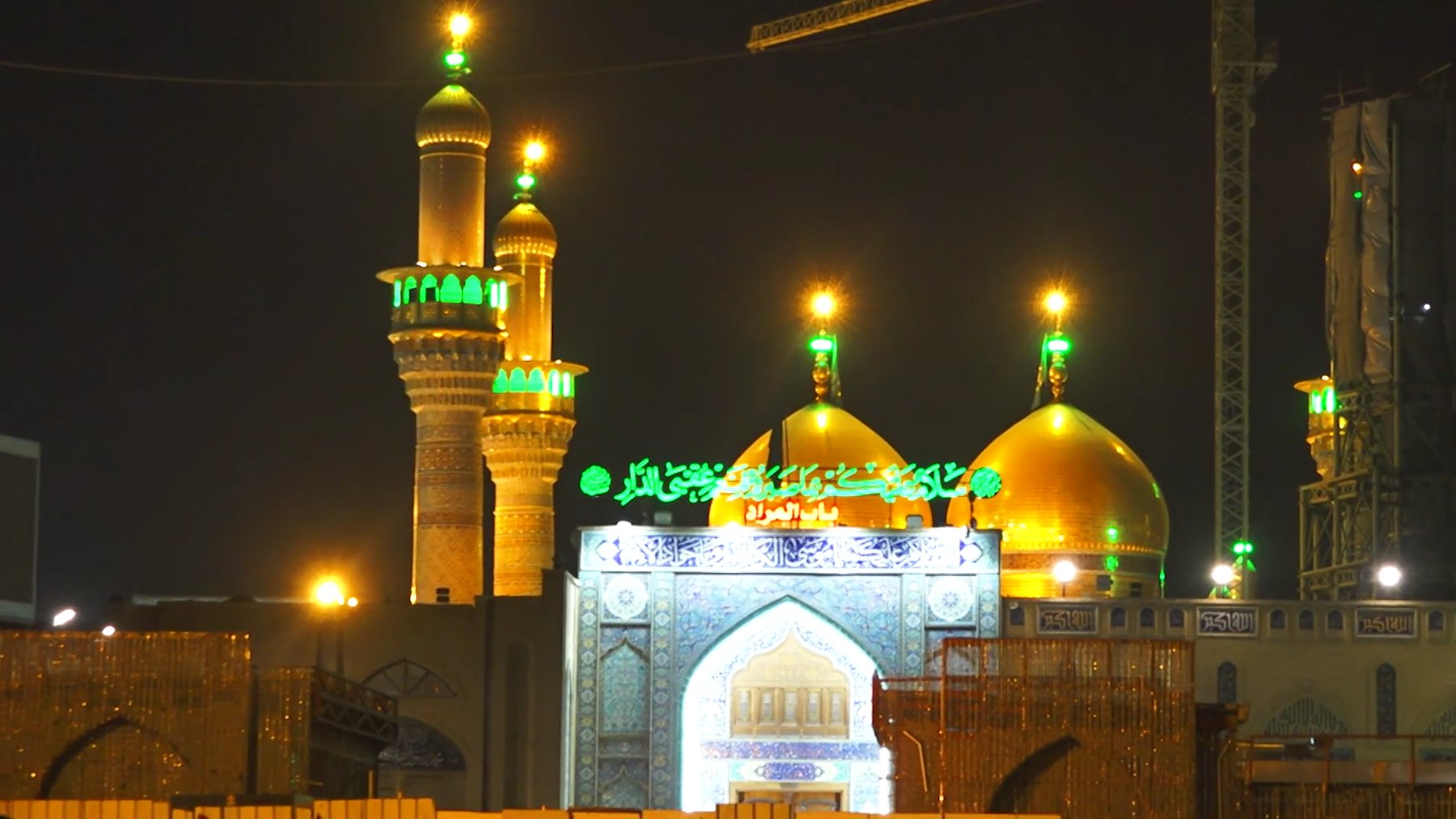
The complex holds Imam Musa al-Kadhim, the seventh Imam, who died in 799, and his grandson Imam Muhammad al-Jawad, the ninth, who died in 835. Two gilded domes, four gold minarets, roughly 140 by 135 metres and more than 26,000 square metres of ground. Two scholars of enormous standing are buried inside — Shaykh al-Mufid and Nasir al-Din al-Tusi — and in adjacent shrines lie al-Sharif al-Radi, who compiled the Nahj al-Balagha, and his brother al-Sharif al-Murtada. Pilgrims routinely visit the Imams and leave without knowing the others are there.
We could not confirm an entry fee, opening hours, or a reliable distance from central Baghdad or the airport, so we are not going to print numbers for any of them. Assume free entry, as at the other shrines, and assume you will want a taxi from the airport rather than a fixed transfer price you found online.
Day 2 — The northern loop: Balad, then Samarra
An early start and a long day. Balad, 85 kilometres north of Baghdad, holds the shrine of Sayyid Muhammad ibn Ali al-Hadi, brother of Imam Hasan al-Askari, whose first mausoleum was built by the Buyid ruler ‘Adud al-Dawla in the tenth century. It is a standard stop on southern pilgrims’ circuits and it is roughly fifty kilometres short of Samarra, which is why the two pair naturally into one day.
Balad was attacked by ISIS during Eid al-Fitr on 7 July 2016. The death tolls in circulation conflict badly: Iraqi officials quoted by AP gave 37, the Washington Post reported at least 40 the following day, and Wikipedia carries 56. We have not found a reconciliation, so treat it as somewhere in the high thirties to mid fifties rather than picking one.
From Balad it is a short run to Samarra, about 120 to 125 kilometres from Baghdad in total and roughly two hours each way with checkpoints. Give the al-Askari shrine at least two hours. The shrine holds Imam Ali al-Hadi and Imam Hasan al-Askari in what was originally al-Hadi’s own house, along with Narjis Khatun, Hakima bint al-Jawad — who was al-Hadi’s sister and therefore al-Askari’s aunt, not his daughter, a point a great many pages get backwards — and several others. The Sardab, the domed structure over the cellar associated with the Occultation, is part of the complex and appears as a scheduled stop on operator itineraries; we could not confirm whether ordinary visitors currently descend into it. Our fuller treatment of the site is in the al-Askari shrine guide.
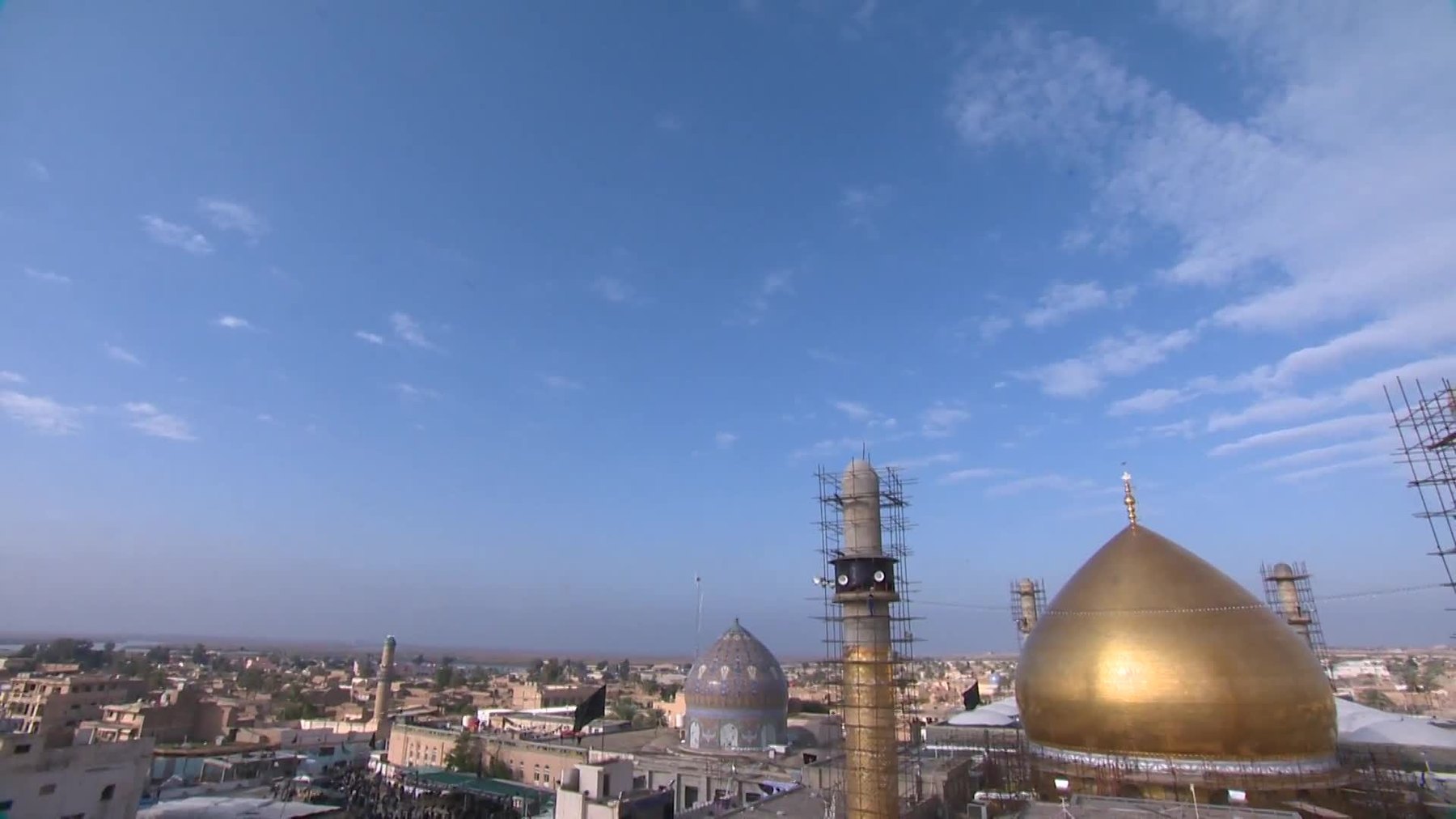
Almost every page you will read about Samarra stops at “the golden dome was destroyed in 2006 and rebuilt in 2009”. The dome was destroyed on the morning of 22 February 2006 by al-Qaeda in Iraq, and the two surviving 36-metre minarets on 13 June 2007. But the 2009 reopening was not the completion. The full rebuild ran from 2010 to 2015 under the Iranian Committee for the Reconstruction of the Atabat Aliyat, regilding the dome with 23,000 gold bricks, and the new darih — 4,500 kilograms of silver and 70 of gold — was unveiled on 24 April 2017. The dome is the largest over any Shia Imam’s shrine, around 1,200 square metres.
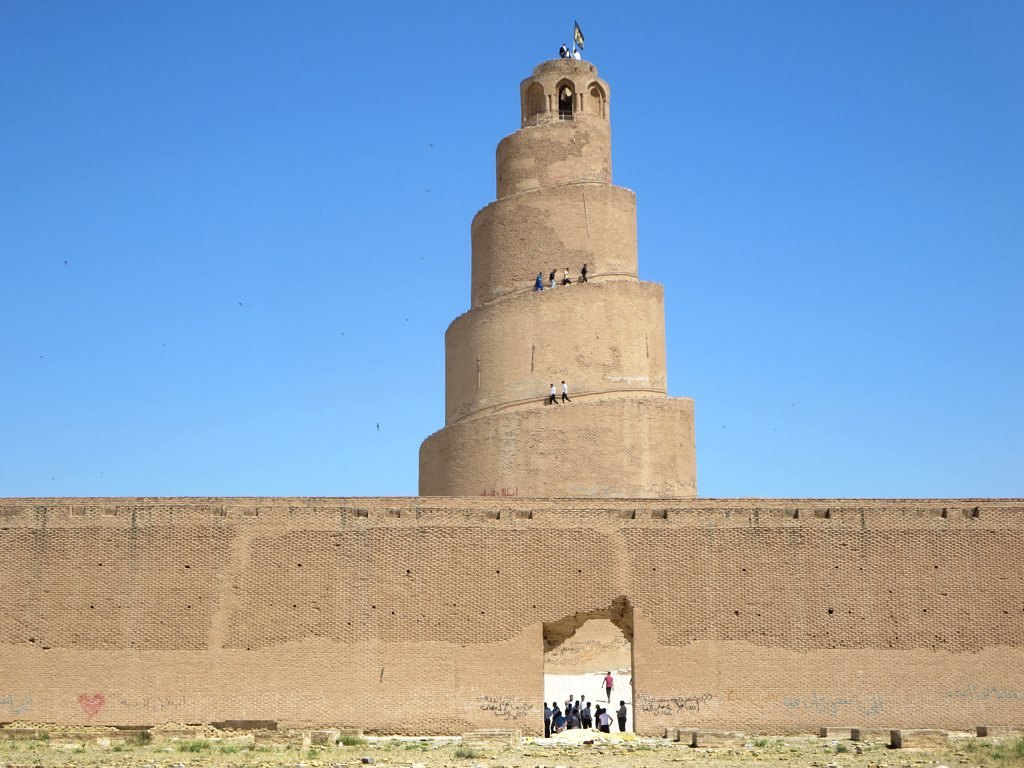
If the day is running well, the Malwiya, the spiral minaret of the ninth-century Great Mosque, is in town and worth thirty minutes. Sources disagree on whether the ramp can currently be climbed, and a February 2026 visitor found it fenced off, so do not build the day around it. Abu Dulaf’s smaller spiral minaret is about twenty kilometres further out and is reported to be climbable, but it turns a full day into a very full one.
Day 3 — Baghdad to Karbala
Coasters to Karbala leave from Alawi garage in Baghdad. The fare is 3,500 IQD a head — a little over two US dollars at the street rate — and a private taxi for the same run was being offered at 30,000 IQD in February 2026. Budget two to two and a half hours rather than the ninety minutes the distance suggests, because you will stop at checkpoints on the way and one of them may take a while.
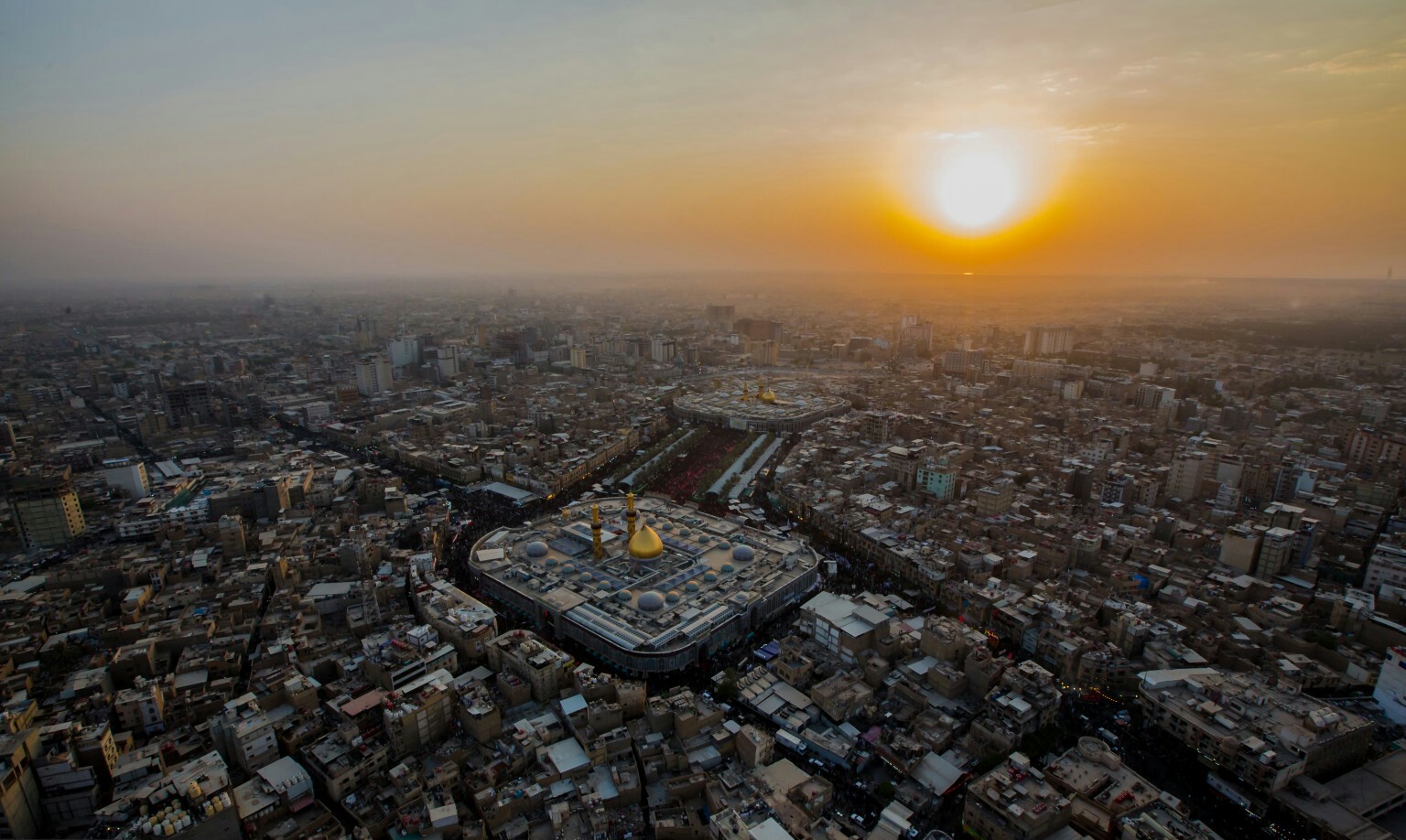
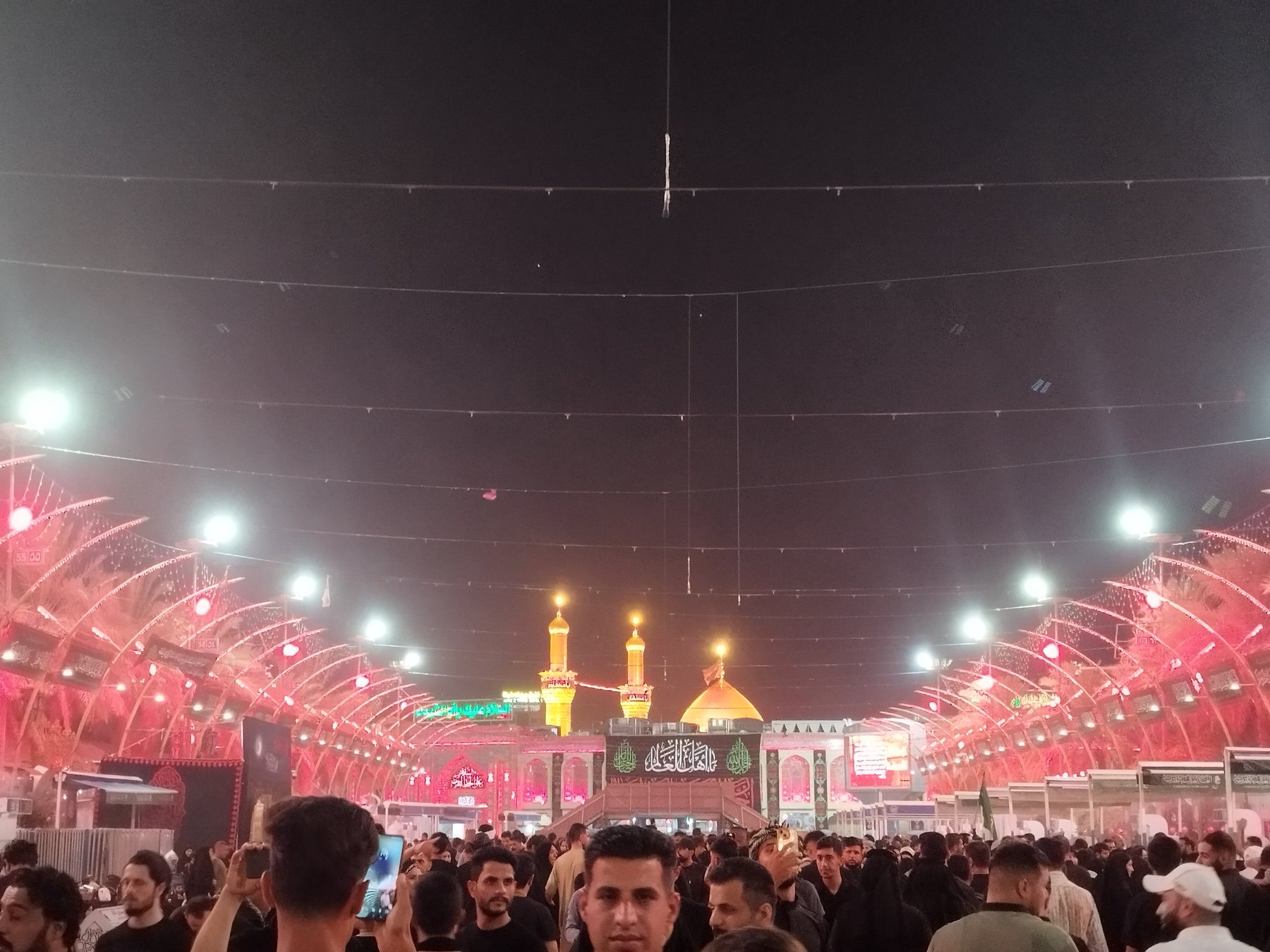
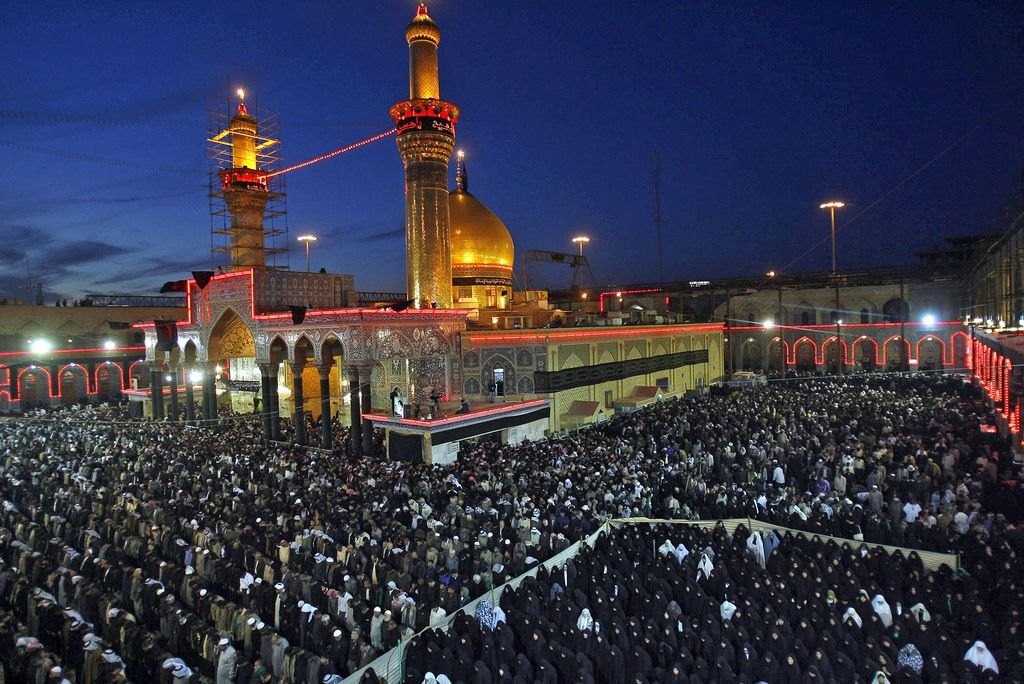
Karbala’s two shrines sit about 300 metres apart, connected by the Bayn al-Haramayn, the covered and illuminated corridor that is the single most photographed space in Shia Iraq. There is a 1.5-kilometre vehicle exclusion zone around the shrines, so wherever your driver stops, you walk the last part. Bab al-Qibla is the main historic gate.
Arriving in the evening is not a problem. A February 2026 traveller reached Karbala late, found the city packed with pedestrians, and had no difficulty finding a room — which is what walk-up availability looks like outside the peak weeks. See our Karbala city guide for the layout, and where to stay in Iraq for how the accommodation market works nationally.
Day 4 — Karbala at different hours, and the atraf day
The reason nearly every group ziyarat itinerary allocates three or four days to Karbala is not that there is more to see. It is that the same shrine at 5am, at midday and at 10pm is three different places, and the return visits are the point. Build the day around prayer times rather than opening hours.
Operator programmes also schedule an atraf-e-Karbala day covering outlying maqams around the city. We could not find a definitive list of which sites that covers — the composition varies between operators and we are not going to invent one. If this matters to you, ask for the specific sites in writing before you book.
Day 5 — Karbala to Najaf
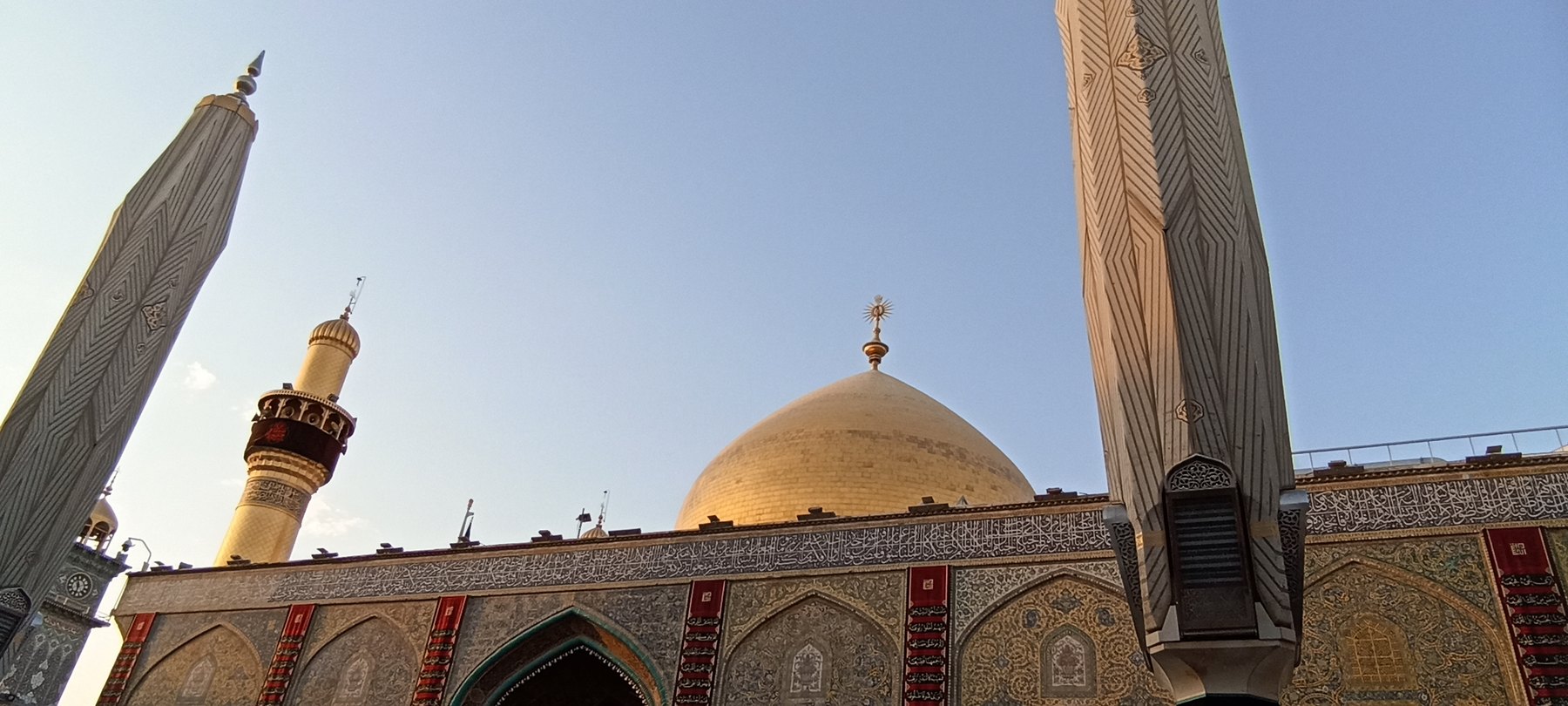
Walk to the Karbala garage and take a coaster to Najaf for 2,500 IQD per person. It is a little over an hour with a short checkpoint delay. In Najaf the coaster drops you at a garage some distance from the haram district, and local buses run the rest of the way in for about 1,000 IQD. Total: under three dollars, door to door, for a journey most package pages describe without any figure at all.
The Imam Ali shrine complex is, by common consent among people who have seen both, even more overwhelming than Karbala’s. The souks around it are the best in the country for wandering. Our Najaf guide covers the city in more detail.
Day 6 — Wadi al-Salam, Sahla, Hannana and Kumayl
Wadi al-Salam is a ten-minute walk from the Imam Ali shrine and there is no ticket, no permit and no guide requirement. A July 2025 visitor walked in from the multi-storey car park and out the far side; a guard asked what she was doing and did not mind the answer. Estimates of its size range from about 6 to 10 square kilometres depending on whose boundary you accept, with something over five million graves accumulated across roughly fourteen centuries. It is on Iraq’s UNESCO tentative list, submitted in January 2011 — it is not an inscribed World Heritage Site, whatever a great many travel pages say. There is more in our Wadi al-Salam guide, including why no maps of it exist.
The rest of the day runs along the Najaf–Kufa axis. Masjid al-Hannana sits on the road itself, north of Najaf: “the weeper”, named for a pillar said to have leaned in grief as Ali’s coffin passed, though a third etymology derives the name from an older Christian monastery called Hanna on the site. Masjid al-Sahla is about two kilometres north-west of the Kufa mosque and roughly ten kilometres from the Imam Ali shrine — a large enclosure of more than 17,500 square metres with seven courtyard maqams and a strong Mahdist association in hadith. The tomb of Kumayl ibn Ziyad, Ali’s companion, is on the same axis.
Day 7 — Kufa, then out
Kufa is ten kilometres north-east of Najaf and its Great Mosque was founded with the city in 638. Ali was struck there while prostrating in the Fajr prayer on 19 Ramadan 40 AH, 28 January 661, and died two days later on 21 Ramadan, 30 January. Those are two different dates, and collapsing them into one is one of the most common errors on this subject.
In the second courtyard are the tombs of Muslim ibn Aqil, Hani ibn Urwa and al-Mukhtar al-Thaqafi. Maytham al-Tammar’s mausoleum is a short walk west of the mosque, rebuilt and expanded in 2011. The mosque itself does not look ancient, and there is a reason: it was comprehensively rebuilt between 1998 and 2010 under Mohammed Burhanuddin of the Dawoodi Bohra community, with a gold zari mihrab and a courtyard paved in Makrana marble from India.
One practical warning that contradicts several guides: cameras must be surrendered at a security point outside the Kufa compound, exactly as at the Imam Ali shrine, and shoes are collected from a counter on the way out. A visitor’s full account of the sequence is summarised in our Kufa guide.
Getting between the cities: real fares and times
Transport is the part of a ziyarat itinerary that operator pages describe without a single number. These are the figures a February 2026 independent traveller actually paid, not estimates. The street rate at the time of writing is around 1,500 IQD to the US dollar; the official Central Bank peg of 1,320 is not what you will get.
| Leg | Mode and fare | Realistic time |
|---|---|---|
| Baghdad (Alawi garage) → Karbala | Coaster, 3,500 IQD pp; private taxi offered at 30,000 IQD | 2–2.5 h with checkpoints |
| Karbala → Najaf | Coaster, 2,500 IQD pp, plus ~1,000 IQD local bus into town | Just over 1 h |
| Baghdad → Samarra | Private car, ~US$100 for a full 8-hour day | ~2 h each way |
| Baghdad → Balad | 85 km; no sourced fare or drive time | Unconfirmed |
| Najaf → Kufa | 10 km; taxi, no reliable published fare | Short |
| Najaf → Baghdad | No sourced fare or drive time | Unconfirmed |
We have deliberately left three rows blank rather than fill them with numbers we cannot stand behind. The widely-copied “3,000 IQD shared taxi, 30 to 45 minutes” figure for Najaf to Kufa traces only to content aggregators, so we are not repeating it. For how intercity transport works more generally, see getting around Iraq.
Doing it independently versus buying an Iraq ziyarat package
This is the comparison nobody publishes, largely because the operators writing about ziyarat have no interest in publishing it. Here is what both sides actually cost in 2026.
What a package costs
Prices split into two very different products. A ground package covers hotels, in-country transport and guided ziyarat only — no flights, no visa. A full package adds air travel and usually the visa.
| Operator / market | Product | 2026 price per person |
|---|---|---|
| Ziarat Planner (Iraq-based) | Ground only, 7 nights: 3N Karbala, 3N Najaf, 1N Kadhimiya | US$390 |
| Ziarat Planner (Iraq-based) | Ground only, 13 days, Arbaeen window, same hotels | US$1,350–1,850 |
| KBM Tours | 9 days / 8 nights, 31 Mar–8 Apr, haram-area hotels, three buffet meals daily, all transport, scholar guides | US$650 |
| Pakistan (Ziaraat Guide) | Arbaeen 2026, 10–14 days | ₨360,000–395,000 (~US$1,380–1,800) |
| India (Tour Terminus) | Arbaeen 2026, incl. air, visa, full board | ₹1,30,000 + 5% GST |
| India, standard season | 10N/11D Baghdad–Karbala–Kufa–Najaf | ₹82,786–95,000 |
| United Kingdom | Six packages listed by one UK operator, 5 to 12 nights | No price published anywhere |
Two things fall out of that table. First, the seasonal multiplier: the same Iraqi operator, the same three hotels, three to four and a half times the price in the Arbaeen window. If your dates are flexible, that is the single biggest number in your budget. Second, the UK finding is real and worth stating plainly — we checked a UK operator advertising six distinct Iraq ziyarat packages for British departures and could not find a price on any of them, or anywhere else in the UK market. Everything is quote-on-request. Ask for a written breakdown separating flights, visa, hotel and ground handling before you commit.
What it costs to do it yourself
Building the same seven days independently, using only figures we can source:
| Item | Budget end | Comfortable end |
|---|---|---|
| 6 nights accommodation | ~US$80–120 (walk-in rooms at 20,000–30,000 IQD pp) | US$330–840 (booking-site rates, US$55–140 a room) |
| Coasters, Baghdad–Karbala–Najaf | ~US$5 | ~US$25 by private taxi |
| Samarra day, private car | US$25–50 pp (US$100 car split 2–4 ways) | US$100–160 for guide with car |
| Local taxis, Najaf–Kufa, airport runs | Allow US$30–50 | Allow US$60–100 |
| Ground total, 7 days | ~US$140–225 | ~US$515–1,125 |
So the budget independent traveller does the whole ground portion for roughly a third to a half of the US$390 ground package — and that DIY figure includes Samarra, which the US$390 package does not. Food is excluded from both sides: we could not source reliable 2026 restaurant prices for the shrine cities and are not going to guess. Our Iraq travel cost breakdown has the wider picture, and Iraqi food covers what you will be eating.
Where a package genuinely earns its money
The cost comparison is not the whole argument for how you run a ziyarat itinerary, and it would be dishonest to pretend otherwise. A package buys you four things that are hard to price. Scholar-guided ziyarat, if the recitation and the history matter to you, is not a service you can buy at the gate. Group visa handling removes the single most common failure point in a trip to Iraq. Block-booked hotel rooms are the only reliable way to sleep near the haram during the peak ten days, when most Karbala hotels take no advance bookings from individuals at all and work through brokers. And for elderly pilgrims, families with small children, or anyone who does not speak Arabic, having someone else deal with checkpoints, drivers and shrine logistics for a week is worth a great deal more than the price difference.
Where a package earns nothing is on hotel quality at the budget end, on flexibility, and on the price of the two coaster rides. If you are fit, travelling light and comfortable with independent travel in Iraq, the arithmetic favours doing it yourself for everything except Samarra.
Samarra is the one day you probably cannot do alone
There is no Iraqi law requiring tourists to use a licensed operator in the shrine cities. Karbala, Najaf and Kufa need no permit; your Iraqi visa is sufficient. Samarra is different, and the difference is practical rather than legal.
The old rule — special permission plus a guide, sometimes a military escort — appears to be loosening. A February 2026 first-hand account states that it “doesn’t seem to be the case anymore”, that there is a final passport and driver ID check before you enter town, and that passports were shown but not taken. Older guides, and some 2025 accounts, still describe passports being held at the checkpoint in exchange for a card. Both may be true depending on which checkpoint and which month. Assume the stricter version and be pleasantly surprised.
What makes a driver necessary is what happens if you arrive without one. You can take a share taxi from Alawi garage heading for Tikrit or Mosul and get dropped at the first checkpoint outside Samarra — at which point the police will most likely put you into a local taxi rather than let you walk around. Abu Dulaf is twenty kilometres out and walking or hitching there is not going to be permitted. A private car arranged through a Baghdad hotel was US$100 for an eight-hour day including pick-up, waiting time at the sites and a drop at Alawi garage afterwards; guide-with-car was quoted at US$150–160.
Two further constraints. Foreigners cannot sleep in Samarra — there are no hotels that take them, though the same February 2026 account mentions that it is possible to sleep overnight inside the al-Askari mosque, which we have not been able to corroborate elsewhere. And the town’s atmosphere is genuinely tense in a way that the shrine cities are not. Samarra’s mayor has said there have been no attacks since the end of 2014, but blast walls put up in 2007 still divide the city, more than two hundred mostly Sunni-owned shops around the shrine remain shuttered, and Sunni residents report hours of questioning simply to approach the haram. The checkpoints are not exotic local colour; they are what a city that has not finished recovering looks like.
Kadhimiya, done properly
Kadhimiya sits on the west bank of the Tigris, north-west of central Baghdad, on what was the Quraysh cemetery of the Abbasid Round City founded in 762. It has a purpose-built women’s entrance, Bab al-Fatimah, begun in late 2008, and the shrine authorities expanded shading works across the courtyards in 2026 to receive more than a million Arbaeen pilgrims.
That expansion has a counterweight that belongs in any honest account. Chatham House reported in March 2022 that the wider shrine expansion programme has been criticised for demolishing more than 130 archaeological sites, Ottoman landmarks and traditional houses. The shrines are growing to meet real and rising demand; the old fabric of the districts around them is what is paying for it.
The Al-Aimmah Bridge disaster
On 31 August 2005 roughly a million people were walking to Kadhimiya for the martyrdom anniversary of Imam al-Kadhim. A mortar attack that morning killed seven. Later, on the Al-Aimmah Bridge over the Tigris, a shout that a man in the crowd was wearing a suicide vest set off a crush. The railings gave way and people fell about nine metres into the river. CNN reported 965 dead on 1 September 2005; contemporary reports ranged from around 700 to around 1,000. It was the largest single loss of Iraqi life since the 2003 invasion, and there was no bomb.
One name is worth carrying. Othman Ali Abdul-Hafez was a Sunni teenager on the Adhamiya side of the river. He went into the Tigris to pull pilgrims out and drowned doing it. The BBC reported his death on 5 September 2005.
The bridge was closed after 2005 and reopened on 12 November 2008. We could not confirm whether it is currently open to pedestrians, so do not plan on walking across it, and do not believe a page that tells you confidently either way.
At the shrine gate: what actually happens
The practical mechanics are consistent across Karbala and, from the accounts we have, Samarra. They are not fully documented for Najaf, and we are not going to assume they transfer.
- Cameras are not allowed; phones are. Specific spots inside are signed where photography is prohibited. Cameras are surrendered at the security point, as at Kufa.
- Free storage at the gate for shoes, cameras and larger bags. Purses are generally fine to carry in.
- Note your gate number or name. These complexes are enormous and you must come out where your shoes are — and where your travelling companion is, because men and women enter through separate gates and separate searches, and you will be split up.
- You will pass through checks constantly, not just at the shrine. The haram districts of Karbala and Najaf are walled with security points, and the women’s checks are conducted inside marked tents.
- Women need an abaya and hijab or a chador across the whole haram district, not only inside the shrine. Since you will spend most of your time in that district, in practice that means most of the time. Abayas are sold on the way in and all over the haram; buying one in Baghdad first is easier.
- Not a strand of visible hair. One 2026 visitor was tapped and pointed at repeatedly by shrine staff carrying green feather dusters, and solved it by buying an undercap — a tube of fabric worn beneath the scarf — from a market stall.
On makeup, the sources conflict. Some guidance says heavy makeup or nail polish can get you turned away at the modesty check. A woman travelling the route in February 2026 reported the opposite: that she wore makeup inside without difficulty and saw many Iraqi women doing the same. Gate officers have discretion, standards vary between shrines and between days, and the safe course is to keep it light rather than to assume either account is universal. Our guide to solo female travel in Iraq goes further into what to expect, and Iraqi laws for tourists covers the wider legal context.
Can non-Muslims join a ziyarat itinerary?
This deserves to be documented rather than resolved, because the honest answer is that the position is contested and the official silence is the most interesting part of it.
The shrine authorities publish no policy. The official websites of the Imam Ali shrine and the Karbala shrines carry no statement on non-Muslim entry in any form we could retrieve. Against that, multiple recent first-hand accounts describe non-Muslims entering both Karbala shrines and the Imam Ali shrine, including the inner chambers, with religion never asked about and clothing checked instead. One Iraqi tourism portal states outright that “visitors of all religions and nationalities are welcome, provided they adhere to the dress code and general etiquette rules” — but that is an operator-facing site, not a shrine authority. We could find no dated report of a refusal on religious grounds between 2024 and 2026.
The practical reading: the barrier at the gate is dress and officer discretion, not creed. That is not the same as a guarantee, and we are not going to give you one. If you are not Muslim and this trip matters to you, dress correctly, behave as the people around you are behaving, do not photograph what is signed as unphotographable, and accept that an individual officer may decide otherwise on the day.
When to go
Heat is the constraint that overrides everything else. The 50°C window runs from mid-June to mid-August, and Karbala and Najaf both hit 50°C on 12 August 2026. Baghdad’s July mean maximum is 44°C. That is not weather you walk between shrines in.
Late October to early April is the answer, with November to March the reliable core. It is the rainy season, which in Iraq means occasional downpours rather than sustained rain, and it is also when the package prices in the table above drop to their floor.
Then there are the gatherings. Arbaeen 2026 fell on Tuesday 4 August, and more than 22 million people entered Karbala. If your purpose is the Arbaeen pilgrimage itself, none of the advice above applies and you should read that guide and the Arbaeen packing list instead; if your purpose is a seven-day ziyarat itinerary at your own pace, the Arbaeen fortnight is the one period to avoid outright. Ashura in Iraq fell on Thursday 25 June 2026. Both dates move roughly ten to eleven days earlier each year: Arbaeen 2027 is expected around 24–25 July and Ashura around mid-June, but no official Iraqi date exists yet and Iraq typically announces the holiday about nine days out. Ramadan 2027 is expected to run from about 8 February to 9 March — treat all three as estimates.
There is a slow structural change worth knowing. Because the lunar calendar drifts backwards against the Gregorian one, Arbaeen is moving out of August and into July, then June. The mega-gatherings are migrating into the hottest months, which means the cool season is becoming steadily freer of them. Our best time to visit Iraq guide has the month-by-month detail.
Safety, advisories and insurance
Say this part plainly. The FCDO regionalised its Iraq advice on 22 July 2026, so the blanket “against all travel to Iraq” line that most competitor pages still carry is out of date — but the regionalised version is not comfortable reading for this route either.
Salah al-Din province, which contains both Samarra and Balad, is under FCDO advice against all travel. Karbala, Najaf and Baghdad province other than Sadr City are under advice against all but essential travel. The US State Department reissued its Level 4 “Do Not Travel” advisory for Iraq on 2 March 2026 and ordered non-emergency US government employees to leave.
The consequence most pages bury: travelling against FCDO advice invalidates ordinary travel insurance. If you fly to Baghdad and spend a day in Samarra, a standard UK policy will not respond — not to a security incident, and not to a broken ankle on the Malwiya either. Specialist cover exists and costs accordingly. See Iraq travel insurance for how that market works, the current advisory picture for the detail, and is Iraq safe for the wider risk assessment. Baghdad specifically is covered separately.
None of that is a recommendation either way. Millions of people make this journey every year, the shrine cities are heavily policed, and Arbaeen 2026 passed with no terrorist attacks at all. Road traffic, not violence, is what injures visitors: all 46 pilgrim deaths recorded during Arbaeen 2026 were road accidents. Read your own government’s advice, understand what it costs you in insurance terms, and make your own decision.
Shortening or stretching the route
Four days. Drop Kadhimiya and Samarra entirely. Fly into Najaf International, spend two days in Najaf with Wadi al-Salam and Kufa, take the coaster to Karbala for two days, fly out of Najaf. This is a complete ziyarat in its own right and it is what most first-time pilgrims on limited leave actually do.
Five days. As above plus a Kadhimiya night, flying out of Baghdad instead.
Ten to eleven days. The extra time goes into Karbala rather than into new cities — that is what the Indian and Pakistani group itineraries do, typically seven days in Karbala, three in Najaf, one in Kadhimiya. Adding the Najaf to Karbala walk, which is about 72.6 kilometres by the numbered poles and takes three to four days on foot, turns the itinerary into something else entirely.
Adding secular sites is easy from Karbala: Babylon is a straightforward day trip on public transport and is roughly the same distance from Najaf.
What we could not confirm
Everything below was searched for and not found. We would rather leave a gap than fill it with a plausible number.
- Kadhimiya’s entry fee, opening hours and distance from central Baghdad or the airport. No authoritative source. Assume free entry by analogy with the other shrines, but that is an assumption.
- Whether the Al-Aimmah Bridge is currently open to pedestrians. It reopened on 12 November 2008; nothing dated since establishes its present status.
- Najaf’s shrine hours, gate names and whether any fee applies. Karbala’s shrines are widely described as operating around the clock; we have no basis for transferring that to Najaf.
- Najaf to Baghdad and Baghdad to Balad drive times and fares. Widely quoted, nowhere sourced.
- The Najaf–Kufa taxi fare. The circulating “3,000 IQD” figure traces only to content aggregators.
- Which sites the atraf-e-Karbala day covers. Operators list it; none we found itemise it consistently.
- Whether ordinary visitors descend into the Sardab at Samarra, and whether non-Muslims may.
- Whether it is really possible to sleep overnight in the al-Askari mosque. One source says so; nothing corroborates it.
- Whether makeup or nail polish will get a woman turned away. Sources directly contradict each other, as described above.
- Any UK ziyarat package price. Six advertised packages, no price on any of them.
- Balad’s 2016 death toll. Three published figures — 37, at least 40, and 56 — with no reconciliation.
- Food costs in the shrine cities in 2026. No reliable current figures, so both sides of our cost comparison exclude meals.
Frequently asked questions
These are drawn from the subheadings and FAQ blocks of the pages currently ranking for this topic, not from a search engine’s suggestion box.
Is it better to start a ziyarat itinerary in Najaf or Karbala?
Neither, if you are doing the full four-city route — start in Kadhimiya, because you land in Baghdad and it saves you a long backtrack for Samarra later. If you are doing the short version and flying into Najaf International, start in Najaf: it is the closer airport and it sets up a single onward road transfer to Karbala rather than a return leg.
Can Kadhimiya and Samarra be skipped on a first trip?
Yes, and many people do. Najaf, Kufa and Karbala on their own make a complete ziyarat and fit comfortably into four or five days. Samarra in particular is the leg that adds cost, a driver, and a province under the strictest tier of FCDO advice, so dropping it simplifies the trip considerably.
How much travel time should I budget between Najaf and Karbala?
The road distance is about 80 kilometres. A coaster does it in a little over an hour including a short checkpoint delay, for 2,500 IQD per person. During Ashura and Arbaeen that time can increase very substantially, and hotel and road conditions change completely.
Which airport should I fly into for a ziyarat tour of Iraq?
Najaf International (NJF) is the natural gateway for a Karbala-and-Najaf trip. Baghdad (BGW) suits an itinerary that includes Kadhimiya and Samarra, which is what the seven-day route above assumes. Karbala’s own airport is not operational — the only aircraft ever to land there was the prime minister’s in August 2024 — despite several competitor pages listing it as an arrival option.
How many days do you need for a full ziyarat itinerary?
Seven days is the shortest ziyarat itinerary that covers all four shrine cities without rushing any of them. Four covers Najaf, Kufa and Karbala properly. Ten to eleven days, the standard South Asian group length, mostly buys more time in Karbala rather than more places.
Can I still get a visa on arrival at Najaf or Baghdad?
No, and this is the most damaging out-of-date claim still circulating on ziyarat sites — we found a 2026 guide telling Pakistani pilgrims that “most” get a visa on arrival for US$75–100. Visa on arrival in federal Iraq was suspended on 1 March 2025 and an e-visa is now mandatory for 37 nationalities. Start with our Iraq e-visa guide, and if you are travelling for Arbaeen specifically, the Arbaeen visa rules are different again. There are country-specific guides for Pakistani and Indian passport holders.
Do I need a licensed operator or a guide to visit the shrine cities?
No. No Iraqi law obliges a tourist to travel through a licensed operator in Karbala, Najaf or Kufa, and independent travellers arrive by public coaster and find rooms on the day. Samarra is the practical exception. If you do want an organised trip, see tours in Iraq.
What does an Iraq ziyarat package cost in 2026?
US$390 per person bought seven nights of ground services from an Iraq-based operator in the Ramadan season; US$650 bought a nine-day all-in with meals and scholar guides in the spring. The same ground services in the Arbaeen window ran US$1,350–1,850. South Asian departure prices including flights ran roughly US$1,000–1,800. No UK operator we checked publishes a price at all.
Can women travel this route, and what do they need to wear?
Yes, including independently. An abaya and hijab, or a chador, is required across the whole haram district in Karbala and Najaf, and for the al-Askari shrine in Samarra — not just inside the buildings. Women and men enter through separate gates and separate searches, so plan where to meet. Buy the abaya before you arrive if you can; they are sold outside every checkpoint if you cannot.
Final thoughts
The gap in the published material on this subject is not knowledge — the religious reference sites know a great deal more about the doctrine than we do. The gap is that nobody writes down what the coaster costs, which day the drive actually eats, or that the identical hotel room triples in price for ten days of the year. That information exists; it is simply held by people who have no commercial reason to publish it.
What we would say to anyone planning this trip: the shrine cities are far easier to move around independently than the operator pages imply, Samarra is genuinely harder than the rest, and the single decision that will change a ziyarat itinerary most is not which package you buy but which month you go in. Forty-degree heat and a twenty-two-million-person gathering are not background conditions; they are the trip.
And read the advisories properly rather than around them. Salah al-Din is under advice against all travel and that has real financial consequences before it has any other kind. For the wider picture start with our guide to ziyarat in Iraq, then the practical groundwork in Iraq travel tips and getting a SIM card on arrival.
Photo credits
Bayn al-Haramayn corridor, Karbala — BlueSky Tr (CC0). Al-Kadhimiya shrine, Baghdad — Media Office of the Iraqi Prime Minister (CC BY 3.0). Al-Askari shrine, Samarra — V. SHIA (CC BY 3.0). Malwiya minaret, Samarra — David Stanley (CC BY 2.0). Imam Ali shrine, Najaf — AHK AV (CC0). Evening prayer at Karbala — J. Ansari (CC BY-SA 4.0). All images sourced from Wikimedia Commons.