Last updated: September 2026. Route, fares and site status re-checked on 26 September 2026 against our research files (August and September 2026), 964media and Shafaq News; FCDO and US advisories checked 25 and 26 September 2026. Several sites on this route closed or changed access in 2026: check each one the week you travel.
Look at the 10-day tours sold for Iraq and most follow the same arc: the south, then north through Samarra and Hatra to Mosul, finishing in Erbil, with a morning at the Iraq Museum. Almost half of that route runs through Salah al-Din and Ninawa, provinces the UK Foreign Office advises against all travel to, and the Iraq Museum has been closed since July 2025. So this Iraq itinerary for 10 days stays south and spends the extra days on what a single week has to skip: two ziggurats near Baghdad, Borsippa, the desert fortress of Ukhaidir, Uruk and a night in the marshes. Our Iraq itinerary planner covers every length of trip.
In short, a good Iraq itinerary for 10 days runs from Baghdad to Babylon to Basra over ten nights: three in Baghdad, then Babylon and Borsippa, Karbala with a detour to Ukhaidir, Najaf and Kufa, Uruk on the way to Nasiriyah, Ur and the marshes, and Basra. It works best from October to April, needs the federal e-visa and a driver for the rural sites.
If you only have a week, our 7-day Iraq itinerary is the tighter version. Below: the route day by day, how to get between the stops, a north-and-south variant, the costs we can date, the paperwork and the safety frame as it stood in late September 2026.
The short answer
| Question | Answer |
|---|---|
| Route | Baghdad → Babylon → Karbala (and Ukhaidir) → Najaf → Uruk → Nasiriyah → the marshes → Basra |
| What ten days adds to a week | Aqar Quf, Ctesiphon, Borsippa, Ukhaidir, Uruk and a marsh night |
| Best season | October to April |
| Transport | A car and driver for the rural sites; shared minibuses between Baghdad, Karbala and Najaf |
| Closed or uncertain | Iraq Museum; Ziggurat of Ur (restoration, reopening unconfirmed); visitor access at Uruk |
| Visa | Federal e-visa, $160, valid nationwide; a Kurdistan Region visa is not valid in federal Iraq |
| Advisories (26 September 2026) | FCDO: against all but essential travel to every province on the route. US: Level 4, Do Not Travel. |
The Iraq itinerary for 10 days, at a glance
| Day | Base | Main sights | Getting there |
|---|---|---|---|
| 1 | Baghdad | Mutanabbi Street, the Tigris, Kadhimiya at dusk | Fly into Baghdad |
| 2 | Baghdad | Adhamiya, the Al-Shaheed Monument, the ziggurat of Aqar Quf | Driver or taxi; Aqar Quf is about 30 km west |
| 3 | Baghdad or Hillah | The arch of Ctesiphon, then south | Driver |
| 4 | Karbala | Babylon and Borsippa | Driver; Babylon is about 85 km south of Baghdad |
| 5 | Karbala | The shrines; the fortress of Ukhaidir, about 50 km south | Private car only for Ukhaidir |
| 6 | Najaf | The Imam Ali shrine, Wadi al-Salam, Kufa | Coaster, about 80 km |
| 7 | Nasiriyah | Uruk, near Samawah, on the way south | Driver |
| 8 | Nasiriyah | Ur if open, or Girsu; the Nasiriyah Museum | Taxi or driver |
| 9 | Chibayish | A day and a night in the marshes | Shared taxi or driver |
| 10 | Basra | The Shatt al-Arab, old Basra; fly home | Driver |
Days 1 to 3: Baghdad and its ancient edges
Three nights in the capital let you see Baghdad at a sensible pace and reach the two monuments on its doorstep that shorter trips miss. Start in the old centre: Mutanabbi Street and its booksellers, best on a Friday morning, the Shabandar café, and the Tigris in the evening. The golden domes of Kadhimiya are at their best lit up after dark. Be ready for closed doors: the Iraq Museum closed in July 2025 and was still in “preparations” at the end of July 2026 after three missed targets, and the Al-Qishla had been shut for more than 18 months.
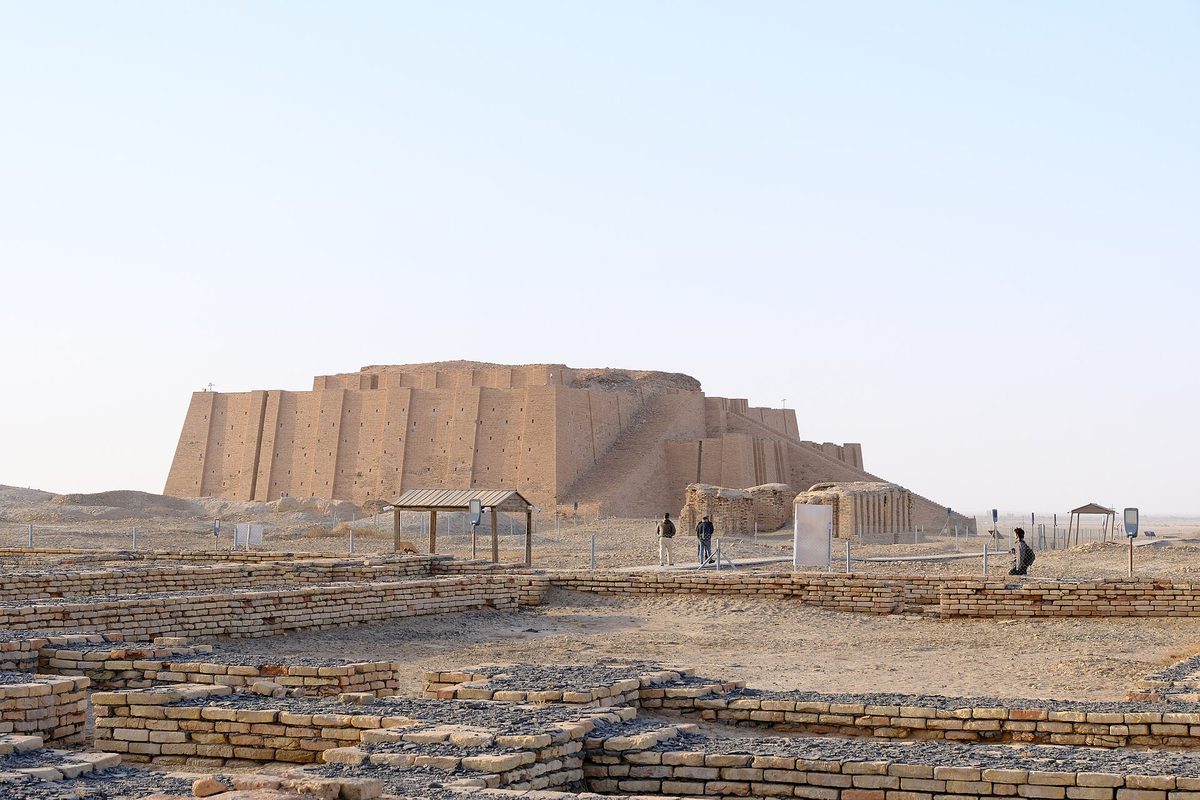
Aqar Quf, about 30 km west of the city, is the best half-day trip from Baghdad. It was the Kassite capital Dur-Kurigalzu, founded by King Kurigalzu I in the 14th century BC, and its eroded ziggurat core, with reed-matting layers still visible between the brick courses, rises higher than anything comparable in Iraq. It was added to Iraq’s UNESCO Tentative List in 2025.
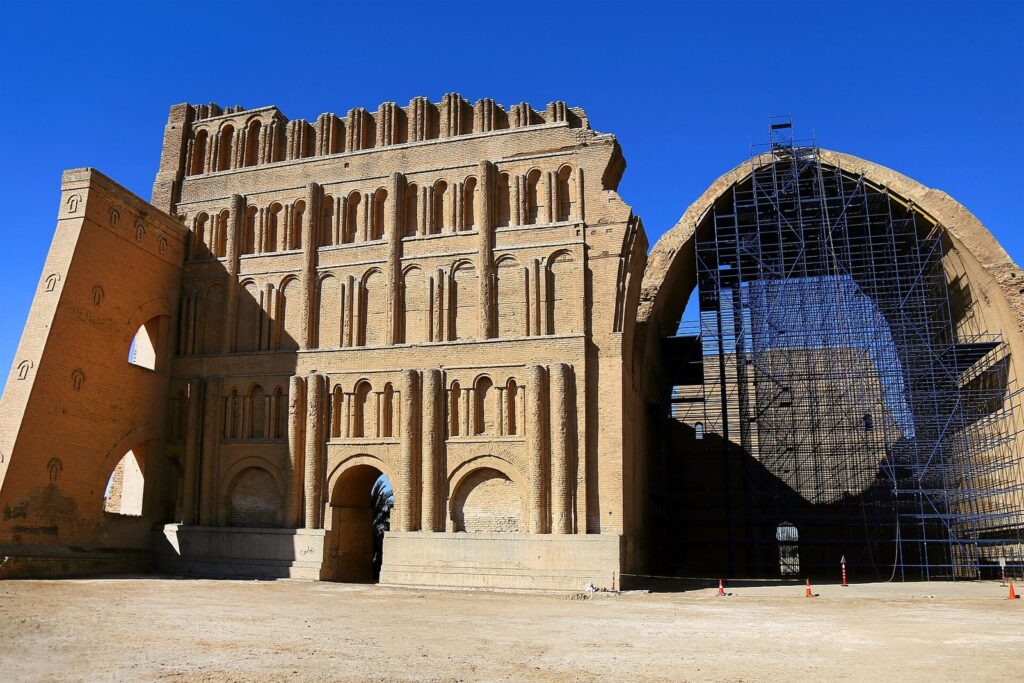
Ctesiphon, south-east of the city at Salman Pak, holds the Taq Kasra, the great brick arch of the Sasanian palace; its north wing collapsed in the Tigris flood of 1888. Make it the first stop of day three on your way south. Both sites are covered in our list of day trips from Baghdad and our Ctesiphon guide.
Why the numbers for these two sites disagree
| Source | Figure | What it actually measures |
|---|---|---|
| Encyclopaedic sources on Aqar Quf | About 52 m | The height of the surviving brick core of the ziggurat |
| Widely quoted travel figure | About 57 m | Height above the surrounding plain, including the mound it stands on |
| Shafaq News, 2026 | Ctesiphon about 30 km from Baghdad | A rounded journalistic distance |
| Britannica | 32 km | Straight-line distance from central Baghdad |
| Encyclopaedic sources | 35 km, “in the village of Salman Pak” | Distance to the modern town beside the site |
| ALIPH, the heritage fund | 40 km | A road-distance figure; no source gives a drive time |
Our Baghdad guide covers the rest of the city, from Adhamiya to the Al-Shaheed Monument.
Day 4: Babylon and Borsippa
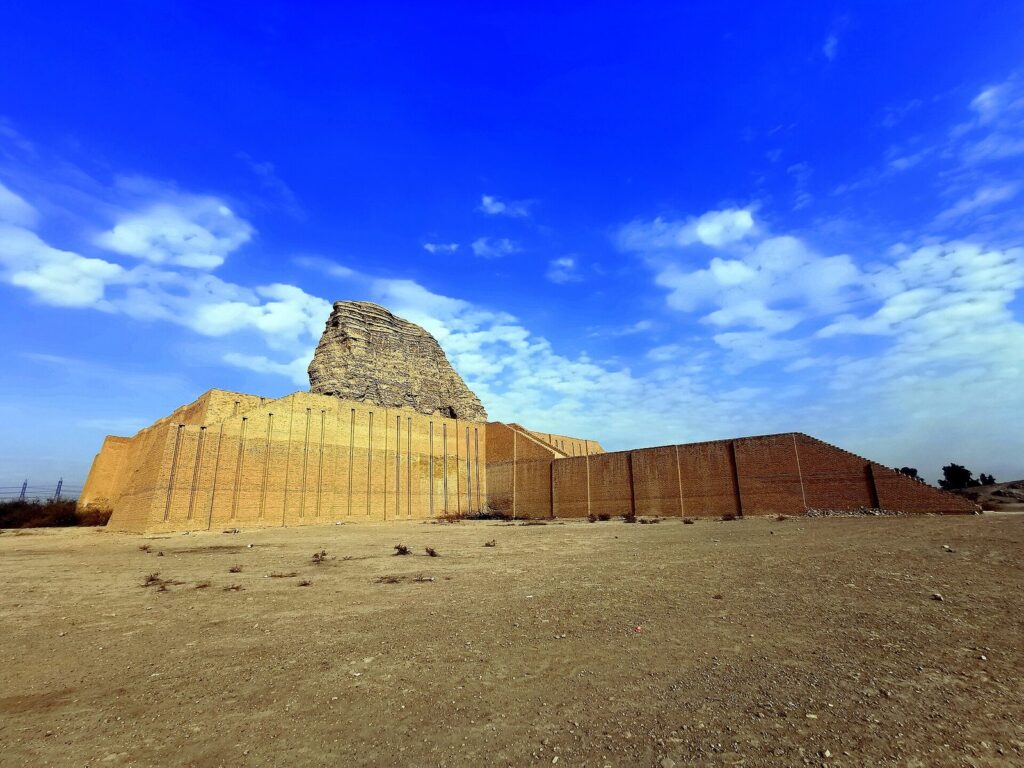
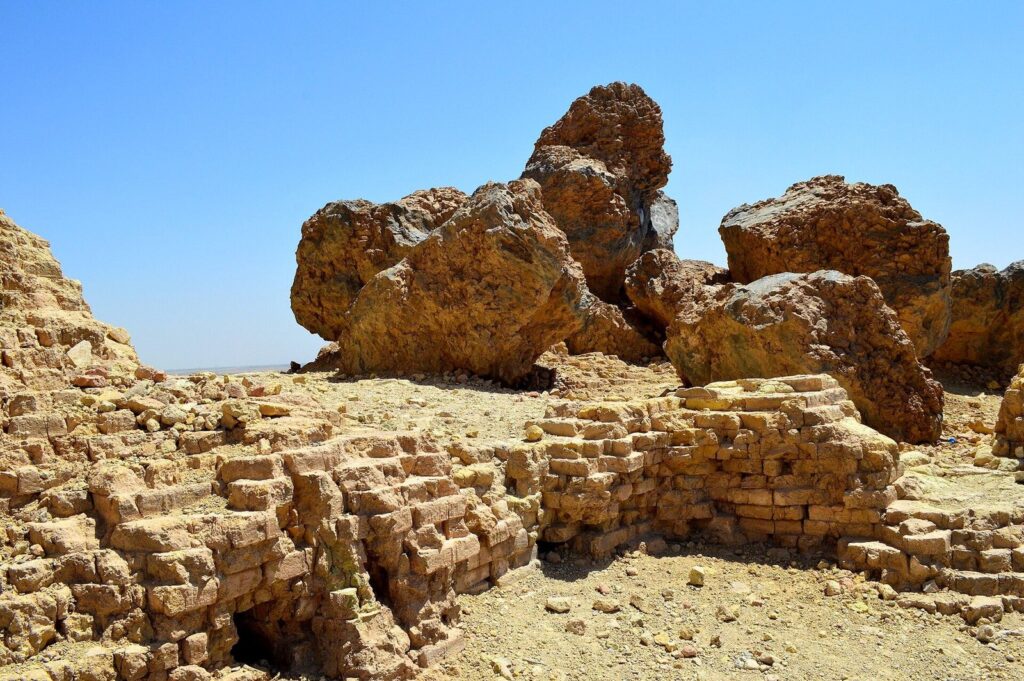
Babylon is about 85 km south of Baghdad, about an hour and a half’s drive according to one operator in March 2026, and foreigners paid 25,000 dinars to enter at that time. Arrive early: the site is open and unshaded. Then drive about twenty minutes further south to Borsippa, the Birs Nimrud, where the ruined ziggurat of Nabu stands alone in farmland. Almost nobody goes, there was no formal entrance fee in 2026, and many scholars believe it inspired the story of the Tower of Babel. Its top is crowned with vitrified, heat-fused brick, blamed by early travellers on divine fire and more likely the work of lightning or a kiln effect. It is almost impossible to find without someone who knows the unmarked roads.
Sleep in Karbala rather than going back to Baghdad. One route warning: Jurf al-Sakr, a closed town on the approaches to Karbala held by an armed faction, is on the FCDO’s against-all-travel list, one more reason to travel with a driver who knows which roads to use.
Day 5: Karbala and the fortress of Ukhaidir
Give the morning to Karbala‘s twin shrines of Imam Hussein and al-Abbas, facing each other across the esplanade of Bayn al-Haramayn. Vehicles are banned within about 1.5 km of the shrines. Women need an abaya and a head covering, usually available to borrow at the entrances; men should wear long trousers and sleeves.
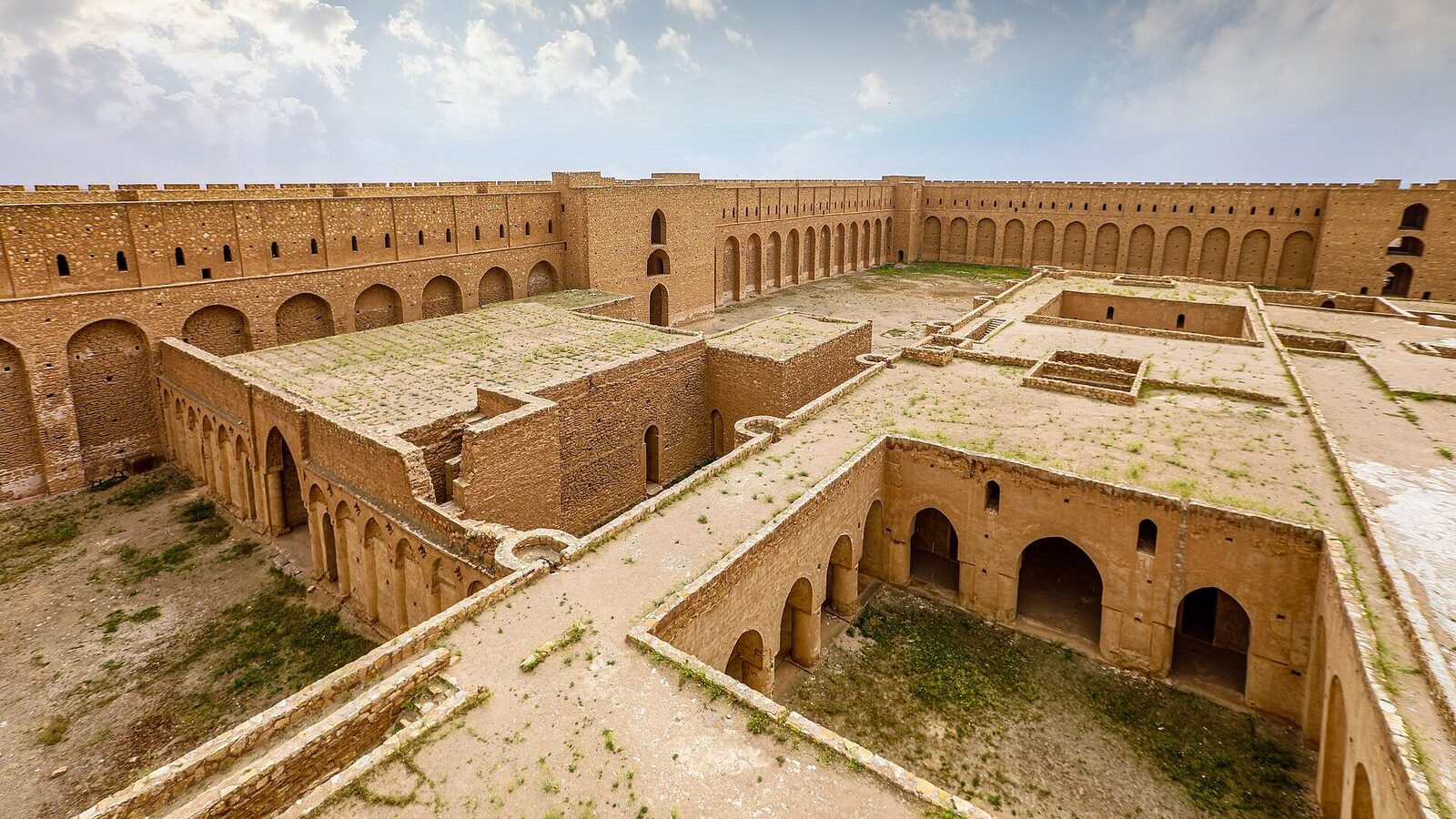
In the afternoon, drive about 50 km south into the desert to Ukhaidir, a fortress-palace built around 775 by Isa ibn Musa, nephew of the first Abbasid caliph al-Saffah, and one of the best-preserved early Islamic palaces anywhere. It has sat on Iraq’s UNESCO Tentative List since 2000. There is no public transport, and the roads from Karbala are secondary or unpaved, so it only works with a private car as part of a Karbala overnight. We found no reliable opening hours or entrance fee.
Day 6: Najaf and Kufa
The coaster from Karbala to Najaf covers about 80 km in a little over an hour for about 2,500 dinars. The Imam Ali shrine allows phones but bans cameras, runs a separate entrance for women and expects them to wear a chador. Beyond it spreads Wadi al-Salam, the vast cemetery, and a short drive away is the Great Mosque of Kufa, where Ali was struck at prayer in 661. Karbala and Najaf are both easy to book on arrival outside the pilgrimage seasons, though many hotels closed during the 2026 war before reopening from 30 May.
Day 7: Uruk, on the way to Nasiriyah
Uruk is where some of the world’s earliest writing appears, and it is the site ten days buys you. It lies in the desert of Muthanna province, near Samawah, and was once a city ringed by a brick wall about 9 km long and 12 to 15 metres high that the Epic of Gilgamesh credits to Gilgamesh himself. Its two great precincts were the Eanna, sacred to Inanna, and the Anu district with its White Temple. Some of the world’s earliest written tablets come from here, and since 2016 Uruk has been part of the Ahwar of Southern Iraq World Heritage Site. German fieldwork resumed in 2016 and now concentrates on the city wall.
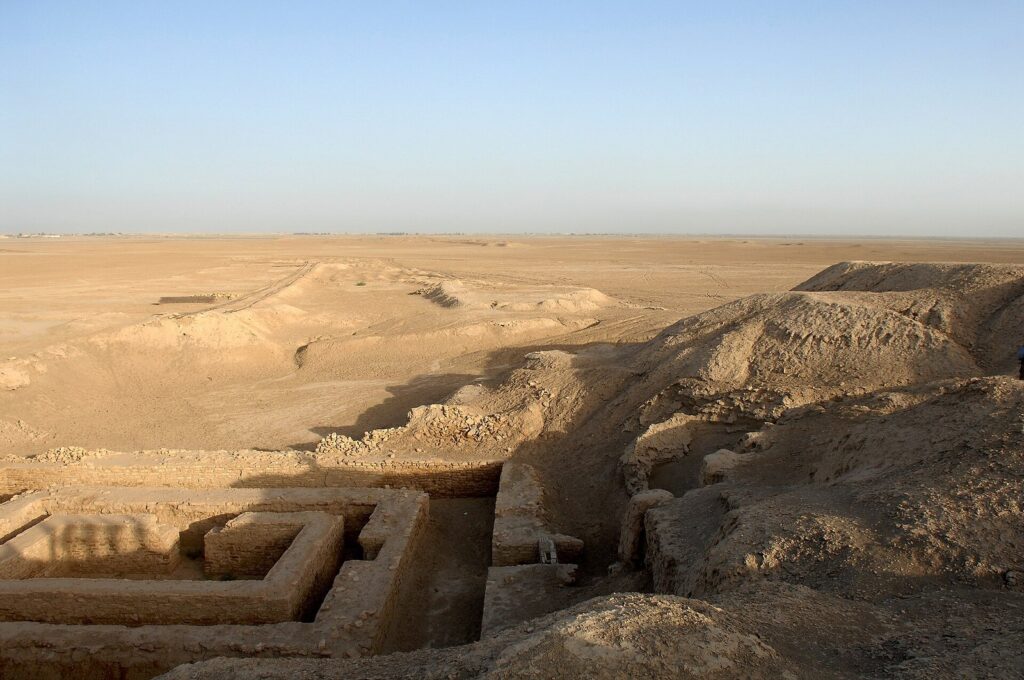
Visitor arrangements are the unknown. A new visitor centre has been reported but we could not confirm when it opened or what it charges, and no authority publishes a drive time from Samawah. Treat Uruk as a stop with a driver who has been before, and continue to Nasiriyah for the night.
Day 8: Ur, Girsu and Nasiriyah
The Ziggurat of Ur is the biggest uncertainty on this route. It closed in 2026 for its seventh restoration campaign, with reopening targeted for July, and we found no report confirming it reopened. When open, foreigners pay 25,000 dinars past the checkpoint, often with no ticket issued and with your passport photographed; a taxi from Nasiriyah costs about 8,000 dinars each way; and climbing the staircase is banned.
If Ur is shut, go to Girsu, the religious centre of the Sumerian state of Lagash at Tell Telloh, where the British Museum’s team has worked since 2016 and in 2020 uncovered a 5,000-year-old cultic area. The Nasiriyah Museum was listed as open in February 2026. Eridu, the city Sumerian tradition names as the first to receive kingship, lies about 24 km south-south-west of Ur, but we found nothing on visitor access there.
Day 9: A night in the marshes
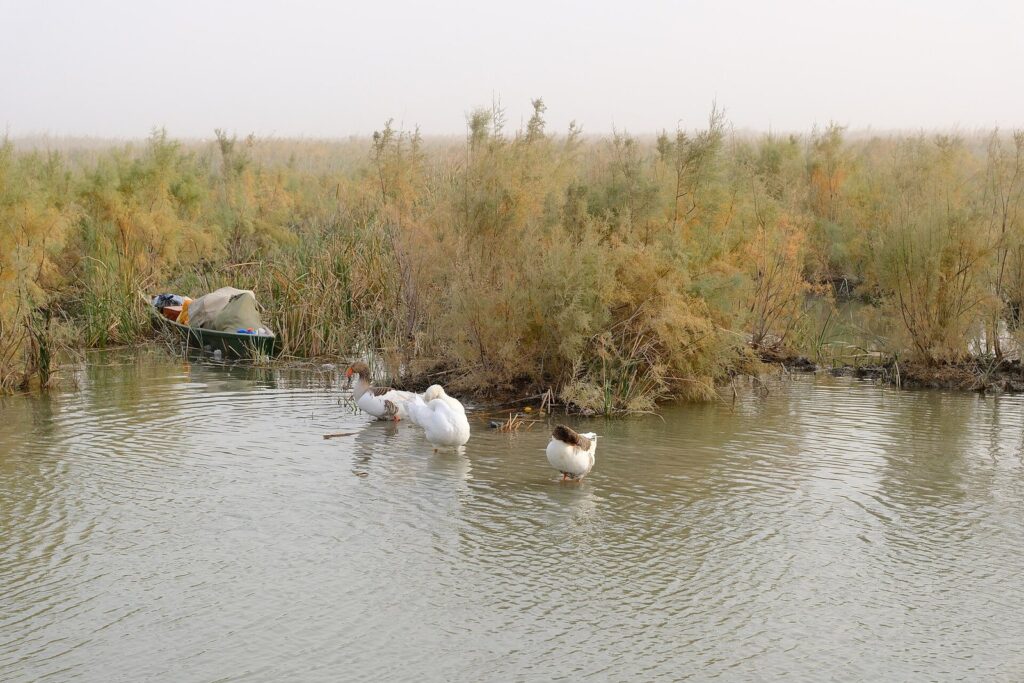
Chibayish, about 90 km from Nasiriyah, is the gateway to the Central Marshes. Travellers put a shared taxi at 3,000 to 5,000 dinars, a mashoof, the traditional canoe, at roughly 25,000 to 35,000 dinars per boat per hour, and a full six- to seven-hour private boat at 40,000 to 50,000 dinars for four; treat those as indicative. With ten days, stay the night in a reed mudhif guesthouse: the offer usually includes meals and a boat trip, and dawn on the water is the reason to be there. There is no formal permit, though some travellers report an informal police registration in Nasiriyah. Our southern Iraq guide covers the marshes in full.
Day 10: Basra
From Chibayish the road east follows the Euphrates to Qurna, where it meets the Tigris to form the Shatt al-Arab, and on to Basra. Spend the day by the river and in the lanes of old Basra, with their shanasheel, the carved wooden balconies of the old merchant houses, and visit the Basrah Museum, which has four galleries and a reported foreigner fee of 25,000 dinars; its hours are unpublished. Fly home from Basra rather than retracing the route. The FCDO advises against all travel within 5 km of the Iranian border in Basra province. Our guide to safety in Basra has more.
Getting between the stops
| Leg | Options | What we know |
|---|---|---|
| Baghdad to Babylon | Driver | About 85 km; about 1h30 (operator, March 2026); one checkpoint at Hillah |
| Baghdad to Karbala | Coaster from Alawi garage, or taxi | About 3,500 dinars by coaster; 2 to 2.5 hours with checkpoints |
| Karbala to Ukhaidir | Private car only | About 50 km each way on secondary roads |
| Karbala to Najaf | Coaster | About 80 km, a little over an hour, about 2,500 dinars |
| Najaf to Uruk to Nasiriyah | Driver | No published drive times |
| Nasiriyah to Ur | Taxi | About 8,000 dinars each way |
| Nasiriyah to Chibayish | Shared taxi or driver | About 90 km; 3,000 to 5,000 dinars shared (indicative) |
| Chibayish to Basra | Driver | No published drive time |
Carry your passport and visa: the FCDO says carrying photographic ID is a legal requirement, and checkpoints within cities and on main roads may stop you. Our guides to getting around Iraq and Iraqi checkpoints explain both.
Is a driver worth it for ten days?
For this route, yes, at least for the rural days. Aqar Quf, Ctesiphon, Borsippa, Ukhaidir, Uruk, Ur and the marshes are all outside towns, several have no public transport at all, signage is Arabic-first, and a local driver handles checkpoints: one Babylon operator described the Hillah checkpoint as a two-minute stop when he does the paperwork. Self-driving needs the 1968 International Driving Permit plus your home licence, and the FCDO calls road travel in Iraq dangerous; the country recorded 2,351 road deaths in 2025.
We found no dated day rate for a car and driver in 2025 or 2026. The only dated price is one operator’s Babylon day trip from Baghdad, from $120 a person in March 2026, including vehicle, guide, entrance fees and Borsippa. Get several quotes, agree a daily price in writing, and confirm whether fuel, the driver’s meals and his nights away are included. For the shrine cities, coasters are easy and cheap. Our page on Iraq tours explains when a full package makes more sense.
A north-and-south variant
If you want the Kurdistan Region in the same trip, take five days in the south (Baghdad, Babylon, Karbala and Najaf) and fly north for five. Fly rather than drive: the roads from Baghdad to Erbil cross provinces the FCDO advises against all travel to, as do the Erbil to Kirkuk and Erbil to Mosul roads. Iraqi Airways and UR Airlines both appear on Erbil airport’s flight board. In the north, the Erbil Citadel has been only partly open during restoration, and the Rawanduz gorge, the waterfalls and Sulaymaniyah fill the rest; our Kurdistan itinerary has the detail.
Get the visa the right way round. The federal e-visa is valid across the whole country, the Kurdistan Region included, so it covers both halves of this trip. A Kurdistan Region visa works in one direction only: it is valid in the Region and not in federal Iraq, and travellers holding one have been refused trying to cross south. If you are doing both, buy the federal visa.
When to go, and what to avoid
October to April. Basra averages about 19 °C in January against 47 °C in July, and every site on this route is exposed. Avoid the big Shia dates on the Karbala and Najaf days: Arbaeen is expected on 24 or 25 July 2027, Ashura around 15 June 2027 and the Rajab walk in Baghdad around 4 January 2027. Ramadan is expected from about 8 February to 9 March 2027, and Eid al-Fitr right after it closes offices for several days. For the month-by-month picture, see our guide to the best time to visit Iraq.
What does ten days cost?
We only give prices we can date. The shared minibuses are cheap, about 3,500 and 2,500 dinars for the two coaster legs. Entrance fees at Babylon, Ur and the Basrah Museum each run to a reported 25,000 dinars for foreigners. A marsh boat costs tens of thousands of dinars for a group. The big costs are the driver, for which no current day rate is published, and accommodation, which moves with pilgrimage seasons; we don’t quote hotel rates. Our guide to what a trip to Iraq costs sets out the budget tiers.
Visas and paperwork
According to the FCDO there is no visit visa on arrival in federal Iraq: you apply on the Government of Iraq e-visa portal at least 24 hours before travel, the visa costs $160 and is valid for 60 days, and you need a return or onward ticket and a passport valid for six months beyond arrival. Apply well ahead: in April 2026 Shafaq News reported approvals paused for several weeks after the abduction of an American journalist in Baghdad, though the Interior Ministry denied a suspension. Our Iraq visa guide covers the details.
The safety frame for this route
Every province on this itinerary, Baghdad, Babil, Karbala, Najaf, Al-Muthanna, Dhi Qar and Basra, is one the UK Foreign, Commonwealth & Development Office advises against all but essential travel to. Its Iraq travel advice, last updated 22 July 2026 and unchanged when we checked on 25 September, also lists as against all travel Baghdad’s Sadr City, Jurf al-Sakr in Babil and the strip within 5 km of the Iranian border in Basra, and warns of a high threat of kidnapping throughout Iraq, with British nationals seen as legitimate targets, including tourists.
The US State Department’s advisory is Level 4, Do Not Travel, reissued on 29 August 2026. The FCDO warns that your travel insurance could be invalidated if you travel against its advice; our Iraq travel insurance page explains what to check. We give you the inputs; the decision stays with you.
What we could not confirm
- Whether Ur has reopened. The restoration was due to finish in July 2026; no reopening report found.
- Visitor arrangements at Uruk. A visitor centre has been reported, but not its opening date, hours or fee.
- Access to Girsu and Eridu. Both are excavation sites; we found no published visitor arrangements.
- Ukhaidir’s hours and fee. The figures in circulation come from aggregator sites we don’t trust.
- Drive times on the southern legs. No authority publishes them.
- A car-and-driver day rate. Nothing dated for 2025 or 2026.
- The Iraq Museum’s reopening date. None announced as of late July 2026.
Frequently asked questions
Is 10 days enough to see Iraq?
It is enough to see the south properly: Baghdad and its ziggurats, Babylon and Borsippa, the shrine cities, Ukhaidir, Uruk, Ur and the marshes, and Basra. It is also enough for a split trip with five days in the Kurdistan Region, though you would drop the deeper southern sites.
What is the best 10-day route in Iraq?
Baghdad for three nights, then south: Babylon and Borsippa, Karbala with Ukhaidir, Najaf and Kufa, Uruk on the way to Nasiriyah, Ur or Girsu, a night in the marshes and Basra. It follows the Euphrates, avoids backtracking and stays out of the provinces the FCDO rates against all travel.
Can you include Kurdistan in 10 days?
Yes: five days in the south, then fly from Baghdad to Erbil for five days in the Kurdistan Region. Fly rather than drive, because the overland routes cross provinces the FCDO advises against all travel to. Buy the federal e-visa, which is valid in the Region too; a Kurdistan Region visa is not valid in Baghdad.
Is Uruk worth the detour?
For anyone interested in how civilisation began, yes. Uruk is where some of the earliest writing appears, its wall ran for about 9 km, and it is part of the Ahwar World Heritage Site. Go with a driver who knows the site, because visitor arrangements and drive times are not published.
How do you get to Ukhaidir?
By private car from Karbala, about 50 km south on secondary or unpaved roads. There is no public transport, so it works best as an afternoon trip during a night in Karbala. We found no reliable opening hours or fee, so ask your driver or hotel before you set off.
Do you need a guide for 10 days in Iraq?
Not legally in the shrine cities, where coasters make independent travel easy. A driver who knows the rural sites is close to essential for Aqar Quf, Ctesiphon, Borsippa, Ukhaidir, Uruk and the marshes, because they are remote, unsigned and quicker to reach through checkpoints with a local.
Final thoughts
Ten days is the length at which southern Iraq stops being a checklist. You have time for the second-tier sites that most visitors never see, Borsippa’s burnt summit, the empty courtyards of Ukhaidir, the wall of Uruk, and for a night on the water in the marshes rather than a rushed boat hour. The price of that depth is logistics: more rural driving, more uncertain opening, more reliance on a good driver.
For a shorter trip, the one-week version keeps the core. For how this fits the other lengths of trip, from three days to three weeks, see our Iraq routes planner, and for the story behind the ruins, our history of Mesopotamia.
Photo credits
Ukhaidir fortress (featured image): Mustafa Hamzah Almosawy, Wikimedia Commons (CC BY-SA 4.0). Aqar Quf ziggurat: Osama Shukir Muhammed Amin FRCP(Glasg), Wikimedia Commons (CC BY-SA 4.0). Taq Kasra, Ctesiphon: Safa.daneshvar, Wikimedia Commons (CC BY-SA 4.0). Borsippa ziggurat: Osama Shukir Muhammed Amin FRCP(Glasg), Wikimedia Commons (CC BY-SA 4.0). Uruk, Warka: SAC Andy Holmes (RAF), Wikimedia Commons (OGL v1.0). Chibayish marshes: Alli Khalil, Wikimedia Commons (CC BY-SA 4.0). All images via Wikimedia Commons under the licences shown.