Last updated: September 2026. Route, flights, fares and site status re-checked on 26 September 2026 against our research files (August and September 2026), INA, Kurdistan24 and Shafaq News; FCDO and US advisories checked 25 and 26 September 2026. Closures and flight schedules on this route changed repeatedly in 2026: confirm each one the week you travel.
Most published plans for an Iraq itinerary of 2 weeks draw a loop: south from Baghdad to Basra, then north through Samarra and Mosul to Erbil. It is a neat shape on a map, but it runs straight through Salah al-Din, Ninawa and Kirkuk, three provinces the UK Foreign Office advises against all travel to. The full-country route that works in late 2026 is two separate halves joined by a flight: a week in the south along the Euphrates, and a week in the Kurdistan Region’s mountains and cities. Our Iraq itinerary planner covers routes of every length.
In short, the best Iraq itinerary for 2 weeks spends eight days in the south (Baghdad, Babylon, Karbala, Najaf, Ur and the marshes, Basra), flies north via Baghdad, and spends six days in the Kurdistan Region (Erbil, the Rawanduz gorge, Sulaymaniyah and Halabja), flying home from Sulaymaniyah. Buy the federal e-visa, which covers both halves, and go between October and April.
If you have less time, our 10-day Iraq itinerary goes deeper into the south alone. Below: the route day by day, the flight that joins the halves, a northern alternative via Duhok and Amedi, how to get around in each region, the costs we can date, and the safety frame as it stood in late September 2026.
The short answer
| Question | Answer |
|---|---|
| Route | Baghdad → Babylon → Karbala → Najaf → Nasiriyah → marshes → Basra → (fly) → Erbil → Rawanduz → Sulaymaniyah → Halabja |
| Split | Eight days in federal Iraq, six in the Kurdistan Region |
| Joining the halves | Fly: Iraqi Airways restarted Baghdad to Erbil, Sulaymaniyah and Basra routes in April 2026. Don’t drive through Kirkuk or Mosul. |
| Visa | The federal e-visa ($160) is valid in both halves; a Kurdistan Region visa is not valid in the south |
| Best season | October to April; late October and March to April suit both regions |
| Closed or uncertain | Iraq Museum; Ziggurat of Ur (restoration); Erbil Citadel (partial, scheduled access) |
| Advisories (26 September 2026) | FCDO: against all but essential travel to every province on the route. US: Level 4, Do Not Travel. |
The Iraq itinerary for 2 weeks, day by day
| Day | Base | Main sights | Getting there |
|---|---|---|---|
| 1 | Baghdad | Mutanabbi Street, the Shabandar café, the Tigris | Fly into Baghdad |
| 2 | Baghdad | Kadhimiya, the Mustansiriya Madrasa, Aqar Quf | Taxi, ride-hailing or driver |
| 3 | Karbala | Babylon and Borsippa on the way south | Driver |
| 4 | Najaf | The Karbala shrines; the Imam Ali shrine and Kufa | Coaster, about 80 km |
| 5 | Nasiriyah | Uruk on the way, if your driver knows it | Driver |
| 6 | Nasiriyah | Ur if reopened, or Girsu; the Nasiriyah Museum | Taxi or driver |
| 7 | Chibayish | A day and a night in the marshes | Shared taxi or driver |
| 8 | Basra | The Shatt al-Arab and old Basra | Driver |
| 9 | Erbil | Fly north via Baghdad | Domestic flights |
| 10 | Erbil | The citadel (as open), the Qaysari bazaar, Ankawa | Taxi or Careem |
| 11 | Soran area or Erbil | Shaqlawa, the Rawanduz gorge, Bekhal and Gali Ali Beg, Korek | Driver |
| 12 | Sulaymaniyah | The road via Koya and Dukan | Driver or shared taxi |
| 13 | Sulaymaniyah | Halabja and the Hawraman valleys | Driver |
| 14 | Fly home | The Slemani Museum and Amna Suraka in the morning | Fly from Sulaymaniyah |
The south: days 1 to 8
Baghdad (days 1 and 2)
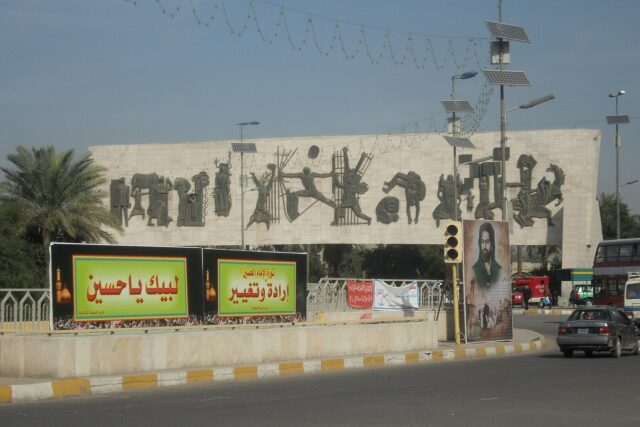
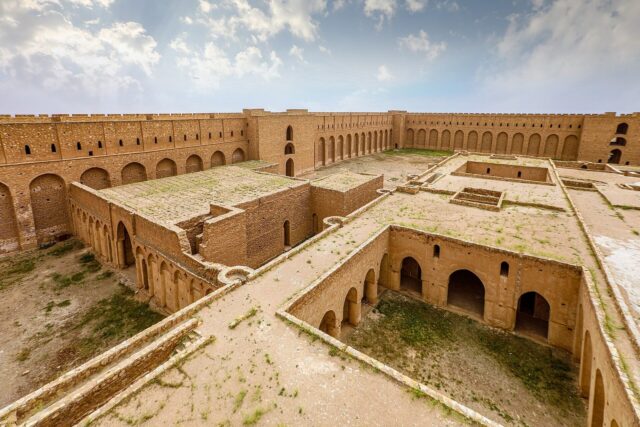
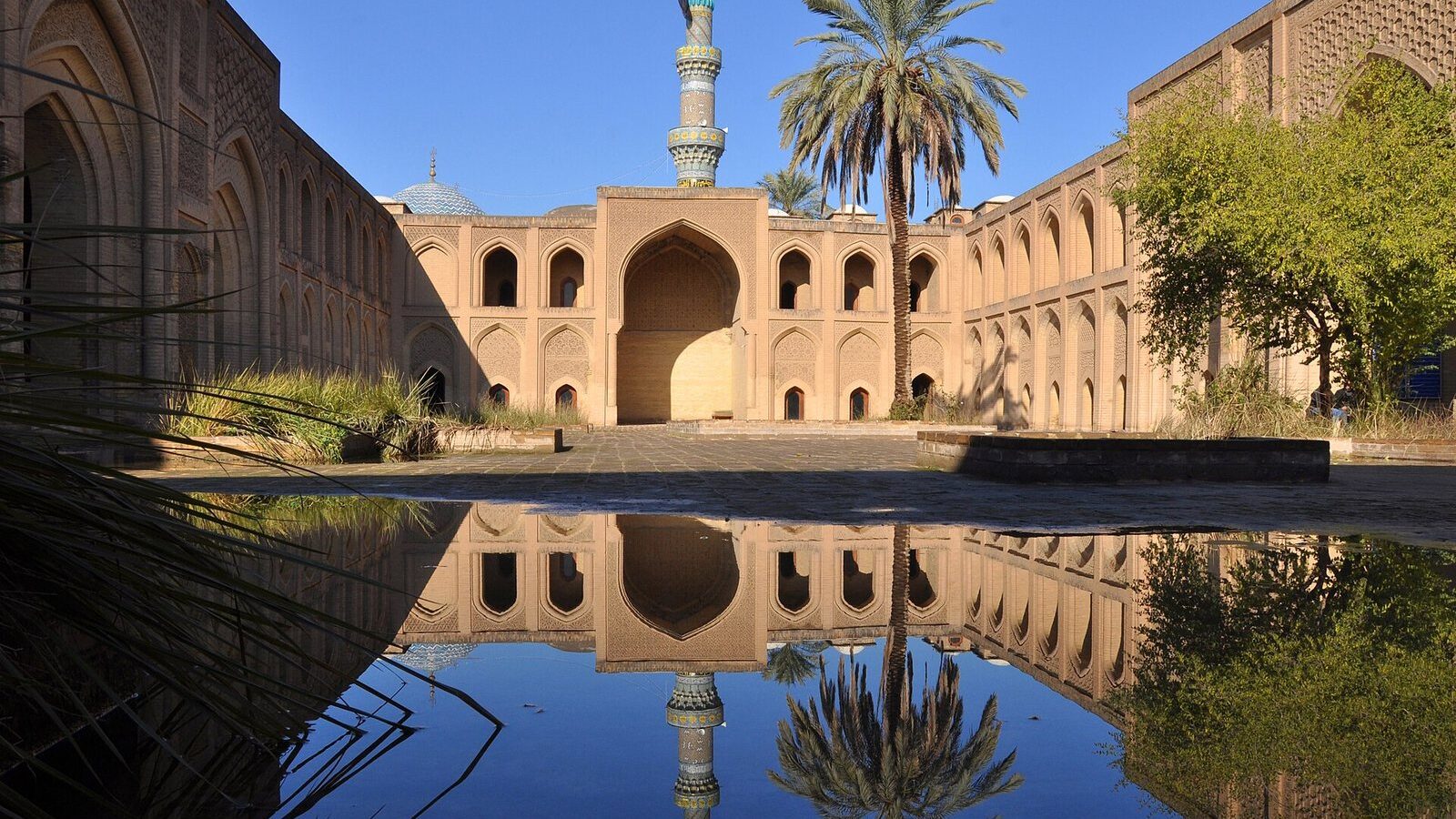
Start in the old centre on Mutanabbi Street, best on a Friday morning when the booksellers spread across the pavement, with tea at the Shabandar café. The Mustansiriya Madrasa, built for the Abbasid caliph al-Mustansir in the 1230s, is one of the few Abbasid buildings still standing in Baghdad; check that it is open before you go. The golden domes of Kadhimiya are best lit after dark, and the Kassite ziggurat of Aqar Quf, about 30 km west, makes an easy half-day. Expect closures: the Iraq Museum has been shut since July 2025, with no announced reopening date as of late July 2026, and the Al-Qishla had been closed for more than 18 months. Our Baghdad guide has the rest.
Babylon, Karbala and Najaf (days 3 and 4)
Babylon is about 85 km south of Baghdad, roughly an hour and a half by car according to one operator in March 2026, when foreigners paid 25,000 dinars to enter. Borsippa’s ruined ziggurat is about twenty minutes further on, with no formal fee. Sleep in Karbala, see the shrines of Imam Hussein and al-Abbas in the morning, then take the coaster to Najaf, about 80 km, a little over an hour, for about 2,500 dinars. Women need an abaya at the Karbala shrines and a chador at the Imam Ali shrine in Najaf. Jurf al-Sakr, a closed town on the approaches to Karbala, is on the FCDO’s against-all-travel list.
Nasiriyah, Ur and the marshes (days 5 to 7)
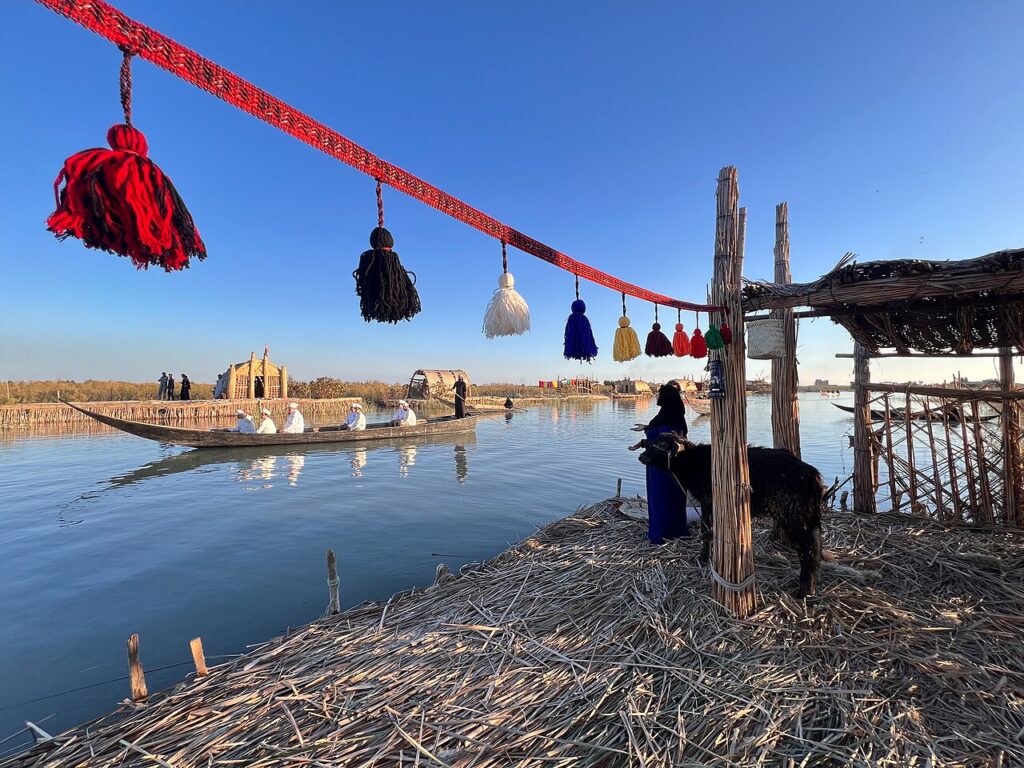
Drive south to Nasiriyah, stopping at Uruk near Samawah if your driver knows the site; its visitor arrangements are not published. The Ziggurat of Ur closed for its seventh restoration campaign in 2026, with reopening targeted for July, and we found no report that it reopened; when open, foreigners pay 25,000 dinars and a taxi from Nasiriyah is about 8,000 dinars each way. If it is shut, Girsu, in the same province, is the substitute. Then spend a day and a night in the marshes at Chibayish, about 90 km from Nasiriyah, where travellers put a boat at roughly 25,000 to 35,000 dinars an hour and reed mudhif guesthouses offer overnight stays.
Basra (day 8)
From Chibayish the road follows the Euphrates to Qurna, where it meets the Tigris, and on to Basra. Spend the day on the Shatt al-Arab and in old Basra’s lanes of shanasheel, the carved wooden balconies, and at the Basrah Museum, with its four galleries and a reported foreigner fee of 25,000 dinars. The FCDO advises against all travel within 5 km of the Iranian border in Basra province. Our southern Iraq guide covers Basra and the marshes together.
How do you get from the south to Kurdistan?
Fly. The overland routes north from Baghdad run through Salah al-Din and Kirkuk, and the roads from Mosul and Kirkuk into the Kurdistan Region cross provinces the FCDO advises against all travel to. When Iraqi Airways restarted after the spring 2026 closure of Iraqi airspace, INA reported that its first phase covered domestic routes from Baghdad to Erbil, Sulaymaniyah and Basra, so the simplest link is Basra to Baghdad and on to Erbil, either as a connection or with a night in Baghdad. There is no scheduled flight between Erbil and Sulaymaniyah.
Domestic schedules were rebuilt in phases after the closure, and flights to Erbil, Baghdad and Basra were suspended again from 24 July to 8 August 2026, so book the domestic legs last, check them the week you fly, and keep a spare day in the plan.
The north: days 9 to 14
Erbil (days 9 and 10)
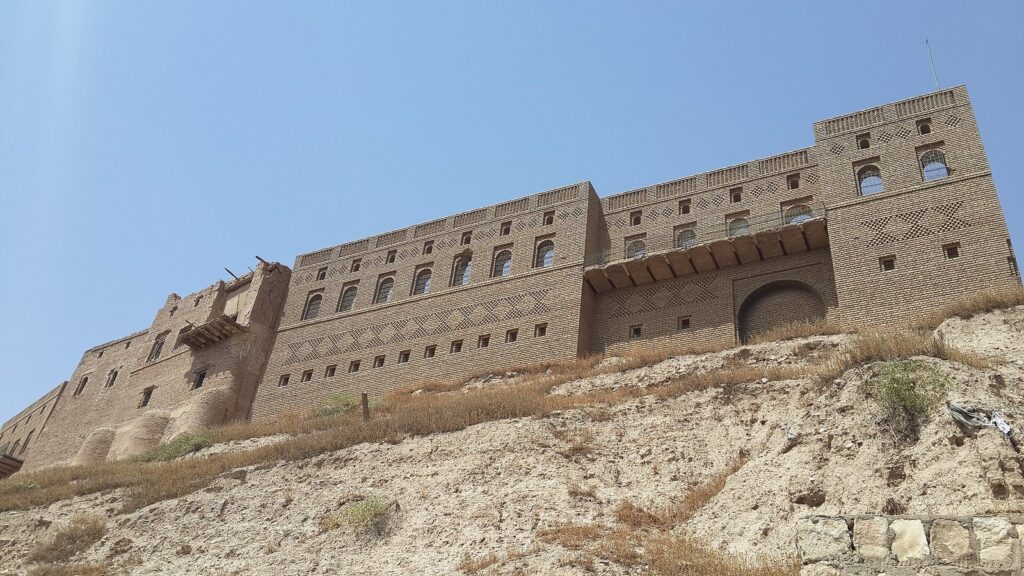
Erbil’s citadel is the city’s centrepiece and a UNESCO World Heritage Site, but access has been partial and scheduled since it reopened one day a week in May 2025, with most back streets fenced for restoration and no official hours or fee published; our Erbil Citadel guide explains how to check. Below it, the Qaysari Bazaar is open and trading normally in 2026, two years after a fire destroyed around 227 shops. Ankawa, the Christian district, is where the city’s bars and restaurants cluster. Careem operates in Erbil. Our guide to things to do in Erbil covers the rest.
Why the Erbil airport numbers disagree
| Source | Figure | What it actually measures |
|---|---|---|
| Erbil Rotana, the hotel’s own page | 6 km | From one hotel on Gulan Street to the airport |
| Airport-distance sites | About 6.6 km | Straight-line distance, airport to city centre |
| Same sites | About 8.7 km | Driving distance to the centre |
| Other aggregators | Up to about 13 km | The upper end of loose estimates; depends where “the city” is |
Shaqlawa, Rawanduz and Korek (day 11)
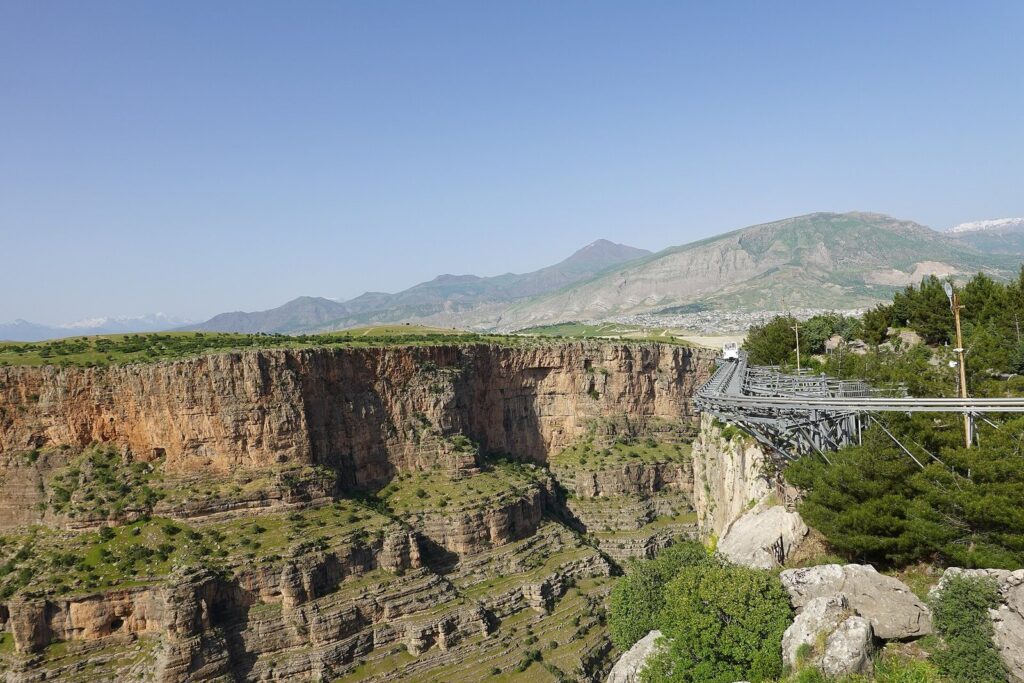
Head north-east into the mountains along the Hamilton Road, the route a British engineer built from Erbil through Rawanduz towards Iran between 1928 and 1932. Shaqlawa, a hill town about 50 km out, is the first stop; Rawanduz, about 123 km from Erbil, sits on a gorge that its builder said was reputed to be the finest in Asia. Bekhal waterfall is about 10 km west of Rawanduz, Gali Ali Beg some 130 km from Erbil, and the Korek Mountain cable car climbs from near Bekhal to a top station at 2,000 metres. No authority publishes drive times between these places. Our guides to Rawanduz and Korek Mountain cover each; the FCDO reports Iranian strikes on Iranian-Kurdish opposition groups around Rawanduz.
Erbil to Sulaymaniyah (day 12)
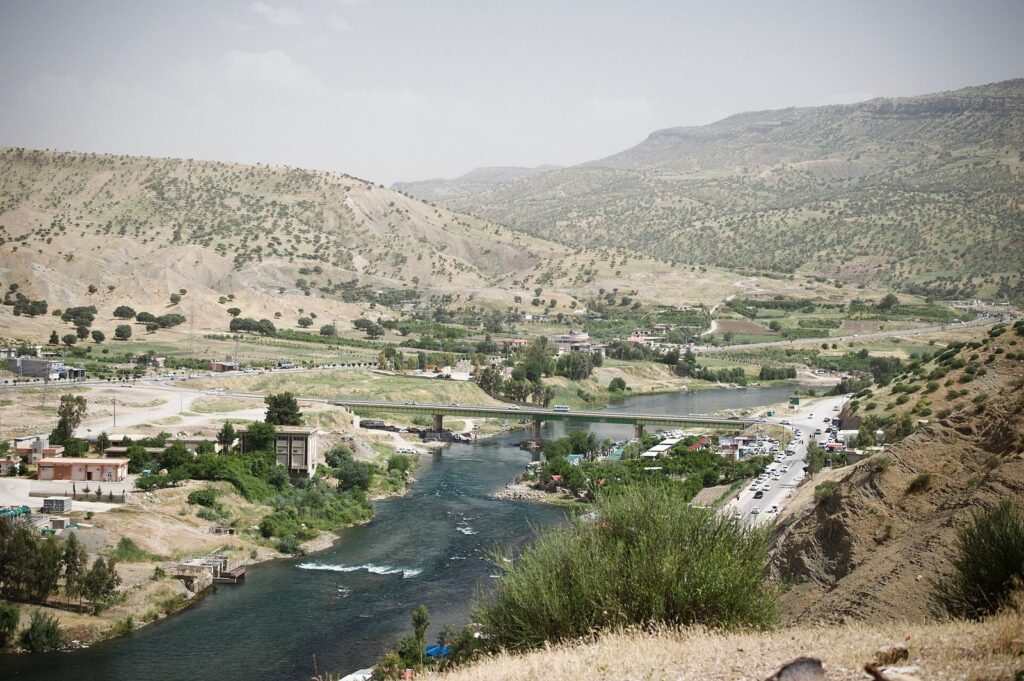
There are two roads. The shorter goes through Kirkuk, a live freight corridor with slow checkpoints, but Kirkuk province is on the FCDO’s against-all-travel list, which is enough to rule it out. The normal tourist route goes via Koya and Dukan; the FCDO notes Iranian strikes around Koya too, so check the news that morning. The Kurdistan Regional Government gives the distance as 198 km without saying which route. Shared taxis run between the cities’ garages, with a seat quoted at about 15,000 dinars in a crowd-sourced 2022 figure; a driver gives you the chance to stop at Lake Dukan, which the KRG puts about 70 km from Sulaymaniyah.
Sulaymaniyah and Halabja (days 13 and 14)
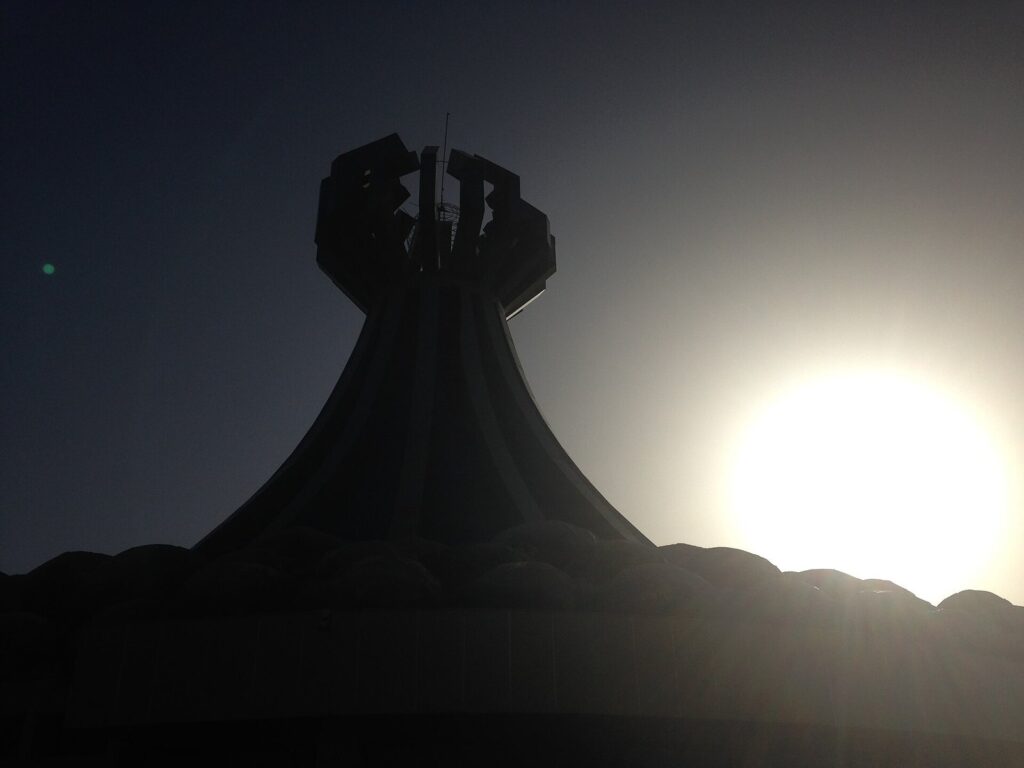
From Sulaymaniyah, spend a day on Halabja, the town hit by the 1988 chemical attack, and its Monument and Peace Museum, which draws more than 100,000 visitors a year; 16 March, the anniversary, is its busiest and most sensitive day. Beyond it lie the Hawraman valleys and Ahmad Awa, about 84 km east of Sulaymaniyah. On the last morning, visit the Slemani Museum, whose hours are disputed (its own site says 09:00 to 13:00, Sunday to Thursday; more recent reports say about 09:00 to 15:00, Saturday to Thursday), and Amna Suraka, the former Ba’athist prison that documents the Anfal campaign, for which we found no confirmed 2026 hours.
Fly home from Sulaymaniyah. Its airport’s carriers in August 2026 included Qatar Airways to Doha, Royal Jordanian to Amman, flydubai to Dubai, AJet and Pegasus to Istanbul Sabiha Gökçen and Iraqi Airways to Baghdad, with Condor due to start from Düsseldorf on 18 December 2026. Fog is common on the Sulaymaniyah plain in winter and the airport has no instrument landing system, so avoid a tight connection.
A northern alternative: Duhok, Amedi, Lalish and Akre
If mountains and villages matter more than cities, swap days 12 to 14 for the Duhok side of the Region:
| Place | What we know | Caution |
|---|---|---|
| Duhok | Base for the north-west; a cable car up Mount Zawa | Duhok province draws over two million visitors a year; book ahead at holidays |
| Amedi | Clifftop town about 90 km north-east of Duhok, 1.5 to 2 hours by car, no direct public transport | Nights below freezing in winter |
| Lalish | The holiest Yazidi temple, about 60 km north of Mosul; barefoot throughout | Administratively in Ninawa, which the FCDO rates against all travel, though reached from Duhok |
| Akre | Old hill town about 100 km south-east of Duhok and 140 km from Erbil; paved road, shared cars | Busiest at Newroz, 20 to 21 March |
Fly home from Erbil if you take this version. Our Kurdistan itinerary covers the north in more depth.
Where to sleep each night
| Nights | Base | What to know |
|---|---|---|
| 2 | Baghdad | Book the first night before you land; the rest of the city is easy to change |
| 1 | Karbala | More than 1,000 hotels and usually walk-up outside pilgrimage seasons; full for Arbaeen and Ashura |
| 1 | Najaf | Around 250 hotels; many closed during the spring 2026 war and reopened from 30 May |
| 2 | Nasiriyah | A working city of about 700,000 and the base for Ur and Girsu |
| 1 | Chibayish | A reed mudhif guesthouse, usually with meals and a boat trip included |
| 1 | Basra | Close to the airport for the flight north |
| 2 | Erbil | Book ahead at Newroz and both Eids, when the Region’s hotels fill |
| 1 | Soran area or Erbil | Stay near Rawanduz to see the gorge in morning light, or return to Erbil |
| 2 | Sulaymaniyah | Close to the airport for the flight home |
We don’t quote room rates: they move with pilgrimage seasons in the south and holidays in the north. Our guide to where to stay in Iraq explains the tiers and what drives prices.
Getting around each half
The two regions work differently. In the south, coasters (shared minibuses) run cheaply between Baghdad, Karbala and Najaf from city garages, at about 3,500 and 2,500 dinars for the two legs, while Babylon, Uruk, Ur and the marshes need a car and driver; we found no dated day rate, only one operator’s Babylon day trip from Baghdad at $120 a person in March 2026. In the north, travel between cities is largely by shared taxi from each city’s garage, and a driver is the way to reach the gorges and waterfalls. Everywhere, carry your passport and visa: the FCDO says photographic ID is a legal requirement and checkpoints may stop you. Self-driving needs the 1968 International Driving Permit plus your licence, and the FCDO calls road travel dangerous. Our guides to getting around Iraq and Iraqi checkpoints explain both.
Running the route in reverse
In autumn, the weather argues for doing the north first: the Kurdish mountains are at their best in October, and the south is only really comfortable from November. Reversed, the trip starts with a flight into Sulaymaniyah or Erbil, crosses south by flying to Baghdad, and ends in Basra, flying home from its airport.
| Season | Start | Order | Fly home from |
|---|---|---|---|
| Spring (March to April) | Baghdad | South first, then north as the hills turn green | Sulaymaniyah or Erbil |
| Autumn (October to November) | Sulaymaniyah or Erbil | North first, then south as it cools | Basra or Baghdad |
| Winter (December to February) | Baghdad | Mostly south; the north only for the cities or skiing | Basra or Baghdad |
Either way, the domestic flight is the hinge, so keep a spare day beside it.
When to go
The two halves peak at different times. The south is best from November to March, when Basra averages about 19 °C in January; the Kurdistan Region is best in April to early June and September to October. The weeks that suit both are late October to November and March to early April, so aim for those, and avoid the big pilgrimage dates on the Karbala and Najaf days: Arbaeen, expected on 24 or 25 July 2027, Ashura around 15 June 2027 and the Rajab walk in Baghdad around 4 January 2027. Our guide to the best time to visit Kurdistan sets the two regions side by side.
What do two weeks cost?
We only give prices we can date. Coasters in the south total about 6,000 dinars for the two main legs; entrance fees at Babylon, Ur and the Basrah Museum run to a reported 25,000 dinars each for foreigners; a marsh boat costs tens of thousands of dinars for a group; a shared-taxi seat from Erbil to Sulaymaniyah was about 15,000 dinars in 2022. The big costs, a driver, domestic flights and accommodation, have no current published rates we trust, and we don’t quote hotel prices. Iraq runs largely on cash, and shops, restaurants and hotels rarely take cards. Our guide to what a trip to Iraq costs, linked below, sets out the budget tiers.
Money, SIMs and staying connected
Iraq runs on cash. ATMs exist in the big cities, but foreign debit cards are often refused, and shops, restaurants and hotels rarely take cards, so bring US dollars in good condition and change them as you go. Rates are quoted per 100 dollars: in Baghdad and Erbil in mid-August 2026 the dollar traded at around 153,000 dinars per 100, roughly 1,530 dinars to the dollar against an official rate of 1,320, according to Shafaq News. 964media publishes daily rates if you want to check before you change money. On arrival and departure, the FCDO says you must declare Iraqi currency over 200,000 dinars and any currency or goods over US$10,000.
For data, buy a local SIM as soon as you land; one network, Asiacell, was founded in Sulaymaniyah and was the first mobile operator in Iraq. A local number makes ride-hailing, maps and calls to drivers far easier in both halves of the country. Our guides to the Iraq SIM card and travel costs have the detail.
Dress, photography and the law across both halves
The two regions feel different, and the rules follow. In the shrine cities of the south, dress is at its strictest: women need an abaya and covered hair at the Karbala shrines, where abayas can usually be borrowed at the entrance, and a chador at the Imam Ali shrine in Najaf, which runs a separate entrance and service for women; men should wear long trousers and sleeves. The Najaf shrine bans cameras but allows phones. Baghdad is somewhat looser, and in the Kurdistan Region there is no sourced dress code at all: an Erbil resident’s guide from January 2026 notes that most people wear long trousers rather than shorts, and that women don’t have to cover their hair or ankles. The FCDO’s only specific warning is that clothing ignoring local norms causes more offence during Ramadan.
Leave the drone at home. The FCDO says the Kurdistan Regional Government prohibits sharing footage of drones being launched or of target locations with media outlets or on social media, with violations liable to legal action, and travellers report that bringing a drone into the Region risks detention. Ask before photographing people, and don’t photograph checkpoints or security forces anywhere.
One law applies nationwide and matters to some readers more than any other: under the July 2024 amendment to Iraq’s anti-prostitution law, the FCDO says, actions, clothing or items that the authorities consider to promote LGBT+ identities can bring up to seven years in prison and a fine of 10 to 15 million dinars, and same-sex relationships carry 10 to 15 years. Our guides to Iraqi laws for tourists and solo female travel in Iraq go into more detail.
Visas and paperwork
Get the federal e-visa. It is valid across the whole country, the Kurdistan Region included, so it covers both halves of this trip, whereas a Kurdistan Region visa is valid in the Region only, and travellers holding one have been refused when trying to cross south. According to the FCDO, you apply on the Government of Iraq e-visa portal at least 24 hours before travel; it costs $160, is valid for 60 days, and needs a return or onward ticket and a passport valid for six months. Apply early: in April 2026 Shafaq News reported approvals paused for several weeks after the abduction of an American journalist in Baghdad, though the Interior Ministry denied a suspension. Our Iraq visa guide covers the details.
The safety frame for this route
The UK Foreign, Commonwealth & Development Office’s Iraq travel advice, last updated 22 July 2026 and unchanged when we checked on 25 September, advises against all but essential travel to every province on this route: Baghdad, Babil, Karbala, Najaf, Al-Muthanna, Dhi Qar, Basra and the whole Kurdistan Region, with no carve-outs for particular Kurdish cities. It advises against all travel to Ninawa, Kirkuk and Salah al-Din, to Baghdad’s Sadr City, Jurf al-Sakr and the strip within 5 km of the Iranian border in Basra. It warns of a high threat of kidnapping throughout Iraq, reports Iranian strikes on Iranian-Kurdish opposition groups around Rawanduz and Koya, and says coalition military installations, including in the Kurdistan Region, continue to be a target.
The US State Department’s advisory is Level 4, Do Not Travel, reissued on 29 August 2026. The FCDO warns that your travel insurance could be invalidated if you travel against its advice; our Iraq travel insurance page explains what to check, and our guide to safety in Kurdistan covers the northern half. We give you the inputs; the decision stays with you.
What we could not confirm
- Whether Ur has reopened after the restoration due to finish in July 2026.
- The Iraq Museum’s reopening date. None announced as of late July 2026.
- Erbil Citadel’s opening days and hours. No official body publishes them.
- Domestic flight frequencies. Iraqi Airways’ restart was phased; current timetables must be checked directly.
- Drive times anywhere in the Kurdistan Region. None is published for any city pair.
- A car-and-driver day rate in either region for 2025 or 2026.
- Visitor arrangements at Uruk and Girsu. Not published.
- Amna Suraka’s 2026 hours, and which of the Slemani Museum’s two published schedules is current.
Frequently asked questions
Is two weeks enough for Iraq?
Two weeks is enough to see both halves of the country properly: a week in the south for Baghdad, Babylon, the shrine cities, Ur and the marshes, and a week in the Kurdistan Region for Erbil, the mountains and Sulaymaniyah. It is the shortest trip that does justice to both without rushing.
What is the best two-week route in Iraq?
Eight days south from Baghdad to Basra along the Euphrates, a flight north via Baghdad, then six days in the Kurdistan Region from Erbil through the Rawanduz gorge to Sulaymaniyah and Halabja, flying home from Sulaymaniyah. It avoids the provinces the FCDO rates against all travel and never backtracks by road.
Can you drive from Baghdad to Erbil?
The roads exist, but they cross Salah al-Din or Kirkuk, provinces the FCDO advises against all travel to, which can also affect your insurance. Fly instead: Iraqi Airways restarted its Baghdad to Erbil route in April 2026, and Baghdad to Sulaymaniyah too.
Which visa do you need for Baghdad and Kurdistan?
The federal e-visa, which costs $160 and is valid across the whole country, including the Kurdistan Region. A Kurdistan Region visa, available on arrival at Erbil and Sulaymaniyah for eligible nationalities, is valid in the Region only and will not get you into Baghdad or the south.
Can you add Mosul to a two-week trip?
Mosul has real pull: the al-Nuri mosque and its rebuilt al-Hadba minaret reopened in late August 2025 after a UNESCO-led restoration, and its airport began domestic flights in November 2025. But Mosul is in Ninawa province, which the FCDO advises against all travel to, as it does Kirkuk and Salah al-Din on the roads that lead there. That is why this route leaves it out; our guide to safety in Mosul sets out the current position for anyone weighing it.
Should I start in the north or the south?
Follow the weather. In autumn, start in the Kurdish mountains in October and finish in the south in November, as it cools. In spring, start in the south in March and finish in the north in April, when the hills are green. Either way, keep a spare day around the domestic flight.
Do you need a guide for two weeks in Iraq?
Not for the cities or the shrine towns, where shared minibuses and taxis work. A driver who knows the rural sites is close to essential for Babylon, Uruk, Ur, the marshes and the Kurdish gorges, because they are remote, unsigned or both, and checkpoints are quicker with a local handling them.
Final thoughts
Two weeks is the first length of trip that shows you Iraq as the country Iraqis know: the Shia south with its shrines and date palms, the Kurdish north with its mountains and its own flag, and the flight between them that, in 2026, was the sensible way to cross. The route is less of a grand loop than the ones on older blogs, but it trades the provinces the advisories rule out for time in the places that reward it.
For shorter versions, see our one-week route; for the full range of trip lengths, our Iraq routes planner; and for the practicalities of a first visit, our Iraq travel tips.
Photo credits
Mustansiriya Madrasa, Baghdad (featured image): Taisir Mahdi, Wikimedia Commons (CC BY-SA 4.0). Mashoof in the marshes: Montzr 1, Wikimedia Commons (CC BY-SA 4.0). Erbil Citadel: JEHAN SHERKO, Wikimedia Commons (CC BY-SA 4.0). Rawanduz canyon: Khoshhat, Wikimedia Commons (CC BY 4.0). Lesser Zab below Dukan Dam: Levi Clancy, Wikimedia Commons (CC0). Halabja Monument: Aya sh.yusuf, Wikimedia Commons (CC BY-SA 4.0). All images via Wikimedia Commons under the licences shown.