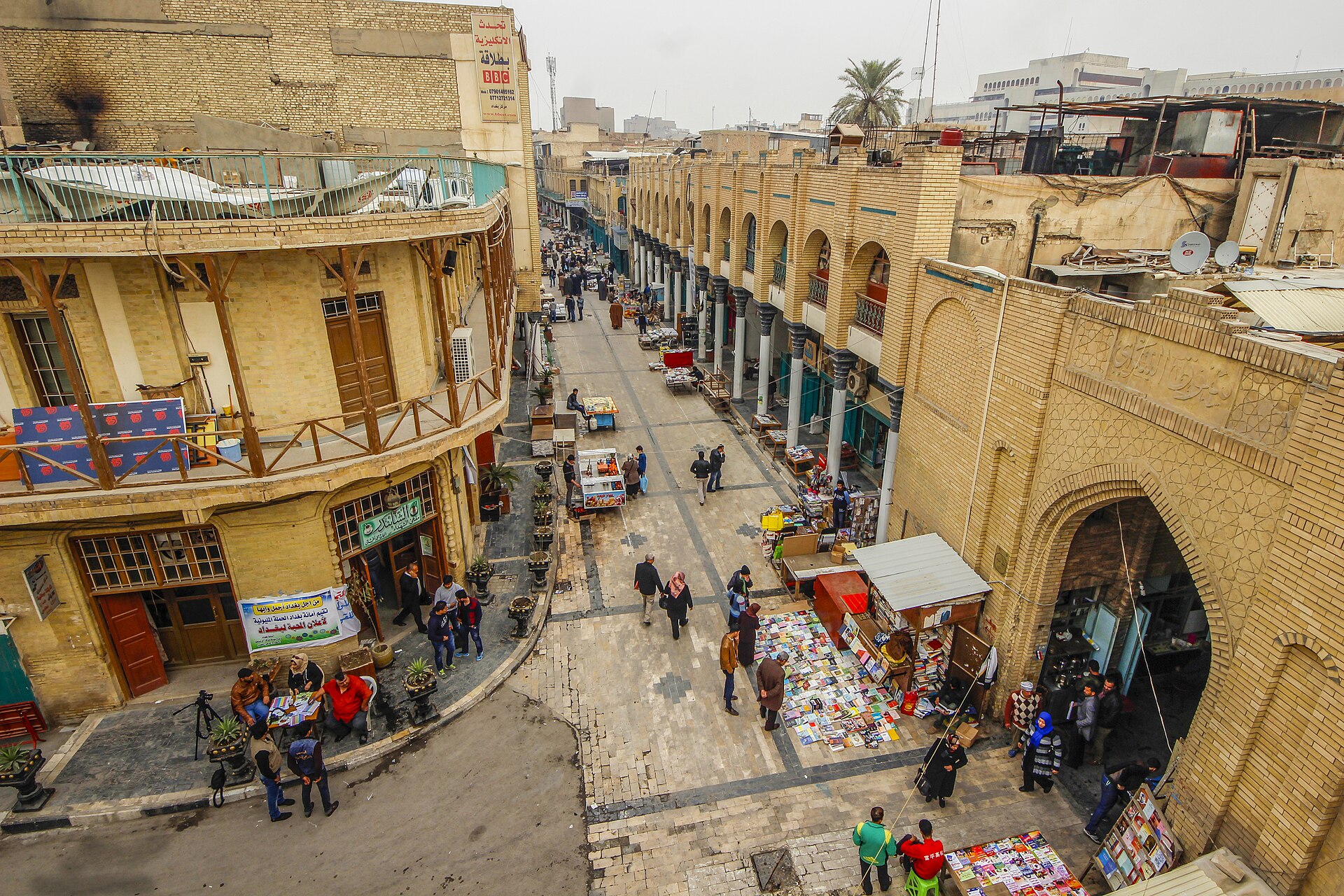
Last updated: August 2026. We re-checked the FCDO regional advice (updated 22 July 2026), the US State Department Level 4 advisory (reissued 2 March 2026), the reopening dates for the al-Nuri Mosque and Mosul airport, and the current state of explosive-ordnance clearance in the Old City.
Ask the question in a Mosul teahouse and you will get a shrug and a glass of tea. Ask it of the British Foreign Office and you get the strongest warning in its vocabulary. Both answers are honest, and the gap between them is the whole problem. For how Mosul compares with everywhere else, see our guide to whether Iraq is safe to visit.
So, is Mosul safe? Officially, no: the FCDO advises against all travel to Ninawa province, which includes Mosul, and the US State Department has Iraq at Level 4, Do Not Travel. Unofficially, a steady trickle of foreign visitors goes to Mosul city each month, almost always with a local guide, and almost always without incident. Those two sentences are both true at the same time, and no amount of writing will collapse them into one clean verdict. What we can do is explain what the advisories are actually based on, which parts of Ninawa the risk sits in, and what a visit costs you in insurance and consular protection if you go anyway.
The short version is that the risk is not evenly spread. Mosul city in 2026 is a functioning place of roughly two million people with traffic jams, university terms, restaurant openings and a reopened international airport. Rural western Ninawa, the desert towards the Syrian border, the Sinjar area and the disputed territories to the south and east are a different proposition entirely, and that is where the advisory’s reasoning mostly lives. The province-wide warning flattens a gradient that anyone actually planning a trip needs to see.
This article covers what each government advisory says and why; the difference between the city and the province; the unexploded-ordnance problem that most travel blogs skip; how people actually reach Mosul and what happens at the checkpoints; whether you need a guide; what insurance and consular support you lose; the ethics of visiting a city that was fought over street by street; and who should simply not go.

Is Mosul safe? The short answer
| Question | Straight answer |
|---|---|
| What does the UK say? | FCDO advises against all travel to Ninawa province, including Mosul. Unchanged by the 22 July 2026 regionalisation that softened advice elsewhere. |
| What does the US say? | Level 4 — Do Not Travel, for all of Iraq. Reissued 2 March 2026. |
| Do people visit anyway? | Yes. Small numbers, mostly on organised trips or with a Mosul-based guide, mostly as a day trip or overnight from Erbil. |
| Is the city itself dangerous day to day? | Violent crime against visitors is rare and residents are conspicuously welcoming. The realistic hazards are explosive remnants, road accidents and being in the wrong place if something political flares. |
| Where is the risk concentrated? | Rural and desert western Ninawa, the Syrian border strip, the Sinjar district, and unlit roads after dark — not the city centre. |
| Will my insurance work? | Almost certainly not. Travelling against your government’s advice voids most standard policies, and that includes medical evacuation. |
| Can my embassy help me? | Barely. Consular support in Iraq is severely limited and the UK operates by appointment only in Baghdad and Erbil. |
What the travel advisories actually say
Start with the documents, because most pages that answer this question paraphrase them badly or quote a version that is two years old.
The FCDO updated its Iraq advice on 22 July 2026 and, importantly, made it regional rather than blanket. That change is why you now see British travel content describing parts of Iraq as merely “all but essential travel” — Baghdad province outside Sadr City, Karbala, Najaf, most of Basra. It did not help Mosul. Ninawa province sits in the against-all-travel list alongside Kirkuk province, Salah al-Din, most of Anbar, and most of Diyala. In FCDO language, “advise against all travel” is the top of the scale. There is nothing stronger short of telling nationals to leave.
The US State Department is blunter and broader. Iraq has been at Level 4 — Do Not Travel for years, and the advisory was reissued on 2 March 2026 with its risk indicators unchanged: terrorism, kidnapping, armed conflict, civil unrest. On the same date, State ordered non-emergency US government employees to leave the country. The advisory’s much-quoted line about leaving DNA samples with your medical provider is genuinely in there. It is not a rhetorical flourish aimed at scaring tourists; it is standard language for postings where remains may not be recoverable or identifiable, and it tells you plainly how the US government models the downside.
Australia’s Smartraveller and most European ministries sit in the same place: do not travel, all of Iraq or all of federal Iraq. There is no major Western government currently telling its citizens that Mosul is fine.
Why the advice has not moved despite the recovery
Reconstruction does not change a threat assessment. Advisories are written around low-probability, high-consequence events — a mass-casualty attack, a kidnapping, a sudden collapse in security, the practical impossibility of getting an injured citizen out. Mosul’s cafés reopening does not shift any of those inputs. Neither does the fact that hundreds of foreigners have visited without trouble; from a government’s point of view, a run of good outcomes is not evidence of low risk, it is a sample size.
It also helps to know what the assessment is built on. In Ninawa’s case there are four legs: ISIS remnant cells operating out of rural and desert areas; the sheer density of explosive remnants of war in and around the Old City; the contested security architecture in the disputed territories, where federal forces, Popular Mobilisation units and Kurdish forces all have equities; and, since 8 July 2026, a regional escalation involving strikes and retaliatory attacks across Iraq, including the Kurdistan Region. That last one is not Mosul-specific but it is the reason Iraqi airspace has closed at short notice more than once this year, and it is why an itinerary that treats Baghdad and Mosul as interchangeable stops is a mistake.
Mosul city versus Ninawa province: the gradient the advisory hides
This is the single most useful thing to understand, and it is why the honest answer to “is Mosul safe” cannot be a yes or a no.
Ninawa is a large province — roughly 37,000 square kilometres, sharing about 320 kilometres of border with Syria. A province-level advisory has to be written to the worst part of it. The worst part of it is not the city.
| Area | What the risk actually looks like |
|---|---|
| Central and east Mosul | Ordinary urban life. Heavy security presence, routine checkpoints, very low street crime. The main hazards are traffic and the occasional political flashpoint. |
| West Mosul / the Old City | Safe to walk on cleared streets with a guide. Genuine danger inside rubble and unrestored buildings: unexploded ordnance and unstable structures. |
| Nineveh Plains (Bakhdida, Bartella, Tel Keppe) | Generally calm and visited regularly, but a disputed-territories patchwork with several armed actors and occasional local friction. |
| Western and desert Ninawa, Syrian border strip | Materially dangerous. This is where remnant cells operate — IEDs, ambushes on roads, attacks on security forces and villagers. |
| Sinjar district | Unresolved politically, periodically subject to airstrikes and armed standoffs, with heavy mine contamination. Not a casual destination. |
| Roads at night, anywhere in the province | Avoid. Checkpoint behaviour changes after dark, lighting is poor and response times are long. |
Independent monitors tracking ISIS activity in Iraq through 2026 consistently place Ninawa in the top group of governorates for incidents, alongside Anbar, Salah al-Din and Diyala — and consistently locate that activity in the western Ninawa desert, rural districts and transport corridors rather than in the city. The tactics are low-cost and insurgent: roadside IEDs, ambushes, kidnappings, arson against farmland, targeted killings of village leaders and security personnel. Iraqi counter-terrorism forces run clearance sweeps in the province regularly, including a large operation in Ninawa in early August 2026 that destroyed a cache of rockets, mines, mortar rounds and IEDs.
None of that is aimed at foreign visitors, and almost none of it happens where a visitor would be. But it is real, it is ongoing, and it is the reason the province sits where it sits on the advisory list. Anyone telling you Mosul is simply “safe now” is not lying about the city so much as ignoring the province.
Unexploded ordnance: the hazard nobody warns you about properly
Read a dozen Mosul travel posts and you will find one that tells you to wander into ruined houses and climb up for the view. Do not do this.
The battle for Mosul in 2016–17 was one of the largest urban battles since the Second World War. A UN-Habitat assessment put the rubble generated in the city at more than 11 million tonnes, with close to 10,000 buildings in the Old City damaged or destroyed. ISIS booby-trapped homes systematically as it withdrew. Coalition and Iraqi munitions that failed to detonate are still in that rubble. UNMAS has assessed that fully clearing Mosul will take more than another ten years; Mosul residents interviewed in late 2025 put it closer to twenty and said no one was coming.
This is not a theoretical hazard. Trained clearance staff working near Mosul have been killed doing this work — a UNMAS partner team member died at a clearance site at Batnaya, in the Tel Keppe area, in April 2024. If professionals with detectors and protective equipment are being killed, an unequipped visitor stepping off a cleared path is not being adventurous, they are being reckless with somebody else’s emergency services.
The rules are simple and you only need three of them. Stay on surfaced, used paths and streets. Do not enter rubble, collapsed buildings or unrestored houses, however open the doorway looks. Do not touch or pick up anything metal, and that includes casings, fragments and souvenirs. If you see marking tape, painted stones or hazard signage, whatever is on the other side of it is not for you. Locals know which lanes are cleared; this is one of several reasons to walk the Old City with someone from it.

What has actually reopened, and what has not
A surprising amount of competitor content on Mosul is two or three years stale. As of August 2026, here is what we could verify.
| Site | Status |
|---|---|
| Great Mosque of al-Nuri | Reopened. The Iraqi prime minister presided over the reopening on 31 August–1 September 2025; prayers returned for the first time since 2017. |
| Al-Hadba minaret | Rebuilt and standing again, using roughly 26,000 of the original bricks on the exterior. It leans, as it always did. |
| Mosul International Airport | Open. Formally inaugurated 16 July 2025, first scheduled domestic passenger flight in November 2025, first international departure (an Umrah charter to Medina) on 26 January 2026. Schedules remain thin. |
| Al-Tahera and al-Saa’a churches | Restored under the same UNESCO programme. Other Old City churches range from working parishes to active building sites. |
| Mosul Cultural Museum | Announced for a 2026 reopening with the Louvre, ALIPH, World Monuments Fund and Smithsonian. The date has slipped before. Treat as imminent but unconfirmed and check locally. |
| Nineveh: Mashki, Adad and Nergal gates | Visitable on the city’s eastern edge. Mashki Gate, bulldozed by ISIS in 2016, has been under reconstruction since 2022, when workers uncovered eight 2,700-year-old Sennacherib-era reliefs. |
| Nimrud | Open in principle, heavily damaged, roughly 30 km south-east. Confirm access on the day; it sits outside the city. |
Two claims you will still find on page one of Google are simply wrong. The first is that Mosul airport is closed — it is not, and has not been since 2025. The second is that nothing remains of the al-Hadba minaret. It was rebuilt and it reopened almost a year ago. If a guide is repeating either of those to you, their information is old, and you should wonder what else is.
How people actually get to Mosul
Almost everyone arrives by road from Erbil. It is roughly 85 kilometres and takes an hour and a half to two hours depending on the checkpoints, which is the reason the day trip works at all. Baghdad to Mosul is a much longer haul, four to six hours on Highway 1 through Salah al-Din, and it crosses provinces that are also on the against-all-travel list.
The Erbil road has two significant control points: the crossing from Kurdistan Region control into federal territory, and a second ring of checks on the approach to Mosul itself. Expect your passport to be looked at properly at both. Expect to be asked where you are going, who you are with, where you are staying, and to be handed back to the car after five minutes. In our experience across federal Iraq, checkpoint interactions are tedious rather than threatening — but they are also the point at which a visa problem becomes a very long afternoon.
The visa question, which is genuinely messy
Federal Iraq and the Kurdistan Region run separate entry regimes. Visa on arrival for federal Iraq was suspended on 1 March 2025 for most nationalities and an e-visa is now mandatory for the 37 affected countries, at around US$114. The Kurdistan Region still issues visas on arrival at Erbil and Sulaymaniyah for many of the same passports, at around US$70.
Here is where reports diverge. The long-standing rule, and the one we would plan around, is that a Kurdistan Region visa is not valid in federal Iraq, and travellers have been refused passage trying to move south on one. Since early 2025 several operators and bloggers have claimed the KRI visa now permits onward travel into federal Iraq, including Mosul, for nationalities eligible for the federal e-visa. We could not confirm that from an official Iraqi or KRG source, and we have seen 2026 reports of travellers being turned back at checkpoints between Erbil and Mosul. Treat the permissive version as unreliable. If you are going to Mosul, hold a valid federal visa. The cost of being wrong is a wasted day at best and a formal problem at worst. The mechanics are set out in our Iraq entry requirements guide.
Flying into Mosul directly is now technically possible, but schedules are thin and Iraqi airspace has closed at short notice more than once in 2026 — a full closure followed strikes on 28 February, and EASA’s Iraq-specific bulletin CZIB-2026-05, issued 8 July 2026 and running to 31 August unless reviewed, advises operators not to use the Baghdad flight information region. Do not build a tight itinerary around a domestic Iraqi flight, and never book a same-day onward international connection. Getting around Iraq covers the road and air options in full.

Do you need a guide in Mosul?
In Erbil, no. In Baghdad, it helps. In Mosul, it is a different category of decision, and we would not go without one.
Four reasons, none of them about personal danger from the population. First, the checkpoints: a local who can explain who you are, in Arabic, to a young soldier who has never processed a tourist is worth the fee on its own. Second, the ground: knowing which Old City lanes are cleared and which are not is knowledge you cannot get from a map. Third, access: some restored sites, including parts of the al-Nuri complex, are managed and not simply walk-in, and being with someone known locally is the difference between seeing them and photographing a gate. Fourth, and least discussed, the security services in Ninawa notice foreigners. Being able to say who you are with, and having that person be a known quantity, resolves most of what would otherwise be a long conversation.
Guides are usually arranged through Mosul-based fixers, Erbil operators or the Iraq travel Facebook groups. Rates for a day with a driver reported by travellers in 2025–26 cluster in the US$150–250 range for a car and guide from Erbil, more if you add Nineveh Plains sites or Hatra. We are not naming operators because we have not vetted any, and this is a place where an unvetted recommendation could do real harm. If you would rather have the arrangement handled end to end, our overview of organised tours in Iraq explains how the operator market works and what to ask before you pay a deposit.
Photography, filming and the things you should not point a camera at
Mosul is more sensitive about cameras than Erbil, and for understandable reasons. The rules that keep people out of trouble:
Do not photograph checkpoints, soldiers, police, military vehicles, government buildings, bridges under guard or the airport perimeter. Put the phone away entirely as you approach a checkpoint; do not film out of the car window on the approach roads. Ask before photographing any individual, and take a no as a no — you are in a city where a large number of people lost family members, and where being photographed by a stranger has historical associations that are not yours to override. Photographing the interior of a mosque or church requires the same permission you would seek anywhere. Drones are a hard no, and flying one in Ninawa is the fastest way we can think of to end a trip in an interview room.
One more point that belongs here rather than in the ethics section: do not stage photographs in front of destruction. It is the single thing residents mention most often about visitors, and it costs you nothing to avoid.
Insurance, consular support and the real price of “do not travel”
This is the practical consequence that most articles bury, and it deserves its own heading.
Travelling to a destination your government advises against will invalidate most standard travel insurance policies. Not just the terrorism clause — the entire policy, including the medical cover and, critically, the medical evacuation cover. A road accident on the Erbil–Mosul highway is a far more likely way to need US$50,000 of air ambulance than anything involving a militant, and that is the number you are exposed to. A small number of specialist insurers will write cover for Iraq, including Ninawa, at a real price and with real exclusions. Read the territorial limits and the government-advice clause before you buy anything; our guide to travel insurance for Iraq sets out the questions to ask.
Consular support is the other half. The FCDO states plainly that consular support in Iraq is severely limited; the British Embassy in Baghdad and Consulate-General in Erbil operate an appointment-only service, and their ability to travel to insecure areas to deliver consular services may not be possible. British nationals are explicitly told not to assume that assistance to leave Iraq will be available if the situation deteriorates. The US has been even more direct, having ordered non-emergency staff out in March 2026 and prohibited its own personnel in Baghdad from using the international airport there. Whatever your mental model of “the embassy will sort it out”, set it aside for Ninawa.
The ethics of visiting Mosul
Mosul is not a ruin. It is a city of around two million people, most of whom lived through the occupation and the battle, and it is worth being clear-eyed about what a visitor is walking into.
The “dark tourism” frame — which several publications reach for — is the wrong one. Dark tourism describes visiting a site whose significance is its death: a battlefield, a camp, a memorial. Mosul is a working city with schools, a large university, a bus station, wedding halls and a fish market. Treating it as an exhibit is both inaccurate and, to the people who live there, insulting. The Old City is a neighbourhood people are trying to move back into, not a set.
Does tourism help? Modestly and unevenly. Foreign visitors are still a handful compared to the domestic and regional Iraqi visitors who make up the great majority. What foreign visitors can do is spend money where it lands locally: a Mosul-based guide rather than an out-of-town one, a Mosul hotel rather than a day trip if you can manage the night, tea and lunch in the city, the small shops around the restored heritage square, a Mosul-based driver. Tip properly. Buy something you actually want. These are small acts and they are also the only economic contribution a visitor genuinely makes.
Mosulis themselves are not shy about the politics of their own reconstruction, and it is worth listening rather than assuming gratitude. When the al-Nuri Mosque reopened, residents interviewed by Kurdistan24 thanked the UAE and UNESCO and then said, pointedly, that rebuilding Mosul’s landmarks should have been the Iraqi government’s job. One resident, Mustafa Sabir, described the al-Nuri Mosque and the al-Saa’a and al-Tahera churches together as symbols of the city’s coexistence and said, “The Iraqi government should have been the one to undertake the renovation works.” Another, Hussein Abbas, was in the mosque in 2014 when an unremarkable man told the congregation to pray and then delivered a sermon; only afterwards did they learn who he was. That is the register in which people here talk about 2014 — flat, precise, unsentimental. Match it.
The practical version of all this is short. Ask before you photograph. Do not ask people to recount what happened to them; if they want to tell you, they will. Do not treat a destroyed street as a backdrop. Learn enough Arabic to greet people. Understand that hospitality in Mosul is often insistent and that accepting tea is the polite move; our guide to Iraqi culture and etiquette covers the rest, and if you want to eat well while you are there, Mosuli food is a genuine regional cuisine rather than a footnote to Baghdad’s.

Who should not go to Mosul
This list is not a moral judgement. It is a list of people for whom the downside is disproportionate.
Anyone on a first trip to the Middle East. Mosul is not a place to learn how checkpoints, fixers and Iraqi bureaucracy work. Go to Iraqi Kurdistan first, or Jordan, and come back.
Anyone who cannot self-insure the medical downside. If a US$50,000 evacuation bill would ruin you and no insurer will cover you, that is the answer.
Anyone travelling on a passport with an unhelpful relationship to Iraq or Iran, or with a professional profile — journalism, research, NGO work, energy, defence — that changes how you are perceived. Kidnap risk in Iraq has always been about who you are worth to somebody, not about tourism.
Anyone who needs reliable medical care. Mosul’s health system is functioning but under-resourced. Serious trauma or cardiac care means Erbil at best.
Anyone travelling with children. The unexploded-ordnance risk alone makes this an easy no.
Anyone who has to tell an employer, a duty-of-care team or an insurer where they are going. If you would need to lie about the trip, that is a signal, not an obstacle.
Anyone who wants Mosul mainly for the story. If the appeal is the name, go somewhere else and let the city get on with its recovery. There is plenty in the rest of Iraq that will occupy you.
If you do go: a practical routine for a day in Mosul
Assume you are coming from Erbil with a guide and driver, leaving early and back before dark. That shape is not an accident: it is what almost everyone does, and it removes the two riskiest variables, night driving and unfamiliar accommodation.
Leave Erbil by 07:00–08:00. Carry your passport and a printed copy of your visa; keep both accessible for checkpoints rather than buried in a bag. Have your guide’s number saved and shared with someone at home, along with the plate number of the car. Tell one person outside Iraq your day plan and a check-in time.
Get a local Iraqi SIM before you travel north; coverage in Mosul is decent, but note that a Kurdistan-region SIM may not roam usefully in federal territory, and eSIM products sold as “Iraq eSIMs” are usually roaming rather than local. Carry cash in small dinar notes — cards are close to useless outside Erbil, as our Iraq costs guide explains — and do not carry more than you would be relaxed about losing.
Dress conservatively; Mosul is more socially conservative than Erbil or Baghdad. Long trousers and covered shoulders for everyone, a scarf to hand for women entering religious sites. The Iraq packing list has the detail. Drink bottled water. Do not eat from livestock markets or handle animals: Iraq has an active Crimean-Congo haemorrhagic fever outbreak, with 313 confirmed cases and 24 deaths recorded nationally so far in 2026 and recent cases in Ninawa. It spreads by tick bite and by contact with infected livestock blood or tissue, not by eating a cooked meal in a restaurant, so the practical precaution is narrow — stay away from abattoirs and animal markets.
Be back on the Erbil road with daylight to spare. If your guide says a street or a site is not happening today, that is not caution theatre, and arguing with it is how people get into trouble. Our general Iraq travel tips and the timing advice in when to visit Iraq both apply here — Mosul in July is 45°C and the Old City has no shade.
Is Mosul safe for solo travellers and for women?
Travellers who have done it, including women travelling alone, generally report Mosul as calm and the local reception as warm to the point of being overwhelming. Street harassment is reported as less of a problem than in some regional capitals. That is a genuine data point and we are not going to dismiss it.
It is not the whole picture. Solo travel raises the cost of anything going wrong: a checkpoint dispute with nobody to translate, an accident with nobody to call, an illness in a hotel where nobody knows you are there. Mosul also draws official attention to unaccompanied foreigners in a way Erbil does not. Our honest position is that Mosul is the one place in Iraq where we would treat a guide as close to mandatory regardless of how experienced you are, and that goes double if you are travelling alone. Solo travel in Iraq covers the wider country, where the calculation is different.

How Mosul compares with the rest of Iraq
Useful context, because “is Mosul safe” is rarely asked in isolation. Erbil and the wider Kurdistan Region sit at “all but essential travel” and function more or less like a normal destination, though the July 2026 drone attacks over Erbil were a reminder that regional escalation reaches there too — see our assessment of Kurdistan. Baghdad province, excluding Sadr City, is also at “all but essential travel” and receives a growing number of independent travellers; the Baghdad picture is its own conversation. Karbala and Najaf, likewise “all but essential”, handle enormous pilgrimage crowds — Arbaeen fell on 5 August 2026 — with an infrastructure built for it. The southern marshes and Basra sit in a similar band; see southern Iraq.
Mosul is not in that band. It sits with Kirkuk, Salah al-Din and Anbar in the against-all-travel tier, and the sensible reading is that visiting Mosul is a materially bigger step than visiting Baghdad, which is itself a bigger step than visiting Erbil. If you are trying to work out where you sit on that ladder, whether Iraq is open to tourists at all is the place to start, and the main Iraq travel guide ties the whole picture together.
Is Mosul safe? Frequently asked questions
Is Mosul safe to visit in 2026?
Both the UK and US governments say no, and their advice has not softened. Mosul city itself is calm day to day and visitors go regularly without incident, usually with a local guide. The honest framing is that the city is far safer than the advisory implies while the province around it is not, and that going means accepting no insurance and almost no consular support.
Is ISIS still in Mosul?
Not as a governing or visible presence — the city was retaken in 2017 and is heavily policed. Remnant cells remain active in rural and desert parts of Ninawa province and across the Syrian border, and Iraqi forces run clearance operations there regularly, including a large sweep in Ninawa in August 2026. That activity targets security forces and villagers, not tourists, but it is why the province-wide warning exists.
Can I visit the al-Nuri Mosque and the al-Hadba minaret?
Yes. Both reopened at the start of September 2025 after UNESCO’s Revive the Spirit of Mosul reconstruction, funded largely by the UAE. It is a working mosque again, so normal etiquette applies: modest dress, no photography of worshippers without asking, and access to some parts is managed rather than free-roaming.
Do I need a permit to visit Mosul?
There is no separate tourist permit for the city, but you do need a valid federal Iraqi visa, and you will pass through checkpoints where it will be inspected. Do not rely on a Kurdistan Region visa to get you into Mosul; the official position is that it is not valid in federal Iraq and travellers have been turned back on it in 2026.
Is it safe to walk around Mosul’s Old City?
On cleared streets, with someone who knows which ones they are, yes. Off them, no. Explosive remnants of war are still present in the rubble and UNMAS assesses that full clearance will take more than another decade. Do not enter damaged buildings and do not pick anything up.
Is Mosul safe for female travellers?
Women who have visited, including solo, generally report feeling comfortable and describe very low levels of street harassment. Mosul is socially conservative, so dress accordingly and expect more attention as an unaccompanied foreign woman than you would get in Erbil. We would still recommend a guide.
Has Mosul airport reopened?
Yes. It was formally inaugurated in July 2025, took its first scheduled passenger flight in November 2025 and its first international departure in January 2026. Schedules are limited and Iraqi airspace has closed at short notice more than once in 2026, so treat any domestic flight as provisional.
Will my travel insurance cover me in Mosul?
Almost certainly not. Ninawa is under an against-all-travel advisory and standard policies void entirely when you travel against that advice, including medical and evacuation cover. A few specialist insurers write Iraq cover; read the territorial limits and the advisory clause carefully before assuming you are protected.
Is Mosul safe compared with Baghdad?
On paper, no: Baghdad province outside Sadr City is at “all but essential travel” while Ninawa is at “all travel”. On the street, the difference is narrower than that gap suggests, and some frequent visitors argue Mosul feels calmer than parts of Baghdad. The advisory gap still matters because it drives your insurance and your consular position.
How long do people spend in Mosul?
Most visitors do a long day trip from Erbil. One night in the city gives you the riverfront in the evening and an unhurried Old City morning, and it puts more money into local hands, but it also means being in Ninawa after dark; hotel standards are basic by Iraqi accommodation norms. Two nights is generous unless you are adding the Nineveh Plains monasteries or Hatra. See our Iraq itinerary options for how it fits a wider trip.

Final thoughts
The reason this question is hard is that it is really two questions wearing one coat. “Is Mosul safe” in the sense of “will I be attacked walking down a street in the city centre” has an answer, and the answer is that it is unlikely, and that thousands of people do exactly that every day without thinking about it. “Is Mosul safe” in the sense of “is this a defensible thing to do, given what happens if the small probability lands” has a different answer, and it depends on facts about you: your insurance, your passport, your dependants, your tolerance for being somewhere your government cannot reach you.
What we would not do is pretend the first question settles the second. A lot of Mosul coverage does. It tells you the city is fine now, mentions the advisories in a line, and moves on to the food. The advisories are not decoration. They are why a road accident on the Erbil highway could cost you fifty thousand dollars, and why an embassy that would move mountains for you in Amman will offer you an appointment in Baghdad.
If you go, go with someone from the city, spend your money there, stay out of the rubble, keep the camera down at checkpoints and ask before you point it at anyone. If you do not go, that is a reasonable reading of the same facts. Either way, read the country-wide safety picture before you decide, look at what is actually in the city in our Mosul guide, and if the Assyrian sites are what pulled you here in the first place, ancient Mesopotamia has a great deal more of it in parts of the country that are easier to reach.
Photo credits
Al-Hadba minaret, Mosul (December 2025) — photo by الدبوني, CC BY-SA 4.0, via Wikimedia Commons. Great Mosque of al-Nuri, Mosul (February 2025) — photo by الدبوني, CC BY-SA 4.0, via Wikimedia Commons. The Old Bridge and the Tigris, Mosul (January 2025) — photo by Abdulsalam Al Dabbagh, CC BY-SA 4.0, via Wikimedia Commons. Mar Thomas Syriac Catholic church, Mosul (2025) — photo by الدبوني, CC BY-SA 4.0, via Wikimedia Commons. Mashki Gate, Nineveh (2014) — photo by Omar Siddeeq Yousif, CC BY-SA 4.0, via Wikimedia Commons. Khan al-Gumruk, Mosul (January 2025) — photo by الدبوني, CC BY-SA 4.0, via Wikimedia Commons.