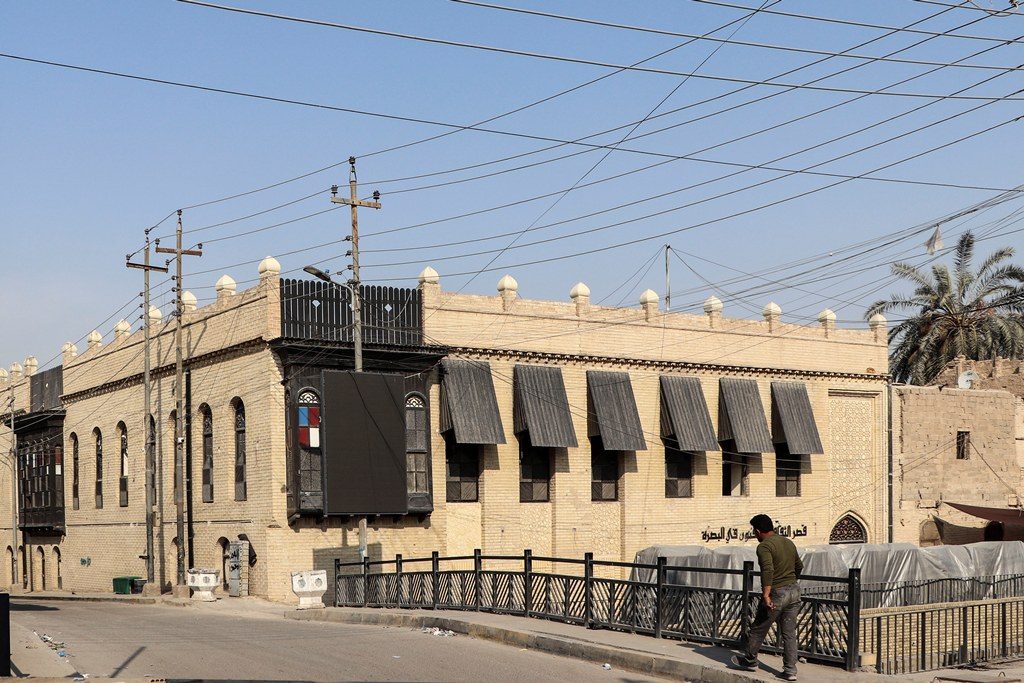
Last updated: August 1, 2026 — passport, visa, health, customs and exit rules re-checked this week against the UK FCDO, the US State Department, the KRG’s own visa portal and current traveler reports.
The single most expensive mistake in Iraq travel costs nothing to avoid: reading a guide written before March 2025. That was the month Iraq switched off visa on arrival, and the internet still hasn’t fully noticed. People turn up at Baghdad airport with cash in hand and get sent home on the next flight. Entry rules are only the first layer of the trip; our complete guide to travelling in Iraq covers everything that comes after the border.
So, plainly. The Iraq entry requirements in 2026 are a passport valid at least six months with a blank page, a visa arranged before you fly (there is no visa on arrival in Federal Iraq), a return or onward ticket, and an exit stamp on the way out. The Kurdistan Region runs its own parallel system with its own rules — and mixing the two up is the second-most expensive mistake.
This guide is the whole border checklist, not just the visa: what your passport has to look like, what you’ll be asked for at the desk, the blood-test rule that panics people who read it out of context, what you can and can’t bring, the ten-day residency line, and the exit stamp that catches travelers on the way out. If you want the visa application itself dissected screen by screen, that lives in our Iraq visa guide. This page is everything else — and everything the forms don’t explain.

Iraq entry requirements at a glance
Two governments, two rulebooks, one country. Here’s the comparison that saves the most grief:
| Requirement | Federal Iraq (Baghdad, Najaf, Basra, the south) | Kurdistan Region (Erbil, Sulaymaniyah, Duhok) |
|---|---|---|
| Visa on arrival | No — abolished 1 March 2025 | Yes, still available to eligible nationalities |
| Where to apply | evisa.iq (federal e-visa portal) | visit.gov.krd, or on arrival |
| Cost | About $160, insurance bundled in | 100,000 IQD (about $65–77) |
| Validity | 60 days per the FCDO; 30-day stay widely reported | 30 days, extendable at the Residency Office |
| Passport validity | 6 months minimum, 1 blank page | 6 months minimum |
| Where the visa works | All of Iraq, Kurdistan included | Kurdistan only — not Baghdad, not the south |
| Lead time | Apply at least 24 hours ahead; two weeks is sane | About 5 days online, or minutes on arrival |
| Onward ticket | Expected — airlines can refuse boarding without one | Rarely checked, but bring proof anyway |
If you take one thing from that table, take the bottom-left cell against the bottom-right: a federal Iraqi visa gets you into Kurdistan, but a Kurdistan visa will not get you into Federal Iraq. That asymmetry has stranded more travelers than every other rule on this page combined.
Start here: the two Iraqs, and why it decides everything
Iraq is one sovereign country with two immigration systems inside it. Baghdad controls the federal borders and the federal e-visa. The Kurdistan Regional Government controls entry at Erbil, Sulaymaniyah and the northern land crossings, and it issues its own visa. Both are legitimate. They are not interchangeable, and only one of them travels.
The trap is geographic and quiet. From the Iraqi government’s point of view there is no border between Erbil and Mosul, so there is no immigration post on that road where you could upgrade a Kurdish visa into a federal one. If you fly into Erbil on a KRG visa and then decide you want to see Baghdad or the shrines, your options are to fly out and re-enter on a federal e-visa, or to not go. Travelers discover this at a checkpoint on the Erbil–Mosul road, which is a bad place to discover it.
So decide the shape of your trip before you buy anything. Kurdistan only — the mountains, Erbil’s citadel, Lalish, Amedi — and the KRG system is cheaper, faster and genuinely easy; our Iraqi Kurdistan guide covers that side in full. Anything that touches Babylon, Karbala, Najaf, Ur, the marshes or Mosul, and you need the federal e-visa from the start. Planning both? Federal, always. It costs more and covers everything.
Your passport: the rules that actually turn people away
Everyone remembers “six months.” Fewer people know the rest, and the rest is what causes problems at check-in.
- Six months’ validity. The FCDO frames it as six months beyond your arrival date. The US State Department frames it as six months from the day you submit the visa application. Apply the stricter reading and you’ll never have the argument.
- At least one blank page — a full visa page, not a margin. Iraq stamps generously, and Kurdistan adds its own entry and exit stamps on top.
- Physical condition matters. A water-damaged cover, a loose page or a torn laminate gets read as tampering. Iraqi border officers are noticeably more careful about document integrity than most, and there is no benefit of the doubt at 3am in an arrivals hall.
- Names must match exactly across passport, visa application and airline booking. Middle names dropped from a ticket are the single most common cause of a rejected e-visa application, and the portal is unforgiving about it.
- Bring photocopies. Two paper copies of the photo page, plus a photo on your phone. You will hand your passport over at hotel check-in and at checkpoints, and having a copy in your pocket while the original is in a hotel drawer is standard practice here.
The Israel question, answered honestly
Israeli nationals cannot enter or transit any part of Iraq — not federal territory, not Kurdistan, not even airside without leaving the aircraft. That one is absolute.
An Israeli stamp or an Israeli exit record in an otherwise ordinary passport is a different, softer problem. It can get you refused entry to Federal Iraq. Kurdistan is markedly more relaxed about it in practice. Israel has issued entry cards rather than passport stamps for years now, so most recent travelers have nothing visible — but Jordanian and Egyptian land-border stamps from the Israeli crossings still tell the story to anyone who reads them. If that’s your passport and Federal Iraq is your plan, travel on a clean second passport if your country issues them.
The visa, in one screen
The full application walkthrough is in our Iraq visa guide. Here is the compressed version, which is all most people need before booking flights.
Roughly 37 nationalities are eligible for the federal e-visa — all EU states, the UK, US, Canada, Australia, New Zealand, Japan, South Korea, Switzerland, China and Russia among them. You apply at the government portal, upload a passport scan and a photo, pay around $160 by card, and wait. The FCDO says apply at least 24 hours before travel. Approvals have landed in six hours and taken three weeks; two weeks of buffer costs you nothing and has saved a lot of trips.
Two things the portal doesn’t advertise. Journalists and NGO workers are not eligible for the e-visa and must go through an Iraqi embassy or consulate — declaring yourself a journalist on the form is a rejection, and not declaring it is a much bigger problem later. And if your nationality isn’t on the list, the route is a licensed Iraqi tour operator who obtains Ministry approval on your behalf, typically around $250 on top of a booked tour, with about four weeks of lead time.
A live caveat, stated plainly: the e-visa system has been unsettled since spring. In April 2026, after the abduction of an American journalist in Baghdad, Shafaq News reported that approvals had been quietly frozen for several nationalities including British and Canadian — applications accepted, then held and rejected a week or two later. The Interior Ministry publicly denied it the following day, with spokesman Abbas al-Bahadli saying issuance was ongoing. Similar claims have circulated since, none of them traceable to a named official. We can’t referee that from outside the country, so we’ll tell you what we’d do: apply early, don’t book non-refundable flights until the visa is in your inbox, and ask a licensed operator to sanity-check the current state of play for your passport before you commit money.
Where your visa actually works
A visa is only as good as the door you present it at. This is where Iraq’s two systems bite hardest.
| Entry point | Federal e-visa | KRG visa |
|---|---|---|
| Baghdad International (BGW) | Yes | No |
| Basra International (BSR) | Yes | No |
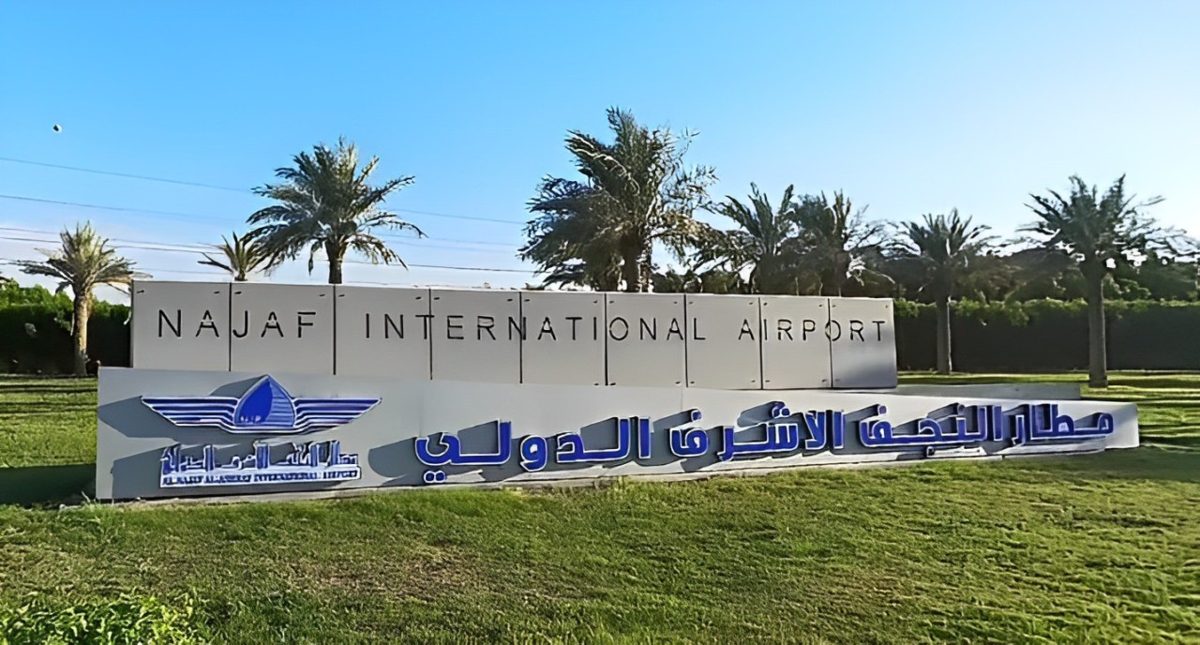
| Najaf International (NJF) | Yes — the pilgrim gateway | No |
| Erbil International (EBL) | Yes | Yes, incl. on arrival |
| Sulaymaniyah International (ISU) | Yes | Yes, incl. on arrival |
| Land borders with Jordan, Kuwait, Saudi Arabia, Iran | Yes | No |
| Ibrahim Khalil / Habur (Turkey) | Enters Kurdistan; check before relying on it | Yes |
Two footnotes worth having. Kirkuk airport issues 60-day visas on arrival to some nationalities under the KRG system — an oddity, not something to plan around. And the Turkish crossing at Ibrahim Khalil is the one entry point where sources genuinely disagree about federal e-visa acceptance; if that’s your route, confirm on the portal rather than trusting any guide, this one included. Our getting around Iraq guide has the full border-by-border picture.
The documents nobody tells you to pack
Your visa gets you to the desk. These get you past it.
- A return or onward ticket. The FCDO is explicit that without one, the airline may refuse to board you — and airlines enforce this more aggressively than Iraqi immigration does, because they carry the cost of flying you back.
- Your accommodation address in Iraq. Asked for on the visa application and again on arrival. A hotel booking confirmation with a street address, printed, ends the conversation. Our where to stay guide covers how booking actually works here, which is not the way it works elsewhere.
- Proof of funds. Rarely inspected, occasionally demanded. Iraq runs on cash for foreigners and ATMs are unreliable, so you’re carrying US dollars anyway — see our Iraq travel costs breakdown.
- Printed copies of everything. Visa approval, insurance certificate, hotel booking, onward ticket. Print two sets. Phone batteries die in queues, there is no guest wifi at a land border, and you cannot buy a local SIM until you are through.
- Travel insurance that doesn’t exclude Iraq. Most standard policies void themselves the moment your government advises against travel — and both the US and UK currently do. Specialist cover exists; read the war-and-terrorism exclusions properly, and use our Iraq travel insurance guide to work out what to ask before you buy.
Health rules: the blood-test line that panics everyone
Search Iraq entry requirements and you’ll hit a sentence about mandatory HIV and hepatitis testing. It’s real, and for ordinary visitors it almost certainly doesn’t apply to you.
The FCDO wording is precise: you must have a blood test for HIV and hepatitis unless you’re travelling on a visit visa, within 10 days of arrival, repeated every 90 days while you remain in Iraq. A tourist e-visa is a visit visa. The rule is aimed at people taking up residence or employment — which is also how the State Department frames it, tying blood tests and residency stamps to long-term residents and those seeking work. If you’re here for three weeks of Babylon and kebabs, nobody is drawing your blood.
What can genuinely apply:
- Yellow fever certificate if you’re arriving from — or spending more than 12 hours in transit in — a country with yellow fever transmission risk. Applies from nine months of age.
- Polio vaccination certificate for travelers arriving from a polio-endemic country — currently Afghanistan and Pakistan.
- Meningococcal ACWY is widely listed for arrivals from the African meningitis belt, given at least 10 days before entry. We couldn’t confirm that one against a current Iraqi or WHO instrument, so check with an Iraqi consulate if it might apply to you.
No vaccination is required for a straightforward arrival from Europe, North America or the Gulf. Bring prescription medication in original labelled packaging with a copy of the prescription, and keep quantities to what your trip plausibly needs.
What you can and can’t bring in
Customs officers at Iraqi ports of entry have broad powers to search you and your vehicle and to confiscate anything they consider a threat to security, health or public order. In practice, arrivals are relaxed. In principle, the list is long.
Leave at home: drones (tourists are not getting permission, and they’re actively confiscated — travelers reported exactly this at Erbil in 2026), weapons and ammunition of any kind, Israeli currency, narcotics, pornographic material, and anything that looks like an antiquity. That last one matters more here than almost anywhere: Iraq takes cultural-property export seriously, and buying an “old” object in a bazaar is how tourists acquire a customs problem on the way out. Our Mesopotamia sites guide explains why the country is so alert to it.
Nominally allowed: 200 cigarettes or 250g of tobacco, 500ml of perfume, and — on paper — one litre of wine or spirits. Ignore that last allowance. Iraq’s 2023 Municipal Revenues Law banned the import, sale and production of alcohol, and a 2024 extension pushed the ban into hotels and clubs, with fines running into thousands of dollars. Kurdistan doesn’t enforce it and Baghdad’s duty-free still trades, but a bottle in your bag entering Federal Iraq is a needless argument. The full picture is in our Iraqi culture and etiquette guide.
Money: the numbers you must declare
Entering or leaving, you must declare more than 200,000 Iraqi dinars in local currency, or more than $10,000 (or equivalent) in foreign currency. Since Iraq is effectively cash-only for visitors and most people arrive with a serious stack of dollars, know the threshold and stay under it or declare properly. Undeclared cash above the line is a confiscation risk, not a paperwork nuisance.

Staying more than 10 days: the residency stamp
This is the rule most likely to catch a longer trip — and also the one where the published guidance is oldest, so read it with that in mind. The long-standing rule is that visitors staying beyond 10 days obtain a no-fee residency stamp, sometimes called an exit stamp, from the Directorate of Residence; under 10 days, nothing is required. In Baghdad it’s handled at the main Residency Office near the National Theatre, and your hotel or guide will usually walk you through it, because they’ve done it a hundred times.
The honest caveat: the State Department’s current Iraq page no longer states a 10-day threshold at all. It says only that residency stamps and blood tests may be required for long-term residents and people seeking employment. The 10-day figure survives largely in older reproductions of that guidance, and the penalties quoted alongside it range from about 10,000 IQD (roughly $8) to several hundred dollars, with exit-stamp fees quoted anywhere between $20 and $500 — a spread wide enough to tell you nobody writing it down has checked lately. So: treat it as probably live, ask your hotel on day one of a longer stay rather than day nine, and let the people who process this every week tell you what the office actually wants this month.
Leaving: the exit stamp people forget
The State Department’s guidance is blunt: don’t leave Iraq without an exit stamp in your passport. It sounds obvious until you’re moving between the federal and Kurdish systems, where the stamping isn’t always where you expect, or crossing a land border where the process involves several windows in no obvious order. Watch your passport get stamped before you walk away from the counter.
Two more exit rules worth knowing: minors under 18 leaving Iraq must be accompanied by a parent or legal guardian, and the same currency declaration thresholds apply on the way out as on the way in. Build in time — Baghdad airport’s layered security means three hours before departure is realistic, not cautious. Our transport guide covers airport logistics in detail.
Special cases the forms don’t cover
- Born in Iraq? The KRG’s own eligibility checker states that if your passport lists Iraq as your place of birth, you don’t need a visa for the Kurdistan Region at all, and no late penalty applies beyond 30 days. If your passport doesn’t show place of birth, bring documentation proving it.
- Dual nationals. Iraqi-origin travelers on foreign passports can face a different conversation entirely, including questions about Iraqi ID and military service history. Check with an Iraqi consulate before you fly rather than at the desk.
- Iranian citizens currently enter visa-free. Turkish nationals under 15 have their own carve-out. Neither generalizes to anyone else.
- Journalists, researchers and NGO staff. Not eligible for the e-visa. Embassy route, and be straightforward about your purpose — visa fraud is a far worse outcome than a slow application.
- Weapon Authority Cards. If you’re the kind of traveler carrying weapons legally — security contractors, mostly — the documentation is mandatory and people have been arrested for not having it on them.
Arriving during Arbaeen — which is right now
If you’re reading this in early August 2026, you’re reading it during the largest annual gathering of human beings on earth. Arbaeen falls on Wednesday 5 August this year, and by the end of July the Iraqi Security Media Cell had already counted well over three million foreign pilgrims inside the country, drawn from 172 nationalities. Officials expect 4.5–5 million foreign arrivals before it’s over, and something close to 22 million people in total once Iraqis are counted.
What that means for entry, concretely. Najaf airport is running at pilgrimage volume. The Iranian land crossings are moving enormous numbers of people, and the KRG has opened extra passport-control stations on the northern routes. Nearly 7,000 pilgrims came through Haji Omeran alone in the past fortnight — a fraction of the roughly 200,000 who used Haji Omeran and Bashmakh in 2024, which fell to 100,000 last year as the regional conflict bit. Kurdish authorities lay on free transport, water, food, cooling stations and ambulances from the crossings toward Karbala.
Pilgrims travel on their own visa channels, often through group organizers with seasonal arrangements, and the rules differ by nationality — Pakistani pilgrims, for instance, must now travel through registered group organizers rather than individually. If you’re going for the pilgrimage itself, our ziyarat guide covers the season properly. If you’re a general tourist arriving in the next fortnight, understand that hotels in Karbala and Najaf are full at triple rates, the roads south of Baghdad are effectively a moving city, and immigration queues are long. It’s an extraordinary thing to witness and a miserable time to be doing ordinary sightseeing.

Before you book: the security picture, August 2026
Entry requirements are paperwork. Whether you should be going at all is a separate question, and right now it’s a live one.
The United States and Israel launched strikes on Iran on 28 February 2026 and the regional conflict that followed has not resolved. A June memorandum included a 60-day ceasefire; exchanges continued anyway. On 1 August the US Embassy in Baghdad and its consulate in Erbil issued a joint alert telling Americans in Iraq to prepare for flight cancellations, periodic airspace closures and travel disruption. The US and Saudi Arabia have conducted joint strikes on Iran-aligned militias inside Iraq.
In aviation terms: EASA’s conflict-zone bulletin CZIB-2026-05, issued 8 July and valid to 31 August 2026, advises operators not to fly in Baghdad FIR at any altitude. The FAA prohibits US operators below FL320 under SFAR 77, in force to October 2027. Iraq’s own NOTAM warns of GPS jamming and spoofing across the north. Flights are operating, but cancellations and diversions are routine rather than exceptional.
Both the US State Department (Level 4: Do Not Travel) and the UK FCDO (against all travel) advise against going. We don’t pretend otherwise, and we don’t tell anyone to ignore their government. What we do is give you accurate information so the decision is yours and informed — the reasoning is laid out in our is Iraq safe guide, and the seasonal timing question in our best time to visit piece. If you do travel, buy flexible tickets and leave slack in the itinerary.
The scam layer: fake visa sites
Search “Iraq visa” and most of page one is not the government. Third-party sites clone the portal’s look, charge $200–400 for a form you could fill in yourself, and some simply take the money. Several rank above the official site.
The federal portal is evisa.iq (applications run through eservice.evisa.iq). The Kurdistan portal is visit.gov.krd. Anything else is an intermediary at best. A legitimate Iraqi tour operator arranging Ministry approval for a non-eligible nationality is a real and useful service; a website with a stock photo of a passport and a $299 “processing fee” is not.
Your pre-departure checklist
- Decide the trip shape — Kurdistan only, or all of Iraq. This picks your visa.
- Check your passport: six months’ validity, a blank page, no damage, name matches your booking exactly.
- Apply at evisa.iq (or visit.gov.krd), two weeks out, not 24 hours.
- Don’t book non-refundable flights until the visa is approved.
- Book accommodation with a printable street address; get travel insurance that doesn’t exclude Iraq.
- Print twice: visa, insurance, hotel booking, onward ticket. Photocopy your passport twice.
- Leave the drone and the duty-free bottle at home. Know the $10,000 and 200,000 IQD declaration lines.
- Staying over 10 days? Ask your hotel about the residency stamp on arrival day.
- Check the advisory and airspace status again the week you fly.
- On the way out: confirm the exit stamp is in your passport before you leave the counter.
Iraq entry requirements: your questions, answered
Can I still get a visa on arrival in Iraq?
Not in Federal Iraq. Visa on arrival ended on 1 March 2025 for the 37 nationalities that previously had it. You must hold an approved e-visa before you board. The Kurdistan Region is the exception — visas on arrival are still issued at Erbil and Sulaymaniyah airports, but they’re valid only inside Kurdistan.
How much does it cost to enter Iraq?
About $160 for the federal e-visa, insurance included. The Kurdistan e-visa is 100,000 IQD, roughly $65–77 depending on the exchange rate. The residency stamp for stays over 10 days is free; exit-stamp fees, where they apply, vary by visa type and length of stay.
How long can I stay?
The FCDO puts the federal e-visa’s validity at 60 days; a 30-day stay is what most travelers report being granted, and the two figures aren’t necessarily in conflict — validity and permitted stay are different things. Kurdistan grants 30 days, extendable at the Residency Office. Read the stamp you’re actually given rather than any guide.
Do I need a return ticket to enter Iraq?
Effectively yes. The FCDO warns that without a return or onward ticket you risk being refused boarding by the airline. Immigration may not ask; the check-in desk very likely will.
Can I visit Baghdad on a Kurdistan visa?
No. A KRG visa is valid in Erbil, Sulaymaniyah and Duhok only. There’s no immigration post on the internal road where you could convert it, because federally that road doesn’t cross a border. You’d need to leave and re-enter on a federal e-visa.
Does my passport need six months’ validity?
Yes, plus at least one blank page. The UK measures the six months from your arrival date; the US measures it from your visa application date. Satisfy the stricter one.
Do I need vaccinations to enter Iraq?
Not for a standard arrival from Europe, North America or the Gulf. Yellow fever proof is required if you’re coming from a risk country (including long airport transits), and polio proof if you’re arriving from a polio-endemic country (Afghanistan or Pakistan). A meningococcal ACWY requirement for arrivals from the African meningitis belt is widely repeated but we couldn’t verify it officially — check with a consulate if that’s your route.
Is the HIV test requirement real for tourists?
Not for visit-visa holders, which includes tourists. The testing rule applies to people staying on other visa types — residence and employment, essentially. If you’re on a tourist e-visa, it doesn’t reach you.
Can Americans enter Iraq?
Yes. US citizens are on the e-visa list and enter routinely. Separately, the State Department rates Iraq Level 4: Do Not Travel, and has done for years. Both things are true at once.
Will an Iraq stamp cause problems for future travel?
For most passports, no. The one worth planning around is the US Visa Waiver Program: if you hold a VWP-country passport, travel to Iraq after 1 March 2011 generally makes you ineligible for ESTA, and you’d apply for a full US visa instead. It isn’t absolute — there are carve-outs for military and government travel, and case-by-case waivers for journalists, humanitarian staff and legitimate business travel — but plan for the full visa and treat an exception as a bonus.
Can I bring a drone?
No. There’s no realistic permission route for tourists, and drones are confiscated at customs — Erbil airport in particular has been actively taking them in 2026.
What happens if I overstay?
Fines, and in serious cases detention or deportation. Short overruns of the 10-day residency line attract a small fine on departure. Don’t test the upper end of the range; extensions are available in Baghdad and are far cheaper than the alternative.
Final thoughts
Iraq’s entry rules aren’t hard. They’re just unforgiving of assumptions — and almost every guide on the internet is still carrying assumptions from before March 2025. Get the passport right, apply for the correct one of the two visas well ahead, print more paper than feels necessary, and check the stamp on the way out. That’s the whole game.
Everything past the desk is the reason people come: Babylon and Ur without the crowds, the marshes at dawn, masgouf on the Tigris, and a level of hospitality that will genuinely embarrass you. When you’re ready to build the trip around it, start with our complete Iraq travel guide and the itineraries that actually work.
Photo credits
All images via Wikimedia Commons: Hardscarf (CC BY-SA 4.0); Levi Clancy (CC BY-SA 4.0); Kharbaan Ghaltaan (CC BY-SA 4.0); Kayhan Ertugrul (CC BY-SA 3.0).