Last updated: 7 August 2026. Re-verified this week against the UK FCDO’s Iraq page (which now splits its advice province by province), the US State Department advisory of 2 March 2026, the federal e-visa rules at evisa.iq, the Kurdistan Regional Government’s own visa page, the Baghdad–Basra rail timetable, and the Baghdad street exchange rate. Most English-language pages on solo travel in Iraq are out of date on at least one of those.
Solo travel in Iraq is legal, increasingly common and logistically harder than it is dangerous. No law requires a foreign tourist to hire a guide in either federal Iraq or the Kurdistan Region. What stops people is rarely crime — it is checkpoints without a local phone number, a country with almost no hostels, and a 2026 in which the flights are less reliable than the streets. Solo or not, the baseline planning is the same, and all of it lives in the Iraq travel guide.
That is the short version, and it is worth sitting with, because it inverts what most people expect. The travellers who came back from Iraq in 2025 and 2026 and wrote it up were not robbed, harassed or scammed. Several of them could not get anyone to let them pay for lunch. What exhausted them was the logistics: waiting for a shared taxi to fill, negotiating a hotel that had never registered a foreigner, and standing at a checkpoint outside Samarra while a soldier tried to work out what to do with a person travelling alone for no reason he recognised.
This page is the independent traveller’s version of our complete Iraq travel guide. It assumes you are going without a tour, and it is honest about the parts of the country where that decision costs you something.
Solo travel in Iraq at a glance
| The question | The answer, August 2026 |
|---|---|
| Is a guide legally required? | No — not in federal Iraq, not in Kurdistan. But three specific places make solo access difficult (see below) |
| Visa | Federal e-visa in advance at evisa.iq, about $160, 60 days, single entry. Visa on arrival was abolished on 1 March 2025 |
| Kurdistan visa | Separate. 100,000 IQD, still available on arrival, 30-day stay — and valid in the Kurdistan Region only |
| Hostels | Essentially one, in Sulaymaniyah, and it is listed as a hotel. Budget 20,000–40,000 IQD for a private room instead |
| Getting between cities | Shared taxis and minivans from each city’s garaj. 5,000–25,000 IQD depending on distance. Leaves when full |
| Ride-hailing | Careem in Baghdad, Najaf, Basra and Erbil, city rides only. Baly covers most of federal Iraq and also books intercity cars |
| The solo premium | Real but small on transport, brutal on drivers and remote sites. Budget roughly $50–60 a day without a car, $150+ on any day you hire one alone |
| Language | Arabic, Kurdish in the north. English is thin outside hotels. Offline translation is not optional |
| Cash | Bring clean US dollars. Cards work in a handful of places and not at all in most |
| The actual 2026 risk | Flight cancellations and regional escalation, not street crime |
The safety position, stated honestly
Two things are true at once, and any page that gives you only one of them is selling you something.
The first: the official position is severe, and it changed recently. The US State Department has Iraq at Level 4, Do Not Travel, in an advisory dated 2 March 2026, and on that same date ordered non-emergency US government employees out of the country. American officials are barred from using Baghdad International Airport. The UK’s Foreign, Commonwealth & Development Office dropped its blanket warning on 19 June 2026 and now splits the country in two. It advises against all travel to Ninawa province (which contains Mosul and Hatra), Kirkuk, Salah al-Din (Samarra, Tikrit), the part of Anbar west of but not including Ramadi City, Diyala outside Baqubah City, Jurf al-Sakr town in Babil, Sadr City in Baghdad, a 5km strip along the Iranian border in Wasit, Maysan and Basra, and 5km strips along the Saudi and Kuwaiti borders. It advises against all but essential travel to everywhere else, including Baghdad province, Karbala, Najaf, Dhi Qar and the whole Kurdistan Region.
That distinction matters more than any other single fact on this page, and most solo-travel guides to Iraq skip it entirely. Two of the destinations that appear on almost every Iraq itinerary — Mosul and Samarra — sit inside the harder category. Read the main warnings page, which carries the province-by-province lists; the sub-pages show the same banners but not the detail.
The security backdrop behind those words is genuinely worse than it was a year ago. Following the strikes on Iran in late February 2026, Iran-aligned groups have fired at targets across Iraq; Rudaw’s tally, published on 2 August 2026, counted 966 one-way attack drones and missiles aimed at the Kurdistan Region since 28 February, killing 32 people and injuring around 150. Coalition air defences shot down eight drones over Erbil between 20:53 and 21:20 on the evening of 15 July, three of them near the US Consulate, without casualties. On 28 and 29 July, joint US and Saudi airstrikes hit Popular Mobilisation Forces sites in Baghdad, Wasit, Nineveh, Basra, Kirkuk, Karbala and Diyala, killing twenty people and wounding thirty-two; Iraq’s National Security Council called it a flagrant violation of the country’s sovereignty. US Central Command framed it as a response to more than thirty drone attacks in seventy-two hours. There is a 30 September 2026 deadline for Iran-aligned armed groups to disarm, and at least two of them have publicly refused. None of this was aimed at tourists. All of it is the weather you would be travelling in.
The second thing that is true: the people who actually went had unremarkable trips. A Western European man who spent a week alone in Baghdad, Karbala, Najaf and Erbil in November 2025 wrote that he moved through all four “by foot and at night, without guide or knowing a single word of Arabic.” A woman who did five days in Iraqi Kurdistan alone in January 2026 reported no incident of any kind. A traveller who did ten days in February 2026 across Baghdad, Samarra, Babylon, Karbala, Najaf, Chibayish and Basra using shared taxis for every intercity leg wrote that he “lost track of the number of times strangers paid for my meal or businesses refused to take payment.” We have not found a first-hand account from the last two years of a solo tourist being robbed or attacked in Iraq.
Our fuller assessment lives at Is Iraq safe to visit?, and the current entry position is at Is Iraq open to tourists right now?. The summary for a solo traveller: the day-to-day risk is low and the tail risk is not, and the tail risk in 2026 is mostly about being in the wrong region during an escalation rather than about anything happening to you on a street in Karrada.
Do you actually need a guide in Iraq?
No. There is no Iraqi law requiring a foreign tourist on a standard e-visa to travel with a licensed guide, escort or minder, in federal Iraq or in the Kurdistan Region. We could not find such a rule in any government source, embassy page or entry-requirement document, and independent travel is demonstrably happening every week.
The reason so many pages imply otherwise is that four different things get folded into one sentence. Untangling them is most of the value of this article.
1. Site-level access gates, which are real
Samarra is the clearest case. The city sits in Salah al-Din, is controlled by Saraya al-Salam, and has checkpoints on every approach. Travellers consistently report leaving their passport at the first checkpoint in exchange for a visitor card, being refused permission to walk around unaccompanied, and being told to hire a taxi rather than wander. Foreigners are widely reported not to be permitted to stay overnight. It is visitable in a day from Baghdad — the Malwiya spiral minaret is worth the trip — but “solo” there means “solo with a driver who knows the checkpoint commander.” Note that Salah al-Din carries the FCDO’s all-travel warning, and that the security arrangement in Samarra is itself contested: Saraya al-Salam publicly objected to a change of command there in June 2026.
Western Anbar and the road to Jordan is the second. The highway running west from Ramadi to the Jordanian border is heavily patrolled, and travellers repeatedly report being told they can only cross in convoy or with an escort. This is also inside the FCDO’s all-travel area. Shared taxi drivers on the Amman side have been refusing foreign passengers for this reason.
Hatra is the third, and it is arbitrary — and it sits in Ninawa, inside the FCDO’s all-travel zone. Whether you get in appears to depend on which officer is at the nearest checkpoint that day. Overlanders report both success and flat refusal in the same month.
2. The old sponsor system, mostly retired
Until fairly recently, a foreigner arriving at the Nasiriyah checkpoint needed a named local to register as their sponsor, and the shared-taxi driver was held responsible for them until that person physically arrived. One traveller’s account of this from 2021 has her waiting ninety minutes and paying 25,000 IQD to compensate the driver for the other passengers he had to abandon. Travellers who repeated the journey more recently report the requirement simply gone — the same is true of Mosul and of Ur. If you read an older account describing a sponsor requirement, check its date before you plan around it.
3. Nationality-specific restrictions that look like guide rules
These exist and they move. A British traveller reported in early 2024 that UK, French, US and German passport holders were being turned back at the Mosul checkpoint while other nationalities passed freely, with no explanation offered. Separately, a Pakistani government circular dated 22 June 2026 relayed Iraqi instructions barring Pakistani male pilgrims under 50 from entering alone on a pilgrimage visa. Neither is a guide requirement; both will feel like one if you are the person being refused.
4. Tour operators describing a preference as a rule
Several of the highest-ranking pages about independent travel in Iraq are published by companies that sell Iraq tours. Their “independent versus organised” sections invariably conclude that independent travel is possible but really only for the very experienced. That may be sincere. It is also their business. Read it with that in mind — and note that one of those same operators’ own destination guides describes independent travel in Iraq as considerably easier than in Pakistan or Afghanistan.
The one thing a guide genuinely cannot fix
A Kurdistan visa is not an Iraq visa. If you fly into Erbil or Sulaymaniyah and take the Kurdistan Regional Government’s own entry permit, you may travel in the Kurdistan Region and nowhere else. You cannot use it to go to Baghdad, Babylon, Karbala, Najaf or the marshes, and hiring a guide does not change that — a claim to the contrary appears on at least one popular blog and it is simply false. Minibus drivers in Erbil check for a federal visa before they will take you south, precisely because they are the ones who get stopped. If you want the whole country, get the federal e-visa and enter through Baghdad, Basra or Najaf. Our Iraq visa guide and the detail page on entry requirements both walk through it.
The visa, as a solo traveller
Nothing about the federal e-visa treats you differently for travelling alone. You apply at evisa.iq at least 24 hours before you fly, you pay about $160, and the approval is valid for 60 days with a single entry. An onward or return ticket is required, and without one you risk being refused boarding. Visa on arrival for federal Iraq was abolished on 1 March 2025 and has not returned, no matter how many blog posts still show a photograph of the sticker.
Two wrinkles worth knowing:
- There is more than one tier, and $160 is only the top one. The portal’s Ordinary visa is 206,000 IQD, about $160 — one entry within 60 days of issue and a 60-day stay. That is the one the FCDO quotes and the one most travellers want. There is also a cheaper Visit tier at 151,000 IQD, roughly $114, which buys a 30-day stay inside a 90-day window, and a Tourist tier that requires a sponsoring licensed Iraqi tour company. Card payments carry a 5.5% international processing fee on top, and it is not refunded if you are refused. Check the portal on the day you apply rather than trusting any figure on any blog, including this one.
- Carrying photographic ID is a legal requirement in Iraq, not a suggestion. Since hotels routinely hold your passport at check-in, this creates a specific solo trap: you walk out, you get stopped an hour down the road, and there is nobody in the car who can vouch for you. One traveller only got through a checkpoint because a guided group happened to arrive and their guide intervened. Retrieve your passport before you leave, every time, or carry a good colour photocopy and know where the original is.
One more, filed under things nobody mentions until it happens: if you lose your passport in Iraq, the FCDO notes that after reporting it to the police you are legally required to publish the details in two local newspapers, and that you may be refused an exit stamp until you have. Alone, in a language you do not read, that is a genuinely bad week.
What solo travel in Iraq actually costs
Iraq is cheap to eat in, moderate to move around, and stubbornly expensive to sleep in — and the third of those is where travelling alone hurts. Almost nowhere in the country prices a bed. It prices a room. Our full breakdown is in the Iraq travel cost guide; what follows is the part that changes when there is only one of you.
| Cost | Shared between two | Alone | The solo penalty |
|---|---|---|---|
| Budget hotel room, Baghdad | ~20,000 IQD each | ~40,000 IQD | Roughly double. Rooms are priced, not beds |
| Sleeper berth, Baghdad–Basra | 37,000 IQD each | 37,000 IQD, or 74,000 for sole occupancy | About $24 extra if you want the compartment |
| Shared taxi between cities | Same per seat | Same per seat | None in money. A real one in waiting time |
| Car and English-speaking driver, per day | ~$75 each | $100–150+ | $75–100 a day. The biggest single line |
| Taxi to a site with no public transport (Lalish, Hatra, the marshes) | Halved | Up to 150,000 IQD (~$98), all yours | Severe, and unavoidable |
| Federal e-visa | ~$160 each | ~$160 | None |
| Site entry, foreigner rate | 25,000 IQD each | 25,000 IQD | None. Iraqis pay about 3,000 |
| Meals | Same | Same, minus the sharing | None. Food is the cheapest thing in Iraq |
A realistic solo daily budget: about $50 a day if you use shared taxis and stay in basic hotels, $80–100 if you want comfortable rooms and the occasional taxi to yourself, and $150 or more on any day you hire a car and driver. One traveller reported spending roughly €650 across two weeks in federal Iraq including the visa. Another spent about €200 in a week and changed money back at the end.
The single clearest solo number in Iraq: the night train
The Baghdad–Basra sleeper is the best-value long journey in the country and almost nobody writes about it properly. Train 20 runs daily in both directions — not three times a week, whatever you have read — covering 541km in about eleven hours. It leaves Baghdad Central at 19:00 and reaches Basra around 06:00. A berth in a two-bed sleeper is 37,000 IQD, about $24 at the street rate. A four-bed berth is 31,000. A first-class seat is 15,000 and second class is 10,000.
Here is the solo detail: you can buy both tickets in a two-bed sleeper and have the compartment to yourself for about 74,000 IQD, roughly $49. That is the clearest single supplement in Iraqi travel, and it is still less than a mediocre hotel room in Baghdad.
Practicalities that catch people out. There is no online booking and no advance sale — tickets are sold same-day at the station only, and the Baghdad ticket office runs roughly 09:00 to 19:00 with a lunch break. If you want a sleeper, go at nine in the morning. Bring your passport and visa, and bring cash; the card machine is unreliable. Be at the station an hour before departure, because luggage is laid out on the platform for sniffer dogs at around 18:30. Station staff do not like cameras. One thing to check before you plan around it: the line was suspended for maintenance after the Arbaeen pilgrimage this year and only resumed on 7 August 2026, and the Ministry of Transport’s own notice gave the northbound departure as 19:30 where the timetable says 19:00. Ask at the station. Our guide to getting around Iraq covers the wider network.
Moving around alone: the garaj, and how it actually works
Iraq has almost no intercity buses in the sense you are imagining. What it has is the garaj — a yard on the edge of each city where shared taxis and minivans queue by destination and leave when they fill. It is the backbone of independent travel here and it is the thing first-timers find most intimidating.
The method is simple and everyone who has done it describes it the same way: you walk in, you say the name of your destination out loud, and someone takes you to the right vehicle. You do not need Arabic for this. You do not need to negotiate much either — multiple solo travellers report that the price is simply the price and foreigners are not overcharged, which is not what most people expect from a chaotic transport yard in a country with no tourists.
What to know:
- Baghdad splits its garages by direction. Allawi North serves Samarra, Tikrit and Mosul; Allawi South serves Hilla, Karbala, Najaf, Nasiriyah and Basra. Some travellers are sent to Al-Nahda on the east bank for northbound departures instead, so ask before you commit to a taxi across town.
- The vehicle leaves when full — about four passengers in a shared taxi, six to eight in a minivan — which means ten to thirty minutes at a busy hour and considerably longer on a quiet route. This is the real solo cost: not money, time.
- Buying the empty seats is normal and cheap. Want to leave now? Pay for the remaining seats. Want the front? It costs slightly more and is worth it.
- Sample fares travellers reported in 2025 and 2026, with buses running cheaper than shared taxis on the same legs: Baghdad to Hilla or Karbala around 10,000 IQD; Karbala to Hilla for Babylon 2,000; Baghdad to Samarra 15,000; Basra to Nasiriyah 15,000; Nasiriyah to Chibayish for the marshes 5,000; Sulaymaniyah to Erbil 10,000 for a four-hour minibus via Dukan.
- Journey times: Baghdad to Samarra a little over two hours; Baghdad to Erbil about five; Baghdad to Mosul about five with a clean run.
Within cities, use Careem. It operates in Baghdad, Najaf, Basra and Erbil, round the clock, and it is the single most useful safety tool a solo traveller has in Iraq: a named driver, a photograph, a plate number and a route you can share over WhatsApp. Short cross-town hops ran travellers roughly 3,500–6,000 IQD in 2026. Baly, the Baghdad-founded rival, is often slightly cheaper — Tahrir Square to Kadhimiya runs about 5,800 IQD — and covers far more of the country, including Basra, Karbala, Najaf, Hilla, Kirkuk, Mosul and Nasiriyah. It also books an intercity car between governorates inside the app: a two-hour, 110km hop is quoted at around 40,000 IQD, four times a shared-taxi seat but it leaves when you do. Careem does not do intercity at all. In Kurdistan you may not need either, since street taxis in Erbil or Sulaymaniyah typically run 3,000–5,000 IQD within town. Agree the fare before you get in; there are no meters.
Where a solo traveller actually sleeps
Iraq has essentially one backpacker hostel, and it is in Sulaymaniyah. Everywhere else you are booking a private room. Hostelworld lists no hostels in Baghdad — in fact none anywhere in Iraq. This is the fact that breaks most solo budgets, and it is why an Iraq trip costs more per day alone than an equivalent trip almost anywhere else in the region.
Names travellers have used recently, with the prices they reported. Treat these as orientation rather than quotes — small hotels change hands and standards drift.
- Sulaymaniyah — the Dolphin Hotel & Hostel on Sara Square is where the backpackers are, and it rates well. Dorm beds and basic private rooms in the city ran travellers roughly $12–20 and $20–35 respectively across 2025 and 2026; check the current rate before you count on it. Travellers consistently praise the owner for answering WhatsApp questions at length.
- Baghdad — Kasr Al Barakat is the long-standing budget standby, and travellers report rates in the 30,000–40,000 IQD band, though nothing is published. In the shrine districts you can do better: one traveller paid 20,000 IQD in Kadhimiya in 2026 for a double used as a single, without breakfast. Most of those places are not listed online in any language. In central Baghdad, anything under 30,000 IQD is a gamble. Two separate travellers warn that budget rooms often come with unchanged sheets; asking for fresh ones at check-in is normal and works.
- Erbil — the widest budget spread in the country, roughly $20 to $200, concentrated in Ankawa and the centre. Around $30 gets a private room with a bathroom.
- Basra — Al Buraq on Al-Istiqlal Street is locally recommended at around 25,000 IQD a night, with mid-range options from about $60.
- Karbala and Najaf — 15,000–20,000 IQD around the shrines outside pilgrimage weeks, though rates in both cities spike sharply around Arbaeen and the Safar mourning dates. This is the one place the solo traveller occasionally wins. One woman was quoted 60,000 IQD for a room in Najaf and charged 30,000 because she was alone.
- Nasiriyah — the weak link. Travellers describe the cheap options bluntly and the first genuinely clean option at around 75,000 IQD.
Walk in rather than book online. This is close to universal advice from people who have done it. One traveller landed in Baghdad at one in the morning with nothing booked and had no trouble; another found every hotel of the trip on Google Maps and walked through the door. Direct walk-ins are also cheaper — one reports paying $32 at the door in Karbala for a room listed at $45 online. Our where to stay in Iraq guide goes into the categories properly.
Two rules that are about who you are with rather than whether you are alone. Hotels do not refuse lone foreign guests as a matter of course — we found no evidence of that anywhere. What travellers consistently report being enforced is room-sharing: an Iraqi man and a woman cannot share a room without proof of marriage, and while two foreign travellers sharing is usually fine, it may not be in Najaf or Karbala. And Samarra is the exception to everything: travellers and operators consistently report that hotels there are closed to foreigners and that overnight stays are not permitted.
Money, alone and in cash
Iraq runs on cash, and a solo traveller has no one to borrow from when a machine eats a card. Take that seriously.
There are two exchange rates and you should know both. The official Central Bank rate sits around 1,310–1,320 dinars to the dollar. The parallel or street rate in Baghdad was about 1,520–1,530 in the first week of August 2026 — roughly a 15% premium. Every competing guide we checked quotes a single number, and most quote a stale one: 1,300, 1,450, or a euro rate presented as a dollar one. Budget from a page quoting 1,300 and you will under-estimate what $500 is worth by roughly 110,000 dinars — enough to change what a week looks like. Rates move; check the day’s figure in the Iraqi financial press before you change anything substantial.
Practical points, learned the hard way by people who went recently:
- Bring clean, new $100 bills. Torn or marked notes get refused, and hundreds get a better rate than twenties.
- ATMs are unreliable for foreign cards. They work best in Erbil, Sulaymaniyah and Duhok and are patchy elsewhere; some machines take only one network. Expect a per-withdrawal fee on top of your own bank’s — travellers report the equivalent of several dollars a time — and low per-transaction limits.
- Do not rely on money transfer as a backup. A traveller in February 2026 found Western Union branches in Baghdad unable to pay out in either currency.
- Change a small amount at the airport for the taxi and the first night, then do the real exchange in town.

Staying connected, which matters more alone
Buy a local SIM on day one. Zain and Asiacell have the best national coverage, Korek makes sense only if you are staying in Kurdistan, and a 10–20GB tourist bundle runs roughly 20,000–27,000 IQD depending on network and validity. You need your passport to register it, and at least one traveller was refused a SIM while holding only a printed e-visa without a passport sticker.
An eSIM saves you the queue and costs several times as much per gigabyte, and it gives you no Iraqi number — which matters more than it sounds, because a local WhatsApp number is how every hotel, driver and new acquaintance in Iraq will want to reach you. Alone, that is your entire support network. There is also a national quirk worth planning around: Iraq still shuts the internet off nationwide during school examination sessions. In June 2026 that meant total national outages from 06:00 to 07:30 on exam mornings. It is short and it is early, but it is total, and a VPN does not help. The full picture is in our guide to SIM cards and internet in Iraq.
Download before you fly: offline maps with Iraq saved (Google Maps is thin on small towns), Google Translate with Arabic offline and the camera function for menus, Careem, Baly and WhatsApp. Install a VPN before you arrive rather than after. And put your hotel’s name in Arabic in your notes — several budget places in Baghdad are not findable in English on any map.
Checkpoints, when there is nobody else in the car
You will pass military and police checkpoints on every intercity journey. Most are undramatic: they look at the passport, ask where you are going and why, and wave the vehicle on. Travellers report frequently not even being asked to get out. Have the name of a hotel ready, even a provisional one — “I’ll find something when I arrive” is a genuinely confusing answer to give a soldier, and it slows everything down.
The honest solo picture is mixed. In Kurdistan, checkpoints often do not check foreigners at all. In federal Iraq, the experience varies by province and, sometimes, by gender: one woman on a bus in Kurdistan found that only the men and she were called out to show ID, and nothing came of it. The real disadvantage of being alone shows up at the difficult checkpoints, where a group with a fixer gets waved through and you do not. Set against that, there is a counter-effect that several travellers describe: being conspicuously alone makes officials curious rather than suspicious, and curiosity gets you through faster than paperwork does. Our page on Iraq travel tips covers the etiquette.
Why Iraq is socially easier alone than almost anywhere
This is the part that surprises people, and it is consistent across every first-hand account we could find. Travelling alone in Iraq attracts hospitality rather than suspicion. Strangers pay for meals. Shopkeepers refuse money. People give up their afternoon to walk you somewhere. A solo traveller is a curiosity in the best sense — and unlike in countries with a developed tourist economy, nobody is working an angle, because there is no angle to work.

Two resources do most of the heavy lifting for independent travellers here. The Iraqi Travelers Café Facebook group is cited by essentially everyone who has travelled the country independently in the last three years; it is where people find local contacts, ask whether a road is open, and in some cases get member rates at Baghdad hotels. Couchsurfing is genuinely active in Baghdad and Erbil, and several solo travellers of both genders have used it without incident. The best vetting advice we have seen for women travelling alone is to check hosts’ references thoroughly, treat references from other solo women as the strongest signal, and prefer hosts who live with their families. If you want the wider cultural context before you go, our Iraq culture guide and the Iraqi food guide are the right places to start — and you will be offered chai more times a day than you can politely accept.
What is genuinely harder alone
An honest list, because the enthusiasm above is not the whole story.
- Time, relentlessly. Waiting for vehicles to fill, finding the right garage, negotiating hotels in a language you do not speak. One solo traveller’s blunt estimate: a Basra-to-Erbil trip covering the country properly needs at least fourteen days without a driver, where a tour does it in nine.
- Sites with no public transport. Lalish, Hatra, the marshes, Ur, Abu Dulaf. One woman paid 150,000 IQD, about $98, for a taxi to Lalish with waiting time and a return — and noted afterwards that for the same money she could probably have hired an actual guide.
- Getting ill. There is nobody to fetch water, argue with a hotel, or find a pharmacy. Serious medical care is limited outside Baghdad and Erbil.
- Insurance. Travel against your government’s advice and your policy may be invalidated — the FCDO says as much on its own Iraq page — and specialist cover exists precisely because standard cover often will not respond. Both the US and UK currently advise against travel to all or part of Iraq. This is not a solo-specific problem, but it becomes one when you are the only person who can make a phone call. The mechanics and the questions to ask are in our guide to travel insurance for Iraq.
- The 2026 flight problem. This is the live risk and almost nobody flags it. Iraqi airspace is open and commercial flights operate, but the European Union Aviation Safety Agency issued a bulletin on 8 July 2026 advising operators not to use the Baghdad flight information region at any altitude, valid to 31 August 2026, and France and Italy have their own notices. Emirates has suspended both Dubai–Baghdad and Dubai–Basra, with Baghdad filed to restart daily from 1 October 2026 — later than several other Middle East routes it is restoring in September. If you are alone with a fixed return date and no travel companion to share a rebooking crisis with, buy flexible tickets and build slack into the end of the trip.
- LGBT+ travellers face specific legal risk. A July 2024 amendment to the Anti-Prostitution and Homosexuality Law provides for ten to fifteen years’ imprisonment for same-sex relations, and up to seven years plus a fine of 10 to 15 million dinars for anything the authorities read as “promotion,” including clothing or possessions. Gender-affirming surgery without court approval carries up to three years. Nothing else on this page changes that calculation, and most solo-travel guides to Iraq skip it entirely.
- Alcohol is not a solo social lubricant here, because importing, making and selling it is illegal in federal Iraq. A 2016 provision was gazetted into force in March 2023 and extended to hotels and registered social clubs in November 2024, with fines running to 25 million dinars. The law targets the trade rather than the drinker — the FCDO says it is not aware of travellers being stopped for carrying alcohol for personal use — but the practical effect is that there is nowhere licensed to drink. Enforcement has been uneven and a black market exists, yet the pages telling you that you can drink in a Baghdad hotel bar are out of date, including one updated as recently as July 2026. The Kurdistan Region does not enforce the ban and licensed shops and bars operate openly there.
A solo route that works
If you have seven to ten days and a federal visa, fly into Baghdad and do the southern loop: two or three days in Baghdad including Mutanabbi Street on a Friday, a day trip covering Babylon and Ctesiphon, two days for Karbala and Najaf, then Nasiriyah for Ur and an overnight in the marshes at Chibayish. Take the night train back or fly out of Basra.
With two weeks, add Samarra as a Baghdad day trip with a driver, then cross into Kurdistan overland — Erbil, the Hamilton Road, Sulaymaniyah — and fly home from Erbil. Ninawa and Salah al-Din currently carry the FCDO’s hardest warning, so Mosul, Hatra and Samarra are decisions to make deliberately rather than routine stops.
If you only have five days and want the gentlest possible introduction, do the Kurdistan Region alone on the KRG’s own visa. It is the easier door by a wide margin: no sponsor system, no city permits, relaxed checkpoints, more English, and the country’s only real hostel. Sulaymaniyah, Halabja and Erbil is a comfortable solo week, with Lalish as an add-on — though note that Lalish sits in a KRG-administered district of Ninawa province, which carries the FCDO’s all-travel warning. Easier is also not the same as safer in 2026: the FCDO advises against all but essential travel to the whole Kurdistan Region, and it is the part of Iraq absorbing the most drone and missile fire. Our Iraqi Kurdistan guide has the detail, and our Iraq itinerary guide has longer routes. Before you fix dates, read the best time to visit Iraq — going alone through an Iraqi July is a specific kind of mistake.
Wherever you go, pack for it properly. Our Iraq packing list covers the dress code, which is stricter than most people expect and stricter again in the shrine cities. And if the ruins are the reason you are going, ancient Mesopotamia and southern Iraq are the two pages to read next.
Solo travel in Iraq: your questions, answered
Can you travel to Iraq alone?
Yes. Solo travel in Iraq is legal and no guide is legally required in either federal Iraq or the Kurdistan Region. A number of independent travellers did it in 2025 and 2026 and reported no crime or harassment. The constraints are practical — checkpoints, thin accommodation, no hostels outside Sulaymaniyah — and political, in the sense that both the US and UK advise against travel to all or part of the country.
Do I need a guide to travel in Iraq?
Not as a rule. Three places make it difficult in practice: Samarra, where you will be told to hire a taxi and cannot stay overnight; the road west from Ramadi to Jordan, where an escort or convoy is often required; and Hatra, where access depends on the checkpoint that day. If the only visa open to you is the sponsored tier, a licensed Iraqi tour company has to sponsor you, which in practice usually means travelling on their arrangements — though we found no rule requiring an escort at all times.
Is Iraq safe for solo travellers in 2026?
The street-level risk to a tourist is low; first-hand accounts from the last two years are consistent about that. The country-level risk is not low: the US has Iraq at Level 4 with an ordered departure of non-emergency embassy staff, the FCDO advises against all travel to several provinces and all but essential travel to the rest, and the Kurdistan Region has absorbed hundreds of drone and missile attacks since February 2026. Both statements are true. Decide with both in front of you.
Are there hostels in Iraq?
Barely. The Dolphin in Sulaymaniyah is the only genuine backpacker hostel most travellers mention. Federal Iraq has none, and Baghdad has none listed on the major booking platforms. Budget on 20,000–40,000 IQD for a private room instead.
How much does solo travel in Iraq cost per day?
Roughly $50 a day on shared taxis and basic hotels; $80–100 for comfortable rooms and the occasional private taxi; $150 or more on any day you hire a car and driver alone. Food is very cheap. Accommodation is the line that punishes you for being one person.
Can I get a visa on arrival in Iraq?
Not for federal Iraq — it was abolished on 1 March 2025. You must hold an approved e-visa before you fly, and travellers without one are refused entry. The Kurdistan Region still issues its own visa on arrival at its entry points for eligible nationalities, at 100,000 IQD for a 30-day stay, but that permit is valid inside the Kurdistan Region only.
Can I use a Kurdistan visa to visit Baghdad?
No. The Kurdistan Regional Government’s visa is explicitly valid for travel in the Kurdistan Region only, and the FCDO states this plainly. Hiring a guide does not extend it. To travel in federal Iraq you need the federal e-visa, and it is much simpler to enter through Baghdad, Basra or Najaf if you want the whole country.
Is there Uber in Iraq?
No, but Careem covers Baghdad, Najaf, Basra and Erbil, and Baly covers most of federal Iraq. Careem is within-city only; Baly also books intercity cars between governorates. For the cheapest intercity travel you still use shared taxis from the garaj, and there is no app for that.
How do shared taxis work if I do not speak Arabic?
You walk into the garage, say your destination out loud, and someone points you to the right vehicle. Solo travellers consistently report that this works without a word of Arabic and that foreigners are not overcharged. The vehicle leaves when it fills, so if you are in a hurry, buy the empty seats.
Is the Baghdad to Basra train worth taking alone?
Yes, and it is one of the best-value journeys in the country. It runs daily, takes about eleven hours overnight, and a berth in a two-bed sleeper costs 37,000 IQD, roughly $24. If you want the compartment to yourself, buy both berths for about 74,000 IQD. Tickets are sold same-day at the station only, so arrive when the office opens.
Can women travel alone in Iraq?
Several have, recently, and written it up in detail — including a five-day solo trip through Iraqi Kurdistan in January 2026 with no incident. The consensus among people who have done it is that the Kurdistan Region is considerably easier than federal Iraq for a woman alone, and that the difficulties are social friction and conspicuousness rather than danger. Dress expectations are stricter in the shrine cities of Karbala and Najaf.
Can I drink alcohol in Iraq?
In the Kurdistan Region, yes — shops and bars operate openly. In federal Iraq, importing, manufacturing and selling alcohol has been illegal since March 2023, and the ban was extended to hotels and registered social clubs in November 2024, with fines up to 25 million dinars. The law targets the trade rather than the drinker, and the FCDO says it is not aware of travellers being stopped for carrying alcohol for personal use — but there is nowhere licensed to drink, and guides telling you that Baghdad hotel bars are an option are out of date.
What should I do if I lose my passport in Iraq?
Contact your embassy immediately, and be aware that after reporting it to the police there is a legal requirement to publish details of the loss in two local newspapers, without which you may be refused an exit stamp. This is one of the strongest arguments for carrying colour photocopies and keeping a scan in your email.
How long do I need for a solo trip to Iraq?
Five days is enough for the Kurdistan Region alone. Seven to ten covers Baghdad and the southern loop. To do the whole country from Basra to Erbil independently, without hiring a driver, budget at least two weeks — the estimate comes from someone who tried it with less.
Is the day-to-day situation different from what the news suggests?
Usually, yes, and it is worth being precise about why. The 2026 escalation has been directed at military and militia targets rather than civilian areas or tourist sites, which is why travellers keep reporting quiet streets in the same week as air defence activity overhead. That is not a reason to dismiss the risk. It is a reason to track which provinces are affected, keep your plans loose, and pay more attention to whether your flight will operate than to whether Karrada is calm.
Photo credits
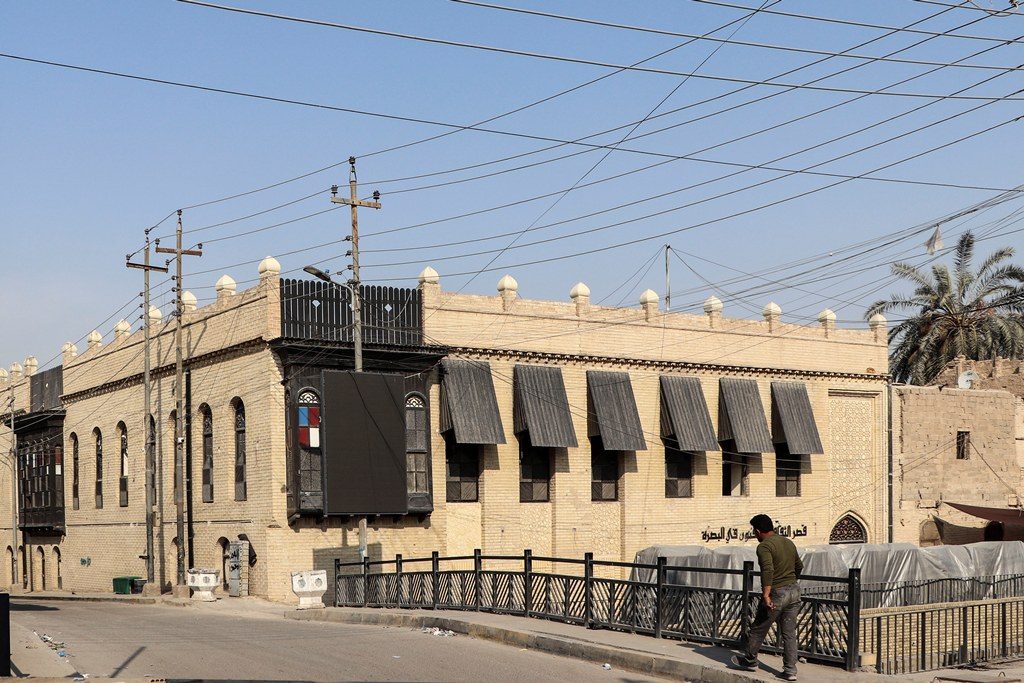
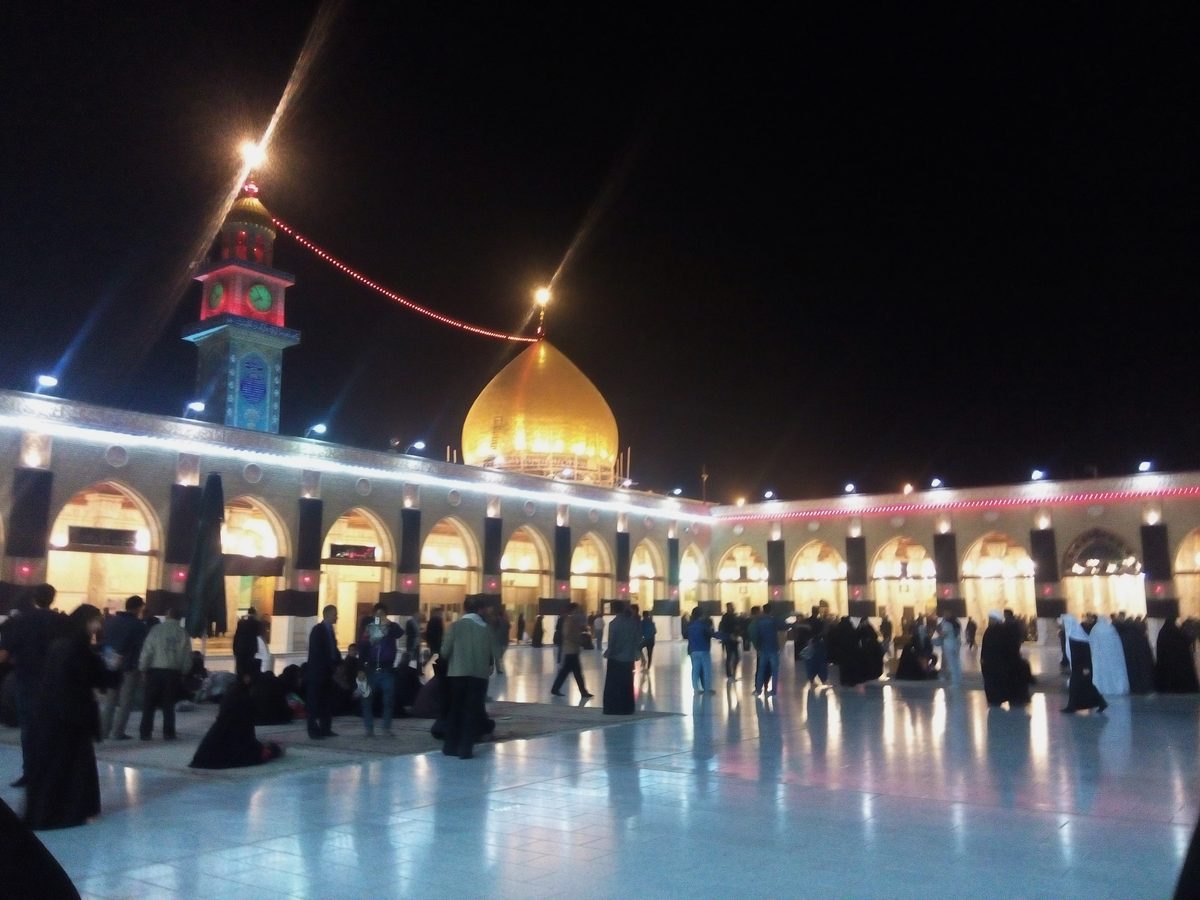
Images from Wikimedia Commons, used under the licences shown. Featured image: shanasheel house on Basra’s Al-Ashar canal by Clemens Schmillen (CC BY-SA 4.0). Great Mosque of Kufa at night by ن.عامری (CC BY-SA 4.0). Al-Ashar canal, Basra, 2025 by Clemens Schmillen (CC BY-SA 4.0). Traditional tea house in Iraqi Kurdistan by Haremhassan (CC BY-SA 4.0).