Last updated: August 5, 2026. Prices, rules and climate figures re-checked this week; where a number comes from traveler reports rather than an official source, it says so.
Search for an Iraq packing list and you’ll get something 80% generic — passport, adapter, sunscreen, packing cubes, the same list you’d get for Portugal with “modest clothing” bolted on. The decisions that are actually specific to this country barely get a sentence: what happens to your feet at a shrine, why your abaya is better bought in Karbala than at home, and the fact that Iraq runs on 230 volts through three different plug shapes. What you carry follows from when you go and how you move, both of which are mapped out in the full Iraq travel guide.
Here’s the short version of what to pack for Iraq. The list is built from three variables: which season you’re travelling in, whether you’re going to Kurdistan or the federal south, and whether shrines are on your itinerary. Get those right and everything else is ordinary travel packing. Get them wrong and you’ll be buying trousers in a bazaar on day two — which, to be fair, is not the worst outcome.
This guide covers what to bring, what to leave, what to buy when you land, and what the country will actually do to your luggage.

The eight things people get wrong
| The mistake | What to do instead |
|---|---|
| Packing one climate | Iraq spans 50°C desert and snowbound mountains. Pack for your region and month, not for “the Middle East” |
| Buying an abaya at home | They’re sold outside every shrine for a few dollars and fit the local expectation better |
| Bringing one plug adapter | Iraq uses types C, D and G. Bring a universal adapter |
| Shoes that don’t slip off | You’ll remove them at shrines, mosques and Lalish. Laces are a daily tax |
| Relying on cards | Bring cash — new, unmarked US$100 bills, plus small denominations |
| Packing a drone | It gets confiscated. Leave it |
| Forgetting paper | Printed visa, hotel booking and passport photocopies. Phones die in queues |
| No power bank | The grid fails daily and budget hotels cut the generator overnight |
Start with the three variables
Before any list, answer three questions. They determine most of what goes in the bag.
1. Which month? Iraq’s seasonal range is extreme even by regional standards. July in Basra and January in the Zagros are not the same packing problem — they’re not the same continent.
2. Kurdistan, the federal south, or both? The Kurdistan Region is cooler, greener, more relaxed about dress and legal for alcohol. Federal Iraq is hotter, flatter, more conservative, and includes the holy cities. Our Kurdistan guide and southern Iraq guide cover the difference properly.
3. Shrines or no shrines? If Karbala, Najaf, Kadhimiya or Samarra are on the itinerary, women need a full covering layer and everyone needs footwear that comes off easily. If you’re doing Kurdistan’s mountains and Erbil’s cafés, none of that applies.
Season by season
| Season | Federal Iraq | Kurdistan | Pack |
|---|---|---|---|
| Summer (Jun–Sep) | 45–50°C, dust storms, brutal | Erbil hits ~42°C; mountains cooler | Loose long cotton or linen, hat, electrolytes, dust buff. Avoid if you can |
| Autumn (Oct–Nov) | Warm days, cool evenings — ideal | Crisp, occasional rain | Layers, light jacket, one warm evening layer |
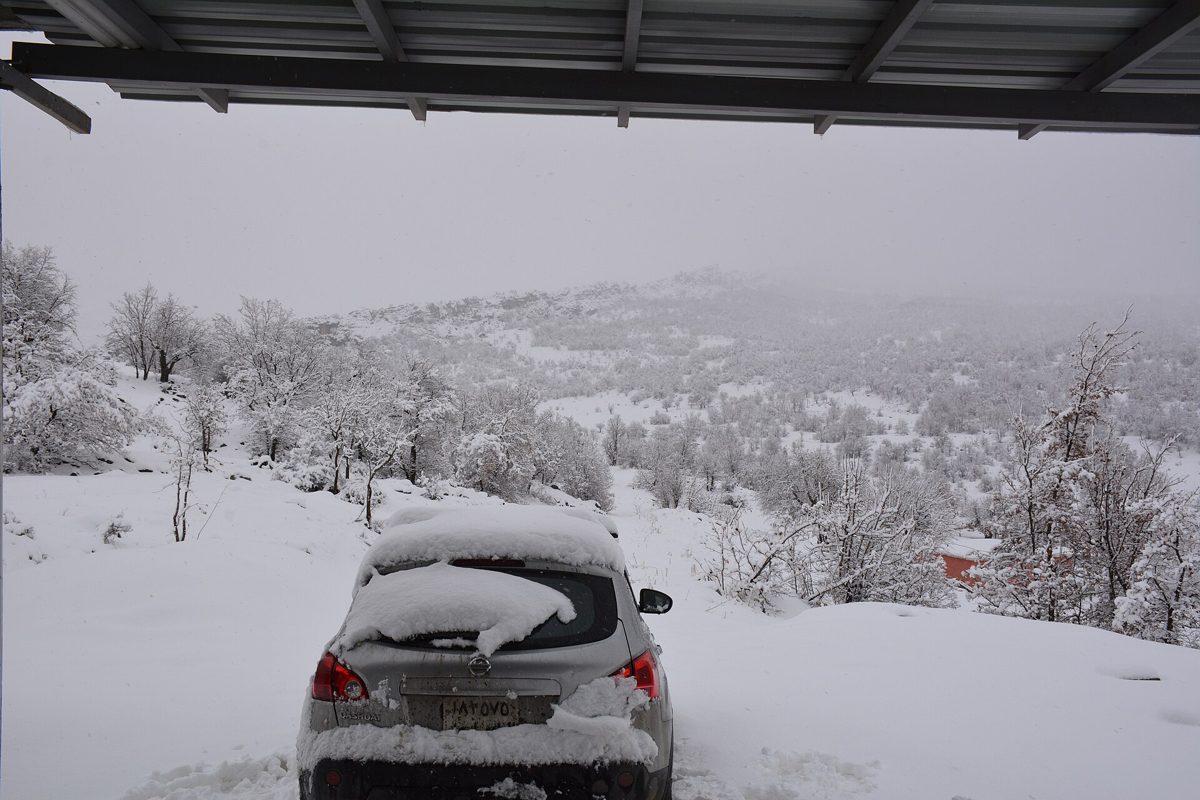
| Winter (Dec–Feb) | Cool and wet; 5–17°C; Baghdad even saw snow in 2020 | Genuine winter — snow, ice, road closures | Proper coat, waterproof, warm layers for the north |
| Spring (Mar–May) | The best window; hot by late May | Green, wildflowers, some rain | Layers, light rain shell, walking shoes |
A few numbers to calibrate. Basra recorded around 53.9°C on 22 July 2016 — a figure the World Meteorological Organization has never certified, but nobody in Basra disputes — and Baghdad hit 51.8°C on 28 July 2020. In the other direction, Baghdad had snow in February 2020 for the first time in over a decade, and Kurdistan’s high roads close for it most winters. Dust storms are their own category: in 2022 they repeatedly closed Baghdad and Najaf airports, and one May storm sent around 5,000 people to hospital.
If you have flexibility, our best time to visit guide makes the case for October–November and March–May. This article assumes you’re going anyway — and if you’re still at the should-I stage, start with is Iraq open to tourists and is Iraq safe.
What to wear: men
Simpler than most people expect, and stricter than shorts-and-a-t-shirt.
- Long trousers, always. Lightweight cotton or linen in summer, jeans the rest of the year. Shorts are acceptable in parts of Kurdistan and read as odd everywhere else; in the holy cities they’re a genuine problem.
- Sleeves. T-shirts are fine in most of the country. Sleeveless is not. A long-sleeved shirt doubles as sun protection and shrine-appropriate cover.
- A collared shirt. One is enough. It changes how checkpoints and hotel desks read you, and it costs nothing to pack.
- Nothing with slogans — political, religious or military. This is a country where a printed t-shirt can start a conversation you don’t want at a checkpoint.
- A warm layer, even in summer. Desert nights drop, coaches over-air-condition, and Kurdistan is cold at altitude.
What to wear: women
This is where the guides get vague, so let’s be specific. Iraq is conservative, but the requirement varies enormously by where you are.
Baseline everywhere: loose clothing that covers arms to the wrist and legs to the ankle, nothing tight or sheer, and a scarf carried at all times. Long tunics over loose trousers are the outfit that works in every context in the country, and it’s what many Iraqi women wear.
Kurdistan is markedly more relaxed. In Erbil and Sulaymaniyah you’ll see local women in jeans and no headscarf, and foreign women without a scarf attract no attention outside religious sites. You still want long sleeves and long trousers; you don’t need to be covered head to toe.
Baghdad and the federal south tighten it up. A headscarf isn’t legally required for foreigners in the street, but it makes you far less conspicuous, and conspicuousness is the thing you’re managing.
The holy cities: abaya, chador, and where to actually buy one
Karbala and Najaf are a different standard, and worth understanding precisely because the internet overstates it in one direction and understates it in the other.
In the shrine district — the old-city area around the Imam Hussain and Al-Abbas shrines in Karbala, and the Imam Ali shrine in Najaf — a full abaya plus headscarf is effectively mandatory, and it’s enforced at modesty checks on the way in. Some shrines lend black cloaks at the entrance. Elsewhere in those cities, modest dress with a scarf is the expectation rather than a full abaya.
Don’t buy an abaya at home. They’re sold on the approach roads to every major shrine for roughly 5,000–15,000 IQD — a few dollars — and the local cut is what people expect to see. A chador, the lighter draped version, runs cheaper still at around 4,000–5,000 IQD in traveler reports. Buying one on arrival costs less than the excess baggage and gets you something that fits the setting.
One practical note: they’re almost always black, and black in 45°C is a decision. Wear the lightest possible layer underneath.
Lalish, and the barefoot rule
Lalish, the Yazidi holy valley north of Mosul, is entered barefoot — shoes come off from the parking area, not at a temple door, and you walk the whole site without them. Socks are tolerated and, in summer, strongly advisable, because the stone gets scorching. Don’t step on doorway thresholds, which are sacred, and traveler convention is to avoid wearing blue. Pack a pair of socks you don’t mind ruining.
More on all of this in our Iraqi culture and etiquette guide.
Footwear deserves its own paragraph
You will take your shoes off more often than in almost any country you’ve travelled. Shrines, mosques, Lalish, some homes, occasionally a carpeted office. Every pair of laces is a small daily tax.
The setup that works: one pair of comfortable slip-on or easily-removed walking shoes for cities and sites, plus sturdy sandals for summer and shrine days. If you’re hiking in Kurdistan, add proper boots — the mountain trails are real terrain, not park paths. Bring more socks than you think, both because of the shoes-off routine and because Iraqi dust gets into everything.
Electronics and power
Plugs: types C, D and G, at 230V and 50Hz. This is the detail almost every packing list gets partly wrong — some say C and D, others say C and G. It’s all three, and the British-style type G is the most common in hotels and shops. Bring a universal adapter rather than a single-type one.
Dual-voltage devices — phones, laptops, cameras, anything marked 100–240V — are fine with just an adapter. Single-voltage appliances from a 110V country will be destroyed, so leave the hairdryer.
A power bank is not optional. Iraq’s grid fails daily. Every hotel runs a generator, but budget places often switch it off overnight, and there was a nationwide blackout during a 50°C heatwave in August 2025. Ask about 24-hour power when you book — our accommodation guide explains how.
Other electronics worth a line: an unlocked phone, because you’ll want a local SIM and it won’t work in a locked handset. A headtorch, for the power cuts. And no drone — there’s no realistic permit route for tourists and they’re routinely confiscated on arrival, Erbil especially.
Money and documents
The single most consequential thing in your bag is cash, and the condition of it matters.
- New, unmarked US$100 bills. Worn, torn or pre-2013 notes get refused or discounted at exchange shops, and you will not win that argument. Budget roughly $100 a day and expect to bring some home.
- Small denominations too — $1, $5, $10 for tips and small purchases.
- Both a Visa and a Mastercard. ATMs are most reliable in Erbil, Sulaymaniyah and Duhok, patchy elsewhere, and some machines take only one network.
- Printed visa approval, insurance certificate, hotel booking and onward ticket. Two sets. Officers ask for paper.
- Four or five photocopies of your passport photo page, plus a photo on your phone. You’ll hand these over at checkpoints and hotels routinely.
Our cost guide has realistic daily budgets, the visa guide covers the application itself, and entry requirements covers the rest of the paperwork, including the currency declaration thresholds — over $10,000 or 200,000 dinars must be declared, in both directions.
Luggage: what the country does to your bag
Iraq is not a wheeled-suitcase country. You’ll be lifting bags into the boots of shared taxis, up unlit hotel stairs, across gravel forecourts at garages, and occasionally over a checkpoint’s inspection table. A soft backpack or duffel in the 40–60 litre range handles all of that; a hard shell fights you at every stage.
Two things worth knowing before you weigh it. Regional carriers into Baghdad and Erbil generally run standard 20–30kg checked allowances, but the smaller operators and domestic hops are stricter and less forgiving than European budget airlines about cabin size. And because so much of Iraq’s intercity travel is shared, your bag competes for space with four other people’s — travelling light is a social courtesy as much as a practical one. Our getting around Iraq guide explains the garage system that makes this true.
Add a small daypack that closes properly. You’ll carry documents, cash, water and a power bank every single day, and open-topped tote bags are a nuisance in crowds.
Pack a few gifts
This is the item missing from every other list, and it’s the one that changes trips.
You will be fed, driven, guided and hosted by people who refuse payment. Iraqi hospitality is not a travel-writing flourish — it’s a daily, slightly overwhelming fact, and by day four you’ll be looking for a way to reciprocate that doesn’t insult anyone. Cash usually does insult.
What works: small, obviously-from-home items. Chocolate or biscuits from your country, a keyring or pin, postcards of your city, good coffee, something for the children of a household that has hosted you. Nothing expensive — the point is the gesture, not the value. A dozen small things weigh almost nothing and solve a problem you will definitely have. Our culture guide covers the etiquette around giving and receiving, including the right-hand rule.
Three trips, three lists
Most people do one of three versions of Iraq. The base list above covers all of them; here’s what changes at the margins.
The Kurdistan trip — Erbil, Sulaymaniyah, Duhok, the mountains. The most relaxed dress code in the country, no abaya required, alcohol legal. Add proper hiking boots and a warm layer regardless of season, because altitude does what altitude does. Skip the shrine kit entirely. Full detail in our Kurdistan guide.
The southern circuit — Baghdad, Babylon, Karbala, Najaf, Ur, the marshes, Basra. The hottest, most conservative version, and the one that needs the full kit: abaya or scarf, slip-on shoes, maximum sun and dust protection, and more water capacity than feels reasonable. If the marshes are on the itinerary, add something you don’t mind getting wet in a boat. See our southern Iraq guide and best places to visit.
The archaeology trip — Ur, Uruk, Babylon, Nimrud, Hatra, Mosul and Nineveh. Long days on exposed ground with no shade and no café. Add a wide-brimmed hat over a cap, serious sun protection, twice the water, and shoes with a real sole — these are working excavation sites, not landscaped parks. Our ancient Mesopotamia guide covers what’s open.
Combining all three? Pack for the southern circuit and add boots. It’s the superset.
Health and toiletries
No vaccinations are required for a standard arrival from Europe, North America or the Gulf, and there are no COVID requirements of any kind. A travel clinic will usually suggest the routine regional set — hepatitis A and typhoid among them — a few weeks ahead. Yellow fever proof is only required if you’re arriving from a risk country.
What to bring rather than buy:
- Prescription medication in original labelled packaging with a copy of the prescription. Bring the full trip’s supply — your specific brand may not exist locally.
- A basic kit: painkillers, rehydration salts, something for an upset stomach. Iraqi food is generally safe, street food included, but it’s cooked in a great deal of oil and most visitors have a rough day adjusting.
- Sunscreen. Available but expensive and limited in choice; bring your own if you’re particular.
- Lip balm and moisturiser. The dry heat is relentless and this is the thing people forget.
- Hand sanitiser and wet wipes, for markets, long road days and the occasional squat toilet in a budget hotel.
What you can happily buy there: ordinary toiletries, bottled water (cheap and universal — don’t drink the tap water anywhere, and Basra’s supply in particular has a documented history of problems), tissues, and most over-the-counter remedies. Pharmacies are common, well stocked and often the fastest route to solving a minor problem.
What to leave at home
- Drones. Confiscated at customs, no tourist permit route.
- Alcohol. A ban on import, sale and production took force in March 2023 and was extended into hotels and clubs in November 2024, with fines running into thousands of dollars. Kurdistan doesn’t enforce it and sells openly — but don’t carry bottles south. The duty-free allowance still nominally lists a litre of spirits; ignore it.
- Revealing clothing, and that includes gym wear, short skirts and vest tops for women, and shorts for men outside Kurdistan.
- Anything with Israeli markings. Israeli nationals cannot enter or transit any part of Iraq, and Israeli stamps or receipts in a passport can cause problems entering Federal Iraq.
- Weapons of any kind, including large knives and anything tactical-looking.
- Political, military or religious slogans on clothing or luggage.
- A hard suitcase, if you can avoid it. You’ll be in shared taxis, up hotel stairs and across rough ground; a backpack or soft duffel is easier everywhere.
- Expensive-looking jewellery. Not because of crime — petty theft is genuinely rare — but because it changes how you’re priced.
Packing for checkpoints and customs
Your bag has an audience in Iraq that it doesn’t have elsewhere. On a two-week southern trip you’ll clear something like forty checkpoints, and how your luggage is organised affects how long each one takes.
The practical rule is documents in a pocket, not in the bag. Passport, printed visa and a photocopy should be reachable without unpacking anything — digging through a rucksack at a checkpoint while four soldiers wait is the avoidable version of a two-minute stop. Keep your day’s cash somewhere separate from your main stash.
At customs, arrivals are relaxed in practice and broad in principle: officers can search you and your vehicle and confiscate anything they judge a risk. The things that actually get pulled are drones, weapons, anything that reads as an antiquity, and alcohol heading into Federal Iraq. Nobody is going to care about your laptop or your camera.
Two smaller notes. Don’t pack anything that looks tactical — camouflage patterns, military-surplus bags, large sheath knives — because in a country with this recent history it invites a conversation you don’t want. And on the way out, don’t carry anything you bought in a bazaar that a customs officer could plausibly read as an antiquity, however convincingly it was described as a replica. Our entry and exit requirements guide covers the export rules.
Laundry, and why you can pack less
People overpack for Iraq because they assume laundry is difficult. It isn’t. Hotels above the very cheapest will wash clothes for you cheaply, usually returned same-day, and in a climate this dry anything hand-washed in a sink is dry within hours — often within one, in a southern summer.
That changes the maths. Four or five days of clothing covers a three-week trip comfortably. What you can’t easily replace is the specific item — the one pair of shoes that fits, the prescription, the adapter — so weight your packing toward the irreplaceable and away from volume. A universal sink plug and a small tube of travel detergent are two of the highest-value items you can carry.
The exception is socks. Between the shoes-off routine at shrines and the dust that gets into everything, bring more pairs than the arithmetic suggests.
Cameras, and what you can point them at
Iraq is enormously photogenic and enormously particular about what you photograph. Bring whatever camera you like — a phone is entirely sufficient, and a proper camera is welcomed at sites — but pack the rules along with it.
Freely: people, who will frequently ask you for a photograph; markets, food, architecture, ruins, landscapes. Street photography is received far more warmly here than in most countries.
Never: checkpoints, soldiers, police, bridges, government buildings, airports, the Green Zone, or anything that looks like security infrastructure. Ask before photographing women. Some shrine complexes restrict photography inside — watch what locals are doing and follow it.
Practical kit notes: dust is the real enemy of camera gear here, so bring a blower and keep lens changes to a minimum outdoors. A polariser earns its place in the flat desert glare. And leave the tripod unless you have a specific reason — it reads as professional equipment at checkpoints and invites questions about permits.
Don’t pack it, buy it there
Iraq is cheap for most consumables, and a bazaar run on day one is more efficient than an extra bag. Approximate prices, verified against recent traveler reports:
| Item | Rough price | Where |
|---|---|---|
| Abaya | 5,000–15,000 IQD | Approach roads to any major shrine |
| Chador | ~4,000–5,000 IQD | Same |
| Headscarf | A few thousand dinars | Any bazaar |
| Local SIM with ~10GB | 20,000–23,000 IQD | Airport arrivals or any phone shop |
| Bottled water | Pennies | Everywhere |
| Loose cotton shirt or trousers | Cheap and plentiful | Any bazaar |
| Sandals | Cheap | Any bazaar |
| Toiletries, tissues, basic medicines | Cheap | Pharmacies and supermarkets |
The bazaar is also where you’ll learn that prices are written in Eastern Arabic numerals — ١ ٢ ٣ rather than 1 2 3. Downloading a converter or learning the ten shapes on the plane is one of the highest-return five minutes of the trip.
The day bag
What actually leaves the hotel with you, every day:
- Passport and printed visa copy — not left in the room
- Cash for the day, in dinars, in small notes
- Power bank and cable
- Scarf, if you’re a woman — the one item that turns a normal outfit into a shrine-appropriate one
- Water, more than you think in summer
- Sunglasses and a hat
- A dust buff or light scarf, if the forecast is hazy
- Tissues and hand sanitiser
- Socks, if a shrine or Lalish is on the day’s plan
If you’re travelling during Arbaeen
Pilgrimage season changes the packing calculus. Arbaeen 2026 falls on 5 August — today, as this publishes — and the weeks around it turn Karbala and Najaf into the largest gathering on earth. If you’re going deliberately — and our ziyarat guide covers doing it properly — add: broken-in walking shoes you’d trust for 80km, blister care, far more water capacity, a light sleeping mat if you’re joining the walk, and a printed copy of everything, because networks buckle under the crowds. Black clothing is the norm during Muharram and Safar mourning periods.
The checklist, condensed
- Documents: passport (6 months’ validity, blank page), printed visa approval ×2, insurance certificate, hotel bookings, onward ticket, 4–5 passport photocopies
- Money: new US$100 bills plus small notes, Visa and Mastercard, a money belt if it helps you sleep
- Clothing: long trousers, long-sleeved shirts, one collared shirt, loose tunic or over-layer, warm layer, rain shell in winter and spring
- Women additionally: headscarf (two), loose tunics, and buy the abaya on arrival
- Footwear: slip-on walking shoes, sturdy sandals, plenty of socks, boots if hiking
- Electronics: universal adapter (C/D/G, 230V), power bank, unlocked phone, headtorch, charging cables — no drone
- Health: prescriptions in original packaging, painkillers, rehydration salts, stomach remedy, sunscreen, lip balm, hand sanitiser, wet wipes
- Sun and dust: hat, sunglasses, buff or light scarf
- Bag: soft backpack or duffel, plus a daypack
- Buy there: abaya, SIM card, water, toiletries, cheap clothes
Iraq packing list: your questions, answered
What should I pack for Iraq?
Long trousers and long-sleeved tops in breathable fabric, a warm layer, slip-on shoes and sandals, a universal C/D/G adapter, a power bank, cash in new US$100 bills, printed copies of your visa and bookings, and — for women — a headscarf, with the abaya bought on arrival.
What plug adapter do I need for Iraq?
Iraq uses plug types C, D and G at 230V and 50Hz, with British-style type G most common in hotels. A universal adapter covers all three. Dual-voltage devices are fine; single-voltage 110V appliances are not.
What should women wear in Iraq?
Loose clothing covering arms and legs, plus a headscarf carried at all times. Kurdistan is relaxed enough that a scarf is optional outside religious sites. In the shrine districts of Karbala and Najaf a full abaya and headscarf are effectively required and enforced at the entrance.
Do I need to bring an abaya to Iraq?
No — buy one there. Abayas are sold on the approach roads to major shrines for roughly 5,000–15,000 dinars, the local cut suits the setting better, and some shrines lend cloaks at the door.
Can men wear shorts in Iraq?
In parts of Kurdistan, yes, though you’ll stand out. In Federal Iraq and especially the holy cities, no. Long trousers everywhere is the simple rule.
Do I need to bring cash to Iraq?
Yes. Foreign cards work in a limited number of places and ATMs are unreliable outside the Kurdistan cities. Bring new, unmarked US$100 bills for changing plus small denominations for daily use.
Can I bring a drone to Iraq?
No. There’s no realistic permit route for tourists and drones are routinely confiscated at customs, with Erbil airport particularly active about it.
Can I bring alcohol into Iraq?
Don’t. A ban on import, sale and production took force in March 2023, extended to hotels and clubs in late 2024. Kurdistan doesn’t enforce it and sells alcohol openly, but carrying bottles into Federal Iraq is a needless argument.
What shoes should I take to Iraq?
Something that slips off easily. You’ll remove your shoes at shrines, mosques and throughout Lalish. Comfortable slip-on walking shoes plus sturdy sandals covers almost everything; add boots for Kurdistan’s mountains.
Do I need a sleeping bag or towel?
Not usually — hotels provide bedding, and even basic places have sheets. A quick-dry travel towel is worth the space, since budget rooms sometimes don’t supply one. A sleeping mat only matters if you’re joining the Arbaeen walk.
Is there anything I can’t buy in Iraq?
Specific prescription brands, good sunscreen at a reasonable price, and specialist outdoor gear. Almost everything else — clothing, toiletries, SIM cards, basic medicines — is available and cheap.
Final thoughts
The honest summary is that Iraq asks less of your luggage than its reputation suggests. The country is conservative rather than restrictive, cheap rather than remote, and well supplied with everything except the specific brand of thing you insist on. Cover your arms and legs, bring more cash and fewer laces than usual, carry a universal adapter and a power bank, leave the drone and the whisky, and buy the abaya when you get there.
Once the route is settled — our Iraq itineraries run from three days to three weeks — the packing follows from it. What you can’t buy locally is the preparation — knowing that the shoes come off, that the notes have to be crisp, that the grid goes down at two in the morning. That’s most of what this list is for. When the bag’s packed, our 25 Iraq travel tips covers the ground rules, and the complete Iraq travel guide is the place to build the rest of the trip.
Photo credits
All images via Wikimedia Commons: Enasiqph (CC BY-SA 4.0); Sirwan Nazad Pendroy (CC BY-SA 4.0).