Last updated: September 2026. Climate normals re-checked on 26 September 2026 against the published tables for Basra, Baghdad, Erbil and Sulaymaniyah; power cuts from 964media (18 May 2026); Eid visitor figures from Rudaw (31 May 2026); FCDO and US advisories checked 25 and 26 September 2026.
The usual way out of a hot country’s summer is to head north. In Iraq that barely works. Erbil, where most visitors to the Kurdistan Region land, averages 42.4 °C on a July afternoon; Baghdad averages 43 to 44 °C. The drive north buys you a degree or two. The climb into the high valleys can buy you ten, and that is exactly what Iraqi families do. It is the pattern behind our month-by-month guide to the best time to visit Iraq, and summer is where it matters most.
So, should you go? For the south and centre, Iraq in summer is the wrong season unless your reason cannot move: a pilgrimage, family, a job. From June to September, afternoon averages run between 40 and 47 °C, 50 °C days arrive most years, dust storms disrupt flights and the grid rations power. The Kurdish mountains are the one exception.
Below: the real numbers city by city, why the Kurdish cities are no refuge but the valleys above them are, the pilgrimages that fall in the heat, the power cuts and dust, a workable summer day, and the safety frame as of late September 2026.
The short answer
| Question | Answer |
|---|---|
| Is summer a good time to visit? | Not for Baghdad, Babylon, Ur, Basra or the shrine cities. The Kurdish mountains are in season, and crowded at Eid. |
| How hot does it get? | July afternoon averages: Basra 47 °C, Baghdad 43–44 °C, Erbil 42 °C. Four governorates were at 50 °C on 15 August 2026. |
| Where is it cooler? | Altitude, not latitude. Shaqlawa averages about 39 °C in July; Kurdistan24 says Balakayati rarely passes 30 °C. |
| Hardest weeks | Mid-June to mid-August, and in 2026 the 50 °C readings ran past mid-August. |
| Pilgrimages in the heat | Ashura expected about 15 June 2027; Arbaeen expected 24 or 25 July 2027, both set by moon sighting. |
| Electricity | Rolling cuts across federal Iraq in 2026: Najaf was on two hours on, six off, in May. |
| Advisories (26 September 2026) | FCDO: against all but essential travel to Baghdad, the south and the Kurdistan Region. US: Level 4, Do Not Travel. |
How hot does Iraq get in summer?
Three kinds of number get quoted about Iraq’s heat, and most of the confusion comes from mixing them up. Climate averages tell you what an ordinary afternoon peaks at. Headlines report the hottest weather station in the country on the worst day. Records are one-off extremes. For planning you want the averages; for judging risk, keep the headlines in mind.
| City | June | July | August | September | July overnight low | Period of the data |
|---|---|---|---|---|---|---|
| Basra | 45.0 °C | 47.0 °C | 47.2 °C | 43.3 °C | 30.7 °C | 1991–2020 |
| Baghdad | 40.6 °C | 43.3 °C | 43.3 °C | 40.0 °C | 24.4 °C | Not stated |
| Erbil | 38.9 °C | 42.4 °C | 42.5 °C | 37.6 °C | 26.5 °C | 2012–2023 |
| Duhok | 38 °C | 42 °C | 41 °C | Not given | Not given | Long-run, years not stated |
| Sulaymaniyah | 37.6 °C | 41.3 °C | 39.2 °C | 35.4 °C | 22.1 °C | 2012–2023 |
| Shaqlawa | Not given | 38.6 °C | 38.8 °C | Not given | Not given | Climate-Data.org model |
These are mean daily maximums from each city’s published climate table: an ordinary afternoon, not a ceiling.
Two things jump out. The whole country is hot at once: in July fewer than six degrees separate Basra, at the head of the Gulf, from Sulaymaniyah, 882 metres up in the Zagros foothills. And the south barely cools at night. A July night in Basra averages 30.7 °C, and in 2026 the World Health Organization singled out nights above 30 °C as one of the main dangers of the summer pilgrimage season. Baghdad at least drops to the mid-twenties before dawn.
Then the extremes. In 2026 eight governorates were close to 50 °C as early as 9 June; Karbala and Najaf reached 50 °C on 12 August, and four governorates were still at 50 °C on 15 August, according to 964media’s daily bulletins. The summer before, Xinhua reported Basra International Airport as the hottest spot in the world on 28 July 2025, at 51.8 °C, with Iraqi cities taking 11 of the top 15 places. Baghdad’s record is 51.8 °C, set on 28 July 2020. Wikipedia’s Basra table lists 53.9 °C on 22 July 2016, the figure usually quoted as Iraq’s highest; the World Meteorological Organization has not verified it.
Why the numbers you read disagree
| Source | Figure | What it actually measures |
|---|---|---|
| Erbil climate table, 2012–2023 | 42.4 °C in July | The average afternoon high: what an ordinary July day peaks at |
| Same table | 34.5 °C in July | The daily mean, day and night averaged together, often misread as “the temperature” |
| Same table | 26.5 °C in July | The average overnight low |
| English and German Wikipedia, Baghdad | 44.0 °C and 43.3 °C in July | The same measure from different sources and periods; the German table does not state its years |
| 964media, 15 August 2026 | 50 °C in four governorates | The hottest stations on one day, not a typical afternoon in any single city |
| Xinhua, 28 July 2025 | 51.8 °C at Basra airport | One station’s peak on one day |
Our Iraq weather by month page carries the full twelve-month tables, rainfall included. For summer the rain column is easy: from June to September it is effectively zero everywhere, the Kurdish mountains included.
Dry heat and very long days
For most of the country the heat is dry: July humidity averages 22 per cent in Basra, 23 in Baghdad, 25 in Erbil and 19 in Sulaymaniyah. Sweat evaporates almost as fast as you produce it, which makes 43 °C feel more bearable than it should, and that is the trap: you lose water without noticing. Nor is there cloud to wait for; Baghdad averages 11.4 hours of sunshine a day in August.
Is Kurdistan cooler in summer?
Yes and no, and the difference is height. Erbil sits on the plain and averages 42.4 °C in July. Duhok averages about 42 °C, and Sulaymaniyah, at 882 metres, still manages 41.3 °C. Those are Baghdad-grade afternoons. Nobody should plan a July sightseeing day in Erbil expecting mountain air. Our guide to Iraqi Kurdistan covers the Region as a whole; this section is about where the cool actually is.
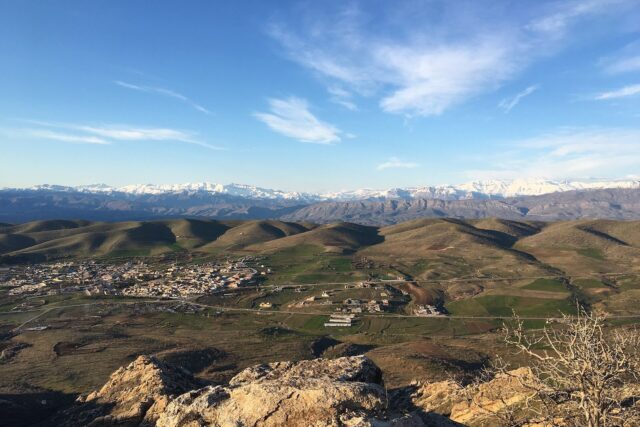
It starts in the foothills and gets serious in the high valleys along the Hamilton Road, the route a British engineer cut from Erbil through Rawanduz to the Iranian border between 1928 and 1932. Shaqlawa, a hill town at the foot of Safeen mountain about 50 km north-east of Erbil, averages 38.6 °C in July; its Wikipedia page gives its height as both 966 m and 1,066 m. Pirmam, the town most Iraqis know as Salahaddin, sits at 1,107 m and is one of the few natural viewpoints over Erbil, so families park on the hills there and picnic. Higher again, Kurdistan24 reported in August 2026 that summer temperatures in Balakayati, in the Choman area near the top of the Hamilton Road, rarely exceed 30 °C.
| Summer escape | Height | What the sources say |
|---|---|---|
| Shaqlawa | 966 m or 1,066 m (one source gives both) | July average high 38.6 °C; about 50 km from Erbil; the Pirmam Tunnel eased traffic on the route (Invest Kurdistan, May 2025) |
| Pirmam (Salahaddin) | 1,107 m | Hillside picnic spots looking down on Erbil, about 36 km away |
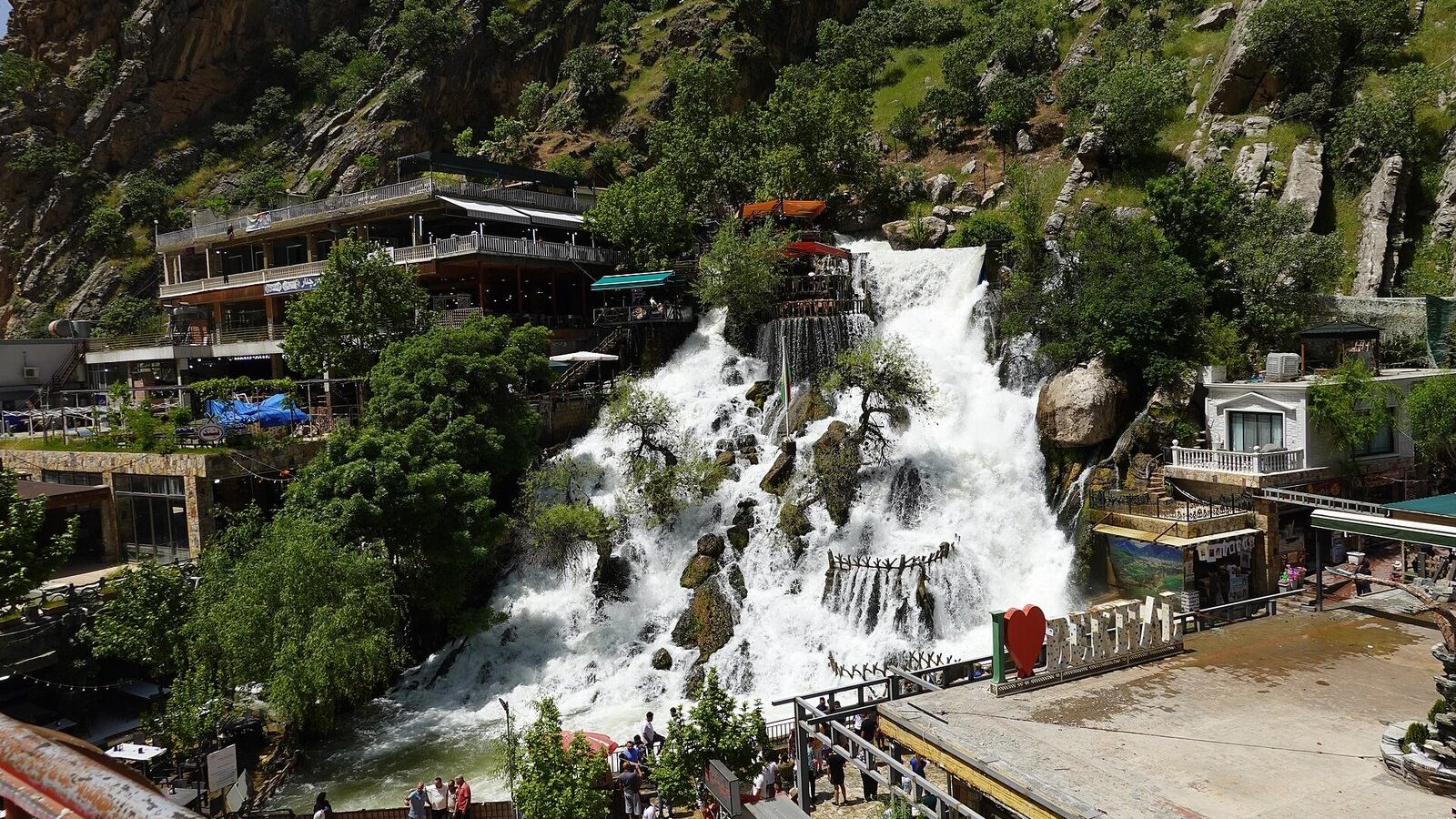
| Gali Ali Beg and Bekhal | Not published | Waterfalls and river restaurants on the Rawanduz road, about 130 km north of Erbil; a new highway to Khalifan has eased the drive |
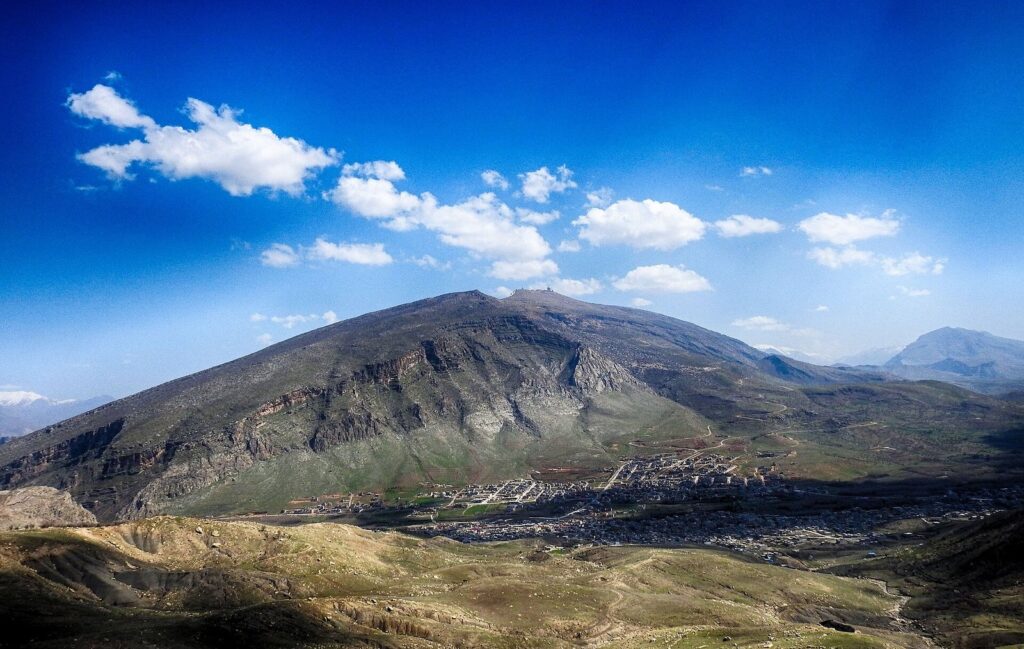
| Korek Mountain | Resort about 1,690 m; cable-car top station 2,000 m; summit 2,127 m | Villas, a Radisson Blu and a cable car from Bekhal; Kurdistan24 says 80 per cent of visitors come from outside the Region |
| Balakayati | Not published | Rarely exceeds 30 °C in summer (Kurdistan24, August 2026) |
| Amedi | 912 m according to Shafaq News; other published figures differ widely | Clifftop town about 90 km north-east of Duhok, 1.5 to 2 hours by car, with no direct public transport |
Distances are the weak spot in all of this. No Kurdish authority publishes drive times between these places, and summer traffic stretches them anyway. Our pages on Rawanduz and its gorge road, the Korek Mountain resort and cable car and the clifftop town of Amedi give what can be confirmed for each. Korek alone sees 60 to 100 snow days between December and March, so summer is also when the high country opens to walkers; our Kurdistan hiking guide covers the routes and the landmine warnings.
The Eid effect
The mountain summer is also Iraq’s domestic holiday season, and it peaks at Eid. Rudaw reported that more than 350,000 tourists visited the Kurdistan Region during the four-day Eid al-Adha holiday at the end of May 2026, around 80 per cent of them from federal Iraq. Erbil counted more than 100,000, up from 89,000 the year before; Sulaimani nearly 100,000; Halabja more than 100,000; Duhok more than 50,000 over five days. The Region has a little over 70,000 hotel and motel beds in total. If your dates touch an Eid, book before you fly and expect queues on the mountain roads.
The safety picture in the mountains
The FCDO advises against all but essential travel to the whole Kurdistan Region, with no carve-out for the resorts, and its safety page says Iranian strikes on Iranian-Kurdish opposition groups have continued in areas including around Rawanduz and Koya. The border strip has a history too: on 20 July 2022 artillery hit the Parakh resort in Zakho district, crowded with holidaymakers from central and southern Iraq, killing nine civilians, two of them children. Baghdad and Erbil blamed Turkey; Ankara denied it and blamed the PKK. None of this makes the mountains uniquely dangerous, but summer is when the resorts near the borders are fullest. Our page on whether Kurdistan is safe sets out the current picture in detail.
Summer and the religious calendar: Ashura and Arbaeen in the heat
Iraq’s biggest gatherings follow the Islamic lunar calendar, which runs about 11 days shorter than the solar year, so every religious date slides earlier each year. For the next few years that parks the two great Shia commemorations in the hottest weeks of all.
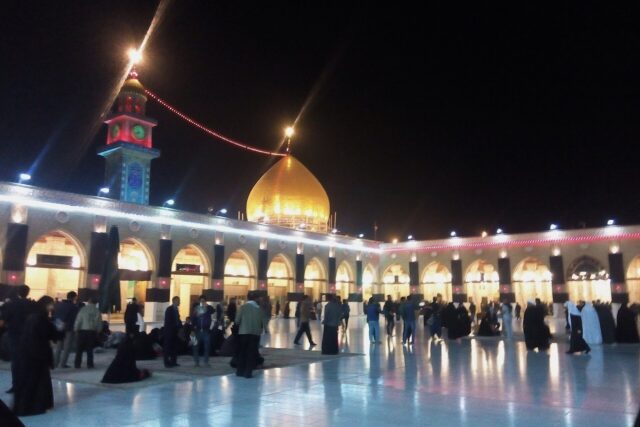
Ashura, the tenth day of the month of Muharram, marks the killing of Imam Hussein, the Prophet’s grandson, at Karbala in 680. In Iraq it fell on Thursday 25 June 2026 and is expected around 15 June 2027. Arbaeen, forty days later, is one of the largest annual gatherings anywhere: millions converge on Karbala, many on foot from Najaf and further south. It fell on Tuesday 4 August 2026 and is expected on Saturday 24 July 2027, or the Sunday if Iraq again runs a day behind the Saudi calendar, then around 13 or 14 July 2028. Shafaq News puts the Ashura and Arbaeen crowds at 20 to 25 million pilgrims.
| Occasion | 2026 | 2027 (expected) | What it means if you are not a pilgrim |
|---|---|---|---|
| Eid al-Adha | End of May, four-day holiday | About mid-May | Kurdish resorts and mountain roads full; book ahead |
| Ashura (10 Muharram) | Thursday 25 June | About 15 June | Processions and road closures in Karbala, Kadhimiya and other Shia centres |
| Arbaeen (20 Safar) | Tuesday 4 August | 24 or 25 July | Karbala and Najaf saturated for days either side; the road between them given over to walkers |
WHO Iraq issued an Arbaeen-specific heat warning on 29 July 2026, after its regional office’s risk assessment found the pilgrimage would fall in the hottest stretch of the year: daytime around 45 °C, nights above 30 °C along the routes, and ten of Iraq’s 18 provinces rated high-risk, Karbala, Najaf and Babil among them. The same assessment noted that southern Iraq sees about 70 days a year above 45 °C. The walking routes are lined with mawkibs, volunteer-run roadside stations that hand out water, food, tea and shade for nothing, and the scale of that hospitality is remarkable. It does not change the thermometer.
For anyone who is not making the pilgrimage, the practical rule is simple: keep Karbala, Najaf and the roads between them out of your plans for Arbaeen week, and check the Ashura date before booking Karbala or Kadhimiya. The FCDO warns that curfews and vehicle bans can be imposed at short notice around religious holidays and pilgrimages. If you are going for Arbaeen itself, start with our guide to the Arbaeen pilgrimage and our Karbala city guide.

Power cuts: the part of summer nobody advertises
Iraq’s electricity supply falls short every summer, and 2026 started worse than usual. On 18 May 2026, before the real heat had even arrived, 964media reported cuts deepening across the country: parts of Baghdad on two hours on and two off, some cuts stretching to four; Hilla down to one hour on and three off; Najaf to two on and six off; Basra on five on and one off. The cause was gas. Iraq relies on Iranian gas for more than 30 per cent of its generation, and imports collapsed after US and Israeli strikes on Iran’s South Pars field in March. Najaf’s electricity chief said the governorate needed about 3,000 megawatts in 2025 and received about 1,400, with 2026 demand expected to pass 3,200.
What that means for a visitor depends on where you sleep. A hotel with its own generator rides through the cuts; one that relies on the grid loses its air conditioning when the grid goes, and a room in Basra, where July nights average 30.7 °C, is not somewhere to be without it. Ask the hotel directly whether it runs its own generator and whether it keeps it going all night, and don’t treat a booking-site tick box as the answer. Carry a charged power bank and a small torch, and keep drinking water in the room.
Dust, the shamal and flights
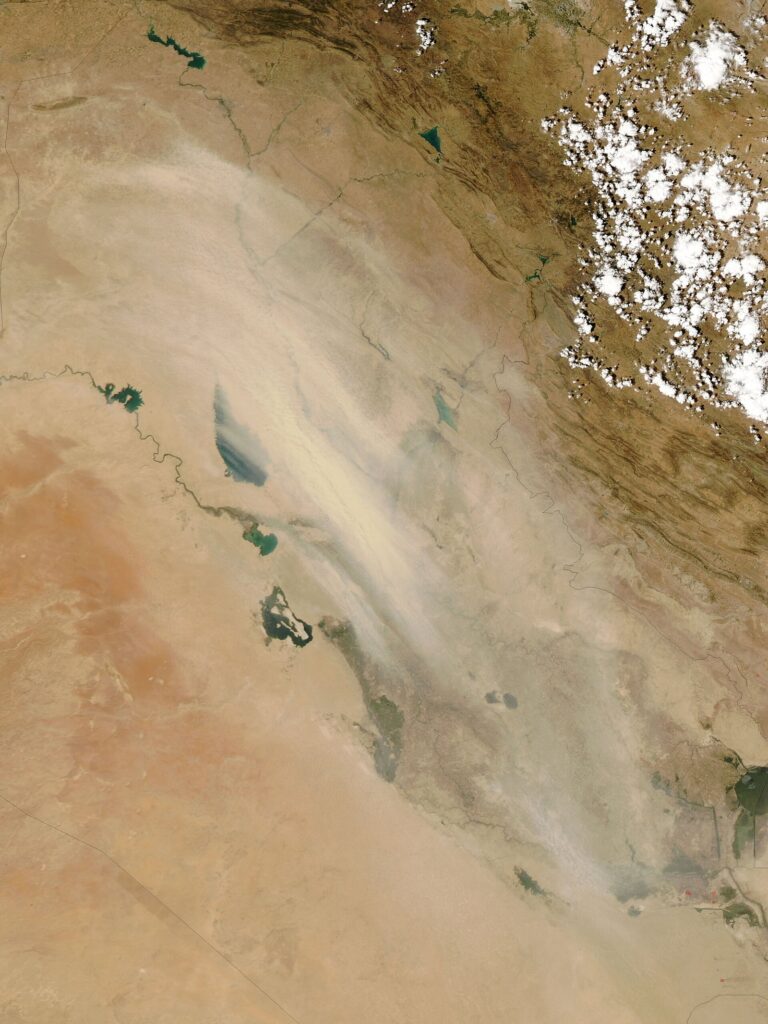
From mid-June to mid-September the shamal, a steady north-westerly wind, blows across the plains and lifts dust; in spring, and again from late September into November, the sharqi takes over. Iraq’s Environment Ministry counts 272 dusty days a year. The FCDO’s safety page warns that sand and dust storms are common in spring and summer, that poor visibility makes driving difficult and that they affect flights.
Summer 2026 added a second kind of disruption: on 24 July flights to Erbil, Baghdad and Basra were suspended, and they began returning on 8 August when Qatar Airways resumed Doha to Erbil. As of 25 September 2026, the European Union Aviation Safety Agency’s bulletin CZIB-2026-05-R1 told European airlines not to operate in Iraqi airspace at any altitude and was due to run until 30 September; check whether it has been extended. Erbil airport’s own flight board in late September listed Turkish Airlines, Pegasus, Royal Jordanian, EgyptAir, flydubai, Air Arabia and Qatar Airways among its carriers. The rule we would follow in any summer: never book an onward international connection on a separate ticket the same day, and leave a spare day before the flight home.
What a summer day actually looks like
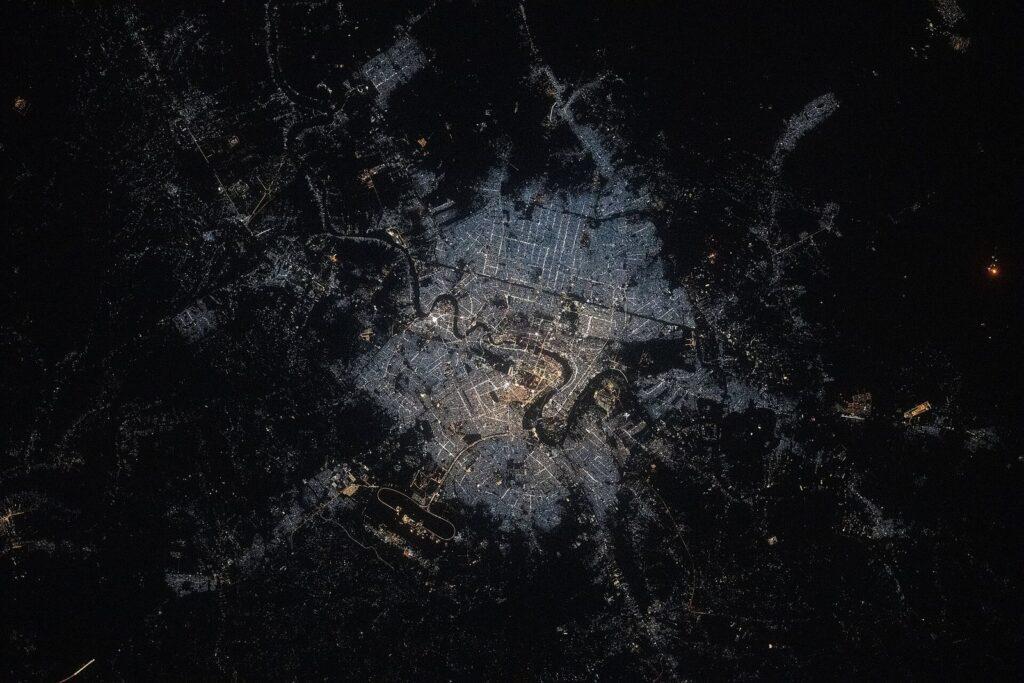
Iraqis worked out how to live with this heat long before air conditioning, and their rhythm is worth copying. In the south and centre markets are a morning affair; by early afternoon the streets thin out and the city waits. After dark it comes back. In Baghdad summer social life runs late: cafés and ice-cream shops trade well past midnight, and masgouf, carp split open and slow-grilled beside a wood fire, is a riverside meal from late afternoon onwards. Our guide to Baghdad’s cafés and nightlife covers where that evening life happens.
For sightseeing, that means starting at first light. One operator running Babylon from Baghdad leaves at 07:00 and aims to be on site by 08:30, because the site is mostly open and unshaded and the heat is punishing by midday from April to October. The same logic applies to the open desert sites of the south, such as the Ziggurat of Ur. A midday visit in July is not a question of discomfort: heat illness on an exposed archaeological site is a real risk. Our list of day trips from Baghdad shows which run as half days, the ones that suit summer best.
| Time of day | What works in July | What doesn’t |
|---|---|---|
| First light to mid-morning | Archaeological sites, markets, walking the old quarters, photography | A late start |
| Late morning to late afternoon | Indoor visits you have confirmed are open, a long lunch, sleep | Anything exposed; long road transfers in a car with tired air conditioning |
| Late afternoon to sunset | Riverbanks, masgouf, the first round of tea | Assuming the heat has broken: it hasn’t |
| After dark | Cafés, ice cream, parks full of families, evening walks | Expecting the city to go to bed early |
A month-by-month look at Iraq in summer
June
June is when the heat arrives in earnest rather than when it builds. Baghdad’s average afternoon is already 40.6 °C and Basra’s 45 °C, and in 2026 eight governorates were close to 50 °C on 9 June. The shamal sets in from mid-month. Ashura is expected around 15 June 2027.
Iraq in July
July and August are the peak, with little to choose between them: Basra averages 47 °C, Baghdad 43 to 44 °C, Erbil 42.4 °C. In 2026 July also brought the worst of the regional escalation, with drones shot down over Erbil on 15 and 21 July before the flight suspension. Arbaeen is expected on 24 or 25 July 2027, making the last full week of July 2027 the hardest of the year for road travel in the south.
August
August matches July, and in 2026 it outlasted the usual “mid-June to mid-August” rule of thumb: four governorates were still at 50 °C on 15 August, eleven days after Arbaeen. In the south it is the month to be indoors by eleven; up in the high valleys, a 30 °C afternoon feels like a gift.
September
September is the turn, slowly. Baghdad’s average afternoon drops to 40 °C, Erbil’s to 37.6 °C and Sulaymaniyah’s to 35.4 °C, but Basra still averages 43.3 °C. The shamal eases from mid-month and the sharqi, with its own dust, begins in late September. The nights are the first real relief: Baghdad’s September low averages 21.1 °C, against 24.4 °C in July.
Should you go in summer, and who does it suit?
The honest answer depends on why you are going.
Pilgrims
Your dates are set by the calendar, not the weather, and for the next few years the calendar says July. Walk in the cooler hours, use the mawkib shade, carry oral rehydration salts and take the WHO’s advice below seriously, especially for older members of your group.
Visiting family
If you are visiting relatives in summer, the heat is a given; the useful planning is around power (who has a generator), the Eid dates and a weekend or two in the mountains.
First-time visitors after Babylon, Ur and Baghdad
Don’t go in summer. You would spend the best hours of each day in a car at dawn and the rest indoors. The same trip in October, November, March or April gives you afternoons on the sites instead of in the hotel.
The marshes
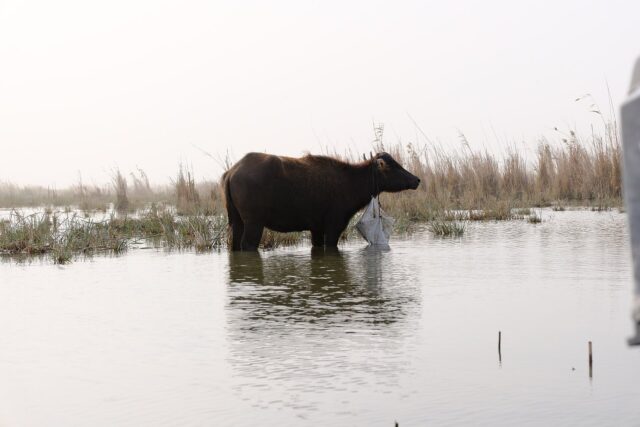
The Mesopotamian Marshes are best from October to April. The 2025 to 2026 wet season, the longest in more than 40 years, left 32 to 36 per cent of the marshland under water in 2026, against no more than 8 per cent over the previous five years: a reprieve, not a recovery. Our southern Iraq guide covers the marshes and Basra together.
The safety frame, as of late September 2026
Nothing about the season changes the advisories, but they sit behind every plan. The UK Foreign, Commonwealth & Development Office’s Iraq travel advice, last updated 22 July 2026 and unchanged when we checked on 25 September, advises against all travel to Anbar west of Ramadi, Ninawa, Kirkuk, Salah al-Din, Diyala outside Baqubah city, Jurf al-Sakr in Babil, Baghdad’s Sadr City, within 5 km of the Iranian border in Wasit, Maysan and Basra, and within 5 km of the Saudi and Kuwaiti borders. Everywhere else, including Baghdad, Babil, Karbala, Najaf, Dhi Qar, Basra, Al-Muthanna and the whole Kurdistan Region, is against all but essential travel.
The US State Department’s advisory is Level 4, Do Not Travel, reissued on 29 August 2026. The FCDO’s line on insurance is blunt: your travel insurance could be invalidated if you travel against its advice. Our Iraq travel insurance page explains what to check before you buy, and our Iraq travel advisory tracker follows the changes. We give you the inputs; the decision, and the responsibility for it, stays with you.
Packing and health for 45-degree days
The WHO’s advice for the 2026 Arbaeen heat applies to anyone in Iraq in July: drink safe water regularly without waiting to feel thirsty; take frequent breaks in shade or cooled rooms, including at night; wear light, loose clothing; keep an eye on older people, children, pregnant women and anyone chronically ill; keep taking prescribed medication and carry enough of it; and get medical help at once for dizziness, confusion or fainting.
Clothes do double duty. Loose, long, light-coloured cotton or linen covers you against the sun and against the dress expectations of the shrine cities and conservative towns, where shorts and bare shoulders draw attention. Women visiting the shrines in Karbala, Najaf or Kadhimiya need to cover fully, hair included. A wide-brimmed hat, sunglasses, high-factor sunscreen, oral rehydration salts, a refillable bottle and a scarf or mask for dusty days all earn their space. Our Iraq packing list has the full kit, and our guide to Iraqi laws for tourists covers dress and conduct.
What we could not confirm
- Heat holidays. Search results say Iraqi governors can suspend government working hours on 50 °C days, and that seven southern provinces declared an official holiday on 27 July 2025, but we could not open the reports or verify a standing rule. Closures are announced a day or two ahead. If you need a government office in July, for a visa extension say, don’t count on it being open.
- Electricity in the Kurdistan Region. We found no dated 2026 report of supply hours in Erbil, Duhok or Sulaymaniyah.
- Summer water in the marshes. There is no report after May 2026 on how far the marshes have drawn down from their spring level.
- Exact 2027 dates for Ashura and Arbaeen. Both depend on moon sighting, and Iraq ran a day behind Saudi Arabia’s calendar in 2026. Treat 15 June and 24 or 25 July 2027 as expected, not fixed.
- Summer opening hours at sites. Almost no Iraqi site publishes hours. For Erbil Citadel the only figures are unofficial and conflicting, including a claimed 09:00–18:00 in summer that we could not trace to the citadel itself.
- Hotel occupancy and summer prices. Kurdish media reported occupancy above 90 per cent at Eid al-Adha 2026, but we saw that figure only in search summaries. We found nothing reliable on summer discounts in the south.
- Erbil’s hottest day. The city’s climate table has no record row. A 964media headline had Erbil “climbing to 49 °C” in early August, but the report behind it would not load, so we can’t confirm the station or the year.
Frequently asked questions
How hot does Iraq get in July?
In July the average afternoon high is about 47 °C in Basra, 43 to 44 °C in Baghdad and 41 to 42 °C in Erbil, Duhok and Sulaymaniyah. Individual days run hotter: Basra airport hit 51.8 °C on 28 July 2025, and several governorates reached 50 °C in June and August 2026. Nights in Basra average about 31 °C.
Is it safe to visit Iraq in summer?
The season doesn’t change the advisories. As of late September 2026 the FCDO advises against all but essential travel to Baghdad, the south and the Kurdistan Region, and against all travel to several provinces; the US rates Iraq Level 4, Do Not Travel. Summer adds heat illness, dust on the roads and, in 2026, flight suspensions.
Is Kurdistan cooler than Baghdad in summer?
The cities barely are: Erbil averages 42.4 °C in July against Baghdad’s 43 to 44 °C. The mountains are different. Shaqlawa averages about 38.6 °C, and Kurdistan24 reports that Balakayati, high on the road to Iran, rarely passes 30 °C. That is why around 80 per cent of the Region’s Eid visitors in 2026 came from federal Iraq.
When is Arbaeen in 2027?
Arbaeen is expected on Saturday 24 July 2027, or Sunday 25 July if Iraq’s moon sighting again runs a day behind Saudi Arabia’s calendar, as it did in 2026. Karbala, Najaf and the roads between them will be saturated for days either side, and the WHO warned of 45 °C days and nights above 30 °C during the 2026 pilgrimage.
Can you visit Babylon or Ur in summer?
Yes, but only at dawn. Both sites are exposed and almost shadeless, and a midday visit in July is a genuine heat risk, not just discomfort. Leave Baghdad around 07:00 for Babylon, be off the site by late morning, and carry more water than you think you need. October to April is far better.
Are there power cuts in Iraq in summer?
Yes, across federal Iraq. In May 2026 964media reported Baghdad districts on two hours on and two off, Najaf on two on and six off and Basra on five on and one off, after Iranian gas imports collapsed. Hotels with their own generators ride through the cuts, so ask before booking whether yours runs one all night.
Final thoughts
Summer shows you how Iraq actually lives with its climate: the dawn starts, the shuttered afternoons, the riverbanks filling after dark, the family convoys heading for the waterfalls at Eid. None of that is a reason for a first visit. It is the honest picture for anyone whose reason to go doesn’t bend to the calendar, though, and for them the gap between a hard trip and a dangerous one is mostly planning: the hours you keep, the hotel’s generator, the spare day before the flight.
If you do have a choice, the numbers make the case for you. Baghdad’s April afternoons average 29 °C and its November ones 25 °C, against 43 °C in July, and by spring the Kurdish hills have had their rain. Our guide to Iraq in spring covers the best window of the year, and our wider seasonal planner for Iraq sets every month side by side. If summer is fixed, build the trip around altitude, and our Kurdistan itinerary is the place to start.
Photo credits
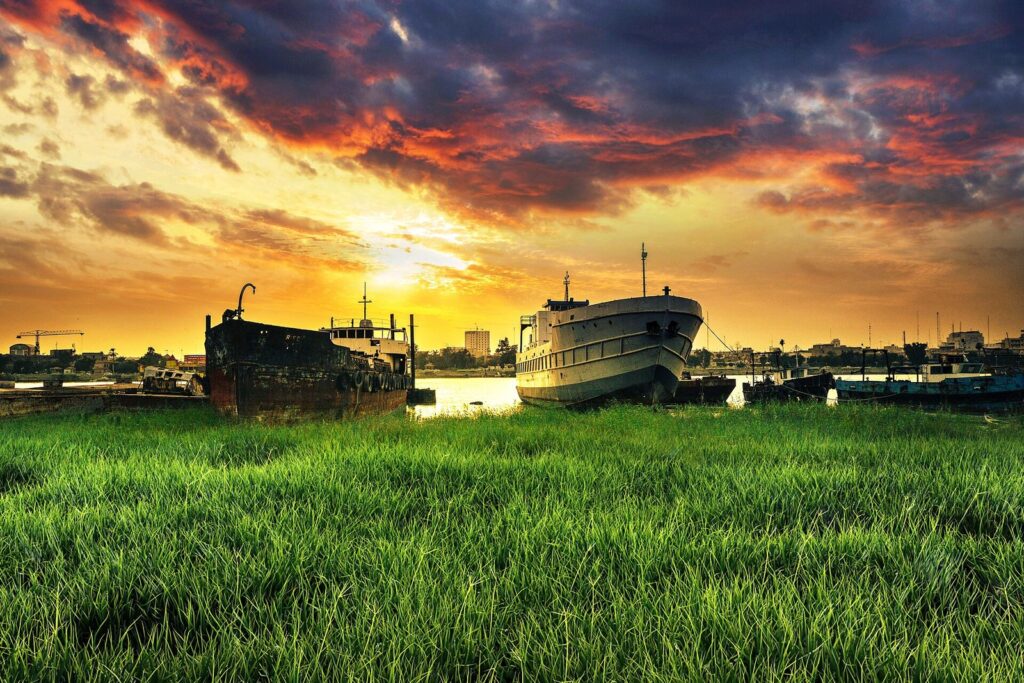
Bekhal waterfall (featured image): Khoshhat, Wikimedia Commons (CC BY 4.0). Shatt al-Arab, Basra: Mohammed Abdul Hussein, Wikimedia Commons (CC BY-SA 4.0). Korek Mountain above Khalifan: Sarchia Khursheed, Wikimedia Commons (CC BY-SA 4.0). Pilgrims on the Arbaeen route: Amir Hesaminejad, Wikimedia Commons (CC BY 4.0). Dust storm over Iraq, 24 July 2005: NASA image created by Jeff Schmaltz, MODIS Rapid Response team., Wikimedia Commons (public domain). Baghdad at night from the ISS, May 2025: NASA Johnson Space Center, Wikimedia Commons (public domain). All images via Wikimedia Commons under the licences shown.