Last updated: September 2026. Climate normals for Erbil, Sulaymaniyah and Basra re-checked on 26 September 2026 against their published tables; spring conditions from Shafaq News (April 2026); tourism figures from Rudaw, Kurdistan24 and the KRG; FCDO and US advisories checked 25 and 26 September 2026.
Search for the best time to visit Kurdistan and half the answers describe somewhere else: Iranian Kurdistan, the Hawraman valleys on the far side of the border, or Kurdish Turkey. This page is about the Kurdistan Region of Iraq, the provinces of Erbil, Duhok, Sulaymaniyah and Halabja, and about how its seasons line up against the rest of Iraq. They don’t line up well. When the Kurdish hills are at their best, Basra is already heading for 40 °C; when the south is at its most pleasant, the Kurdish passes can be under snow. Our month-by-month guide to the best time to visit Iraq covers the country as a whole.
The short version: the best time to visit Kurdistan is April to early June and September to October, when Erbil’s afternoons run between about 25 and 38 °C, the hills are green in spring, and the mountains are open for walking. Southern Iraq’s best months are the reverse, November to March. For both in one trip, aim for late October to November or March to April.
Below: the Kurdish seasons in turn, Erbil’s weather month by month, Basra’s heat, a side-by-side calendar for the two regions, the domestic tourism peaks that shape the Kurdish summer, the water in the lakes and waterfalls, and the safety frame as it stood in late September 2026.
The short answer
| Question | Answer |
|---|---|
| Best months for Kurdistan | April to early June, and September to October. March and November work for the cities. |
| Best months for the south | November to March: Basra averages 19 to 27 °C in the afternoon. |
| Both in one trip | Late October to November, or March to early April. |
| Summer in Kurdistan | Hot in the cities (Erbil averages 42 °C in July), cool in the high valleys; peak season for Iraqi holidaymakers. |
| Winter in Kurdistan | Wet in the cities, snow in the mountains, skiing at Korek. |
| Busiest weeks | Newroz (21 to 23 March) and both Eids, when most visitors come from the rest of Iraq. |
| Advisories (26 September 2026) | FCDO: against all but essential travel to the whole Kurdistan Region. US: Level 4, Do Not Travel. |
When is the best time to visit Kurdistan?
It depends on whether you mean the cities or the mountains. Erbil sits on the plain and is hot for five months of the year; the high valleys along the Hamilton Road towards Iran stay green and cool into summer. The seasons look like this:
| Season | Erbil (high / low) | Sulaymaniyah (high / low) | What it’s like | Verdict |
|---|---|---|---|---|
| Spring (March to May) | 18.9 to 32.6 / 7.7 to 17.3 °C | 17.6 to 30.4 / 4.1 to 12.7 °C | Rain in March, green hills, wildflowers and full waterfalls; Newroz on 21 March | Best |
| Summer (June to August) | 38.9 to 42.5 / 22.9 to 26.5 °C | 37.6 to 41.3 / 18.1 to 22.1 °C | Dry and hot in the cities; mountains busy with Iraqi holidaymakers | Mountains only |
| Autumn (September to November) | 37.6 to 21.4 / 21.3 to 9.5 °C | 35.4 to 19.1 / 16.1 to 5.8 °C | Dry until November, then heavy rain; the best walking weather | Very good |
| Winter (December to February) | 13.2 to 15.4 / 2.9 to 5.1 °C | 11.2 to 13.6 / −0.6 to 1.8 °C | Wet, grey, snow in the mountains, occasional fog | For snow and skiing |
Spring: the green season
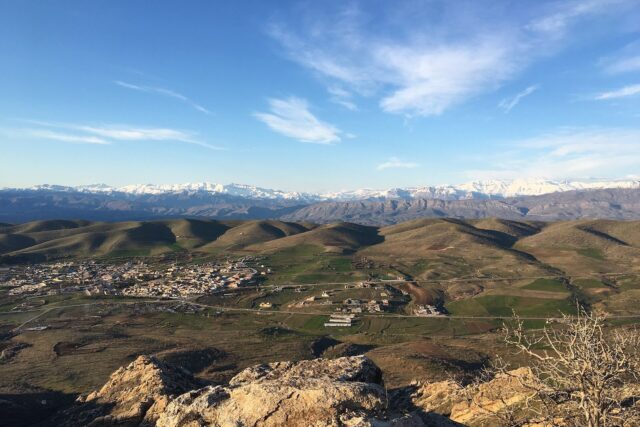
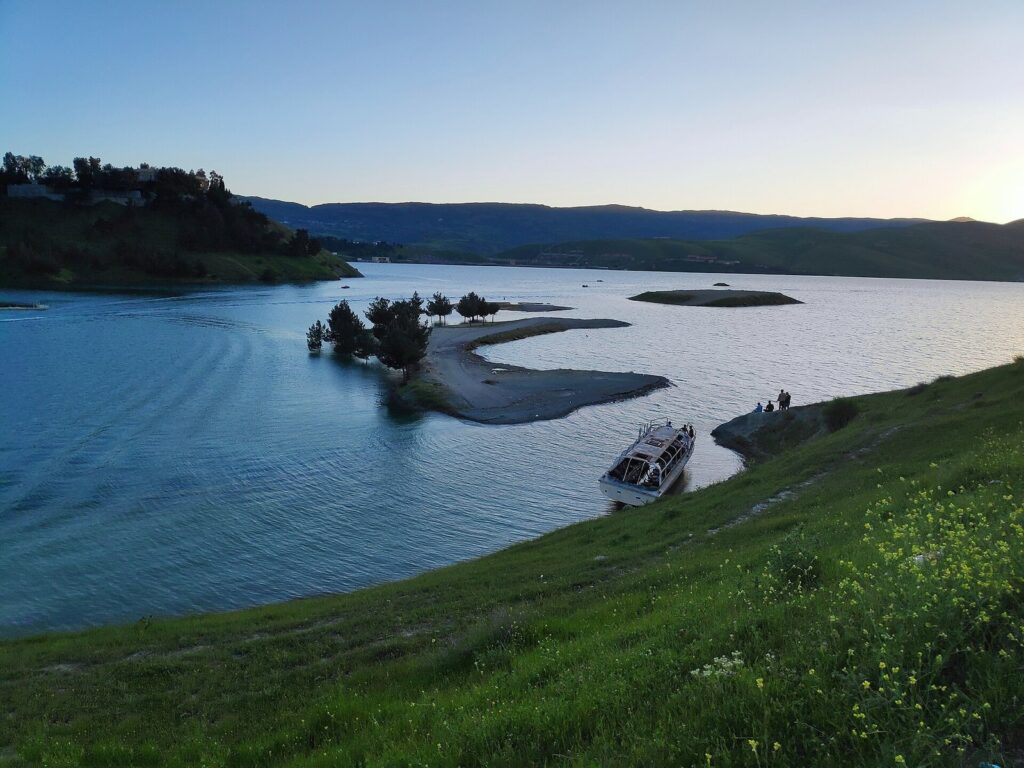
Spring is the Kurdish Region at its most beautiful, and the season most Kurds would name. The winter rains, heaviest from November to March (Sulaymaniyah averages 129 mm in March alone), turn the hills green, and the waterfalls run full. After a wet winter in 2025 to 2026, with dense snow in its final weeks, Shafaq News reported in mid-April 2026 that the border highlands of Hawraman, Hmishwan Falls, Noroli and Sazan were carpeted in wildflowers, with swollen waterfalls drawing the first visitors of the spring season. Newroz, the Kurdish New Year on 21 March, opens the season with fires and picnics; our guide to Iraq’s festivals has the dates.
The catch is that spring is short. By late May Erbil’s afternoons average 32.6 °C, and by June 38.9 °C. March can still be wet and cold in the hills, so April and early May are the sweet spot. Our guide to Iraq in spring covers the season across the whole country.
Summer: hot cities, busy mountains
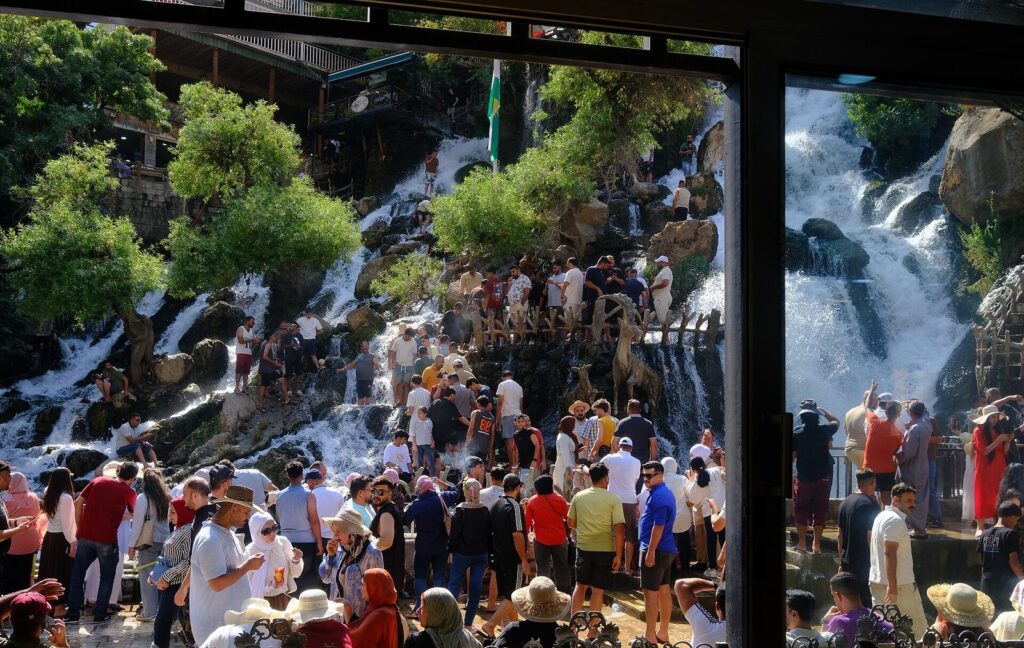
Summer is a peak season for the Kurdish mountains, but not with foreign visitors. Iraqis from Baghdad and the south come north to escape the heat of the plains, and they head for the mountains rather than the cities: Erbil averages 42.4 °C in July, not much less than Baghdad. Higher up, it is a different climate. Kurdistan24 reported that more than 30,000 tourists visited the Balakayati area of Choman district in July 2026, where summer temperatures rarely exceed 30 °C and snow lingers on some peaks all year; the area has more than 40 established tourist sites and more than 220 orchard cottages for rent. Our page on Iraq in summer covers the escape to altitude in detail.
Autumn: the walker’s season
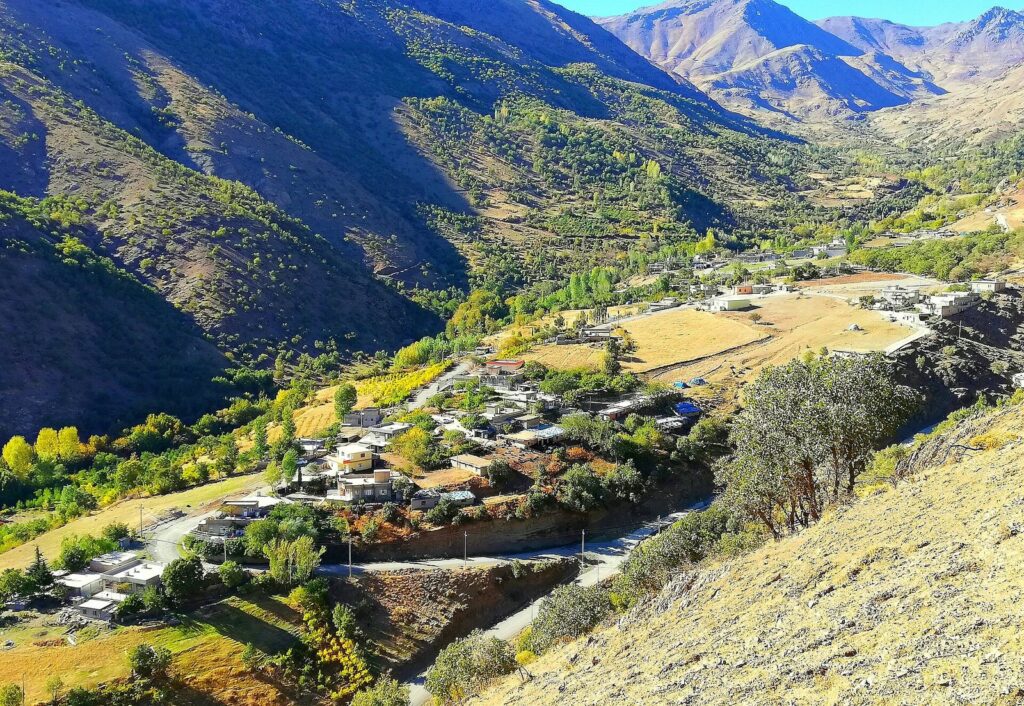
September and October are the best months for the high country: the summer crowds have gone, the passes are months from snow, and the afternoons fall from the high 30s to around 30 °C in Erbil and 28.6 °C in Sulaymaniyah in October. The landscape is dry and golden rather than green until the rains return in November, when Sulaymaniyah takes 109 mm in the month. Halabja’s pomegranate festival at the end of October and the Yazidi feast at Lalish in early October give the season its events. Our page on Iraq in autumn covers September to November in full.
Winter: snow and skiing
From mid-December to March snow covers the mountains, and Korek Mountain, which sees 60 to 100 snow days in a winter, runs as a ski resort. The cities are cool and wet: Erbil averages 13.2 °C in January with nights around 3 °C, and Sulaymaniyah drops below freezing at night. Fog is common on the Sulaymaniyah plain, where the airport has no instrument landing system. It is a good season for a snow weekend and a poor one for touring, as our page on Iraq in winter explains.
Erbil weather month by month
Most visitors arrive in Erbil, so its climate is the one to plan around. These are the 2012 to 2023 normals from the city’s published climate table:
| Month | Average high | Average low | Daily mean |
|---|---|---|---|
| January | 13.2 °C | 2.9 °C | 8.1 °C |
| February | 15.4 °C | 4.4 °C | 9.9 °C |
| March | 18.9 °C | 7.7 °C | 13.3 °C |
| April | 25.5 °C | 11.4 °C | 18.4 °C |
| May | 32.6 °C | 17.3 °C | 24.9 °C |
| June | 38.9 °C | 22.9 °C | 30.9 °C |
| July | 42.4 °C | 26.5 °C | 34.5 °C |
| August | 42.5 °C | 25.9 °C | 34.2 °C |
| September | 37.6 °C | 21.3 °C | 29.5 °C |
| October | 30.1 °C | 16.0 °C | 23.1 °C |
| November | 21.4 °C | 9.5 °C | 15.5 °C |
| December | 15.4 °C | 5.1 °C | 10.2 °C |
Erbil gets about 420 mm of rain a year over roughly 62 rainy days, almost none of it between June and September, and averages about one snowy day. Humidity swings from 25 per cent in July to 76 per cent in December, which is why a 15 °C winter afternoon there feels colder than the number suggests. Our guide to things to do in Erbil covers what to see in each season, and our Iraq weather by month tables add Baghdad, Basra and Sulaymaniyah.
Basra heat and the southern calendar
The south runs on a different clock. Basra, at the head of the Gulf, is one of the hottest cities on earth in summer and one of the most pleasant in Iraq in winter:
| Month | Basra high / low | Month | Basra high / low |
|---|---|---|---|
| January | 18.7 / 8.3 °C | July | 47.0 / 30.7 °C |
| February | 21.7 / 10.1 °C | August | 47.2 / 29.9 °C |
| March | 26.8 / 14.3 °C | September | 43.3 / 26.3 °C |
| April | 33.4 / 20.1 °C | October | 37.2 / 21.7 °C |
| May | 40.3 / 26.2 °C | November | 27.0 / 14.4 °C |
| June | 45.0 / 29.1 °C | December | 20.5 / 9.6 °C |
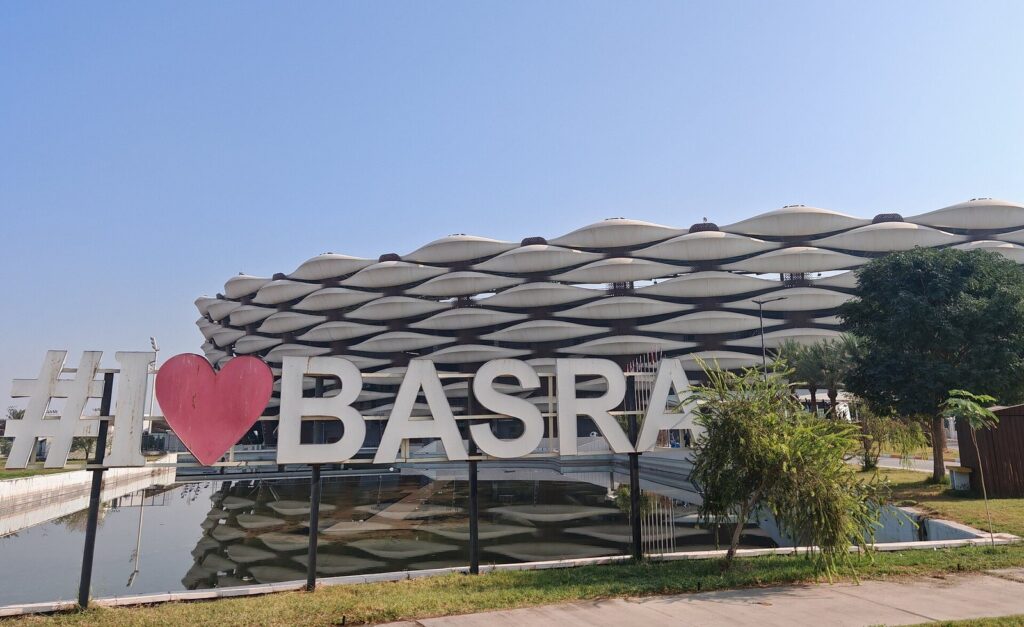
Basra heat is a planning fact, not a figure of speech. Wikipedia’s 1991 to 2020 table lists a record of 53.9 °C on 22 July 2016, usually quoted as Iraq’s highest though not verified by the World Meteorological Organization, and Xinhua reported Basra airport as the hottest place in the world on 28 July 2025, at 51.8 °C. July nights average 30.7 °C. In summer 2026 the city’s electricity was running five hours on and one off as early as May, according to 964media. From November to March, by contrast, Basra is mild, and the marshes to the north-west are in their best months. Our southern Iraq guide covers Basra, the marshes and Ur.
Sulaymaniyah, Duhok and the hill towns: how they differ from Erbil
Erbil is the gateway, but it is also the lowest and hottest of the Region’s main centres. The others shift the seasons in useful ways:
| Place | Height | July high | January low | Rain a year | Snow |
|---|---|---|---|---|---|
| Erbil | On the plain | 42.4 °C | 2.9 °C | About 420 mm | About 1 day a year |
| Sulaymaniyah | 882 m | 41.3 °C | −0.6 °C | About 722 mm | About 4 days a year |
| Duhok | Not given | 42 °C | 3 °C | Not given | 2 or 3 days a year; more in the uplands |
| Shaqlawa | 966 or 1,066 m | 38.6 °C | −0.4 °C | About 881 mm | Not uncommon |
| Amedi | 912 m, per Shafaq News | 36.3 °C | −2.4 °C | Not given | Occasional |
| Halabja | About 700 m | Not given | Not given | 700 to 900 mm | Not given |
Sulaymaniyah is the wettest major city in Iraq and has the driest summer air, with July humidity around 19 per cent, so its spring is greener and its winter harder than Erbil’s. Amedi, on its clifftop in Duhok governorate, runs about six degrees cooler than Duhok city in July, which is exactly why Iraqi families drive up there in summer, but its January nights average −2.4 °C. Halabja, watered by the Sirwan river, is the Region’s orchard country and comes into its own in autumn. Our guides to Sulaymaniyah, Duhok and Amedi cover each in detail.
Kurdistan vs the south, month by month
| Month | Kurdistan Region | Baghdad and the south | Best for |
|---|---|---|---|
| January | Cold, wet; snow in the mountains | Mild days, cold nights | The south; skiing at Korek |
| February | Cold, wet; Ramadan expected from about 8 February 2027 | Mild; Ramadan | The south |
| March | Rain, first green, Newroz | Warm and pleasant | Both, with rain gear in the north |
| April | Green, blossom, waterfalls full | Warming fast; dust season begins | Kurdistan first, the south early in the month |
| May | Warm, still green in the hills | Hot (Basra averages 40 °C) | Kurdistan |
| June | Hot cities, good mountains | Very hot | Kurdish mountains |
| July | Hot cities, busy mountains | Extreme heat; Arbaeen expected 24 or 25 July 2027 | Kurdish mountains |
| August | Hot cities, busy mountains | Extreme heat | Kurdish mountains |
| September | Warm, dry, crowds thinning | Still hot | Kurdistan |
| October | Ideal walking weather; Lalish feast; Halabja festival | Cooling through the month | Kurdistan, then the south late in the month |
| November | First heavy rain, cold nights | Mild, with the first rain; marshes in season | Both |
| December | Wet; snow arrives mid-month | Mild days; Christmas | The south |
Is summer really the peak season in Kurdistan?
By visitor numbers, the Region’s peaks are its holidays rather than its best weather. Rudaw reported that more than 350,000 tourists visited over the four-day Eid al-Adha holiday at the end of May 2026, around 80 per cent from federal Iraq; Kurdistan24 says 80 per cent of visitors to the Korek Mountain resort come from outside the Region. A Kurdish minister said the same in 2018: most holidaymakers come from central and southern Iraq, drawn by cool mountains in summer and snow in winter. For a foreign visitor, the practical upshot is that the best weather and the busiest weeks don’t always coincide, and that Eid, not August, is when hotels fill.
How many visitors come in a year is harder to pin down, because the Region’s own figures don’t agree:
| Source | Figure | What it actually measures |
|---|---|---|
| Kurdistan Board of Investment, May 2025 | Over 8 million tourists in 2024, up from 700,000 in 2015 | A promotional headline; “tourist” is not defined, and domestic day-trippers are likely included |
| Kurdistan Board of Tourism chart, 2007 to 2023 | Implies about 2.2 million in 2015 | The Board’s own series, three times the investment board’s 2015 figure |
| Kurdistan24, 1 January 2026 | More than 3.4 million visitors to Erbil in 2025 | The governor’s figure from a press conference |
| Shafaq News, 31 December 2025 | More than 1.5 million visitors to Erbil in 2025 | The same press conference, reported differently |
| Rudaw, 28 November 2018 | 2.8 million for the whole Region in 2018 | The tourism minister’s count for that year, described as a return to pre-ISIS levels |
What is consistent is the pattern: Iraqi holidaymakers dominate, holidays drive the peaks, and nobody publishes a split between domestic and foreign arrivals.
Water: lakes, waterfalls and the drought years
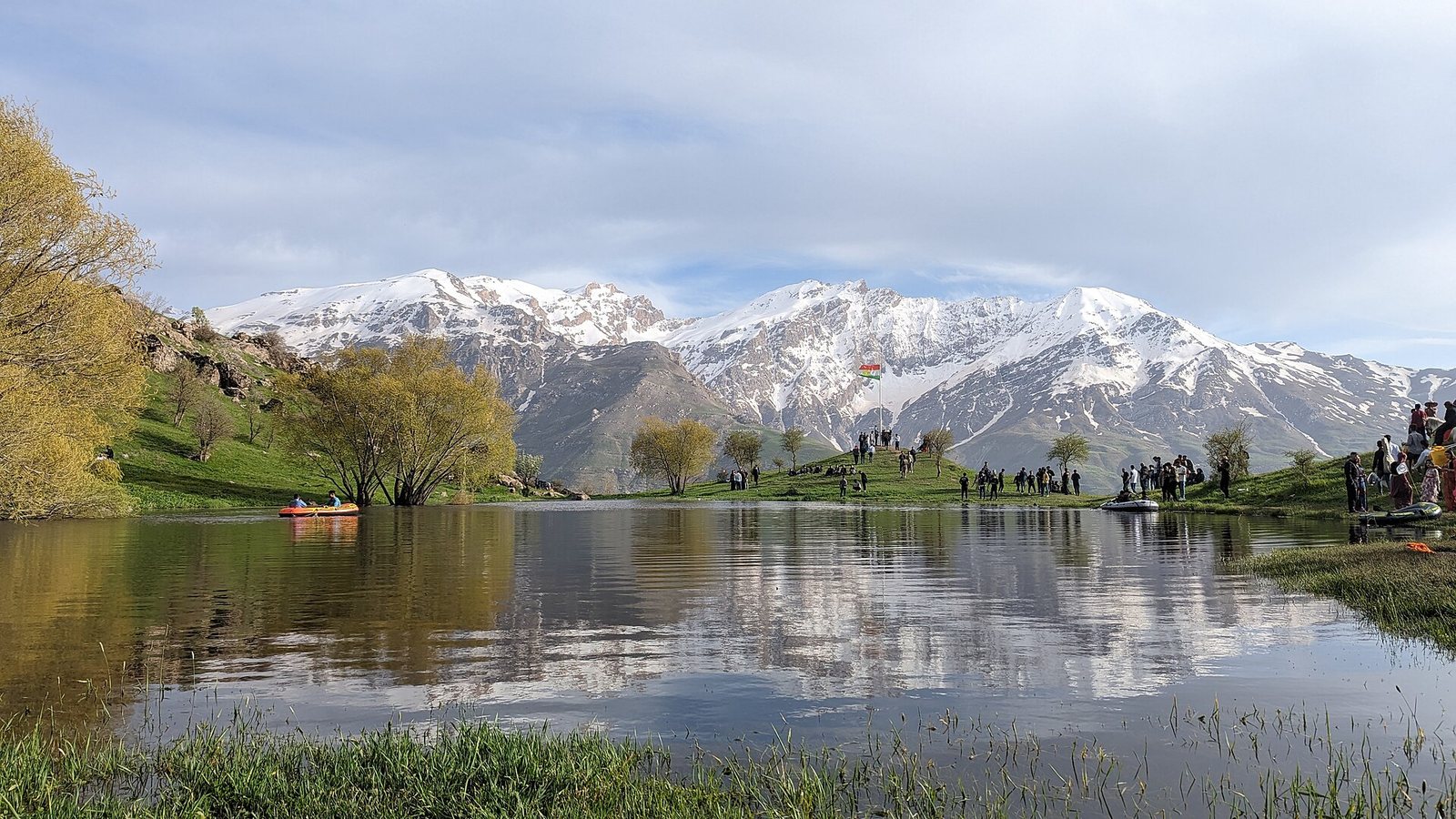
The Region’s lakes and waterfalls are only as good as the last winter. In June 2025, after a winter of 220 mm of rain against a typical 600 mm, Lake Dukan held about 24 per cent of its capacity, its lowest in around 20 years, according to the dam’s director speaking to AFP. The following winter, 2025 to 2026, was the longest wet season in more than 40 years: Dukan reached 87 per cent by May 2026, its best since 2016, and Darbandikhan was full in April. National water reserves were still expected to fall back to around 20 billion cubic metres by the winter of 2026.
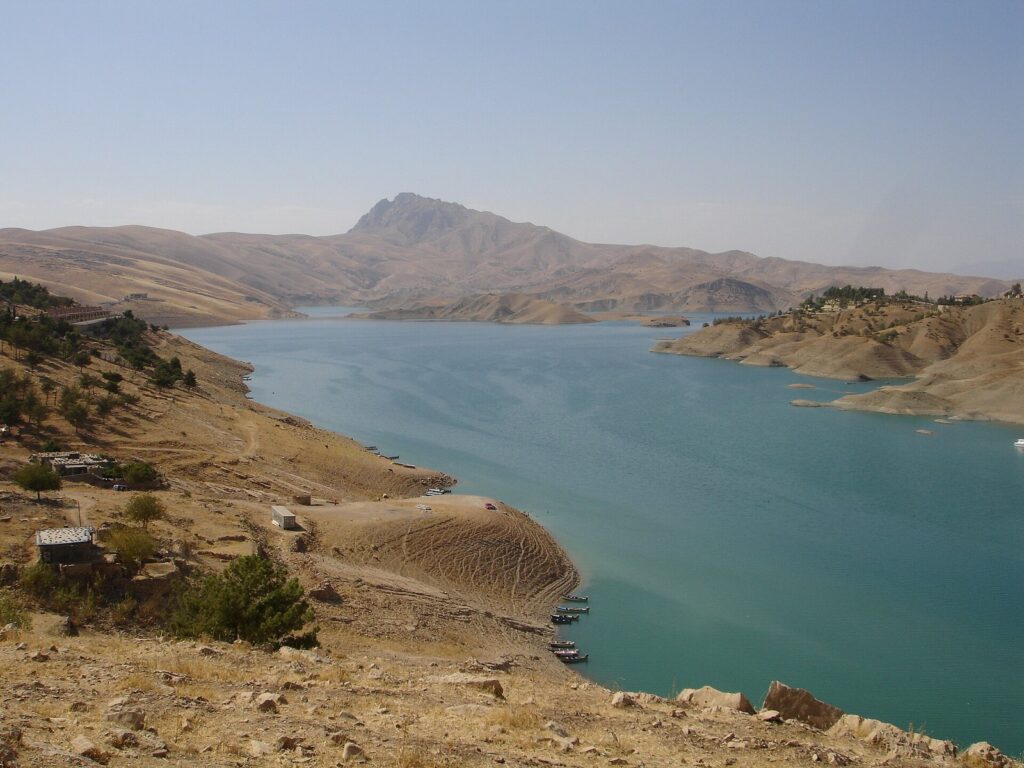
For visitors, the rule is simple: waterfalls and lake shores are at their best in April and May, after the rains and snowmelt, and at their thinnest in September. If a waterfall is the point of your trip, go in spring and check the previous winter’s rainfall before you do.
Where to go in each season
| Season | Go to | Why |
|---|---|---|
| Spring | The Hawraman valleys and Halabja; the waterfalls around Rawanduz; Akre for Newroz; Lake Dukan | Green hills, full waterfalls and lakes, the Newroz fires |
| Summer | Balakayati and Choman; Korek Mountain; Amedi; Shaqlawa | Altitude: 30 °C afternoons instead of 42 °C |
| Autumn | The high routes of our Kurdistan hiking guide; Lalish for the Yazidi feast; Halabja for the pomegranate festival | Dry, settled weather and the year’s harvest events |
| Winter | Korek for skiing; Erbil’s bazaars and Ankawa at Christmas; Sulaymaniyah’s museums | Snow up high, indoor sights and city life below |
What else decides the timing
- Holidays. Newroz (21 to 23 March) and both Eids fill hotels and roads. In 2027 Eid al-Fitr is expected around 9 or 10 March and Eid al-Adha around 16 May.
- Ramadan. Expected from about 8 February 2027. Sulaymaniyah shut its liquor stores and banned public drinking for Ramadan 2025; see our guide to Ramadan in Iraq.
- Flights. In 2026, flights to Erbil, Baghdad and Basra were suspended from 24 July to 8 August. As of late September, Erbil airport’s flight board listed Turkish Airlines, Pegasus, Royal Jordanian, EgyptAir, flydubai, Air Arabia and Qatar Airways among its carriers; check your airline the week you fly.
- Visas. A Kurdistan Region visa, on arrival at Erbil or Sulaymaniyah for eligible nationalities or online at a fee of 100,000 dinars, is valid in the Region only; the south needs the federal e-visa ($160). Our Kurdistan visa guide explains the difference.
What to pack for each season
- Spring: a waterproof layer for March showers, a warm top for evenings, and shoes with grip for wet paths around waterfalls.
- Summer: light, loose, long clothing for 40 °C cities, sun protection, and a warm layer for mountain nights. Most people in Erbil wear long trousers rather than shorts, a resident guide noted in January 2026.
- Autumn: layers for 30 °C afternoons and cool evenings, and a proper jacket and waterproof from November.
- Winter: a warm coat, waterproof boots, gloves and a hat for the hills; full winter gear for Korek.
Our Iraq packing list covers the rest of the kit, and the Lalish rule of going barefoot in every season.
The safety frame, as of late September 2026
The UK Foreign, Commonwealth & Development Office’s Iraq travel advice, last updated 22 July 2026 and unchanged when we checked on 25 September, advises against all but essential travel to the whole Kurdistan Region, with no carve-outs for particular cities. Its safety page reports that Iranian strikes on Iranian-Kurdish opposition groups have continued in areas including around Rawanduz and Koya. In the south, Baghdad, Babil, Karbala, Najaf, Dhi Qar, Basra and Al-Muthanna are also against all but essential travel, and several provinces, including Ninawa, Kirkuk and Salah al-Din, are against all travel. The FCDO also warns that border crossings with Iran can close with little or no notice.
The US State Department’s advisory is Level 4, Do Not Travel, reissued on 29 August 2026. The FCDO warns that your travel insurance could be invalidated if you travel against its advice; our Iraq travel insurance page explains what to check, and our guide to safety in Kurdistan covers the Region’s risks in more depth. We give you the inputs; the decision stays with you.
What we could not confirm
- Wildflower timing by district. Spring blooms are well reported, but no authority publishes when they peak in Erbil, Duhok or Sulaymaniyah governorates.
- 2026 visitor totals. Reports describe heavy losses for Erbil’s tourism businesses during the spring conflict and a recovery after the April ceasefire, but we found no published total for 2026.
- What counts as a tourist. The Region’s figures mix arrivals, visits and day trips, and no domestic and foreign split is published.
- Seasonal hotel prices. No reliable data; we don’t quote rates.
- Drive times to the mountain areas. No authority publishes them, and holiday traffic changes them.
- This winter’s rainfall. Whether 2026 to 2027 refills the lakes as well as the last winter did is unknown until spring.
Frequently asked questions
What is the best month to visit Kurdistan?
April is the strongest single month: Erbil averages 25.5 °C in the afternoon, the hills are green after the winter rains and the waterfalls are full. October is the best alternative, with Erbil at about 30 °C, dry weather and the best walking conditions of the year.
Is Kurdistan hot in summer?
The cities are: Erbil averages 42.4 °C in July and Sulaymaniyah 41.3 °C, close to Baghdad. The high valleys are much cooler; Kurdistan24 reports that Balakayati rarely passes 30 °C in summer. That is why Iraqi families holiday in the mountains, not the cities, from June to August.
What is the weather like in Erbil?
Erbil is mild and wet in winter (13 °C afternoons in January), pleasant in spring and autumn (25.5 °C in April, 30 °C in October) and very hot in summer (42 °C in July and August). It gets about 420 mm of rain a year, almost none from June to September.
How hot does Basra get?
Very. Basra averages 47 °C in July and August, with nights around 30 °C, and has recorded 53.9 °C (22 July 2016), the figure usually quoted as Iraq’s highest. Its airport was the hottest place in the world on 28 July 2025, at 51.8 °C. November to March is the time to go.
Can you visit Kurdistan and southern Iraq on one trip?
Yes, but the timing is a compromise. Late October to November and March to early April suit both regions. You will need the federal e-visa for the south, as a Kurdistan Region visa is valid in the Region only, and should expect checkpoints between the two.
Is Kurdistan busy at Eid?
Very. More than 350,000 tourists visited the Region over the four-day Eid al-Adha holiday in May 2026, around 80 per cent of them from the rest of Iraq, and hotels fill. Book early, or plan around the Eid dates, which move about 11 days earlier each year.
Final thoughts
The simplest way to think about Iraq’s two climates is that they take turns. The Kurdish hills have their best months while the south is heating up and cooling down, and the south has its best months while the hills are wet and white. Travellers who want both should use the hinges between them, and travellers who only want Kurdistan should go in April or October and be flexible about the weather.
For more on the Region itself, start with our guide to Iraqi Kurdistan; for a route, our Kurdistan itinerary works in either spring or autumn; and our seasonal guide to Iraq sets both regions against the whole year.
Photo credits
Gomi Felaw, Choman (featured image): Kushared/Mohammed Sardar, Wikimedia Commons (CC BY-SA 4.0). Lake Dukan in spring: Mhamadkorra, Wikimedia Commons (CC BY-SA 4.0). Bekhal waterfall in August: TeebaAW, Wikimedia Commons (CC BY-SA 4.0). Nawanda, Balakayati: ZaniyarSaeed, Wikimedia Commons (CC BY-SA 4.0). Basra International Stadium: Taha9009, Wikimedia Commons (CC BY-SA 4.0). Lake Dukan in summer: User:Zirguezi, Wikimedia Commons (public domain). All images via Wikimedia Commons under the licences shown.