Last updated: September 2026. Route, fares and site status re-checked on 26 September 2026 against our research files (August 2026), 964media and Shafaq News; FCDO and US advisories checked 25 and 26 September 2026. Closures on this route change often: check each one the week you travel.
Search for an Iraq itinerary of 7 days and most plans try to cram in everything: Baghdad, Babylon, Samarra’s spiral minaret, Mosul’s old city and the Erbil citadel. On paper it works. In practice, Samarra lies in Salah al-Din and Mosul in Ninawa, both provinces the UK Foreign Office advises against all travel to, and two of the headline sights, the Iraq Museum in Baghdad and the Ziggurat of Ur, spent much of 2026 closed. The week that actually works in late 2026 is simpler and runs in one direction: south, from Baghdad to Basra, along the Euphrates. Our Iraq itinerary planner covers routes of every length; this is the classic week.
In short, a good Iraq itinerary for 7 days goes Baghdad (two days), Babylon on the way to Karbala, Karbala and Najaf, then Nasiriyah for Ur and the marshes, ending in Basra, which has its own airport. It works best between October and April, needs the federal e-visa, and is easiest with a driver for the rural legs.
Below: the route at a glance, each day in turn with what is open and what isn’t, how to get between the stops and what it costs where prices are known, what to cut or swap, the paperwork and the safety frame as it stood in late September 2026.
The short answer
| Question | Answer |
|---|---|
| Route | Baghdad → Babylon → Karbala → Najaf and Kufa → Nasiriyah (Ur, marshes) → Basra |
| Best season | October to April; avoid June to September in the south |
| Transport | Shared minibuses between the shrine cities; a car and driver for Babylon, Ur and the marshes |
| Visa | Federal e-visa, $160, applied for at least 24 hours ahead; a Kurdistan Region visa is not valid on this route |
| Closed or uncertain | Iraq Museum (closed since July 2025); Ziggurat of Ur (restoration, reopening unconfirmed); Al-Qishla |
| Dates to avoid | Arbaeen (expected 24 or 25 July 2027), Ashura (about 15 June 2027) and the Rajab walk in Baghdad (about 4 January 2027) |
| Advisories (26 September 2026) | FCDO: against all but essential travel to every stop on the route. US: Level 4, Do Not Travel. |
The Iraq itinerary for 7 days, at a glance
| Day | Base | Main sights | Getting there |
|---|---|---|---|
| 1 | Baghdad | Mutanabbi Street, the Tigris bank, Kadhimiya at dusk | Fly into Baghdad |
| 2 | Baghdad | Al-Shaheed Monument, Adhamiya, a half-day to Ctesiphon or Aqar Quf | Taxi or ride-hailing in the city |
| 3 | Karbala | Babylon (and Borsippa) on the way south | Car and driver; or coaster from Baghdad to Karbala |
| 4 | Najaf | The Karbala shrines in the morning; the Imam Ali shrine, Wadi al-Salam and Kufa | Coaster Karbala to Najaf, about 80 km |
| 5 | Nasiriyah | Ur, if open; Nasiriyah Museum | Car and driver |
| 6 | Nasiriyah or Chibayish | A boat day in the Mesopotamian Marshes | Shared taxi or driver, about 90 km each way |
| 7 | Basra | The Shatt al-Arab, the Basrah Museum, old Basra; fly home | Car and driver |
Days 1 and 2: Baghdad
Give the capital two nights, and be ready for some of its best-known doors to be shut. The Iraq Museum, home of the finest Mesopotamian collection anywhere, closed in July 2025 and was still in “preparations” at the end of July 2026 after three missed reopening targets; the Al-Qishla, the Ottoman barracks by the river, had been closed for more than 18 months; and the Baghdadi Museum was under rehabilitation from June 2026. Check all three before you arrive.
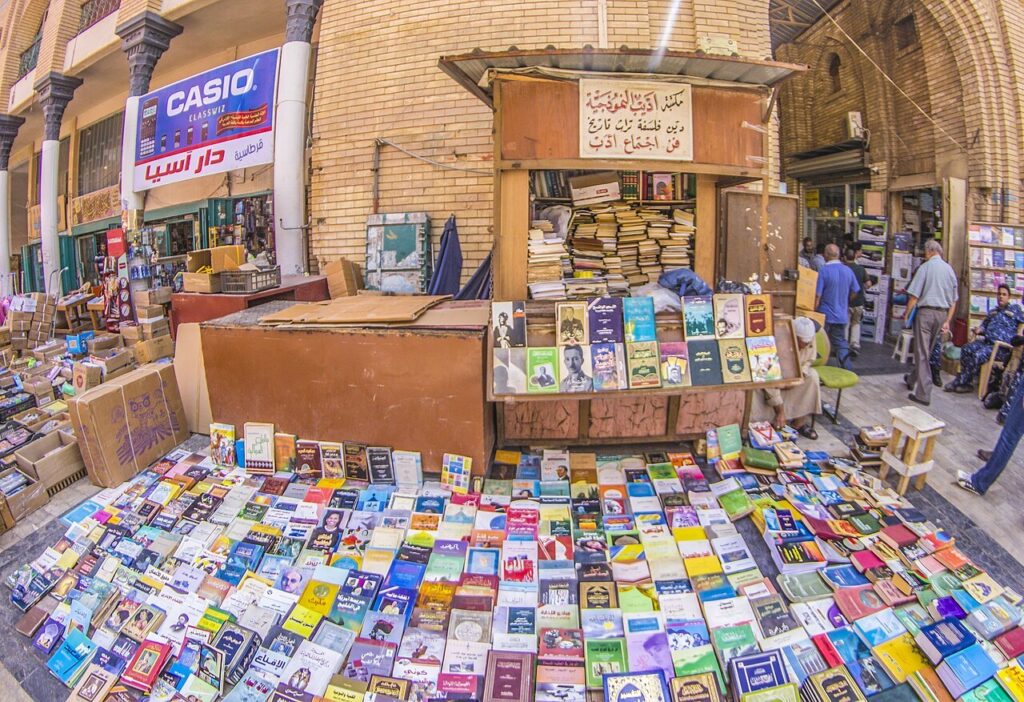
What does work is the city itself. Start in the old centre on Mutanabbi Street, the booksellers’ street, which is at its best on a Friday morning, with tea at the Shabandar café. Walk the Tigris in the late afternoon, and see the gold domes of the Kadhimiya shrine lit after dark; women need to cover fully there. On day two, the Al-Shaheed Monument and a half-day out of town fill the time: the great arch of Ctesiphon, about 30 to 40 km south-east depending on who is measuring, or the ziggurat of Aqar Quf to the west. Our list of day trips from Baghdad has both, and our Baghdad guide has the rest.
Getting around Baghdad is easiest by ride-hailing: Baly, a Baghdad company, holds about 80 per cent of the city’s market, and Careem also operates. Sadr City, in the north-east of the capital, is on the FCDO’s against-all-travel list.
Day 3: Babylon, then on to Karbala
Leave Baghdad early. Babylon is an open site with little shade, and the guides who run day trips from Baghdad plan on eight to nine hours door to door for Babylon and nearby Borsippa, whose ruined ziggurat is hard to find without someone who knows the unmarked roads. One Baghdad operator described the single checkpoint at Hillah as a two-minute stop when the driver handles the paperwork; travellers on their own report much longer waits at checkpoints elsewhere.
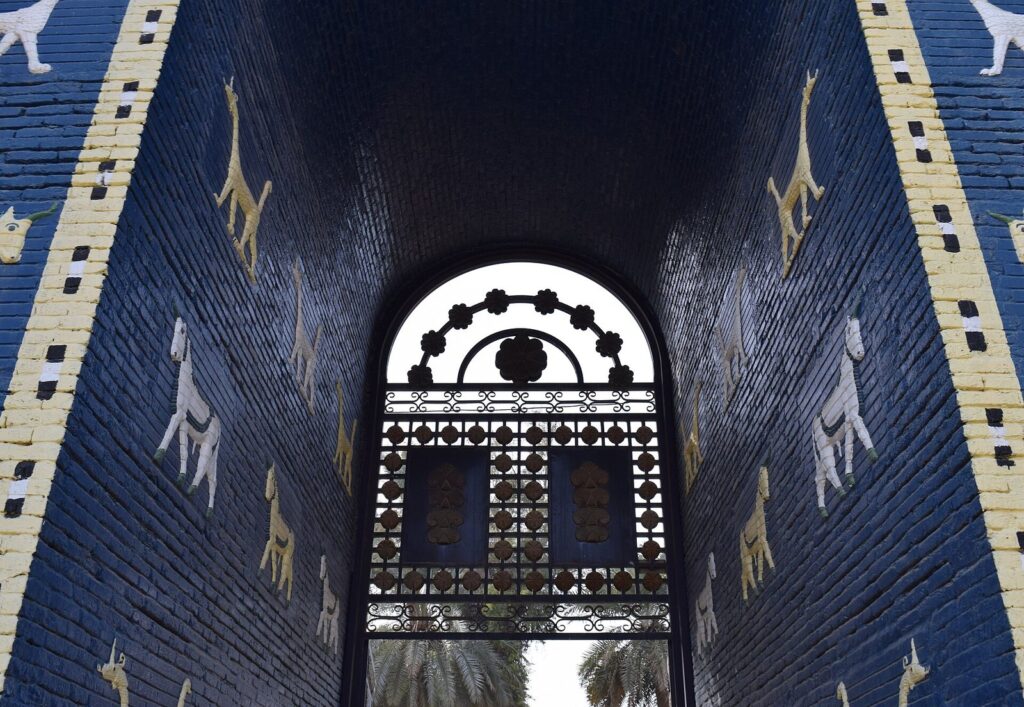
From Babylon, continue south-west to Karbala for the night, rather than doubling back to Baghdad. If you are going by public transport instead, the coasters (shared minibuses) to Karbala leave from Baghdad’s Alawi garage for about 3,500 dinars; the 95 km trip is 78 minutes in free-flowing traffic but realistically two to two and a half hours with checkpoints. A private taxi was being offered at around 30,000 dinars and a shared taxi at 10,000 dinars in our August 2026 research. One route warning: Jurf al-Sakr, a closed town on the approaches to Karbala held by an armed faction, is on the FCDO’s against-all-travel list, which is one more reason to travel with a driver who knows the roads.
Day 4: Karbala and Najaf
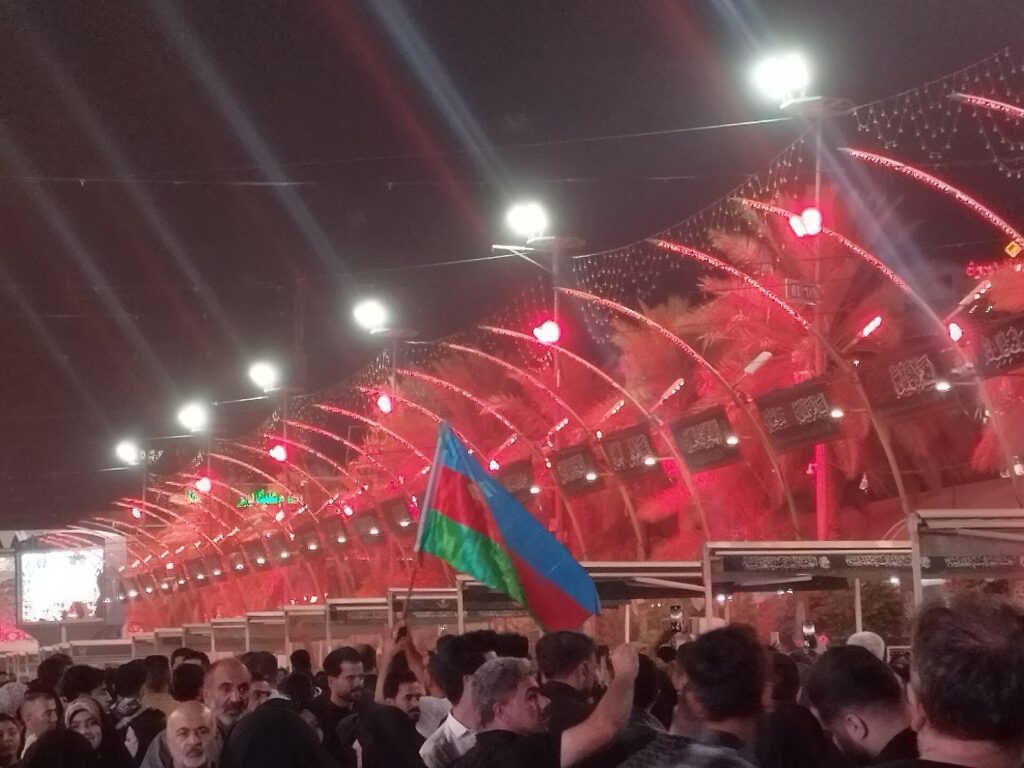
Spend the morning at the twin shrines of Imam Hussein and his half-brother al-Abbas, which face each other across the open esplanade called Bayn al-Haramayn. Vehicles are banned within about 1.5 km of the shrines, so park and walk or use the shrine shuttle buses. Dress is stricter than in Baghdad: women need an abaya, the full-length cloak, and a head covering, and abayas can usually be borrowed at the entrances; men should wear long trousers and sleeves.
In the afternoon, take the coaster from the Karbala garage to Najaf, about 80 km, a little over an hour, for about 2,500 dinars, plus about 1,000 dinars for a local bus into town. In Najaf, the Imam Ali shrine allows phones but bans cameras, runs a separate entrance for women, and expects women to wear a chador. Beyond it lies Wadi al-Salam, one of the largest cemeteries in the world, and a short drive away the Great Mosque of Kufa, where Ali was struck at prayer in 661.
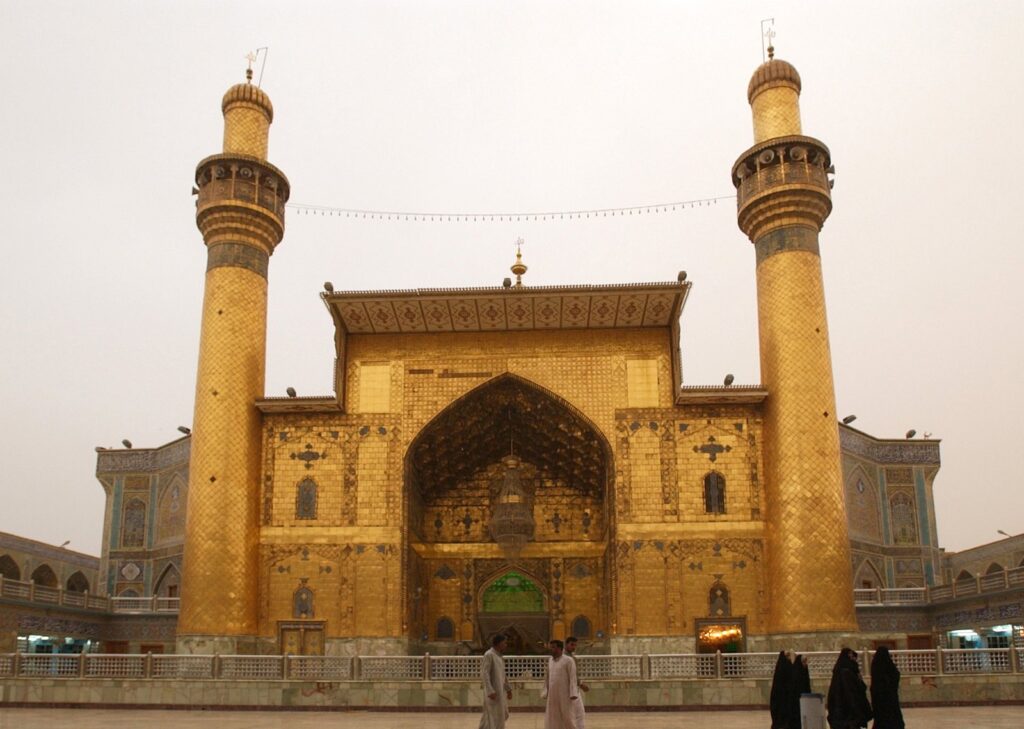
Accommodation is not usually a problem outside pilgrimage season: Karbala has more than 1,000 hotels and Najaf around 250, and both cities are walk-up feasible. The 2026 war was a shock, though. Shafaq News reported in April that more than 80 per cent of Najaf’s hotels had closed and most of Karbala’s had suspended operations, with reopening from 30 May. We don’t quote room rates; our guide to hotels in Karbala explains how the market works.
Days 5 and 6: Nasiriyah, Ur and the marshes
The long leg south to Nasiriyah is where a car and driver earns its cost; no authority publishes a drive time, and the public-transport options are thin. Nasiriyah itself is a working city of about 700,000 on the Euphrates, and its museum was among those the State Board of Antiquities and Heritage listed as open in February 2026.
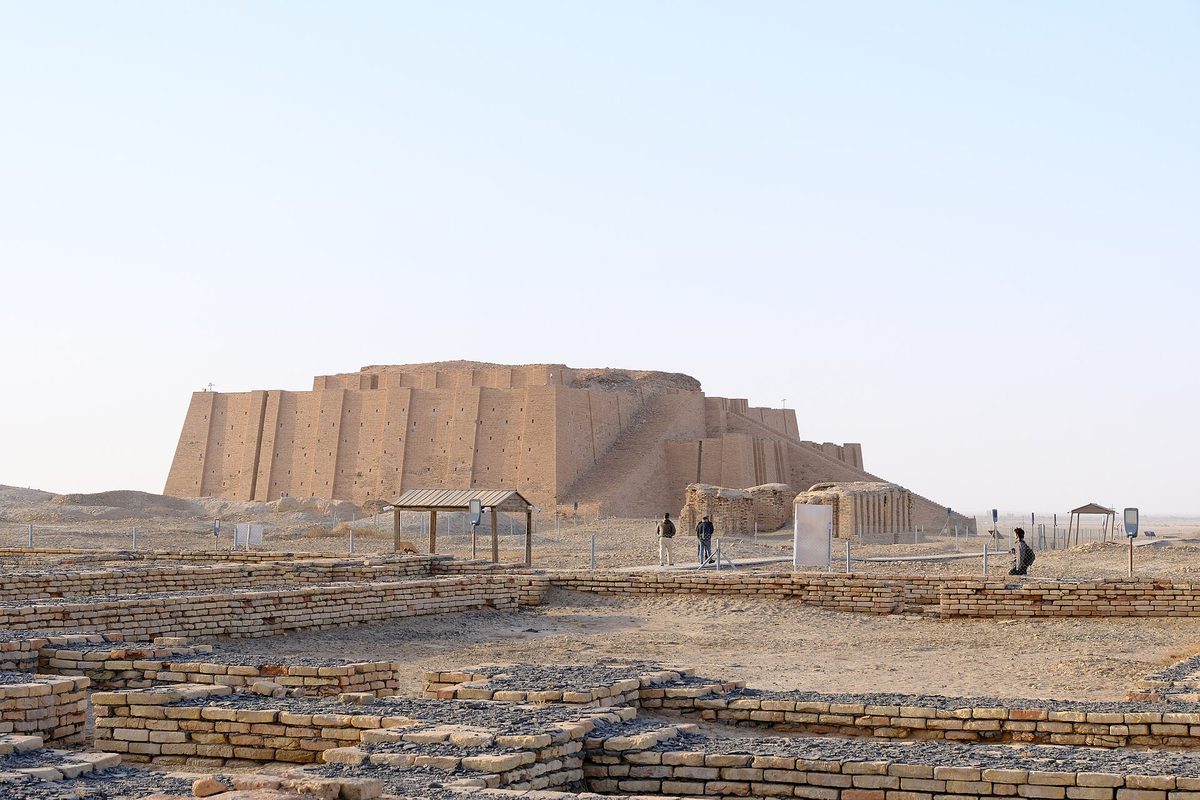
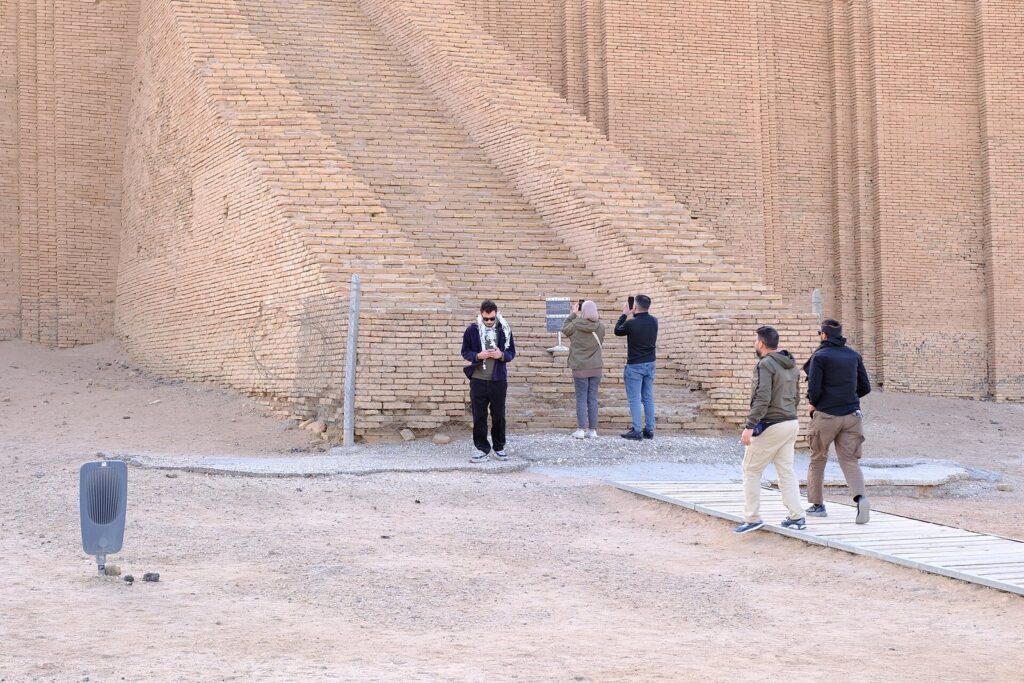
The Ziggurat of Ur, just outside the city, is the reason most people come, and it is the biggest uncertainty on this route. It closed in spring 2026 for its seventh restoration campaign, with reopening targeted for July 2026, and we have found no report confirming that it reopened. When it is open, foreigners pay 25,000 dinars (Iraqis 3,000) past the checkpoint, often without a ticket being issued and with your passport photographed; a taxi from Nasiriyah costs about 8,000 dinars each way; and climbing the staircase is banned. If Ur is still closed, the Sumerian site of Girsu in the same province is the natural substitute.
Day six belongs to the marshes. Chibayish, about 90 km from Nasiriyah, is the usual base; travellers’ accounts put a shared taxi at 3,000 to 5,000 dinars, a mashoof (the traditional canoe) at roughly 25,000 to 35,000 dinars per boat per hour, and a full six- to seven-hour private boat at 40,000 to 50,000 dinars for four. Treat those as indicative: they come from travellers rather than official tariffs. Reed mudhif guesthouses offer overnight stays with meals and a boat trip. There is no formal permit, but some travellers report an informal police registration in Nasiriyah. Our southern Iraq guide covers the marshes in full.
Day 7: Basra and home
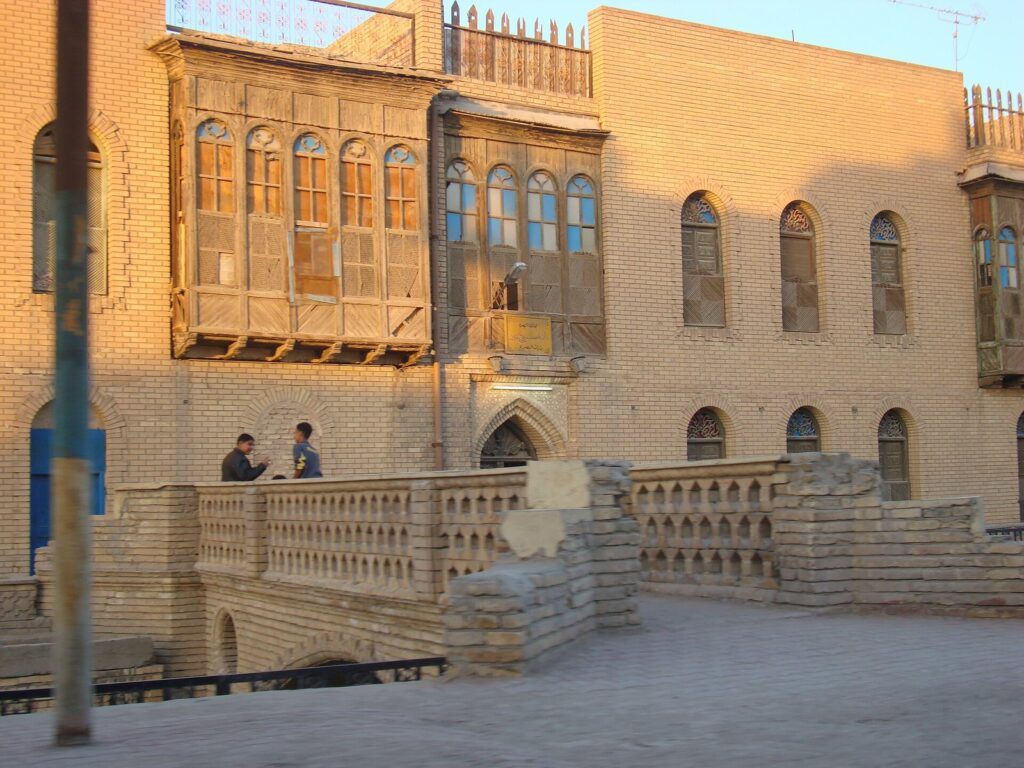
Finish in Basra, Iraq’s port city at the head of the Gulf, and fly home from its airport rather than retracing the route. Spend the day on the Shatt al-Arab, the river formed by the Tigris and Euphrates, in the lanes of old Basra with their shanasheel, the carved wooden balconies of the old merchant houses, and at the Basrah Museum, which has four galleries and a reported fee of 25,000 dinars for foreigners; its hours are unpublished and it has a history of weekend closures. The FCDO advises against all travel within 5 km of the Iranian border in Basra province, so the Shalamcheh border area is off the itinerary. Our guide to safety in Basra covers the city in more detail.
Pacing the week
Friday is the Iraqi weekend. It is the best day for Mutanabbi Street’s book market and the worst for quiet sightseeing at Babylon, where local families and school groups arrive; the guides who run Babylon trips recommend weekday mornings, especially Tuesday to Thursday. Start early every day between April and October, when the open sites are punishing by midday. Buy a local SIM on arrival for maps and ride-hailing; our guide to the Iraq SIM card compares the networks. And keep a little slack in the plan: in 2026, a closure or a checkpoint delay undid more itineraries than distance did.
How do you get around on this route?
| Option | Best for | What we know |
|---|---|---|
| Coaster (shared minibus) | Baghdad to Karbala; Karbala to Najaf | About 3,500 and 2,500 dinars; leave from city garages when full |
| Shared or private taxi | Intercity legs, Ur, Chibayish | Private Baghdad to Karbala offered at about 30,000 dinars; agree the price first |
| Car and driver | Babylon, Borsippa, the Najaf to Basra leg | No dated day rate found; one operator’s Babylon day trip from Baghdad started at $120 a person in March 2026, including guide and fees |
| Self-drive | Not recommended | The FCDO requires the 1968 International Driving Permit and your home licence, and calls road travel dangerous; Iraq recorded 2,351 road deaths in 2025 |
| Ride-hailing | Within Baghdad, Najaf and Basra | Baly dominates Baghdad; Careem operates in Baghdad, Najaf and Basra |
| Flights | Arriving or leaving | Baghdad, Najaf and Basra all have international airports; Najaf’s routes are mainly regional, with no European services |
Carry your passport and visa at all times: the FCDO says it is a legal requirement to carry photographic ID, and checkpoints within cities and on main roads may stop you. Search results mention a Baghdad to Basra passenger train, but we found no current timetable. Our guides to getting around Iraq and Iraqi checkpoints cover both in detail.
Why Samarra and Mosul aren’t on this route
Two of Iraq’s great sites sit just outside the classic week, and it is worth knowing why rather than assuming they were forgotten.
Samarra, about 120 to 130 km north of Baghdad depending on which end of its 41.5 km-long archaeological city you measure to, has the spiral Malwiya minaret and the golden-domed al-Askari shrine. It is in Salah al-Din province, which the FCDO advises against all travel to. It is also the one city in this part of Iraq where a driver or fixer is functionally necessary: a 2026 account describes handing over your passport at the checkpoint in exchange for a visitor card, and independent travellers have reported holds of 45 minutes. Our guides to the Malwiya minaret and the al-Askari shrine cover it for those who decide to go.
Mosul has had a remarkable year of recovery: the al-Nuri mosque and its rebuilt al-Hadba minaret, reconstructed with about 26,000 original bricks, reopened at the end of August 2025, and its new airport began domestic flights in November 2025. But Mosul is in Ninawa province, also on the FCDO’s against-all-travel list. Our guide to safety in Mosul sets out the current position.
What should you cut or swap?
| If… | Then… |
|---|---|
| Ur is still closed | Swap it for Girsu, or give the marshes a second day |
| You only have five days | Drop Basra and fly home from Najaf, or drop the marshes |
| It is summer | Don’t do this route; the south averages 43 to 47 °C in July. Go north to the Kurdistan Region instead |
| Your dates hit Arbaeen, Ashura or Rajab | Move the shrine cities, or the whole trip; roads and hotels fill |
| You want the Kurdistan Region too | Take three days in Baghdad and four in the north instead; our Kurdistan itinerary covers that half |
| You want to travel independently | Karbala and Najaf are easy on coasters; keep a driver for Babylon, Ur and the marshes |
What does a week like this cost?
We only give prices we can date. Public transport is cheap: the two coaster legs total about 6,000 dinars. Site fees add up faster: Ur and the Basrah Museum each charge foreigners a reported 25,000 dinars. A marsh boat runs to tens of thousands of dinars for a group. The big variables are the driver, for which we found no current day rate, and accommodation, where prices move with pilgrimage seasons; we don’t quote hotel rates. Our guide to what a trip to Iraq costs sets out the budget tiers.
Visas and paperwork
This whole route is in federal Iraq, so you need the federal visa. According to the FCDO, there is no visit visa on arrival; you apply on the Government of Iraq e-visa portal at least 24 hours before travel, the visa costs $160 and is valid for 60 days, and you need a return or onward ticket and a passport valid for six months beyond arrival. A Kurdistan Region visa is valid in the Kurdistan Region only. Apply early: in April 2026 Shafaq News reported approvals paused for several weeks after the abduction of an American journalist in Baghdad, though the Interior Ministry denied any suspension. Our Iraq e-visa guide walks through the application.
The safety frame for this route
Every stop on this itinerary is in a province the UK Foreign, Commonwealth & Development Office advises against all but essential travel to: Baghdad, Babil, Karbala, Najaf, Dhi Qar and Basra. Its Iraq travel advice, last updated 22 July 2026 and unchanged when we checked on 25 September, also lists places on or near the route as against all travel: Baghdad’s Sadr City, Jurf al-Sakr in Babil, and the strip within 5 km of the Iranian border in Basra. It warns of a high threat of kidnapping throughout Iraq and says British nationals are seen as legitimate targets, including tourists.
The US State Department’s advisory is Level 4, Do Not Travel, reissued on 29 August 2026. The FCDO warns that your travel insurance could be invalidated if you travel against its advice; our Iraq travel insurance page explains what to check, and our travel advisory tracker follows the changes. We give you the inputs; the decision stays with you.
What we could not confirm
- Whether Ur has reopened. The restoration was due to finish in July 2026; we found no report that the site is open again.
- The Iraq Museum’s reopening. Closed since July 2025, with no announced date as of late July 2026.
- A car-and-driver day rate. No dated rate for 2025 or 2026; ask several operators and agree a price per day in writing.
- Drive times on the southern legs. Najaf to Nasiriyah and Nasiriyah to Basra have no published times.
- The Baghdad to Basra train. We found no 2026 timetable or fare.
- Babylon’s ticket price. A foreigner rate of 25,000 dinars is widely reported, but we could not confirm it as a published national tariff.
- Hotel recovery after the 2026 war. Reopening began on 30 May 2026; how many have reopened since is not published.
Frequently asked questions
Is 7 days enough for Iraq?
It is enough for one region done properly. A week covers Baghdad, Babylon, the shrine cities, Ur and the marshes, and Basra, with a driver for the rural legs. It is not enough to add the Kurdistan Region as well without rushing; for that, take ten days or two weeks.
What is the best 7-day route in Iraq?
The classic week runs south from Baghdad: two days in the capital, Babylon on the way to Karbala, Karbala and Najaf, then Nasiriyah for Ur and the marshes, and Basra to fly home. It follows the Euphrates, avoids backtracking and stays out of the provinces the FCDO rates against all travel.
Can you do Baghdad and Kurdistan in one week?
Yes, as a split trip: three days in Baghdad and four in the Kurdistan Region. You need the federal e-visa, because a Kurdistan Region visa is not valid in Baghdad, and you should plan the journey north carefully, since the direct road runs through provinces the FCDO advises against travelling to.
Do you need a guide for a week in Iraq?
No Iraqi law obliges tourists to use a licensed operator in the shrine cities, and Karbala and Najaf are easy by coaster. A driver makes the most difference at Babylon, Ur and the marshes, where sites are rural, roads unmarked and checkpoints quicker with a local handling the paperwork.
When is the best time for a week in Iraq?
October to April. The south is mild in winter, with Basra averaging 19 °C in January, while summer brings 43 to 47 °C afternoons. Avoid Arbaeen (expected 24 or 25 July 2027), Ashura (about 15 June 2027) and the Rajab walk in Baghdad (about 4 January 2027).
Is the Ziggurat of Ur open?
It closed in spring 2026 for its seventh restoration campaign, with reopening targeted for July 2026, and we have found no report confirming it reopened. Check locally before you travel to Nasiriyah; if it is closed, Girsu, in the same province, is the best substitute.
Final thoughts
A week in Iraq rewards restraint. The temptation is to chase every famous name on the map; the better trip follows one river, stays in the provinces where the advisories are least severe, and leaves time for the things that make the south memorable: a morning at Babylon before the heat, the crowds of Karbala at dusk, a day in a canoe in the reeds. What it demands is flexibility, because in 2026 closures, not distances, were what broke most plans.
If you have longer, our longer Iraq routes add the north. For the weather on each leg, see our guide to the best time to visit Iraq, and if you would rather hand the logistics to someone else, our page on Iraq tours explains what operators offer.
Photo credits
Ishtar Gate passage, Babylon (featured image): MohammadHuzam, Wikimedia Commons (CC BY-SA 4.0). Mutanabbi Street, Baghdad: Mondalawy, Wikimedia Commons (CC BY-SA 4.0). Ishtar Gate replica, Babylon: MohammadHuzam, Wikimedia Commons (CC BY-SA 4.0). Bayn al-Haramayn, Karbala: BlueSky Tr, Wikimedia Commons (CC0). Imam Ali shrine, Najaf: U.S. Navy photo by Photographer's Mate 1st Class Arlo K. Abrahamson., Wikimedia Commons (public domain). Ziggurat of Ur: Alli Khalil, Wikimedia Commons (CC BY-SA 4.0). Shanasheel, old Basra: Lordali91, Wikimedia Commons (CC BY-SA 3.0). All images via Wikimedia Commons under the licences shown.