Last updated: August 2026. The restoration status of Rasheed Street, the tram, and the open-or-closed position of every landmark on this route were re-checked against Iraqi government announcements, Iraqi press and dated traveller accounts in August 2026.
Most guides to old Baghdad hand you a list. Thirty numbered landmarks, alphabetically indifferent, half of them on the other side of the river and one of them inside the Green Zone. Nobody tells you what order to walk them in, how far apart they are, or which ones are currently boarded up behind a contractor’s hoarding. That is the gap this article exists to fill. This is the historic core of the city we cover in full in our Baghdad travel guide.
The walkable core of old Baghdad is a single corridor on the Rusafa bank: Rasheed Street from al-Midan Square down to al-Rusafi Square, then east into Mutanabbi Street and out onto the Tigris at al-Qishla. It is roughly 650 metres of street plus the side alleys — about fifteen minutes of pure walking, and realistically two to three hours once you stop. Friday morning is the day to do it. And in 2026 there is a hard boundary in the middle of it: the section from al-Midan to al-Rusafi has been restored and reopened, and everything beyond al-Rusafi towards Abu Nuwas Street is an active construction site.
Below is that route as an actual sequence — stop by stop, with distances, timings and an honest status for each landmark. Then the things that determine whether the walk works at all: the restoration programme and the new tram, the fact that three of Baghdad’s headline heritage buildings are simultaneously shut, what happens at checkpoints, what the heat does to the schedule, and where the camera stays in your bag. Our wider Baghdad travel guide covers the rest of the city; this piece is only about the old quarter, on foot.
The short answer
| Question | Answer |
|---|---|
| Where does old Baghdad start? | Al-Midan Square, at the northern end of Rasheed Street on the Rusafa (east) bank. |
| How long is the walk? | 650 m of restored street, about 1.5 km with the Mutanabbi and Qishla detours. Two to three hours. |
| Best day and time | Friday morning, from around 08:00. Mutanabbi and the Qishla grounds are both at their busiest. |
| Can I do it independently? | Yes. Foreign travellers report walking it alone without being stopped. Carry your passport. |
| What is closed? | Al-Qishla building, the Baghdadi Museum and the Iraq Museum — all three, right now. |
| What is new? | A battery tram has been running on Rasheed Street since March 2026, the first in Baghdad since the Ottomans. |
| Government advice | FCDO: all but essential travel to Baghdad province, against all travel to Sadr City. US: Level 4, do not travel. |
The route: old Baghdad in eleven stops
This is the sequence that makes geographic sense. It runs north to south down Rasheed Street, ducks east into the book market, comes back out onto the river, and ends at the water. Walking times are between stops, at a normal pace, and assume you are not stopping — the real time is governed by how long you linger, which is the point of the exercise.
| # | Stop | What it is | Walk to next | Status, August 2026 |
|---|---|---|---|---|
| 1 | Al-Midan Square | Northern end of Rasheed Street; the Armenian Church of the Virgin Mary faces the street here | 3 min | Open; restored section begins |
| 2 | Haydar-Khana Mosque | Early 19th-century Ottoman mosque, tiled facade, the best-known building on the street | 4 min | Working mosque; exterior always viewable |
| 3 | Al-Khulafa Mosque and the Suq al-Ghazl minaret | A 1960 Makiya mosque built around a much older brick minaret | 3 min | Working mosque; minaret visible from the street |
| 4 | Souk al-Safafeer | The coppersmiths’ market, off Rasheed Street | 4 min | Open and still working, much reduced |
| 5 | Khan Murjan | 14th-century caravanserai, one of the great brick interiors in Iraq | 5 min | Managed as a cultural venue; check on the day |
| 6 | Al-Mustansiriya Madrasa | 625 AH / 1227 CE — the oldest surviving Arab-Islamic university building | 4 min | Visitable; no published hours or fee |
| 7 | Al-Rusafi Square | End of the restored section; the statue of the poet Maruf al-Rusafi | 5 min | Open. Works begin south of here |
| 8 | Mutanabbi Street | The book market; pedestrianised, roughly 1 km | 2 min | Open; Friday is the day |
| 9 | Shabandar Café | Coffee house on Mutanabbi since 1917, in a 1904 building | 5 min | Trading |
| 10 | Al-Qishla | Ottoman parade ground and 23 m clock tower on the Tigris | taxi | Building closed 18+ months |
| 11 | Abu Nuwas Street | The Tigris corniche and the masgouf grills | — | Phases 1–2 complete, phase 3 ongoing |
Two notes on that table before you use it. Stops 1 to 7 are a straight line down one street, so you cannot get lost. Stops 8 to 11 involve turning east off Rasheed Street into the lanes, and the lanes are where old Baghdad actually lives — the restored frontage is the shop window, and the alleys behind it are the shop.
Why 2026 is an unusual year to walk it
Rasheed Street was inaugurated in 1916 by the Ottoman military governor Khalil Pasha, cut straight through the medieval fabric to move troops. It became Iraq’s first modern street: the first with electric light, the address for the banks, the cinemas, the cafés and the political arguments. Then it declined, through war, sanctions and forty years of deferred maintenance, until the arcades were propped up and the balconies were falling into the road.
Since February 2025 it has been the object of the most serious heritage intervention Baghdad has attempted in decades. The programme is called Baghdad Pulse — نبض بغداد — supervised by Amanat Baghdad, the city administration, together with the Iraqi Private Banks League, and funded by the Central Bank of Iraq. Works on Rasheed Street launched on 10 February 2025.
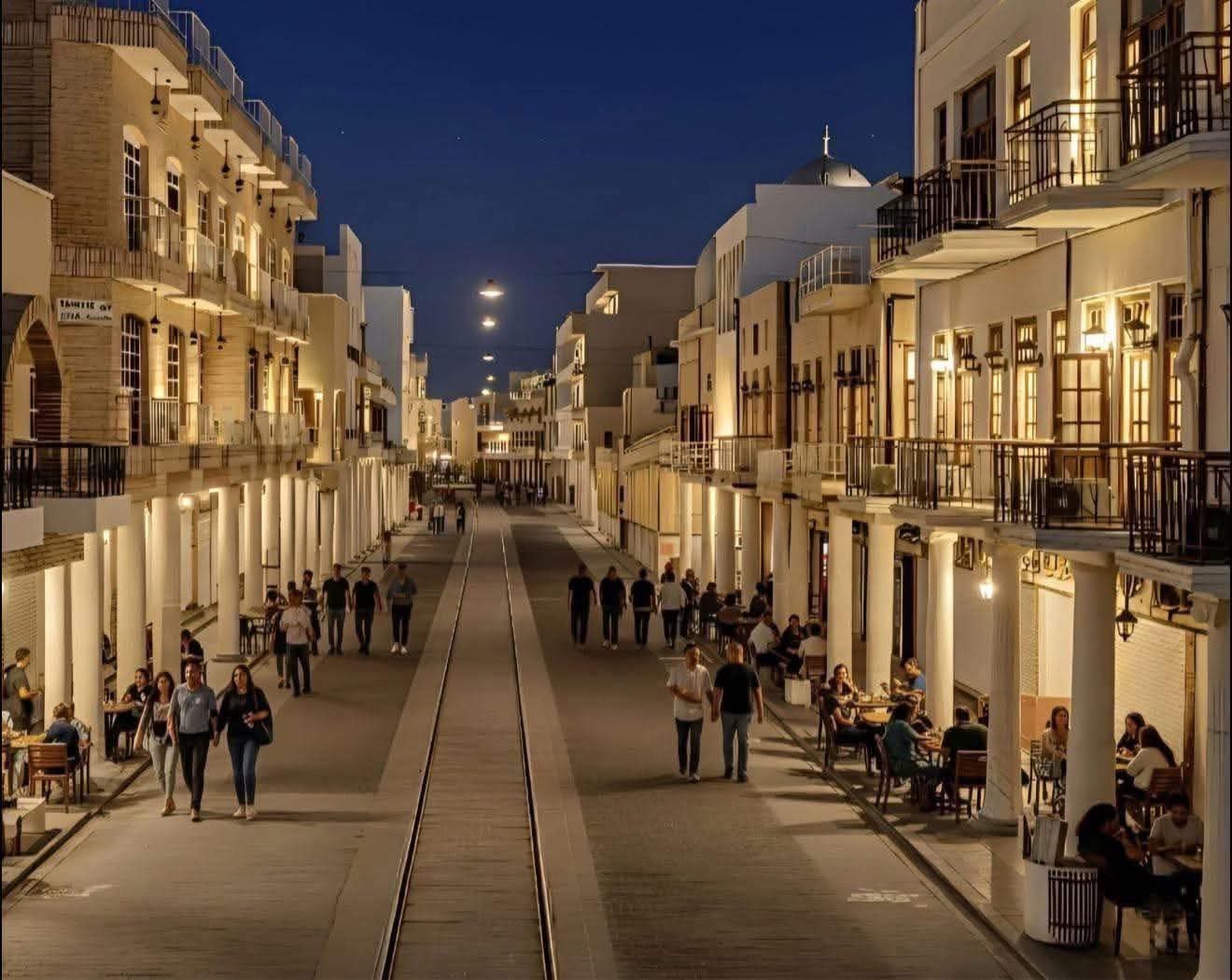
On the evening of Thursday 11 September 2025, Prime Minister Mohammed Shia al-Sudani inaugurated the first completed section: al-Midan Square to al-Rusafi Square, around 650 metres and roughly 70 to 72 buildings. That section got new sewage, power and telecoms, civil defence provision, a municipal service centre, a district police station and — the detail that surprised everyone — a heritage tramway laid into the roadway.
Phase 2 launched the same evening and covers the stretch from al-Rusafi Square southward, about 3.5 kilometres and 183 buildings. Iraqi sources describe its far end differently: some say it terminates at the start of Abu Nuwas Street, others at the Italian Hospital. It was still in progress as of May 2026.
So the practical sentence, and it is the single most useful thing anyone can tell you about walking old Baghdad this year: al-Midan to al-Rusafi is finished and open. Everything south of al-Rusafi towards Abu Nuwas is a live construction site. Plan the walk on the finished half and take a car for the rest.
There is a human cost inside that, and it deserves saying plainly rather than being airbrushed out of a nice restoration story. An Iraqi investigation published in August 2025 reported four buildings physically obstructing the works and a tangle of unresolved property-ownership disputes along the street. We found no confirmed demolition scandal and are not asserting one. But a street this old has owners, tenants and shopkeepers, and a project on this scale rearranges their lives whether or not the facades come out beautifully.
The tram nobody has written about
This is the newest thing in old Baghdad and almost no English-language page mentions it. The Turkish manufacturer Garatren built a retro-styled battery tramcar for Rasheed Street — air-conditioned, running on stored electricity rather than overhead wires. Tracklaying finished in December 2025, and the first car ran on Rasheed Street in early March 2026. It is the first tram in Baghdad since the Ottoman era.
The route is exactly the restored section: a single line from al-Midan Square to al-Rusafi Square, with Amanat Baghdad saying it will be extended toward Abu Nuwas once the remaining stretches are finished. It is a sightseeing vehicle first and a transport service second, running slowly so passengers can look at the buildings. A dedicated cycle path runs alongside the tramway.
Al Jazeera reported from inside the tram on 22 March 2026, over Eid al-Fitr, and the piece is worth knowing about because it is a rare view of Baghdadis simply enjoying their own city. Families riding in the evening, children waving at the red carriage, students taking selfies, vendors staying open late. Mohammed al-Sufi, the Baghdad Pulse spokesman, told the paper the tram deliberately echoes the double-decker bus that once ran the same street, and that street life had returned “not only in the daytime but late into the night”.
Two honest caveats. First, capacity figures conflict: the manufacturer’s specification is quoted at 60 passengers, while Al Jazeera’s reporters counted carriages holding 24. Second, and more usefully for you — we could not confirm fares or a timetable from any source. Do not trust any page that prints one. Ask on the day, at the al-Midan end.
What is open, what is shut, and what is a building site
Here is the part every competing page gets wrong, because heritage status in Baghdad changes faster than travel content does. Three of the city’s headline heritage attractions are closed at the same time. That is not a sentence anybody else is writing, and it should change how you plan a day.
| Landmark | Status, August 2026 | Detail |
|---|---|---|
| Al-Qishla | Closed | Shut to the public for more than eighteen months as of 9 June 2026; publishers and booksellers protested outside demanding it reopen |
| Baghdadi Museum | Closed or disrupted | Rehabilitation of the museum and its surroundings announced April 2026 and launched June 2026 under the Rasheed Street project |
| The Iraq Museum | Closed | Shut since July 2025. Still only “preparations” for reopening as of 28 July 2026 |
| Mutanabbi Street | Open | Rebuilt 2021–22 with private funding; pedestrianised and trading |
| Souk al-Safafeer | Open | Coppersmiths still working, though only a handful of skilled tradesmen remain |
| Al-Mustansiriya Madrasa | Open to visitors | No official hours or fee published anywhere we could verify |
| Rasheed St south of al-Rusafi | Construction | Phase 2, 183 buildings, in progress |
If you were counting on museums, read our roundup of museums in Iraq that are actually open before you build a day around one — Basra, Nasiriyah and Samawa are all functioning, and Baghdad’s row is the exception rather than the rule. The full story of the national collection’s closure is in our guide to visiting the Iraq Museum.
Stops 1–3: al-Midan Square down to al-Khulafa
Start at al-Midan. It is the northern head of Rasheed Street and the point where the restored section begins, so everything from here runs downhill in terms of effort and uphill in terms of interest. Facing the street at the square is the Armenian Church of the Virgin Mary — Surp Asdvadzadzin, known locally as Miskinta — built in 1639–40 and one of the oldest churches in Baghdad. It is a useful reminder in the first ninety seconds of the walk that old Baghdad was never a single-community city, a theme we pick up in our guide to Iraqi culture and etiquette.
Walk south. The arcades — the shanashil-fronted colonnade that gives Rasheed Street its character — run almost continuously along both sides, which means the whole first section is in shade. That matters more than it sounds; see the heat section below.
Haydar-Khana Mosque comes up on the left. It is early 19th-century Ottoman, and although the date 1819 is quoted everywhere, we could not confirm it from a source we trust. The tiled facade and the minaret are the photograph; the interior is a working mosque, so behave accordingly and ask before entering.
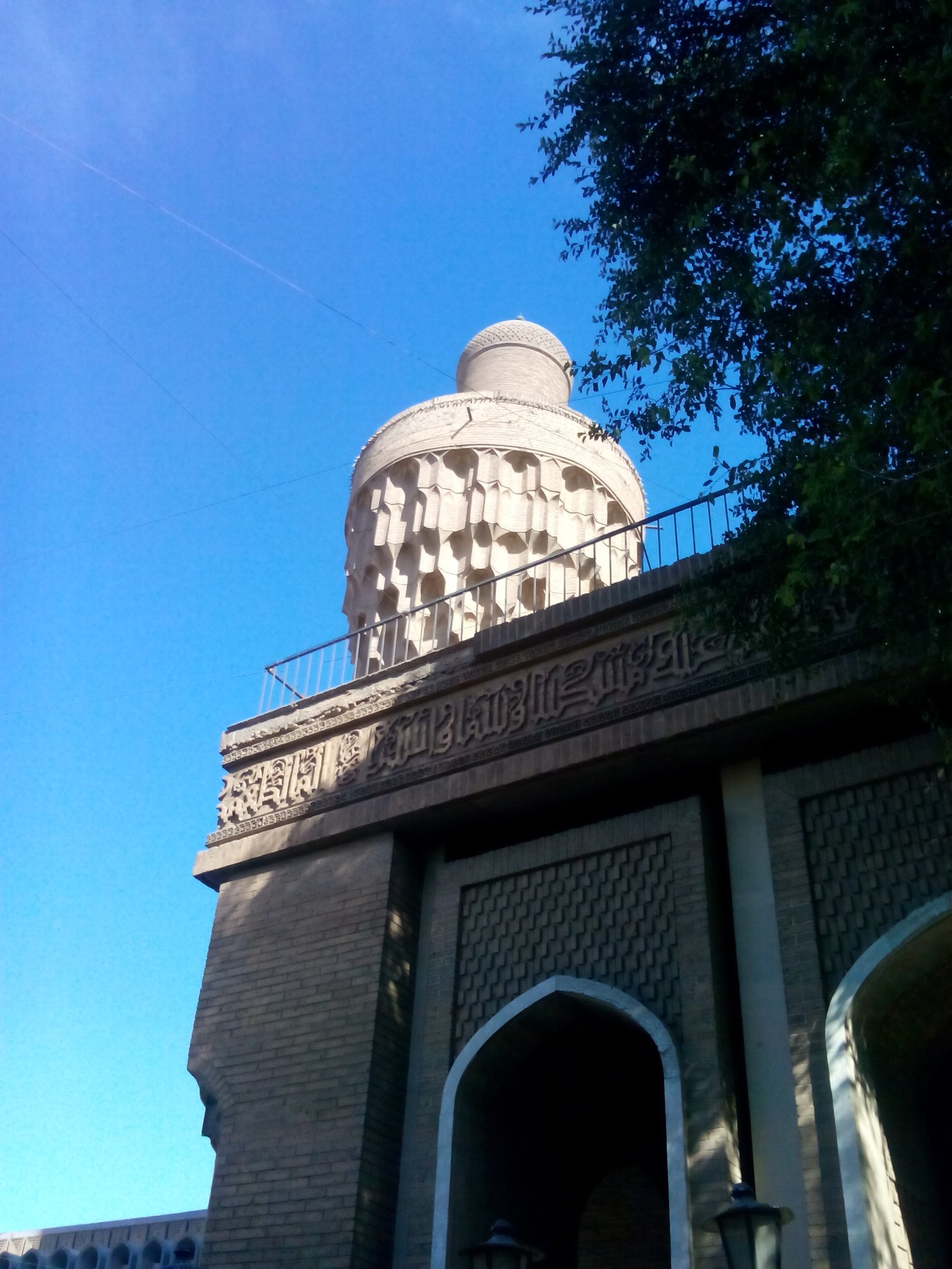
A few minutes further is al-Khulafa Mosque, and this is where almost every guidebook and blog goes wrong. The site is genuinely early — the original mosque of Caliph al-Muqtafi dates to 902–908 CE. But the minaret standing there today is not from the ninth century. It is around 1279, Ilkhanid, built after the Mongol sack of Baghdad, and it has the only twelve-sided minaret base in Iraq. The mosque wrapped around it is a 1960 building by the architect Mohamed Makiya. So: an Ilkhanid minaret inside a modernist mosque on a 10th-century site. Never write, and do not believe, “9th-century minaret”. If Baghdad’s layered chronology interests you, our overview of ancient Mesopotamia and its successors puts the Abbasid centuries in order.
Stops 4–6: the souks, Khan Murjan and the Mustansiriya
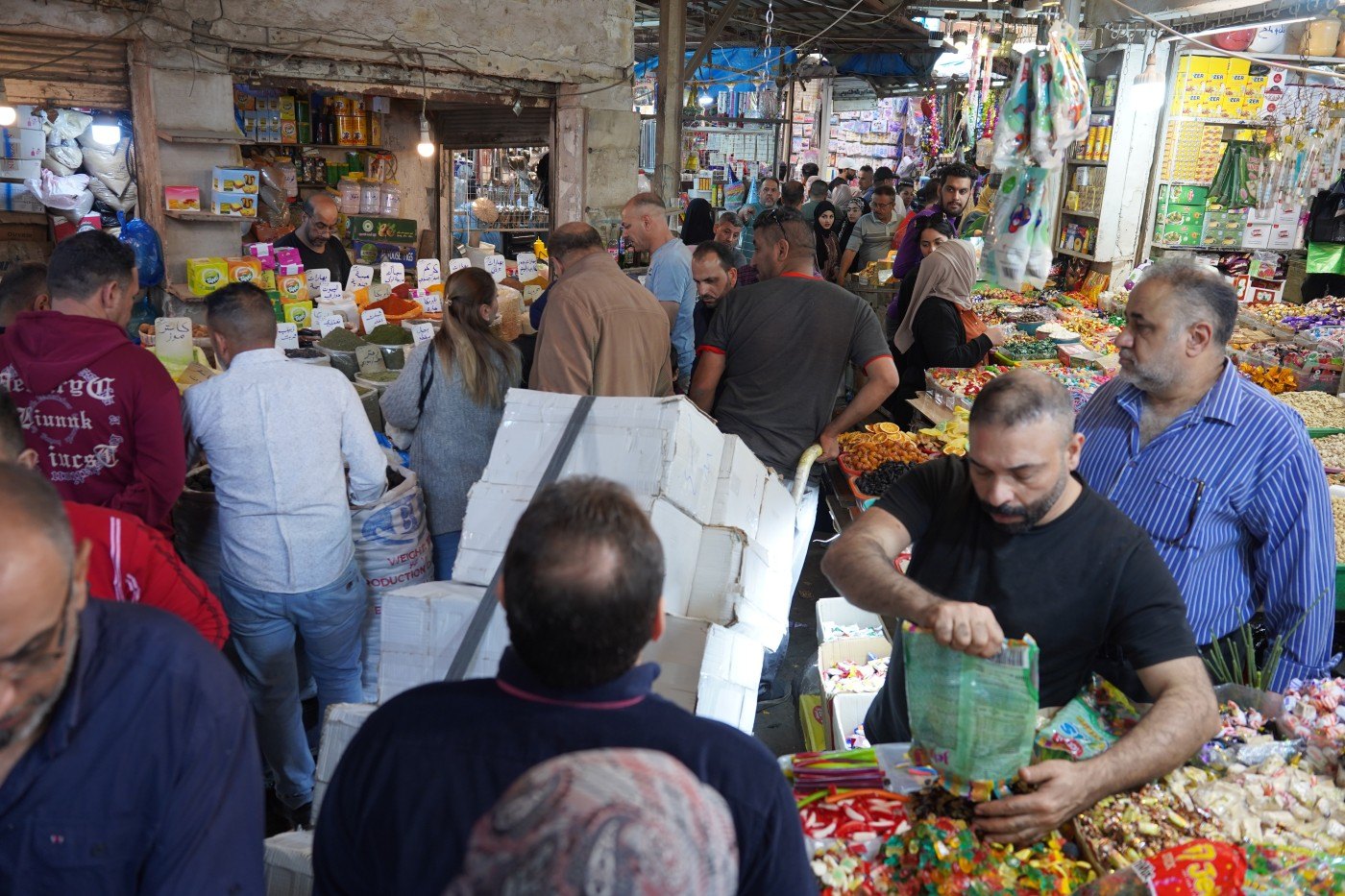
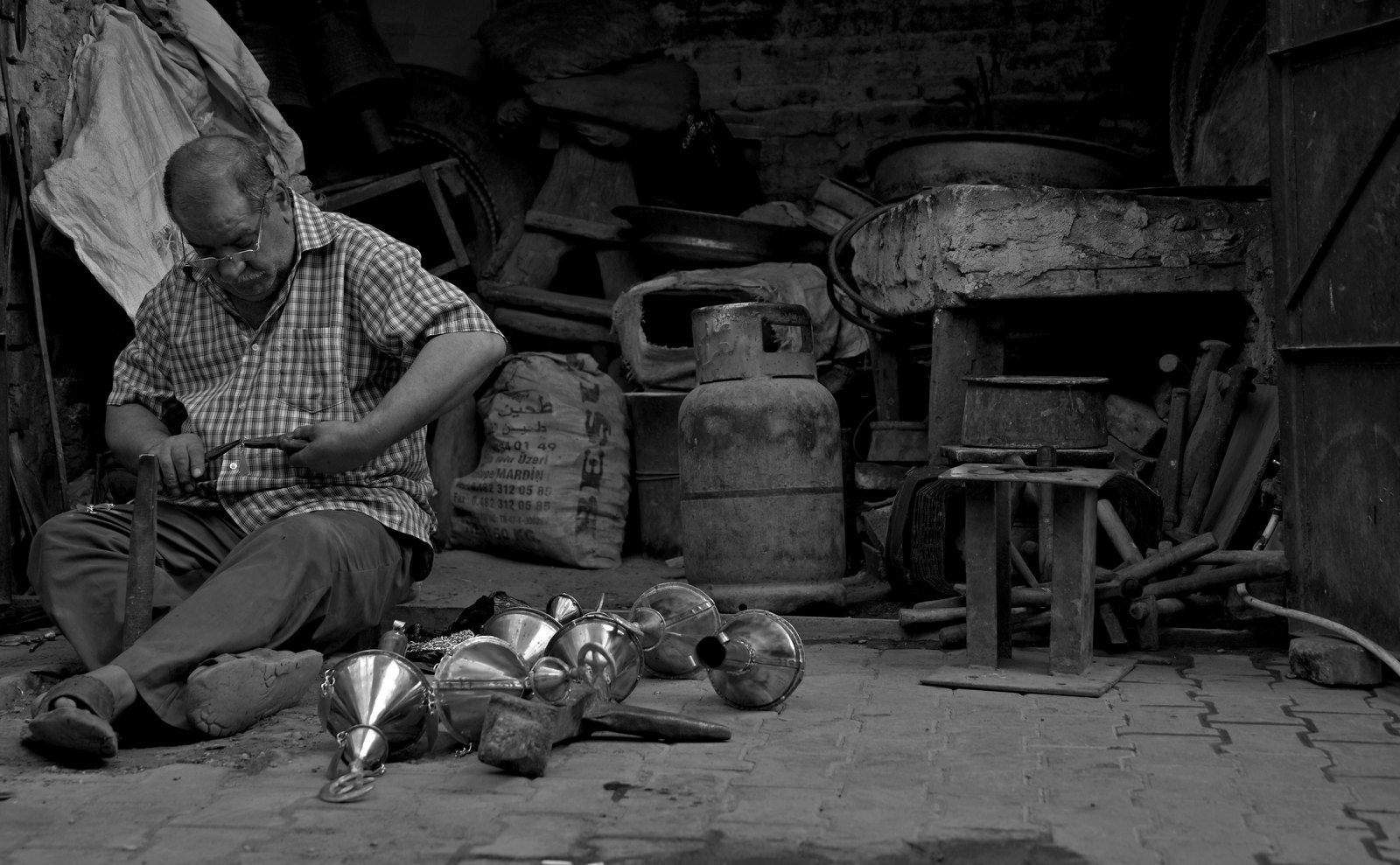
Souk al-Safafeer, the coppersmiths’ market, is the best sensory experience on the walk and the one with the shortest remaining life. You hear it before you see it: hammers on copper, a sound that used to fill several lanes and now comes from a handful of workshops. Reporting from the souk describes only a handful of skilled tradesmen left. Buy something if you like something — trays, coffee pots, the small hammered cups. Bring cash; almost nothing here takes a card, and our breakdown of what things cost in Iraq explains why the whole country still runs on notes.
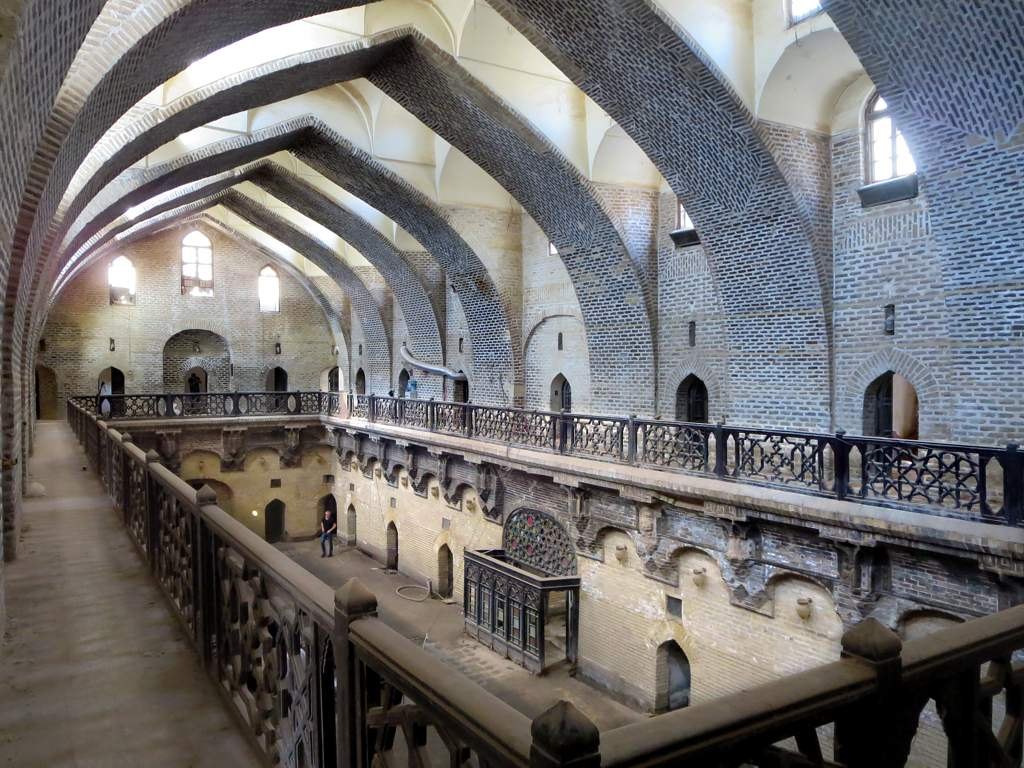
Khan Murjan is a 14th-century caravanserai built by Amin al-Din Mirjan, and its transverse brick vaults are among the most impressive interiors in Iraq — a long hall of pointed arches with a gallery running above. It is now managed by Liwan for Culture and Development in partnership with the State Board of Antiquities and Heritage. For years it operated as a restaurant, and a lot of older content still describes it as one. We could not confirm that it currently serves food, so treat it as a cultural venue with variable access and ask locally whether it is open the day you go.
Then al-Mustansiriya Madrasa, and this is the oldest thing you will touch all day. Founded by the Abbasid caliph al-Mustansir in 625 AH / 1227 CE, it is the oldest surviving purpose-built Arab-Islamic university building anywhere — a two-storey courtyard of tawny brick with an inscription band running round it, a great iwan on the qibla side and the famous carved brick portal on the street. It taught all four Sunni schools of law under one roof, which was a deliberate and radical piece of institutional design at the time.
What we cannot tell you is when it opens or what it costs. The “Sunday to Thursday, 9 to 5” line that appears on dozens of pages traces back to AI-generated aggregator sites, not to any Iraqi source. There are no published hours and no published fee we could verify. Travellers report walking in during daylight hours without a ticket. Go mid-morning, and if the gate is shut, the exterior brickwork is half the reason to come.
The Mustansiriya sits inside something else worth knowing: “Historical Features of the Tigris River in Baghdad Rusafa, from the Mustansiriya School to the Abbasid Palace” has been on Iraq’s UNESCO tentative list since 28 March 2014, covering 7.57 hectares. Tentative means proposed, not inscribed — a distinction our guide to Iraq’s UNESCO World Heritage Sites spells out, because half the internet gets it wrong in both directions.
Stops 7–9: al-Rusafi Square and Mutanabbi Street
Al-Rusafi Square is the hinge of the whole walk. North of it, restored street. South of it, hoardings, plant and 183 buildings under scaffolding. The bronze figure in the middle is Maruf al-Rusafi, the poet, and Baghdadis use the statue as the standard meeting point.
Turn east and you are in Mutanabbi Street. It is roughly a kilometre, car-free, and it is the reason many people come to old Baghdad at all: the booksellers’ street, named in 1932 under King Faisal I after the poet al-Mutanabbi, and rebuilt after the 5 March 2007 car bomb that killed around 30 people. Friday morning is when it is fullest — readers, poets, the calligraphers, the men selling out of cardboard boxes. We have a full article on the market’s history, its bookshops, the 2021–22 restoration and the trade’s very real decline in our guide to Mutanabbi Street.
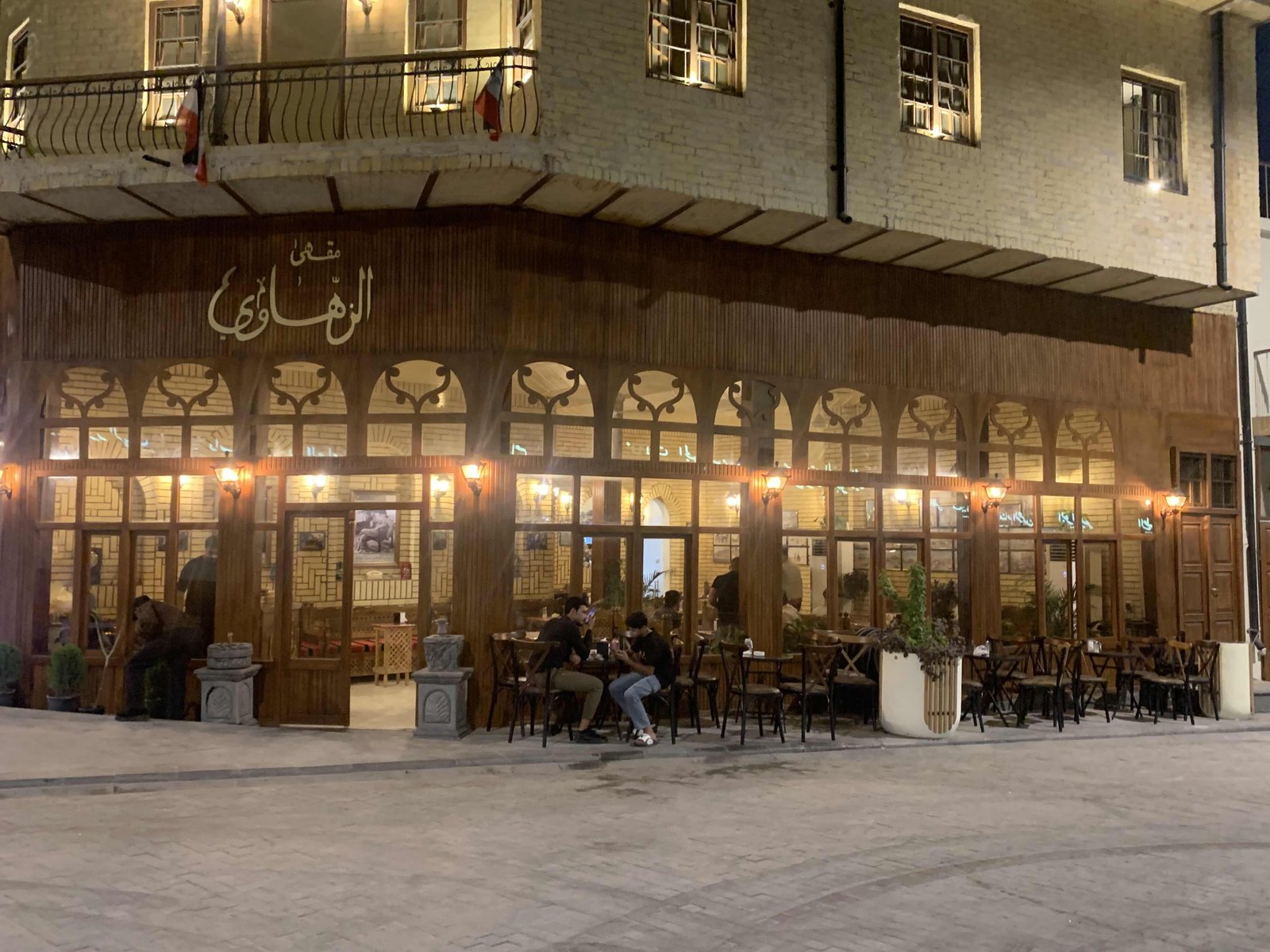
Two cafés anchor this end of the walk and both are documented rather than invented. Shabandar Café sits at the Tigris end of Mutanabbi in a building from 1904 and has operated as a coffee house since 1917. On Rasheed Street itself, the Umm Kulthoum Café has kept trading straight through the restoration works; its owner, known as Abu Marwan, has run it since 1989. And on the lane that links Rasheed Street to Mutanabbi, a restored heritage house now operates as a café run by Ali Shakir, in his early thirties — a small sign that the restoration is producing new businesses and not only new paint.
Chai is the default order and it is served hot, sweet and small. If you want to eat rather than drink, the food on and around this walk is street food — kebab, samoon bread, falafel, the fried fish sandwiches — and our guide to Iraqi food and what to order covers the vocabulary you need to point at things confidently.
Stops 10–11: al-Qishla and the river
Al-Qishla is where Mutanabbi Street meets the Tigris: an Ottoman military compound on the Rusafa bank with a 23-metre clock tower completed under the governor Midhat Pasha in 1868, its clock a gift from King George V. It reopened to the public in 2012 and for a decade it was the most likeable public space in central Baghdad — a lawn where poets read aloud, artists set up easels and families sat on the grass on Friday mornings.
It is shut. On 9 June 2026 the Iraqi Publishers and Booksellers Association issued a statement demanding the building be reopened, noting it had been closed to the public for more than a year and a half, and called a peaceful protest for 10:30 the following Friday morning outside the building. Their statement also warned against proposals to turn al-Qishla into a predominantly commercial space. The Friday gatherings in the grounds are genuinely documented, and the figure of 3,000 visitors every Friday that circulates online dates from 2022 — it describes the place as it was, not as it is. We could not confirm what, if any, part of the site is accessible in 2026. Assume the building is not, look at the clock tower from outside, and treat anything more as a bonus.
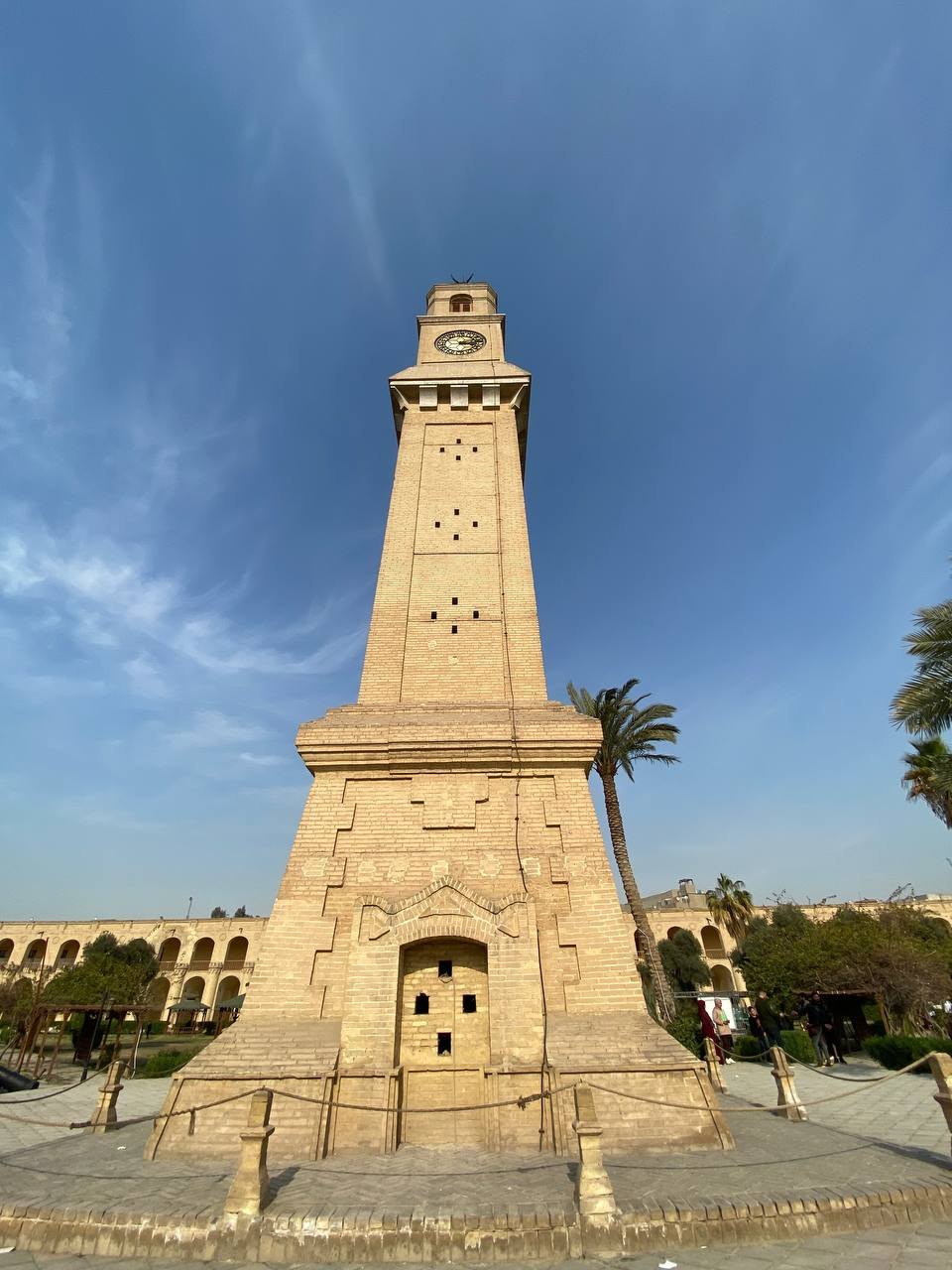
From al-Qishla, take a taxi rather than walking to Abu Nuwas Street, because the direct route runs through the phase 2 works. Abu Nuwas is the Tigris corniche, the strip of riverside gardens and grills where Baghdadis eat masgouf — carp split, staked around a fire of tamarisk wood and cooked upright for an hour or more. The first two phases of the corniche redevelopment are complete and phase 3 is continuing, so expect gardens, sports pitches and a central plaza alongside older stretches.
Note what that means. Rasheed Street phase 2 ends at the start of Abu Nuwas. The walk from Rasheed Street to the Tigris is literally the thing the government is currently building. Come back in a few years and this will be one continuous pedestrian route. We are not going to name a masgouf restaurant, quote a price or print an opening hour, because we could not confirm any of them; go at dusk, look for the smoke, and ask what the fish costs before it goes on the fire.
Can you actually walk old Baghdad on your own?
Yes, and there is a dated source for it rather than a vibe. Joan Torres of Against the Compass, who runs tours in Iraq, wrote on a page last updated 23 July 2026 that he was “always able to walk around freely with my camera without anyone ever asking questions or stopping me”, and that “you can walk around all by yourself or go to dinner alone”. His characterisation of checkpoints is the useful one: they are “a challenge, not really a danger”.
What that means practically:
- Carry your passport. Photo identification is a legal requirement in Iraq and the old city has checkpoints on its approaches. A photocopy is not a substitute at a checkpoint.
- Expect variation. Some checkpoints wave a foreigner through with a nod. Others look at the passport, ask where you are going, and glance in a bag. Our article on what happens at Iraqi checkpoints walks through the sequence.
- Americans are held longer. Not aggressively, but expect more questions and more phone calls up the chain.
- Ignore the Green Zone comparison. Diplomats and contractors are confined to the International Zone by their employers’ rules. That is their constraint, not yours, and it says nothing about whether Rasheed Street is walkable.
None of that changes the official position, which you should know before you go. The FCDO advises against all but essential travel to Baghdad province, and against all travel to Sadr City specifically. The US State Department has Iraq at Level 4, Do Not Travel, reissued on 2 March 2026. The consequence people most often miss: travelling against FCDO advice invalidates most travel insurance policies, which is a financial fact rather than a moral one, and our guide to travel insurance for Iraq explains what specialist cover involves. The current wording of both advisories, and how they changed when the FCDO regionalised its Iraq advice on 22 July 2026, is in our Iraq travel advisory tracker. For the crime-and-security picture in the capital specifically, see is Baghdad safe to visit.
One gap we will not paper over. We could not find a single dated, first-hand account of a woman walking old Baghdad alone. There is plenty of general reporting on women travelling in Iraq, and there are group accounts, but nothing specific and recent enough for us to give you a verdict on this route. We are not going to invent one. Our solo female travel in Iraq guide sets out what is actually documented, and solo travel in Iraq covers the general independent-traveller case.
Photography in old Baghdad, practically
Ordinary tourist photography needs no permit. Professional or documentary shooting — tripods, crews, anything that looks like a production — needs permission from the State Board of Antiquities and Heritage, and you should arrange it in advance rather than on the day.
What you never point a camera at: checkpoints, military bases, security personnel, bridges and government buildings. Treat that as prudent practice rather than a citable statute. The line that circulates widely, that the FCDO says photographing government buildings is illegal, does not appear on the current FCDO page. That does not make it a good idea. A soldier who does not want his photograph taken will not be adjudicating the fine print.
Everything else on this route is fair game and old Baghdad is unusually good to photograph: the shade-and-light of the arcades in early morning, the copper in Safafeer, the brick of the Mustansiriya portal, the red tram against the restored facades. People are generally relaxed about being asked, and asking is the whole trick. Our guide to photography spots in Iraq has more on where and when the light works.
When to walk it: heat, day of the week, time of day
Baghdad’s July mean maximum is 44.0°C and there is effectively no rain from June to September. In practice the 50°C window runs from mid-June to mid-August. On a day like that a two-hour walk is not a pleasant activity, it is a medical decision.
| Period | Walking conditions | Recommended start |
|---|---|---|
| Late Oct – early Apr | Comfortable. The best months by a distance | Any time from 09:00 |
| April, October | Warm but workable | 08:00, finish by 13:00 |
| May, September | Hot; the arcades matter | 07:00–07:30, done by noon |
| June – August | Extreme. 44°C+ routine | First light, or evening only |
Friday is the day. Mutanabbi Street peaks on Friday morning, the Qishla gardens’ poetry-and-art scene is a Friday tradition, and the whole quarter has a different atmosphere. The trade-off is that some shops on Rasheed Street proper are shut on Friday and Saturday, so if you want the coppersmiths hammering, come on a weekday. Doing both is not unreasonable — the walk is short.
In summer, the evening version works surprisingly well. The restored section is lit, the tram runs into the night, and Al Jazeera’s reporting from March 2026 describes street life continuing late. Our guide to the best time to visit Iraq has the month-by-month picture, and what to pack for Iraq covers the hat-and-water end of it.
Getting to the start, and getting away
Al-Midan Square is the drop-off point. Tell a driver “Sahat al-Midan, Shari al-Rasheed” and you will not need to explain further. Coming out, al-Qishla or Mutanabbi Street are equally well known.
Ride-hailing works in Baghdad. Careem operates in the city. Lezzoo Taxi, the Iraqi app, passed 200,000 rides in under three months as of September 2025. We deliberately are not listing several other app names that circulate online because we could not confirm they operate in Baghdad — that is the sort of detail that gets copied between blogs without anyone checking. Street taxis are everywhere and negotiated; agree the fare before you get in.
You will want a working data connection for the apps, which means a local SIM rather than roaming — see getting an Iraqi SIM card. For the wider question of moving between cities, our guide to getting around Iraq covers shared taxis, the GMC system and the trains.
Two things that are not on this walk, despite appearing on almost every “things to do in Baghdad” list next to Rasheed Street:
- Al-Shaheed Monument — the split turquoise dome — is on the Rusafa side, out near the Army Canal. It is a drive, and its visitor access in 2026 is unconfirmed and reportedly often closed.
- The Victory Arch, the crossed swords, is on the Karkh side, west of the river, inside the Green Zone. Access is restricted; most visitors photograph it from a car. It is not a walking-tour stop and it is not even on the same bank.
Bab al-Wastani, the only surviving gate of the Abbasid city wall, is a genuine old-Baghdad site and worth seeing — but it sits off the Muhammad al-Qassim Highway and is not walkable from Rasheed Street. Add it to a driving half-day, not to this route. If you are building a longer stay, our Iraq itinerary planner and the list of things to do in Iraq will help you place it.
Practical notes for the day
- Cash. The street rate is around 1,500 dinars to the dollar; the official Central Bank peg is 1,320. Bring dinars in small notes. Dollars change everywhere but nobody at a copper stall wants to break a hundred.
- Shoes. The restored section is smooth. The alleys are not, and there is broken paving and open cabling around the phase 2 works.
- Water. Carry more than you think. Tap water is not reliably potable anywhere in Iraq.
- Alcohol. Banned federally. Do not go looking for it in old Baghdad; the rules and the penalties are set out in our guide to Iraqi laws travellers should know.
- Entry paperwork. Federal Iraq requires an e-visa for most nationalities since visa on arrival was suspended in March 2025. Start with Iraq’s entry requirements and the Iraq e-visa process.
- Where to sleep. Most visitors base themselves in Karrada or Jadriya and taxi in. See where to stay in Iraq.
What we could not confirm
The honest list, because on this subject the gaps matter as much as the facts:
- Tram fares and timetable. No source. Anyone printing a figure is guessing.
- Tram capacity. The manufacturer’s spec is quoted at 60 passengers; Al Jazeera described carriages seating 24. Both are published; we cannot reconcile them.
- Al-Mustansiriya Madrasa’s opening hours and entry fee. Nothing official exists. The widely-copied “Sunday–Thursday 9–5” traces to AI aggregator pages.
- Al-Qishla’s grounds. The building is closed. Whether the gardens are accessible at all in 2026, we could not establish.
- Khan Murjan’s current function. Whether it serves food today is unconfirmed. We are not calling it a restaurant.
- Haydar-Khana Mosque’s foundation date. 1819 is quoted everywhere and confirmed nowhere we could check.
- Abu Nuwas restaurants. The masgouf strip exists. No specific restaurant, price or opening hour is confirmed, so we name none.
- Women’s solo experience on this specific route. No dated first-hand account exists.
- Rasheed Street’s length. One architect quoted in the Iraqi press gives the original street as roughly 3 km; the Prime Minister’s office describes phase 2 alone as around 3.5 km. These do not agree and we have not seen them reconciled.
- Phase 2’s southern terminus. Described in different Iraqi outlets as the start of Abu Nuwas Street and as the Italian Hospital.
Old Baghdad: your questions, answered
These come from the subheads competing guides actually use — airport transfers, opening hours, entrance fees, whether the walk is doable — rather than from a search box.
How long does the old Baghdad walking tour take?
Fifteen minutes of pure walking for the restored 650 metres, and about 1.5 km in total once you add Mutanabbi Street and al-Qishla. Budget two to three hours if you want to stop for chai, look properly at the Mustansiriya and browse books. Half a day if you add Abu Nuwas at the end.
Do I need a guide to walk old Baghdad?
No. Foreign travellers report walking this route independently without difficulty, and there is no Iraqi legal requirement to use a licensed operator in Baghdad. A guide adds context and smooths checkpoint conversations, and some people prefer that; see tours in Iraq for what an operator actually provides. But the walk itself does not require one.
What are the opening hours and entrance fees on this route?
Almost nothing on this walk has published hours or a published fee, and that is a real answer rather than an evasion. The mosques are working mosques. Mutanabbi Street and Souk al-Safafeer are streets. The Mustansiriya has no verifiable published hours or ticket price. Al-Qishla, the Baghdadi Museum and the Iraq Museum are closed. Assume free, assume daylight, and assume nothing is guaranteed.
How do I get from Baghdad airport to old Baghdad?
Baghdad International is on the west side of the city; the old quarter is on the east bank, across the Tigris. The airport road runs through several security stages and the trip takes longer than the distance suggests. Airport taxis operate from a controlled rank, and ride-hailing apps work in the city. Do not schedule the walk for the same morning you land.
Is Rasheed Street finished?
Half of it. The 650 metres from al-Midan Square to al-Rusafi Square was inaugurated on 11 September 2025 and is finished and open. The 3.5 km beyond al-Rusafi, covering 183 buildings, was launched the same evening and was still in progress in 2026. Do not plan on walking the southern half.
Can I ride the Rasheed Street tram?
It has been carrying passengers since March 2026 and Al Jazeera reported families riding it over Eid that month, so in principle yes. The line runs al-Midan to al-Rusafi. We could not confirm fares or a schedule from any source, so ask at the al-Midan end rather than trusting a number you read online.
Is old Baghdad safe to walk?
The old quarter is a busy commercial district and travellers who have walked it describe checkpoints as an administrative nuisance rather than a threat. That sits alongside an FCDO position of all but essential travel to Baghdad province and a US Level 4 advisory, and those two things are both true at once. Read the advisories, understand that travelling against them voids your insurance, and make your own call.
Which day of the week is best?
Friday morning for atmosphere — the book market and the Qishla scene are both Friday institutions. A weekday if you specifically want the coppersmiths working and the Rasheed Street shops open. Start early whichever you choose.
What else is near old Baghdad?
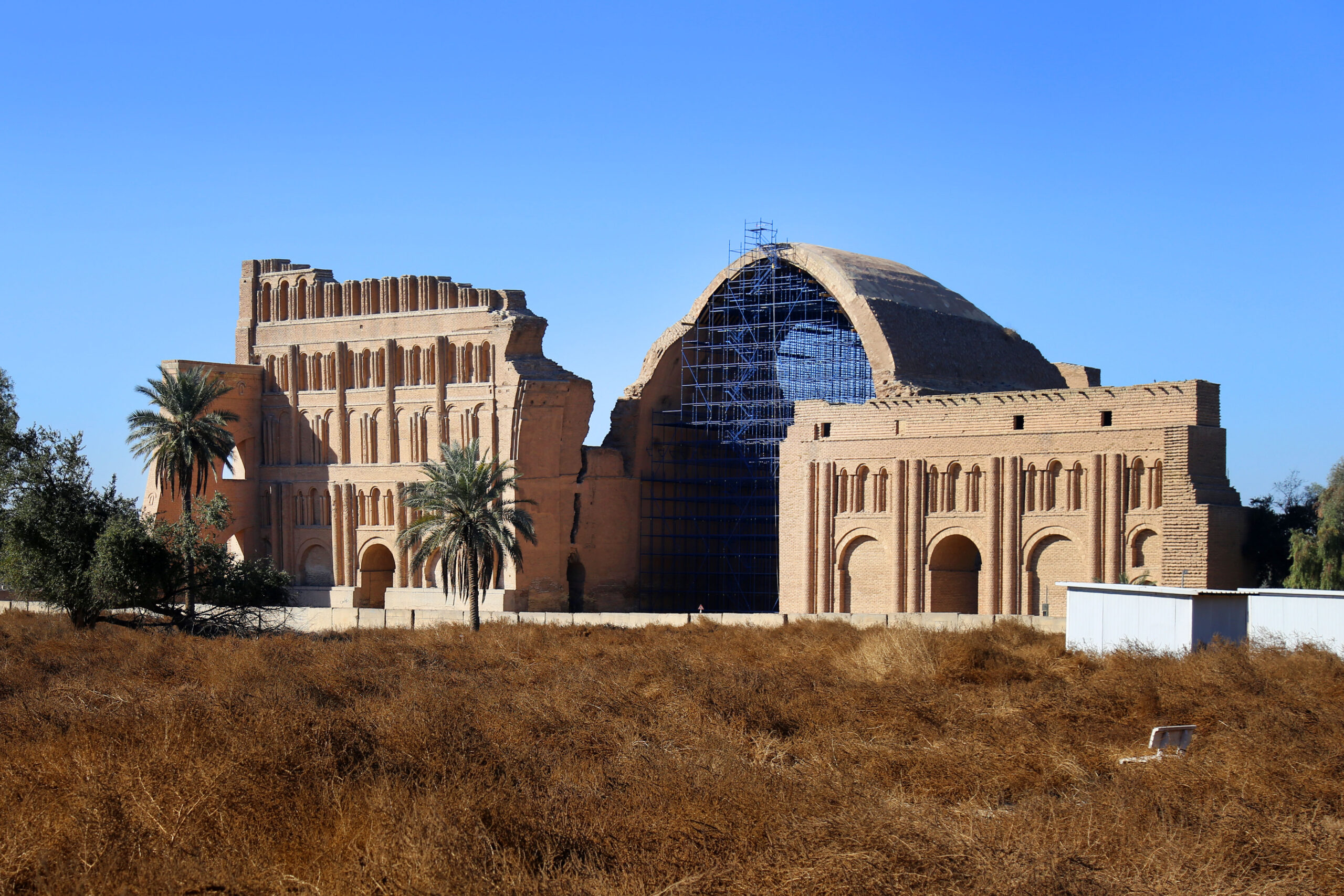
Kadhimiya’s golden-domed shrine is across the river to the northwest and is a separate half-day. Ctesiphon’s great arch is about an hour south. Both appear in our roundups of the best places to visit in Iraq and Iraq’s lesser-known sites.
Final thoughts
Old Baghdad is in an odd, transitional state and it is worth understanding that before you arrive. One half of its main street has been rebuilt to a standard the city has not seen in decades, complete with a tram that Baghdadis ride for fun. The other half is scaffolding. The book market is trading and the booksellers are telling reporters they sell five copies where they once sold fifty. The clock tower everyone photographs stands over a building that has been locked for a year and a half while the people who used it protest outside. That is not a tidy story and any page that presents it as one is not telling you the truth.
What makes the walk worth doing is exactly that unresolved quality. You are not looking at a preserved old town. You are looking at a working city arguing with itself in public about what to keep — and doing it in brick, in the middle of a region that has had a hard eighteen months. Go in the cool months, go on a Friday morning, and give it longer than the distance suggests.
When you have done it, the natural next steps are outward: the other Iraqi cities worth walking, the groundwork in our practical tips for travelling in Iraq, and the country as a whole in our Iraq travel guide.
Photo credits
Rasheed Street after restoration — Thegiantofgiants, CC0, via Wikimedia Commons. Al-Qishla clock tower — Mohammed Harith Khalil, CC BY-SA 4.0, via Wikimedia Commons. Suq al-Ghazl minaret, al-Khulafa Mosque — Usamasaad, CC BY-SA 4.0, via Wikimedia Commons. Khan Murjan interior — David Stanley, CC BY 2.0, via Wikimedia Commons. Coppersmith in Souk al-Safafeer — Ash.sharaf93, CC BY-SA 4.0, via Wikimedia Commons. Al-Zahawi Coffeehouse, Rasheed Street — Ayham4002, CC0, via Wikimedia Commons.