Last updated: August 2026. Re-checked on 15 August 2026 against 964media’s Arabic and English archives, Shafaq News, UNESCO’s tentative-list file for Rusafa, and the FCDO’s 22 July 2026 Iraq advice. Two of the markets described in the present tense on most English travel pages no longer work the way those pages say.
Search for a baghdad bazaar in English and you will mostly find a Magic: The Gathering card. Search in Arabic and you find something else entirely: a run of markets in central Rusafa that have been trading, in some form, since the Abbasids laid the city out, and that have been rebuilt, bombed, renovated, fined, bulldozed and moved into the small hours within the last eighteen months. The markets are one thread of the city we unpack in our guide to Baghdad.
The short version: Baghdad’s traditional markets are concentrated in one walkable pocket of central Rusafa either side of al-Rasheed Street, they are cash-only, no published opening hours exist for any of them, and Friday is the day the city’s market life peaks. Shorja is the big wholesale bazaar. Souk al-Safafeer is the coppersmiths’ lane, much reduced. Souk al-Saray and Mutanabbi Street are the paper and book trade. Souk al-Ghazl is the Friday animal market. Souk Mureidi, the one you may have read about, was demolished in August 2025.
This guide covers each of those markets in turn, plus the gold trade on al-Nahr Street, what is genuinely worth buying, how money works when there are no ATMs, and the one legal trap that could turn a souvenir into a criminal charge. It is meant to be the practical answer to “what is shopping in Baghdad actually like”, which is the question the English-language internet has not been answering. Where a fact could not be sourced — and on this subject a great deal could not — it is labelled rather than guessed.
The short answer
Every Baghdad bazaar and souk in this guide, with its status as of mid-August 2026.
| Market | What it is, as of mid-August 2026 |
|---|---|
| Shorja (الشورجة) | Baghdad’s largest and oldest market. Wholesale food, spices, textiles, household goods, electronics. Working-class prices. No published hours. |
| Souk al-Safafeer (الصفافير) | The copper market off al-Rasheed Street. Last published count of working coppersmiths: ten, in 2018. Nobody has counted since. |
| Souk al-Saray (السراي) | Rebuilt and reopened mid-June 2024. Books, paper, stationery, school supplies. Roughly 300 m long, three metres wide. |
| Mutanabbi Street | Car-free book street, just under 1 km. Trades daily, fullest on Friday. Booksellers are being priced into the side alleys. |
| Souk al-Ghazl (الغزل) | Friday animal and bird market. Since February 2026 much of the trade has shifted into the night to dodge municipal crackdowns. |
| Souk Mureidi (مريدي) | Demolished in August 2025. Being rebuilt as 500 shops on 8 dunams. In Sadr City, which the FCDO rates “against all travel”. |
| Al-Nahr Street | Where Baghdad’s gold is priced and traded. 21-carat is the default; the trading unit is the 5-gram mithqal. |
There is no single Baghdad bazaar: where the markets are and how they connect
The single most useful orientation sentence anyone has written about this is ArrivalGuides’: most of Baghdad’s traditional marketplaces sit off al-Rasheed Street, in the area between the Shuhada and Ahrar bridges. Get that into your head and the rest of the geography falls into place.
Al-Rasheed Street is the spine — the early-twentieth-century commercial street that runs down the Rusafa bank of the Tigris, lined with colonnades and shanasheel balconies in various states of collapse and repair. Souk al-Safafeer branches west off it near Bab al-Agha, opposite the Murjan Mosque, and runs through toward the Mustansiriya Madrasa. Shorja lies on the other side of Rasheed Street, running back toward al-Nahr Street, which is where the gold is. Mutanabbi Street runs off Rasheed too, car-free, ending at the poet’s statue above the river, with the Qishla’s entrance off it. Souk al-Saray starts at Mutanabbi’s far end, opposite the al-Sarai Mosque. Souk al-Ghazl sits near the Caliphs’ Mosque, in the same Shorja pocket.
All of it is walkable, one market to the next, in an hour of unhurried wandering — which is the point that no competitor page makes. You do not choose between these markets. You walk through several of them without noticing where one ends. If you are building a broader itinerary, the same quarter holds most of what is worth seeing in Baghdad’s old city, and our guide to Iraq’s cities shows how the capital’s markets compare with Erbil’s and Basra’s.
A useful landmark inside Shorja itself: the Roman Catholic Latin Cathedral of St Joseph stands inside the marketplace. If you are lost among the stalls, that is a fixed point to steer by, and it is a reminder that this quarter has never been religiously uniform.
Shorja market: the oldest and largest bazaar in Baghdad
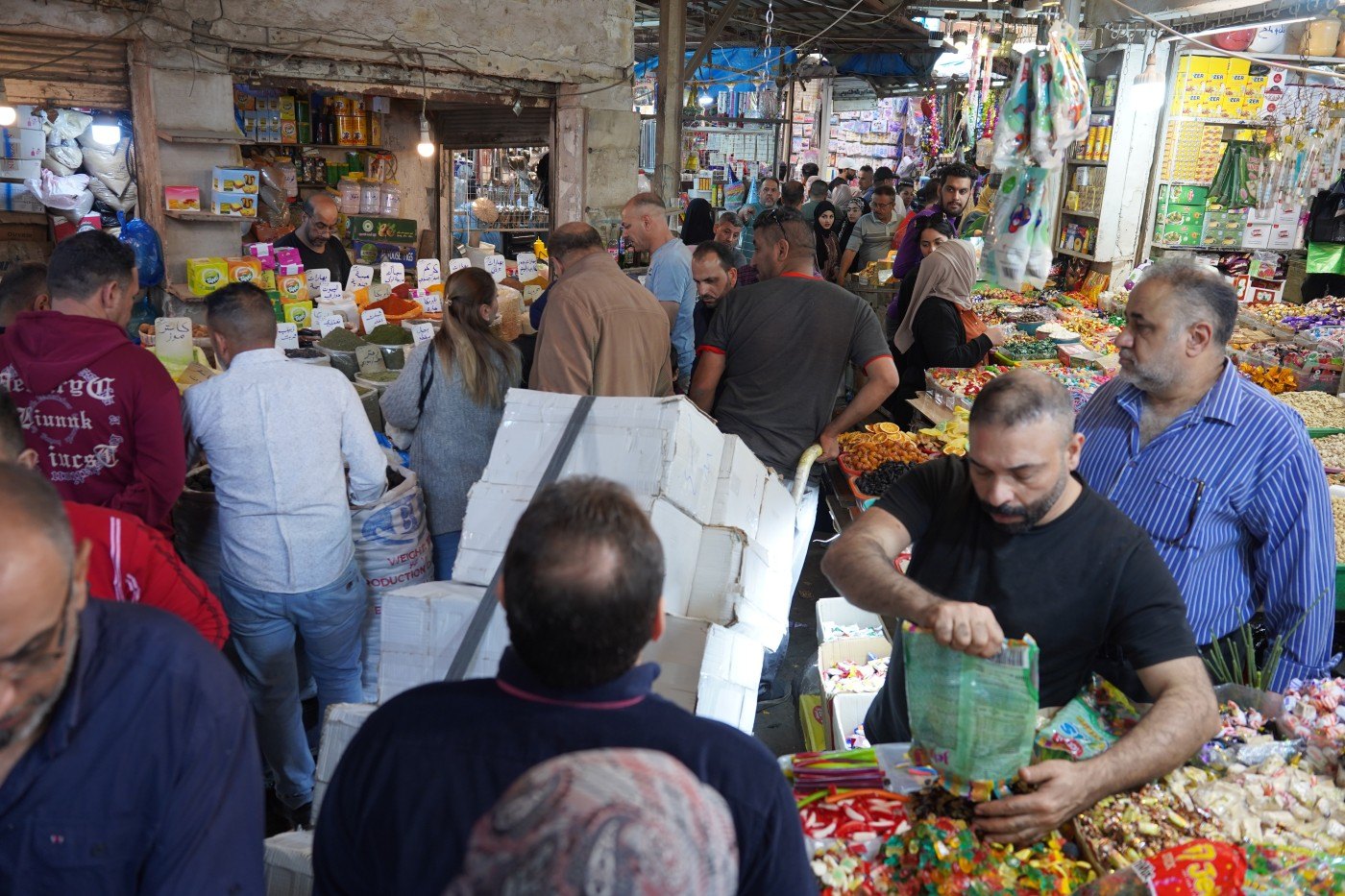
Shorja is the answer to “where is the big market”. It sits in Rusafa, downtown, next to Bab al-Sharqi market, and it is a wholesale market before it is anything else — sugar, tea, grains, spices, sweets, textiles, household goods, electronics, religious objects. Al-Monitor described it in April 2015 as a barometer of Iraq’s political and economic condition, which is still the best one-line description of the place.
The name is Persian: Shurchah, “salty well”, from the merchants who established it. The adjacent quarter, Ab-Khana, is Persian too — “cistern”. The standard history, traceable to that same 2015 Al-Monitor piece, puts the market’s origin at around AD 750, first as Souk al-Rayahin and then as Souk al-Attarin, the perfumers’ and herbalists’ market. Treat that as a 2015 secondary source rather than a settled archaeological fact.
The Jewish quarter that used to be here
Shorja was the historic Jewish quarter of Baghdad before the Farhud pogrom of 1941. The area east of Hennouni Street was Jewish, with synagogues, workshops and businesses; most of the population left in 1950 and again in 1968. You will not find that on page one of any English search result about Baghdad markets, and it is the single richest layer of history in the quarter. Nothing marks it on the ground. If you are interested in how deep Iraq’s layers run, our guide to ancient Mesopotamia covers the older strata.
What Shorja is actually like to shop in
It is a price market, not a souvenir market. A vendor told 964media in December 2024 that “Bab Al-Sharji and Al-Shorja are known as markets for the working class”, and the seasonal trade bears that out — that December, Santa costumes started at 2,000 dinars and decorative trees ran up to 20,000. Nobody comes here for a curated Iraqi keepsake. They come because it is cheap, and because street stalls undercut the shops that have to carry overheads.
It is also dense. Baghdad has more than a million tuk-tuks, only around 100,000 of them registered, and 964media named al-Shorja as one of the three commercial districts worst snarled by them. Expect noise, expect to be pushed along, expect to give way to handcarts.
Fires and the civil-defence crackdown
This is the practical thing to know, and no travel page carries it. Shorja burns. Civil Defense put out a large fire in a deteriorated multi-storey building used for clothing storage in central Shorja on 12 June 2025, with no injuries; another Shorja fire, in a five-storey building near Souk al-Safafeer, drew a criminal-forensic investigation on 16 October 2025. Arabic coverage references fires in 2014, 2015, 2019, 2023, 2024 and 2025. The honest framing is “repeatedly, most years since 2003” rather than a false precise list. As of 15 August 2026 the most recent verifiable major Shorja fire was October 2025.
What followed matters more for a visitor. After the Kut supermarket fire in Wasit killed 61 people, Rusafa authorities shut down around 700 commercial projects in Shorja and the surrounding area on 27 July 2025 for failing civil-defence standards — closures of up to 15 days, ordered under Civil Defense Law No. 4 of 2014. Baghdad police closed further buildings on 2 August 2025. By 6 June 2026, Civil Defense said it had closed 11,000 non-compliant buildings nationally and was asking parliament to raise fines tenfold.
Practically: parts of Shorja may be shuttered on any given day by civil-defence order, and that is routine administration, not a sign of trouble. Do not read a row of closed shutters as a security signal.
The bombings, and one cautionary story about visitors
Shorja was a bombing target during the worst years. The 12 February 2007 Baghdad bombings killed 76 people and injured 155 to 180. A suicide car bomb hit near the marketplace on 26 March 2007. That is history, not a current risk read, and it should be written as history. What is worth keeping is what happened on 1 April 2007, when a visiting American congressional delegation toured Shorja and described it as feeling like a normal summer market back home. The New York Times reported days later that the market had been locked down with heavy security for the visit, and merchants said the same. Outsiders reporting on Baghdad markets have a long record of seeing the version arranged for them. Be sceptical of anyone’s snapshot, including ours.
Souk al-Safafeer: the Baghdad copper market, and how many smiths are left
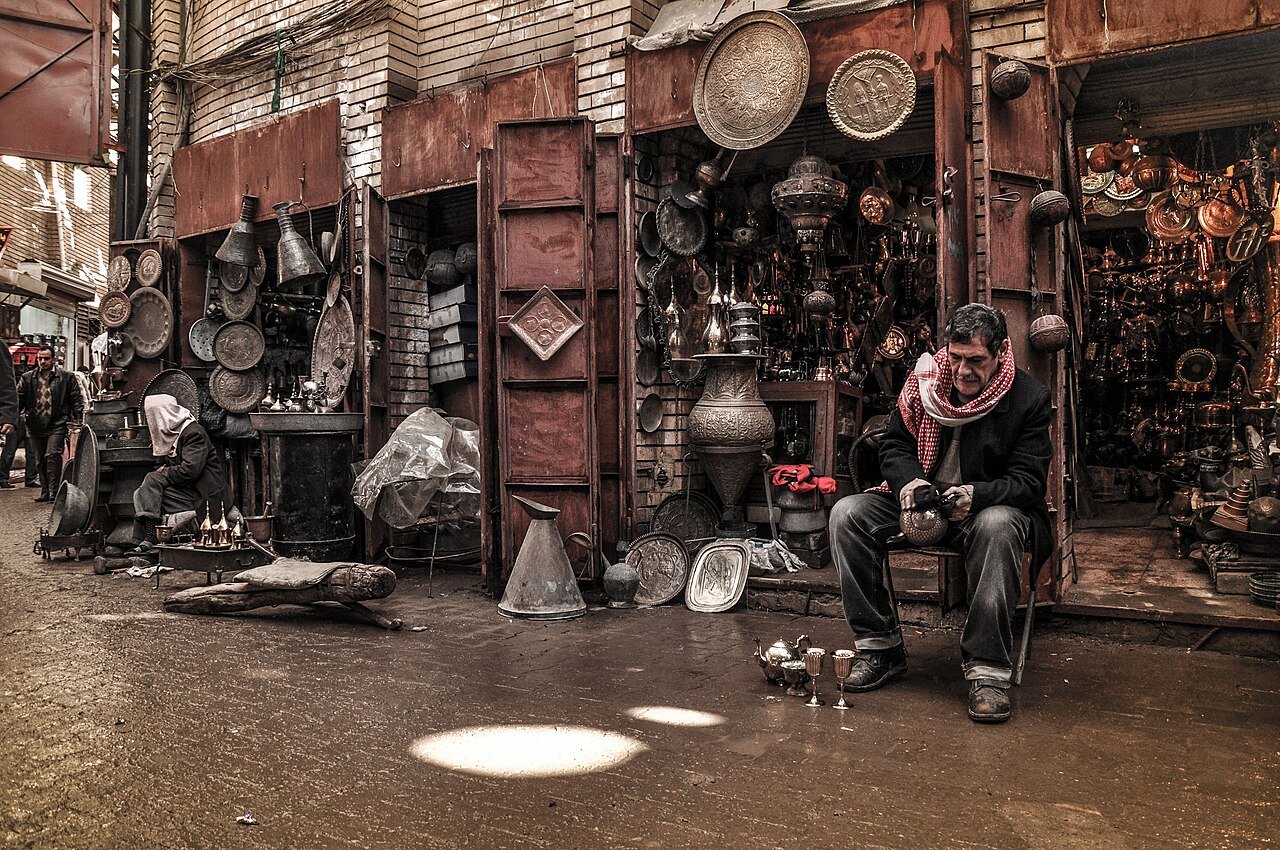
The coppersmiths’ market — “the market of the yellow copper” — branches off al-Rasheed Street on its western side and connects through to the Mustansiriya Madrasa. Arabic sources place it more precisely in the Bab al-Agha lanes, opposite the Murjan Mosque. It runs about 500 metres and contains its own small heritage mosque, al-Safareen, roughly 250 square metres, built by a philanthropist in the mid-eighteenth century.
Its founding date depends on which source you take. Wikipedia’s lead calls it Abbasid, active ever since. Jamil Abu Tabikh’s Baghdad memoirs date the current market to around 1600–1618, in the Ottoman period. The reconcilable version is: Abbasid in lineage, Ottoman in its present fabric.
The coppersmith count: everything published, with its date
This is the trap on this subject, so here is the whole evidence base laid out. There is no 2025 or 2026 count of working coppersmiths in Souk al-Safafeer. Any page telling you how many are left “today” is fabricating a number.
| Figure | What it measures, and when |
|---|---|
| ~200 shops | Shops in the market, undated baseline — Rudaw Arabic, 2018 |
| 68 coppersmiths | Working coppersmiths before the 2003 invasion — Al Jazeera English, 7 August 2018 |
| 10 coppersmiths | Still working as of 2018 — Al Jazeera English, 7 August 2018 |
| ~90% of shops | Coppersmith shops converted to fabric stalls — same source, 2018 |
| “Only a handful” | Remaining traders; the hammering has faded — UN in Iraq feature, February 2018 |
Why the collapse? The remaining smiths blame government neglect and the absence of state support above everything else. Then: the collapse in customers’ purchasing power; cheap Indian and Chinese imitation copperware flooding the market; owners selling or renting out their shops. Coalition troops during the war years bought out most of the genuine old stock, and fake “Iraqi antiques” started appearing to fill the gap — which matters when you get to the antiquities section below.
There is a legal footnote worth knowing. Under Saddam Hussein, a law designated any Iraqi building or establishment more than 100 years old as heritage to be preserved, and al-Maidan Square, al-Rasheed Street and Souk al-Safafeer were all on that list. That law was abolished after 2003.
Is the hammering still there?
The souk was known for the beat of hammers echoing down it. The UN’s own 2018 feature says the sound of hammers striking copper sheets and trays has faded. The honest line is: quieter than it was, and getting quieter, but not silent. Come in the morning if you want to hear anything at all.
One more correction, because it circulates: no Baghdad souk holds any UNESCO status. Iraq submitted the “Historical Features of the Tigris River in Baghdad Rusafa” to the World Heritage Tentative List on 28 March 2014 (Ref. 5880), and the listed components are monuments — the Mustansiriya Madrasa, the Asifiyah and Wazir mosques, the old Saray complex including al-Qishla and its clock tower, Bait al-Hikma, the Abbasid Palace. The souks sit inside or beside that zone. They are not themselves inscribed, and a tentative listing is not an inscription in any case. Our guide to Iraq’s UNESCO World Heritage sites sets out what actually is listed.
Souk al-Saray and Mutanabbi Street: books, paper and a trade losing ground
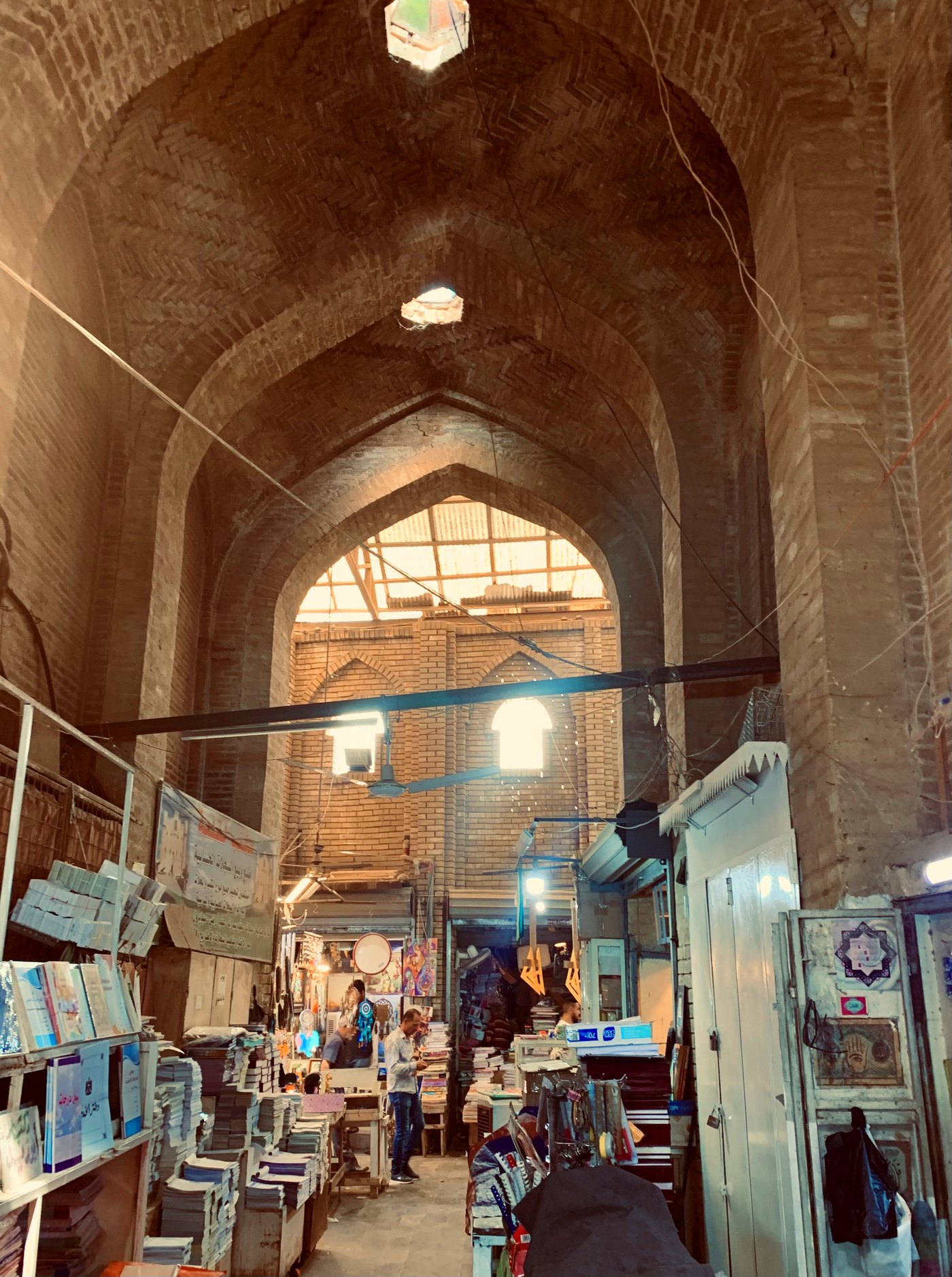
Souk al-Saray is effectively an extension of Mutanabbi Street. Its entrance is at the far end of the street, opposite the al-Sarai Mosque, which was built in 1660 at the same time as the souk. It is not more than 300 metres long and the pedestrian way is not more than three metres wide. Historically it was the natural-leather market; today it trades notebooks, paper, school books, stationery, academic material and crafts.
The rebuild is finished. This gets written wrong constantly, because the “Baghdad Pulse” programme has three stages and English coverage collapses them into one. Stage one was Mutanabbi Street, reopened December 2021. Stage two was the Souk al-Saray axis, opened mid-June 2024. Stage three is al-Rasheed Street itself: works launched 10 February 2025, the al-Midan to al-Rusafi section of roughly 650 metres and 70-odd buildings inaugurated on the evening of 11 September 2025, and phase two — al-Rusafi to Abu Nuwas, about 3.5 km and 183 buildings — still under way as of 9 May 2026. A retro battery tram built by the Turkish maker Garatren first ran on Rasheed Street in early March 2026.
So: Mutanabbi and Saray are open and done. Rasheed Street is the live building site, and if you go in 2026 that is where you will meet hoardings, dust and diverted traffic.
What the rebuild did to the booksellers
Here is the part that reads like a success story and isn’t. Shafaq News reported on 10 May 2025 that the Saray redevelopment, initially seen as a revitalisation effort, relocated several major literary outlets into a single building tucked away from the street’s foot traffic. Visitor numbers dropped. So did sales.
On Mutanabbi Street itself, the same report sets out the economics plainly. Rents along the main road run 2 to 3 million Iraqi dinars a month; many booksellers have moved into alley shops — the qasariyyas — where rent averages 350,000 dinars. At mid-August 2026 street rates that is roughly $1,300–1,950 against about $230, though the conversion depends heavily on which exchange rate you use. Approaching from al-Rusafi Square you now meet toy stalls and stationery booths before you see a single bookshelf. Publisher Sattar Mohsen Ali, who has worked the street for decades, put it to Shafaq like this: “The street’s original identity was rooted in bookstores. Pens and printers were always secondary. But today, stationery sells better.” And: “We’re losing a book vendor every month.”
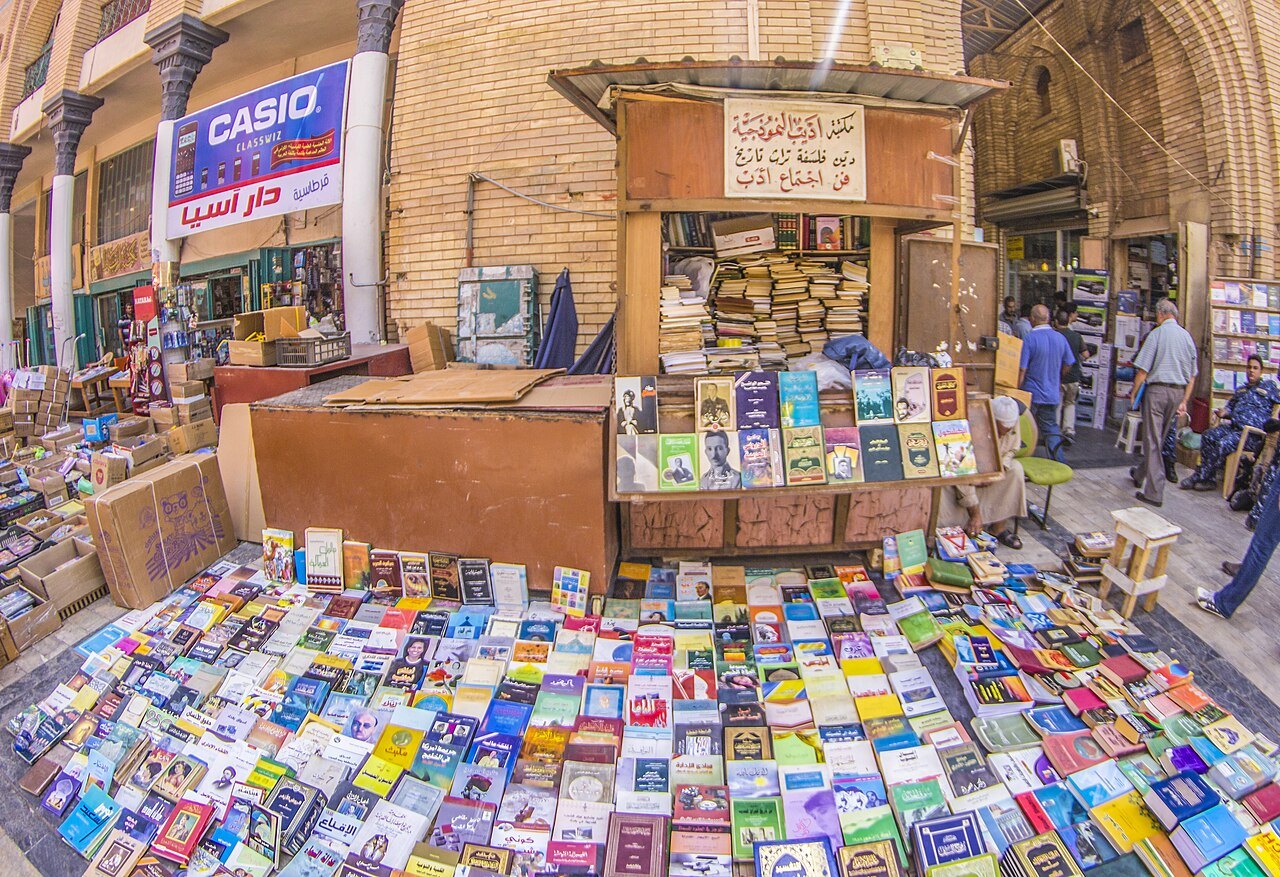
Rampant piracy and unchecked photocopying have deepened it. Others have pivoted to school supplies and office tools, or closed. A manager of one of the surviving literary outlets told Shafaq: “We had to adapt. Now we sell printers, backpacks — whatever helps us pay rent.” A reader who has used the street for thirty years said it now “feels like a regular market”.
None of this means don’t go. It means go knowing that what you are seeing is a trade in retreat rather than a heritage attraction in good health, and that the bookshops are down the alleys, not on the frontage. Our dedicated guide to Mutanabbi Street goes further into the street itself.
The street, briefly
Mutanabbi Street is just under a kilometre, narrow and car-free, beginning at an arch carrying the poet’s verses and ending at the statue of al-Mutanabbi looking over the Tigris, sculpted by Mohammed Ghani Hikmat in 1977. It was formally inaugurated as a street by King Faisal I in 1932, though the book trade there is far older. It is the source of the saying “Cairo writes, Beirut publishes, and Baghdad reads.”
On 5 March 2007 a bomb tore through it; the New York Times reported 26 killed, and the blast killed five of the Shabandar Café owner’s children. Prime Minister Nouri al-Maliki officially reopened the street on 18 December 2008. The Shabandar itself, open since 1917, is still trading — the owner, Mohammed al-Khashali, died on 11 January 2025 aged 93, and his son Omar now runs it. It is on our Baghdad food guide along with the rest of the city’s tea-and-hookah culture.
Is Friday the book day?
Half-right, and worth being precise about. We could not source any statement that Mutanabbi’s book market is officially or exclusively a Friday institution, and no opening hours are published. What is safe to say: the street trades daily, Friday is the traditional gathering day, and Friday is when it is fullest — because the Iraqi weekend is Friday–Saturday and the working week runs Sunday to Thursday. Wikipedia describes the street as crowded from early morning until late at night, which cuts against the “Friday-only” framing entirely.
Al-Qishla, the Ottoman barracks with the 22-metre clock tower at the end of the street, is a separate question. Our last check found it closed and had been for 18 months as of 9 June 2026. We could find no source confirming a reopening and none confirming continued closure. Assume closed, verify on the ground. The clock, incidentally, was a gift from King George V to the Iraqi government, with the dedication written inside.
Souk al-Ghazl: the Friday market that now works at night
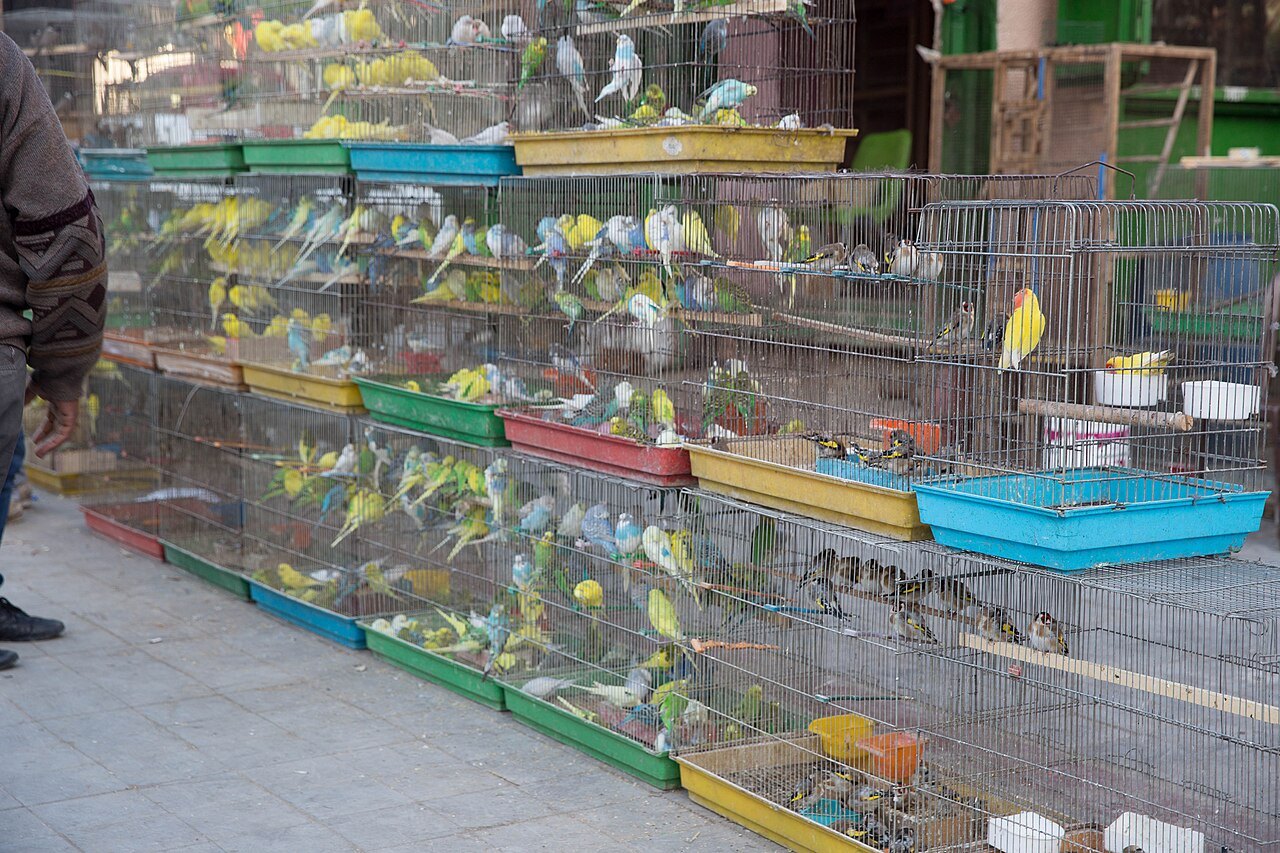
Souk al-Ghazl was the yarn and textile market — that is what the name means — until the 1960s, when new traders moved in and turned it into an animal market. It sits near the Caliphs’ Mosque in the Shorja area, so it is walking distance from everything else in this guide.
Friday is the trading day, and this is the only properly sourced trading day in this entire subject. Xinhua reported on 3 February 2022 that “the Al-Ghazl market is the place to be every Friday for pet lovers in central Baghdad”, and Arabic sources treat it as a weekly market. That is a 2022 source — flagging it because it is four years old and it is still the best we have. No opening hours are published. It is an informal one-day-a-week street market that fills up in the morning.
The 2026 twist
Except that it no longer only fills up in the morning. On 9 February 2026, 964media’s English service ran a story headlined “Baghdad’s Ghazl animal market shifts to nighttime as traders dodge crackdowns”. Four days later its Arabic service ran a piece whose headline translates as “In the dead of night — Souk al-Ghazl is not beaten; it wakes when the government sleeps”, with a deck tying the night trade explicitly to Shorja.
The cause is municipal, and it is named. Arabic coverage carried the phrase “after Mureidi” — municipality crews moved on Souk al-Ghazl to clear the streets in the wake of the Mureidi demolition described below. Traders responded by trading at night.
So the working picture as of mid-August 2026 is: Friday is still the day, but a substantial part of the market has gone nocturnal, and how much of it you see in daylight depends on how recently the municipality has been through. We could not pin the exact date of the al-Falluja TV report or the Azzaman column on the regulation measures, so treat the chronology as 2025–26 rather than a fixed timeline.
What is sold, and what isn’t
Birds are the core trade — parrots, bulbuls, finches, and rare species smuggled in from Brazil and Africa. Also dogs, cats, sheep, goats, fish, and exotics including snakes and monkeys. Small adjacent shops sell dry grains, pulses and herbs.
Two things you may have read that we could not source at all: weapons sales at Souk al-Ghazl — no credible source places them there, and that reputation attaches to Mureidi — and bird-flu or animal-disease closures, for which there is no evidence either. The closure pressure is urban-planning, not veterinary. Do not repeat either claim.
A word on how it feels. This is a live-animal market in a country with no meaningful welfare enforcement, and the wild-bird trade is under some pressure — Dhi Qar authorities released confiscated birds into the marshes and seized hunting gear in December 2025. Some travellers find Ghazl the most memorable thing they see in Baghdad. Others find it upsetting and leave. Both reactions are reasonable, and you should decide before you walk in rather than after.
Souk Mureidi: the market that was bulldozed
Every English travel page describing Baghdad’s markets still writes about Souk Mureidi in the present tense. It was demolished in August 2025.
The timeline comes from 964media’s Arabic archive. On 20 August 2025: “Chaos in Souk Mureidi — more than 2,500 shops face demolition and everyone is watching for the bulldozer”, with a deck calling it the oldest market in Sadr City. On 27 August: “Souk Mureidi resists demolition with fire and bullets — the government begins its hardest task in Sadr City.” The same day, a farewell piece: “Farewell Souk Mureidi, and this is the last picture — a memory of poverty and the sanctions years, and a refuge of the opposition.” On 30 August: “The ‘yellow beast’ keeps tearing out Mureidi’s encroachments — crowds gathered to watch.” On 9 September, a neighbouring Sadr City market, Souk al-Hay, went the same way, with loudspeakers calling “selling today only”.
And then, on 19 July 2026: “A memory of poverty and the sanctions years, in a new guise — Souk Mureidi soon on al-Sadda Street”, with a deck reading 500 shops on 8 dunams. An informal market of more than 2,500 shops is being replaced by a formal one of 500. That is roughly an 80% reduction in shop count, and it tells you what the campaign was for.
Mureidi’s reputation, historically, was knock-offs — so much so that a December 2025 protest slogan in another Baghdad district used “Souk Mureidi” as shorthand for forged paperwork. It was never a casual visitor destination. And Sadr City carries the FCDO’s “advise against all travel” rating, a harder category than the rest of Baghdad province. This is a read-about-it entry, not a go-there one. We include it because the market you may have read about no longer exists, and because that is the clearest possible demonstration of how fast this subject rots.
Gold on al-Nahr Street: how Baghdad prices it
If you want gold, the answer is a street, not a souk, and it is named in every Iraqi price report: al-Nahr Street in Rusafa, adjacent to Shorja. Shafaq News’s daily gold survey is literally headed “Gold prices on Baghdad’s Al-Nahr Street”. Gold clusters around the Kadhimiya shrine and in Karrada are commonly mentioned but we could not source either with a dated citation, so al-Nahr Street is the only one we will name.
Three conventions will confuse you if nobody explains them, and nobody does.
The unit is the mithqal, and in the Iraqi gold trade a mithqal is 5 grams. Shafaq states this inline every time it publishes a price. The classical Islamic mithqal of about 4.25 grams is a historical weight and the Baghdad gold market does not use it. If a price sounds implausible, check which mithqal you are being quoted.
21-carat is the default. 18k and 22k exist, but 21k is the reference against which everything is quoted.
Locally made “Iraqi gold” is priced separately and more cheaply than imported “Gulf”, Turkish or European gold — typically around 30,000 dinars per mithqal less, roughly 3.5%. That is a workmanship-and-origin premium, not a purity difference at the same carat.
| Baghdad, al-Nahr Street — 1 August 2026 | Sell / Buy, IQD per 5 g mithqal |
|---|---|
| 21-carat Gulf, Turkish or European | 866,000 / 862,000 |
| 21-carat Iraqi | 836,000 / 832,000 |
| 21k Gulf, in jewellery shops | 865,000–875,000 |
| 21k Iraqi, in jewellery shops | 835,000–845,000 |
| Same day in Erbil, 22k / 21k / 18k | 900,000 / 860,000 / 736,000 |
Source: Shafaq News market survey, 1 August 2026. These move fast — the Gulf 21k price had been 853,000 two days earlier, a swing of about 1.5% in 48 hours. Always check the day’s rate before you buy, and always date any price you are quoted online, including ours.
One genuinely useful consequence: gold is effectively fixed-price. It is quoted daily against a published per-mithqal rate with a spread of about 4,000 dinars between buy and sell. Haggling over the metal itself is not a thing. Workmanship charges on a finished piece are a separate negotiation.
Shopping in Baghdad: what is actually worth buying
Short list, and everything on it is sourceable:
- Copper — trays, plates, jugs, lanterns, engraved work and above all the dallah coffee pot, which is the signature Iraqi copper object. From Souk al-Safafeer. We could find no reliable price for any of it in Baghdad, so ask several sellers before you commit.
- Books, paper and stationery — Mutanabbi Street and Souk al-Saray. Religious studies and philosophy reportedly top demand on Mutanabbi. No published prices exist.
- Leather goods — made in front of you in the covered Rusafa souk, per a 2021 traveller account.
- Spices, tea, grains, sugar and sweets — Shorja’s traditional trade, and the cheapest thing you will carry home.
- Gold — al-Nahr Street, 21-carat, by the mithqal, at the published daily rate.
Things widely listed as Baghdad market buys that we could not tie to any named Baghdad market with a dated source: Iraqi date varieties and date syrup, amba, rugs and kilims, prayer beads, silver, oud and perfume, football shirts. They are all genuinely Iraqi products and you may well find them. We are simply not going to tell you which stall sells them, because nobody has published that and inventing it would be the easiest thing in this article to get wrong. The same goes for shop names: we have not verified a single named shop in any Baghdad souk, so this guide names none. For food specifically, our Iraqi food guide covers what is worth eating and what travels.
The antiquities law: why “genuine Babylonian” is a trap
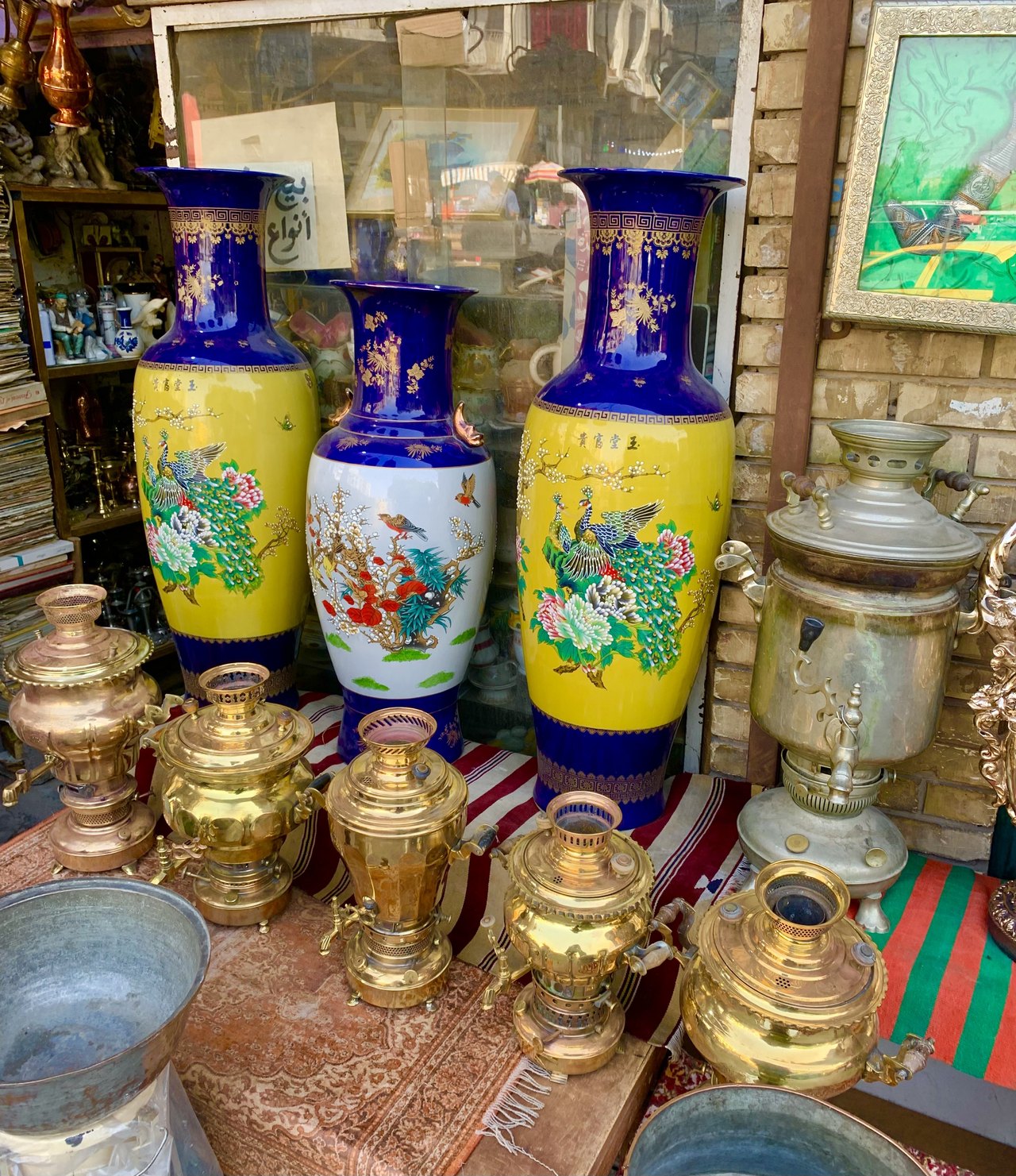
Read this before you buy anything that looks old.
Iraqi law provides that a person who exports, or intends to export, antiquities may be punished by execution, imprisonment or a fine. Intentional export of items determined to be cultural heritage is punishable by death on the statute books. That penalty is understood not to have been imposed for antiquities offences since the Saddam era — but the statute exists, and the sentences handed down are not theoretical.
The case that proves it: Jim Fitton, a 66-year-old British retired geologist, was arrested at Baghdad International Airport with stone and pottery fragments he had picked up while on an organised archaeology tour. An Iraqi court sentenced him to 15 years. The judge cited his advanced age as the reason for not imposing death. A German man arrested with him was also detained. Fitton was not a smuggler, he was a tourist who put shards in his bag at a site, and he was caught at the airport, which is where this is always caught.
Now stack the second problem on top. Fake “Iraqi antiques” have proliferated in Souk al-Safafeer since 2003, after coalition troops bought out most of the genuine old stock. So the object a trader swears is Babylonian is overwhelmingly likely to be worthless — and it may still be enough to get you arrested, because the determination is made by the State Board of Antiquities and Heritage at the airport, not by the seller in the souk.
The rule is simple and there is no upside to bending it: do not buy, do not pick up, and do not pack anything that looks archaeological. No coins, no cylinder seals, no pottery sherds, no cuneiform anything, no “old” stone. Not from a market, not from the ground at a site, not as a gift. If you want something with age to it, buy hand-worked copper — it is honest, it is legal, and the trade actually needs the money. Our guide to Iraqi laws for tourists covers the rest of the legal ground, and the Iraq Museum page explains why the country is as protective as it is.
Money: cash, small notes, and no ATMs
Iraq is a cash economy and the souks are the deepest end of it. Cash remains the dominant payment method across the country; as of a June 2025 survey, Mansour Mall was one of the few places in Baghdad where a handful of establishments accepted cards at all. Card acceptance is genuinely creeping into malls and modern retail — the central bank is implementing a point-of-sale mandate and one major card issuer moved to zero commission on electronic payments from 1 January 2026 — but we could not trace any of that into the traditional markets. Assume the souks are cash.
| Money question | What to do |
|---|---|
| Which currency? | Iraqi dinars for the souks. US dollars change readily at exchange offices; sellers may take them but you will not get the exchange office’s rate. |
| Which rate? | Two exist. The official peg is 1,320 IQD to the dollar; the Baghdad street rate on 15 August 2026 was about 1,535. Ask which one you are being given. |
| ATMs? | Rare and unreliable. Do not build a day around finding one. |
| Notes | Carry small denominations. Nobody at a stall wants to break a 25,000 or 50,000 note for a 2,000-dinar purchase. |
| Haggling | Genuinely unclear. Nobody publishes Baghdad’s convention. Gold is fixed-price against the daily rate; elsewhere, ask two or three stalls and let the spread tell you. |
Our Iraq travel cost guide has the wider budget picture, and the Iraq SIM card guide is worth reading first if you want a working phone for exchange rates and maps while you are in the market.
Crowds, pickpockets and the actual risk picture
Two things are true at once and most pages only carry one of them.
The first: your government’s advice is severe. The FCDO advises against all but essential travel to Baghdad province, and against all travel to Sadr City, under regionalised advice updated 22 July 2026 and still current on 15 August 2026. The US State Department has Iraq at Level 4, Do Not Travel, reissued 2 March 2026 with an ordered departure of non-emergency government employees on the same date. Since 8 July 2026 there have been strikes and retaliatory attacks by Iran across the region including Iraq, and Baghdad had a run of incidents through March 2026 including drones over the Green Zone. Every one of those bulletins may have moved by the time you read this — re-check them on the day rather than trusting any travel page, including this one. Travelling against your government’s advice invalidates most travel insurance, which is the practical consequence almost nobody spells out; our Iraq travel insurance guide explains how that works, and the Iraq travel advisory page tracks what each government currently says.
The second: in a crowded market the risk you are actually exposed to is petty theft and traffic. Shorja is dense, cash-heavy and easy to pickpocket in. Carry what you need in a front pocket, leave the rest at the hotel, and do not stand in a crowd counting a fistful of dinars. And note the numbers that should frighten you more: Iraq recorded 2,351 road deaths in 2025, with Baghdad accounting for around 19.5% of national crashes. Far more visitors are hurt crossing a road here than by anything political. Is Baghdad safe? works through this properly, and getting around Iraq covers drivers, taxis and checkpoints.
Most visitors to these markets arrive with a local guide or driver, and there is a good practical case for it beyond security: the markets are unsigned, the geography is not intuitive, and nobody is going to explain the mithqal to you in English. Our page on Iraq tours sets out what that normally involves.
Dress, photography and behaviour in the markets
Baghdad’s central markets are ordinary working places, not tourist attractions, and the etiquette follows from that.
Dress. Iraq is broadly conservative and Baghdad’s markets are mixed-gender working spaces. Long trousers or a long skirt, shoulders covered, nothing tight or transparent; women do not need a headscarf in the markets themselves, though you will want one to hand if your day also includes a shrine — Kadhimiya has its own rules. This is general Iraqi practice rather than a souk-specific dress code; we could not find a published rule for any market. Our Iraq packing list and guide to Iraqi culture go further, and solo female travel in Iraq covers the specifics for women travelling alone.
Photography. Two rules, one hard and one soft. The hard one: never photograph checkpoints, soldiers, police or security infrastructure anywhere in Iraq. That is not a cultural nicety, it is how people end up detained, and cameras are a sensitive subject in Baghdad right now — fifteen camera drones were seized from a single delivery motorcycle in the city on 15 August 2026. The soft one: ask before photographing traders, and always before photographing women. Stalls are usually fine. Faces are a conversation.
We could not source how photography is actually received in any specific souk, so treat that as an honest gap rather than a green light. Our Iraq photography guide deals with the wider question of where cameras are and are not welcome.
Timing: Friday, heat, and the Iraqi working week
The single most useful scheduling fact: the Iraqi weekend is Friday–Saturday and the business week runs Sunday to Thursday. Friday is the main closure day for offices and the quietest day for wholesale — and simultaneously the one day Souk al-Ghazl trades, and the day Mutanabbi Street is fullest. You cannot have all of it on one day. Plan Friday around Ghazl and Mutanabbi, and the wholesale markets around any other morning.
Then heat. Baghdad’s July mean maximum is 44 °C, and the 50 °C season runs later than most guides suggest — four Iraqi governorates were at 50 °C on 15 August 2026. In summer the markets are a morning activity, full stop. By early afternoon the lanes are half-shuttered and the city’s social life has moved to the evening. Our best time to visit Iraq guide has the seasonal detail; October to April is when a market day is actually pleasant.
Ramadan changes the rhythm completely, shifting shopping into the late evening — in 2026 it ran from 19 February for the full 30 days, with Eid al-Fitr on Friday 20 March. Arbaeen, which fell on 4 August in 2026, reshapes transport and accommodation across central and southern Iraq for weeks around it. Both move about eleven days earlier each year. Check where they land before you book; our Iraq itinerary guide shows how a Baghdad market morning fits into a longer trip.
Malls, and where a card actually works
If you need air conditioning, a card terminal or a cinema, Baghdad has modern retail. Two malls are sourced as trading: Mansour Mall, one of the first modern malls in Iraq, with international boutiques, a food court and a 5D cinema — and notably one of the few places in the country where some establishments take cards — and Maximall, with international brands, local boutiques, dining and a cinema.
Other mall names circulate widely in listicles. We could not find dated 2025–26 evidence that they are trading and have therefore not named them. If someone’s guide lists six Baghdad malls without a source, treat the list as decorative.
There is a real behavioural shift underneath all this, and it is not the lazy “malls are replacing souks” line. What is actually evidenced is narrower and more interesting: 964media reported in autumn 2025 that in Rawah, in Anbar, the market now trades one day a week because women shoppers switched to delivery apps. That is a national change in how Iraqis buy things, and the souks are on the wrong side of it.
A half-day plan for the central souks
No opening hours are published for any Baghdad bazaar or souk, so this is a sequence rather than a timetable.
- Start early, especially between June and September. Traders open early and the afternoon heat empties the lanes.
- Shorja first, while it is busiest and most itself. Steer by the Latin Cathedral of St Joseph. Expect crowds, handcarts and tuk-tuks.
- Cross to Souk al-Safafeer off the western side of al-Rasheed Street, near the Murjan Mosque. Listen for hammering; it is quieter than it was. Walk it through to the Mustansiriya Madrasa.
- Al-Nahr Street if gold interests you. Look at the day’s rate first, and remember the mithqal is 5 grams.
- Mutanabbi Street, then Souk al-Saray at its far end. Go into the alleys — that is where the books went.
- Add Souk al-Ghazl only on a Friday, and understand that a good part of the trade now happens at night.
- Expect closed shutters. Civil-defence orders shut buildings routinely. It means nothing.
If you have more time in the city, things to do in Iraq and Al-Shaheed Monument and Baghdad’s modern landmarks pick up where the old city stops, and where to stay in Iraq covers the practical side of basing yourself in Rusafa or Karkh.
What we could not confirm
This subject has more holes in it than any we have covered. Rather than paper over them:
- Opening hours for any Baghdad souk. None are published anywhere — not Shorja, Safafeer, Saray, Mutanabbi, Ghazl or al-Nahr Street. Souk al-Ghazl’s Friday trading day is the only day-of-week fact with a proper source, and that source is from 2022.
- Any 2025 or 2026 count of coppersmiths in Souk al-Safafeer. The last published count is ten, from 2018.
- Al-Qishla’s current status. Closed for 18 months as of June 2026; no source confirms a reopening or continued closure.
- Any price for a copper tray, coffee pot or book in Baghdad. We found none that were both dated and about Baghdad.
- Haggling norms. No source states Baghdad’s convention. Gold is the exception, and it is fixed-price.
- How photography is received in any specific market.
- Gold souks in Kadhimiya or Karrada, or any relocation, vehicle ban or multi-storey redevelopment plan for Shorja. The tuk-tuk congestion is documented; a ban is not.
- Weapons at Souk al-Ghazl, or any veterinary closure of it. Neither is sourced.
- The form or date of a memorial at the site of the 3 July 2016 Karrada bombing, which killed at least 324 people and injured 223 by the settled Iraqi figure. It is widely referred to; we could not describe it accurately, so we have not.
- Karrada’s current retail atmosphere, and whether card acceptance has reached any traditional market. Evidence points the other way.
- Any shop name, anywhere. We have verified none, so we name none.
Frequently asked questions
What is the main bazaar in Baghdad?
Shorja, in the Rusafa district of central Baghdad, is the largest and oldest. It is primarily a wholesale market for food, spices, textiles, household goods and electronics rather than a tourist bazaar. Souk al-Safafeer, Souk al-Saray, Mutanabbi Street and Souk al-Ghazl are all within walking distance of it.
Which Baghdad bazaar should I see first?
Shorja, for scale and atmosphere, then Souk al-Safafeer for the copper trade and Mutanabbi Street for books — they are a few minutes’ walk apart. If your visit falls on a Friday, prioritise Souk al-Ghazl and Mutanabbi instead, since Friday is the one sourced trading day for the animal market and the day the book street is fullest.
What day is the Baghdad market?
Souk al-Ghazl trades on Friday — that is the only trading day with a solid source, from Xinhua in February 2022. Mutanabbi Street trades daily but is fullest on Friday, because the Iraqi weekend is Friday–Saturday. The wholesale markets follow the Sunday-to-Thursday working week. No souk publishes opening hours.
Is Souk Mureidi still open?
No. It was demolished from around 20 August 2025, amid resistance that Iraqi media described as involving fire and gunfire, with more than 2,500 shops affected. As of July 2026 it is being rebuilt on al-Sadda Street as a formal market of 500 shops on 8 dunams. It was in Sadr City, which carries the FCDO’s harshest rating.
Can you still buy copper in Souk al-Safafeer?
Yes — trays, jugs, lanterns, engraved work and the dallah coffee pot are all still sold. The craft itself has contracted sharply: the last published count, from 2018, put working coppersmiths at ten, down from 68 before 2003, with around 90% of the shops converted to fabric stalls. No newer count has been published by anyone.
Can I bring an antique home from Baghdad?
No, and this is the one thing in this guide that could cost you years. Iraqi law allows the death penalty for intentional export of antiquities, and a British tourist, Jim Fitton, received 15 years for pottery and stone fragments he picked up on an organised archaeology tour and was caught with at Baghdad airport. Fake “Iraqi antiques” are also common in the souks, so the item may be worthless as well as illegal.
Do Baghdad’s markets take cards?
Assume not. Iraq is a cash economy, ATMs are rare, and card acceptance has only reached malls and some modern retail. Bring dinars in small denominations. Dollars change easily at exchange offices, but check whether you are being given the official rate of 1,320 or the street rate, which was around 1,535 in mid-August 2026.
Is it safe to walk around Baghdad’s souks?
The FCDO advises against all but essential travel to Baghdad province and against all travel to Sadr City; the US State Department rates Iraq Level 4, Do Not Travel. Travelling against that advice usually voids your insurance. Within the markets themselves, the day-to-day risks are pickpocketing, crowding and traffic. Most visitors go with a local guide or driver.
How much time do the Baghdad souks need?
Half a morning covers Shorja, Souk al-Safafeer, Mutanabbi Street and Souk al-Saray at a reasonable pace, because they are all in one pocket of Rusafa. Add Souk al-Ghazl only on a Friday. In summer, start early — by afternoon the heat has emptied the lanes.
Final thoughts
The thing that struck us hardest, compiling a Baghdad bazaar guide in 2026, was how much of the English-language record is simply out of date. A market of 2,500 shops was bulldozed a year ago and page one has not noticed. Another one moved into the night in February and page one has not noticed that either. The best real journalism about Shorja is eleven years old. The last time anyone counted the coppersmiths, it was 2018.
That gap is worth taking personally when you visit, because it changes what you are looking at. These are not heritage attractions being preserved for visitors. They are working markets under pressure from rent, regulation, imports, delivery apps and bulldozers, and the trades inside them — copper, books, leather — are the ones losing. Buying a hand-worked tray or a genuinely printed book is not a souvenir transaction so much as a small vote for the thing continuing to exist. Buying a “Babylonian” figurine is the opposite, and may also be a crime.
Go early, carry small notes, ask before you photograph anyone, and treat everything with a date on it — including this page — as needing a re-check. If you are building the rest of the trip, start with the Baghdad city guide, read our Iraq travel tips before you go, and see the best places to visit in Iraq for what lies beyond the capital.
Photo credits
Shorja market during Ramadan by Chinese Horse From Kaso Mall (CC0). Souk al-Safafeer by Taisir Mahdi (CC BY-SA 4.0). Books on Mutanabbi Street by Mondalawy (CC BY-SA 4.0). Souk al-Saray interior by Ayham4002 (CC BY-SA 4.0). Souk al-Ghazl bird market by Aziz1005 (CC BY-SA 4.0). Souk al-Haraj antiques by Ayham4002 (CC0). All images via Wikimedia Commons.